
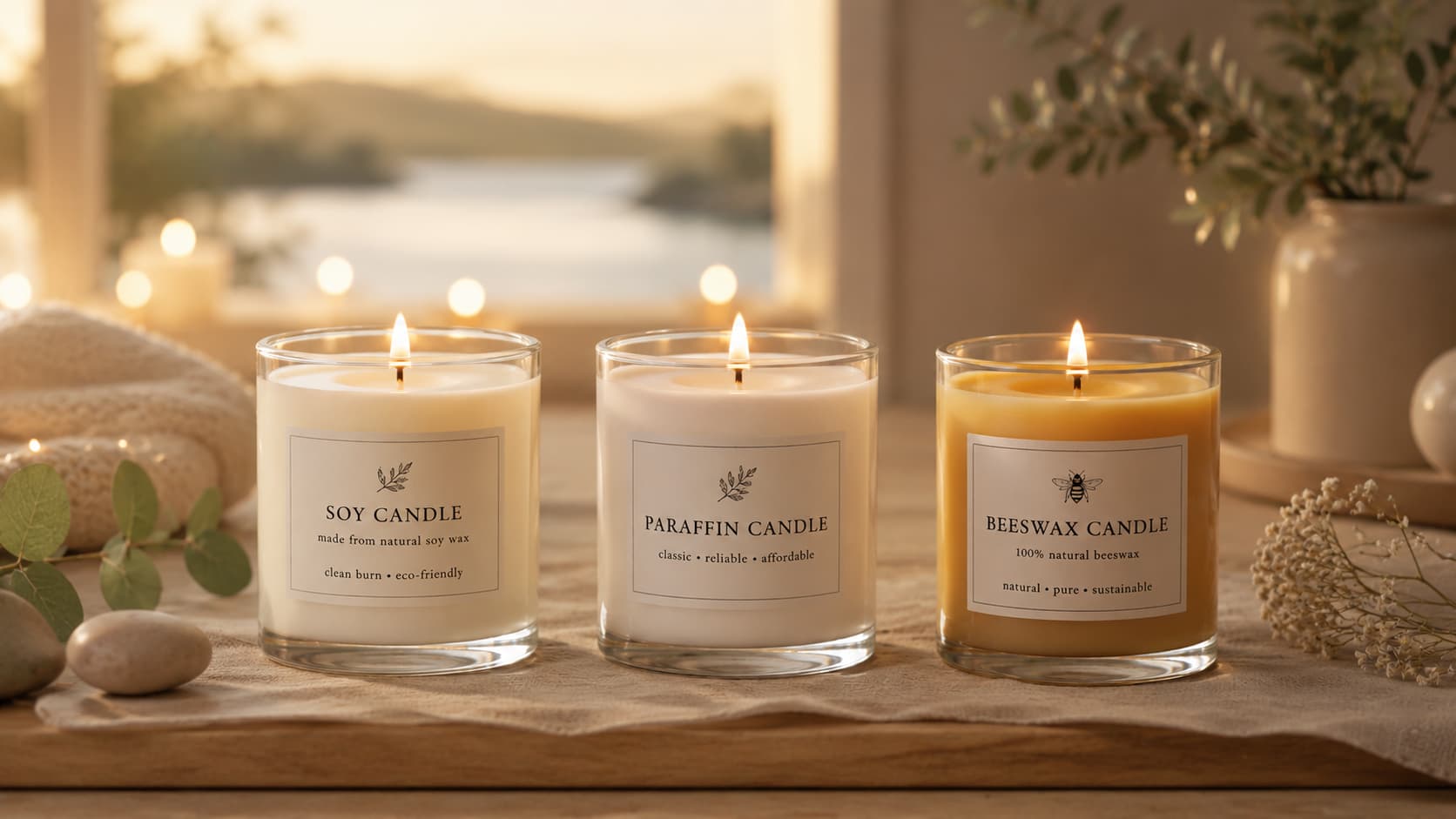
Lighting a candle feels harmless, almost like turning on a lamp. But every candle is a small chemistry event happening inside a home, and the wax behind the flame changes what actually ends up in the air. Soy, paraffin, and beeswax are the three most common candle waxes on the market, and they come from completely different sources — crude oil, soybeans, and honeybee hives — so they don’t burn the same way or release the same things once lit. The differences matter more than most shoppers realize, and they’re often exaggerated or oversimplified by marketing on both ends of the price spectrum.
What Is Paraffin Wax and Why Is It Controversial?
Paraffin is made from petroleum, and burning it releases more soot and more volatile organic compounds (VOCs) than soy or beeswax. That reputation is largely earned, though the risk is often overstated for casual, occasional use.
Paraffin wax is a byproduct of refining crude oil into fuel. It is cheap, holds fragrance and color well, and has been the backbone of the candle industry for over a century. The concern isn’t that paraffin is some rare toxic substance — it’s that burning it releases small amounts of chemicals such as benzene, toluene, and formaldehyde as the flame vaporizes the wax, and all three are compounds health experts flag as potential carcinogens or respiratory irritants. Compared with plant or animal-based waxes, paraffin generally produces the largest quantities of these byproducts.
Scale still matters here. Cigarette smoke, not candles, accounts for the vast majority of a typical person’s lifetime benzene exposure, so an hour of candlelight in a kitchen is a very different situation than the controlled lab conditions researchers use to study these chemicals. The more consistent everyday issue with paraffin is soot. It tends to produce noticeably more black soot than soy or beeswax, and that soot is fine particulate matter (often called PM2.5) small enough to travel deep into the lungs — the same category of pollutant linked to worsened asthma symptoms and general respiratory irritation with repeated exposure.
Is Soy Wax Actually Healthier Than Paraffin?
In most side-by-side comparisons, soy wax burns cleaner than paraffin, producing less soot and fewer VOCs. Cleaner than paraffin isn’t the same as completely clean, though.
Soy wax comes from hydrogenated soybean oil, making it a renewable, plant-based alternative to a petroleum product. One frequently cited comparison, published in the Journal of the American Oil Chemists’ Society, tracked how quickly each wax type burned down and how much soot each left behind — soy came out closer to beeswax on both counts, well ahead of paraffin, which is a genuine advantage for anyone specifically worried about soot and VOC output.
Soy candles aren’t automatically pure, though. Many aren’t 100 percent soy — some brands blend soy with paraffin to help the candle hold its shape or throw scent further, and a label needs to explicitly state “100% soy wax” for that to be a safe assumption. The fragrance oils added to a soy candle matter just as much as the base wax itself; a heavily fragranced soy candle can still release meaningful VOCs when burned, so wax type alone only tells part of the story. Soybean farming also carries its own environmental footprint tied to pesticide use and land clearing in some growing regions — a separate issue from indoor air quality, but relevant for anyone choosing soy specifically for sustainability reasons.
Is Beeswax Really the Cleanest-Burning Candle?
Beeswax candles generally produce the least soot and the fewest synthetic byproducts of the three, largely because pure beeswax needs little to no added fragrance and no chemical processing to become candle-ready.
Beeswax comes straight from honeybee hives with minimal processing, unlike paraffin (refined from oil) or soy wax (which requires hydrogenation to turn liquid soybean oil into a solid). Its naturally mild honey scent means many beeswax candles are sold unscented or lightly scented, cutting out one of the biggest sources of VOCs in candles generally: added synthetic fragrance.
A popular claim holds that beeswax candles “purify the air” by releasing negative ions that bind to dust and allergens. That idea circulates widely in candle marketing, but it deserves skepticism — the scientific evidence behind a measurable, meaningful air-purifying effect from a burning beeswax candle is thin, and no major independent health body has confirmed it as a real benefit. The better-supported claim is simpler: beeswax burns slower and with less soot than paraffin, a real, measurable difference rather than a marketing story.
Beeswax also isn’t vegan, since it’s produced by honeybees — a relevant factor for anyone avoiding animal-derived products, who would lean toward soy instead.
Coconut wax has entered the market more recently as a fourth option, usually blended with soy or beeswax rather than sold pure. It burns cleanly, similar to beeswax, and holds fragrance well, though pure coconut wax is soft and often needs to be blended with a firmer wax to hold its shape in a container candle. Coconut blends tend to sit near the top of the price range, close to or above pure beeswax.
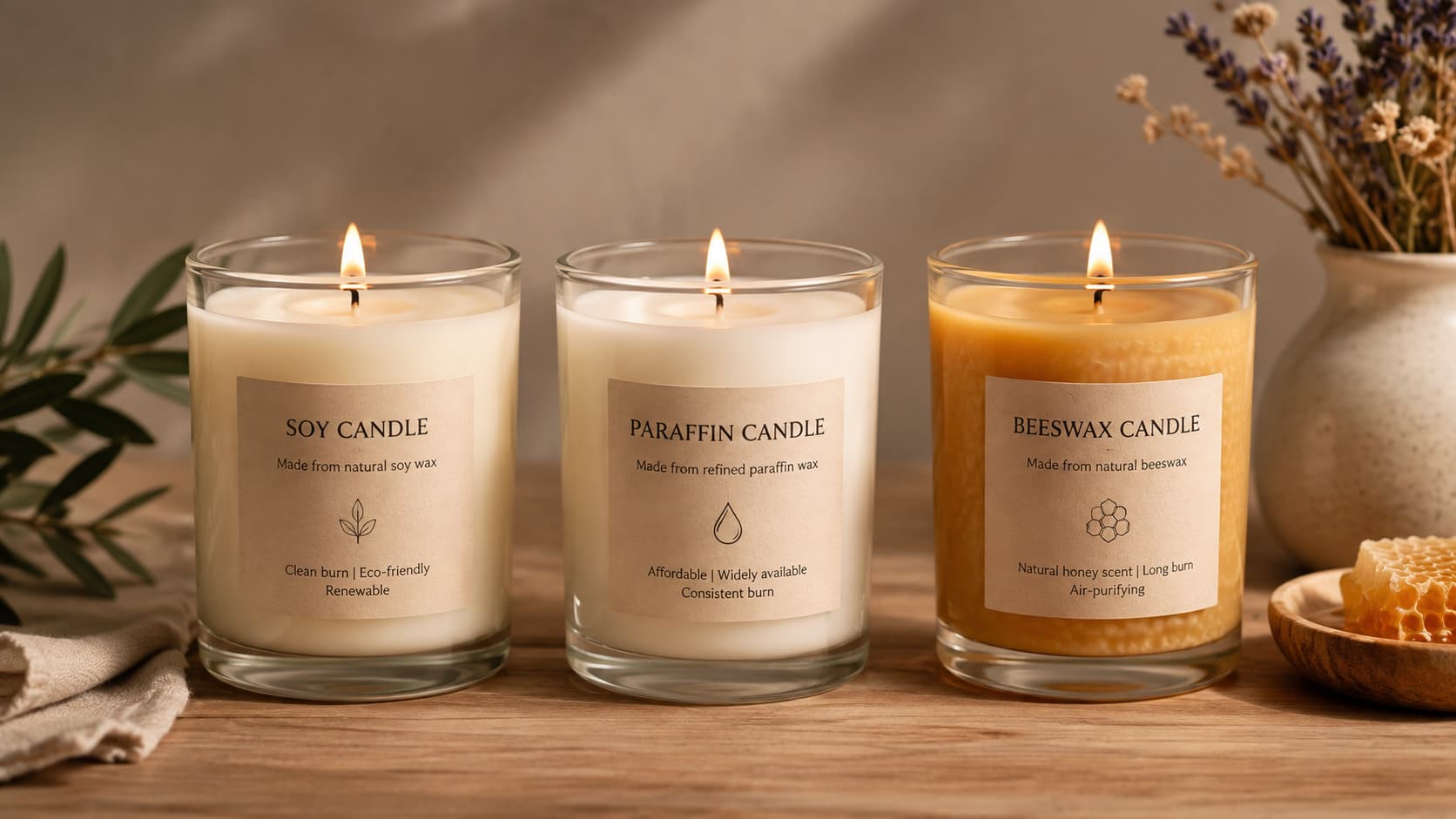
Soy vs. Paraffin vs. Beeswax
| Factor | Paraffin | Soy Wax | Beeswax |
|---|---|---|---|
| Source | Crude oil byproduct | Hydrogenated soybean oil | Made by honeybees |
| Soot level | Highest | Low | Lowest |
| VOC release when burned | Highest (benzene, toluene, formaldehyde) | Lower, but depends on fragrance load | Lowest, especially unscented |
| Renewable | No (fossil fuel-based) | Yes | Yes |
| Vegan-friendly | Yes | Yes | No |
| Typical cost | Lowest | Mid-range | Highest |
| Typical burn time | Shorter | Longer than paraffin | Longest, due to density |
| Common drawback | Soot, VOCs, petroleum sourcing | Often blended, fragrance can offset benefits | Higher cost, limited scent options |
No candle wax is completely free of combustion byproducts. Fire, by nature, produces some smoke and particulate matter — the differences between waxes come down to how much and what kind.
The Wick Matters Almost as Much as the Wax
A candle’s wick was once a bigger health concern than the wax itself, back when some wicks contained a thin metal core to help them stand upright. That core was sometimes made with lead, which could vaporize into the air when burned.
The federal government addressed this directly in 2003, when the Consumer Product Safety Commission moved to outlaw lead-cored wicks entirely — no manufacturing, no domestic sales, no imports — after determining that children were especially vulnerable to the lead exposure a burning wick like that could cause. The ban covers both domestically made and imported candles sold in the United States, so lead wicks haven’t been a legal concern in new candles for over two decades. Most wicks today are cotton, paper-core, or wood, none of which carry that same risk. Candles from small overseas sellers or unusually old stock warrant a closer look at wick material, but candles sold through normal retail channels in the US have largely moved past this issue.
Why Candle Scent Matters More Than You Think
In many cases, yes. The scent oils added to a candle can contribute as much, or more, to VOC release as whether the base wax is soy, paraffin, or beeswax.
This is one of the most overlooked parts of the health conversation. A heavily scented soy candle can release more volatile compounds than an unscented paraffin candle, because synthetic fragrance oils are themselves chemical blends engineered to vaporize easily and spread scent through a room. Minimizing VOC exposure often has more to do with scent load than wax type alone. Candles scented with essential oils tend to be a gentler option than those using synthetic fragrance blends, though essential oils carry their own considerations for people with allergies or sensitive skin.
Simple Habits for Cleaner Candle Burning
A few habits shape how much soot and VOC buildup accumulates in a home, regardless of which wax is burning. Wicks trimmed to about a quarter inch before each burn prevent an oversized, sooty flame. Rooms with some airflow — a cracked window or a running vent fan — clear particulate matter far faster than a sealed room. Burn times beyond roughly four hours overheat the wax pool and speed up how fast fragrance compounds evaporate, so shorter, more frequent burns tend to produce less buildup than one long one. Trimmed wick debris and spent matches left in the wax pool can smolder and add unnecessary smoke, and a lid kept on the candle between uses keeps dust and residue out of the wax.
Frequently Asked Questions
Are paraffin candles actually dangerous to burn at home?
For occasional use in a ventilated room, the levels of chemicals released are generally low enough that they aren’t considered a serious health hazard. The concern grows with frequency, poor ventilation, and multiple candles burning at once, particularly for people with asthma or other respiratory sensitivities.
Is soy wax 100% natural?
Not exactly. Soy wax starts as soybean oil but goes through a hydrogenation process to become solid at room temperature, making it plant-based but not unprocessed. A label stating “100% soy wax” is the only reliable way to confirm it isn’t blended with another wax.
Do beeswax candles really clean the air?
Strong independent scientific evidence for the popular claim that beeswax candles purify indoor air through negative ions doesn’t exist. What is well supported is that beeswax burns with less soot and fewer VOCs than paraffin, a real air quality benefit on its own.
Is lead in candle wicks still a concern today?
Lead-core wicks have been banned from manufacture and sale in the United States since 2003, and most manufacturers stopped using them even earlier, in the 1970s. Candles bought through normal retail channels today are extremely unlikely to contain a lead wick.
Which wax is best for people with allergies or asthma?
Unscented or lightly scented beeswax and soy candles tend to be the gentlest options, since they minimize both soot and added fragrance chemicals — the two most common irritants for sensitive airways.
Conclusion
Paraffin, soy, and beeswax candles all release some level of soot and VOCs when burned, simply because that’s what happens when wax is melted and vaporized by an open flame. Paraffin consistently produces the most soot and the highest levels of chemicals like benzene and toluene, soy offers a meaningfully cleaner middle ground as long as it isn’t heavily blended or over-fragranced, and beeswax tends to burn the cleanest overall, particularly when left unscented. Wax type sets the baseline, but fragrance load and burning habits — trimmed wicks, ventilation, and shorter burn times — do more for indoor air quality than switching waxes alone ever will.