Tudor sits in a strange and interesting spot in the watch world. It shares a founder and a family tree with Rolex, yet it has spent the last decade building a reputation that stands completely on its own. Walk into any watch forum or collector meetup and you will hear the same debate: is Tudor a genuine alternative to Rolex, or just a cheaper cousin riding on a famous name? The truth is more interesting than either answer, and it comes down to real engineering, a fascinating military history, and a handful of watches that have earned their reputation the hard way.
Why Buy a Tudor Watch?
Tudor watches stand out because they combine Rolex-level case and bracelet quality with movements built by Tudor’s own factory, at prices that are noticeably lower than Rolex. That combination is rare in Swiss watchmaking. Most brands either build everything in-house and charge a premium for it, or outsource parts to keep costs down and accept a drop in quality.
Tudor takes a different path. Since 1926, it has used Rolex-grade Oyster cases, crowns, and bracelets, built to the same waterproofing and durability standards. But Tudor’s movements come from Kenissi, a manufacturing company that Tudor itself owns a majority stake in, alongside Chanel and Breitling as partners. This setup lets Tudor sell chronometer-certified, in-house movements without the price tag that usually comes with them.
The other reason Tudor stands out is its history. This is not a brand that invented a story to sell watches. It has real service records with the French Navy, the U.S. military, and polar expeditions, and that history shapes the way its current watches look and work.
The History of Tudor Watches
Who Founded Tudor and Why?
Hans Wilsdorf, the same man who founded Rolex in 1905, registered the Tudor trademark in February 1926. He wanted agents to be able to sell a watch that cost less than a Rolex but still met Rolex’s standards for reliability. So he built a separate company to do exactly that, using Rolex cases, crowns, and bracelets but fitting them with movements from outside suppliers to keep the price down.
The name itself was a branding choice. Wilsdorf named the company after the Tudor era, a period in English and Welsh history known for major change and exploration. A rose became the brand’s logo, and it still appears on the crown of every Tudor watch today.
Wilsdorf never intended Tudor to feel like a discount version of Rolex. His plan was to give more people access to the same level of dependability, using a different business model rather than a lower standard.
How Tudor Became Independent from Rolex
Tudor is still owned today by the Hans Wilsdorf Foundation, the same private trust that owns Rolex, but the two companies now run completely separately. Montres Tudor SA is a Swiss watchmaker based in Geneva, registered by Hans Wilsdorf in 1926, and it remains a sister company to Rolex.
The turning point came in the 2010s. Tudor stopped using Rolex-derived movements and third-party ETA movements, and started building its own calibers through Kenissi. In 2015, it released its first in-house automatic movement, the MT5621, inside the North Flag model. From that point on, Tudor stopped being “Rolex’s budget brand” in any meaningful engineering sense and became a manufacturer with its own research and development.
Tudor also has a long, documented military past that gave it real-world testing no marketing budget can buy. Tudor Submariners were used extensively by French Navy divers into the mid-2000s, and were also issued to divers in the American, Canadian, and Italian navies. This is where the brand’s most famous design detail comes from.
In 1969, Tudor introduced square, oversized hands and hour markers on its dive watches, nicknamed “Snowflake” hands by collectors because of their shape. The new design gave divers more surface area for luminous paint, making the dial easier to read underwater, and it became the first major design detail that separated Tudor from Rolex visually. You still see this exact hand shape on the modern Black Bay and Pelagos lines.
Best Tudor Watches by Collection
Tudor’s current lineup is built around a few clear families. Each one is aimed at a different kind of wearer, so the “best” one depends on how you plan to use it.
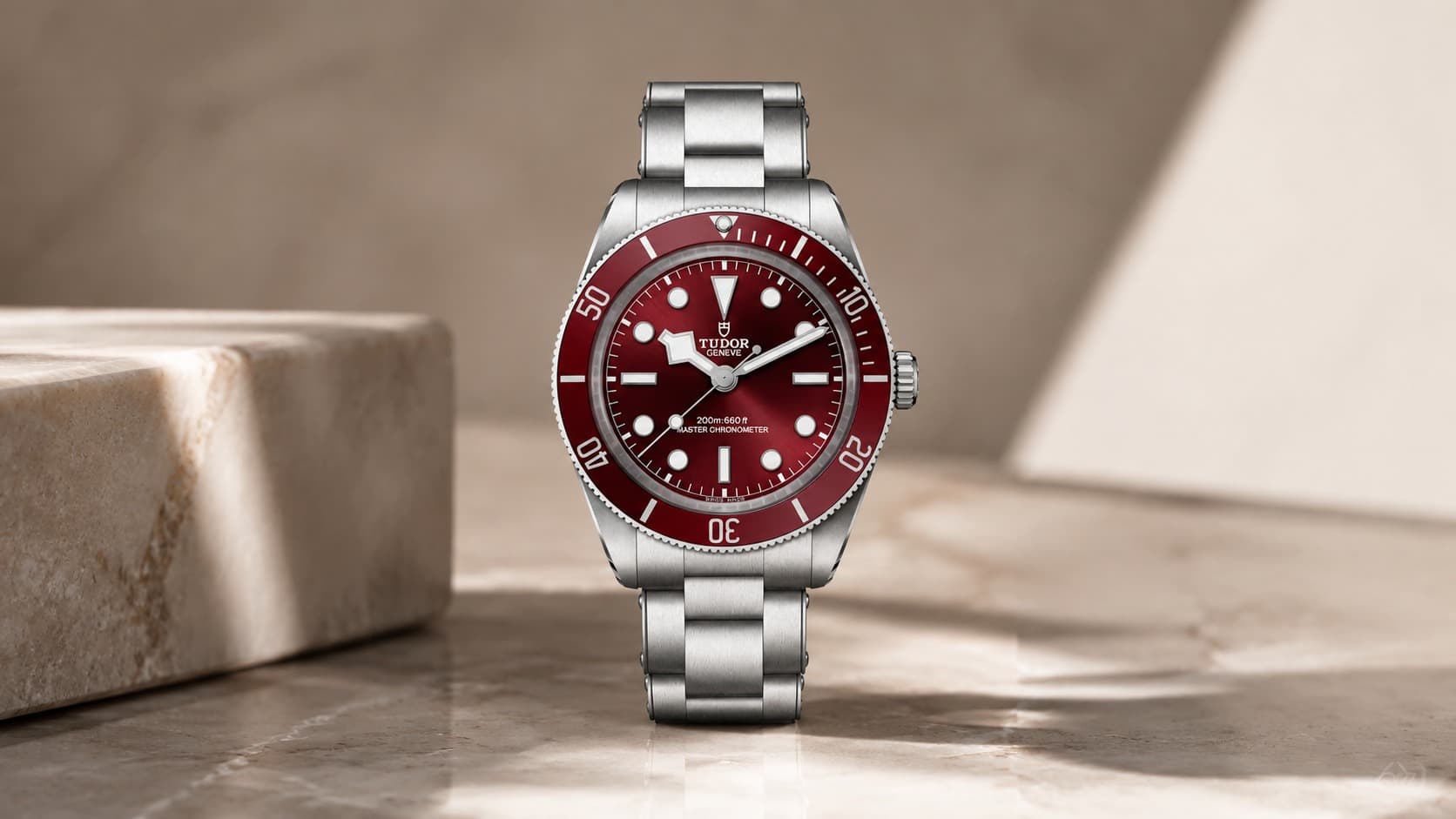
Tudor Black Bay 58
The Black Bay 58 answers the question a lot of buyers ask first: can I get a small, classic dive watch that doesn’t look oversized on a normal wrist? The answer is yes, and it does it with a 39mm case, which is close to the size of Tudor’s original 1958 dive watch.
Inside is Tudor’s in-house Manufacture Calibre MT5402, a chronometer-certified movement with a silicon hairspring that resists magnetism better than a standard spring. It holds a power reserve of around 70 hours, meaning you can take it off on a Friday night and it will still be running on Monday morning. The watch carries 200 meters of water resistance, which covers swimming, snorkeling, and most diving that a hobbyist would ever do.
Retail prices for the steel Black Bay 58 start at roughly $3,700 to $4,000, with fabric strap, leather strap, and bracelet options changing the price slightly. Gold and bronze versions cost significantly more.
Tudor Black Bay Pro and Black Bay GMT
These two models are built for people who travel or want to track a second time zone. Both use a movement with a GMT hand and a rotating bezel, letting the wearer read a second time zone at a glance without doing any math.
The Black Bay Pro takes design cues from Tudor’s 1980s and 1990s Ranger models, with a fixed steel bezel and a simple black-and-cream dial. The Black Bay GMT leans further into the classic dive watch look, with a red-and-blue “Pepsi” bezel option that echoes vintage Rolex GMT-Master colors, since both were built around the same core design decades ago. Both run on Tudor’s MT5652-family movements, tested to COSC chronometer standards.
Tudor Pelagos
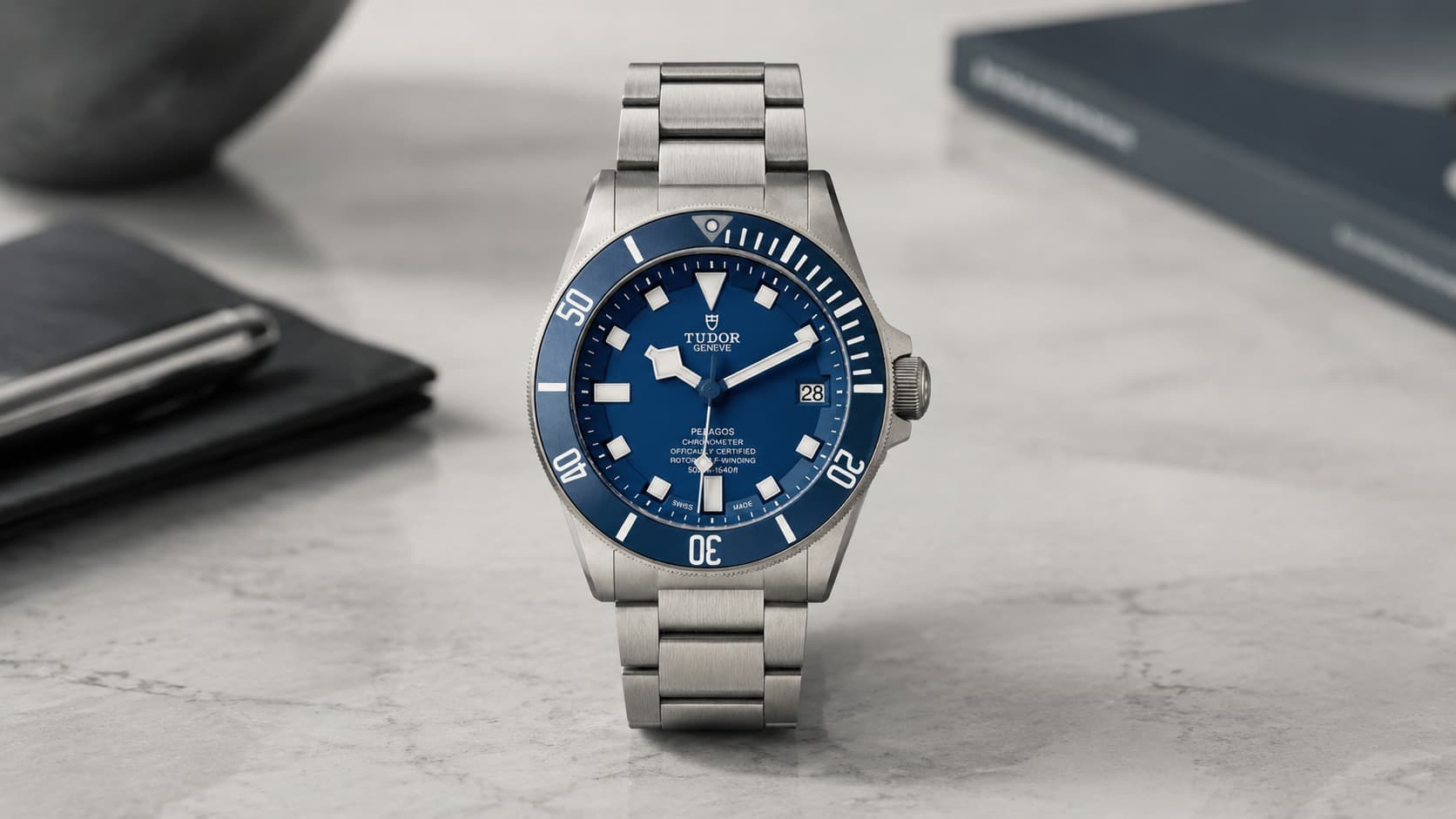
The Pelagos is Tudor’s serious tool watch, built for people who actually want to dive with it rather than just look like they might. Its case is made from lightweight, corrosion-resistant titanium instead of steel, and it uses a ceramic bezel insert that resists scratching far better than aluminum.
Depending on the exact version, the Pelagos offers water resistance from 200 to 500 meters, well beyond what recreational diving requires. It also carries a helium escape valve on some models, a small feature that lets trapped gas safely leave the watch case during saturation diving decompression, so the crystal doesn’t pop off under pressure. The Pelagos 39, a smaller version released in recent years, brings this same toughness into a more everyday-friendly 39mm case.
Tudor Ranger
The Ranger is Tudor’s field watch, and it has genuine polar exploration history behind it. Tudor supplied watches for British expeditions to Greenland in the 1950s, and the modern Ranger borrows its clean dial, oversized numerals, and rugged case shape from those original field watches.
It is one of the simplest watches in Tudor’s current range: no rotating bezel, no GMT hand, just hours, minutes, seconds, and a date window. That simplicity is the point. It is built to be easy to read in tough conditions and to survive daily wear without complaint.
Tudor Royal
The Royal is Tudor’s answer for buyers who want a dress watch rather than a tool watch. It has a more formal, integrated bracelet design, a date window, and comes in sizes as small as 28mm for smaller wrists, up to 41mm. It is also Tudor’s most affordable in-house-movement watch, making it a common entry point for first-time buyers who want a Tudor without spending Black Bay money.
Here is a quick side-by-side to help compare the main collections:
| Collection | Best For | Case Material | Approx. Water Resistance |
|---|---|---|---|
| Black Bay 58 | Classic dive watch look, smaller wrists | Stainless steel | 200m |
| Black Bay Pro / GMT | Travel, second time zone | Stainless steel | 200m |
| Pelagos | Actual diving, toughness | Titanium | 200–500m |
| Ranger | Everyday, simple field watch | Stainless steel | 100–150m |
| Royal | Dress and office wear | Stainless steel | 100m |
What’s Inside a Tudor: Movements and Chronometer Certification
A watch movement is the mechanical engine that keeps time inside the case. Tudor’s modern in-house movements come from Kenissi, and most of them share a few key features: a silicon hairspring, chronometer certification, and a power reserve of around 65 to 70 hours.
Chronometer certification comes from COSC, the Swiss Official Chronometer Testing Institute. To earn it, a movement has to keep time within a tight range, roughly minus 4 to plus 6 seconds a day, tested in different positions and temperatures before it goes into a case. Tudor states that its Manufacture Calibre MT5400 performs better than COSC’s own requirements, thanks partly to its non-magnetic silicon hairspring.
Some newer Tudor models go a step further and earn METAS Master Chronometer certification, the same standard Omega uses. This tests the fully cased watch, not just the bare movement, checking accuracy, resistance to strong magnetic fields, water resistance, and power reserve all at once. A watch with this certification has been tested closer to how it will actually be worn, rather than just how the movement performs in a lab.
How Tudor Compares to Rolex
This is the question almost every new Tudor buyer eventually asks, so it deserves a direct answer. Tudor and Rolex share a founder, an owner, and a similar approach to durability, but they are built and sold differently today.
- Movements: Rolex builds every movement entirely in-house. Tudor’s movements are made by Kenissi, a company Tudor holds a majority stake in, which also supplies movements to other brands.
- Finishing: Rolex movements typically receive more decorative finishing, since collectors sometimes see the movement through a display caseback. Tudor’s movements are built for reliability first, with a simpler, more industrial finish.
- Availability: Rolex sports models are famous for long waitlists at retailers. Tudor watches are, in general, easier to buy at or near retail price.
- Price: Tudor’s steel sports watches typically start thousands of dollars lower than Rolex’s equivalent models, which is still the core idea Wilsdorf had in 1926.
- Resale value: Rolex sports watches tend to hold or exceed their retail price on the secondhand market. Tudor watches usually depreciate somewhat after purchase, like most other watch brands, though popular models like the Black Bay 58 tend to hold value better than most.
Neither brand is simply “better.” Rolex remains the more prestigious name and the stronger investment in resale terms. Tudor gives buyers a genuinely well-built, chronometer-certified watch with real military heritage, at a price that leaves room in the budget for other things.
How to Choose the Right Tudor Watch
Think about how you will actually wear the watch, not just how it looks in photos. A few questions can narrow the list quickly:
- Do you swim or dive regularly? Choose the Pelagos for serious water use, or the Black Bay 58 for casual swimming and everyday wear.
- Do you travel across time zones often? The Black Bay GMT or Black Bay Pro solves that problem with a second time-zone hand.
- Do you want something for the office rather than the gym? The Royal’s dressier bracelet and slimmer case fit that setting better than a dive watch does.
- What size wrist do you have? Tudor’s 39mm cases suit most wrists, but the brand also makes smaller options in the Royal and larger ones in the Ranger and Black Bay Pro if you prefer more presence on the wrist.
Frequently Asked Questions
Is Tudor owned by Rolex?
Not exactly. Tudor and Rolex are both owned by the Hans Wilsdorf Foundation, a private trust set up by their shared founder, but they operate as separate companies with their own designs, movements, and management.
Are Tudor watches a good investment?
Most Tudor watches lose some value after purchase, similar to most watch brands outside of a handful of Rolex and Patek Philippe models. Certain popular references, like the Black Bay 58, tend to hold their value better than average, but buyers should choose a Tudor because they want to wear it, not primarily as a financial investment.
What is the most affordable Tudor watch?
The Tudor Royal is generally the brand’s most affordable model with an in-house movement, making it a common starting point for buyers new to the brand.
Do Tudor watches use the same parts as Rolex?
Not anymore for the movement. Historically, Tudor used Rolex cases and bracelets with outsourced movements. Today, Tudor still builds cases to Rolex-grade standards but uses its own Kenissi-made movements rather than Rolex calibers.
How long do Tudor watches last?
With normal wear and servicing roughly every seven to ten years, a mechanical Tudor watch can easily last several decades. Many original 1950s and 1960s Tudor dive watches are still running today and are actively collected.
Conclusion
Tudor earns its reputation through decades of real service, not just clever marketing. It shares its founder and its build quality standards with Rolex, but it has carved out its own identity through Kenissi-built, chronometer-certified movements, genuine military history, and a lineup that covers everything from serious dive tools to office-friendly dress watches. If you want Rolex-level case quality without the Rolex price or waitlist, and you’re comfortable with a watch that depreciates somewhat rather than holding its value, a Tudor is one of the most reasonable Swiss watches you can buy today.