Anyone who has shopped for a watch online has likely noticed a short code sitting near the price, something like “SKU: OMG-SPD-BLK-42.” It looks technical, and a little confusing, but it is one of the simplest pieces of information a retailer provides. Knowing what that code means can prevent mix-ups when comparing watches, tracking a warranty, or confirming that a listing matches the exact model being sought.
What Does SKU Stand For?
SKU stands for Stock Keeping Unit. It is the unit of measure a business uses to track a distinct product in its inventory, along with the details that make that product different from similar ones, such as size, color, or material.
A SKU works like a store’s internal name tag for a product. Every watch, in every color and every strap option, gets its own SKU. That way, when a staff member scans a code at checkout, the computer knows exactly which watch left the shelf. SKUs are typically used internally, and the same product can end up with a completely different SKU at two different stores, even though it is the identical watch.
This differs from how most people assume codes work. A SKU is not a universal number stamped onto a product by its manufacturer. It is created by whoever is selling it, purely to keep their own shelves and spreadsheets organized.
A SKU is sometimes called an “item number,” “item ID,” or “product code” instead. These are casual, everyday names for the same thing. Whichever term a retailer uses, the job of the code stays the same: telling the store’s own system which exact item is being counted, sold, or restocked.
How Is a SKU Different From a Watch’s Reference Number?
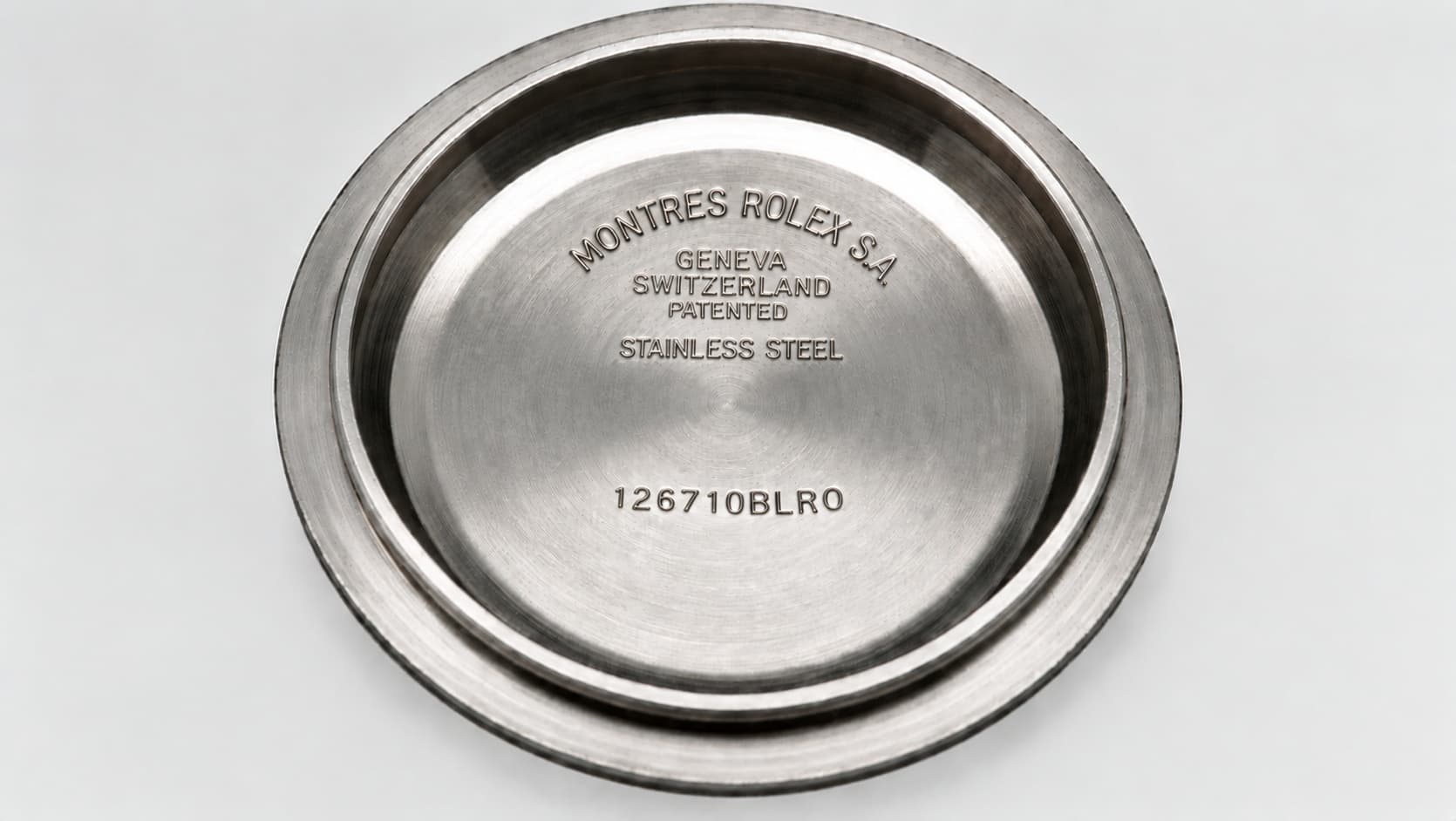
A SKU and a reference number are not the same thing, even though both look like strings of letters and numbers. The reference number comes from the watch brand itself and identifies the exact model. The SKU comes from the retailer and exists only to manage stock.
A reference number is a sequence used by watchmakers to identify specific models, and it helps separate variations in case materials, movements, and complications. Two watches that look almost the same, but come in steel instead of gold, will usually carry two different reference numbers straight from the manufacturer. Using the reference number, a person can typically figure out the watch type, its material, the dial, and even the movement inside it.
A SKU, on the other hand, is built by the shop selling the watch. A single reference number might get folded into several different SKUs across different stores, or combined with extra letters that mean nothing to anyone outside that store’s warehouse team.
| Code Type | Who Creates It | What It Tells You |
|---|---|---|
| Reference Number | The watch manufacturer | The exact model, materials, and specs |
| SKU | The retailer or seller | Where the item sits in that seller’s inventory |
| Serial Number | The watch manufacturer | The one-of-a-kind ID for that individual watch |
A reference number identifies what the watch is. A SKU identifies where a store keeps it.
The Rolex GMT-Master II known as the “Pepsi” carries the reference number 126710BLRO. Collectors break that code down piece by piece: the digits point to the GMT-Master II family and its movement generation, while the letters at the end spell out the red-and-blue bezel color. That entire string comes from Rolex itself, and it stays the same no matter which store sells the watch. A retailer selling that exact watch might still create its own SKU, such as “ROL-GMT-PEPSI-42,” purely to track that one listing inside its own website or warehouse software.
What Does a Watch SKU Actually Look Like?
A typical SKU is a short mix of letters and numbers, often built from abbreviations of the product’s features. It is usually up to about eight characters long and made from a combination of letters and numbers. For a watch, that might mean letters for the brand, a shortened model name, the case color, and the strap type, all squeezed into one compact code.
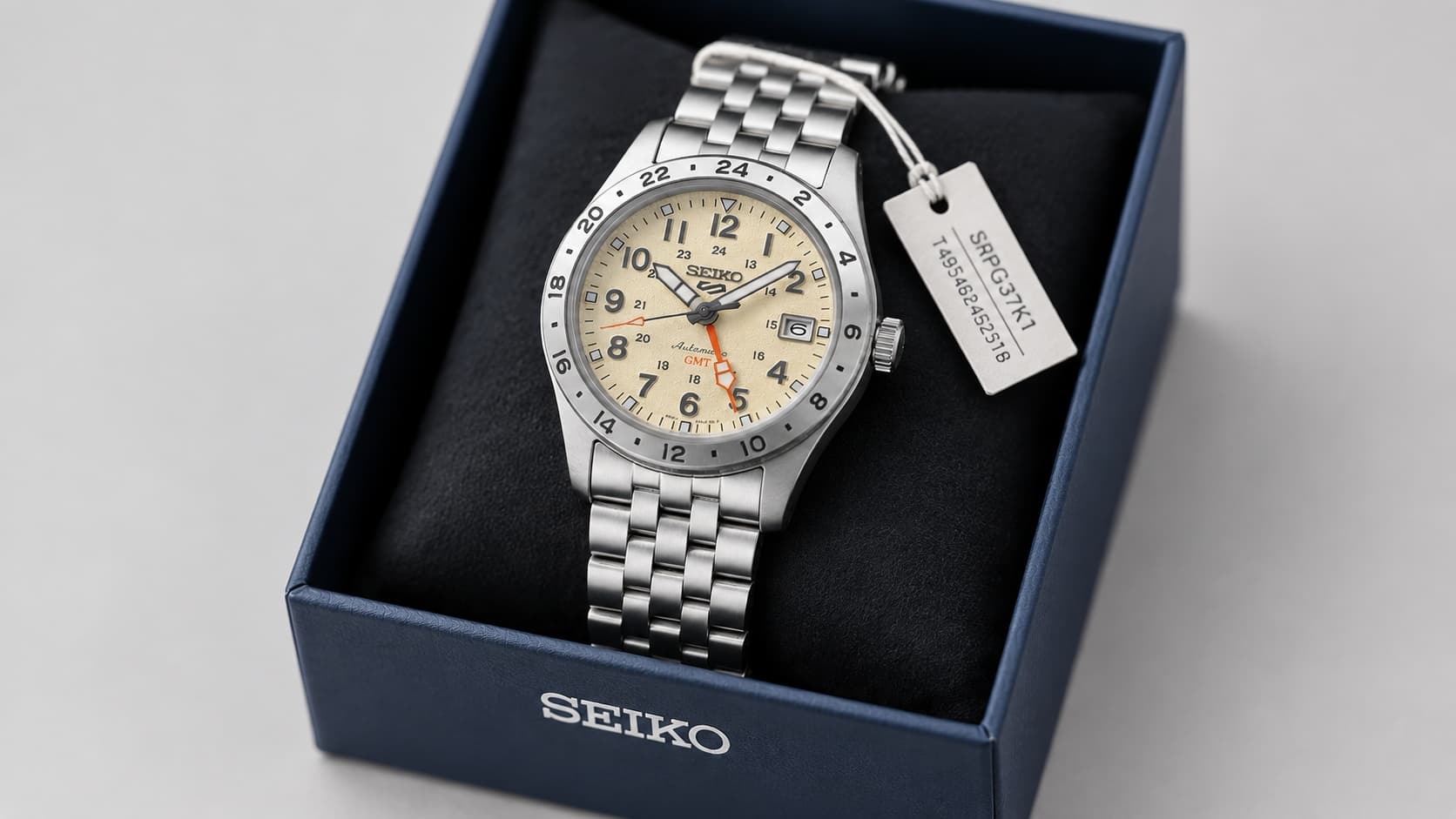
A retailer might create something like “SEK-5-BLU-ST” for a Seiko 5 with a blue dial and a steel bracelet. None of those letters are official brand codes. They are simply shortcuts the store’s own team decided to use so their inventory makes sense to them.
Because there is no industry rulebook for building a SKU, formats vary wildly. There are no official rules on how a business develops or uses its SKUs, so the same product can carry very different-looking codes depending on who is selling it. That is completely normal, and it does not affect the watch itself in any way.
Why Do Watch Brands and Retailers Use SKUs?
Retailers use SKUs to keep stock organized and to avoid selling something they do not actually have. SKUs play a key role in improving inventory tracking, financial analysis, and the overall efficiency of business operations. Without them, a store selling hundreds of watch variations would have no fast way to tell a black-dial version from a white-dial version once both sat in the same stockroom.
SKUs also help behind the scenes in ways shoppers rarely notice. A good system lets a business quickly check which watches are selling well, which ones are running low, and which ones need reordering. It speeds up returns too, since a staff member can pull up the exact product just by scanning or typing the code.
A SKU is not the same as a barcode, even though the two often work together. A barcode is a visual pattern of lines that a machine scans, while a SKU is the alphanumeric code behind it, and a SKU can be represented as a barcode without every barcode being a SKU. On a store shelf, scanning the barcode is often just a fast way of pulling up that product’s SKU in the system.
SKUs also matter more today because so many watches sell across several channels at once. The same watch might be listed on a brand’s own website, inside a department store, and on a jewelry retailer’s site all at the same time. Each of those sellers runs its own inventory system, so each one assigns that watch its own SKU, even though the reference number from the manufacturer never changes.
Where Can a SKU Be Found on a Watch Purchase?
A watch’s SKU usually appears on the product listing, the receipt, or the packing slip that comes with an order, rather than on the watch itself. Retailers print it wherever it helps their own staff process the sale and manage the stockroom.
A SKU is not typically engraved on the caseback or printed on the dial. That space is reserved for the manufacturer’s own information. The reference number and the serial number are usually the numbers that appear on the watch case or on a tag attached to it, since those come from the brand rather than the shop.
Having the SKU on hand speeds up customer service inquiries about an order. It lets the seller pull up the exact item in seconds instead of requiring a description of the color and strap all over again.
For purchases made through an online account, the SKU is often visible in the order history too, right next to the product name and image. Saving or screenshotting it before a return or exchange can shave a few minutes off the process later.
Does a SKU Affect a Watch’s Value or Authenticity?
A SKU has no effect on a watch’s authenticity or resale value. It exists purely for the retailer’s own bookkeeping, so it carries no weight with appraisers, collectors, or the brand that made the watch.
Confirming that a watch is genuine, or figuring out what it is worth, relies on the reference number and serial number instead. A reference number defines the model and applies to every watch of that exact type, while a serial number is unique to each individual watch and serves as a production and ownership record. Those two codes come straight from the manufacturer, which makes them useful for verification in a way a store-created SKU never can be.
A SKU that looks different between two invoices for what appears to be the “same” watch is nothing to worry about. It almost always just means the watches came from different retailers, each with its own internal labeling habits.
Can a SKU Be Used to Compare Prices Across Retailers?
No, a SKU is not useful for comparing prices between different stores. Because each retailer builds its own SKU system, the same exact watch can carry a completely different code at every store that sells it, which makes SKUs impossible to match up when shopping around.
The reference number is the code to use for comparing prices across multiple sellers instead. Since it comes from the manufacturer and never changes, that number can be searched on any retailer’s site with confidence that the listing is the identical model, material, and features.
Frequently Asked Questions
Is a SKU the same as a serial number?
No. A SKU is created by the retailer to track inventory, while a serial number comes from the watch manufacturer and identifies one specific, individual watch. The serial number is far more important for proving ownership or checking a watch’s production history.
Can two different watches share the same SKU?
They should not. A properly managed SKU system assigns a unique code to each distinct product variation, so a black-dial version and a blue-dial version of the same watch will normally get two separate SKUs, even from the same retailer.
Do watch brands create SKUs themselves?
Usually not for the public-facing codes shoppers see online. Brands create reference numbers and serial numbers. SKUs are typically built by whichever retailer or distributor is selling the watch, purely for their own inventory system.
Why do SKUs look different for the same watch on different websites?
Because each retailer designs its own SKU format. There is no shared standard across the industry, so one shop’s shorthand for “blue dial” might look nothing like another shop’s shorthand for the same feature.
Does the SKU matter when filing a warranty claim?
Not usually. Warranty claims are almost always processed using the reference number and serial number, since those come directly from the manufacturer. The SKU mainly helps the retailer locate the original order faster.
The Bottom Line
A watch’s SKU is nothing more than a retailer’s internal shortcut for keeping shelves and spreadsheets in order, and it has no bearing on the watch’s quality, authenticity, or resale value. Proving what a watch actually is relies on the reference number and serial number from the manufacturer, while the SKU exists solely to help a store find an order a little faster.