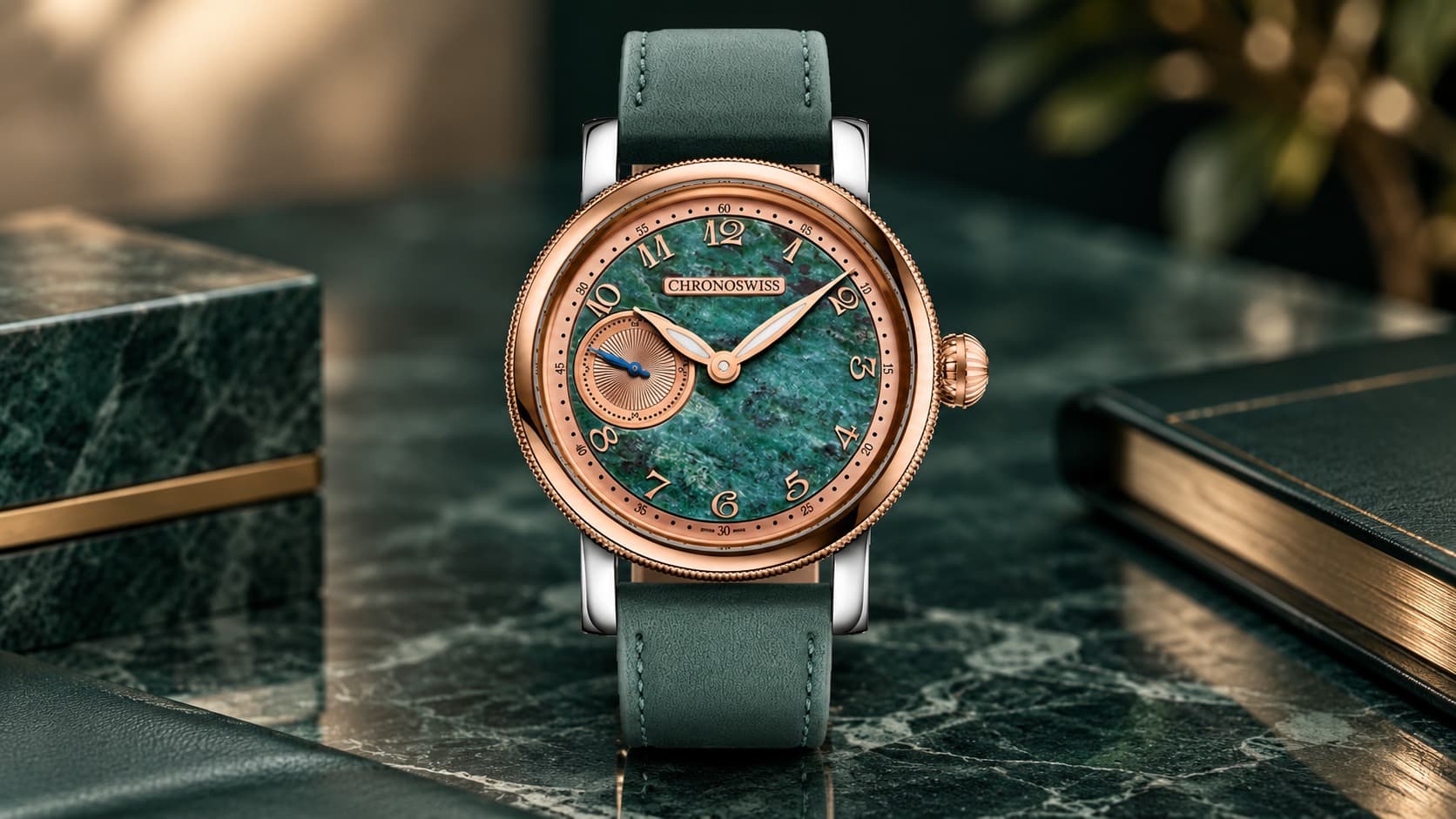
Chronoswiss is one of the few watch brands recognizable from across a room. The oversized crown, the fluted bezel that looks like the edge of a coin, and the split-up dials on many of its models make it stand apart from almost every other Swiss watchmaker. Founded in the early 1980s, right when quartz watches were taking over the world, Chronoswiss bet everything on old-fashioned mechanical watchmaking, and that bet turned it into one of the most recognizable independent brands in horology. Its lineup ranges from heritage regulator pieces to oversized pilot-style watches, each carrying a distinct part of the brand’s identity.
How Chronoswiss Started and Grew
Chronoswiss was founded in Munich, Germany, in 1983 by a watchmaker named Gerd-Rüdiger Lang. He had worked for Heuer (now TAG Heuer) and had spent years around chronograph movements before starting his own company. Most of the watch industry was moving toward cheap, battery-powered quartz watches at the time, so Lang went the opposite direction on purpose.
His first watch was a big deal in the industry. It combined a mechanical chronograph with a moon phase display and a clear case back, so owners could watch the tiny gears moving inside. That combination had never been done before in one wristwatch. Because Lang wanted the “Swiss made” reputation for precision but started his company in Germany, he built the name Chronoswiss from the Greek word for time, “chronos,” and the word “Swiss.”
The brand kept inventing new mechanisms through the 1990s, which is often overlooked next to its regulator fame. The Kairos Chronograph (1991) put the hour and minute display off to one side, the Rattrapante (1992) added a split-seconds function that lets a watch time two events at once, and the Opus (1995) became the first serially produced automatic chronograph with a fully skeletonized movement. The Delphis followed in 1996, mixing a digital hour window, a retrograde minute hand, and a normal small-seconds dial into one watch, a combination no brand had built before. Several of these models won “Watch of the Year” awards from German watch magazines during that decade, cementing Chronoswiss as a genuine innovator rather than just a nostalgia brand. In 2012, the company was bought by Swiss entrepreneur Oliver Ebstein, and the headquarters moved from Munich to Lucerne, Switzerland, where it remains a small, independent watchmaker today.
Signature Features of Chronoswiss Watches
Chronoswiss watches all share a handful of design details that tie the whole collection together, no matter the price point. These details explain why the brand is so easy to recognize and why collectors care about it.
The most obvious feature is the onion crown, an oversized, rounded winding crown that is easy to grip even with gloves on. Next to it, most models use a fluted or “coin-edge” bezel, a ring of small ridges around the case that echoes old pocket watches. Long, sloped lugs (the parts that connect the case to the strap) and a clear sapphire case back that shows off the movement round out the signature look.
That regulator display, where the hours, minutes, and seconds each get their own separate sub-dial instead of sharing one center point, is the brand’s biggest claim to fame. It comes from old master clocks that factories used to keep their workers’ watches accurate, and Chronoswiss was the first company to shrink that layout down for the wrist. No other Swiss brand has built as many variations around this one historic complication, and it remains the feature most associated with the Chronoswiss name almost four decades after it first appeared.
Chronoswiss also does more of its finishing in-house than many similarly sized brands. Its Lucerne headquarters includes a working area sometimes called the “House of Chronoswiss,” where craftspeople still cut guilloché patterns and fire enamel dials using traditional tools. This explains why even the brand’s more affordable pieces carry hand-finished details normally found on watches costing far more.
Chronoswiss does not build its movements entirely from scratch the way a handful of top-tier manufactures do. Most of its calibers start as a base movement from an outside supplier, historically ETA or Enicar, which Chronoswiss then modifies, decorates, and often fits with its own in-house modules, such as the regulator display module or a retrograde function. This is a common and respected approach among independent watchmakers of Chronoswiss’s size, and it keeps prices more reasonable than fully in-house calibers would, though it does mark a real distinction from brands that manufacture every part of their movements internally.
Best Chronoswiss Watch Models
Chronoswiss Régulateur (Regulator Classic)
The Régulateur is the watch that made Chronoswiss famous, and it is still the best starting point for understanding the brand. Launched in 1987, it split the dial into three parts: a large central minute hand, a small hour sub-dial, and a small seconds sub-dial, both sitting off-center.
The design was inspired directly by old precision clocks used in watchmaking workshops, where separating the hands made it easier to read the exact time at a glance. The very first Régulateur ran on a hand-wound movement, but Chronoswiss soon switched to an automatic caliber it named the C.122, built from a modified Enicar ébauche, and kept variations of that basic architecture running for decades while updating case size and dial finishing.
New pieces in this line generally sell in the low thousands of dollars, while vintage examples from the 1980s and 1990s are popular with collectors hunting for an original, early Chronoswiss. Because the Régulateur was the brand’s very first regulator model, older examples in good condition with their original box and papers tend to hold collector interest even decades after they were made.
Chronoswiss Flying Regulator
The Flying Regulator is the modern reinvention of that original idea, and it is arguably the most photographed Chronoswiss model today. Instead of flat sub-dials, the hour and seconds displays appear to float above the main dial, giving the watch a three-dimensional, almost architectural look.
Chronoswiss has released dozens of versions of the Flying Regulator over the years, including skeletonized versions that expose the gear train, colorful limited editions, and an “Open Gear” line with visible wheels turning behind the dial. Some Open Gear editions add a retrograde seconds function, where the seconds hand sweeps across an arc and then jumps back to zero instead of moving in a full circle, adding a small piece of mechanical theater to an already busy dial. The case typically measures around 41mm, keeps the brand’s signature fluted bezel and onion crown, and uses sapphire crystal on both the front and back with roughly 100 meters of water resistance.
Prices for new Flying Regulator models generally start around $8,000 to $9,000 for steel limited editions and rise toward $20,000 or more for precious-metal versions like the Flying Regulator Manufacture in rose gold. Most releases in this line are limited to a set number of pieces, often 30 to 50 examples, a detail collectors interested in numbered editions tend to track closely.
Chronoswiss Timemaster
The Timemaster takes Chronoswiss in a completely different direction: rugged, oversized, and built for legibility rather than delicate finishing. It borrows visual cues from military pilot watches, with a large lumed dial, bold numerals, and a bidirectional rotating bezel.
At 44mm across, it is one of the largest watches Chronoswiss makes, and some versions run on Caliber 672, a manual-wind movement based on the classic ETA/Unitas 6497 pocket-watch design, modified with a hacking seconds function and a swan-neck fine regulator so the watch can be set to the exact second and adjusted for accuracy. Automatic and chronograph versions use different movements, including a GMT chronograph built on Caliber C.754 that adds a second time zone tracked on the bezel.
Because it comes in both automatic and manual-wind versions, chronograph editions, and different dial colors, the Timemaster has a wide price range, generally starting in the low thousands and rising toward $10,000 or more for GMT chronograph models. It suits buyers who want a Chronoswiss with a tool-watch feel rather than the dressier regulator look, though its size and heavy crown read as bold even by Chronoswiss standards and are best judged in person rather than in photos.
Chronoswiss Sirius and Pulse Collections
Not every Chronoswiss watch uses a split-dial layout. The Sirius and Pulse collections offer conventional three-hand and chronograph watches for people who want the brand’s craftsmanship without the regulator display.
These models still carry the fluted bezel and onion crown, but with a cleaner, more traditional dial. The GMT version within the Pulse line tracks a second time zone and is finished with hand-guilloché work, a technique where fine patterns are engraved into the metal before the watch is assembled, and its top editions use enamel dials set in gold cases. Because Chronoswiss does much of this finishing work in its own workshop in Lucerne, these pieces highlight the brand’s craft skills even though the overall design reads as far more understated than the Flying Regulator.
This part of the lineup also carries forward some of Chronoswiss’s less regulator-focused history. Earlier three-hand and chronograph models like the Kairos, which put its hour and minute display off to one side rather than in the center, and the reversible Cabrio case from the early 1990s showed that the brand could design outside the regulator format when it wanted to. The Sirius and Pulse lines continue that tradition today for buyers who want Chronoswiss’s build quality without the split-dial layout.
Chronoswiss Flying Grand Regulator Skeleton
For collectors who want to see everything happening inside the watch, the Flying Grand Regulator Skeleton removes almost all of the dial, exposing the movement’s bridges, wheels, and the floating regulator sub-dials all at once.
This is one of the most complex watches in the current Chronoswiss lineup, combining the brand’s signature display with open-worked, hand-finished components. Related Open Gear Grand Regulator models with retrograde seconds functions have retailed in the range of roughly CHF 8,800 to CHF 9,900 (around $9,000 to $10,000) when new, and skeletonized or precious-metal tourbillon versions of the Grand Régulateur push well past $20,000. It is aimed squarely at people who already know and want a regulator watch rather than first-time buyers, since the open-worked dial takes some getting used to compared to the brand’s simpler models.
Chronoswiss Tourbillon Régulateur
At the very top of the collection sits the brand’s tourbillon regulator, which pairs the split-dial regulator layout with a tourbillon, a rotating cage that holds the escapement and balance wheel to help fight the effects of gravity on accuracy.
Chronoswiss has produced several versions of this watch over the years, including gold-cased and skeletonized editions, and the brand describes its early Régulateur à Tourbillon as the first tourbillon built with both a regulator dial and a cantilevered tourbillon cage, meaning the cage is supported from only one side instead of two. Because tourbillons are complicated and expensive to make by hand, these pieces are limited in number, often produced in runs of a few dozen, and priced well into the tens of thousands of dollars, with skeletonized full-set examples on the secondary market reaching over $35,000. They represent the brand’s flagship engineering rather than an everyday option.
Chronoswiss Watches Compared
| Model | Signature Feature | Case Size | Best For |
|---|---|---|---|
| Régulateur | Classic split-dial regulator | ~38-40mm | Entry point into the brand’s heritage design |
| Flying Regulator | Floating, 3D regulator sub-dials | ~41mm | Collectors who want the modern Chronoswiss look |
| Timemaster | Oversized, lumed, tool-watch styling | 44mm | Buyers who want legibility over dress-watch elegance |
| Sirius / Pulse | Traditional three-hand or GMT dial | ~38-41mm | People who want Chronoswiss craft without the regulator look |
| Flying Grand Regulator Skeleton | Open-worked movement, floating dials | ~44mm | Advanced collectors who want to see the mechanics |
| Tourbillon Régulateur | Regulator dial plus tourbillon | ~38mm | Buyers seeking the brand’s top-tier complication |
Best Chronoswiss Watch for Your Style
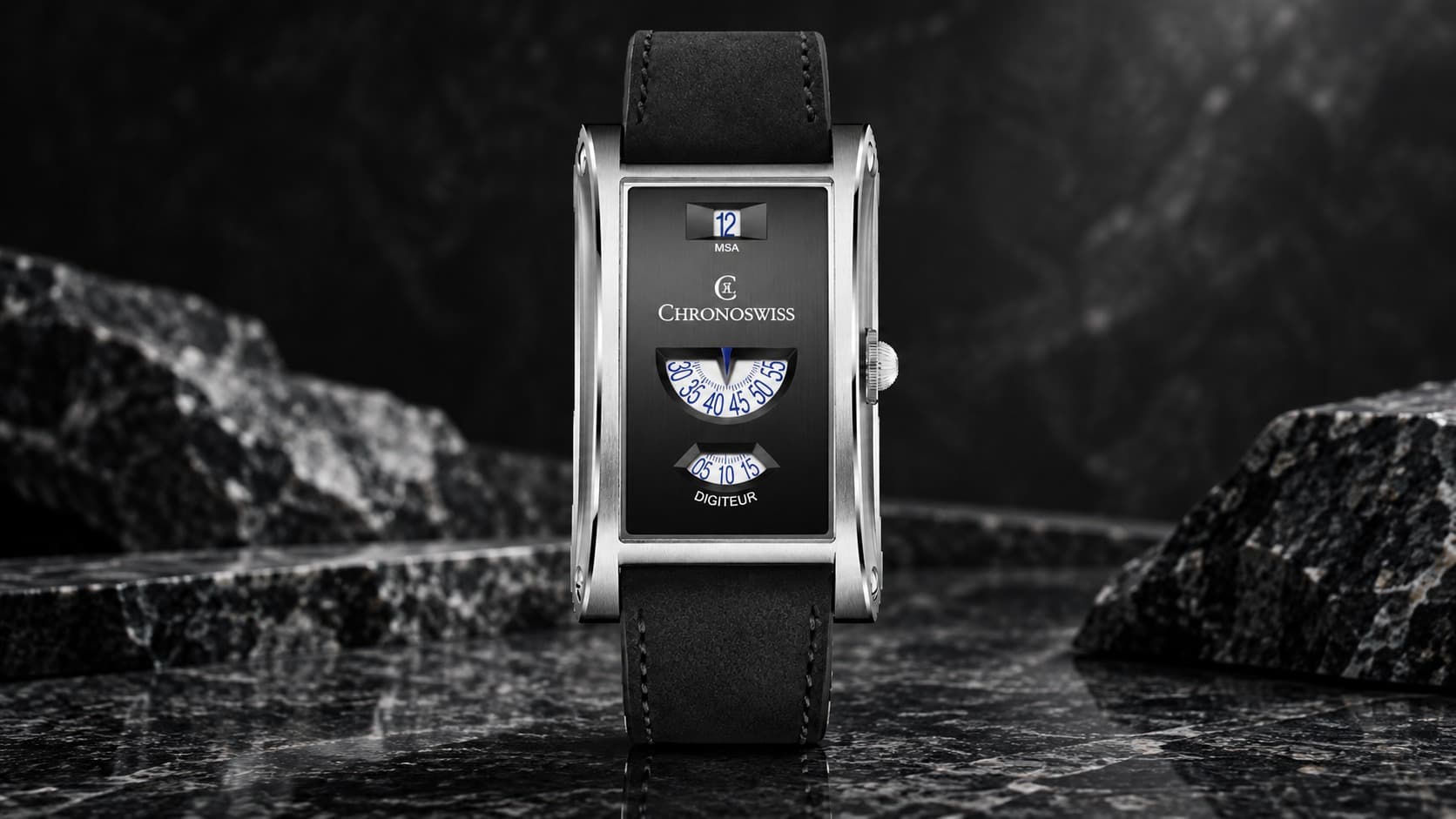
Chronoswiss is not a brand built for blending in. Every model, even the simpler three-hand pieces, carries visible design choices that set it apart from mainstream Swiss watches, which makes the amount of attention a watch draws a real factor in choosing between models.
Buyers drawn to a watch that looks like a small, moving piece of art tend to gravitate toward the Flying Regulator or the skeletonized models. Those who want something suited to hiking, traveling, or working with their hands are usually better served by the Timemaster’s larger case and stronger legibility. Collectors more interested in the brand’s history than its boldest modern designs often look toward an original Régulateur from the 1980s or 1990s, the watch that started the company.
Frequently Asked Questions
Is Chronoswiss a luxury watch brand?
Yes, Chronoswiss is considered an independent luxury watch brand. It sits below giants like Rolex or Patek Philippe in size and recognition, but its watches are hand-finished in Switzerland and its complicated pieces, like the tourbillon regulator, compete with other high-end independent watchmakers.
What does the regulator display on a Chronoswiss watch actually do?
A regulator display separates the hour, minute, and second hands into different positions on the dial instead of stacking them on one center axis. This layout comes from old precision clocks, and Chronoswiss made it famous by shrinking it down into a wristwatch starting in 1987.
Why do Chronoswiss watches have such a big crown?
The oversized “onion” crown is a signature design choice, not just a practical one. It makes the watch easier to identify at a glance and easier to wind or adjust, especially with gloves on, and it has appeared on nearly every Chronoswiss model since the brand’s earliest years.
Does Chronoswiss make its own watch movements?
Not entirely. Chronoswiss builds most of its calibers on outsourced base movements, historically from ETA or Enicar, which it then modifies, hand-finishes, and often fits with its own in-house modules for functions like the regulator display. This approach is common among independent watchmakers of Chronoswiss’s size and keeps prices more accessible than a fully in-house caliber would.
Are Chronoswiss watches a good investment?
Chronoswiss watches are generally bought for their design and craftsmanship rather than as an investment. Because the brand is smaller and less widely traded than major Swiss houses, resale values can vary a lot depending on the specific model, condition, and whether it comes with its original box and papers.
Where are Chronoswiss watches made?
Chronoswiss watches are made in Lucerne, Switzerland, where the brand has been headquartered since 2012. The company was originally founded in Munich, Germany, in 1983, before Swiss entrepreneur Oliver Ebstein bought the brand and relocated it.
The Bottom Line
Chronoswiss built its entire identity around one idea: mechanical watchmaking was worth saving, even when the rest of the industry was moving to quartz. That idea shows up across the lineup, from the original Régulateur that introduced the split-dial layout in 1987, to the modern Flying Regulator that turned the same concept into a three-dimensional design, to the rugged Timemaster built for buyers who want size and legibility over delicate dress-watch styling. Across every model, the brand stays defined by one recognizable silhouette, an oversized crown, a fluted bezel, and a genuine commitment to mechanical watchmaking that has not changed since 1983.