Every March, green clovers show up on t-shirts, greeting cards, and jewelry, and the words “shamrock” and “four-leaf clover” get used interchangeably by most people, even though they don’t mean the same thing. One is a symbol of Ireland with roots in religious teaching, and the other is a rare genetic accident that has been treated as a good-luck charm for centuries. Knowing the difference makes it easier to choose the right piece when it comes to clover-themed jewelry, and it remains a small but frequently misunderstood detail of Irish tradition.
What Is a Shamrock?
A shamrock is a small clover plant with three leaves, and it’s the official plant symbol of Ireland. The word itself comes from the Irish word seamróg, which simply means “little clover.” Shamrocks grow in thick clusters in fields and lawns, so finding one is not special or rare at all.
Shamrocks are tied closely to Irish history and to Saint Patrick, the patron saint of Ireland. According to a well-known legend, Saint Patrick used the three leaves of a shamrock to explain the idea of the Holy Trinity — the Father, the Son, and the Holy Spirit — to people he was teaching about Christianity. Most historians agree this is more of a popular story than a proven historical fact, since there isn’t solid evidence linking Saint Patrick himself to the tale. Whether or not the story is exactly true, it’s why the shamrock has stuck around as a symbol of faith for so long.
There’s also some genuine scientific debate about which exact plant counts as a “true” shamrock. Botanists haven’t settled on one single species, and a few different plants get sold under the shamrock name each spring — some closer relatives of clover, and others that only look similar from a distance. Even in Ireland, there isn’t one agreed-upon species — it’s more of a cultural idea than a strict scientific label.
What Is a Four-Leaf Clover?
A four-leaf clover is a clover plant that grew an extra leaf by accident. Most clover plants only grow three leaves, so when a fourth one shows up, it’s considered rare and special. The odds of stumbling across one are usually put at around 1 in 10,000, which is exactly why finding one feels like such a big deal.
That fourth leaf isn’t magic — it’s a genetic mutation. An uncommon recessive gene occasionally causes an extra leaflet to form, and it shows up in the very same clover species that normally grows the standard three-leaf shamrock shape. Because they pop up randomly and rarely, people tend to stumble on just one at a time rather than finding a whole patch of them.
The four-leaf clover’s lucky reputation actually goes back further than most people realize. Long before it became a St. Patrick’s Day trinket, the ancient Celts believed a four-leaf clover could help ward off evil spirits and bad luck, not just attract good fortune. That protective idea eventually faded into the background, leaving the simpler, more familiar version of the symbol that people know today: find one, and good things are supposed to follow.
A shamrock is always a three-leaf clover. A four-leaf clover is a rare mutation of that same type of plant. Every four-leaf clover started out as the kind of plant a shamrock comes from — it just grew one extra leaf.
Shamrock vs. Four-Leaf Clover: Key Differences
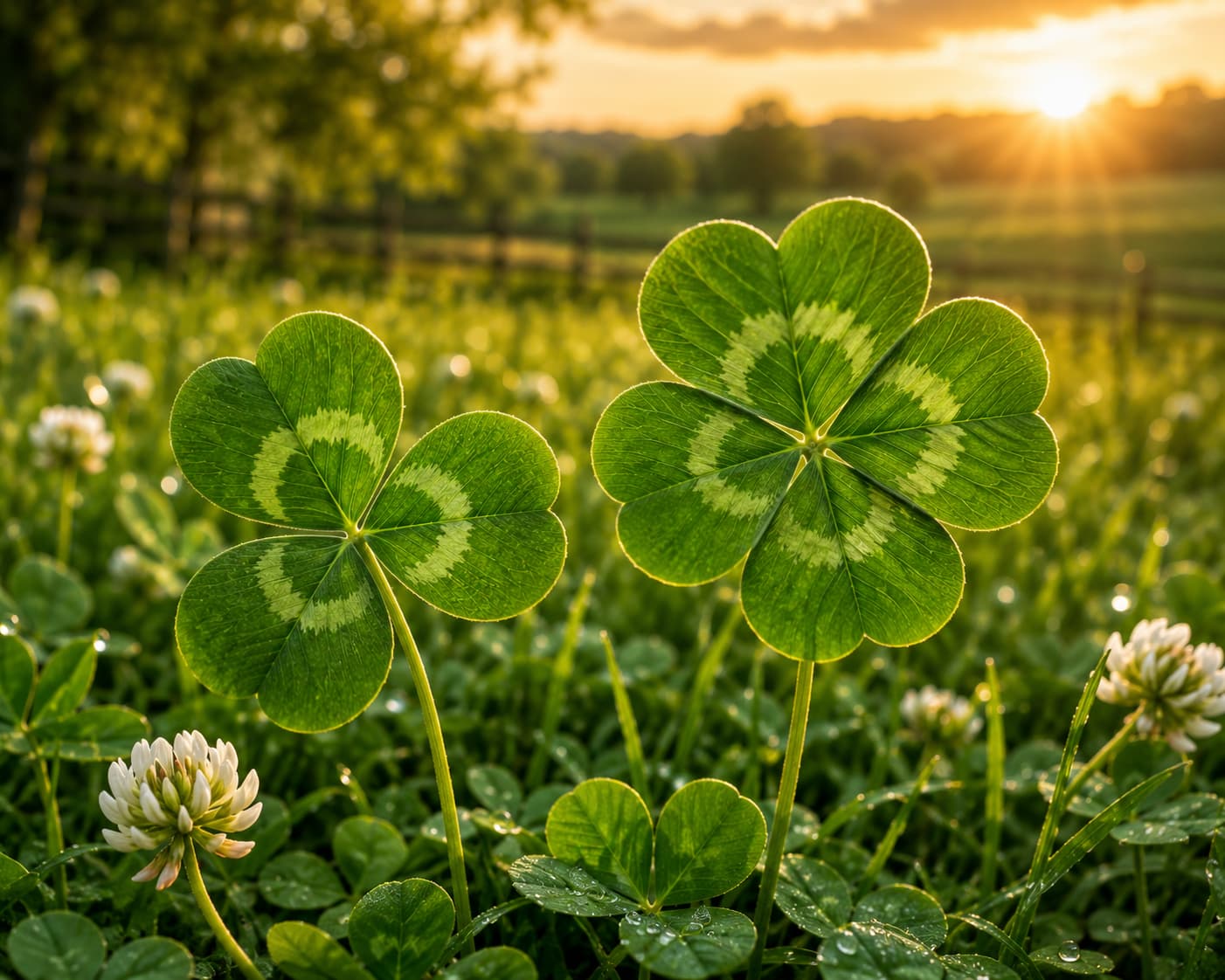
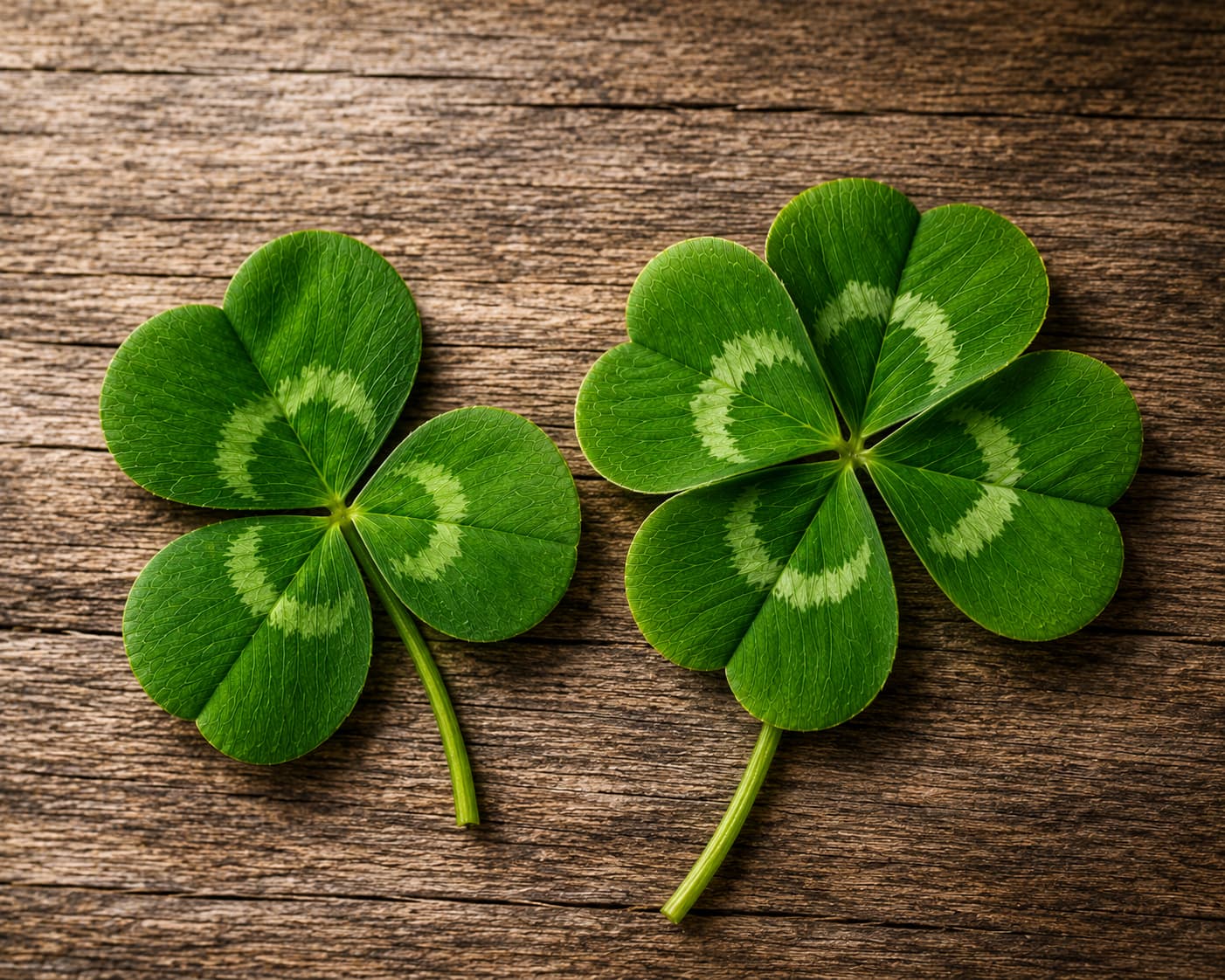
The most obvious difference is easy to spot: shamrocks have three leaves, and four-leaf clovers have four. But the two symbols split apart in almost every other way too, from rarity and growth pattern to the beliefs attached to each one.
| Shamrock | Four-Leaf Clover | |
|---|---|---|
| Leaf count | Three | Four |
| Rarity | Common, grows in clusters | Rare, roughly 1 in 10,000 |
| Symbolizes | Ireland, faith, the Holy Trinity | Good luck |
| Growth pattern | Grows in clusters | Found one at a time |
| Ancient belief | Used to teach the Holy Trinity | Once thought to ward off evil spirits |
| Best known for | St. Patrick’s Day | Being a lucky charm year-round |
Why Shamrocks and Four-Leaf Clovers Get Confused
People confuse them mostly because both are green, both come from the same plant family, and both show up around St. Patrick’s Day decorations. It’s an easy mistake to make since a lot of “shamrock” merchandise is actually drawn with four leaves instead of three.
A true shamrock is meant to have three leaves, and drawing it with four is technically incorrect, even though this happens constantly in mass-produced decorations and clip art. Because four-leaf clovers are seen as extra lucky, brands and designers sometimes add the fourth leaf on purpose to make a shamrock-themed product feel luckier, even if that’s not historically correct. Once the leaf count becomes the focus, though, spotting the difference is straightforward.
Shamrock vs. Four-Leaf Clover Jewelry Meaning
Jewelry designers borrow both symbols constantly, but the leaf count still carries meaning even once it’s shrunk down to a pendant or a ring. The choice between the two comes down to matching the piece to the message it’s meant to send, whether that’s heritage, hope, or something in between.
- Shamrock jewelry points toward heritage and identity rather than luck. It’s a natural pick for celebrating Irish ancestry, marking Saint Patrick’s Day, or giving to someone with a personal connection to Ireland’s history and traditions — the three leaves are about where someone comes from and what they believe, not chance.
- Four-leaf clover jewelry points toward hope and good fortune instead. It tends to work best as a gift for a specific moment — before an exam, a job interview, a move, a surgery, or a trip — since the whole idea behind the symbol is wishing someone a stroke of luck right when it’s needed.
- Mixed or ambiguous designs show up often in mass-market jewelry, where a “shamrock” charm is quietly drawn with four leaves for extra visual appeal. Counting the leaves before buying is the easiest way to confirm which symbol — and which meaning — a piece actually represents.
Neither symbol is the “better” choice, since they aren’t competing for the same job. A shamrock carries a sense of identity and belief that doesn’t shift from day to day, while a four-leaf clover carries a specific wish for good fortune tied to a single moment. The message a piece is meant to send is really what decides which symbol fits.
Frequently Asked Questions
Is a shamrock just a young four-leaf clover?
No. A shamrock isn’t a four-leaf clover that hasn’t finished growing — it’s simply the standard three-leaf form of the plant. The fourth leaf on a lucky clover comes from a random genetic mutation, not from extra growing time.
Do shamrocks only grow in Ireland?
No. Old Irish folklore claims that shamrocks are so tied to Ireland that they refuse to grow anywhere else, but that isn’t true — the plants commonly sold as shamrocks grow just fine in many other countries. The idea persists mostly as folklore rather than fact.
Why is a four-leaf clover considered lucky?
Its luck comes almost entirely from how rare it is. Because only about 1 in 10,000 clovers grows a fourth leaf, finding one has been treated as a special, fortunate event for generations, and that rarity is where the “lucky” reputation comes from.
What does each leaf on a four-leaf clover stand for?
A common tradition says the four leaves represent faith, hope, love, and luck, with the fourth leaf being the one that adds luck on top of the three qualities already tied to the shamrock. This isn’t an official rule, just a popular belief that’s been passed down over time.
Can a shamrock and a four-leaf clover come from the same plant?
Yes, in many cases. Since a four-leaf clover is simply a mutated version of a three-leaf clover, it’s entirely possible for a rare four-leaf specimen to grow in the same patch as ordinary three-leaf shamrocks.
Conclusion
Shamrocks and four-leaf clovers may share a family tree, but they stand for different things: one is a centuries-old symbol of Ireland and faith, built on three leaves that grow in abundance, while the other is a rare, four-leaved fluke that has long been treated as a sign of good fortune. The simplest way to tell them apart will always be counting the leaves — three points to heritage and tradition, four points to luck. Once that distinction is clear, a clover printed on a card or worn as a charm reads differently altogether.