A tiny padlock hanging from a chain looks simple, but it has been carrying big feelings for thousands of years. Long before it showed up on a necklace, a lock was a promise that something precious would stay safe, whether that was a treasure chest, a child’s life, or a lover’s heart. Today the same little shape shows up on runways, on punk rock jackets, and on the wrists of people who just like the way it clicks shut. Understanding where that meaning came from makes the jewelry a lot more interesting to wear.
What Does a Lock Symbolize in Jewelry?
A lock in jewelry almost always stands for protection, commitment, or a secret that’s being kept safe. Depending on the culture and the era, it has meant marriage, loyalty, childhood safety, or simply “this belongs to me and I’m not letting go.”
The reason a lock carries so much weight is pretty simple: a lock’s whole job is to keep something secure. When people started wearing tiny locks as jewelry, they weren’t locking up jewels or doors anymore. They were locking up feelings, promises, and memories instead. A closed padlock says something has been sealed, finished, or protected, which is exactly why it became such a popular way to say “this is permanent.”
The exact meaning still shifts depending on how the lock is worn. A lock given by one person to another usually points to love, trust, or a relationship milestone. A lock worn alone, chosen by the wearer for themselves, tends to lean more personal, standing for self-protection, independence, or a private promise that doesn’t need anyone else’s permission. Neither reading is more “correct” than the other, which is part of why the symbol has lasted so long.
Where Did Lock Symbolism Start?
Lock symbolism in jewelry likely started in ancient Rome, where finger rings shaped like keys let a person publicly show they controlled a household’s property or storerooms. Some historians also point to ancient China, where couples would clasp a lock onto a gate and toss the key away to represent being bound together forever, a tradition that still echoes today.
In Rome, keys mattered more than locks at first because holding the key to a house or storeroom was a visible sign of status. Someone who wore a key literally controlled access to valuable things, so the jewelry was a quiet way of broadcasting power. Locks came into the picture as the natural partner to that idea. If a key opened something, a lock was what kept it closed, and jewelers eventually started making both shapes small enough to wear.
By the 18th and 19th centuries, the lock had fully entered Western jewelry as its own symbol rather than just a companion to the key. European jewelers began working small padlocks into pendants, bracelets, and lockets, and wearers started treating the closed shape itself, not just the pairing with a key, as something worth putting on. That shift is really the moment lock symbolism became about emotion rather than ownership of property.
Locks as a Symbol of Love and Marriage
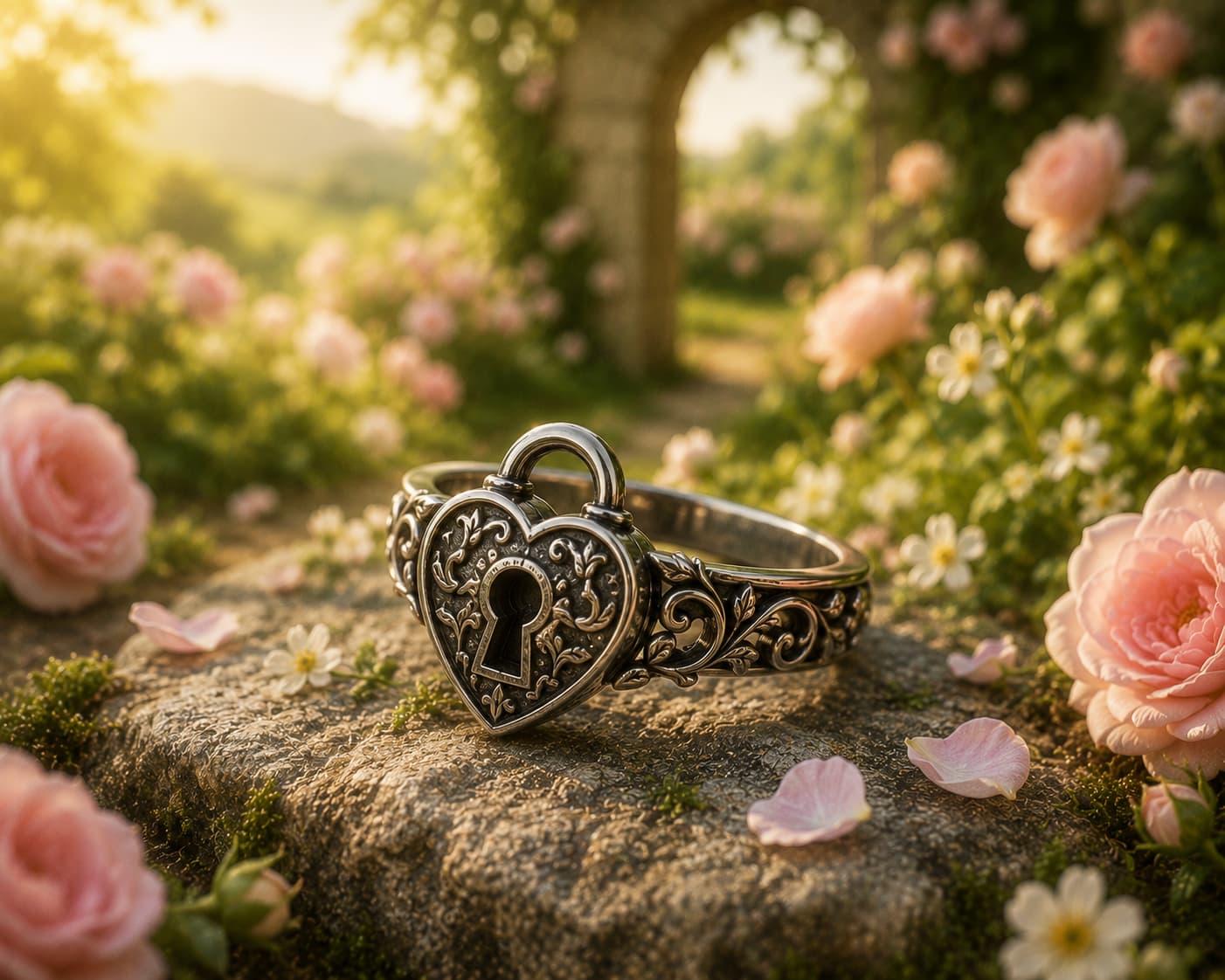
Locks became tied to romance partly because the idea translates so naturally: a lock that can’t be opened is a fitting stand-in for a love that isn’t supposed to end. Some jewelry historians trace this specific link back to ancient Rome, where decorative locks were reportedly exchanged as marriage tokens, though the clearest and best-documented evidence of locks as romantic symbols comes later, from Europe.
That connection between locks and lasting love didn’t fade with the Roman Empire. It resurfaced strongly during the 18th and 19th centuries, when European jewelers started making lock-shaped pendants and lockets as romantic gifts. Giving someone a lock, especially alongside its matching key, became a symbolic way of saying that something mattered enough to protect, which is really what committing to another person is all about.
A closed lock without its key isn’t a dead end. In jewelry, it usually means the opposite: something has been sealed for good, on purpose.
The Story Behind Love Lock Bridges
Love lock bridges became popular because couples started attaching personalized padlocks to bridge railings and throwing the keys into the water below, treating the ritual as a physical symbol of a relationship that can never be undone. The most famous example was Paris’s Pont des Arts, which became so covered in padlocks that part of its railing collapsed in 2014.
The tradition really took off in the mid-2000s and spread to cities including Paris, Rome, Seoul, and New York. By 2015, the Pont des Arts was holding an estimated 45 tonnes of metal, and Paris officials had to remove more than a million locks and replace the railings with glass panels to stop the practice from continuing. It’s a strange twist that a symbol of permanence ended up being too heavy to actually last, but the ritual itself has kept going in other cities and on other bridges around the world.
What’s the Difference Between Lock and Key Jewelry?
Lock and key jewelry usually comes as a matched pair because the two symbols complete each other: the key represents access, trust, and being let in, while the lock represents protection, security, and holding something safe. Wearing one on its own still carries meaning, but wearing them together tells a fuller story.
A key pendant is often meant to signal that the wearer has been granted access to something meaningful, whether that’s a person’s heart, a memory, or a new chapter in their life. A lock pendant flips that message around, standing for safekeeping and protection instead of access. Some couples split the pair, with one partner wearing the lock and the other wearing the key, as a playful way of showing they belong to each other.
Chinese Longevity Lock Meaning
A Chinese longevity lock is a small pendant, shaped like a padlock and usually crafted from silver, gold, or jade, that families placed on infants and young children as a spiritual safeguard. Wearing it was meant to anchor the child’s soul to the world and shield them from illness, misfortune, and an early death, making it one of the oldest protective uses of lock symbolism anywhere.
The custom traces back to the Ming dynasty and became especially popular in the 19th century, when silver became easier to access in China. Families didn’t give a longevity lock as decoration; they gave it as a spiritual safeguard, often engraving it with wishes for a long, healthy, and lucky life. Some versions were passed down for generations, turning a piece of protective jewelry into a family heirloom as well.
How Did Victorian Jewelers Used Lock Symbolism
Victorian jewelers used lock and key motifs as a kind of secret code, letting people express romantic feelings they weren’t always allowed to say out loud. This era was famous for treating jewelry like a coded love letter, and locks fit that style perfectly.
Small lock and key charms, lockets, and brooches let a Victorian suitor hint at devotion, secrecy, or a promise without ever putting it into words. A locket, a close cousin of the lock symbol, often held a photo, a portrait, or even a curl of hair from a loved one, tucked away and protected from the world exactly the way a locked box would be. This obsession with sentimental, hidden meaning is part of why lock symbolism has such an emotional pull even now, decades later.
How Designers Use Lock Symbolism Today
Modern designers use lock jewelry to represent everything from romance to rebellion to self-ownership, which shows just how flexible the symbol has become. The same shape that once represented belonging to someone else now just as often represents belonging to oneself.
The padlock also crossed into punk and alternative fashion decades ago, worn as a bold, hardware-inspired statement piece rather than a romantic gesture. Luxury houses picked up the motif too; Van Cleef & Arpels, for instance, built an entire watch around it in the 1930s called the “Cadenas,” designed so the case itself flipped shut over the dial like a tiny padlock, hiding the time from anyone but the wearer. Today the padlock shape appears in everything from delicate minimalist necklaces to chunky statement chains, proving a symbol doesn’t need to pick just one meaning to stay relevant.
Popular Types of Lock Jewelry
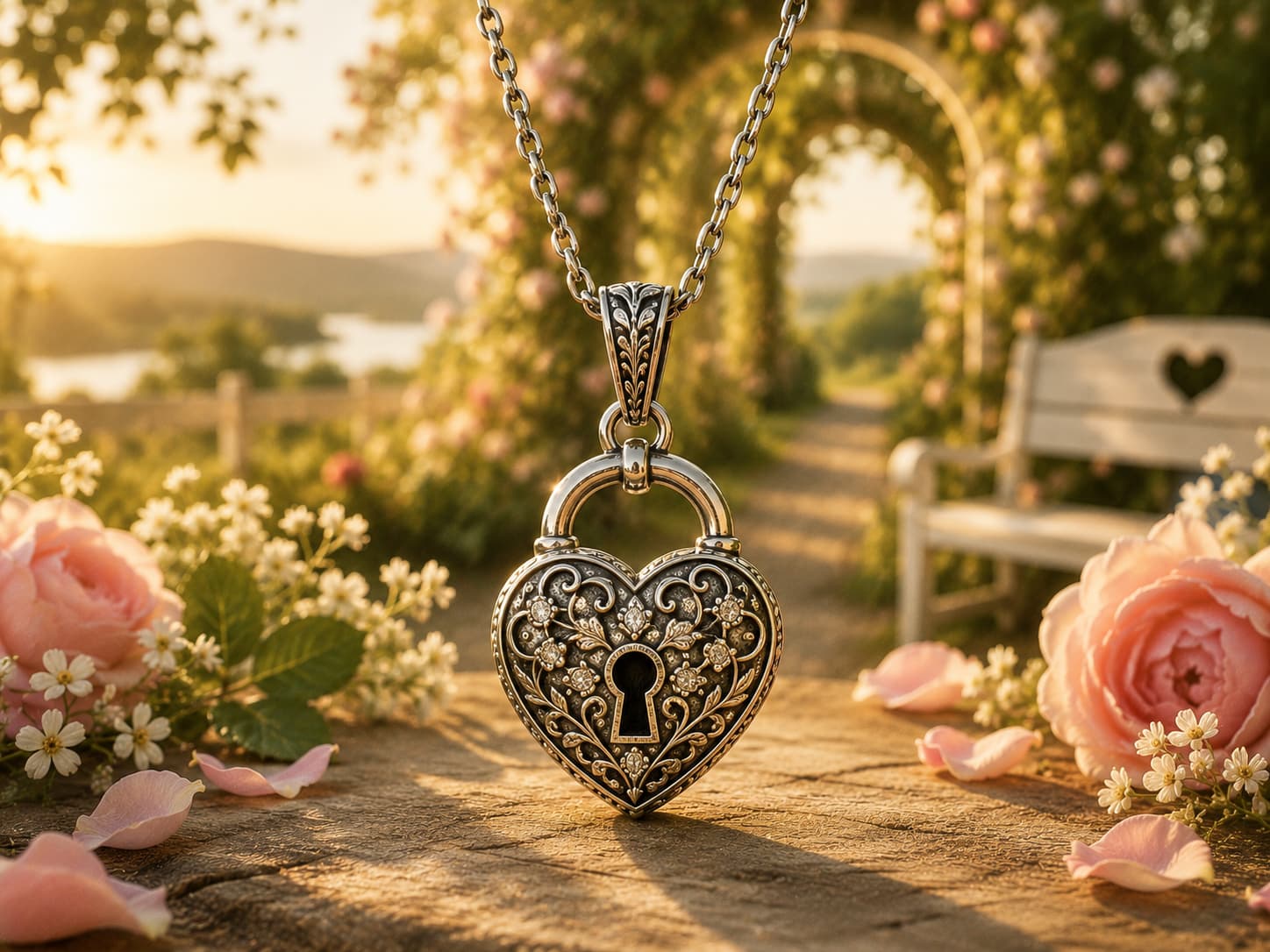
Lock symbolism shows up in almost every category of jewelry today, not just necklaces, which is part of why it feels so easy to find a piece that fits a specific style or occasion. Some versions stay close to the original padlock shape, while others use the idea of “locking” more loosely, like a clasp that can’t be opened without a special tool.
Common pieces include:
- Padlock necklaces – the most recognizable version, usually a small working or decorative lock on a chain, sometimes engraved with initials or a date
- Lock bracelets – often designed with a screw or tool-operated clasp so the piece can’t be casually removed, symbolizing a promise that stays put
- Lock charms – small padlock shapes added to a charm bracelet or layered necklace alongside other meaningful symbols
- Lock rings – less common but growing in popularity, often featuring a tiny padlock detail on the band or as the ring’s focal point
- Lock earrings – a subtler way to wear the symbol, usually as studs or small huggie hoops
- Carabiner-style locks – a modern twist that borrows from climbing gear, popularized by designers who reimagined the padlock as a bold, hardware-inspired clasp
Materials range from everyday stainless steel and gold vermeil to solid gold and platinum for finer pieces, with some designs adding gemstones or engraving to personalize the symbol even further.
Ways to Wear a Lock Jewelry
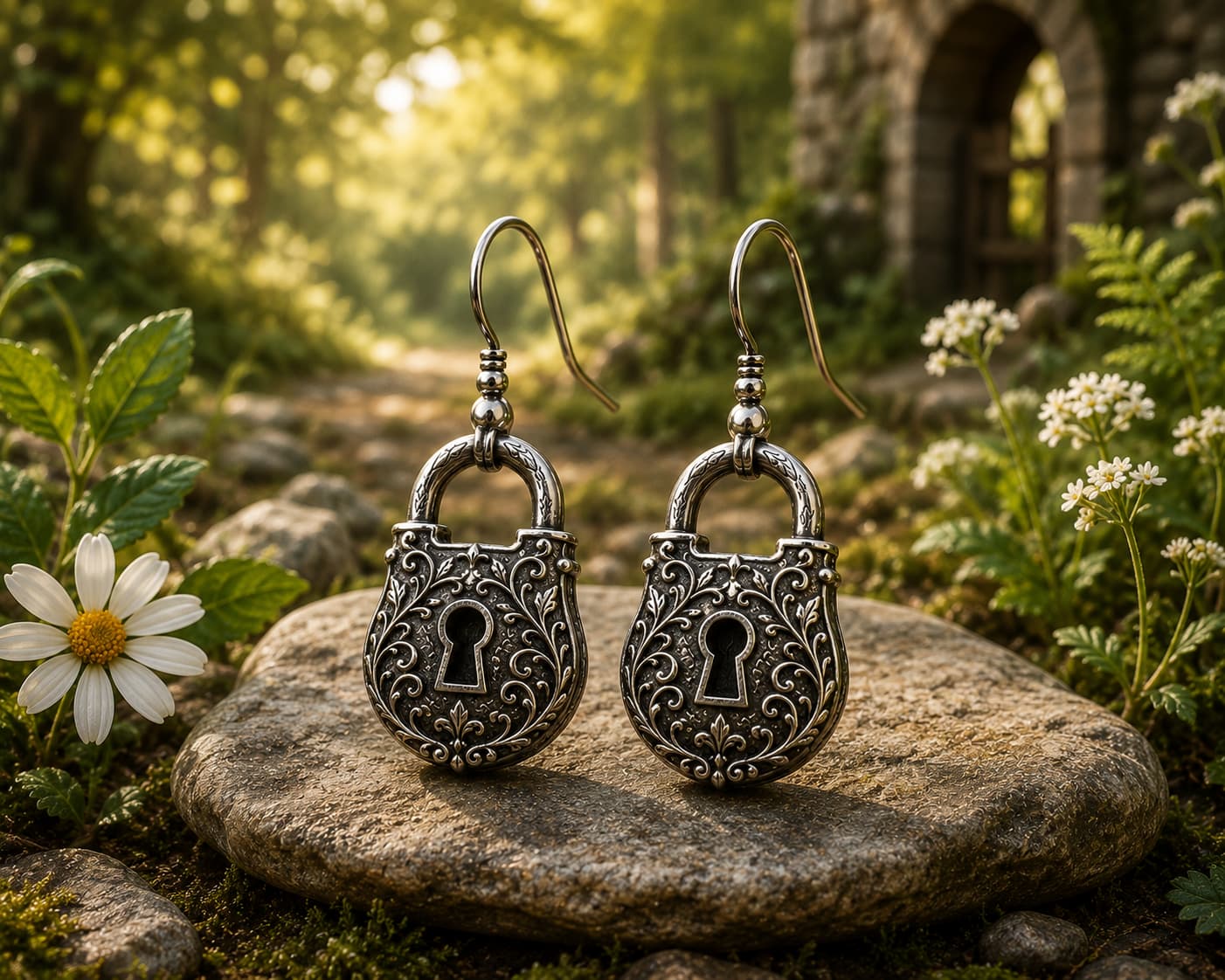
There’s no single “correct” way to wear lock jewelry, since the symbol works whether it’s dressed up, dressed down, worn solo, or paired with a matching key. What matters more is the meaning behind the piece.
A small lock pendant on a delicate chain reads as personal and sentimental, which makes it a natural gift for anniversaries, friendships, or milestones worth protecting. A larger, chunkier padlock charm on a thicker chain leans into the bolder, more fashion-forward side of the symbol, closer to its punk and streetwear roots. Either way, a lock is one of the few pieces of jewelry that quietly explains itself just by existing.
Frequently Asked Questions
Does a lock necklace mean you’re taken?
Not necessarily. While lock necklaces have deep roots in romance and commitment, today they’re worn just as often to represent self-protection, personal strength, or simple style rather than a relationship status.
What’s the difference between a lock and a locket?
A lock is typically a solid, closed shape worn as a symbol of security or commitment, while a locket is a hinged pendant designed to open and hold something inside, like a photo or a lock of hair. Both share the same root idea of protecting something valuable.
Is it bad luck to wear a lock without the key?
No, wearing a lock alone isn’t considered bad luck in any major tradition. In fact, throwing away or losing the key is part of the original symbolism in several cultures, representing a promise that’s meant to stay sealed forever.
Why do people throw padlock keys into rivers?
This comes from the love lock tradition, where couples attach a padlock to a bridge or gate and throw the key into the water below. It’s meant to represent a bond that can never be undone, since the lock physically can’t be reopened once the key is gone.
Can men wear lock jewelry?
Yes, lock jewelry isn’t limited to any gender. Its history includes Roman signet-style key rings worn by men, punk rock padlock necklaces worn by men and women alike, and modern unisex chain jewelry that plenty of men wear today.
Conclusion
Lock symbolism has survived for thousands of years because it does something few symbols manage: it explains itself at a glance. A closed lock always means the same basic thing, that something is being kept safe, whether that something is a marriage vow in ancient Rome, a child’s soul in imperial China, a secret crush in Victorian England, or simply a personal reminder to protect one’s own peace of mind. That’s the real reason lock and padlock jewelry keeps coming back into style. It’s not really about the metal shape at all; it’s about what people choose to lock away inside it.