Experiencing the frustration of a spinning ring is a common jewelry problem that affects many wearers. Whether it’s your engagement ring, family heirloom, or favorite statement piece, a constantly rotating ring is both annoying and concerning. Beyond the inconvenience of frequent adjustments, spinning rings face higher risk of damage and could potentially slip off without notice. This issue can affect anyone, regardless of the ring’s quality or price. Fortunately, there are many solutions available—from quick DIY fixes you can implement at home to professional, permanent alterations that will keep your treasured jewelry securely in place.
Why Do Rings Spin on Your Finger?
The spinning sensation you experience with your rings isn’t random—it happens for specific physical reasons related to both your finger anatomy and the ring’s design. Understanding these underlying causes will help you select the most effective solution for your particular situation. Most spinning issues stem from sizing mismatches, finger shape characteristics, ring design elements, and even environmental factors that affect how your jewelry fits throughout the day or across seasons.
- Incorrect ring size: The most common cause of spinning rings is simply that the ring is too large for your finger. When there’s excess space between the ring and your finger, it naturally moves around with hand movements. A properly sized ring should slide over your knuckle with slight resistance and fit snugly (but comfortably) at the base of your finger.
- Tapered fingers: Many people have fingers that are naturally wider at the knuckle and narrower at the base. This cone-shaped finger structure creates a particular challenge: the ring must be large enough to fit over the knuckle but will inevitably be loose where it actually rests on your finger.
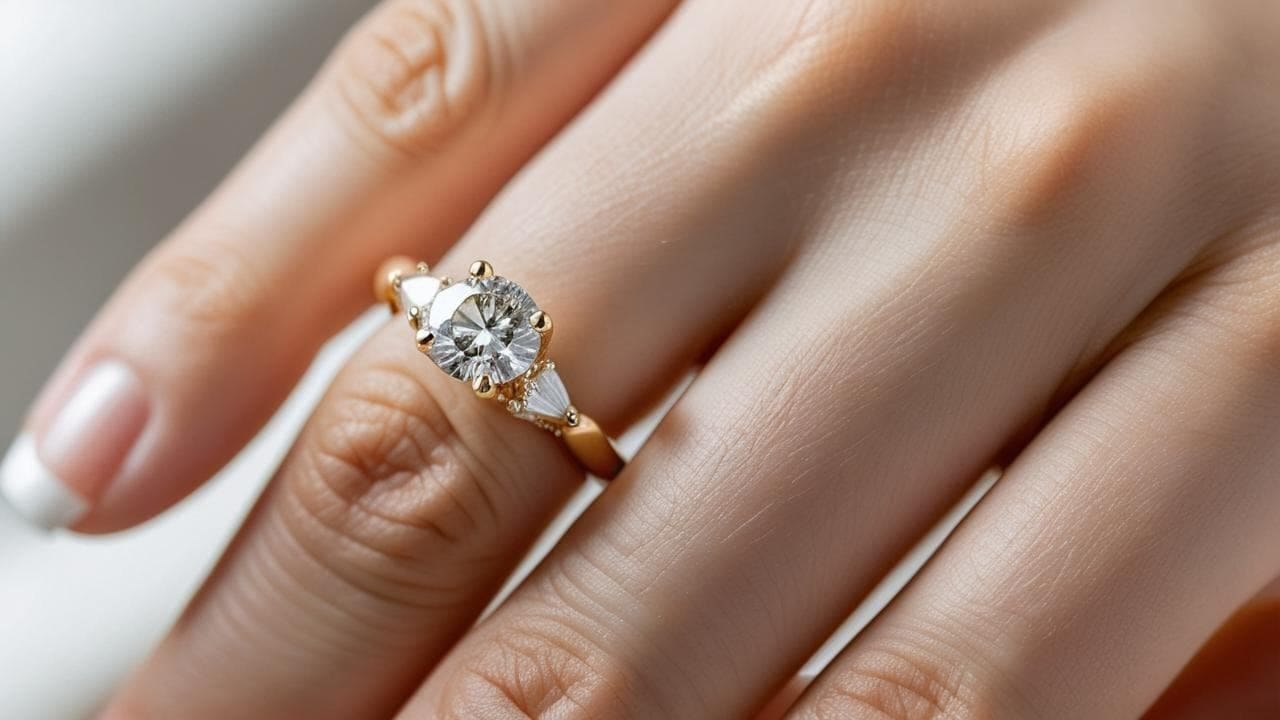
- Top-heavy ring design: Rings with large center stones, elaborate settings, or significant weight concentrated on the top portion tend to spin more frequently. This occurs because gravity naturally pulls the heavier section downward when there’s any space between the ring and your finger.
- Seasonal temperature changes: Cold weather causes blood vessels to constrict, making fingers temporarily smaller. Many people notice their rings fit more loosely and spin more in winter months or cold environments, even if they fit perfectly during warmer weather.
- Weight fluctuations: Even minor changes in body weight can affect finger size. Losing weight often results in slimmer fingers, while gaining weight typically increases finger circumference. This is why rings that once fit perfectly may begin to spin after weight changes.
- Medical conditions: Certain health conditions like arthritis can cause joint inflammation and knuckle enlargement, exacerbating the gap between knuckle size and finger base size, making proper ring fit challenging.
These factors often work in combination, making ring spinning a complex issue that sometimes requires multiple approaches to solve effectively. By identifying which specific factors affect your ring’s stability, you can select the most appropriate solutions for your unique situation.
Quick DIY Fixes for Spinning Rings
When your ring won’t stay in place but you need an immediate fix, several effective temporary solutions can provide relief without requiring a trip to the jeweler. These DIY methods are ideal for special occasions, seasonal changes, or while you’re deciding on a more permanent solution. Most utilize readily available household items or inexpensive products that can be implemented in minutes to keep your ring properly positioned.
- Ring guards/ring noodles: These small, transparent silicone or plastic tubes are designed to fit inside your ring band, effectively reducing its inner diameter. They typically cost under $10 for a multipack containing various sizes to fit different ring widths. To use, simply slide the correctly sized tube onto the inside bottom portion of your ring band. They’re nearly invisible when worn and can be easily removed without damaging your jewelry.
- Transparent spiral silicone coils: Similar to ring guards but with a spiral design, these clear coils wrap around the inside of your ring band. Their advantage is adjustability – you can cut them to the exact length needed for your specific ring and finger size. They’re particularly effective for rings with unusual shapes or varying band widths.
- Adhesive tape method: For an extremely quick fix using items you likely have at home, cut a small strip of transparent tape (like Scotch tape) and attach it to the inside bottom of your ring. While not as elegant as commercial solutions, this works in a pinch to create friction between your ring and finger. Medical or athletic tape provides a more skin-friendly alternative for sensitive skin.
- Clear nail polish layers: Applying several thin layers of clear nail polish to the inside bottom of your ring creates a built-up surface that narrows the ring’s diameter. Allow each layer to dry completely before adding the next. This solution typically lasts several days to a week before needing reapplication. Be aware that this method isn’t suitable for rings with porous gemstones like pearls or opals.
- Ring stacking: Wearing a tighter-fitting ring alongside your spinning ring can help lock both in place. This method works particularly well for engagement and wedding ring combinations, where the wedding band can help stabilize a top-heavy engagement ring. It also offers a stylish way to combine multiple rings while solving a practical problem.
- Temporary ring adjuster clips: These metal or plastic clips attach to the bottom of your ring shank, reducing the inner diameter. Unlike permanent sizing beads, these can be removed at any time and are useful when your finger size fluctuates seasonally.
These temporary solutions are excellent for addressing immediate ring spinning problems while you consider more permanent options. They’re affordable, non-damaging to your jewelry, and can be implemented or removed as needed to accommodate finger size fluctuations. For rings that only spin occasionally due to seasonal changes or specific activities, these methods may be all you need to maintain comfort and security.
Permanent Solutions to Stop Ring Spinning
When temporary fixes prove insufficient or inconvenient, professional permanent solutions offer lasting stability for your spinning rings. These modifications are performed by jewelers and actually alter your ring’s structure or dimensions to achieve a more secure fit. While they typically require an investment of both time and money, permanent solutions eliminate the need for constant adjustment and provide peace of mind that your valuable jewelry is securely in place.
- Professional ring resizing: The most straightforward solution for a ring that’s simply too large is professional resizing. A jeweler removes a small section of the band and joins the ends back together, creating a smaller circumference. This process typically costs between $50-$150 depending on the metal type and complexity. Most standard rings can be sized down by up to two sizes without compromising structural integrity. However, eternity bands with stones all around or rings with intricate patterns may not be suitable for this method.
- Sizing beads/speed bumps: Small metal balls or ridges can be permanently soldered to the inside bottom of your ring band. These create pressure points that keep the ring centered without actually changing the overall size. This option is ideal for people with large knuckles and smaller finger bases, as the ring can still slide over the knuckle but remains stable when in position. Sizing beads typically cost $25-$75 and are particularly effective for rings that spin but aren’t drastically oversized.
- Spring inserts: For rings that spin significantly, spring inserts provide a stronger solution than sizing beads. These U-shaped metal pieces fit inside the bottom portion of the ring band, creating tension against your finger. They compress slightly when sliding over larger knuckles, then spring back to hold the ring in place. This modification costs approximately $75-$150 depending on the metal and complexity.
- Euro shank modification: A Euro shank (or European shank) features a flat, squared-off bottom portion of the ring band rather than a completely round shape. This design prevents the ring from spinning by creating a flat surface that sits against your finger. Converting a traditional round shank to a Euro shank costs $100-$200 but provides excellent stability for top-heavy rings without changing the appearance from the top view.
- Hinged shank: For those with very significant differences between knuckle and finger base size, a hinged shank might be the best solution. This modification adds a small, nearly invisible hinge and clasp to the bottom of the ring, allowing it to open for placement directly onto the finger without passing over the knuckle. This specialized modification generally costs $150-$300 but solves even the most challenging ring spinning issues.
- Counterweight addition: For top-heavy rings with large stones, jewelers can add additional metal to the bottom portion of the band to counterbalance the weight. This redistribution helps prevent gravity from pulling the heavy portion downward. Costs vary widely depending on the metal type and amount needed but typically range from $75-$200.
These permanent modifications provide reliable, long-term solutions to ring spinning while preserving the beauty and integrity of your jewelry. The ideal option depends on your specific circumstances, ring design, and budget. Consulting with a professional jeweler can help determine which approach will work best for your unique situation while ensuring your precious jewelry remains protected during the modification process.
Spinning Solutions for Different Ring Types and Styles
Different types of rings present unique challenges when it comes to preventing spinning. Engagement rings, wedding bands, eternity rings, and vintage pieces each have distinctive characteristics that influence both why they spin and which solutions work best. Understanding these differences helps you choose the most effective and appropriate spinning prevention method for your specific ring style.
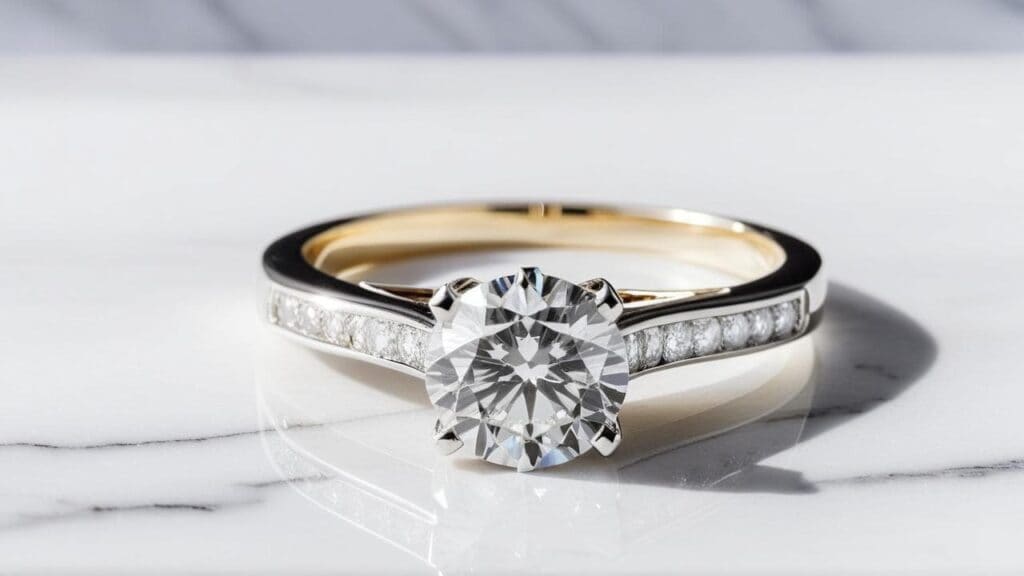
- Engagement rings with large center stones: The classic solitaire or halo engagement ring is particularly prone to spinning due to the weight distribution of a prominent center stone. For these rings, Euro shanks and counterbalance techniques work exceptionally well by addressing the fundamental weight imbalance. Sizing beads also prove effective while maintaining the ring’s original design integrity. For very large stones (2+ carats), consider combining multiple solutions like a Euro shank with sizing beads.
- Eternity bands and rings with stones all around: These cannot be traditionally resized by cutting the band, as this would damage the stone settings. For these rings, spring inserts or sizing beads are the preferred solution. Invisible ring adjusters also work well as a temporary fix. If purchasing a new eternity band, consider designs with slightly heavier metal on the bottom portion to provide natural balance.
- Wide-band rings: Broader bands (6mm or wider) typically spin less than narrow bands because they have more surface contact with your finger. However, when they do spin, the rotation is more noticeable. Wide bands often benefit from reshaping rather than resizing—a slight oval shape rather than perfectly round can better accommodate knuckle-to-finger base differences. Euro shanks are also highly effective for wide bands.
- Vintage or antique rings: These often have delicate or intricate construction that makes modern modification challenging. For irreplaceable heirloom pieces, non-invasive solutions like external ring guards or temporary adjusters are safest. If permanent modification is necessary, seek a jeweler specializing in vintage jewelry who can match original craftsmanship techniques.
- Stacking ring sets: Multiple rings worn together often spin independently, creating misalignment. While soldering rings together is an option, many prefer to maintain flexibility. In these cases, sizing each individual ring properly is crucial. Alternatively, creating slight indentations in adjacent rings can help them “lock” together when worn while still allowing separate wear when desired.
- Rings with unusual shapes or asymmetrical designs: These present special challenges as their weight distribution is inherently uneven. Custom-designed solutions are often necessary, such as strategically placed sizing elements that work with the ring’s unique geometry. Consulting with the original designer, if possible, can yield optimal results.
The effectiveness of any spinning prevention solution depends greatly on matching it appropriately to your specific ring type. What works perfectly for a classic solitaire engagement ring might be completely unsuitable for an eternity band or vintage piece. Taking your ring’s unique characteristics into account ensures you select a solution that maintains both its beauty and functionality while keeping it properly positioned on your finger.
When to Invest in Professional Help for Ring Spinning
While DIY solutions offer convenience and affordability, certain situations clearly indicate the need for professional assistance from a qualified jeweler. Knowing when to attempt self-fixes versus when to seek expert help protects both your jewelry and your investment. Professional jewelers have the tools, materials, and expertise to implement more complex or permanent solutions safely.
- Valuable or sentimental rings: For precious jewelry with significant monetary or emotional value, professional solutions provide security and peace of mind. High-quality diamonds, rare gemstones, or irreplaceable heirloom pieces deserve expert care rather than DIY experimentation that could potentially cause damage.
- Complex ring designs: Rings with intricate detailing, multiple stones, or unusual settings require professional assessment. A jeweler can identify the least invasive modification options that won’t compromise the ring’s structural integrity or aesthetic design. This is particularly important for antique pieces with traditional craftsmanship techniques.
- Significant size discrepancy: When a ring is more than one full size too large, temporary fixes typically prove insufficient. Professional resizing or structural modifications provide more reliable long-term solutions for substantial sizing issues. Attempting major size adjustments at home risks damaging your ring.
- Recurrent spinning despite temporary fixes: If you’ve tried multiple DIY solutions without success, this indicates a fundamental fit issue that requires professional intervention. A jeweler can assess whether the problem stems from finger shape, ring design, or weight distribution and recommend appropriate permanent solutions.
- Rings made from challenging materials: Certain metals like tungsten, titanium, or stainless steel cannot be resized using traditional methods. Professional jewelers have alternative techniques for these materials or can advise on specialized solutions like custom sizing inserts designed specifically for non-resizable rings.
- Multiple rings that need coordinated solutions: When addressing spinning issues with wedding sets or stacking rings, professional help ensures all pieces work together harmoniously. A jeweler can create a comprehensive solution that maintains proper alignment across multiple rings.
- Signs of existing damage or weakness: If your ring shows any indications of previous repairs, weak points, or compromised integrity, DIY methods could potentially worsen these conditions. Professional assessment ensures modifications don’t further damage vulnerable areas.
Professional jewelers offer valuable expertise beyond just implementing solutions—they provide thorough assessments, personalized recommendations, and quality guarantees for their work. Many offer free consultations to evaluate your specific situation before you commit to any modification. While professional services represent a higher initial investment than DIY approaches, they typically provide superior long-term results, protecting both your comfort and your jewelry’s longevity.
How to Maintain Perfect Ring Fit Year-Round
Achieving the perfect ring fit is not a one-time accomplishment but an ongoing process that requires attention to how your body changes over time. Even after implementing spinning solutions, regular maintenance and awareness of factors affecting fit will ensure your rings continue to stay properly positioned. Developing good habits around ring wear and care helps preserve both comfort and security.
- Regular fit checks: Evaluate your ring’s fit every 6-12 months, or whenever you notice changes in how it feels. A properly fitted ring should slide over your knuckle with slight resistance and feel snug but comfortable at the base of your finger. If you notice increased spinning or looseness, address it promptly rather than waiting for potential loss or damage.
- Seasonal adjustments: Many people experience noticeable finger size changes between summer and winter. In colder months, consider using temporary ring adjusters to compensate for naturally smaller finger circumference. Some jewelry wearers maintain “summer” and “winter” sizing solutions for their favorite pieces.
- Weight fluctuation awareness: Even modest weight changes of 5-10 pounds can affect ring fit. During periods of intentional weight loss or gain, be especially vigilant about your rings’ security. Temporary solutions like ring guards are particularly valuable during transitional body phases before committing to permanent resizing.
- Exercise considerations: Physical activity often causes temporary finger swelling. If you exercise regularly, be mindful of how this affects your ring fit throughout the day. Removing rings before workouts protects both the jewelry and your fingers from potential injury, while also preventing damage from fitness equipment.
- Pregnancy and health changes: Hormonal fluctuations, pregnancy, and certain medical conditions can dramatically affect finger size. During these periods, flexible solutions like adjustable ring guards may be preferable to permanent modifications. Some women temporarily switch to larger rings or alternative bands during pregnancy.
- Professional cleaning and inspection: When taking rings for professional cleaning (recommended every 6-12 months), request a fit check as well. Jewelers can spot early signs of improper fit or potential issues before they become problematic. They can also refresh or adjust any existing anti-spinning modifications.
- Proper storage: When not wearing your rings, store them properly in a jewelry box or ring dish. This prevents accidental damage and helps you maintain awareness of which rings might need fit adjustments before wearing them again after extended periods.
Maintaining optimal ring fit requires ongoing attention to your body’s natural changes and how they affect your jewelry’s performance. By recognizing these variables and proactively addressing fit issues, you’ll maximize both comfort and security. Remember that the perfect solution might change throughout your life as your body, lifestyle, and preferences evolve. Being flexible with your approach ensures your cherished rings remain both beautiful to look at and practical to wear throughout the years.
Conclusion
Ring spinning might seem like a minor inconvenience, but it can significantly impact your jewelry experience—from causing frequent adjustments to creating genuine concerns about potential loss or damage. Fortunately, as we’ve explored throughout this guide, numerous effective solutions exist for every situation, preference, and budget. Whether you opt for quick DIY fixes like ring guards and silicone adjusters or invest in professional modifications such as sizing beads or Euro shanks, you can transform an unstable, frustrating ring into a secure, comfortable piece of jewelry that stays perfectly positioned throughout your day.
Remember that the ideal solution depends on your specific circumstances—your unique finger shape, the design of your ring, how frequently you wear it, and your lifestyle factors all influence which approach will work best. Don’t hesitate to combine multiple methods or to transition from temporary to permanent solutions as you determine what works optimally for your situation. For particularly valuable or sentimental pieces, consulting with a professional jeweler provides both peace of mind and access to specialized techniques that preserve your jewelry’s integrity while solving the spinning issue.