Art Deco jewelry represents one of the most influential design movements of the 20th century, emerging from the cultural revolution of the 1920s and lasting through the 1930s. This distinctive style, characterized by its bold geometric patterns, innovative use of materials, and dramatic architectural influences, transformed jewelry design and continues to captivate collectors and fashion enthusiasts today. Let’s explore the fascinating world of Art Deco jewelry, from its historical origins to its enduring impact on modern design.
Understanding Art Deco Jewelry
The Art Deco movement marked a revolutionary departure from traditional jewelry design, embracing the spirit of modernity and technological progress that defined the interwar period. This new aesthetic emerged at a time of unprecedented social change, when traditional values were being challenged and replaced by more modern ideals.
- The term “Art Deco” originated from the 1925 Exposition Internationale des Arts Décoratifs et Industriels Modernes in Paris, where the style was officially presented to the world. This exhibition showcased work from leading designers and jewelers who were breaking away from traditional artistic conventions, establishing new standards for modern luxury goods.
- The emergence of Art Deco coincided with significant social changes, particularly the women’s liberation movement. The style’s bold, geometric designs reflected the new, more independent role of women in society, moving away from the delicate, nature-inspired pieces of the Victorian and Edwardian eras.
- The movement gained tremendous momentum during the Roaring Twenties, fueled by post-war economic prosperity and technological advancement. This period saw unprecedented experimentation in jewelry design, with craftsmen combining precious materials with modern industrial elements to create striking new aesthetics.
- Art Deco jewelry represented the first truly modern jewelry style, breaking from historical revival trends that had dominated previous decades. Its influence extended beyond jewelry to architecture, furniture, and graphic design, creating a comprehensive modern aesthetic that defined the era.
- The style’s popularity spread globally through international exhibitions, fashion magazines, and Hollywood films, making it one of the first truly international design movements in jewelry history. This worldwide appeal helped establish standards for modern jewelry design that continue to influence creators today.
The Art Deco period fundamentally changed how jewelry was conceived, designed, and worn, establishing principles that continue to influence modern jewelry design. This revolutionary movement’s impact extends far beyond its historical period, remaining a touchstone for contemporary designers and a beloved style among collectors and enthusiasts.
History of Art Deco Jewelry
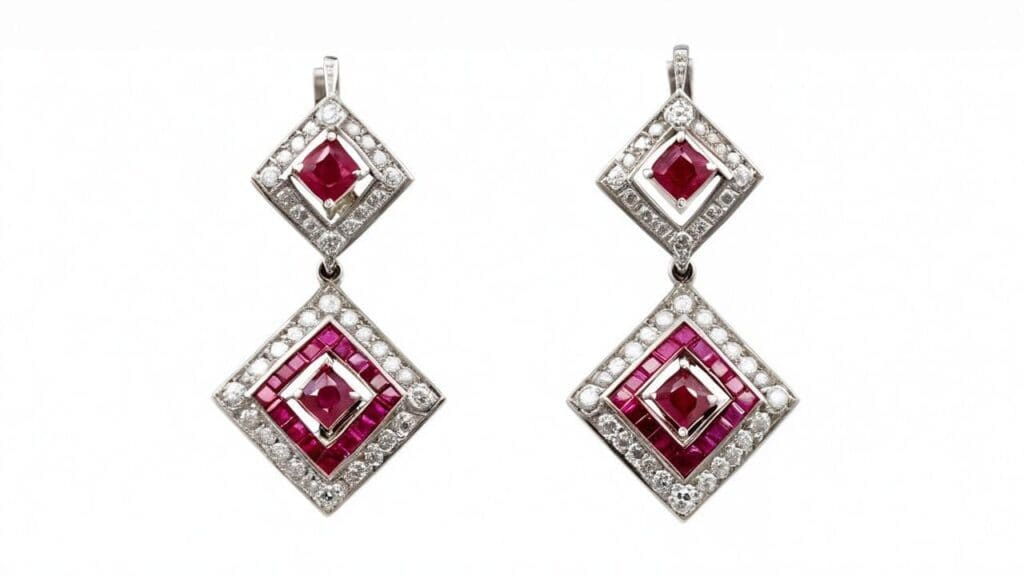
The Art Deco movement emerged from the ashes of World War I, reflecting society’s desire to break from traditional designs and embrace a bold new modern aesthetic. This revolutionary period in jewelry design coincided with significant social changes, technological advances, and cultural shifts that transformed how people viewed and wore jewelry.
- The movement officially gained recognition at the 1925 Paris Exposition Internationale des Arts Décoratifs et Industriels Modernes, though its influence had been growing since the early 1920s. This landmark exhibition brought together leading designers and jewelers from around the world, establishing Art Deco as a distinct and influential style.
- Post-World War I economic prosperity, particularly in America during the Roaring Twenties, fueled demand for luxury goods and innovative designs. This period of wealth creation allowed jewelers to experiment with new techniques and materials while finding ready customers for their bold creations.
- Major jewelry houses like Cartier, Van Cleef & Arpels, and Boucheron played crucial roles in developing the Art Deco style. These prestigious firms employed talented designers who pushed boundaries by combining precious materials with modern geometric designs.
- The discovery of King Tutankhamun’s tomb in 1922 had a profound impact on Art Deco jewelry design, sparking a revival of Egyptian motifs and introducing new color combinations inspired by ancient artifacts. This discovery coincided with a broader interest in exotic cultures and their artistic traditions.
- The rise of independent women in society, including the flapper movement, influenced jewelry design significantly. Shorter hairstyles created demand for dramatic earrings, while new fashion silhouettes called for longer necklaces and bold geometric patterns that complemented the era’s straight-line dresses.
- Technological advancements in gem cutting and metal working, particularly improvements in platinum fabrication, enabled jewelers to create the intricate geometric designs that became synonymous with Art Deco. These technical innovations allowed for more precise and complex patterns than ever before.
- The influence of modern art movements, particularly Cubism, played a crucial role in shaping Art Deco jewelry design. Artists and jewelers embraced abstract forms and geometric patterns, moving away from the naturalistic designs that had dominated previous eras.
The historical context of Art Deco jewelry reveals how this revolutionary style emerged from a unique convergence of social change, technological innovation, and artistic experimentation. This period fundamentally changed how jewelry was designed and worn, establishing principles that continue to influence modern jewelry creation.
Characteristics of Art Deco Jewelry
Art Deco jewelry stands out for its distinctive design elements that broke dramatically from previous styles, embracing modernism through bold geometric shapes and clean lines. This revolutionary aesthetic reflected the era’s fascination with machinery, speed, and industrial progress, while incorporating influences from diverse cultural sources.
- Geometric patterns dominated Art Deco jewelry design, with pieces featuring strong linear symmetry and repeating shapes. Complex arrangements of triangles, squares, rectangles, and circles created dynamic visual effects that reflected the modern machine age aesthetic.
- Contrasting colors became a defining characteristic, with jewelers deliberately pairing white diamonds with black onyx, or combining vibrant precious stones like sapphires, emeralds, and rubies in bold patterns. This dramatic use of color contrast distinguished Art Deco from previous jewelry periods.
- The stepped design motif, directly inspired by modern skyscraper architecture, appeared frequently in Art Deco jewelry. These tiered or layered elements created dimensional depth and reflected the era’s fascination with urban development and architectural innovation.
- Abstract patterns derived from exotic cultures, particularly Egyptian, African, and East Asian art, were incorporated into designs. The 1922 discovery of King Tutankhamun’s tomb significantly influenced Art Deco jewelry, introducing motifs like scarabs, pyramids, and hieroglyphs.
- Sunburst and fan patterns appeared regularly in Art Deco pieces, symbolizing the radiating energy of the modern age. These dynamic designs often featured graduated gems arranged in rays, creating a sense of movement and vitality.
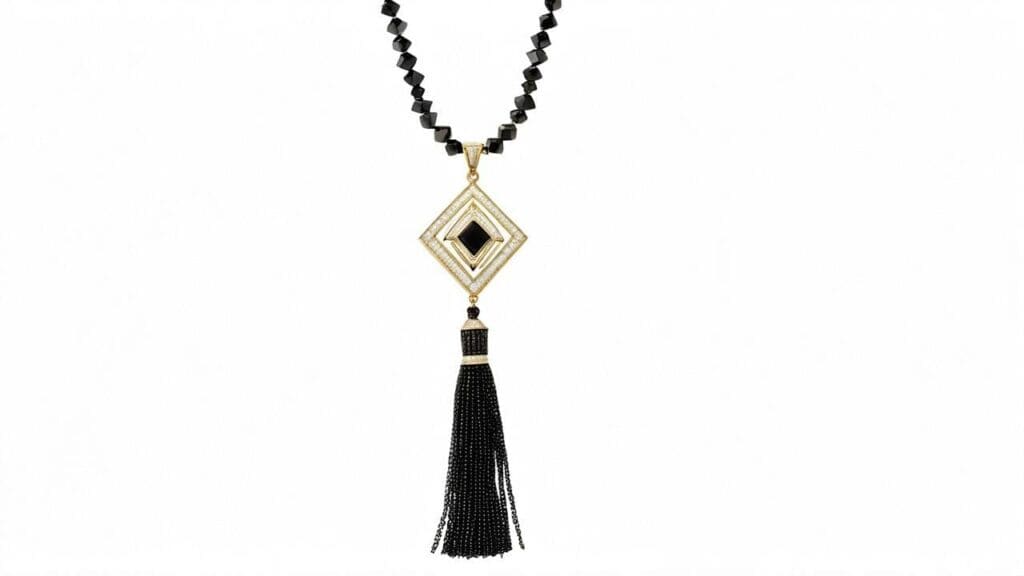
- Long pendants and sautoir necklaces became iconic Art Deco pieces, reflecting the era’s changing fashion with straight, loose-fitting dresses. These pieces often terminated in geometric tassels or bold geometric pendants.
- Mathematical precision in design became paramount, with jewelers using rulers and geometric tools to create perfectly balanced compositions. This technical approach to design represented a sharp departure from the naturalistic, freeform styles of previous eras.
The distinctive features of Art Deco jewelry represented more than just a style - they embodied the spirit of an age that celebrated progress, speed, and modernity. These design elements created a unique visual language that remains instantly recognizable today, demonstrating how Art Deco successfully translated the excitement and energy of the modern age into wearable art.
Common Materials in Art Deco Jewelry
The Art Deco period revolutionized jewelry making through its innovative combination of traditional precious materials with new industrial elements. This era saw the rise of platinum as the premier metal choice, while simultaneously embracing new synthetic materials that reflected the period’s fascination with technological progress.
- Platinum dominated Art Deco jewelry due to its strength and pure white color, allowing jewelers to create intricate settings that made diamonds appear to float. Its durability enabled the creation of extremely fine, lace-like settings that became a hallmark of the period’s most sophisticated pieces.
- White gold emerged as a new material during this era, developed specifically to provide a more affordable alternative to platinum while maintaining the desired bright white appearance. This 18K or 14K gold alloyed with palladium or nickel became immensely popular for both fine and costume jewelry.
- Diamonds were used in revolutionary ways, with newly developed cutting techniques producing precise geometric shapes. Calibré-cut stones, specially shaped to fit together in intricate patterns without visible gaps, became particularly characteristic of the period.
- Colored gemstones played a crucial role, with sapphires, emeralds, rubies, and onyx frequently combined to create bold color contrasts. These stones were often cut in unique geometric shapes to fit the angular Art Deco aesthetic, moving away from traditional rounded cuts.
- Synthetic materials like bakelite and galalith were embraced by jewelry makers, reflecting the era’s fascination with industrial progress. These early plastics allowed for bold, colorful designs at more accessible price points and demonstrated the period’s interest in combining luxury with modern materials.
- Chrome, steel, and other industrial metals found their way into fine jewelry for the first time, often combined with precious materials in unexpected ways. This integration of industrial and precious materials exemplified the Art Deco movement’s modern approach to luxury.
- Egyptian-inspired materials like lapis lazuli, carnelian, and turquoise became popular following the discovery of King Tutankhamun’s tomb in 1922, leading to a significant Egyptian revival influence in Art Deco jewelry design.
The innovative use of materials during the Art Deco period marked a significant departure from traditional jewelry making, establishing new standards for combining precious and industrial materials that continue to influence designers today. This revolutionary approach to materials selection and combination demonstrates how Art Deco jewelry makers successfully merged luxury with modernity, creating pieces that were both precious and decidedly contemporary.
Popular Types of Art Deco Jewelry
Art Deco jewelry encompassed a wide range of distinctive pieces that reflected the era’s modern aesthetic and changing fashion needs. Each type of jewelry from this period featured characteristic elements that made it uniquely Art Deco, from innovative clasps to geometric stone arrangements.
- Sautoir necklaces became an iconic Art Deco piece, featuring long chains or strings of pearls that ended in elaborate geometric pendants or tassels. These often reached down to the waist and could be worn multiple ways, including down the back with backless evening gowns.
- Double-clip brooches emerged as a versatile innovation of the period. These pieces could be worn together as a single brooch or separated into two matching clips, often used to accessorize collars, belts, or hats. The mechanical ingenuity of these pieces reflected the era’s fascination with functionality.
- Bandeau and tiara headpieces gained popularity, featuring geometric patterns that wrapped around the forehead. These pieces often incorporated diamonds and precious stones in low-profile settings that complemented the period’s short hairstyles and close-fitting cloche hats.
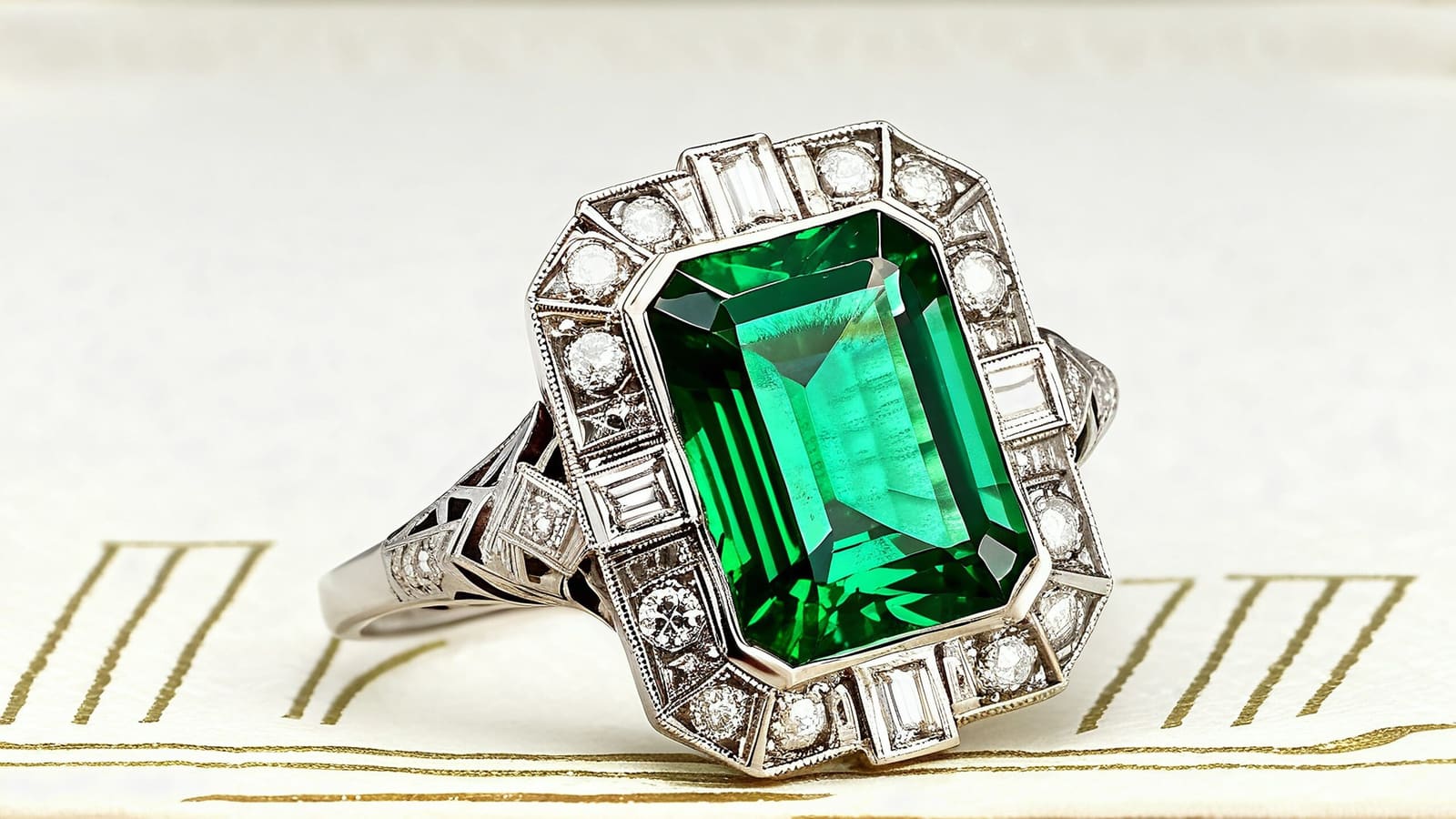
- Cocktail rings became statement pieces during this era, featuring large center stones surrounded by geometric patterns of smaller stones. These bold rings often combined different colored gems in innovative ways, creating dramatic visual effects.
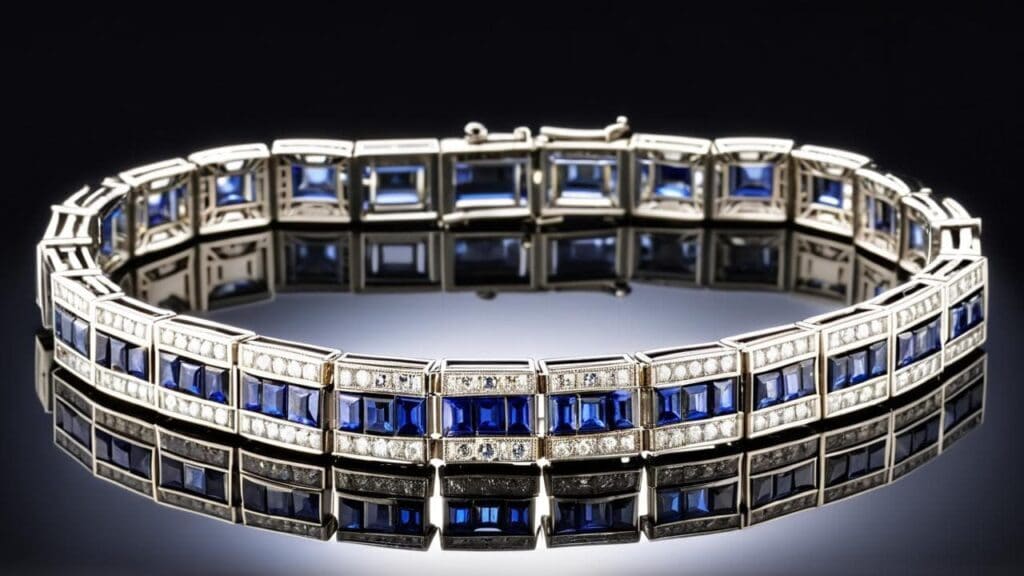
- Link bracelets took on new forms with geometric shapes connecting in repeating patterns. Wide, flexible bracelets known as ‘strap bracelets’ became particularly popular, often featuring intricate pavé work or calibré-cut stones arranged in abstract designs.
- Art Deco earrings were typically long and dramatic, designed to be visible with the era’s short bobbed hairstyles. These pieces often featured graduated diamond drops or geometric patterns that swung freely, creating movement with the wearer.
- Jabot pins, which featured two decorative ends connected by a single pin, became popular for securing scarves and lapels. These pieces often displayed complex geometric patterns and could be quite long, reflecting the period’s preference for vertical design elements.
The jewelry pieces of the Art Deco era not only showcased the period’s distinctive style but also demonstrated remarkable innovation in design and functionality. These pieces represented a perfect marriage of form and function, creating versatile jewels that could be worn in multiple ways while maintaining the bold, geometric aesthetic that defined the movement.
Spotting Real Art Deco Jewelry
Authenticating Art Deco jewelry requires careful examination of design elements, materials, construction techniques, and age indicators. Understanding these key characteristics helps distinguish genuine pieces from later reproductions, though it’s important to note that quality Art Deco-style pieces continue to be made today.
- Construction methods from the 1920s and 1930s show specific handcrafting techniques, particularly in platinum pieces. Look for hand-cut calibré stones fitted precisely into settings and fine milgrain beading along edges, which was typically done by hand during the period.
- Original Art Deco pieces often show signs of natural aging, including slight patina on metals and normal wear patterns on the backs of brooches or clasps. However, excessive wear or poorly executed repairs might indicate a piece has been significantly altered.
- Authentic platinum pieces from this era were made from high-quality platinum, often marked “Plat” or “950.” The metal should have a natural white color and slight heft. Early white gold pieces were typically marked “18K” or “14K” along with manufacturer marks.
- Stone cutting styles should match the period - diamonds often featured transitional or early modern brilliant cuts, while colored stones were frequently cut in geometric shapes to fit specific designs. The presence of laser-cut stones indicates a modern reproduction.
- Genuine pieces typically carry period-appropriate hallmarks or maker’s marks. Research the specific marks, as many famous Art Deco jewelry houses are well-documented. Be aware that some authentic pieces may have lost their marks due to wear or repair.
- Period-correct findings (clasps, pins, etc.) should match the era’s technology. For example, safety clasps on brooches from this period have specific designs that differ from modern ones. Later replacements of these elements may indicate repairs or reproduction.
- Original Art Deco jewelry often features complex, three-dimensional geometric designs with attention to detail on all sides, including the back of the piece. This level of craftsmanship extends to areas not immediately visible when worn.
Original Art Deco pieces represent significant historical and artistic value, reflecting the superior craftsmanship and innovative design of their era. While many beautiful modern pieces are created in the Art Deco style, understanding these authentication points helps collectors and enthusiasts make informed decisions about their purchases.
How to Care for Art Deco Jewelry
Art Deco jewelry pieces are historical treasures that require specific care to maintain their beauty and structural integrity. Given their age and the unique combination of materials used during this period, these pieces need careful attention to prevent damage and preserve their distinctive characteristics.
- Professional cleaning is recommended at least annually for Art Deco pieces, particularly those with complex settings or multiple stones. A qualified jeweler who understands vintage jewelry can check for loose stones and worn prongs while cleaning the piece safely.
- Store each piece separately in soft cloth pouches or individual compartments to prevent scratching. Platinum and white gold pieces from this era can be particularly susceptible to scratching, while certain stones used in Art Deco jewelry may be more fragile than modern counterparts.
- Regular gentle cleaning at home can be done using a soft brush with mild soap and warm water, avoiding harsh chemicals or ultrasonic cleaners which can damage delicate settings or aging materials. Always test cleaning methods on a small, inconspicuous area first.
- Temperature changes can affect old adhesives and settings used in Art Deco pieces. Avoid exposing these pieces to extreme temperatures or sudden temperature changes, which can loosen stones or damage materials like early plastics used in some designs.
- Many Art Deco pieces feature different materials combined in single pieces - such as diamonds with onyx, or precious metals with early plastics. Each material may require different care, so understand the components of your piece before cleaning.
- Watch for signs that your piece needs professional attention: loose stones, worn prongs, catches that don’t work properly, or areas where metal has become thin. Early intervention can prevent loss of stones or more serious damage.
- When wearing Art Deco jewelry, consider the activity level - these pieces weren’t designed for modern active lifestyles. Remove pieces before exercising, swimming, or engaging in activities that might stress the aging materials.
Proper care of Art Deco jewelry ensures these beautiful pieces will continue to be enjoyed for generations to come. While these pieces were built to last, their age and historical significance make proper maintenance essential for their preservation. Regular care combined with professional attention when needed will help maintain both the beauty and value of these vintage treasures.
Styling Art Deco Jewelry
Art Deco jewelry’s bold geometric designs and dramatic aesthetics continue to make powerful fashion statements in contemporary settings. Understanding how to style these vintage pieces with modern clothing helps create sophisticated, unique looks that honor the original spirit of the Art Deco movement while feeling completely current.
- Art Deco pieces work exceptionally well with modern minimalist fashion, as their strong geometric patterns provide striking contrast against simple, clean-lined clothing. A dramatic Art Deco brooch or pair of earrings can transform a basic black dress into an elegant ensemble.
- Layer Art Deco pieces thoughtfully - while the era’s jewelry was often bold, modern styling allows for creative combinations. Long sautoir necklaces can be paired with shorter geometric pendants, but maintain balance by keeping other accessories minimal.
- Consider the neckline of your garment when choosing Art Deco pieces. V-necks complement long pendants, while high necklines work well with Art Deco brooches or clips. The geometric patterns of Art Deco jewelry often echo or complement modern clothing’s architectural lines.
- Evening wear provides perfect opportunities for showcasing elaborate Art Deco pieces. The era’s dramatic designs naturally complement formal attire, with double-clip brooches particularly versatile for modern evening wear as they can be separated and used as dress clips or collar accents.
- Business attire can be elevated with carefully chosen Art Deco pieces. A simple Art Deco brooch or pair of earrings adds sophistication to a blazer or suit while maintaining professional appropriateness. The clean lines of Art Deco jewelry work particularly well in business settings.
- Mix Art Deco with contemporary jewelry thoughtfully. When combining vintage and modern pieces, use similar metal colors or complementary geometric patterns to create cohesive looks. Let statement Art Deco pieces be the focal point.
- Adapt Art Deco pieces to modern uses - period double-clip brooches can become elegant earrings, long necklaces can be wrapped as bracelets, and dress clips can accent handbags or shoes for unexpected modern styling.
Today’s fashion landscape offers endless possibilities for incorporating Art Deco jewelry into contemporary wardrobes. The key lies in balancing these bold vintage pieces with modern clothing while respecting their original design aesthetic. When styled thoughtfully, Art Deco jewelry adds a unique historical dimension to contemporary fashion while remaining remarkably current.
Collecting Art Deco Jewelry
Art Deco jewelry represents a significant segment of the vintage jewelry market, with pieces ranging from accessible costume jewelry to extremely valuable precious gemstone creations. Understanding what drives value in Art Deco pieces helps collectors make informed decisions while building meaningful collections.
- Designer signatures significantly impact value, with pieces from renowned houses like Cartier, Van Cleef & Arpels, and Boucheron commanding premium prices. Original signed pieces with documentation of provenance are particularly valuable for serious collectors.
- Material quality plays a crucial role, especially in platinum pieces which were made to exceptionally high standards during the Art Deco period. The presence of high-quality diamonds and precious stones, particularly in their original cuts and settings, adds substantial value.
- Condition affects value dramatically - pieces maintaining their original stones, settings, and clasps without repairs or replacements command higher prices. However, minor period-appropriate repairs done by skilled craftsmen may not significantly impact value.
- Rarity influences price, with unique designs or pieces featuring unusual material combinations being particularly desirable. Items that exemplify quintessential Art Deco characteristics or demonstrate innovative design techniques are especially sought after.
- Historical significance can enhance value - pieces with documented connections to notable figures or events, or those that represent important innovations in jewelry design, often command premium prices in the collector’s market.
- Size and wearability matter - larger, more dramatic pieces that epitomize the Art Deco style while remaining wearable tend to hold value better than smaller or more delicate items. However, exceptional craftsmanship in any size can command high prices.
- Market trends affect values, with certain aspects of Art Deco design periodically surging in popularity. However, classic Art Deco pieces with strong geometric designs and high-quality materials consistently maintain their value regardless of fashion trends.
When collecting Art Deco jewelry, focus on pieces that combine historical significance with wearability and strong design elements. Building a collection requires patience, knowledge, and often relationships with reputable dealers who understand the market. Quality pieces continue to appreciate in value while providing the joy of owning and wearing a piece of jewelry history.
Conclusion
Art Deco jewelry represents one of the most significant and influential design movements in jewelry history, marking a decisive break from traditional styles while establishing new standards for modern jewelry design. The movement’s innovative use of materials, bold geometric patterns, and dramatic aesthetic choices reflected the spirit of an age that celebrated progress and modernity, creating pieces that remain surprisingly contemporary even today.
The enduring appeal of Art Deco jewelry lies in its unique combination of exceptional craftsmanship, innovative design, and historical significance. Whether worn as statement pieces, collected as investments, or appreciated as historical artifacts, Art Deco jewelry continues to captivate new generations with its bold vision and timeless elegance. These pieces not only tell the story of a remarkable period in design history but also demonstrate how truly innovative design can transcend its era to remain perpetually modern and relevant.