A watch is one of the only pieces of machinery most people wear every single day, and that constant use means it takes a constant beating. Dust gets into the case, sweat and soap touch the metal, the strap gets stretched and twisted, and the tiny parts inside keep moving no matter what else is happening around your wrist. None of that has to shorten its life, though. A watch that gets even a small amount of regular care can easily outlast the person who bought it, while one that gets ignored can start running poorly or stop working within just a few years. The good news is that almost everything a watch needs is simple, cheap, and takes only a few minutes here and there.
Store Your Watch the Right Way
Keeping a watch flat, dry, and away from direct sunlight when it isn’t being worn is the single easiest way to protect it. A drawer, a watch box, or a soft pouch all work fine.
Sunlight and heat can fade a dial over time, especially on watches with colored faces or painted numbers. Leaving a watch on a sunny windowsill for months is one of the easiest ways to dull its look without realizing it. Humidity is the other sneaky problem — a damp bathroom or a drawer near a window that collects condensation can let moisture creep in around the seals, which eventually leads to fogging or rust on the inside parts. If you live somewhere humid, a small silica gel packet dropped into the storage box can absorb extra moisture without costing much at all.
If you own an automatic watch, meaning one that winds itself from the movement of your wrist, storing it flat and not tossing it loosely into a drawer with other objects matters even more. Loose coins, keys, or jewelry can scratch the case or crystal during storage, so a dedicated spot, even something as simple as a small fabric-lined box, protects it far better than an open drawer. A watch winder is only necessary if you own several automatic watches and want them ready to wear without resetting the time and date each time, so it’s a nice-to-have rather than a requirement for most people.
A watch doesn’t need a fancy safe to stay protected. It just needs a consistent, dry spot where nothing else is bumping into it.
Keep It Away from Water (Unless It’s Rated For It)
Checking the water resistance rating printed on the case back before a watch gets wet matters more than most people realize, because not every watch that looks waterproof actually is.
Water resistance is measured in meters or in ATM (short for atmospheres), and the number tells you what the watch was tested to handle under laboratory conditions, not what it can survive in real life. A rating of 30 meters, for example, sounds like a lot, but it really only means the watch can handle a few splashes of rain or hand-washing, not swimming.
| Rating | What It Actually Means |
|---|---|
| 30m / 3 ATM | Splashes, rain, washing hands — not swimming |
| 50m / 5 ATM | Splashing, brief cool-water rinses — not hot showers |
| 100m / 10 ATM | Swimming, snorkeling, most recreational water activities |
| 200m / 20 ATM | Scuba diving and serious water sports |
The reason the real-world limit is lower than the number suggests is that watches are tested in still, standing water in a lab, not while your arm is actually moving. Swimming strokes, diving into a pool, or even just splashing around create extra force on the case that standing water never does, so manufacturers build in a safety margin between the tested number and what they actually recommend for daily use. Hot water makes this worse, because the rubber gaskets that seal the watch expand and contract with heat, which can let moisture sneak past them even on a watch rated for serious depth. That’s why most watchmakers recommend avoiding hot showers with a watch on, even a dive watch, unless the brand specifically says otherwise.
Gaskets also wear out over time, the same way a rubber band gets stiff and cracks after a few years. A watch that was perfectly water resistant when new can lose that protection as it ages, which is why some brands, including several luxury Swiss makers, recommend having the water resistance of a watch professionally re-tested about once a year, especially before summer or before a trip that involves swimming.
Clean Your Watch Regularly
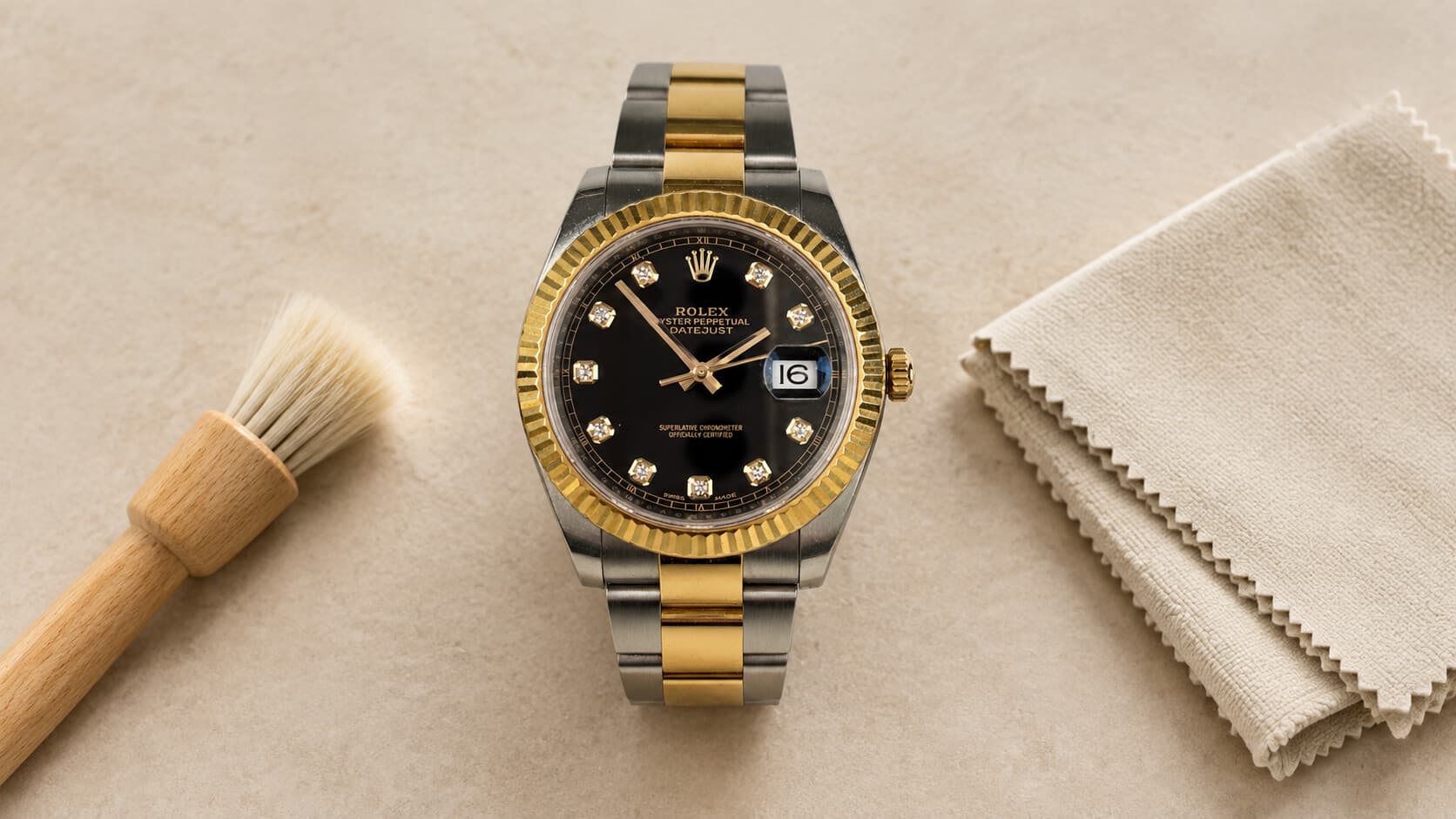
Wiping a watch down with a soft, slightly damp cloth every week or two keeps dirt and oils from building up, and the strap deserves the most attention, since it collects the most sweat and dirt.
For a metal case and bracelet, a soft toothbrush with a little mild soapy water can clean out the small gaps between links where dust and skin oils build up, followed by a dry cloth to remove the moisture. This should only be done if your watch has a water resistance rating of at least 30 meters, since you’re briefly exposing it to water, and it’s worth drying the gaps between links thoroughly so moisture doesn’t sit trapped against the metal.
Leather straps need a different approach entirely. Water can stain and stiffen leather, so a dry microfiber cloth is usually the safest choice, wiped gently after each wear to remove sweat before it soaks in. Letting sweat sit on a leather strap for days at a time is one of the fastest ways to make it crack or smell.
Avoid household cleaners, alcohol wipes, or anything abrasive on your watch. These can strip finishes, damage seals, or cloud the crystal over time. Ultrasonic cleaners, the small machines that use sound waves to shake off dirt, can also be risky for watches with gemstones or already-worn gaskets, so they’re best left to a professional who can tell if your specific watch is a safe candidate.
If your watch has visible grime stuck in the case back engraving or around the crown (the small knob used to set the time), a soft-bristled brush works better than scraping with a fingernail or sharp object, which can leave permanent scratches.
Protect It from Magnets
Keeping a watch away from strong magnets, the kind found in phone cases, speakers, laptop edges, and handbag clasps, protects its accuracy more than most owners expect.
This mostly affects mechanical and automatic watches, which rely on a tiny coiled spring called a hairspring to keep time. When that spring gets magnetized, the coils can stick together slightly, which makes the watch run faster or slower than it should, sometimes by several minutes a day. Everyday items people don’t usually think of as magnetic are often the culprits, including magnetic phone mounts, wireless chargers, laptop edges where the lid clicks shut, refrigerator door seals, and the small magnetic clasps built into many handbags and jewelry boxes. Quartz watches, which run on a battery and a small electronic circuit, are generally less affected, though it’s still smart to keep any watch away from strong magnetic fields when possible.
Signs that a watch may have picked up magnetism include a sudden and noticeable change in how accurately it keeps time, especially if nothing else about how it’s worn or stored has changed. The fix is usually simple: a jeweler or watchmaker can demagnetize the watch in a few seconds using a small tool built for that purpose, and it typically doesn’t cost much, often nothing at all if done during a routine visit.
Avoid Extreme Temperatures
Leaving a watch somewhere very hot or very cold for long stretches puts real stress on the materials inside, which is why avoiding extremes matters more than it might seem.
Most watch brands design their watches to perform normally somewhere in the range of about 10°C to 50°C (50°F to 122°F), which covers nearly all everyday weather. Extreme heat, like a car dashboard in summer, can cause lubricants inside a mechanical movement to thin out or dry up faster than normal, and it can also warp or discolor certain straps and dials. Extreme cold can make lubricants thicken, which may cause the watch to run slower or even stop temporarily. Sudden changes, like jumping from a hot shower into cold air, can also cause condensation to form inside the crystal if the seals are at all compromised.
In most everyday situations — hot weather, a cold morning walk, a warm car — a well-made watch will be completely fine. The real risk comes from prolonged exposure, not brief moments, so the main habit to build is simply not leaving a watch sitting in a hot car or a freezing garage for hours at a time.
Service Your Watch on Schedule
Most mechanical and automatic watches need servicing roughly every three to five years, while quartz watches mainly just need a battery change every two to three years.
A full mechanical service involves a watchmaker opening the case, taking the entire movement apart, cleaning each component, replacing worn parts and gaskets, re-oiling everything, and testing the watch afterward for accuracy and water resistance. This is more involved than most people expect, and it’s the main reason mechanical watches can realistically run for generations if they’re looked after. Cost varies a lot depending on the watch, since a simple time-only mechanical piece is far cheaper to service than one with a chronograph or calendar complication, but it’s reasonable to expect the price to scale with how complicated the movement is.
Quartz watches are simpler. The battery typically lasts two to three years, and most watchmakers recommend replacing the gaskets at the same time, since opening the case to change the battery already breaks the seal temporarily, meaning the watch’s water resistance can’t be guaranteed again until it’s checked.
You shouldn’t wait for a fixed number of years if something feels off sooner. A watch that’s suddenly losing or gaining noticeable time, one where the crown feels loose or gritty when you wind it, or one that’s fogged up inside the crystal are all signs it needs attention right away rather than waiting for a scheduled service.
Everyday Habits That Quietly Damage Watches
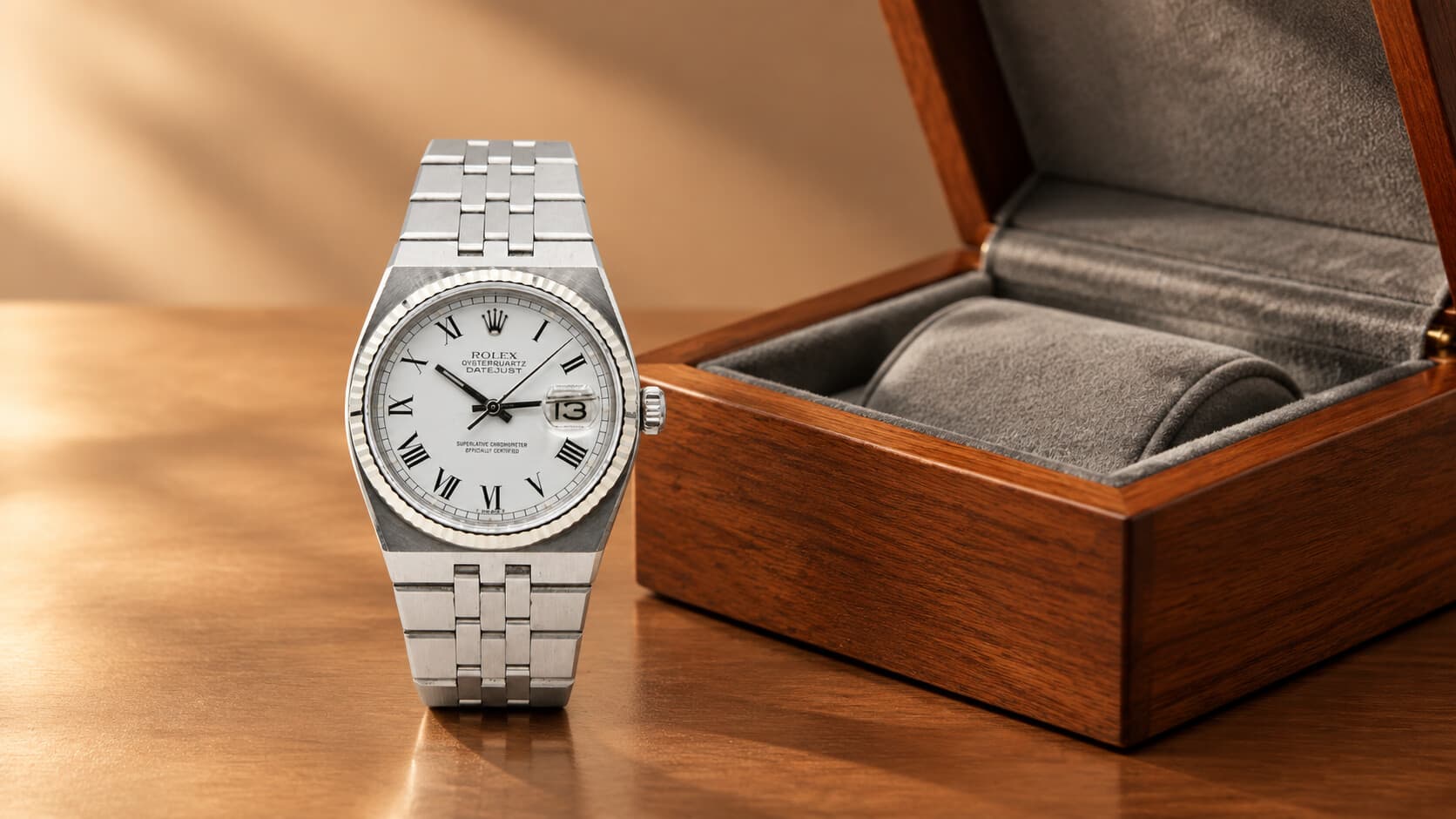
The most common damage comes from small, repeated habits rather than big accidents. A handful of everyday mistakes account for most of the wear a watch sees over its lifetime:
- Showering or swimming with a watch that isn’t rated for it. Even a quick rinse can let moisture in over time.
- Letting the crown stay unscrewed on a screw-down case. If your watch has a crown that twists to lock, always push and screw it back in after setting the time, or water resistance drops immediately.
- Wearing it too loosely during sports or heavy activity. A watch that slides around is more likely to knock against hard surfaces.
- Setting the date between 9 PM and 3 AM. On many mechanical watches, the date-changing gears are mid-motion during these hours, and forcing the date can damage them.
- Storing it next to coins, keys, or other jewelry. Loose metal objects are a leading cause of surface scratches.
- Spraying perfume or cologne directly onto the watch. The alcohol in most fragrances can dull a finish or degrade a leather strap, so it’s safer to spray first and let it dry before putting the watch on.
- Letting sunscreen, hand sanitizer, or chlorinated and salt water sit on the case. These common everyday chemicals can break down gaskets and dull metal finishes faster than plain water does, so it’s worth rinsing the watch with fresh water and drying it after exposure to any of them.
- Knocking the case against doorframes, desks, or equipment. A sharp impact can crack a crystal or bend a case even when the watch seems fine afterward, so it’s worth taking a watch off before manual labor, weightlifting, or anything involving repeated hard contact.
None of these habits cause damage instantly. It’s the repetition over months and years that eventually adds up, which is exactly why small, consistent care matters more than the occasional deep clean.
Frequently Asked Questions
Can I wear my watch every day without hurting it?
Yes. Watches are built to be worn daily, and in fact, automatic watches often run more consistently when worn regularly, since the natural motion of your wrist keeps the internal spring wound.
Is it bad to never wind a mechanical watch?
Letting a mechanical or automatic watch sit unworn and unwound for long stretches won’t damage it, but the lubricants can settle unevenly if it sits still for years at a time. If you’re not wearing it often, winding it briefly every few weeks helps keep everything moving properly.
Why does my watch fog up on the inside?
Fogging on the inside of the crystal almost always means moisture got past a seal, usually an aging gasket or a crown that wasn’t pushed in all the way. This should be checked by a watchmaker soon, since trapped moisture can cause rust on internal parts if left alone.
How do I know if my watch band needs replacing?
A leather strap that’s visibly cracking, stiff, or pulling away from the stitching has reached the end of its life and should be swapped out. A metal bracelet rarely needs full replacement, but loose links or a clasp that pops open unexpectedly are signs it needs tightening or repair.
Does a more expensive watch need less care?
Not really. Price mostly affects the materials and craftsmanship, not how much basic care the watch needs. A $50 watch and a $5,000 watch both benefit from the same habits: staying dry when they shouldn’t get wet, staying clean, and getting serviced before small problems become big ones.
The Bottom Line
Taking care of a watch really comes down to a handful of habits repeated consistently: store it properly, respect its actual water resistance instead of its on-paper rating, keep it clean and away from magnets and extreme heat, and get it serviced before small issues turn into expensive ones. None of this requires special tools or expert knowledge, just a little attention woven into your normal routine. Do that, and a well-made watch can easily keep ticking long enough to become something you hand down rather than something you replace.