Carl F. Bucherer is one of the last great Swiss watch names most people have never heard of, even though the company has been making timepieces since 1888. It built its reputation on a clever invention called the peripheral rotor, on movements made entirely in its own workshops, and on a deep connection to its hometown of Lucerne. The brand’s story took a dramatic turn recently — Rolex bought its parent company in 2023, and reports throughout 2025 and into 2026 say Carl F. Bucherer is being wound down for good. That makes this a strange and interesting moment to look at the brand, because everything from its watches to its resale value is changing fast.
Carl F. Bucherer’s Watchmaking History
Carl F. Bucherer began on September 2, 1888, when Carl Friedrich Bucherer and his wife Louise opened a small watch and jewelry shop in Lucerne, Switzerland. At first the shop mostly sold other people’s watches, catering to the wealthy travelers who flocked to Lucerne as it grew into a fashionable resort town. In recognition of the shop’s growing reputation for quality, the Imperial Court of Berlin gave it the title of Official Watchmaker in the early 1900s, a mark of prestige that helped the young business stand out.
Everything changed once the founder’s sons, Ernst and Carl Eduard, joined the family trade in 1913 — one trained as a watchmaker, the other as a goldsmith. That combination of skills shaped everything the company made afterward.
By 1919, the watchmaker son Ernst had convinced the family to stop just selling other brands’ watches and start producing and marketing their own, launching a women’s model called La Grande Dame that helped establish wristwatches as a serious idea rather than a passing fad. In 1924, the family struck up a business relationship with a young entrepreneur named Hans Wilsdorf — the founder of Rolex — and began carrying his watches in their stores, a partnership that would end up lasting nearly a century.
The company kept building its watchmaking credentials through the mid-20th century. By 1948, it was focused on sporty chronographs with prominent date displays, and by 1968 it had produced around 15,000 certified chronometers, ranking among the top three Swiss producers of these high-precision timepieces. In 1969, the company joined a Swiss consortium that developed the Beta 21, one of the first quartz movements ever made for wristwatches.
Jörg G. Bucherer, the third generation of the family, took control of the company in 1976. In 2001, the family renamed its in-house watch brand from simply “Bucherer” to “Carl F. Bucherer,” honoring the founder directly and separating the manufacturing side from the multi-brand retail stores that still carried the Bucherer name.
Around 2005 to 2007, the company acquired Téchniques Horlogères Appliquées (THA), a respected movement workshop in Sainte-Croix, and began developing its own peripheral rotor technology using that expertise. The resulting caliber, the CFB A1000, launched in 2008 as the first commercially successful peripheral-rotor movement in the industry. A more advanced version, the CFB A2000, followed in 2016 powering the new Manero Peripheral, and the brand added its Heritage line of vintage-inspired watches in 2018.
Everything changed again in August 2023. Rolex acquired the entire Bucherer Group, reportedly because longtime chairman Jörg Bucherer had no direct descendants to leave the company to. The deal included both the massive Bucherer retail network and the smaller in-house Carl F. Bucherer watch brand.
Then, in February 2025, Swiss business publication Bilanz reported that Rolex had decided to shut the watch brand down entirely. According to industry sources, Carl F. Bucherer had been running at a loss despite strong sales years of roughly $100 million to $125 million (CHF 80 to 100 million), with total losses estimated around $310 million (CHF 250 million) over the brand’s lifetime. Any closure does not affect the separate Bucherer retail chain, which still owns Tourneau in the United States and remains under Rolex. Neither Rolex nor Bucherer has issued a full official statement, but as of mid-2026 most industry reporting treats the closure as settled fact.
Carl F. Bucherer’s Key Innovations
Carl F. Bucherer earned its reputation through real engineering, not just marketing. A handful of specific things set the brand apart from typical Swiss watchmakers.
In-House Manufacture Movements
Most Swiss watch brands buy movements from outside suppliers and simply put their name on the dial. Carl F. Bucherer developed and produced its own calibers at its manufacturing facility in Lengnau, Switzerland, using engineering talent inherited from its 2007 acquisition of THA — a workshop once associated with independent watchmaking greats.
Building movements in-house is expensive and slow, but it gave the brand direct control over quality, finishing, and the kind of technical innovation that comes from owning the whole process rather than assembling parts bought elsewhere.
The Peripheral Rotor
This is the brand’s real claim to fame. In a normal automatic watch, a solid metal weight — the rotor — sits on top of the movement and swings around as the wrist moves, winding the mainspring. Carl F. Bucherer figured out how to move that weight to the outer edge of the movement instead, spinning like a ring around the rim.
The company was the first to make this design work reliably, launching it in the CFB A1000 caliber in 2008. The payoff is visual as much as mechanical: since nothing covers the middle of the movement anymore, the case back becomes a small window straight into the gears, bridges, and springs doing the actual work.
The Floating Tourbillon and Other Complications
The brand pushed the peripheral idea even further with its “floating” tourbillon, found in the Manero Tourbillon Double Peripheral. A standard tourbillon cage is attached to a bridge or the movement’s main plate. Carl F. Bucherer’s version is mounted peripherally too, supported by small ball bearings around its rim, so the whole cage appears to hover inside the case with nothing visibly holding it up.
Beyond that showpiece, the brand’s catalog has included flyback chronographs, annual and full calendars, world timers tracking multiple cities at once, and even a hand-built minute repeater — proof that this was a serious watchmaker working across a wide range of traditional complications, not a one-trick brand.
A Jewelry-Making Heritage
Because the company started as a joint watch-and-jewelry shop, and because its founding sons trained as a watchmaker and a goldsmith side by side, Carl F. Bucherer never fully separated horology from fine jewelry the way many watch brands do. That heritage shows up clearly in collections like Alacria and Pathos, where cases are designed first as jewelry pieces and second as timepieces, often set with diamonds or built around unconventional case shapes rather than a standard round dial.
Lucerne Roots and Family Ownership
Carl F. Bucherer remained under the direct ownership of the founding family from 1888 all the way through to the 2023 sale to Rolex — a run of continuous family control that few Swiss watch manufacturers can claim. The brand also stayed unusually tied to one city: while most Swiss watchmaking is associated with the Vallée de Joux, Geneva, or Biel, Carl F. Bucherer built its entire identity around Lucerne, referencing “Lucerne 1888” directly on many dials and marketing campaigns.
Top 10 Best Carl F. Bucherer Watches
These ten models represent the range of what the brand made, from accessible everyday pieces to genuinely rare high-complication watches. Prices are converted from original Swiss franc or dollar retail pricing where publicly available; because the brand is discontinued, actual pre-owned prices will vary by condition, completeness, and dealer.
1. Manero Peripheral
The Manero Peripheral is the watch that best shows off the brand’s core invention in its purest form. It uses the CFB A2050 automatic movement, built around the signature peripheral rotor, in a clean three-hand dress watch case with the date at 3 o’clock and small seconds at 6 o’clock. The open case back puts the whole mechanism on display without any complications distracting from it, making this the model most collectors point to when explaining what made Carl F. Bucherer technically different from its peers.
| Spec | Detail |
|---|---|
| Case Size | 40.6mm x 11.2mm (also offered at 43.1mm) |
| Case Material | Stainless steel or 18k rose gold |
| Movement | CFB A2050, automatic, peripheral rotor, COSC-certified |
| Power Reserve | 55 hours |
| Water Resistance | 30 meters |
| Retail Price | Roughly $8,000 – $20,800 depending on metal and strap |
2. Manero Tourbillon Double Peripheral
This is Carl F. Bucherer’s technical flagship, combining a peripheral rotor with a peripherally mounted floating tourbillon in a 43.1mm case, powered by the COSC-certified CFB T3000 caliber running at 3Hz with a 65-hour power reserve. Standard versions have retailed around $72,300, while special colored and gem-set editions like the Paradise version have gone as high as $152,000 in a limited run of just 18 pieces. It’s a genuine haute horlogerie piece built to showcase the manufacture’s most difficult engineering.
| Spec | Detail |
|---|---|
| Case Size | 43.1mm |
| Case Material | 18k rose gold or steel, some editions gem-set |
| Movement | CFB T3000, automatic, peripheral rotor and floating tourbillon, COSC-certified |
| Power Reserve | 65 hours |
| Water Resistance | Approx. 30 meters (dress rating) |
| Retail Price | $72,300 – $152,000 depending on edition |
3. Patravi TravelTec
Built for people who actually cross time zones, the Patravi TravelTec can track three time zones at once through a rotating bezel and pusher system. Cases have ranged from 42mm up to 47.4mm across different generations, made in stainless steel, titanium, or 18k rose gold, and the line has included special DLC-coated and colored editions for a bolder, more technical look. Recent standard versions have retailed around $13,600.
| Spec | Detail |
|---|---|
| Case Size | 42mm – 47.4mm depending on generation |
| Case Material | Stainless steel, titanium, or 18k rose gold |
| Movement | CFB 1901.1, automatic chronograph, COSC-certified |
| Water Resistance | Up to 100 meters |
| Retail Price | Roughly $13,600 |
4. Patravi ScubaTec
The ScubaTec is Carl F. Bucherer’s answer to the classic dive watch, built to handle real depth with a screw-down crown, automatic helium release valve, and unidirectional rotating bezel. It’s rated to 500 meters of water resistance, which puts it solidly in professional dive-watch territory, while still carrying the brand’s in-house movement construction and finishing, including two engraved manta rays on the case back that tie into the brand’s support of ocean conservation.
| Spec | Detail |
|---|---|
| Case Size | 44.6mm x 13.45mm |
| Case Material | Stainless steel, DLC-coated titanium, or steel/rose gold combinations |
| Movement | CFB 1950.1, automatic, COSC-certified |
| Power Reserve | 38 hours |
| Water Resistance | 500 meters |
| Retail Price | Roughly $8,600 – $9,300 |
5. Manero Flyback
The Manero Flyback is one of the collection’s bestselling models, built around an integrated column-wheel chronograph with a flyback function. A flyback chronograph lets the wearer reset and restart the stopwatch function with a single button press instead of the usual three-step stop, reset, start sequence — a genuinely useful feature for anyone timing intervals back to back. The case has been offered in both 40mm and 43mm sizes, with the newer CFB 1973 caliber extending power reserve over the earlier CFB 1970.
| Spec | Detail |
|---|---|
| Case Size | 40mm or 43mm x 14.45mm |
| Case Material | Stainless steel or 18k rose gold |
| Movement | CFB 1970 or CFB 1973, automatic column-wheel flyback chronograph |
| Power Reserve | 42 hours (CFB 1970) or 56 hours (CFB 1973) |
| Water Resistance | 30 meters |
| Retail Price | Roughly $8,000 – $22,300 depending on metal |
6. Manero AutoDate
Manero AutoDate is one of the most accessible entry points into the brand, with recent retail pricing around $4,300. It strips things back to a simple, elegant automatic watch with a date window, in a versatile size that works equally well under a dress shirt cuff or on a weekend outfit. It’s the watch most likely to appeal to someone who wants Swiss manufacture quality without paying for a complication they may not use.
| Spec | Detail |
|---|---|
| Case Size | Varies by reference, commonly 35.5mm – 40mm |
| Case Material | Stainless steel, some references in rose gold |
| Movement | Automatic, three hands plus date |
| Water Resistance | 30 meters (typical for the line) |
| Retail Price | Roughly $4,300 |
7. Heritage BiCompax Annual
Part of the Heritage line, the BiCompax Annual leans into a design borrowed from a 1956 Carl F. Bucherer chronograph, while adding a genuinely useful annual calendar complication that only needs manual correction once a year instead of monthly like a standard date function. Limited to 888 pieces per colorway, the watch pairs a panda-style or champagne dial with a tachymeter scale and big date window, and it has become one of the brand’s most recognized vintage-inspired designs.
| Spec | Detail |
|---|---|
| Case Size | 41mm x 14.05mm |
| Case Material | Stainless steel or two-tone steel and 18k rose gold |
| Movement | CFB 1972, automatic chronograph with annual calendar module |
| Power Reserve | 42 hours |
| Water Resistance | 30 meters |
| Retail Price | Roughly $8,600 – $13,600 depending on metal |
8. Heritage Worldtimer
This model uses the CFB A2020 automatic world-timer movement, is COSC-certified, offers a 55-hour power reserve, and comes in a 39mm stainless steel case limited to 150 pieces. A worldtimer lets the wearer read the time in dozens of cities simultaneously around the dial’s edge, which is a genuinely practical complication for frequent travelers rather than just a novelty, and the Heritage design language keeps the look period-appropriate rather than overly modern.
| Spec | Detail |
|---|---|
| Case Size | 39mm x 10.25mm |
| Case Material | Stainless steel |
| Movement | CFB A2020, automatic, peripheral rotor, COSC-certified |
| Power Reserve | 55 hours |
| Water Resistance | Approx. 30 meters |
| Production | Limited to 150 pieces |
9. Adamavi
Adamavi is the brand’s tribute to understated, classic watchmaking, offered in three case sizes with round cases in stainless steel or rose gold and a choice of bracelet or strap. Smaller and larger versions use different in-house automatic calibers, while some references have even been offered with hand-wound movements for a more traditional feel. Recent retail pricing has ranged from roughly $2,350 to $3,350 depending on materials and dial finish, making it one of the more approachable ways into the brand for someone who wants quiet elegance over technical showmanship.
| Spec | Detail |
|---|---|
| Case Size | 31mm, 39mm, or 41mm depending on reference |
| Case Material | Stainless steel or 18k rose gold |
| Movement | CFB 1963, CFB 1965, CFB 1966, or CFB 1968 depending on size and complication |
| Water Resistance | 30 meters |
| Retail Price | Roughly $2,350 – $3,350 |
10. Alacria
The Alacria collection blends fine jewelry design with watchmaking, aimed at wearers who want a timepiece that reads first as a bracelet and second as a watch. Cases are typically small and rectangular or curved, often set with diamonds, and the collection spans everything from simpler Alacria Midi pieces to the fully gem-paved Alacria Royal, which has been set with over 600 precious stones on some references.
| Spec | Detail |
|---|---|
| Case Size | Typically 26.5mm x 38mm, varies by sub-collection |
| Case Material | Stainless steel or 18k gold, often diamond-set |
| Movement | CFB 1850 or CFB 1852, quartz |
| Water Resistance | 30 meters |
| Retail Price | Roughly $3,700 for simpler pieces to well over $62,000 for fully gem-set editions |
How to Choose a Carl F. Bucherer Watch
Because Carl F. Bucherer watches are only available on the pre-owned and remaining retail-stock market now, buying one requires a bit more care than picking a currently produced watch off a shelf.
Original warranty cards, box, and purchase receipts matter more now than ever, since the brand’s service network is shrinking and documentation helps establish authenticity for any future buyer. The type of movement is also worth deciding on early. An in-house CFB caliber, from the A1000, A2000, or T3000 families, generally carries more collector interest than earlier models that relied on outsourced movements before the manufacture matured.
Service history is another key factor. A mechanical watch that hasn’t been serviced in over five to seven years may need work soon, and locating a watchmaker experienced with CFB calibers is easier to plan for in advance than to scramble for later.
Case size matters in practice too. Some models, like the larger Patravi TravelTec references, run up to 46-47mm, which reads as genuinely large on most wrists regardless of how it looks in photos.
Finally, rarity has to be weighed against everyday wearability. Limited editions like the Heritage Worldtimer, capped at 150 pieces, or the gem-set tourbillon editions, made in runs as small as 18, carry obvious collector appeal, while a simpler Manero AutoDate or Adamavi tends to be easier to wear daily without worry.
A watch with full original documentation and a documented service history will almost always be worth more — and be easier to sell later — than an otherwise identical watch missing that paperwork.
None of these factors carry equal weight for every buyer. Someone shopping primarily for a daily-wear piece can reasonably prioritize comfort and case size over rarity, while a collector chasing a specific limited edition will care far more about documentation and originality than about whether the watch is the most practical size. Weighing condition, paperwork, and realistic long-term serviceability against personal taste is what ultimately separates a satisfying purchase from a regretted one.
Where to Buy a Carl F. Bucherer Watch
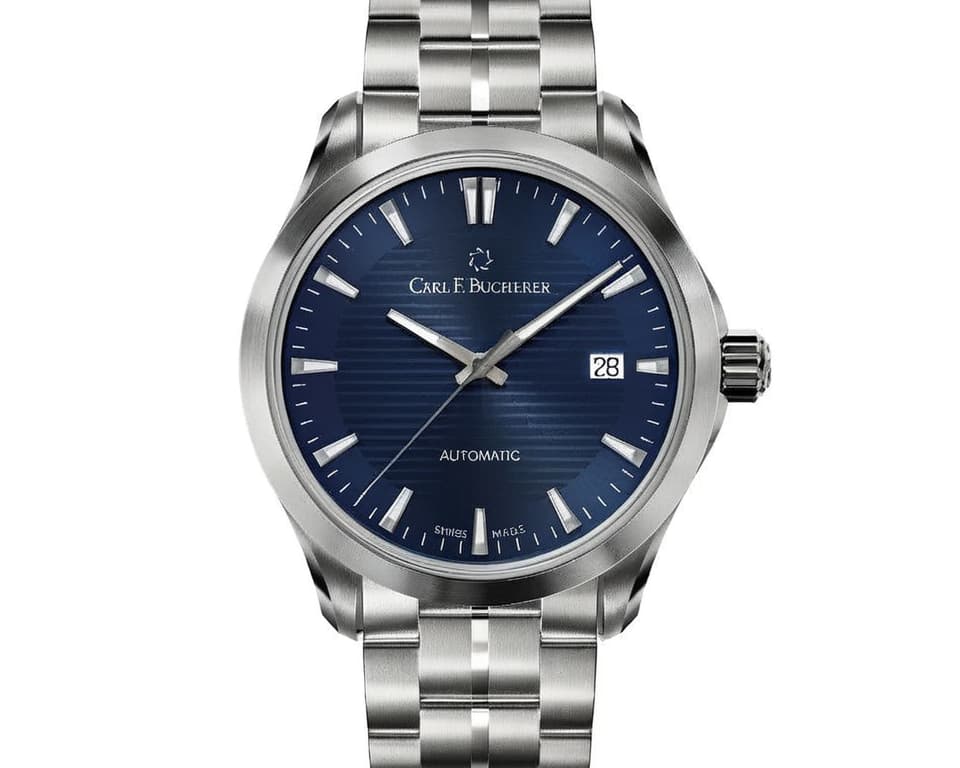
Since Carl F. Bucherer is being discontinued, new stock is limited to whatever remains in authorized retail inventory as boutiques close and shelf space gets reassigned to other brands. Beyond that, the watches exist almost entirely in the pre-owned market, through independent watch dealers, licensed auction houses, dedicated watch marketplaces, and private collector-to-collector sales.
Specialty pre-owned watch platforms currently track several hundred active Carl F. Bucherer listings across dealers worldwide, which suggests a reasonably active — if not enormous — secondary market rather than a brand that has simply vanished from circulation.
A few practical differences from buying a currently produced watch are worth keeping in mind. Certified pre-owned programs, where available, typically include a mechanical inspection and a warranty period, which offers more peace of mind than a private sale without any guarantees.
Auction houses that regularly handle watches occasionally list rare Carl F. Bucherer pieces, particularly limited editions and charity watches, and these listings usually come with condition reports and provenance research that private sellers don’t provide. Independent watch dealers who specialize in Swiss manufacture brands are often the best source for common references like the Manero or Adamavi lines, since they tend to carry more inventory and can speak to a watch’s service history in more detail than a general marketplace listing.
Whichever route is chosen, prioritizing sellers who offer independent authentication, a clear return policy, and documented provenance becomes more important with a brand that no longer has an active retail presence to fall back on for verification.
Will Carl F. Bucherer Watches Hold Value?
This is the area where Carl F. Bucherer’s story really diverges from most watch brands, so it’s worth being direct about it. Before the closure news, the brand was already a slow mover on the resale market compared to Swiss heavyweights — most Carl F. Bucherer watches, once purchased, rarely resurfaced for resale, which industry observers noted was part of why the brand struggled commercially in the first place.
The 2025 discontinuation news changes the calculation in two competing directions. On one hand, a brand ending production often creates scarcity, and scarcity can eventually support higher prices for well-known, limited pieces — this has happened historically with other discontinued watch lines once nostalgia and rarity set in over a decade or more. On the other hand, a shrinking service network and reduced brand visibility can just as easily suppress demand, especially among buyers who worry about long-term maintenance and parts availability.
Charity and Only Watch editions offer a useful data point here. Carl F. Bucherer contributed several one-of-a-kind pieces to the Only Watch biennial charity auction over the years, and pieces with that kind of story and rarity have historically drawn stronger collector interest than standard production models, even from lesser-known brands, because the story and scarcity do a lot of the work that brand recognition alone would otherwise need to do.
In the near term, expect softer resale prices for common models like the Manero AutoDate or Adamavi, since buyers can be cautious about brands without an active retail presence. Rare, well-documented pieces — particularly limited editions and complicated watches like the Tourbillon Double Peripheral or Heritage Worldtimer — are more likely to hold or eventually gain value with serious collectors, precisely because so few were made in the first place.
Timing also plays a role. Prices for brands that stop production often dip in the first year or two after the news breaks, before stabilizing or recovering once the remaining supply becomes clearer and the initial uncertainty fades.
Buying a Carl F. Bucherer watch mainly because it’s genuinely liked and will be worn regularly is a sounder starting point than treating it primarily as a short-term investment. The brand’s discontinued status makes future resale value harder to predict than it would be for an actively produced watch.
Caring for a Carl F. Bucherer Watch
Caring for a Carl F. Bucherer watch isn’t different from caring for any other fine mechanical Swiss watch, though the brand’s changing service situation adds a few practical wrinkles.
Keeping the watch away from strong magnets matters, since magnetized components can throw off accuracy in any mechanical movement. Automatic models rely on regular wrist motion to stay wound; a watch that sits unworn for more than a day or two will run down and need manual winding or resetting.
For someone who owns several automatics and rotates between them, a basic watch winder can help keep an automatic watch like the Manero Peripheral or Patravi ScubaTec ready to wear without needing to reset the time and date every time it comes back into rotation. A winder is a convenience rather than a necessity, though, and hand-winding occasionally works just as well.
A soft microfiber cloth is the safest way to wipe down the case and bracelet after wear, since anything more abrasive risks scratching polished surfaces. A small silica gel packet in the storage box also helps control humidity if the watch lives somewhere without climate control.
Water resistance ratings vary a lot across the collection. The Patravi ScubaTec is built for real depth at 500 meters, while dressier pieces like the Manero Tourbillon carry only a light splash-resistant rating around 30 meters, so checking the specific model’s rating before swimming or showering with it is always worthwhile.
Leather straps should be kept away from water and excessive sweat where possible, since moisture breaks down stitching and leather fibers over time. A slightly damp, never soaked, cloth is enough for routine cleaning, and steel bracelets can be cleaned with lukewarm water, a small amount of mild soap, and a soft-bristled brush.
Servicing is the part that requires extra planning now. Mechanical watches generally need a full service every four to six years to keep lubrication and timing accurate, and with the brand’s dedicated boutique network closing, owners should start researching independent Swiss watchmakers experienced with CFB in-house calibers sooner rather than later, since finding qualified service down the road may take more effort than it would for an actively supported brand.
Frequently Asked Questions About Carl F. Bucherer
The questions below cover the details people most often want confirmed before buying, wearing, or servicing a Carl F. Bucherer watch, especially given the brand’s discontinued status.
Is Carl F. Bucherer still making watches?
As of 2026, no new Carl F. Bucherer watches are being produced. Reports from Swiss business media in early 2025 indicated Rolex, which acquired the brand’s parent company in 2023, made the decision to discontinue the line due to years of financial losses, and industry coverage through 2026 has treated the shutdown as effectively finalized even though no full official statement has ever been issued.
Is Carl F. Bucherer the same company as Bucherer?
No. Bucherer is the large multi-brand retail chain, founded by the same family in 1888, that sells watches from many different brands including Rolex. Carl F. Bucherer is the family’s own in-house watch manufacturing brand, spun off with its own name in 2001. Both were part of the same corporate group and both were included in Rolex’s 2023 acquisition, but only the Carl F. Bucherer watch brand is being discontinued — the Bucherer retail stores continue operating.
What is a peripheral rotor and why does it matter?
A peripheral rotor is a winding weight positioned around the outer ring of a watch movement instead of sitting on top of it in the center. This leaves the middle of the movement completely visible through the case back, which is both a technical achievement and a striking visual feature. Carl F. Bucherer was the first brand to successfully develop and launch this technology commercially, starting with its CFB A1000 caliber in 2008.
Are Carl F. Bucherer watches a good investment now that the brand is closing?
It depends heavily on the specific model. Limited editions and complicated watches with low production numbers are more likely to attract long-term collector interest, while common, mass-produced models like basic Adamavi or Manero AutoDate references are less likely to appreciate quickly and may even see softer demand in the near term as buyers weigh the brand’s uncertain service future.
Where can a Carl F. Bucherer watch be serviced?
Existing Carl F. Bucherer boutiques and authorized service centers can still handle repairs while they remain open, but with the network shrinking, independent watchmakers who specialize in Swiss manufacture movements are becoming a more reliable long-term option. Confirming a watchmaker’s specific experience with CFB in-house calibers like the A1000, A2000, or T3000 families before entrusting them with a service is worth the extra step.
Conclusion
Carl F. Bucherer built something genuinely rare in the Swiss watch industry: a family-run manufacture that engineered its own movements and invented a real technical first with the peripheral rotor, all while staying relatively under the radar for most of its 137-year history. Models like the Manero Peripheral and Manero Tourbillon Double Peripheral show off that engineering at its best, while more affordable pieces like the Adamavi and Manero AutoDate made the brand’s craftsmanship reachable for a wider range of buyers.
The brand’s story is closing out under Rolex ownership, with production reportedly wound down since 2025, which makes buying one today less about chasing the newest release and more about appreciating a finished body of work. For anyone drawn to the mechanics and history rather than speculation, a well-documented Carl F. Bucherer watch remains a genuinely interesting piece of Swiss horology — just one worth buying with full awareness that its future service and resale landscape will look different from an actively supported brand.