Pearls have captivated humanity for centuries with their lustrous beauty. Whether inherited from family, found at an estate sale, or considered for purchase, knowing if pearls are genuine is crucial for understanding their true value. Today’s market offers increasingly convincing imitations, making authentication more challenging than ever. Fortunately, you don’t need expensive equipment to test pearls at home. Simple yet effective methods help distinguish authentic pearls from counterfeits, allowing you to make informed decisions about your jewelry collection.
What Are Real Pearls?
Real pearls form when an irritant enters a mollusk like an oyster or mussel, prompting the creature to secrete layer upon layer of nacre—a combination of minerals and proteins—around the intruder for protection. This natural defense mechanism creates the lustrous gem we cherish. Both natural pearls formed by chance in wild mollusks and cultured pearls created with human intervention are considered real, as they’re composed of genuine nacre through essentially the same biological process.
- Real pearls are organic gems created by living organisms, consisting of calcium carbonate in crystalline form called aragonite and an organic binder called conchiolin, which together form nacre or mother-of-pearl that builds up in layers around an irritant inside a mollusk
- Natural pearls occur spontaneously in the wild when an irritant accidentally enters a mollusk, while cultured pearls involve human intervention to insert an irritant, typically a bead nucleus, but both types produce genuine nacre and are considered authentic pearls
- The value of real pearls depends on several factors including size, shape, color, luster, surface quality, nacre thickness, and origin—natural pearls being extremely rare and valuable while cultured pearls are more common but still valuable
- Freshwater pearls primarily from mussels and saltwater pearls from oysters are both genuine, though they often differ in size, shape, and nacre composition—freshwater pearls typically being smaller with thicker nacre
- The most valuable pearl varieties include South Sea pearls with large size and thick nacre, usually white, silver, or golden; Tahitian pearls with naturally dark colors including black, gray, and peacock green; and Akoya pearls known for classic white color with excellent luster and roundness
- Real pearls grow at an extremely slow rate—approximately 0.5mm in thickness per year—which explains their relative rarity and value compared to manufactured imitations that can be produced quickly
Real pearls represent one of nature’s most remarkable treasures—organic gems created through a biological process rather than geological forces like most gemstones. Understanding their authentic characteristics not only helps you avoid counterfeits but deepens your appreciation for these extraordinary natural wonders that take years to form and centuries to perfect as an art form in jewelry making.
How to Visually Spot Real Pearls
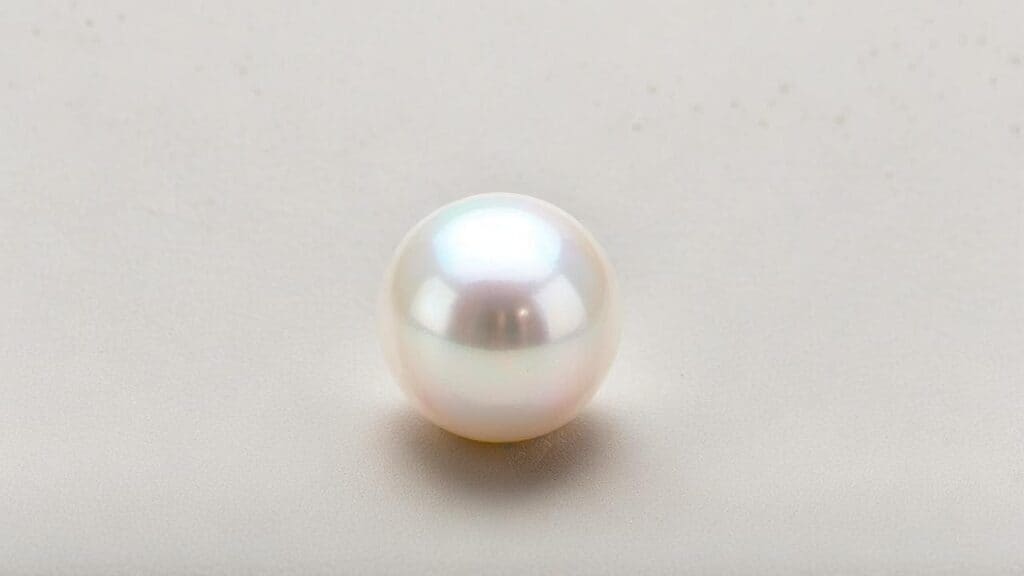
The first step in authenticating pearls requires nothing more than your eyes and careful observation. Visual inspection can reveal telling differences between genuine pearls and their imitations, focusing on surface quality, luster, shape, and color characteristics that are difficult to replicate artificially.
- Surface Texture: Real pearls display subtle imperfections and microscopic ridges on their surface that become visible under close examination or magnification. These natural variations result from the layer-by-layer nacre deposition process. In contrast, fake pearls often appear too uniformly perfect with completely smooth surfaces, especially those made from plastic or glass.
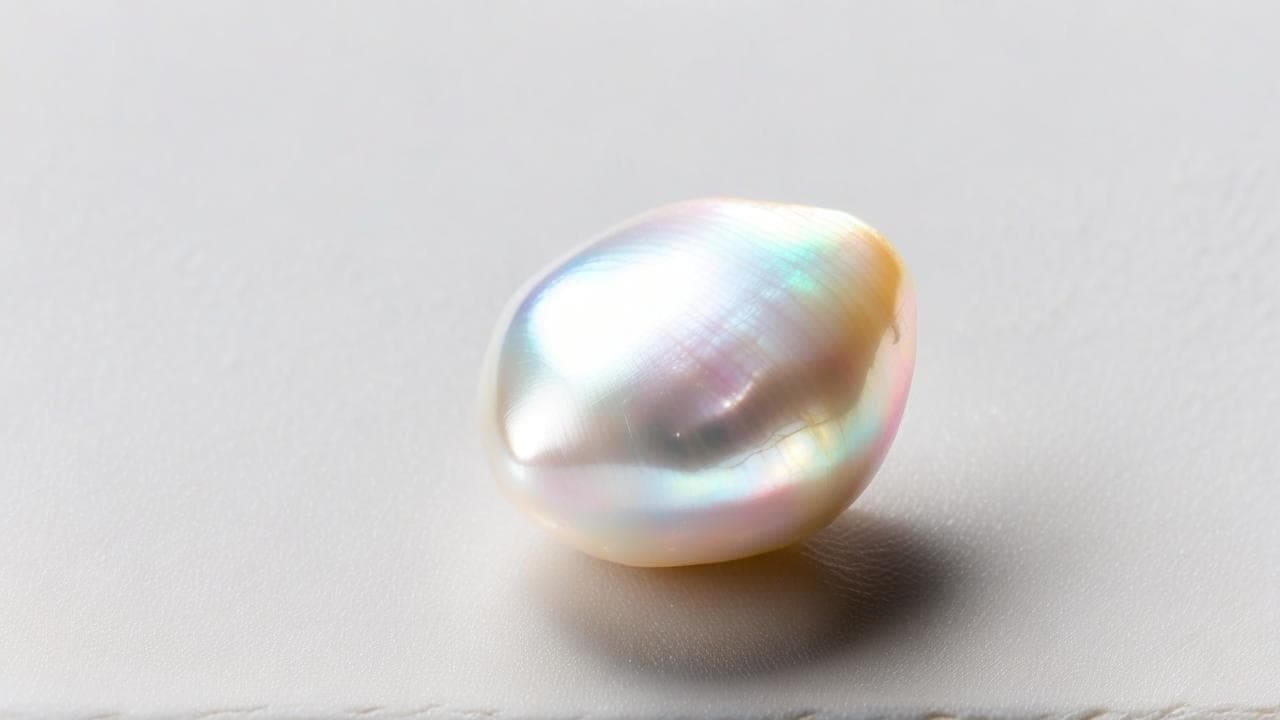
- Luster Assessment: Authentic pearls possess a distinctive deep luster that appears to glow from within the pearl rather than merely reflecting light off the surface. This dimensional quality shifts and moves as you rotate the pearl, creating a soft, almost satiny reflection. Imitation pearls typically show a more superficial, mirror-like shine that looks flat and one-dimensional regardless of viewing angle.
- Shape Variations: When examining a strand, genuine pearls usually show slight variations in size and shape even in high-quality collections. Perfectly matched pearls in size, shape, and color are extremely rare in nature and often signal mass-produced imitations. Even the finest pearl strands will have subtle individual differences when examined closely.
- Color Depth and Overtones: Real pearls display complex color characteristics with main body colors and subtle overtones that seem to float over the surface. These color effects change slightly as the pearl moves in light. Fake pearls often have paint-like color applications that appear uniform and static, lacking the depth and complexity of genuine pearl colors.
- Drill Hole Examination: In pearl strands or earrings, examine the drill holes carefully. Authentic pearls typically show a sharp, clean drill hole often with visible nacre layers around the opening. Imitation pearls frequently have rough, uneven, or melted-looking drill holes and may show underlying material different from the pearl surface.
- Weight Assessment: Hold similar-sized real and fake pearls in each hand if possible. Genuine pearls have significantly more heft and density than most imitations, feeling surprisingly heavy for their size due to their compact crystalline structure. Glass imitations can be heavy but usually lack other authentic characteristics.
Visual inspection provides valuable initial clues about pearl authenticity, though some high-quality imitations can be convincing to the naked eye. Combining visual assessment with physical tests offers more definitive identification of genuine pearls from sophisticated fakes that might otherwise fool casual observation.
How Real Pearls Feel
While visual inspection offers important clues, physical tests provide more concrete evidence of pearl authenticity. These simple tests exploit the unique physical properties of real pearls that imitations cannot replicate, regardless of how convincing they appear visually.
- The Tooth Test: Gently rub a pearl against the edge of your front teeth. Real pearls create a distinctive gritty or sandy feeling due to their microscopically rough surface texture comprised of countless tiny crystals of aragonite. Fake pearls, especially glass or plastic varieties, feel smooth and slippery against teeth. This test is particularly reliable but should be performed gently to avoid damaging the pearl.
- Temperature Sensation Test: Hold a pearl in your palm for about 30 seconds. Genuine pearls feel noticeably cool to the touch at first and warm up slowly, while imitations typically reach body temperature much more quickly. Real pearls have high thermal conductivity that causes this cooling effect, drawing heat away from your skin before eventually warming up when held long enough.
- Weight Comparison Test: Compare the weight of suspected pearls with known authentic pearls of similar size if possible. Due to their dense crystalline structure, real pearls feel substantially heavier than most imitations, particularly plastic ones. This density difference is often immediately noticeable when holding pearls of the same size.
- The Bounce Test: On a hard, flat surface covered with a soft cloth, drop a pearl from about 2 inches height. Real pearls typically bounce minimally due to their density, while many imitations bounce higher. Be extremely careful with this test as pearls can be damaged if dropped from greater heights or onto hard surfaces without protection.
- The Light Reflection Test: In a darkened room, shine a flashlight through a pearl. Real pearls allow some light to pass through creating a subtle, diffused glow, whereas completely opaque or highly translucent reactions often indicate fakes. Most authentic pearls show moderate translucency with a soft internal glow rather than being completely opaque or transparent.
- The Friction Test: Gently rub two pearls together from the same strand. Real pearls produce a slight resistance and sometimes a soft sandy sound due to their microscopic surface texture. Imitation pearls typically slide against each other smoothly and silently because of their regular, manufactured surfaces.
These physical tests exploit natural properties of genuine pearls that are difficult to replicate in imitations. While no single test should be considered definitive on its own, combining several testing methods significantly increases accuracy in identifying authentic pearls from even sophisticated counterfeits.
Pearl Tests You Can Do at Home Without Special Tools
You don’t need specialized equipment to conduct effective pearl authentication tests at home. These accessible methods use common household items to reveal telling differences between real and fake pearls based on their chemical and physical properties.
- The Magnifying Glass Examination: Using a standard magnifying glass or smartphone macro lens, inspect the pearl surface carefully. Authentic pearls reveal fine surface textures with tiny ridges, pits, and natural growth patterns. Look for overlapping platelet structures in nacre that create a subtle scale-like appearance under magnification. Imitations typically show perfectly smooth surfaces or artificial patterns that look mechanically repeated.
- The Acetone/Nail Polish Remover Test: Dab a cotton swab in acetone-based nail polish remover and gently touch it to an inconspicuous area of the pearl. Real pearls remain unaffected by acetone, while many imitation pearls, particularly those with artificial coatings, may become sticky, dull, or show color changes. Always test in a hidden spot and avoid soaking the pearl as acetone can damage any adhesives used in stringing.
- The Hot Needle Test: Heat a sewing needle until very hot and touch it briefly to an inconspicuous part of the pearl. Genuine pearls remain largely unaffected beyond possible minor scorching, while plastic imitations may melt, produce a chemical smell, or show significant damage. This test should be used with extreme caution and only on pearls where a tiny mark would not be problematic.
- The Water Drop Test: Place a small drop of water on the pearl surface and observe its behavior. On real pearls, water typically beads up slightly before slowly absorbing into the surface due to nacre’s porous nature. On artificial pearls, water often remains as a distinct droplet on the surface much longer or rolls off completely without absorption.
- The Makeup Mirror Test: Use a magnifying makeup mirror to examine how light interacts with the pearl. Real pearls typically display a distinctive textured reflection that gemologists call “orient”—a subtle rainbow-like iridescence that shifts as the pearl moves. Fake pearls generally show more uniform reflections without this characteristic play of colors.
- The String Test: Examine how the pearls are strung if dealing with a necklace or bracelet. Quality real pearl jewelry typically features individually knotted pearls with knots between each pearl to prevent loss if the string breaks. Imitation pearl strands are often strung without knots or with knots only every few pearls. While not a test of the pearls themselves, this construction detail offers clues about overall authenticity.
These simple at-home tests provide practical ways to assess pearl authenticity without specialized equipment. For valuable pearl jewelry or when considering significant purchases, these tests offer initial screening, though professional examination remains advisable for definitive authentication of high-value pieces.
Professional Pearl Testing
For definitive pearl authentication, especially for valuable pieces, advanced testing methods provide scientific verification beyond basic tests. While these typically require professional equipment or expertise, understanding these techniques helps you know when to seek specialized evaluation.
- Professional Microscopic Examination: Gemologists use specialized microscopes at 30-65x magnification to evaluate nacre structure, surface features, and drill holes. Authentic pearls reveal characteristic growth patterns and layered nacre structures impossible to duplicate in imitations. The microscope also detects treatment processes and nacre thickness, which affects pearl value and durability.
- X-ray Examination: Professional jewelers and gemological laboratories use X-ray technology to examine pearl internal structure. Real pearls show distinctive growth rings similar to tree rings, while cultured pearls reveal their bead nuclei. This non-destructive test definitively distinguishes natural pearls, cultured pearls, and imitations based on internal structures invisible to other methods.
- Spectroscopy Analysis: Advanced spectroscopic techniques measure how pearls interact with light across different wavelengths. Real pearls produce characteristic spectral patterns based on their aragonite crystal structure and organic components. This scientific approach identifies chemical compositions that distinguish genuine pearls from even sophisticated imitations with near-perfect certainty.
- Specific Gravity Testing: Professional gemologists measure pearl density using specialized liquid solutions or precision scales. Real pearls have a specific gravity between 2.60 and 2.85, significantly different from common imitation materials. This quantitative test provides objective data about pearl composition that visual inspection cannot determine.
- Raman Spectroscopy: This sophisticated technique identifies molecular structures by measuring light scattering patterns. For pearls, it distinguishes aragonite (found in real pearls) from other materials and detects treatments or enhancements invisible to other methods. The test is non-destructive and highly accurate for authentication.
- Ultraviolet Light Reaction: Under specialized UV light, real pearls typically fluoresce blue-white or green, while many imitations show different fluorescence patterns or none at all. While not definitive alone, this test combined with others helps identify certain pearl types and treatments when performed by experienced professionals with proper equipment.
Advanced testing provides scientific certainty about pearl authenticity that basic tests cannot achieve. For valuable antique pearls, important estate jewelry, or significant investments, professional gemological analysis using these methods ensures accurate authentication beyond what visual inspection or simple tests can determine.
Common Pearl Imitations
Understanding the various types of pearl imitations helps you identify them more easily. Each type of fake pearl has distinctive characteristics that differentiate it from genuine pearls through specific telltale signs.
- Glass Pearls: Created by coating glass beads with pearl essence or metallic substances, these imitations can be surprisingly heavy like real pearls. However, they typically feel too smooth against the teeth, warm quickly to body temperature, and show perfectly uniform surfaces without natural variations. Glass pearls often have an overly bright, mirror-like shine rather than the soft, dimensional luster of genuine pearls.
- Plastic Pearls: Made from various plastics including lucite and acrylic, these lightweight imitations often feel unnaturally light compared to real pearls. They warm quickly when touched, produce no gritty sensation during the tooth test, and frequently show molding seams or artificial uniformity under magnification. Their shine typically appears superficial and plastic-like rather than emanating from within.
- Shell Pearls: Manufactured by coating bead bases with shell powder mixed with resin, these sophisticated imitations can be surprisingly convincing visually. They show more weight and durability than plastic pearls but lack the thermal properties of real pearls, warming quickly to body temperature. Under magnification, shell pearls reveal too-perfect surfaces without natural variations in texture and color.
- Majorica/Mallorca Pearls: These premium imitations made famous on the Spanish island of Mallorca involve coating a glass core with multiple layers of fish scale essence. While among the most convincing fakes with substantial weight and attractive appearance, they still lack the gritty feeling in the tooth test and show too-perfect matching in color and size when examined as a strand.
- Cotton Pearl Imitations: Lightweight beads made by compressing cotton fibers into sphere shapes and coating them with pearlescent substances. These feel noticeably lighter than genuine pearls, warm immediately to body temperature, and show no resistance in the tooth test. Their primary advantage is comfort for large statement pieces where real pearls would be too heavy.
- Synthetic Mother-of-Pearl: Created by coating various base materials with crushed mother-of-pearl particles in resin. While containing actual nacre components, these imitations lack the growth structure of genuine pearls. They may pass some basic tests but typically show artificial uniformity under magnification and inconsistent results in chemical tests.
- Swarovski Crystal Pearls: Premium glass-based imitations coated with proprietary crystal materials that mimic pearl appearance. While marketed as high-quality alternatives rather than deceptive fakes, these pearls lack the thermal properties, tooth-test grittiness, and internal structures of genuine pearls, though they offer durability and consistent appearance for fashion jewelry.
Understanding these common fake pearl types helps you recognize specific signs of imitation beyond generic testing. Each type has particular weaknesses in certain tests, making them identifiable through careful examination even when they appear convincing at first glance.
Different Types of Genuine Pearls
Not all real pearls look alike—authentic pearls come in several varieties with different appearances, values, and characteristics. Understanding these legitimate pearl types prevents mistaking unusual but genuine pearls for fakes.
- Natural Pearls: Formed completely by chance without human intervention when an irritant naturally enters a wild mollusk. Extremely rare today and typically found only in antique jewelry, natural pearls command extraordinary prices. They grow around a microscopic natural irritant rather than an inserted bead, giving them a more concentric internal structure visible under X-ray examination than cultured pearls.
- Cultured Pearls: Created through human intervention by inserting an irritant into a mollusk, but still growing through the same biological nacre-producing process as natural pearls. These represent the vast majority of pearls in today’s market. Despite being cultivated, they are genuine pearls composed of real nacre with the same physical and chemical properties as natural pearls.
- Freshwater Pearls: Primarily grown in mussels in lakes and rivers, predominantly in China. These cultured pearls typically have thicker nacre layers since many are solid nacre without a bead nucleus. They come in various shapes including baroque (irregular) forms and a wide range of colors from white to pastels. Their irregular shapes and smaller sizes don’t indicate they’re fake—just a different variety of genuine pearl.
- Akoya Pearls: Saltwater cultured pearls grown in Akoya oysters, primarily from Japan and China. Known for their excellent luster, near-perfect round shapes, and classic white color with rosé overtones. These range from 2-10mm in size and set the standard for traditional pearl appearance. Their exceptional roundness and matching is achieved through careful cultivation, not because they’re imitations.
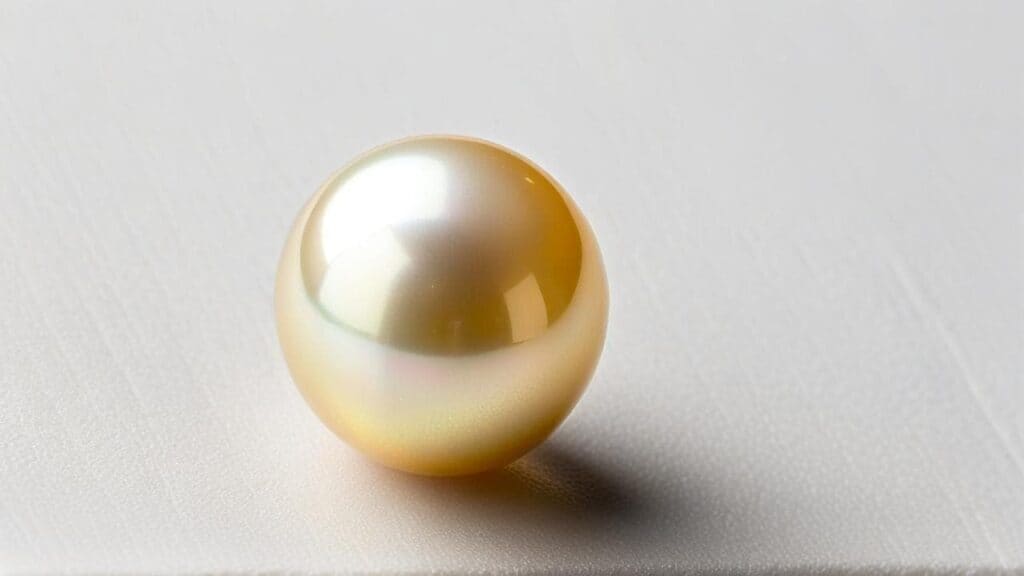
- South Sea Pearls: Large saltwater cultured pearls grown in the Pinctada maxima oyster from Australia, Indonesia, and the Philippines. These premium pearls range from 8-20mm and come in white, silver, and golden colors with thick nacre and distinctive satiny luster. Their significant size and value make them frequent targets for imitation, but genuine specimens command the highest prices in the pearl market.
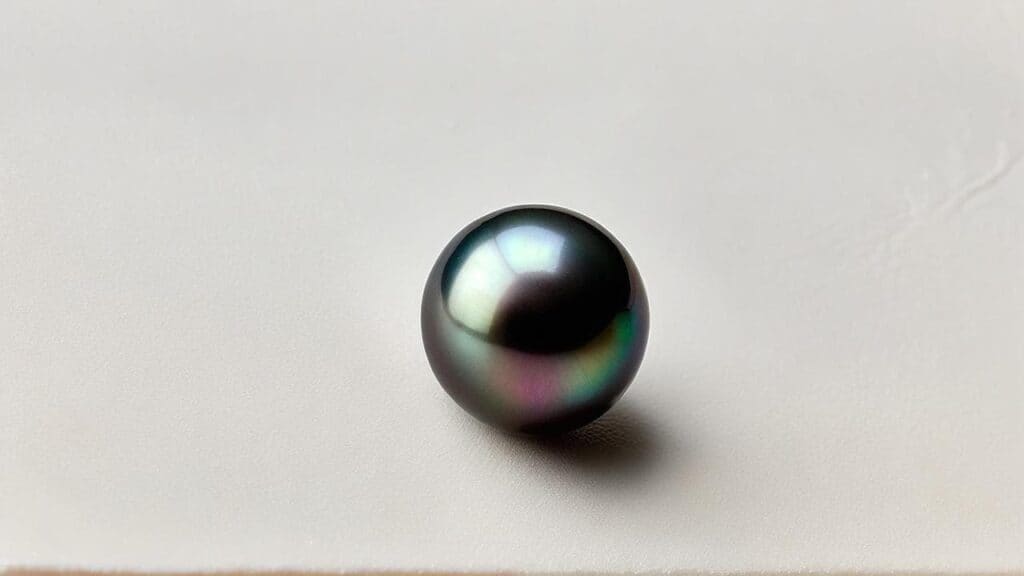
- Tahitian Pearls: Saltwater cultured pearls grown in Pinctada margaritifera oysters in French Polynesia. Distinguished by their naturally dark colors including black, gray, green, and purple with peacock, aubergine, or green overtones. Authentic Tahitian pearls are never dyed—their dramatic coloration is completely natural and results from the specific oyster species that produces them.
- Keshi Pearls: Formed accidentally during the culturing process when oysters reject the implanted nucleus but continue producing nacre, creating all-nacre pearls without a bead center. These small, irregular-shaped pearls have exceptional luster and unique forms. Despite their unusual appearance, they are genuine pearls—not imitations—and valued for their distinctive character and 100% nacre composition.
Understanding these legitimate pearl varieties prevents mistaking unusual but authentic pearls for fakes. Each type has characteristic appearances, values, and properties that distinguish them within the world of genuine pearls, showing that real pearls encompass diverse forms beyond the classic round white pearl.
When to Get Pearls Professionally Tested
While home testing methods provide valuable initial authentication, certain situations warrant professional evaluation from qualified experts. Knowing when to seek professional assessment ensures accurate identification and protects your investment.
- High-Value Pearl Jewelry: Any pearl jewelry representing a significant investment deserves professional authentication. Experts can verify authenticity with scientific certainty while also evaluating other value factors like pearl quality, matching, and craftsmanship that affect overall worth.
- Antique or Estate Pearl Jewelry: Older pearl pieces often contain natural pearls, which are extremely rare and valuable today. Professional assessment can distinguish natural from cultured pearls—a distinction impossible to make with basic tests but crucial for accurate valuation of vintage pearl jewelry.
- Insurance Documentation Requirements: Insurance companies typically require professional appraisals for pearl jewelry above certain value thresholds. These appraisals must include authentication confirmation from qualified gemologists or pearl specialists to ensure proper coverage values.
- Unusual or Rare Pearl Types: Uncommon pearl varieties like natural color Tahitian pearls, exceptionally large South Sea pearls, or pearls with unusual colors or characteristics benefit from expert verification. Specialists can confirm whether unusual features represent authentic rarities or artificial enhancements.
- Pre-Purchase Verification of Expensive Pearls: Before making significant pearl purchases, especially online or from unfamiliar sources, professional pre-purchase authentication prevents costly mistakes. Many reputable jewelers offer authentication services or can recommend trusted third-party laboratories.
- Conflicting Home Test Results: When basic tests yield inconsistent or confusing results, professional testing resolves uncertainties with advanced techniques unavailable to consumers. This scientific approach provides definitive answers when home testing remains inconclusive.
- Professional Authentication Services: For definitive pearl verification, consider GIA (Gemological Institute of America), AGS (American Gem Society), or specialized pearl laboratories that provide detailed authentication reports. These reports typically cost $150-500 depending on the item and testing depth required, representing worthwhile protection for valuable pieces.
Professional authentication goes beyond simply confirming whether pearls are real—it provides detailed information about pearl type, quality factors, treatments, and value characteristics impossible to determine through home testing. For significant pearl jewelry, this expertise ensures accurate understanding of what you own or plan to purchase.
Conclusion
Distinguishing real pearls from imitations doesn’t require expensive equipment or specialized training—just careful observation and simple testing techniques. The methods outlined in this guide give you practical tools to authenticate pearls with reasonable confidence in most situations. Remember that real pearls have distinctive characteristics: slight surface imperfections, a deep dimensional luster, thermal properties that keep them cool to initial touch, and that distinctive gritty feeling against your teeth that fake pearls simply cannot replicate.
When evaluating pearl jewelry, consider using multiple testing methods rather than relying on any single technique. Each test examines different aspects of pearl characteristics, and combining several approaches provides more reliable authentication than any individual test alone. For valuable or historically significant pieces, professional verification remains the gold standard despite the effectiveness of home testing methods. By developing your pearl authentication skills through these practical techniques, you’ll shop with greater confidence, protect your investments, and develop deeper appreciation for these organic gems.