Smoky quartz is one of those stones that looks like it should have a complicated backstory, and it does. That hazy brown-to-black color isn’t a dye, a coating, or a trick of the light — it comes from millions of years of the crystal sitting inside rock that gave off tiny amounts of natural radiation. The result is a gemstone that ranges from a barely-there beige to a black so deep it looks almost like smoke trapped in glass, which is exactly where the name comes from. It’s affordable, tough enough for daily wear, and has a history that stretches from ancient Scotland to modern gem-cutting workshops, which makes it worth understanding beyond just “the brown crystal.”
Understanding Smoky Quartz
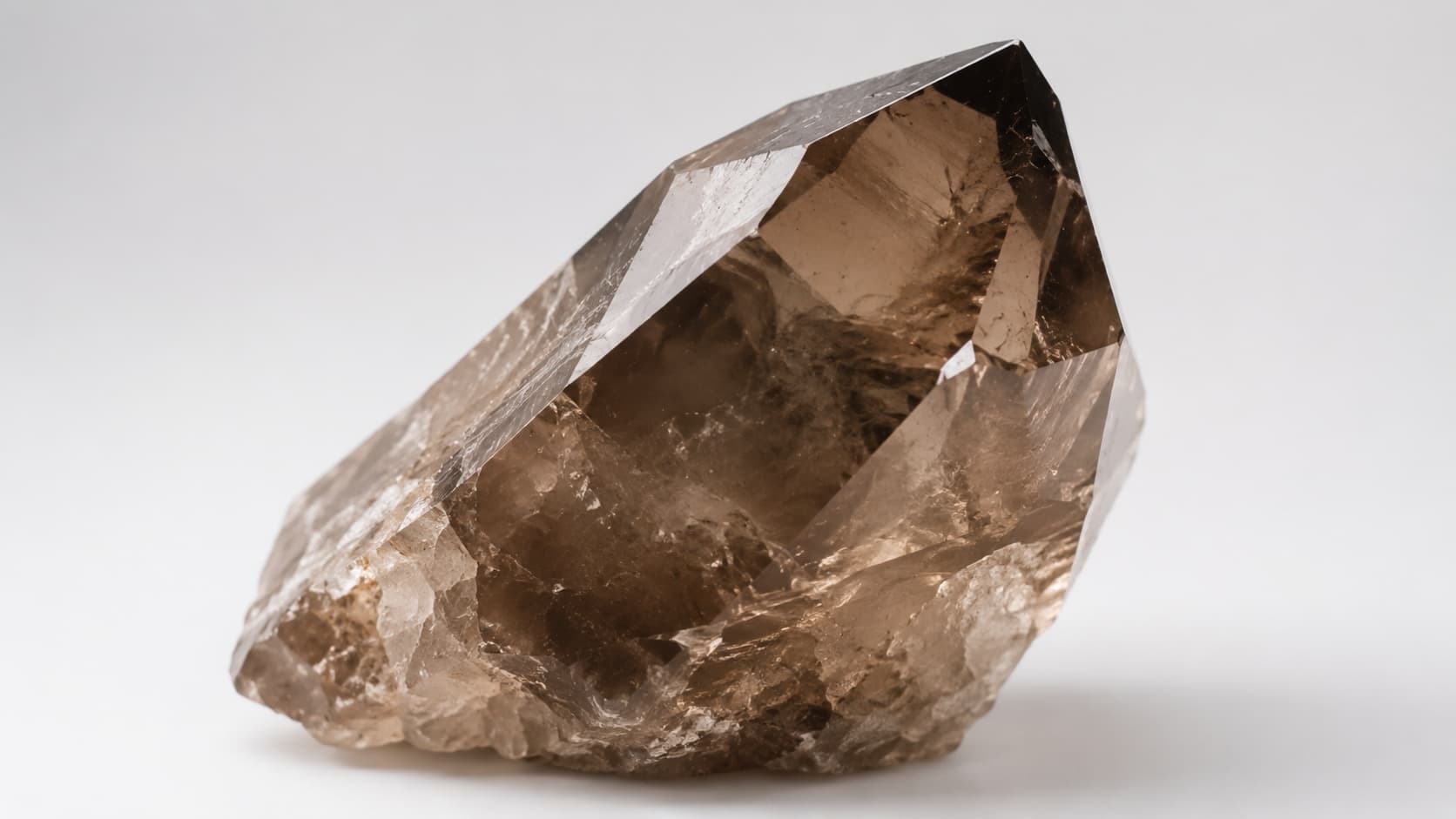
Smoky quartz is a brown-to-black colored variety of the mineral quartz, chemically identical to clear quartz, amethyst, and citrine — they’re all silicon dioxide, just tinted differently. The tint develops over long stretches of geologic time, as background radiation from the surrounding rock interacts with trace aluminum locked inside the crystal, disturbing its electron balance in a way that absorbs light and produces the smoky hue. A closely related process is responsible for amethyst’s purple color, though there the radiation interacts with iron rather than aluminum.
Because it’s part of the huge quartz family, smoky quartz shares the same six-sided crystal shape as clear quartz and amethyst when it grows freely in open pockets of rock. Colors can range widely — some stones are a light, almost tea-colored brown, while others are nearly opaque and black. The nearly-black, opaque variety even has its own name, morion, and stones cut for jewelry often lean toward an orangish or reddish brown, since that shade tends to be the most popular.
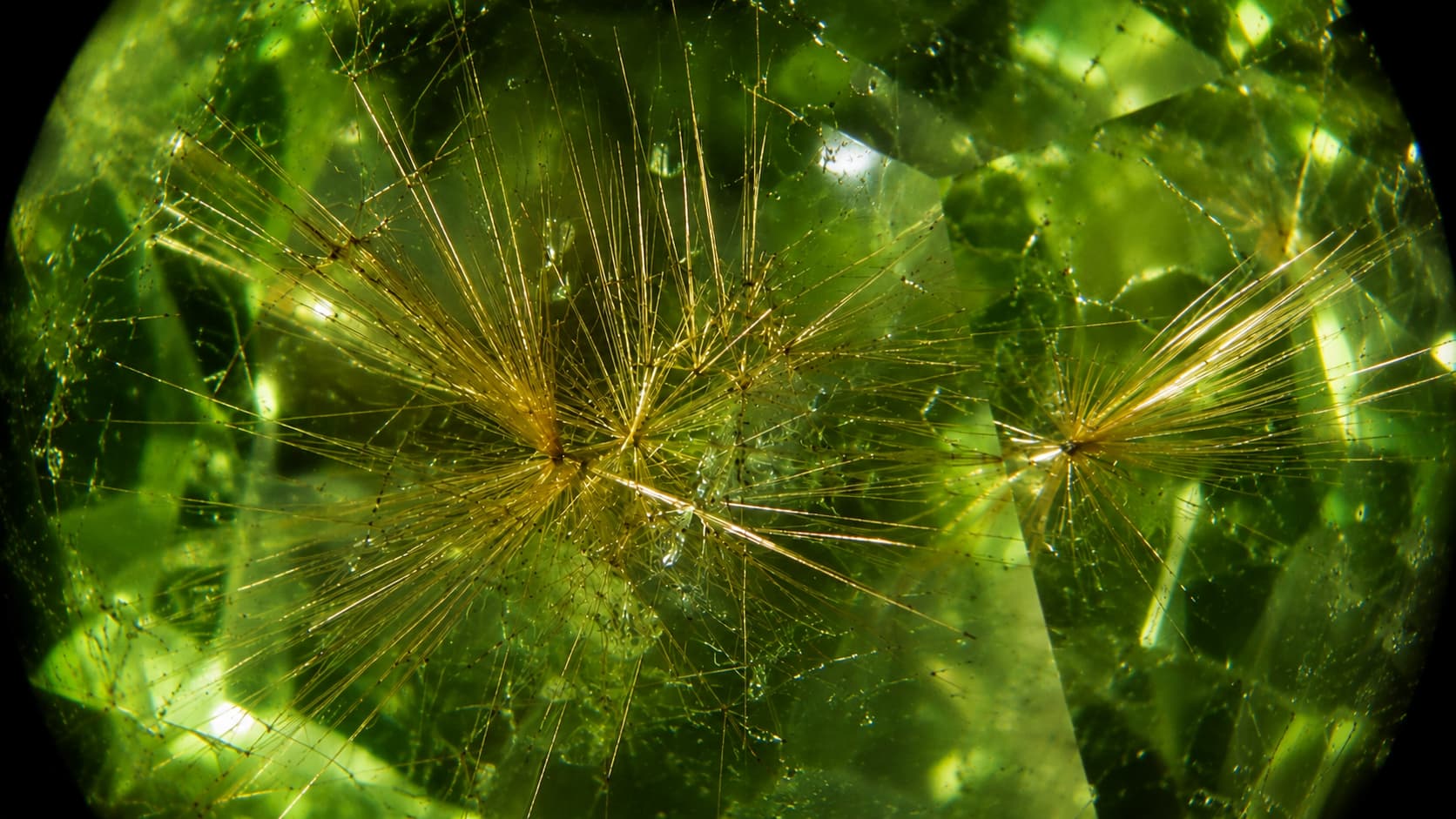
It’s also common to find smoky quartz with color zoning, meaning one crystal can show streaky “tiger stripe” bands of different intensity, or even shift into purple amethyst or yellow citrine sections within the same piece, since all three colors form through a related process. Fine needle-like inclusions of a mineral called rutile show up in some specimens too — when smoky quartz has enough of these threads running through it, it’s sold as its own combination gem, “rutilated smoky quartz.” None of this counts against the stone’s quality; these inclusions are simply part of how the crystal grew and are generally considered a feature rather than a flaw.
Long before quartz showed up in modern jewelry stores, flat polished slices of smoky quartz were used in 12th-century China as an early form of sunglasses, worn to cut down glare rather than to correct vision.
What Causes Smoky Quartz’s Color?
The short answer: aluminum atoms and natural background radiation working together over a very long time. Inside the quartz crystal, aluminum occasionally takes the place of silicon atoms, and small charged particles like hydrogen or sodium sit nearby to balance things out chemically. Over geologic time, natural radiation from the surrounding rock knocks an electron loose, and that disruption is what creates the smoky color.
It’s a genuinely delicate process. Heating true smoky quartz to around 200°C (392°F) actually strips the color back out, though exposing it to radiation again can bring it back. This is also why jewelers sometimes warn against leaving smoky quartz jewelry somewhere very hot, like a car dashboard in summer — it’s one of the few gems where heat can visibly change its appearance rather than just risk cracking it.
Note: A lot of the smoky quartz sold today didn’t start out smoky at all. Colorless quartz is often artificially irradiated in a lab to produce the same brown-to-black color, and the treatment is considered completely safe — the irradiated stones don’t carry any meaningful radioactivity themselves. It’s a legal, common, and disclosed practice in the gem trade, similar to how many blue topaz stones are treated to reach their color.
Quartz in general also has a neat physical trait worth knowing: it’s piezoelectric, meaning it generates a tiny electrical charge when squeezed or put under pressure. That property is why quartz crystals (not specifically the smoky variety, but the same underlying mineral) have historically been used in radio equipment and quartz watches to keep time with remarkable precision. Smoky quartz shares this trait, even though jewelry made from it is chosen for looks rather than electronics.
Where Is Smoky Quartz Found?
Most smoky quartz on the market today is cut from rough stone mined in Brazil, though sizable deposits also exist in Madagascar, Switzerland, Scotland, and parts of the United States like Colorado and Maine. It tends to form inside granite and other rock that has slowly cooled deep underground, along with high-grade metamorphic rock, since those environments contain the trace radioactive elements needed to develop the color over time.
One of the more famous sources has nothing to do with mass production and everything to do with national identity. Smoky quartz found in Scotland’s Cairngorm Mountains even lent its name to the stone — locals call it “cairngorm,” and it’s recognized as the national gemstone of Scotland, where it’s traditionally used in kilt pins, sgian-dubh handles, and other Highland dress accessories.
From a sourcing standpoint, smoky quartz is also considered a fairly low-impact gem to mine. It often turns up as a byproduct in pegmatite deposits being worked for other minerals, so a portion of the smoky quartz on the market isn’t the sole reason a mine exists in the first place — it’s recovered alongside other materials rather than requiring dedicated large-scale extraction.
Is Smoky Quartz Tough Enough for Everyday Jewelry?
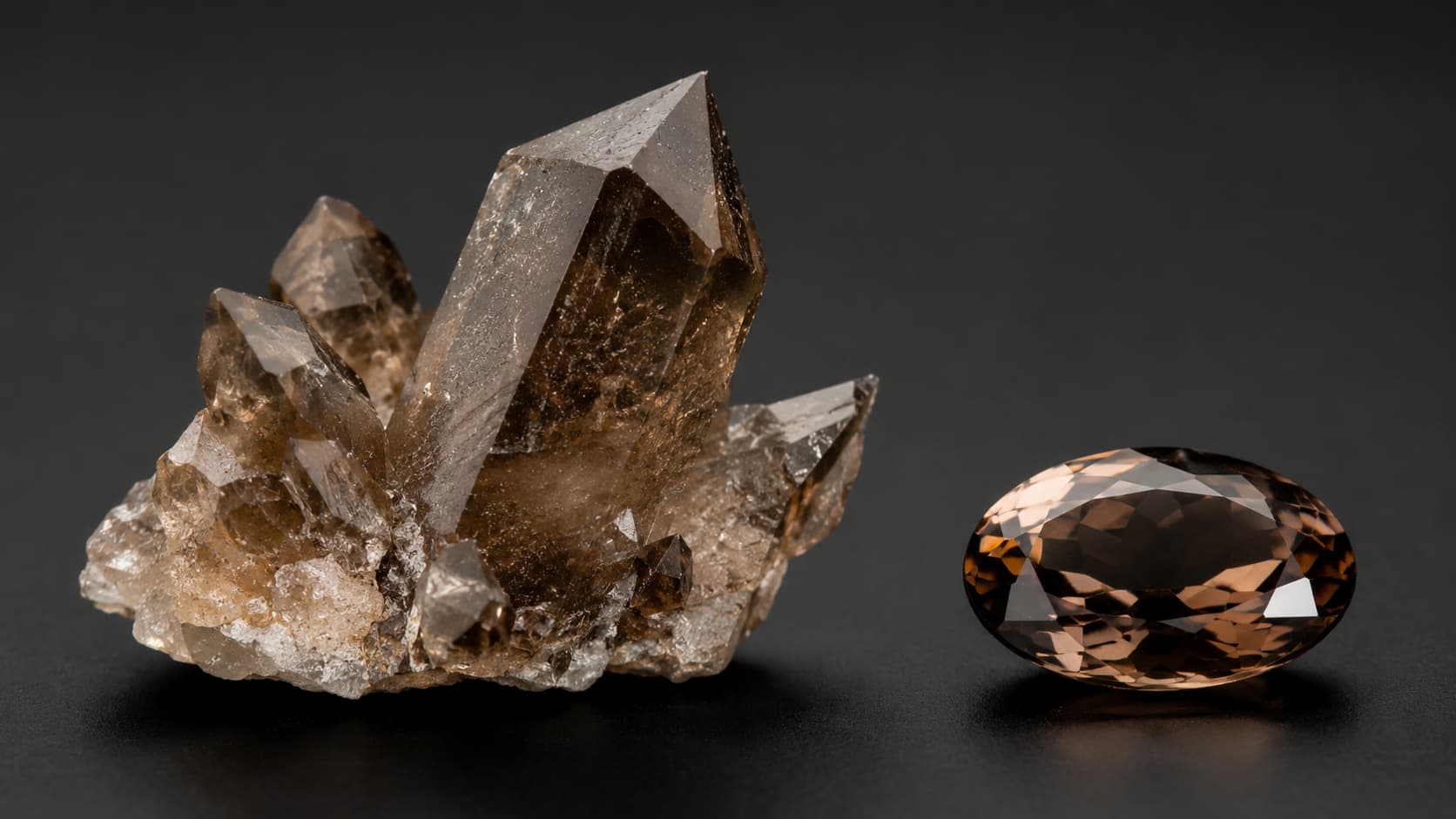
Yes — smoky quartz sits at 7 on the Mohs hardness scale, the same rating as other quartz gems like amethyst, citrine, and rose quartz. That’s hard enough to resist everyday scratches from things like dust, sand, and fabric, which makes it a genuinely practical choice for rings, bracelets, and other pieces that get worn often.
It’s worth knowing the difference between hardness and toughness here, since people mix them up. Hardness just measures resistance to scratching, not resistance to cracking or chipping from a hard knock. Smoky quartz handles daily wear well, but like most gemstones, a sharp direct hit against a hard surface can still chip or fracture it, so it’s not completely indestructible — just durable for its price point.
Smoky quartz is also what gemologists call a “type II” clarity stone, meaning it’s normal, even expected, for a faceted piece to show some visible inclusions on close inspection — tiny crystals, faint fractures, or the rutile needles mentioned earlier. That’s not a sign of poor quality; it’s just typical for the species. For a ring that sees daily wear, a stone with fewer visible inclusions gives the cleanest look, though complete flawlessness is uncommon, since that’s not really how this gem naturally forms.
Natural vs. Lab-Irradiated Smoky Quartz
Both types are widely sold, and both are legitimate. Natural smoky quartz forms the slow way, through exposure to radioactive minerals in the surrounding rock over an extremely long time. Lab-irradiated smoky quartz starts out as colorless quartz and gets the same color-changing radiation exposure done deliberately and quickly in a controlled setting.
| Natural Smoky Quartz | Lab-Irradiated Smoky Quartz | |
|---|---|---|
| How it forms | Colored slowly by radiation in the surrounding rock over geologic time | Starts as colorless quartz, deliberately irradiated in a controlled setting |
| Visual difference | None reliably detectable by eye | None reliably detectable by eye |
| How to confirm | Specialized lab testing (e.g. spectroscopy) | Specialized lab testing (e.g. spectroscopy) |
| Stability of color | Stable under normal wear | Stable under normal wear |
| Market availability | Less common | Makes up a large share of commercial smoky quartz |
Because so much of the smoky quartz on the market has been artificially created this way, buyers benefit from knowing which one they’re getting, not because the treated stone is lower quality, but because sellers should be upfront about the origin of the color. Visually, the two are extremely difficult to tell apart without lab equipment, and the treatment doesn’t make the stone any less real, durable, or attractive — it’s simply a different origin story for the same color.
There’s genuinely no reliable way to tell natural from irradiated smoky quartz just by looking at it, even for an experienced eye. In practice, the choice between natural or treated mostly comes down to personal preference and what a seller discloses, rather than anything that affects how the stone looks, wears, or holds up in daily use.
How Much Does Smoky Quartz Cost?
Smoky quartz is one of the more affordable gemstones on the market, generally running from around $1 to $20 per carat for typical jewelry-quality stones, depending mostly on how deep and even the color is. It’s abundant, mined in many locations around the world, and its brown-to-black color simply isn’t in the kind of high demand that drives up prices for gems like ruby or emerald, so the cost stays low even for good-sized stones.
Color depth is the biggest price factor. Pale, light gray or light brown stones sit at the cheap end of that range, while richly saturated, evenly colored dark brown or near-black stones cost more, since that deeper color is harder to find in nature and looks more dramatic when cut. Clarity matters too — an “eye-clean” stone with no inclusions visible to the naked eye costs more than one with obvious internal fractures or crystals, though as covered earlier, some visible inclusions are simply normal for this gem and don’t necessarily mean lower quality.
| Quality Level | Typical Price (per carat) |
|---|---|
| Pale gray or light brown, smaller sizes | $2 – $5 |
| Balanced medium brown tones with good clarity | $5 – $10 |
| Rich dark brown to near-black, clean stones | $10 – $20 |
| Exceptional: large, flawless, richly colored, or from a notable source | $20 – $100+ |
These ranges shift depending on the seller, cut quality, and current supply, but they reflect where most smoky quartz jewelry falls in general market terms.
Size works a little differently with smoky quartz than it does with rarer gems. Because large, clean crystals are relatively easy to find, the price per carat doesn’t spike dramatically as the stone gets bigger the way it does with diamonds or sapphires — a large, eye-catching smoky quartz centerpiece often costs a fraction of what a similarly sized rare gem would. Exceptional pieces do exist at the high end, particularly large, deeply colored, flawless stones or fine material from well-known sources, and those can sell for considerably more per carat, but for most everyday jewelry, smoky quartz stays budget-friendly. The finished price of a piece of jewelry also reflects the metal, setting, and craftsmanship involved, not just the cost of the stone itself, so a modest gem price doesn’t always translate to a rock-bottom final tag.
How to Clean and Care for Smoky Quartz
The safest way to clean smoky quartz is with warm water, a small amount of mild dish soap, and a soft-bristled brush — something like an old, clean toothbrush works well for reaching the small gaps around a setting. Gently wiping or brushing the stone, rinsing it under clean water, and patting it dry with a lint-free cloth prevents water spots or fibers from being left behind.
For regular upkeep between washes, a microfiber polishing cloth brings back the shine after a day of wear, since it lifts skin oils and light dust without scratching the stone’s surface. Keeping one within easy reach, such as in a drawer or jewelry box, makes regular cleaning far more likely than waiting until a piece starts looking dull.
Certain conditions quietly work against smoky quartz over time. Prolonged direct sunlight can affect the color center inside the crystal, so jewelers often recommend storing smoky quartz jewelry out of direct sun for long stretches rather than leaving it on a sunny windowsill. High heat in general is a similar risk, whether from hot car interiors, saunas, or hot tubs. Storing pieces loose alongside harder gems is another common cause of damage — diamonds, sapphires, and rubies can all scratch quartz if they knock together in a jewelry box, so keeping smoky quartz pieces in their own pouch or compartment prevents this kind of everyday wear. A simple fabric-lined jewelry box with individual slots, or a small drawstring pouch per piece, is enough to solve the problem.
Ultrasonic cleaners are generally considered safe for smoky quartz because of its hardness, but opinions among jewelers are mixed, especially when a stone has visible internal fractures or inclusions. When it’s unclear whether a specific piece has been treated or contains inclusions that make it more fragile, warm soapy water and a soft cloth remain the low-risk option that works for virtually every quartz gem.
Rings need a bit more attention than earrings or pendants, simply because hands bump into things all day — doors, countertops, gym equipment. Removing a smoky quartz ring before heavy manual work or exercise is a sensible precaution, the same one jewelers recommend for most gemstone rings regardless of hardness.
Smoky Quartz Compared to Other Quartz Varieties
| Variety | Color | What Causes the Color | Mohs Hardness | Commonly Treated? |
|---|---|---|---|---|
| Smoky Quartz | Light brown to near-black | Natural radiation activating aluminum impurities | 7 | Often, via irradiation |
| Amethyst | Purple | Natural radiation activating iron impurities | 7 | Sometimes heated to lighten or alter shade |
| Citrine | Yellow to orange | Heat-altered iron impurities (natural or lab-heated) | 7 | Very often, most citrine on the market is heat-treated amethyst |
| Rose Quartz | Pink | Microscopic pink fibers of a dumortierite-related mineral (older sources cite trace titanium or manganese, a theory more recent research has largely revised) | 7 | Rarely |
| Ametrine | Purple and yellow in one stone | Uneven heat exposure within a single amethyst crystal | 7 | Naturally occurring, though lab-made versions also exist |
All of these share the same 7 hardness rating and the same basic silicon dioxide structure — the color, and how often that color gets a helping hand from a lab, is really what sets them apart. A few trace elements and a little radiation or heat can change a stone’s entire personality.
Smoky Quartz Meaning and Symbolism
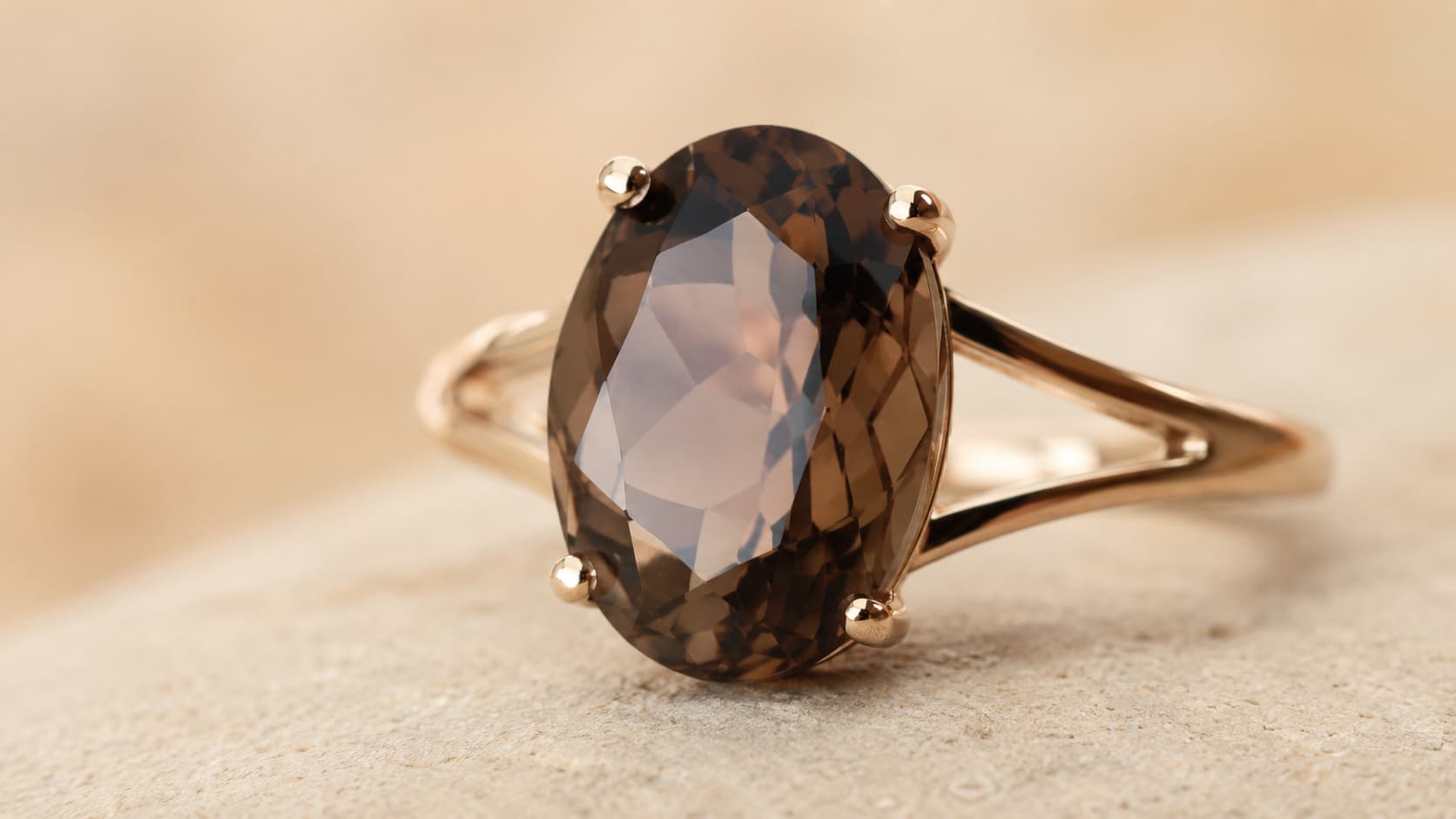
Smoky quartz has long been associated with grounding, protection, and calm in crystal folklore and various spiritual traditions, often linked to the root chakra. These are cultural and metaphysical beliefs rather than scientifically proven properties, but they’re part of why the stone has stayed popular for centuries — people have consistently been drawn to its earthy, understated color and the sense of stability it seems to represent, separate from any factual claim about what the stone can actually do.
Its down-to-earth color has also made it a practical everyday favorite outside of any spiritual meaning. Because it pairs well with warm-toned metals like yellow gold, rose gold, and copper, and reads as more neutral and low-key than brighter gems, smoky quartz has settled into a role as a versatile, wear-with-anything stone rather than an occasion-only piece — the gemstone equivalent of a favorite pair of brown boots.
Frequently Asked Questions
Is smoky quartz a real gemstone or is it fake?
It’s a completely real, naturally occurring gemstone. Whether a specific piece formed its color naturally in the ground or was created through lab irradiation of colorless quartz, the mineral itself is genuine quartz, not a synthetic imitation or a different material dyed to look like it.
Does smoky quartz fade over time?
It can, though it usually takes unusual conditions to cause noticeable fading. Extended exposure to high heat or, less commonly, very intense long-term sunlight can lighten the color since the same radiation-based color center that creates the hue can also be disrupted by heat.
Can you wear smoky quartz every day?
Yes, its Mohs hardness of 7 makes it a reasonably durable choice for rings, bracelets, and other pieces worn regularly, similar to amethyst or citrine. Avoiding sharp impacts and extreme heat, and storing it away from harder gems, keeps it looking good over time.
What’s the difference between smoky quartz and smoky topaz?
They’re often confused because of the similar nickname, but they’re different minerals entirely — smoky quartz is a variety of quartz, while topaz is a separate mineral species. “Smoky topaz” is generally considered a misleading or outdated trade name for smoky quartz rather than an accurate description of true topaz.
Is all smoky quartz treated with radiation?
No, but a large portion of what’s sold commercially has been artificially irradiated from colorless quartz to reliably produce the smoky color. Naturally formed smoky quartz absolutely exists and is mined in significant quantities, but the two look nearly identical without lab testing, so reputable sellers should be able to specify which one is being sold.
Conclusion
Smoky quartz earns its popularity honestly: it’s genuinely durable enough for daily wear, its color comes from a real and fascinating natural process rather than a coating, and it offers an earthy, versatile look that works with both everyday pieces and statement jewelry. Whether a given stone formed slowly underground or was irradiated in a lab, it remains the same mineral, the same hardness, and the same warm, smoky character that has made this quartz variety a mainstay in gemstone collections for generations.