A ruby and a sapphire are made of almost the exact same mineral, yet one is fiery red and the other is deep blue. Color is the first thing most people notice about a gemstone, and it’s usually the reason a stone catches someone’s attention in the first place, but the underlying cause rarely gets a second thought. The answer isn’t magic or luck. It comes down to a handful of physical processes happening at the atomic level, and each one leaves its own fingerprint on the finished stone.
What Causes Color in a Gemstone
Most gemstone color comes from tiny amounts of “foreign” atoms sitting inside a mineral that would otherwise be clear, along with a few cases where light itself gets bent, split, or bounced around inside the stone. Gemologists group these causes into a small number of categories, and nearly every colored gem falls into one of them.
A chemically pure gemstone, in most cases, starts out colorless. Quartz, corundum (the mineral behind rubies and sapphires), and beryl (the mineral behind emeralds and aquamarines) are all naturally clear in their purest form. Color gets added afterward, in roughly the same way a few drops of dye change the appearance of water without altering what the water fundamentally is. In gemstones, those “drops” take the form of trace elements, structural defects, or optical effects, and each works through a different mechanism.
Trace Elements: The Main Cause of Gem Color
Trace elements are the single biggest reason gemstones show color, and they work by absorbing certain wavelengths of light while letting others pass through or bounce back out. Elements such as chromium, vanadium, iron, and manganese absorb parts of the visible light spectrum, and the wavelengths that aren’t absorbed are reflected or transmitted back out, becoming the color that’s actually seen.
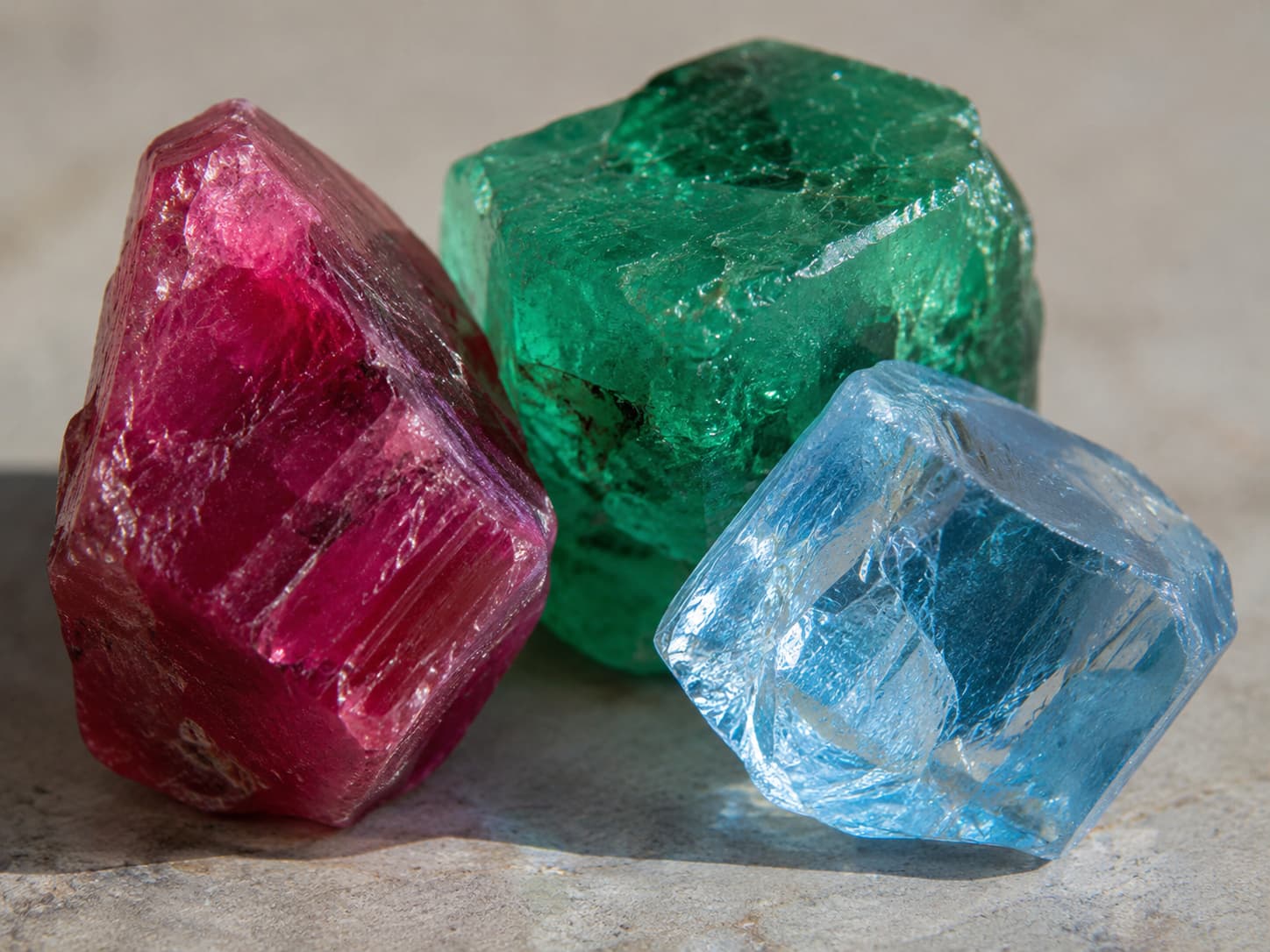
Corundum makes the point clearly, since one mineral is responsible for several of the world’s most recognized gemstones depending entirely on which trace element happens to be present. Pure, untouched corundum has no color at all and is sold as white sapphire. Trace iron shifts it toward yellow, a mix of iron and titanium produces the blue seen in fine sapphires, and even a faint trace of chromium is enough to turn the same crystal into ruby. The gap between a crystal with no market value and one of the most expensive gem materials on the planet often comes down to a concentration of atoms too small to detect without lab equipment.
Beryl, the mineral family behind emerald, aquamarine, and morganite, follows the identical pattern. Stripped of any trace elements, it comes out of the ground colorless, a form gem dealers know as goshenite. Introduce chromium or vanadium and it becomes emerald, swap in manganese and it becomes the soft pink of morganite, and a trace of iron shifts it toward the blue-green of aquamarine. Gems that behave this way, taking on color from an outside impurity rather than from their own base chemistry, are grouped by gemologists under the term “allochromatic.”
A smaller group of gems works the opposite way. In “idiochromatic” stones, the coloring element is built into the mineral’s actual chemical formula, so the color doesn’t vary from specimen to specimen. Peridot’s green comes from iron because iron is one of the essential building blocks of the mineral itself, not a random impurity, which is why peridot only ever appears in shades of green while sapphire spans nearly the entire color spectrum.
The same trace element can produce entirely different colors depending on which mineral it ends up inside. Chromium turns corundum red, producing ruby, but turns beryl green, producing emerald. The element alone doesn’t determine the color — the combination of the element and the surrounding crystal structure does.
Why Chromium Makes Ruby Red and Emerald Green
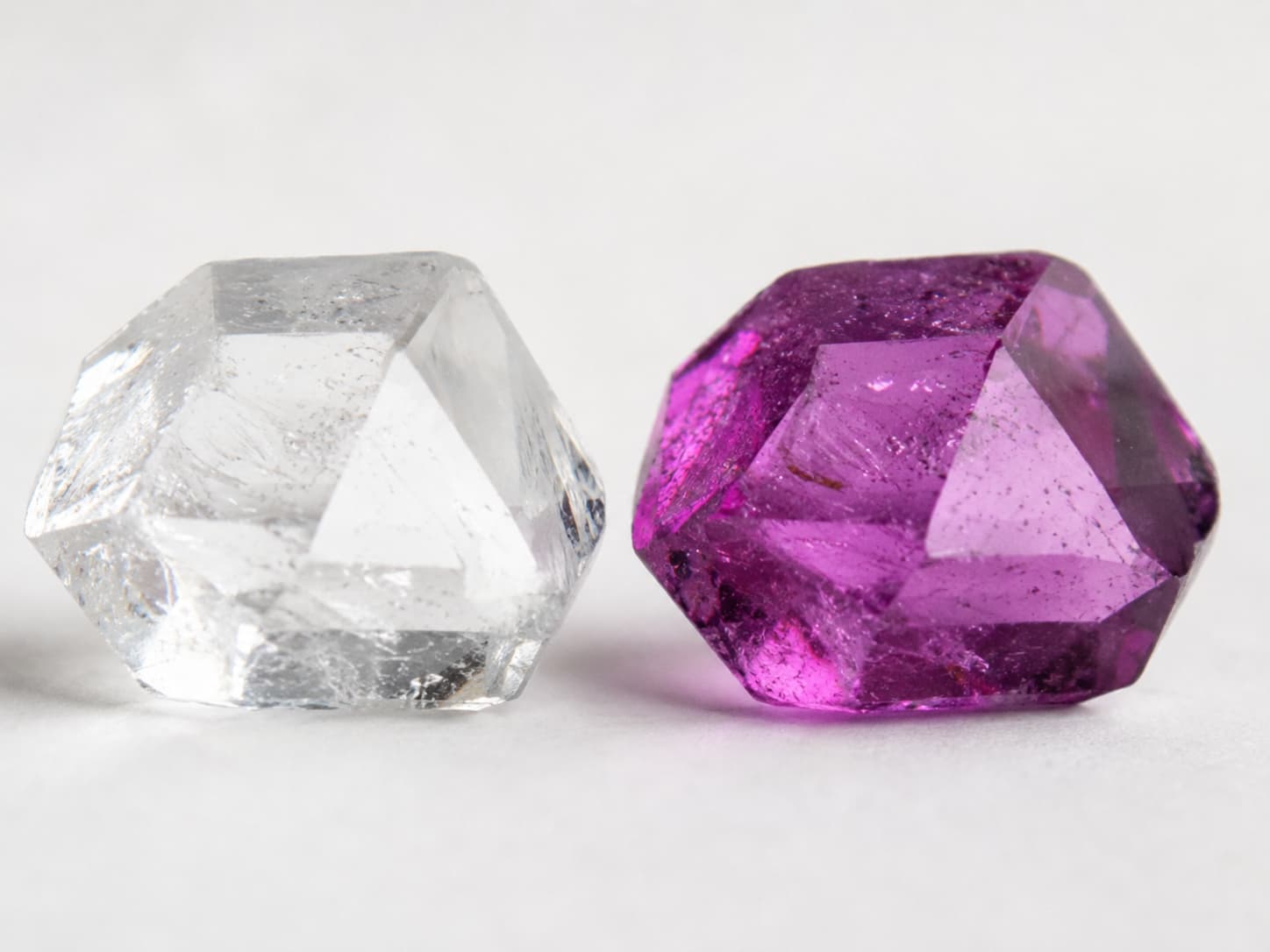
The outcome comes down to how tightly the surrounding crystal structure squeezes the chromium atom, which changes exactly which wavelengths of light it’s able to absorb. Chromium atoms have electrons that jump between energy levels when they absorb light, and the spacing between those energy levels depends on the size and shape of the crystal “cage” the chromium sits inside.
In ruby, chromium sits inside corundum’s tightly packed structure, which forces its electrons to absorb yellow-green and violet light, leaving red as the dominant color that reaches the eye. In emerald, that same chromium atom sits inside beryl’s more open crystal lattice, so the spacing between energy levels shifts and the atom absorbs different wavelengths, producing green instead of red. The identical ingredient, placed in a different container, produces a completely different result — a demonstration of how much crystal structure matters alongside chemistry.
Color Centers: Another Way Gems Get Color
Some gemstone color has nothing to do with foreign atoms at all. It comes from tiny flaws in the crystal structure, such as a missing atom or a stray electron sitting where it shouldn’t be. A color center is a defect in the crystal lattice — a missing atom or an extra electron — that absorbs certain wavelengths of light and produces color even though the gem’s underlying chemistry hasn’t meaningfully changed.
Topaz is one of the clearest examples. Most of its natural colors, including yellow, brown, and blue, are produced by color centers rather than by a coloring element, with chromium responsible only for the pink-to-violet shades. This is also why nearly all blue topaz sold today started out as colorless topaz that was exposed to radiation and then heat, deliberately recreating the same kind of vacancy defects that occur naturally, on a much faster timeline.
Diamonds show a more dramatic version of the same principle. Natural brown and pink diamonds often get their color from vacancy clusters that form when a diamond is squeezed and deformed deep in the earth’s mantle, long after it originally crystallized, rather than from any trace element at all. Two diamonds can be chemically almost identical, yet one is colorless while the other carries a rare and valuable pink tint, simply because it was physically stressed at some point across billions of years underground.
Smoky quartz follows a related pattern. Natural background radiation inside the earth knocks electrons loose within the quartz structure over long periods of time, and those displaced electrons create a defect that absorbs light and produces the brown-to-black smoky color. Certain lab treatments, including irradiating gems intentionally, work by speeding up this same kind of process rather than inventing a new one.
Structural Color: Light Tricks, Not Chemistry
A separate group of gems gets its color purely from the physical structure of the stone bending and splitting light, with no coloring atoms involved. Opal is the most well-known example, and its structure is built from countless microscopic silica spheres packed together in ordered layers. Light entering the stone bounces between these spheres and the tiny gaps separating them, and as different beams travel slightly different distances, they interfere with each other and split into the individual colors of the spectrum. The size of the spheres decides which colors show up: opals built from larger spheres flash red as they’re turned in the light, while those built from smaller spheres tend to flash blue, green, or purple instead, and since no two opals grow with an identical sphere arrangement, no two ever show quite the same pattern.
Labradorite relies on a related but distinct structure. Its crystal formed with extremely thin internal layers stacked on top of one another, and when light passes through them, it gets bounced between the layers and separated into individual wavelengths, similar to what happens when light passes through a prism. Turning the stone changes which wavelength lines up with the eye, which is why labradorite seems to flash a different color, often blue, green, or gold, depending on the angle it’s held at. Moonstone produces a gentler cousin of this effect, called adularescence, where light scattering within its own thin feldspar layers creates a soft, floating glow rather than the sharper color flashes seen in labradorite.
None of these stones rely on chromium, iron, or any other trace element for their signature appearance. A full chemical analysis would turn up nothing relevant, because the source of the color is architecture rather than ingredients.
Why Some Gems Change Color in Different Light
A small number of gems, most famously alexandrite, genuinely shift color depending on whether they’re viewed under sunlight or incandescent light, and the cause is how their coloring element interacts with different light sources. Alexandrite owes its color to chromium, but unlike ruby or emerald, the balance it strikes between red and green is so even that switching the light source is enough to tip it from one to the other. A top-quality stone looks convincingly green under daylight or fluorescent bulbs, then reads as red the moment it’s carried under warm incandescent lighting.
This happens because alexandrite’s chromium absorbs light so evenly across the middle of the visible spectrum that the gem stays balanced on a knife’s edge between two colors, and the light source itself tips that balance. Daylight is rich in blue and green wavelengths, so those tones dominate and the stone reads green. Incandescent light shifts the available spectrum toward red and orange, so the same stone reads red under that light, even though nothing about the gem has physically changed between the two settings. It functions less as a trick of the stone and more as a direct readout of whatever light source happens to be present.
Alexandrite isn’t the only example. Certain garnets, particularly a rare variety found in Madagascar and parts of East Africa, show a similar shift between bluish-green and purplish-red depending on the light source, driven by a comparable combination of vanadium and chromium. Because genuine, strongly color-changing stones are rare in nature, this effect alone can raise a gem’s value considerably compared with a similar stone that stays a single color regardless of lighting.
How Treatments Change Gemstone Color
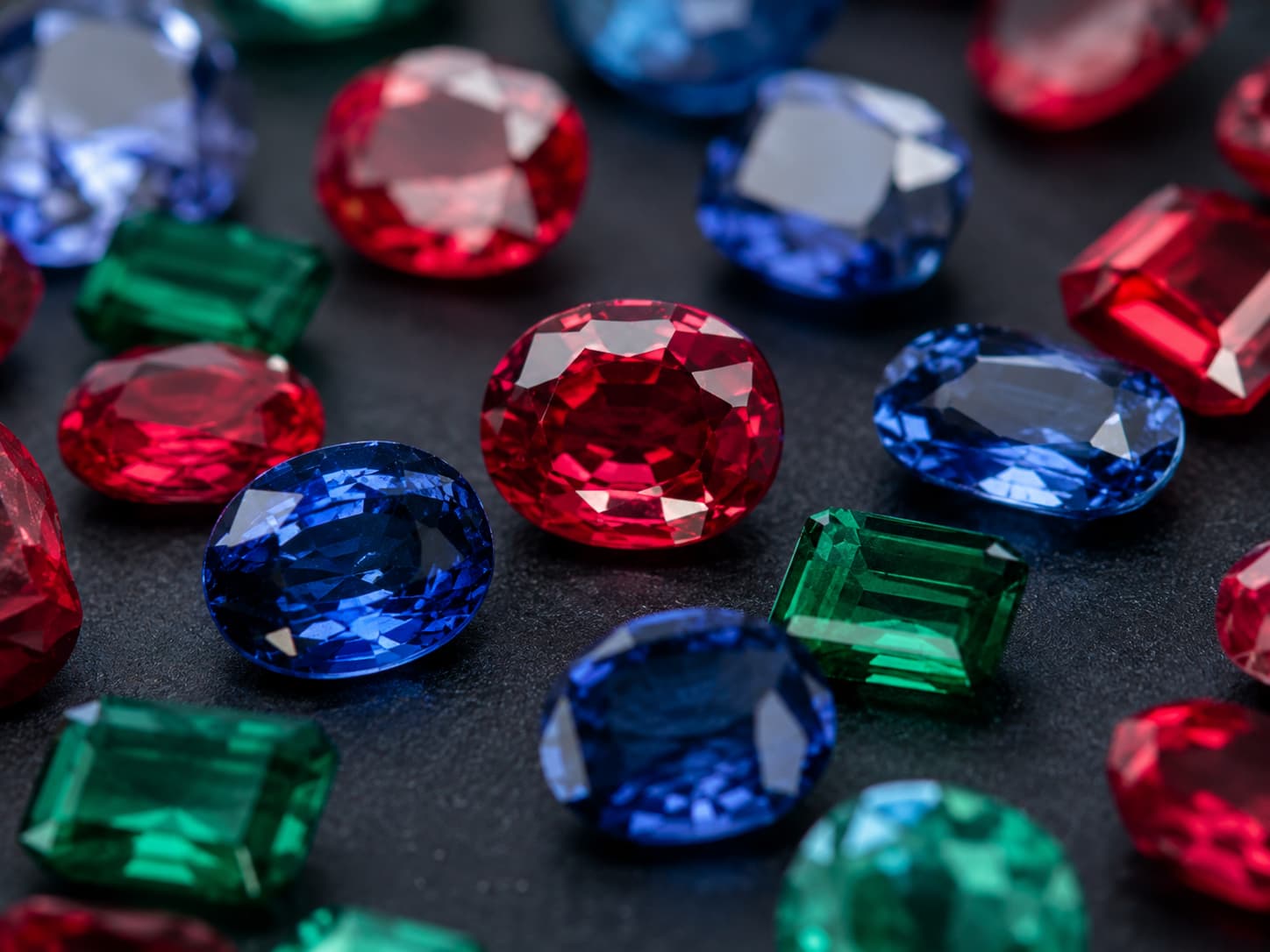
Color treatments are extremely common in the jewelry industry, with heat being by far the most widely used and accepted method. Heat treatment works by encouraging trace elements already present in a stone to shift their oxidation state, or by dissolving small internal inclusions, either of which can lighten, darken, or clarify color. The vast majority of tanzanite on the market and a large share of sapphires and rubies sold today have been heat treated, and reputable sellers disclose this because it affects both appearance and value.
Irradiation is another widely used method, effectively recreating in a lab what natural background radiation does over thousands of years underground. Nearly all blue topaz sold commercially goes through this process, with irradiation creating the color and a follow-up heating step used to stabilize it. Dyeing, coating, and diffusion treatments, in which color-causing elements are forced into just the surface layer of a stone, are also used, particularly on more porous or heavily included gem materials. None of these methods are inherently deceptive when disclosed, but they do mean that “natural color” and “natural stone” aren’t always the same claim.
Frequently Asked Questions
Is a colorless gemstone the same mineral as its colored version?
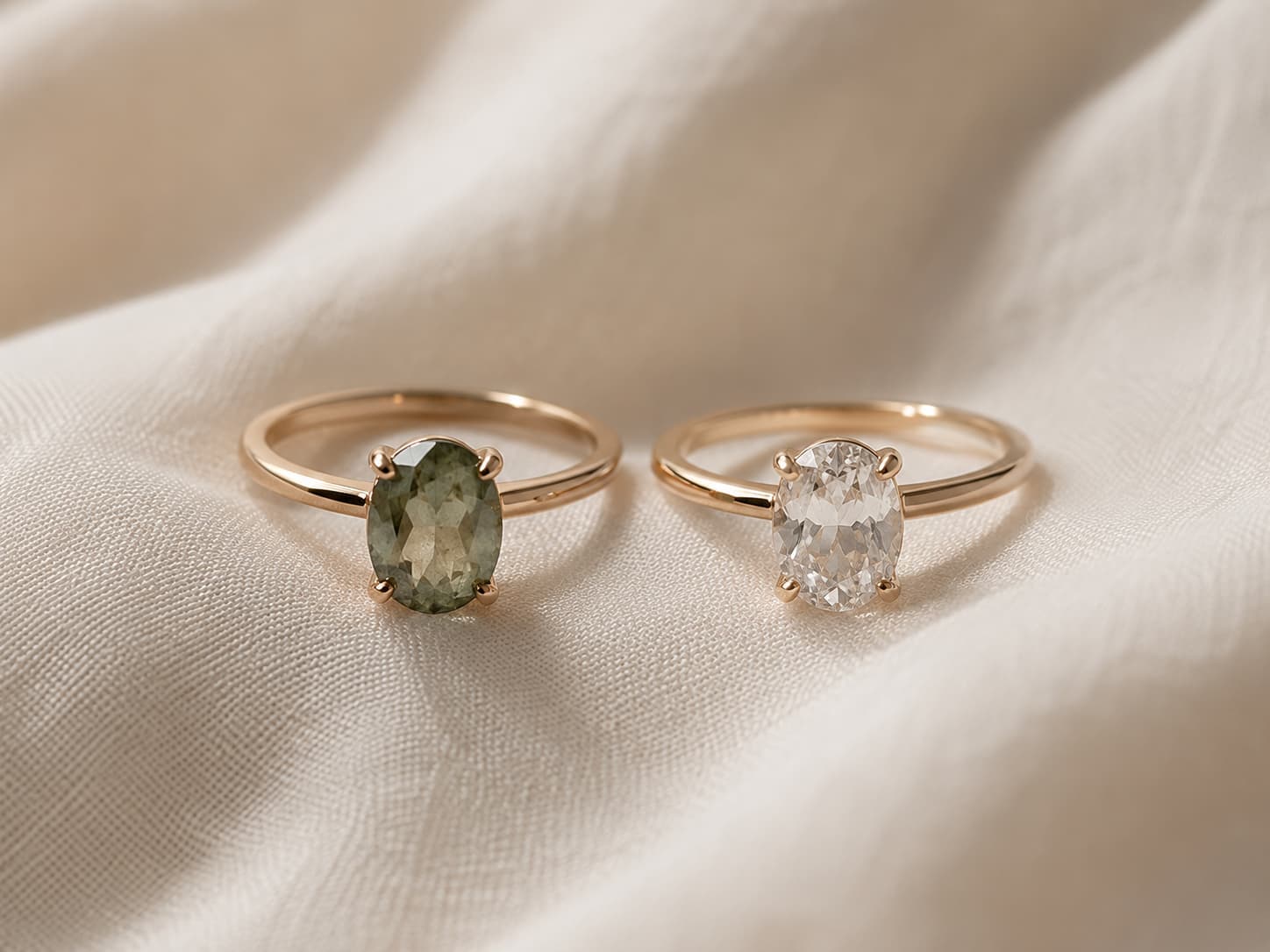
Yes, in most cases. Colorless corundum, colorless beryl (goshenite), and colorless quartz are chemically identical to their famous colored counterparts — ruby, emerald, and amethyst — aside from the trace elements or structural quirks that add color. The base mineral doesn’t change; only the impurities or defects do.
Why do some gemstones only ever come in one color?
Idiochromatic gems, such as peridot and malachite, get their color from an element that’s part of their core chemical formula rather than a random trace impurity. Because that element can’t be removed without the mineral stopping being that mineral, the color stays consistent across every specimen.
Does a deeper color always mean a more valuable gemstone?
Not automatically. Value depends on the ideal color range for that specific gem type, along with tone, saturation, clarity, and cut. A ruby that’s too dark can be worth less than a slightly lighter, more vivid one, since gem buyers generally seek the most balanced, vivid version of a color rather than simply the darkest.
Can two gemstones with the same trace element look completely different?
Yes. The concentration of the trace element, the specific crystal structure it sits inside, and the possible presence of a second trace element working alongside it can all shift the final color. This explains why chromium produces red in ruby but green in emerald, and why two sapphires with similar trace elements can still land in noticeably different shades of blue.
How can a treated gemstone’s color be identified?
For most treatments, appearance alone isn’t enough to tell — this is why lab reports from recognized gemological labs matter for higher-value purchases. Certain treatments, such as fracture filling or dyeing, can sometimes be identified under magnification by a trained gemologist, but heat treatment in particular is often undetectable without specialized lab equipment.
Conclusion
Gemstone color comes down to a short list of physical rules repeating themselves in countless combinations: stray atoms absorbing specific wavelengths of light, tiny defects in a crystal lattice, or microscopic structures splitting light apart before it reaches the eye. The same chromium atom that produces red in ruby produces green in emerald simply because of the crystal it happens to occupy, and a stone like opal needs no coloring atoms at all to produce its display. Behind every colored gemstone sits a specific, traceable piece of physics and chemistry, whether that’s a few wandering atoms, a flaw in a crystal lattice, or light bending its way through a structure built one microscopic layer at a time.