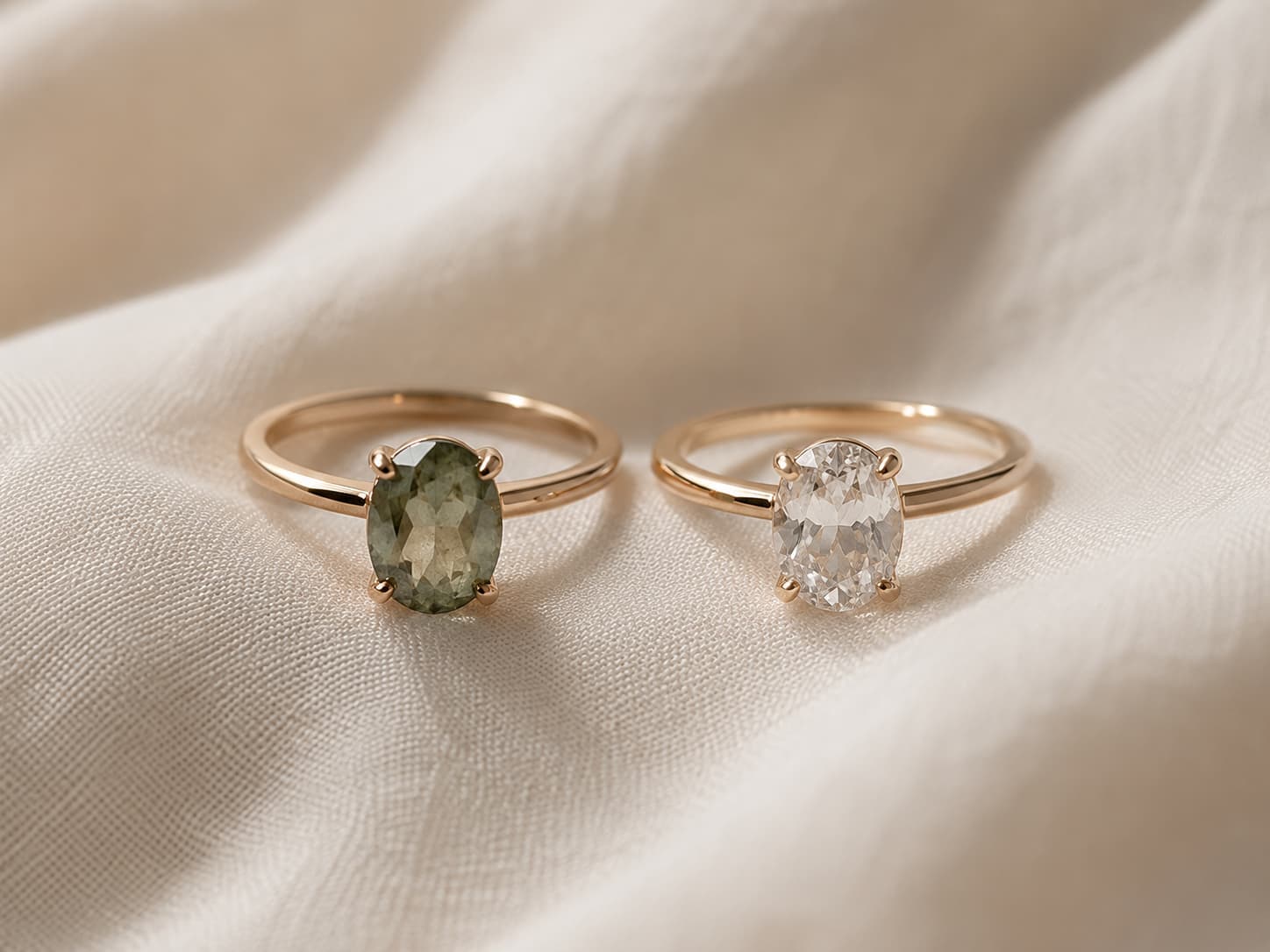
Jewelry counters today often display two versions of the same gemstone side by side, one labeled “natural” and the other “lab-created” or “synthetic,” with a price gap between them despite looking nearly identical. That gap confuses a lot of shoppers, and reasonably so. Both types of gemstones can be chemically real, but where and how each one formed changes its story, its rarity, and what a buyer is actually paying for.
What Does “Synthetic Gemstone” Mean?
A synthetic gemstone is a gem grown by scientists in a lab that shares the same chemical makeup, crystal structure, and optical properties as a gemstone pulled from the ground. It is not fake in the sense of being a different material dressed up to look like the real thing — a synthetic ruby is made of the same mineral, corundum, as a natural ruby.
This is the detail that trips most people up. A “synthetic” diamond is still a diamond by every scientific measure: same hardness, same sparkle, same chemistry. What makes it synthetic isn’t a lesser quality, it’s a different birthplace. Scientists figured out decades ago how to recreate the extreme heat and pressure that forms gems underground, except they do it inside a machine instead of waiting for millions of years of geology to do the work.
A synthetic gem and a “simulant” are not the same thing. A simulant, like cubic zirconia standing in for a diamond, only copies the look of a stone. A synthetic gem copies the actual chemistry.
A separate distinction exists between “synthetic” and “treated.” A treated or “enhanced” gemstone is a natural stone that has been altered in some way after it came out of the ground, often to improve its color or clarity — heating a natural sapphire to deepen its blue, for instance. That stone remains natural in origin; it has simply had some help along the way. A synthetic stone, by contrast, never came from the ground at all. Both categories require honest disclosure from a seller, but they answer entirely different questions about a gem’s history.
How Are Synthetic Gemstones Made?
Labs mainly rely on two methods: one that mimics deep-Earth heat and pressure, and one that grows crystals layer by layer from a vapor or solution. Both processes compress, into weeks or months, what nature normally takes millions of years to accomplish.
The older technique, called flame fusion, applies intense heat to raw mineral powder so it melts and re-crystallizes into a gem-quality mass. The method dates back to 1902, when French chemist Auguste Verneuil discovered that powdered aluminum oxide could be melted in an oxyhydrogen flame and allowed to re-form, drop by drop, into a solid crystal of ruby. That same basic principle still produces synthetic rubies and sapphires today, and it opened the door to more than a century of further innovation in lab-grown gems.
The newer technique grows a gem starting from a tiny sliver, or “seed,” of an existing crystal, adding material to it in thin layers inside a controlled chamber until it reaches full size, a process that can take anywhere from several weeks to a few months depending on the gem and the size being grown. Diamonds are typically grown this way, using either high pressure combined with high temperature, or a vapor-based method that builds up carbon atoms layer by layer inside a low-pressure chamber. Depending on the method and the gem type, growers can also introduce trace elements to control color, the same way nature does with impurities.
How Do Natural Gemstones Form Underground?
Natural gemstones form inside the Earth over enormous stretches of time, shaped by heat, pressure, and chemical activity that no lab fully replicates on the same scale. Diamonds, for example, crystallize deep in the Earth’s mantle and get pushed to the surface through volcanic activity, a process that plays out over roughly one to 3.3 billion years for most diamonds in circulation.
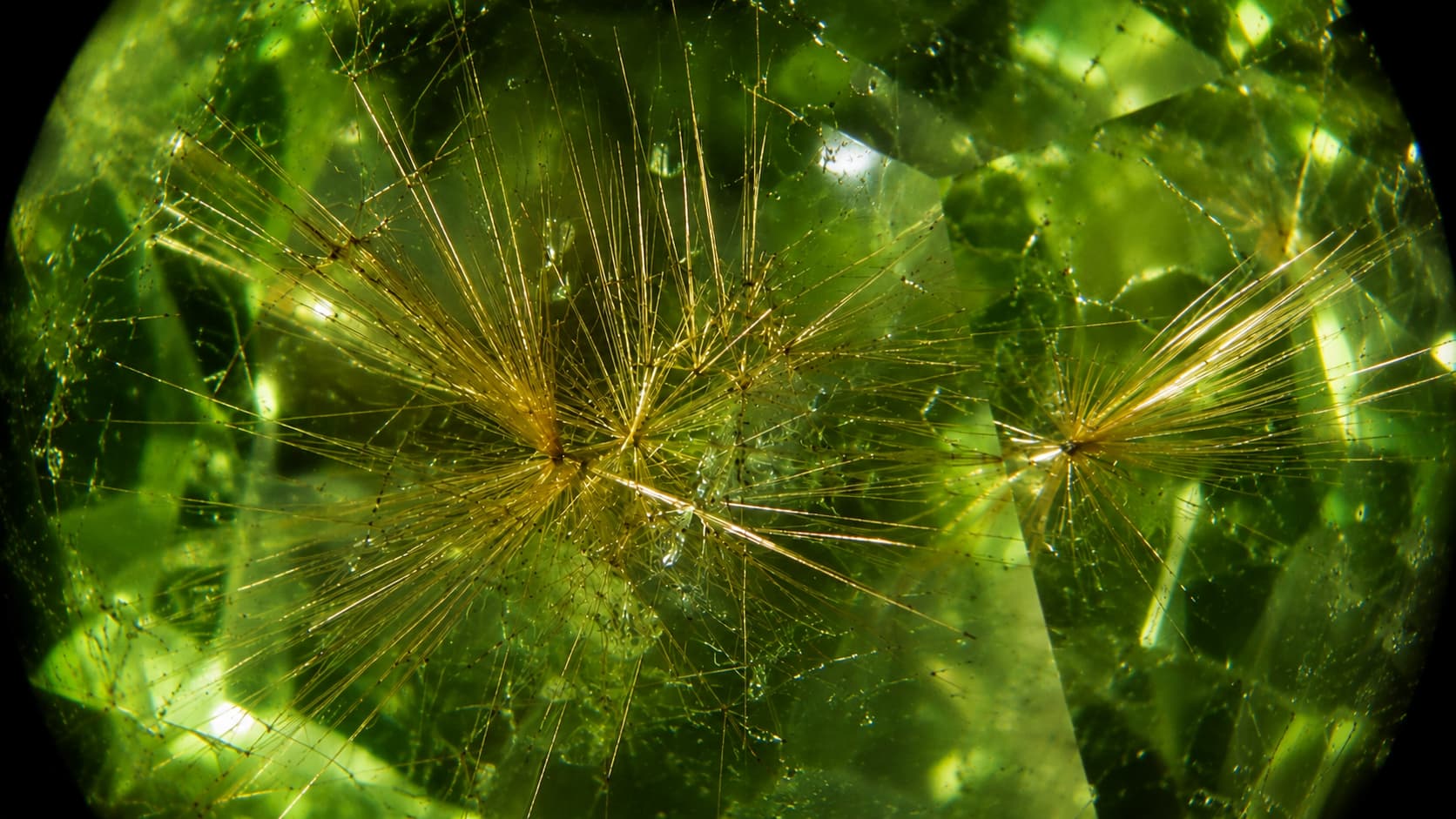
That timescale sits at the heart of why natural stones carry the price and prestige they do. Every natural gemstone is essentially a leftover from ancient geological events, shaped by whatever combination of minerals, pressure, and temperature happened to exist in one particular spot on the planet at one particular point in time. No two natural stones form under identical conditions, which is why natural gems typically carry small internal marks called inclusions, tiny fingerprints of their specific underground journey.
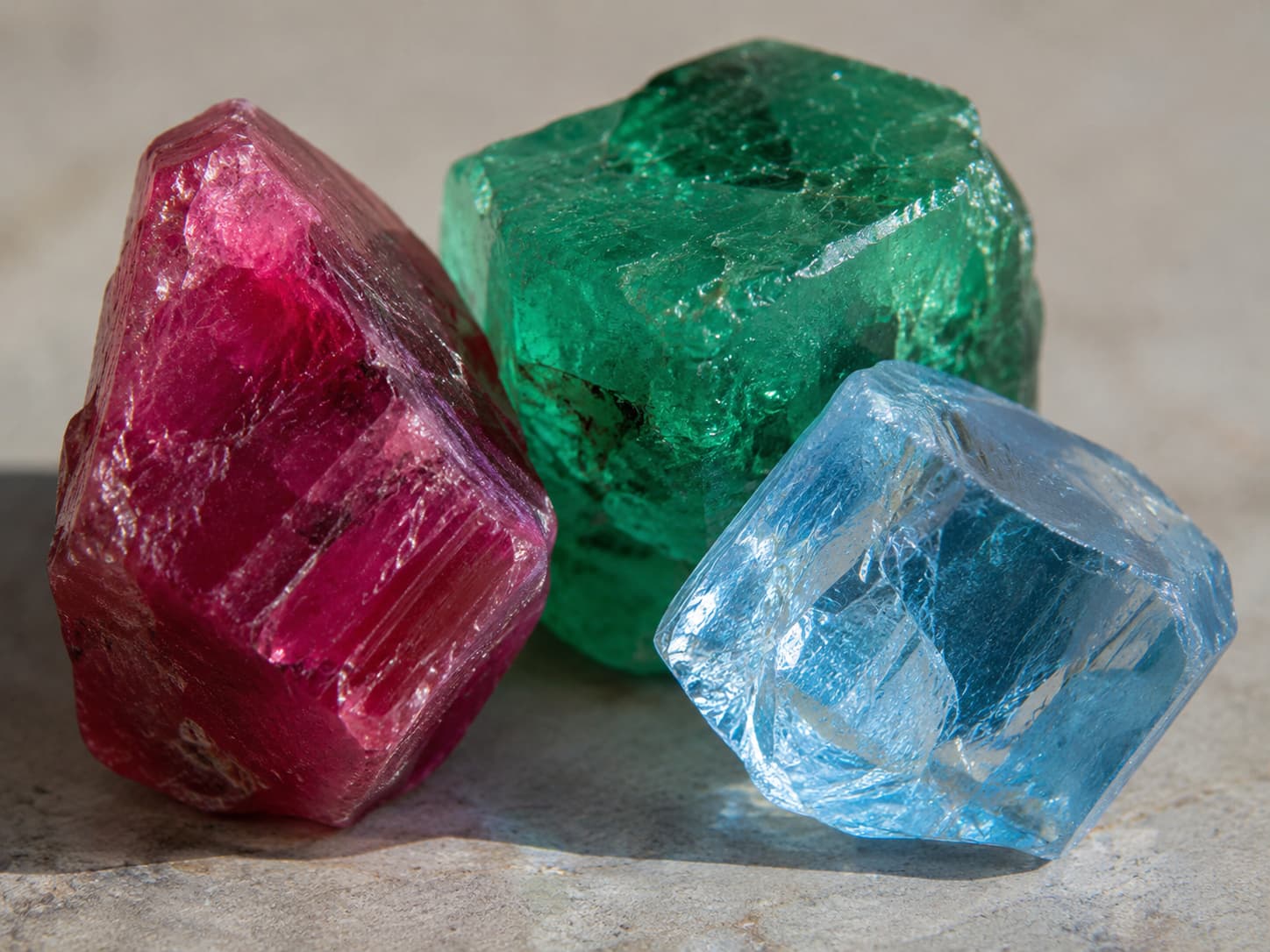
Different gems also form through different geological processes, not just different timelines. Sapphires and rubies crystallize in certain types of metamorphic and igneous rock, emeralds tend to form where beryllium-rich fluids meet chromium or vanadium deep underground, and pearls form organically inside living mollusks rather than through mineral crystallization at all. Extracting a natural stone from the ground is its own separate challenge on top of that formation process, which is why mining operations, and the specific regions a stone comes from, end up playing such a large role in how a gemstone is priced and marketed.
Can Synthetic and Natural Stones Be Told Apart Visually?
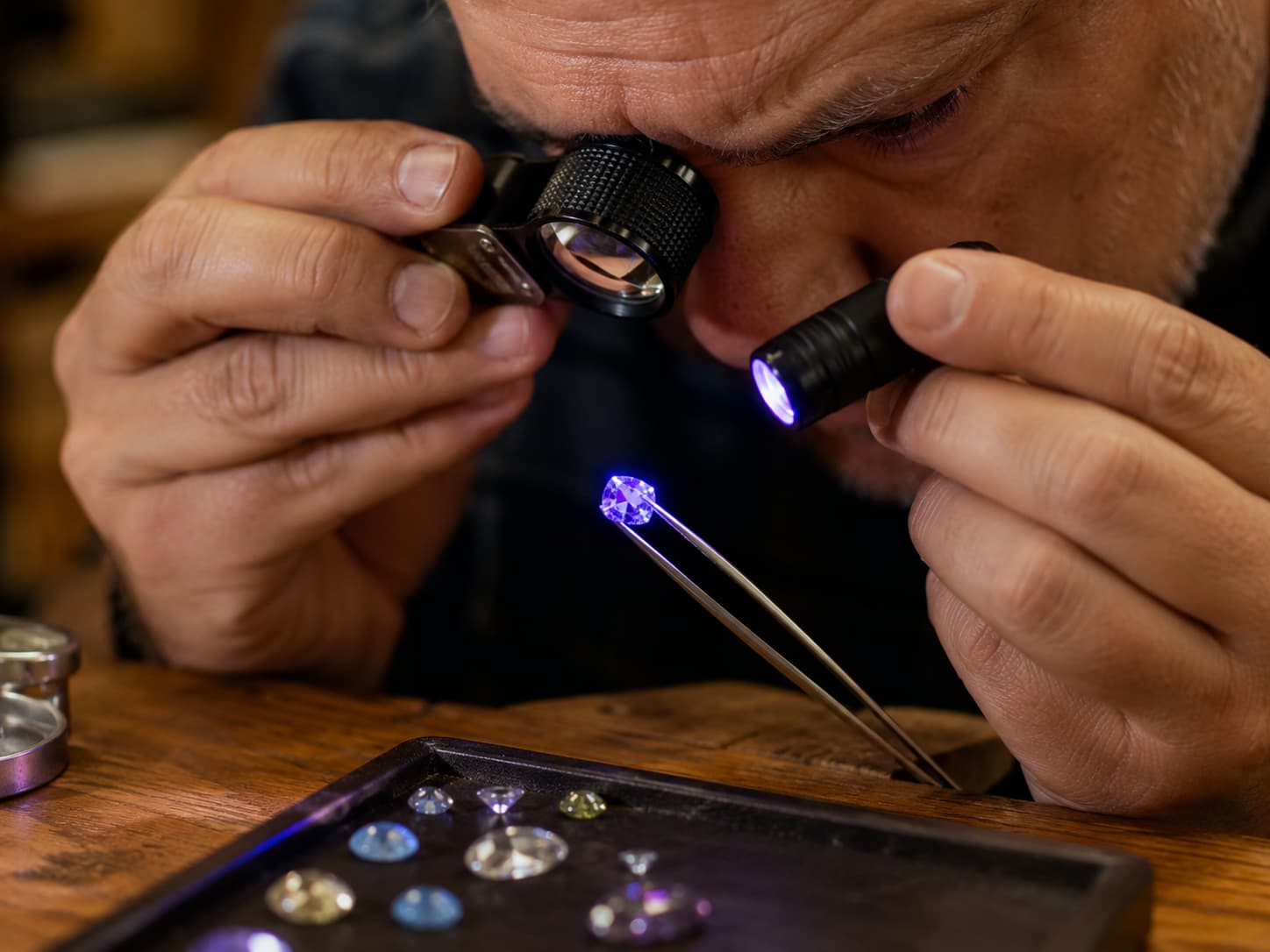
Rarely, and not with the naked eye. Distinguishing a synthetic stone from a natural one usually requires a trained gemologist using specialized lab equipment, since the two can share the same refractive index, hardness, and general appearance.
A handful of patterns offer clues, though none work reliably on their own. Natural stones often contain tiny mineral inclusions, gas bubbles, or growth lines typical of underground formation, while lab-grown stones tend to be cleaner, sometimes carrying telltale marks from their specific growth method instead, such as tiny metallic flecks from the equipment used. Under ultraviolet light, some synthetic stones fluoresce differently than their natural counterparts, because the trace elements picked up underground differ from those used in a lab. Under magnification, natural crystals tend to show curved or irregular growth zoning, while some lab-grown stones show more angular, repetitive patterns tied to their manufacturing process. A tool called a spectroscope measures how a stone absorbs light at different wavelengths, revealing trace elements that point toward a natural or lab origin even when a stone looks flawless to the eye. And because lab conditions are so tightly controlled, synthetic stones are statistically more likely to come out eye-clean or near-flawless, while a natural stone with that same level of clarity is comparatively rare and priced accordingly.
Because these clues require training and equipment to read properly, the only reliable confirmation comes from a certificate issued by an accredited, independent gem lab. Such labs combine microscopes, spectrometers, and sometimes trace-element scanning to reach a confident conclusion, and the resulting report states plainly whether a stone is natural, synthetic, or a specific type of simulant.
Are Synthetic Gemstones “Fake”?
No — a synthetic gemstone is a real gemstone made in a different location. What is misleading is when a stone is marketed as “genuine” or “natural” while actually being synthetic, or when a completely different material such as glass is sold as a gemstone without disclosure. That is fraud, not the existence of synthetic stones themselves.
Four categories tend to get lumped together by mistake, despite meaning very different things:
| Term | What it means | Chemical match to natural? | Example |
|---|---|---|---|
| Natural | Formed underground by geology, mined from the earth | Yes — it is the natural mineral | A mined emerald |
| Treated / enhanced | A natural stone altered after mining to improve color or clarity | Yes — origin is still natural | A heat-treated natural sapphire |
| Synthetic / lab-created | Grown by scientists, same mineral as the natural version | Yes — same chemistry, different origin | A lab-grown emerald |
| Simulant / imitation | A different material made to resemble a gem | No — chemically unrelated | Green glass resembling emerald |
Two of these four categories, natural and synthetic, are chemically the real mineral, while only the simulant category is a true look-alike made of something else entirely. That distinction matters more than the price tag when evaluating exactly what a gemstone is. Reputable jewelers are required to disclose which category a stone falls into, and a proper sales receipt or appraisal should state it in writing. A seller unable to clearly identify whether a stone is natural, treated, synthetic, or simulated is a warning sign worth taking seriously.
Natural vs. Synthetic Gemstones: Why the Price Gap?
Synthetic gemstones cost less mainly because they skip the rarity and mining costs baked into natural stones, and because labs can produce them predictably in a matter of weeks rather than relying on a lucky geological accident. Natural gemstones require expensive, often risky mining operations, and their supply is genuinely limited by what the Earth happened to produce.
Rarity is the core economic driver behind that gap. A flawless natural sapphire is valuable partly because so few of them exist in that quality, and once a particular region has been mined out, that specific source is gone for good. A lab, on the other hand, can grow another batch of comparable synthetic sapphires whenever demand calls for it, which keeps the supply, and therefore the price, far more stable and accessible.
This plays out differently depending on the gem. Lab-grown diamonds have consistently sold for a fraction of the price of a comparable natural diamond, and that gap has generally widened as growing technology has become more efficient and production has scaled up. With colored gems like sapphire, ruby, and emerald, the price gap can be even larger for top-quality natural specimens, since exceptional natural color and clarity in those stones is especially hard to come by.
Natural or Synthetic: Which Should You Choose?
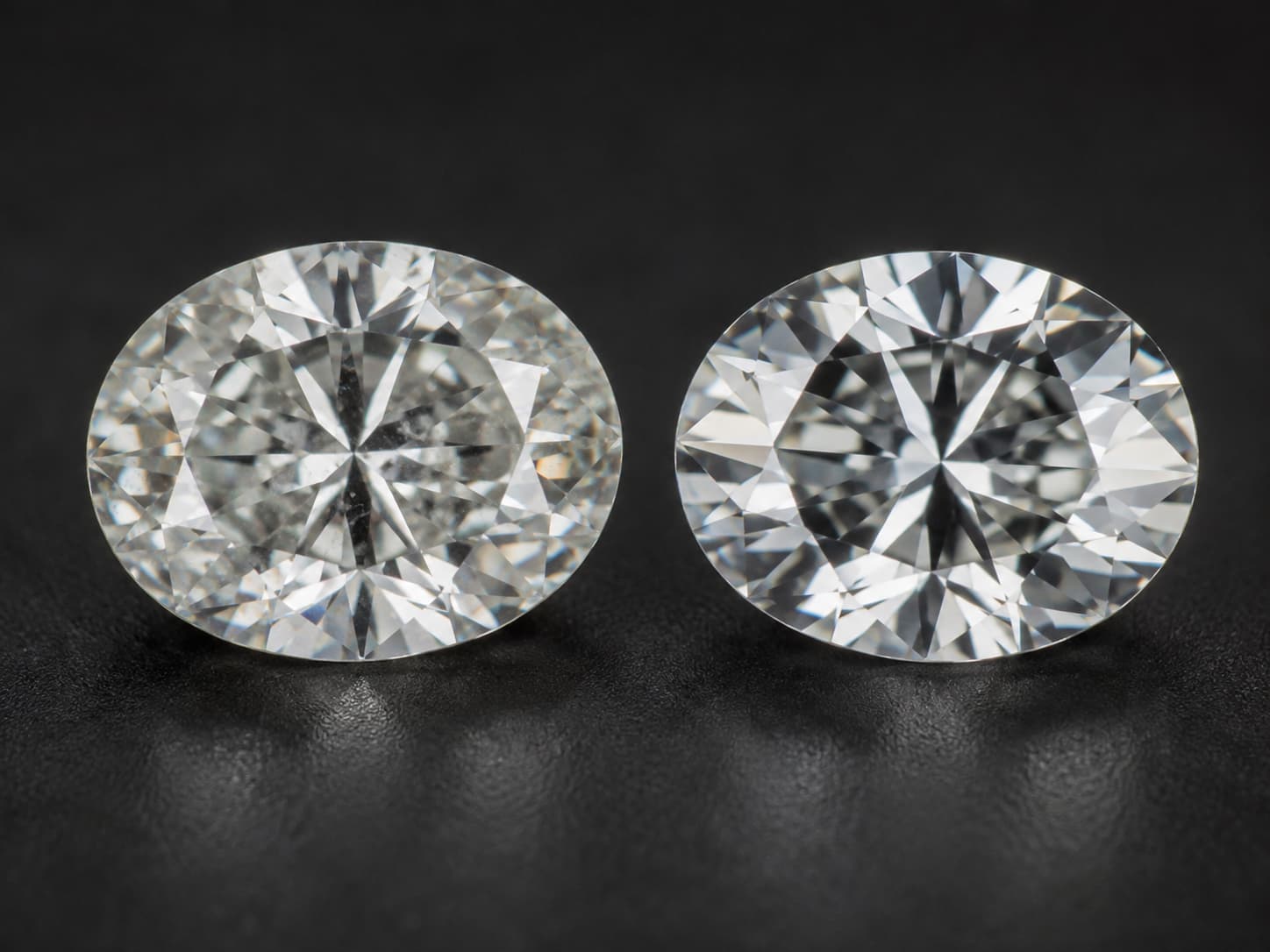
Neither option is objectively superior; the right choice depends on what matters most in a given piece of jewelry. Sentimental history, rarity, and the appeal of owning something shaped by ancient geological forces point toward a natural stone. A chemically identical stone with excellent clarity at a fraction of the cost, without compromising on how the gem actually performs, points toward a lab-created one.
Budget plays a genuine role in that decision as well. Lab-created stones allow buyers to access larger or higher-clarity gems than a natural-stone budget might otherwise permit, which is part of why they have grown so popular for engagement rings and other large centerpiece jewelry in recent years.
Frequently Asked Questions
Is a lab-created diamond a real diamond?
Yes. A lab-created diamond has the same carbon crystal structure, hardness, and optical properties as a mined diamond, and the only difference lies in where it formed. Gemological organizations classify it as a genuine diamond, just with a different origin.
Do synthetic gemstones hold their value like natural ones?
Generally no. Because labs can produce synthetic stones on demand, they do not carry the same scarcity-driven resale value that natural stones can build over time, especially for rare natural colors or exceptional clarity grades.
How can a buyer confirm that a gemstone is natural?
The most reliable proof is a certificate from an accredited, independent gem lab stating the stone’s origin. Reputable jewelers provide this documentation without hesitation, and it remains the only fully dependable way to confirm a stone was not lab-grown or treated without disclosure.
Are synthetic gemstones more eco-friendly than mined ones?
It depends on the specific gem and the energy source powering the lab, since growing crystals still requires significant energy input. Synthetic stones do avoid the land disruption and extraction impact tied to mining, though neither option is entirely impact-free.
Can a jeweler tell the difference just by looking at a stone?
Not reliably with the naked eye. Even experienced jewelers typically need magnification, ultraviolet light tests, or specialized lab instruments to distinguish a synthetic stone from a natural one with confidence.
Conclusion
Natural and synthetic gemstones are both genuine gems in the chemical sense, and the real difference comes down to origin, rarity, and the story behind the stone rather than which one sparkles more. A natural gem carries millions of years of geological history and the scarcity that comes with it, while a synthetic gem offers that same mineral, grown intentionally and affordably in a controlled setting. Understanding which category a stone falls into, and requesting proper documentation, is what actually protects a buyer, far more than trying to spot the difference by eye.