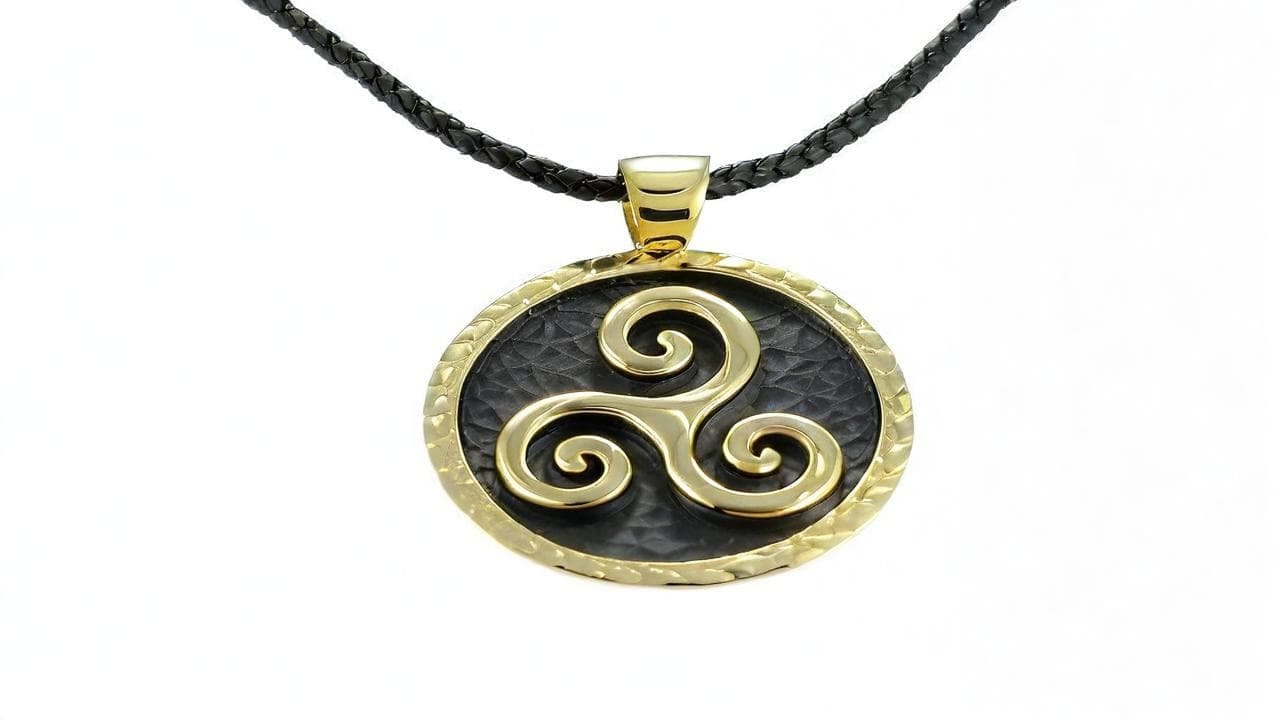
The triskelion stands as one of humanity’s most enduring symbols, with archaeological evidence dating its origins to the Neolithic period around 3200 BCE. First appearing on ancient stones in Malta and later spreading across European and Asian cultures, this three-armed spiral design captures the concept of eternal motion and life’s continuous cycles. The symbol gained particular prominence in Celtic culture, where it was extensively used in jewelry and decorative arts, appearing in illuminated manuscripts and stone carvings. Today, the triskelion continues to hold deep cultural significance, especially in jewelry where it serves as a bridge between ancient wisdom and contemporary design.
What is a Triskelion Symbol?
The triskelion emerges from prehistory as a precisely crafted symbol of mathematical and artistic significance, characterized by its three-armed spiral design radiating from a central point. Archaeological findings from Neolithic sites across Europe demonstrate how early artisans developed sophisticated geometric understanding to create this perfectly balanced symbol, which maintains its visual impact whether carved in stone, cast in metal, or worked into delicate jewelry.
- Archaeological records show the triskelion first appeared in Maltese temple complexes around 3200 BCE, where it was carved into megalithic stones with remarkable precision. These earliest examples demonstrate sophisticated understanding of geometry, with each arm placed exactly 120 degrees apart, creating perfect rotational symmetry that suggests knowledge of advanced mathematical principles in Neolithic societies.
- The word “triskelion” originated in ancient Greek language, combining “tri” (three) and “skelos” (leg). Greek historians and archaeologists have documented its use in Greek art and architecture from the 8th century BCE onward, particularly in Sicily where it appeared on coins and public buildings, demonstrating its importance in Mediterranean cultures.
- Celtic craftsmen adopted and adapted the triskelion between 500 BCE and 500 CE, incorporating it into their distinctive artistic style. Archaeological evidence from Celtic settlements shows they developed unique metalworking techniques specifically for creating triskelion jewelry, including lost-wax casting methods that allowed for intricate detail while maintaining the symbol’s mathematical precision.
- The oldest surviving metal triskelion jewelry pieces, dating from the European Bronze Age (2000-500 BCE), show sophisticated crafting techniques including repoussé work, granulation, and inlay. These pieces, found in burial sites across Ireland and Britain, demonstrate how the symbol transitioned from purely ceremonial use to personal adornment while maintaining its spiritual significance.
- Historical records and archaeological findings confirm that the triskelion appeared in three main variations across ancient cultures: geometric spirals, human legs in running position, and natural forms like animal heads or plant tendrils. Each variation maintained the core three-fold symmetry while adapting to local artistic traditions and symbolic meanings.
The triskelion’s remarkable consistency in design across millennia and cultures speaks to its fundamental appeal and significance in human symbolic expression. Modern analysis of ancient examples reveals that whether carved in stone or crafted in precious metals, the mathematical principles behind the symbol’s construction remained surprisingly constant, suggesting its design holds particular significance in human perception and artistic expression.
Understanding Triskelion Symbol Meanings
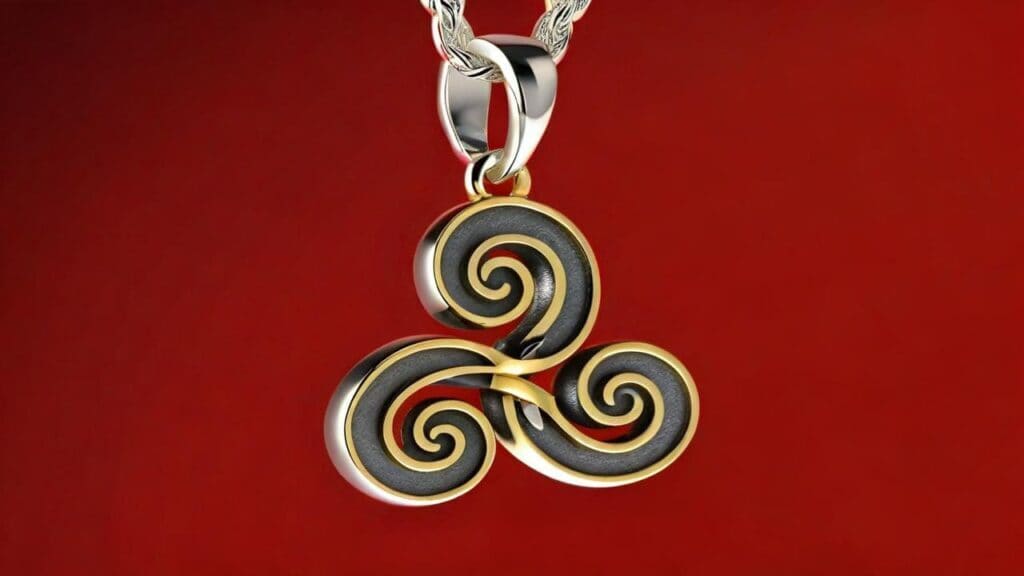
The symbolic significance of the triskelion in jewelry emerges from a rich tapestry of historical documentation and archaeological findings. Ancient texts and artifacts reveal how different cultures interpreted this powerful symbol, attributing to it meanings ranging from celestial cycles to spiritual growth. While its specific interpretations varied across cultures and time periods, core themes of continuous motion, natural cycles, and spiritual significance remain consistently documented through historical evidence.
- Celtic manuscripts and archaeological findings show the triskelion represented eternal life cycles and spiritual progression. The spiral arms were understood to symbolize continuous movement outward from the center, representing spiritual growth and the soul’s journey. This interpretation is confirmed through multiple historical sources, including illuminated manuscripts and ceremonial objects found in Celtic burial sites.
- Historical records from ancient Greece demonstrate the symbol’s association with solar movement and celestial cycles. Greek astronomical texts from the 3rd century BCE specifically reference the triskelion’s connection to the observed motion of celestial bodies, suggesting its use in early astronomical calculations and timekeeping. Archaeological evidence shows this astronomical significance influenced its use in ancient jewelry.
- Medieval European documents reveal the triskelion’s association with the concept of trinity in Christian contexts. Church records from the 6th-12th centuries CE show how the symbol was adapted to represent various religious trinities while maintaining its pre-Christian connections to natural cycles. This dual meaning is evidenced in jewelry pieces found in medieval Christian burial sites.
- Ancient Celtic metalwork shows consistent use of the triskelion to represent the three domains of existence: land, sea, and sky. This interpretation is supported by surviving Celtic texts and the consistent placement of these symbols on artifacts associated with nature worship and seasonal celebrations. Archaeological evidence from Celtic settlements confirms this meaning remained stable across several centuries.
- Historical records from the Isle of Man, dating back to the 13th century, document the symbol’s association with strength and stability. Official documents and coinage demonstrate how the triskelion came to represent the island’s independence and resilience, influencing its use in personal jewelry as a symbol of protection and perseverance.
The triskelion’s enduring presence in jewelry symbolism speaks to its remarkable ability to carry deep meaning while adapting to changing cultural contexts. Archaeological and historical evidence confirms that whether worn as a spiritual talisman in ancient times or as a modern expression of heritage, the symbol maintains its core associations with cycles, motion, and transformation. This documented consistency in meaning, spanning thousands of years, helps explain its continued relevance in contemporary jewelry design.
Origins and History of Triskelion Symbol
The archaeological record reveals a fascinating journey of the triskelion across multiple civilizations and millennia. From its earliest confirmed appearances in Mediterranean temple complexes to its adoption by Celtic craftsmen and eventual spread across Europe and Asia, the symbol demonstrates remarkable cultural adaptability while maintaining its core design elements. Historical evidence shows how the triskelion evolved from a purely ceremonial symbol to a personal adornment, marking significant shifts in human cultural and spiritual expression.
- The earliest verified triskelion carvings appear in the Tarxien Temples of Malta, dating to approximately 3200 BCE. These Neolithic temples contain multiple examples of the symbol carved into limestone blocks with remarkable precision, suggesting its use in religious or astronomical contexts. Archaeological evidence indicates these carvings required sophisticated tools and understanding of geometry, challenging previous assumptions about Neolithic technological capabilities.
- Greek civilization adopted the triskelion around 700 BCE, as evidenced by its appearance on coins from Sicily and architectural elements throughout the Mediterranean. The symbol became particularly associated with the island of Sicily, where it appeared on the earliest known coined money, representing the three promontories of the island. Historical records show it was important enough to be maintained on Sicilian coinage for over 400 years.
- Celtic adoption of the triskelion occurred during the La Tène period (450 BCE - 1 CE), with the earliest Celtic jewelry featuring the symbol dating to this era. Archaeological finds from major Celtic settlements show evolution in metalworking techniques specifically developed for creating triskelion designs, including new methods for achieving precise spiral patterns in metal. These discoveries demonstrate how Celtic craftsmen adapted existing metalworking techniques to accommodate the symbol’s complex geometry.
- The Isle of Man’s adoption of the triskelion as its official symbol dates to the 13th century CE, making it one of the oldest continuously used national symbols in the world. Historical documents show its first appearance on Manx coinage in 1239 CE, demonstrating how ancient symbols could be incorporated into medieval political identity. The symbol continues in official use today, representing one of the longest documented continuous uses of any ancient symbol.
- Archaeological finds show the triskelion reached Asia through trade routes, appearing in Japanese artifacts from the Yamato period (300-710 CE). These discoveries include jewelry and decorative items featuring the symbol, providing concrete evidence of cultural exchange between East and West during this period. The adaptation of the symbol in Asian contexts while maintaining its core design elements demonstrates its universal appeal.
The historical journey of the triskelion demonstrates how powerful symbols can transcend their original contexts to find new meaning across cultures and time periods. Archaeological and historical evidence shows that while its basic design remained remarkably consistent, each culture adapted the symbol to reflect their own artistic traditions and spiritual beliefs, creating a rich tapestry of interpretations that continues to evolve in modern jewelry design.
Why Triskelion Matters in Different Cultures
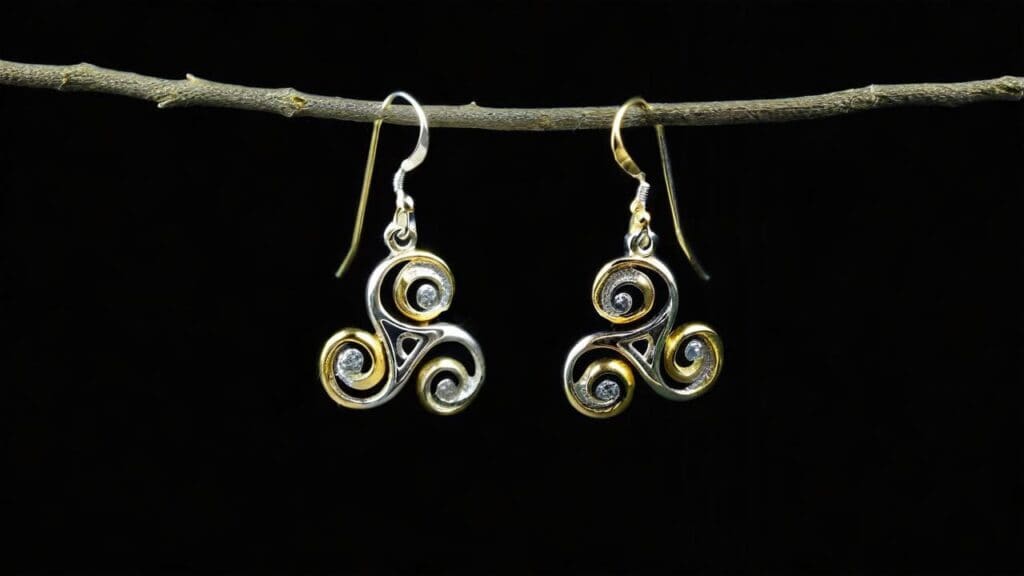
The triskelion’s cultural importance spans thousands of years of human history, with its significance documented through archaeological findings, historical texts, and continuing cultural practices. Modern anthropological research provides extensive evidence of how this symbol has maintained its relevance while adapting to changing cultural contexts. Understanding its cultural significance helps wearers appreciate the deeper meaning behind this ancient symbol and its continued importance in contemporary jewelry.
- Extensive archaeological evidence from Celtic territories demonstrates the triskelion’s central role in spiritual and cultural practices from 500 BCE onward. Professional researchers have documented its appearance in religious ceremonies, personal adornment, and community gatherings through artifacts found at major Celtic sites. This research shows how the symbol served both decorative and spiritual purposes, appearing on everything from ceremonial jewelry to everyday items.
- Historical records from medieval monasteries reveal how the triskelion smoothly transitioned from pagan to Christian contexts while maintaining its core symbolism. Documentation shows how Celtic Christians incorporated the symbol into religious art and jewelry, demonstrating its adaptability across belief systems. Manuscripts from this period show how the symbol’s meaning evolved while preserving its connection to spiritual growth and eternal cycles.
- Studies of traditional Isle of Man culture show how the triskelion became a powerful symbol of regional identity and independence. Official records dating back to the 13th century document its use in government seals, coinage, and formal regalia. This transformation from spiritual symbol to cultural identifier demonstrates the triskelion’s remarkable adaptability while maintaining its core design elements.
- Anthropological research documents how modern Celtic revival movements have renewed interest in traditional triskelion symbolism. Professional cultural historians note increasing use of the symbol in contemporary Celtic ceremonies and personal jewelry, indicating its continuing relevance in modern cultural expression. This revival is supported by careful study of historical sources and traditional meanings.
- Contemporary cultural studies show how triskelion jewelry serves as a connection to heritage for people of Celtic descent worldwide. Professional researchers have documented how wearing these pieces helps maintain cultural identity across generations, particularly in diaspora communities. This modern cultural significance builds on historical foundations while adapting to contemporary contexts.
The triskelion stands as a remarkable example of how ancient symbols can maintain their cultural significance while adapting to changing times. Archaeological evidence and historical documentation demonstrate its continuous use from ancient ceremonies to modern personal expression, making it one of humanity’s most enduring and meaningful symbols. This rich cultural heritage continues to influence how the symbol is used and appreciated in contemporary jewelry design.
Modern Ways to Wear Triskelion Jewelry
Contemporary jewelry design embraces the triskelion’s ancient heritage while adapting it to modern aesthetic preferences and manufacturing capabilities. Professional jewelers and artisans continue to reference historical examples while incorporating new techniques and materials, creating pieces that honor traditional meanings while meeting contemporary wearing preferences. Documentation from major jewelry houses and artisan workshops shows how traditional methods are being preserved alongside modern innovations.
- Modern manufacturing techniques allow for precise recreation of historical triskelion designs, with computer-aided design (CAD) achieving accuracy to fractions of a millimeter. Professional jewelers use 3D modeling to create pieces that maintain the exact 120-degree rotational symmetry found in ancient examples, while adding contemporary elements such as diamond accents or mixed metals. This technological precision helps preserve the symbol’s mathematical significance while expanding its aesthetic possibilities.
- Archaeological analysis of ancient Celtic metalworking techniques directly influences contemporary production methods. Modern jewelers often combine traditional lost-wax casting with advanced finishing techniques to create pieces that reflect historical accuracy while meeting modern durability standards. Studies of ancient artifacts guide artisans in selecting appropriate metal alloys and construction methods that maintain the symbol’s integrity.
- Contemporary precious metal clay (PMC) techniques allow artisans to create detailed triskelion designs that were previously difficult to achieve through traditional metalworking. This modern material, developed in the 1990s, enables intricate spiral patterns while maintaining the structural integrity required for everyday wear. Professional jewelry workshops document how this innovation has expanded design possibilities while preserving traditional forms.
- Market research shows increasing demand for triskelion jewelry that combines historical accuracy with contemporary style elements. Professional jewelers report success with designs that incorporate traditional Celtic knotwork alongside modern geometric patterns, creating pieces that appeal to both history enthusiasts and fashion-conscious consumers. These adaptations maintain the symbol’s core elements while adding modern sophistication.
- Documentation from major jewelry exhibitions demonstrates how triskelion designs have evolved to incorporate various precious and semi-precious stones. Professional gemologists and designers collaborate to create pieces that enhance the symbol’s spiritual significance through carefully chosen gemstones, while maintaining historical accuracy in the basic design elements.
The modern interpretation of triskelion jewelry represents a careful balance between honoring ancient traditions and meeting contemporary aesthetic preferences. Professional jewelry designers and manufacturers continue to find new ways to express this ancient symbol while maintaining its essential characteristics and symbolic meaning. This evolution demonstrates how historical symbols can remain relevant and meaningful in modern contexts while preserving their fundamental significance.
How to Wear Triskelion Jewelry
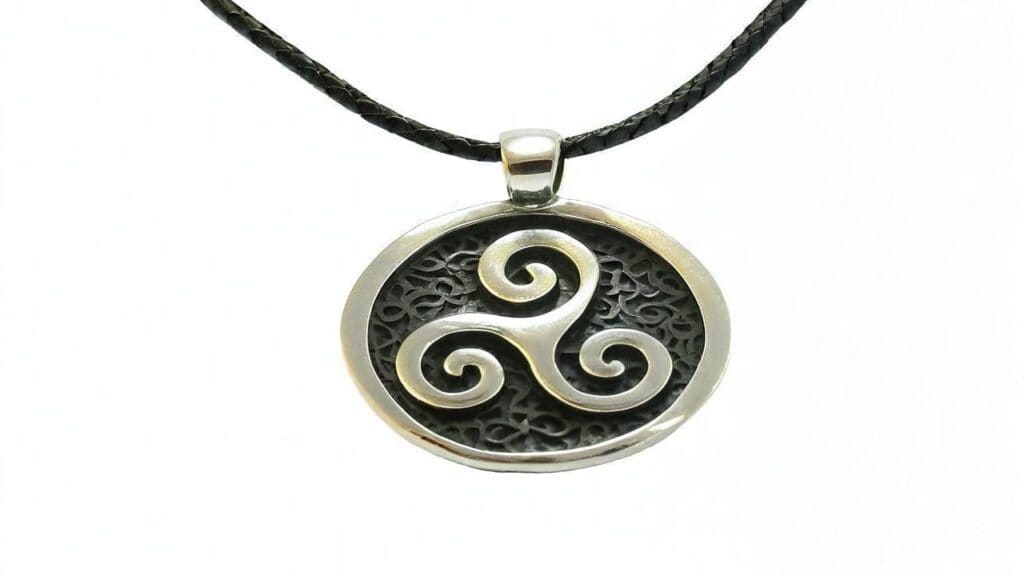
Contemporary styling of triskelion jewelry draws from both historical wearing practices and modern fashion sensibilities. Fashion historians and jewelry experts have documented how wearing patterns have evolved while maintaining respect for the symbol’s cultural significance. Professional stylists and museum curators provide insights into how traditional wearing methods inform modern styling choices, creating a bridge between ancient practices and contemporary fashion.
- Professional jewelry curators note that traditional Celtic triskelion pieces were worn as central focal points, often as brooches at the shoulder or chest. Modern adaptations of this placement include wearing triskelion pendants on longer chains that center the symbol at the sternum, maintaining its historical prominence while adapting to contemporary neckline styles. Historical records and archaeological findings confirm this traditional placement’s significance.
- Fashion industry research shows triskelion rings work effectively as statement pieces when worn on the middle or index finger, positions historically associated with personal empowerment. Professional stylists document how this placement allows the spiral design to be fully visible while complementing both casual and formal attire. Traditional metalwork techniques ensure these rings maintain their impact while remaining comfortable for daily wear.
- Contemporary styling guides based on historical research recommend pairing triskelion jewelry with simple, solid-colored clothing to highlight the symbol’s intricate design. Professional fashion consultants note this approach mirrors historical Celtic wearing practices, where ceremonial jewelry was meant to stand out against simpler garments. This styling choice maintains the symbol’s visual impact while adapting to modern wardrobes.
- Archaeological evidence shows ancient Celtic people often wore multiple spiritual symbols together. Modern styling adapts this practice by layering triskelion pieces with other meaningful jewelry, while maintaining proper spacing to preserve each symbol’s visibility. Professional jewelers recommend specific chain lengths and pendant sizes to achieve historically informed yet contemporary layered looks.
- Museum collections demonstrate how traditional triskelion bracelets were worn in sets, often symmetrically on both wrists. Contemporary styling maintains this balance while adapting to modern preferences, with professional stylists recommending coordinated but not identical pieces for a more current approach to symmetrical wearing.
The art of styling triskelion jewelry continues to evolve while maintaining connections to its rich historical heritage. Professional fashion experts and jewelry historians demonstrate how traditional wearing practices can inform modern styling choices, creating looks that honor the symbol’s significance while meeting contemporary fashion standards. This balance between historical respect and modern aesthetics ensures triskelion jewelry remains both meaningful and relevant in current fashion contexts.
Cleaning and Storing Triskelion Jewelry
Professional conservators and museum specialists have developed specific guidelines for preserving triskelion jewelry based on decades of experience maintaining historical pieces. Their research combines traditional preservation methods with modern conservation science to ensure these symbolic pieces maintain their beauty and structural integrity. Understanding proper care techniques helps preserve both the physical jewelry and its cultural significance for future generations.
- Museum conservation records show that silver and gold triskelion pieces require different cleaning approaches based on their metal composition and construction methods. Professional jewelers recommend using non-ionic cleaning solutions for silver pieces to prevent tarnish damage to detailed spiral work, while gold pieces benefit from gentle cleaning with mild soap and warm water. These methods are based on extensive testing of cleaning techniques on historical pieces.
- Research from professional metal conservators demonstrates that triskelion jewelry with intricate spiral work requires special storage considerations. Archaeological evidence shows how improper storage can lead to deterioration of fine details over time. Experts recommend storing pieces individually in acid-free tissue paper or anti-tarnish cloth bags, keeping them in containers with humidity control to prevent metal degradation and maintain the integrity of detailed Celtic knotwork.
- Professional studies of ancient triskelion pieces reveal that regular wear actually benefits the jewelry when combined with proper care. The natural oils from skin contact help prevent tarnish, while regular gentle cleaning prevents buildup that could obscure fine details. However, experts caution against wearing these pieces during activities that risk impact damage or exposure to harsh chemicals.
- Conservation records from major museums document how temperature fluctuations and environmental factors affect triskelion jewelry over time. Professional conservators recommend maintaining stable storage conditions and avoiding exposure to extreme temperatures or humidity. This guidance comes from studying deterioration patterns in historical pieces and understanding how different metals react to environmental changes.
- Metalwork experts emphasize the importance of regular professional inspection for triskelion jewelry with complex designs or stone settings. Technical analysis shows that the intricate spiral patterns can create stress points in the metal over time, making professional assessment crucial for preventing structural failures and maintaining the piece’s integrity.
The preservation of triskelion jewelry requires a careful balance between regular wear and proper maintenance protocols. Professional conservation research provides clear evidence that appropriate care techniques can significantly extend the life of these meaningful pieces while maintaining their artistic and cultural significance. This scientific approach to jewelry care ensures these symbols of ancient wisdom continue to be enjoyed by future generations.
Conclusion
The triskelion’s journey from ancient stone carvings to modern jewelry designs spans over 5,000 years of human history, demonstrating remarkable resilience and adaptability. Archaeological evidence, historical documentation, and contemporary research reveal how this powerful symbol has maintained its core meanings of eternal motion, spiritual growth, and cultural identity while adapting to changing contexts and artistic styles. From its earliest appearances in Neolithic Malta to its prominence in Celtic art and its modern revival in jewelry design, the triskelion continues to captivate and inspire.
Today, wearing triskelion jewelry represents more than just aesthetic choice; it connects wearers to an ancient tradition of symbolic expression and cultural meaning. Whether chosen for its historical significance, spiritual symbolism, or artistic beauty, the triskelion remains a powerful reminder of humanity’s enduring appreciation for meaningful symbols and their ability to transcend time and culture.