Long before horses became a design on a necklace or ring, they were partners in survival. People rode them into battle, plowed fields behind them, and crossed entire continents on their backs, and that closeness left a permanent mark on how humans think about the animal. A horse in jewelry rarely means just one thing. It can point to freedom, loyalty, luck, or raw strength depending on the culture, the pose of the animal, and the story behind the design, and understanding those layers turns a simple charm into something with real weight behind it.
Why the Horse Became Such a Powerful Symbol
A horse in jewelry usually stands for freedom, strength, and loyalty, because those are the qualities people have connected to real horses for thousands of years. This isn’t a meaning invented by jewelry designers. It comes directly from how horses actually functioned in daily life for most of human history, long before anyone thought to shape one out of gold.
For most of history, horses were closely tied to wealth, power, and status, since only rulers, nobles, and warriors could typically afford to own and keep them. Owning a horse wasn’t a hobby the way it can be today. It was a visible sign that a person had land, resources, and often military strength behind them, which is part of why horses show up so often next to kings and generals in old paintings and sculptures.
Horses also reshaped ordinary life in ways that had nothing to do with status. They pulled plows that fed entire villages, carried messages between cities faster than any person on foot could manage, and made long-distance trade across deserts, mountains, and open plains possible for the first time. Because horses helped whole civilizations grow, feed themselves, and connect with one another, the animal slowly stopped being seen as just useful and started being seen as something closer to a symbol of progress itself.
That layered history is exactly why a horse on a ring or pendant still feels different from, say, a flower or a star charm. It carries centuries of association with movement, effort, and the idea of getting somewhere better than where a person started, which is a lot of meaning to pack into one small piece of metal.
Famous Horses from Myths and Legends
Mythology is full of horses that go far beyond ordinary animals, and five stand out as the ones most often echoed in art, design, and jewelry today. Each one comes from a completely different culture, yet they all circle back to similar ideas: speed, divine connection, and the sense that a horse can carry someone somewhere ordinary transportation never could.
Pegasus, from Greek and Roman mythology, is probably the most recognizable of the five. Born from the blood of Medusa, this winged horse became a symbol of poetic inspiration and freedom, and his image has appeared in art for centuries to represent the idea of reaching for something higher than the everyday.
Sleipnir, the eight-legged horse belonging to the Norse god Odin, is known for extraordinary strength and speed unmatched by any ordinary steed. Norse stories describe him carrying Odin across every realm of the world, which made him a symbol of supernatural power rather than simple usefulness.
Uchchaihshravas, from Hindu mythology, is a seven-headed, snow-white flying horse said to have emerged from the churning of the cosmic ocean of milk. Considered the finest of all horses, he became the mount of Indra, king of the gods, and is regularly described as the standard against which every other horse is measured.
Buraq, from Islamic tradition, is the winged creature said to have carried the Prophet Muhammad on the Night Journey from Mecca to Jerusalem in a single night. The earliest surviving descriptions portray Buraq as a white creature closer to a mule or donkey in build, with wings on its sides, though later art and popular retellings have often pictured it as more horse-like. Either way, Buraq has remained a popular motif in Islamic art for over a thousand years.
Longma, the dragon-horse of Chinese mythology, is described as having a horse’s body covered in dragon scales, sometimes with wings. According to legend, a Longma rose from the Yellow River carrying a sacred diagram on its back, and its appearance was always considered a sign that a wise and worthy ruler sat on the throne.
Together, these five figures show just how far horse symbolism travels across cultures that never had contact with one another, yet still landed on remarkably similar ideas about power, speed, and a connection to something greater than the physical world.
What Horses Mean in Different Cultures
Horse meanings shift from region to region, and these regional differences help explain why horse jewelry feels so universally popular rather than tied to a single culture or country. Each of these traditions developed its own relationship with the animal, shaped by geography, history, and everyday life.
Western and European Traditions
In Western traditions, horses have long been tied to power, speed, and freedom, and the image of a rider crossing open plains still evokes independence and adventure today. This connection didn’t come from nowhere. European knights depended on horses in battle for centuries, and that dependence tied the animal directly to ideas of honor, discipline, and strength.
That link between horses and status carried well into more recent history too. By the Victorian era, horse and equestrian motifs had become a fashionable way for the wealthy to show off both their taste and their connection to country life, which is part of why so much antique horse jewelry from that period still exists and is collected today.
Native American Traditions
Among many Native American nations, the horse holds deep spiritual meaning tied to strength, intuition, and a close bond between animal and rider. This bond wasn’t abstract. Horses transformed hunting, travel, and daily life for many Plains nations after being introduced to North America, reshaping entire ways of living in a single generation.
Because of that rapid and total transformation, horses are treated with genuine respect in art, ceremony, and storytelling rather than being viewed as simple property. A horse, in many of these traditions, is closer to a partner or relative than a tool, which is a meaningfully different relationship than the one found in most European history.
Chinese Culture and the Zodiac
In Chinese culture, the horse represents prosperity, success, and perseverance as one of the twelve animals of the zodiac, standing for ambition, intelligence, and endurance. Someone born in a Year of the Horse is traditionally believed to carry these same qualities, which is why the animal shows up so often in gifts meant to wish someone well.
The horse’s positive reputation in Chinese culture goes back centuries, tied closely to its historical role in trade, travel, and military strength along routes like the Silk Road. Even common phrases wishing someone quick, successful progress still reference the animal directly, which shows just how deeply the symbolism is woven into everyday language.
The Mongolian Steppe
Few cultures on earth are as closely tied to the horse as Mongolia, where the animal has shaped daily life, warfare, and identity for several thousand years. Horses outnumber people across the country’s grasslands, and they still provide transportation, milk, and a measure of family wealth in the same way they did in the era of Genghis Khan, whose mounted armies built one of the largest empires in history.
Beyond their practical role, horses carry spiritual weight in Mongolian tradition as well. In Mongolian shamanism and Buddhist practice, horses are sometimes seen as spiritual messengers capable of carrying prayers upward, a belief tied to the “wind horse” imagery still found on prayer flags across the region. That combination of daily necessity and spiritual respect is part of why the horse remains the single most powerful cultural symbol in Mongolia today.
Popular Types of Horse Jewelry
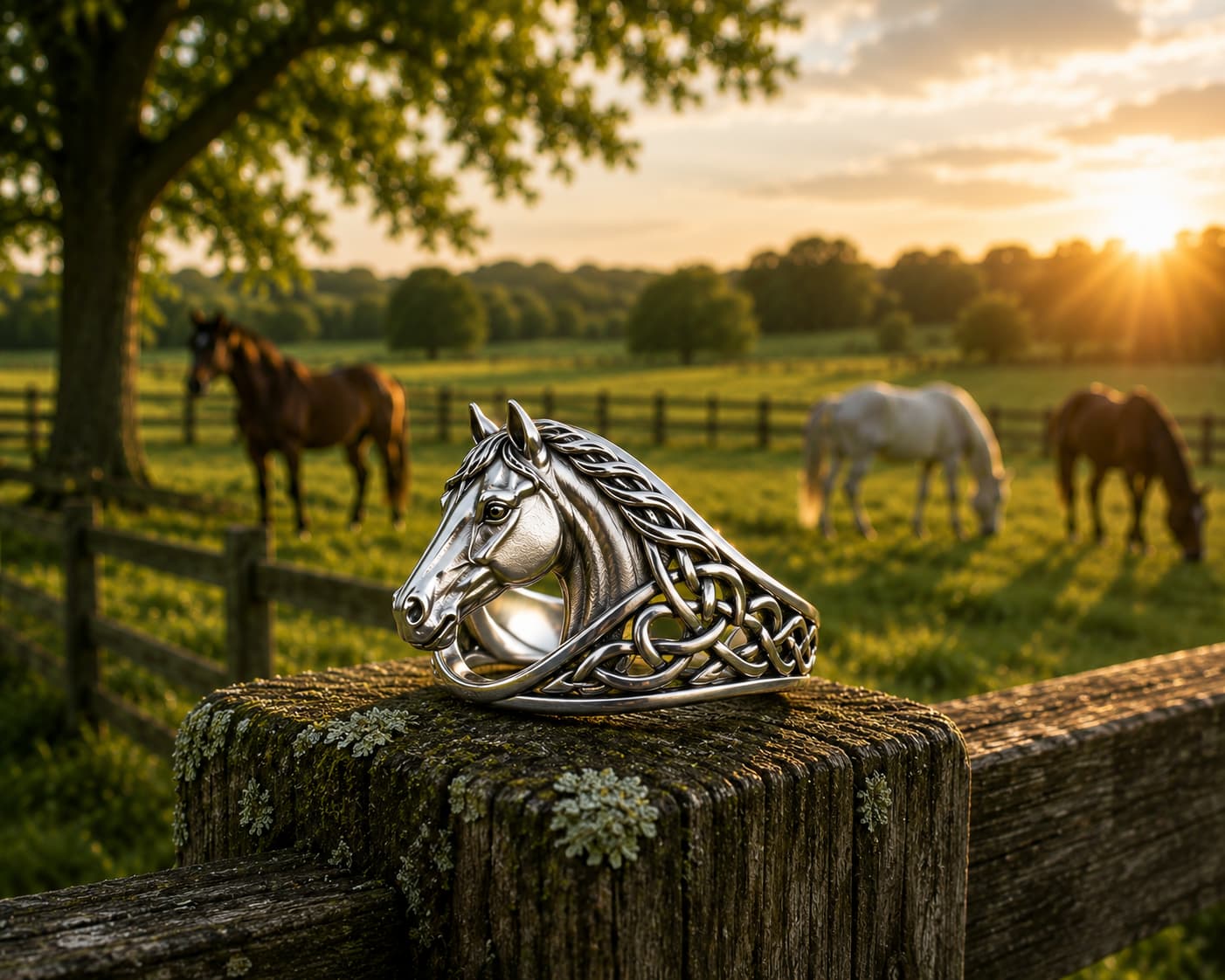
Horse jewelry comes in far more forms than a single charm on a chain, and each type tends to carry its own slightly different feel. The pieces people reach for most often, along with what usually draws someone to each one, include:
- Horse pendant necklace — a small horse figure worn close to the heart, usually chosen as a personal, everyday symbol of freedom or a bond with the animal itself
- Horseshoe necklace or bracelet — one of the most recognizable lucky charms in Western jewelry, tied to protection and good fortune
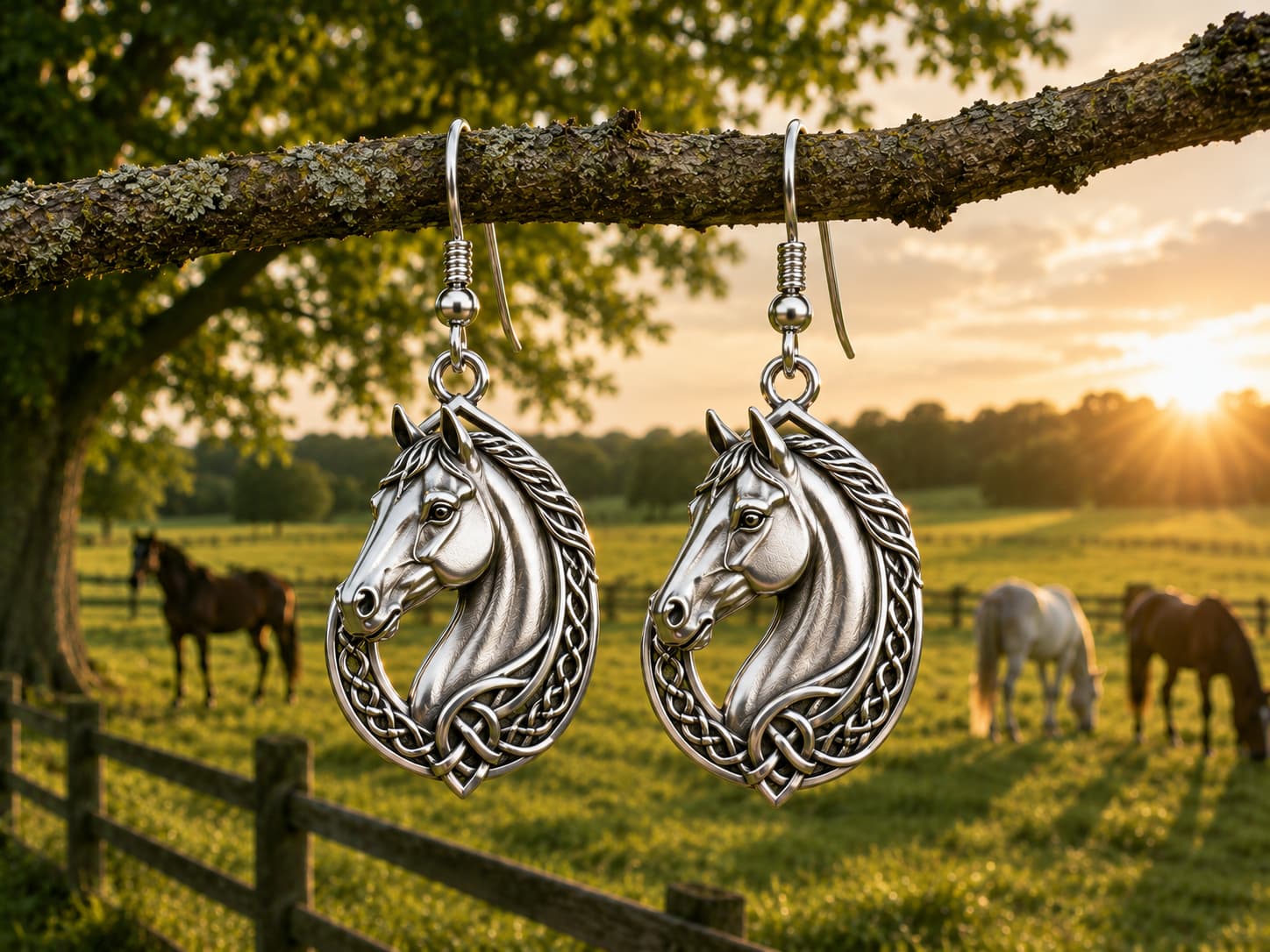
- Horse head earrings — a compact, elegant way to reference strength and grace without a large statement piece
- Equestrian-style rings — designs inspired by stirrups, bits, or bridles, often chosen by people connected to the riding world specifically
- Galloping horse charm bracelets — layered or stacked with other charms, popular for a design that feels more playful and personal
- Winged horse pendants — a nod to Pegasus and similar mythological figures, usually chosen for what it represents rather than any literal riding connection
Whichever form someone chooses, the piece is really doing the same basic job: taking a symbol with thousands of years of history behind it and making it small enough to carry every day.
What Each Horse Pose Symbolizes
The pieces above are about the type of jewelry itself. The pose the horse is captured in adds a separate layer of meaning on top of that, so two pendants shaped like a horse can still say fairly different things depending on how the animal is posed.
| Pose | What It Tends to Represent |
|---|---|
| Galloping | Forward motion, ambition, refusing to stand still |
| Standing head profile | Quiet strength, elegance, focus |
| Rearing | Courage, defiance, standing one’s ground |
| Grazing or resting | Calm, patience, groundedness |
| Winged | Inspiration, imagination, aspiration |
A galloping pose is usually chosen by someone drawn to the idea of chasing a goal, since the design itself is built around forward motion. A rearing pose reads as far more dramatic, often picked to represent resilience or courage rather than calm. A grazing or standing pose sits at the opposite end of that scale, favored by people who connect more with the horse’s steadiness than its speed.
How to Wear Horse Jewelry Today
Horse jewelry works well as a subtle everyday piece rather than something reserved for special occasions. A small horse charm on a thin chain sits comfortably with other simple jewelry, so it layers easily without competing for attention.
For anyone who wants a bolder statement, a rearing horse ring or a wide equestrian-style cuff can act as a single standout piece worn on its own. Because the symbolism behind horse jewelry is so old and so widely shared across cultures, it also tends to work as a meaningful gift, even for someone who isn’t necessarily an experienced rider or lifelong horse lover.
Frequently Asked Questions
What does a horse necklace symbolize?
A horse necklace generally symbolizes freedom, strength, and loyalty, drawing on the animal’s long history as a partner in travel, work, and survival. The exact meaning can shift slightly depending on the horse’s pose, with galloping designs leaning toward freedom and movement, and calmer head profiles leaning toward quiet strength.
What does the Pegasus symbol mean in jewelry?
Pegasus, the winged horse from Greek mythology, represents inspiration, imagination, and rising above ordinary limits. It’s a common choice for anyone drawn to symbolism about ambition or creative achievement rather than purely physical strength.
Does horse jewelry only make sense for people who ride horses?
No. While riders and equestrian enthusiasts are a natural audience for horse jewelry, the symbolism behind it — freedom, resilience, loyalty — appeals to plenty of people who have never been near a stable. The meaning behind the piece has always mattered more than literal riding experience.
Why do so many different cultures have mythological horses?
Horses played a similar practical role in many early societies, offering speed and strength that no other animal could match at the time. Because of that shared usefulness, cultures that never had contact with one another still independently developed myths connecting horses to gods, kings, and journeys beyond the ordinary world.
What’s the difference between a horse and a horseshoe in jewelry?
A horse figure tends to represent qualities of the animal itself, like freedom, power, or grace, while a horseshoe represents luck and protection instead. Both motifs are closely related but carry slightly different traditional meanings.
Conclusion
Horse symbolism in jewelry earns its staying power honestly. It isn’t a trend invented for a catalog — it’s the accumulated result of thousands of years where horses meant survival, status, and progress across nearly every culture that encountered them. Whether someone reaches for a galloping horse charm to represent forward motion, a horse head pendant for quiet strength, or a winged design that nods to Pegasus or Buraq, the piece is tapping into a symbol that has meant roughly the same thing to people everywhere: strength that moves, and freedom worth chasing.