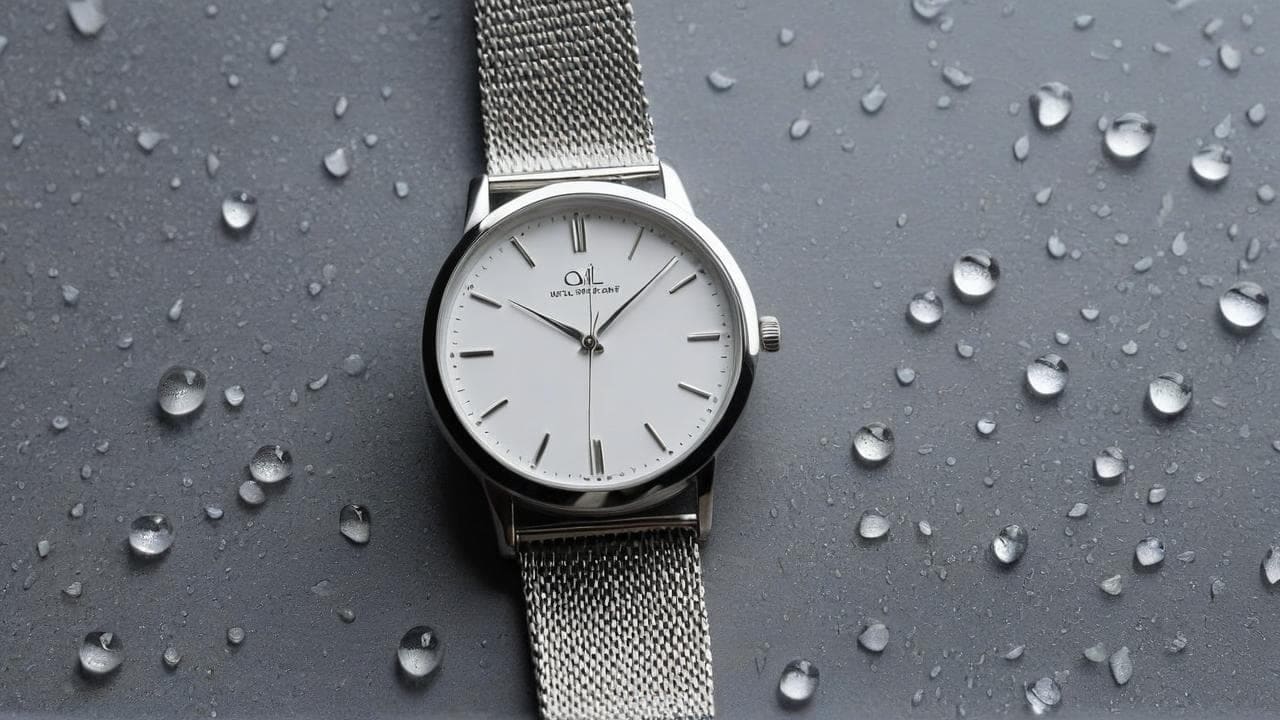
Shopping for a new watch means encountering terms like “waterproof” and “water-resistant” that often create confusion. These seemingly interchangeable descriptions actually carry significantly different meanings that directly impact how your watch performs around water. Understanding this distinction goes beyond technical specifications—it’s about protecting your investment and ensuring your timepiece serves you reliably through various activities. The difference between waterproof and water-resistant watches matters for everything from daily wear to swimming, diving, and water sports, affecting both the longevity of your watch and your peace of mind when wearing it near water.
Why Watch Companies Can’t Claim “Waterproof” Anymore
The term “waterproof” suggests absolute protection against water, but in reality, no watch can guarantee complete impermeability under all conditions indefinitely. This is why regulatory agencies worldwide have restricted use of this misleading term in watch marketing, favoring the more accurate “water-resistant” description that acknowledges the limitations of even the most well-constructed timepieces.
- The Federal Trade Commission (FTC) banned the term “waterproof” for watch marketing in the 1960s because no watch can provide absolute protection against water entry under all conditions and for unlimited periods. This regulation exists to protect consumers from misleading claims.
- Even the highest-quality dive watches with impressive depth ratings of 300+ meters will eventually allow water entry if subjected to excessive pressure, temperature extremes, or after their seals deteriorate with age and use.
- Historically, many vintage watches from brands like Rolex, Omega, and Blancpain were marketed as “waterproof” before regulations changed. These pioneering designs (like the Rolex Oyster from 1926) revolutionized water protection but still had definite limitations.
- Water protection in watches is never permanent—all water-resistant watches require periodic maintenance (typically every 2-5 years depending on use) to replace gaskets and ensure seals remain effective. Without this maintenance, water resistance gradually diminishes.
- If you see modern watches advertised as “waterproof” rather than “water-resistant,” this should be a red flag about either the manufacturer’s credibility or their understanding of proper industry terminology and standards.
Despite marketing that might suggest otherwise, water protection in watches is always conditional and temporary. The correct terminology of “water-resistant” acknowledges that all watches have limits to their protection capabilities, which depend on proper maintenance, age, and the specific conditions they encounter. When shopping for a water-friendly watch, understanding this fundamental truth helps set realistic expectations about what your timepiece can handle.
How Water Resistance Works in Modern Watches
Water resistance represents a watch’s ability to prevent water ingress under specific pressure conditions for limited periods. Unlike the absolute claim of “waterproof,” water resistance is measured in gradations that indicate different levels of protection, helping consumers choose a timepiece appropriate for their intended activities around water.
- Water resistance works through a system of gaskets, O-rings, and seals placed at all potential entry points in a watch case—including the crystal, case back, crown, and any pushers or buttons. These components create barriers that prevent water molecules from reaching the sensitive movement inside.
- The three common units for measuring water resistance are often used interchangeably but have subtle differences: atmospheres (ATM) refer to pressure units (1 ATM equals air pressure at sea level), meters indicate static depth ratings from lab testing (not actual swimming depths), and bars are pressure units nearly equivalent to ATM (1 bar ≈ 1 ATM).
- A critical misconception involves depth ratings: a watch rated for 100 meters doesn’t necessarily mean you can dive with it to 100 meters. These ratings are achieved in static laboratory tests that don’t replicate the dynamic pressures of swimming, diving, or water sports.
- Water pressure increases approximately by 1 ATM for every 10 meters of depth. This means a watch rated for 5 ATM (50 meters) experiences five times the normal atmospheric pressure at its rated depth.
- Temperature fluctuations significantly affect water resistance. Moving from cold water to hot environments (like entering a sauna or hot shower with your watch) can cause gaskets to expand and contract, potentially creating temporary gaps where water can enter.
Water resistance should be understood as a spectrum rather than an absolute quality. Every watch falls somewhere on this spectrum based on its construction, with higher-end dive watches offering superior protection compared to fashion watches with minimal water resistance. The rating system provides a standardized way to compare these capabilities, though real-world performance depends on proper usage, care, and regular maintenance to ensure seals remain effective over time.
Water Resistance Ratings Explained
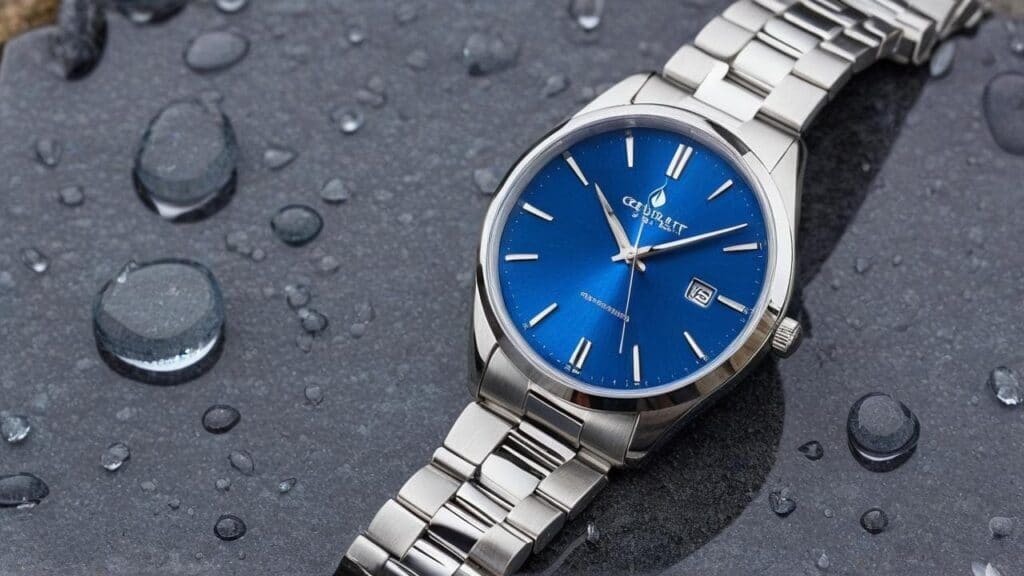
Water resistance ratings tell you the specific pressure conditions under which your watch has been tested—and by extension, what water-related activities it can safely handle. These ratings appear on watch case backs and in product specifications, providing crucial guidance for how to use your timepiece around water without risking damage.
- 3 ATM / 30 meters / 100 feet: Despite the depth rating, these watches are only splash-resistant. They can handle brief exposure to water like washing hands or rain but should never be submerged. The rating indicates resistance to water pressure equivalent to 30 meters of static depth in laboratory conditions, not actual swimming depth.
- 5 ATM / 50 meters / 165 feet: These watches can withstand short periods of swimming in shallow water. They’re suitable for recreational swimming in pools but not for diving, snorkeling, or high-impact water sports. Water pressure from diving into a pool or the dynamic movement of your arm while swimming creates pressure exceeding what these watches are designed to handle.
- 10 ATM / 100 meters / 330 feet: This rating indicates suitability for recreational swimming, snorkeling, and water sports. These watches can handle sustained immersion and some water pressure but aren’t designed for serious diving. They represent a good balance for most active people who participate in water activities occasionally.
- 20 ATM / 200 meters / 660 feet: Watches with this rating are suitable for most water sports, serious swimming, and recreational scuba diving. Most dedicated diving watches start at this rating, as it provides a significant safety margin for most underwater activities.
- 30+ ATM / 300+ meters / 1000+ feet: These professional-grade dive watches are designed for serious scuba diving and can withstand the extreme pressures encountered at significant depths. They often feature additional protective features like helium escape valves for saturation diving.
- ISO 6425 certification: Watches that meet this International Organization for Standardization standard have undergone rigorous testing beyond simple pressure tests, including resistance to thermal shock, magnetic fields, and impact. A true dive watch with this certification provides much more reliable water protection than a fashion watch with the same depth rating but without certification.
The key to interpreting water resistance ratings is understanding that they’re established under ideal laboratory conditions with brand-new watches. Real-world factors like aging gaskets, temperature fluctuations, and dynamic water pressure from movement can significantly reduce effective water resistance. Manufacturers typically recommend staying well within the limits of your watch’s rating rather than pushing boundaries—a 200-meter rated watch is much more appropriate for regular swimming than one rated at 50 meters, providing a crucial safety margin.
What Reduces Watch Water Resistance Over Time
A watch’s water resistance isn’t permanent and can be compromised by various factors. Understanding these vulnerabilities helps you protect your timepiece and maintain its water resistance capabilities over time, preventing costly damage to the movement.
- Age deteriorates water resistance as rubber gaskets and seals naturally dry out, crack, and lose elasticity over time. Even the highest-quality dive watch will gradually lose its water resistance capabilities without periodic service to replace these components, typically recommended every 2-5 years depending on usage.
- Temperature extremes dramatically affect water resistance. Hot water (like in showers, hot tubs, or saunas) causes gaskets to expand and potentially create gaps, while also accelerating the deterioration of seals. Cold water can cause materials to contract and become less flexible, potentially compromising seals around the crystal or crown.
- The crown position matters significantly - an unscrewed or pulled-out crown creates a direct pathway for water to enter the case. Many water resistance failures occur simply because users forget to fully secure the crown before water exposure. Always ensure crowns are pushed in or screwed down completely before any water contact.
- Physical shock from impacts or drops can dislodge gaskets or slightly deform the case, creating pathways for water entry that weren’t present during manufacturing testing. Even microscopic distortions in the case can compromise water resistance.
- Button operation underwater, particularly chronograph pushers or other function buttons, can create temporary pathways for water entry unless the watch is specifically designed for underwater operation. Most watch manufacturers advise against operating non-diving watches’ functions while submerged.
- Altitude and pressure changes affect water resistance due to the pressure differential between the inside and outside of the watch. Activities like flying in unpressurized aircraft or driving in mountains can create pressure conditions that stress the seals of a watch.
- Regular exposure to chemicals found in swimming pools (chlorine), hot tubs, or even some soaps and lotions can accelerate the deterioration of gaskets and seals, gradually reducing water resistance over time. Rinse your watch with fresh water after exposure to chemicals.
Understanding the dynamic nature of water resistance helps explain why manufacturers provide conservative recommendations about water exposure. A watch’s water resistance rating represents its protection capabilities when new and under controlled conditions—not after years of wear or under extreme circumstances. Treating water resistance as a characteristic that requires maintenance rather than a permanent feature will help extend your watch’s lifespan and reliability around water.
Types of Water-Friendly Watches
The watch industry offers several categories of water-resistant timepieces, each designed for specific environments and activities. Understanding the differences between these watch types helps you select the right tool for your particular needs around water.
- Dive watches represent the gold standard for water resistance, featuring robust cases (usually 40-45mm), unidirectional rotating bezels for tracking time underwater, screw-down crowns, extra-thick crystals, and water resistance ratings of at least 200 meters. True dive watches meet ISO 6425 standards, which require testing for magnetic resistance, shock resistance, and anti-reflective crystals in addition to water resistance. Examples include the Rolex Submariner, Omega Seamaster, and Seiko Prospex models.
- Sport watches offer moderate water resistance (typically 100-200 meters) suitable for swimming, snorkeling, and water sports without the specialized features of dive watches. They prioritize versatility, combining enough water protection for most activities with suitable styling for everyday wear. These watches often feature rubber or steel bracelets, luminous dials for underwater legibility, and screw-down crowns but may lack the extreme pressure ratings of dedicated dive watches.
- Everyday water-resistant watches typically offer 30-50 meters of water resistance, providing protection against rain, hand washing, and occasional water splashes. These timepieces focus on daily wearability with minimal water protection suitable for non-aquatic lifestyles. While they may survive brief immersion, they aren’t designed for swimming or regular water exposure.
- Tactical and military watches combine substantial water resistance (typically 100-300 meters) with additional features like highly luminous displays, compass bezels, and extreme durability. Brands like Luminox, Marathon, and certain G-Shock models cater to military personnel, first responders, and adventure enthusiasts who need reliable performance in challenging environments.
- Smart watches and fitness trackers vary widely in their water protection, ranging from basic splash resistance to 100 meters water resistance for swimming tracking. High-end models from Apple, Garmin, and Samsung now offer water resistance suitable for pool swimming and tracking aquatic workouts, though they typically remain less water-resistant than purpose-built dive watches due to their necessary charging ports and touch screens.
- Dress watches generally offer minimal water resistance (typically 30 meters or less), prioritizing slim cases and elegant design over water protection. These timepieces are designed for formal occasions and office wear, where water exposure beyond occasional rain is unlikely. Their minimal gaskets and seals provide basic protection against humidity and brief water contact but not immersion.
Each watch category represents a balance between water protection and other design considerations. Dedicated dive watches maximize water resistance at the expense of thinness or dressy appearance, while fashion watches might offer only minimal splash protection to maintain a sleek profile. When selecting a water-resistant watch, consider your realistic needs rather than maximum specifications—most recreational swimmers are well-served by 100-meter rated sport watches, while serious divers should invest in proper dive watches with 200+ meter ratings and ISO certification.
Keeping Your Watch Water-Resistant
Preserving your watch’s water resistance requires regular care and attention. Even the most robustly built water-resistant watches need proper maintenance to retain their protective capabilities against moisture and water damage.
- Professional water-resistance testing should be performed annually for watches regularly exposed to water and every 2-3 years for watches with occasional water contact. This test uses specialized equipment to pressurize the watch case and detect any water entry without risking damage to the movement. Most watchmakers and service centers offer this test for a modest fee (typically $20-50).
- Gasket and seal replacement should occur every 3-5 years depending on usage conditions and exposure to harsh environments. These rubber or silicone components naturally degrade over time regardless of use, making replacement essential for maintaining water resistance. This service typically requires opening the watch case and should be performed by qualified technicians.
- After saltwater exposure, immediately rinse your watch thoroughly with fresh water to remove corrosive salt residue that can damage gaskets and seals. Even high-quality dive watches can suffer accelerated deterioration if salt is allowed to dry on seals or work its way into small crevices around the crown or case back.
- Always secure the crown by pushing it in fully or screwing it down (if it has a screw-down crown) before any water exposure. An unsealed crown is the most common entry point for water damage in otherwise water-resistant watches. Develop a habit of checking your crown position before water activities.
- Avoid extreme temperature changes while wearing your watch, particularly moving from cold water directly into hot environments (like showers or saunas). These sudden transitions create pressure differentials and material expansion/contraction that can temporarily compromise seals.
- Watch for warning signs of compromised water resistance, including condensation under the crystal, moisture droplets inside the dial, or sudden changes in timekeeping accuracy after water exposure. These symptoms indicate water has entered the case and require immediate professional attention to prevent corrosion damage to the movement.
- Clean watch seals around the crown and pushers periodically using a soft brush to remove accumulated dirt, skin oils, and debris that can prevent proper sealing. Dirt particles can create microscopic gaps in otherwise functional seals, allowing water entry.
Maintaining water resistance is significantly less expensive than repairing water damage to a watch movement. Water that enters a watch case can cause immediate damage to electronic components and set off a chain of corrosion that gradually destroys mechanical parts. Regular maintenance preserves both your watch’s functionality and its value, particularly for higher-end timepieces where water damage can dramatically reduce collectibility and resale potential.
Water Resistance Myths That Could Damage Your Watch
The world of water-resistant watches is filled with persistent myths and misconceptions that can lead to damaged timepieces and disappointed owners. Understanding the truth behind these common beliefs helps you better protect your watch and set realistic expectations.
- The “swimming with a 50m watch” misconception is perhaps the most dangerous myth. While 50m/5ATM suggests underwater capability, this rating only means the watch survived static pressure testing equivalent to 50 meters depth in laboratory conditions. The dynamic pressure created by swimming strokes, diving into water, or water hitting your wrist while in motion can exceed this rating. Most watchmakers recommend a minimum of 100m water resistance for swimming activities.
- Shower myths abound, with many people assuming any water-resistant watch is shower-safe. In reality, hot shower water accelerates gasket deterioration, and soaps, shampoos, and body washes contain chemicals that can degrade seals faster than fresh water alone. Even 200m-rated dive watches will experience accelerated aging of their water-resistant properties if regularly exposed to hot, soapy shower water.
- The age-independent myth assumes water resistance remains constant throughout a watch’s life. In truth, a 10-year-old watch rated for 100m water resistance might now only effectively resist 30m or less due to natural deterioration of seals and gaskets, even if it looks perfect externally. Water resistance requires periodic verification and maintenance regardless of the original specifications.
- The “depth rating equals swimming depth” misconception leads many to believe they can take a 30m-rated watch to 30 meters underwater. These ratings indicate static pressure resistance in controlled laboratory testing, not real-world diving capability. Industry standards typically recommend a minimum 200m rating for actual scuba diving activities, providing necessary safety margin for dynamic pressures.
- Water resistance permanence is frequently misunderstood, with many assuming a water-resistant watch remains so indefinitely. In reality, even unused watches stored in drawers experience gasket deterioration due to natural rubber aging processes and environmental factors. Water resistance is inherently temporary and requires periodic renewal through service.
- The “all water resistance ratings are equal” myth fails to recognize that a 100m rating on a $30 fashion watch likely indicates much less rigorous testing than the same rating on a $3,000 Swiss dive watch. ISO-certified dive watches undergo standardized testing protocols, while many fashion watches receive ratings based on sample testing of similar models rather than individual verification.
- Button operation safety underwater is commonly misunderstood, with many assuming they can freely use chronograph pushers or adjust settings while swimming. Unless specifically designed for underwater operation (like dedicated dive watches), operating pushers or the crown while submerged often breaks the water-resistant seal temporarily, allowing water entry.
Dispelling these myths helps watch owners develop more realistic expectations about their timepieces’ capabilities. The most conservative approach to water and watches remains the safest: only use watches for water activities well within their rated capabilities, maintain them regularly, and remember that any water resistance rating represents ideal performance when new—not a permanent guarantee throughout the watch’s lifetime.
Which Water Resistance Level Is Right for You?
Selecting a watch with appropriate water resistance for your specific needs balances protection against cost, as higher water resistance typically increases a watch’s price. Matching your watch’s capabilities to your actual activities prevents both unnecessary spending and water damage risk.
- For everyday office wear with minimal water exposure beyond hand washing and occasional rain, watches with 30m/3ATM water resistance provide sufficient protection. These watches handle brief water contact but should be removed before showering or swimming. This level suits dress watches and fashion timepieces worn primarily indoors.
- Weekend warriors who enjoy occasional swimming, beach visits, or boating should select watches with at least 100m/10ATM water resistance. This rating provides adequate protection for surface water sports, swimming, and snorkeling while offering a safety margin for unexpected submersion or water pressure. Most quality sports watches and entry-level dive watches provide this level of protection.
- Dedicated swimmers, surfers, and water sports enthusiasts benefit from watches rated at 200m/20ATM. This level ensures reliable protection during regular aquatic activities, withstanding the increased pressure from diving into pools, surfing wipeouts, or water skiing falls. Look for watches with screw-down crowns and solid case construction at this level.
- Scuba divers require watches with minimum 200m/20ATM ratings, though 300m or greater provides better safety margin for recreational diving. True dive watches should meet ISO 6425 standards, indicating they’ve passed specialized tests beyond simple water pressure resistance. Features like unidirectional timing bezels, luminous dials, and extra-secure crown systems become essential at this level.
- Saturation divers and professional underwater workers need specialized dive watches rated to 300m+/30ATM+ with helium escape valves and other technical features. These professional instruments handle the extreme pressures and mixed gas environments encountered in technical diving and can cost significantly more than standard water-resistant watches.
- For multi-purpose needs, consider a 100m-rated sports watch as the versatile middle ground, handling most recreational water activities while remaining suitable for everyday wear. This level represents the best balance between adequate protection and reasonable cost for most active individuals.
- When selecting a watch for water activities, prioritize trusted brands with established reputations for water resistance testing. Watches from companies with diving heritage (like Seiko, Citizen, Rolex, Omega) typically offer more reliable water protection than fashion brands that primarily focus on aesthetics over technical performance.
Choosing the right water resistance level ultimately means honestly assessing your actual needs rather than hypothetical scenarios. While owning a 1000m super dive watch might seem appealing, most people never encounter conditions requiring such extreme specifications. The most practical approach focuses on selecting a watch with water resistance appropriate for your regular activities plus a reasonable safety margin, ensuring your timepiece remains both functional and protected throughout its life.
Conclusion
The distinction between “waterproof” and “water-resistant” watches reflects more than marketing terminology—it represents a fundamental truth about how watches interact with water. No watch provides absolute protection against water in all conditions indefinitely, which is why the term “water-resistant” more accurately describes even the most robust dive watches available today. Understanding the gradations of water resistance helps you select appropriate timepieces for your activities and maintain them properly to preserve their protective capabilities.
Remember that water resistance ratings represent ideal performance under laboratory conditions when the watch is new, not guarantees of performance after years of wear or under extreme circumstances. Regular maintenance, careful attention to crown position before water exposure, and realistic expectations about your watch’s capabilities all contribute to preventing costly water damage. Even the finest dive watches require periodic service to maintain their water resistance as gaskets and seals naturally age and deteriorate.
When choosing your next watch, select water resistance appropriate for your actual needs rather than hypothetical scenarios, and invest in quality construction from reputable manufacturers if water activities form a significant part of your lifestyle. With proper understanding, selection, and maintenance, your water-resistant watch can provide reliable service through all your adventures, whether they involve boardrooms, swimming pools, or ocean depths.