For most of the 20th century, if you wanted a good watch, you bought a Swiss one. That changed almost overnight when a small, battery-powered movement from Japan made traditional mechanical watches look slow, unreliable, and expensive by comparison. The fallout became known as the quartz crisis, a period so severe that it wiped out most of the Swiss watch industry’s workforce and forced century-old companies to close their doors for good. It’s one of the most important stories in the history of watchmaking, and it still shapes how brands design, price, and market watches today.
What Was the Quartz Crisis?
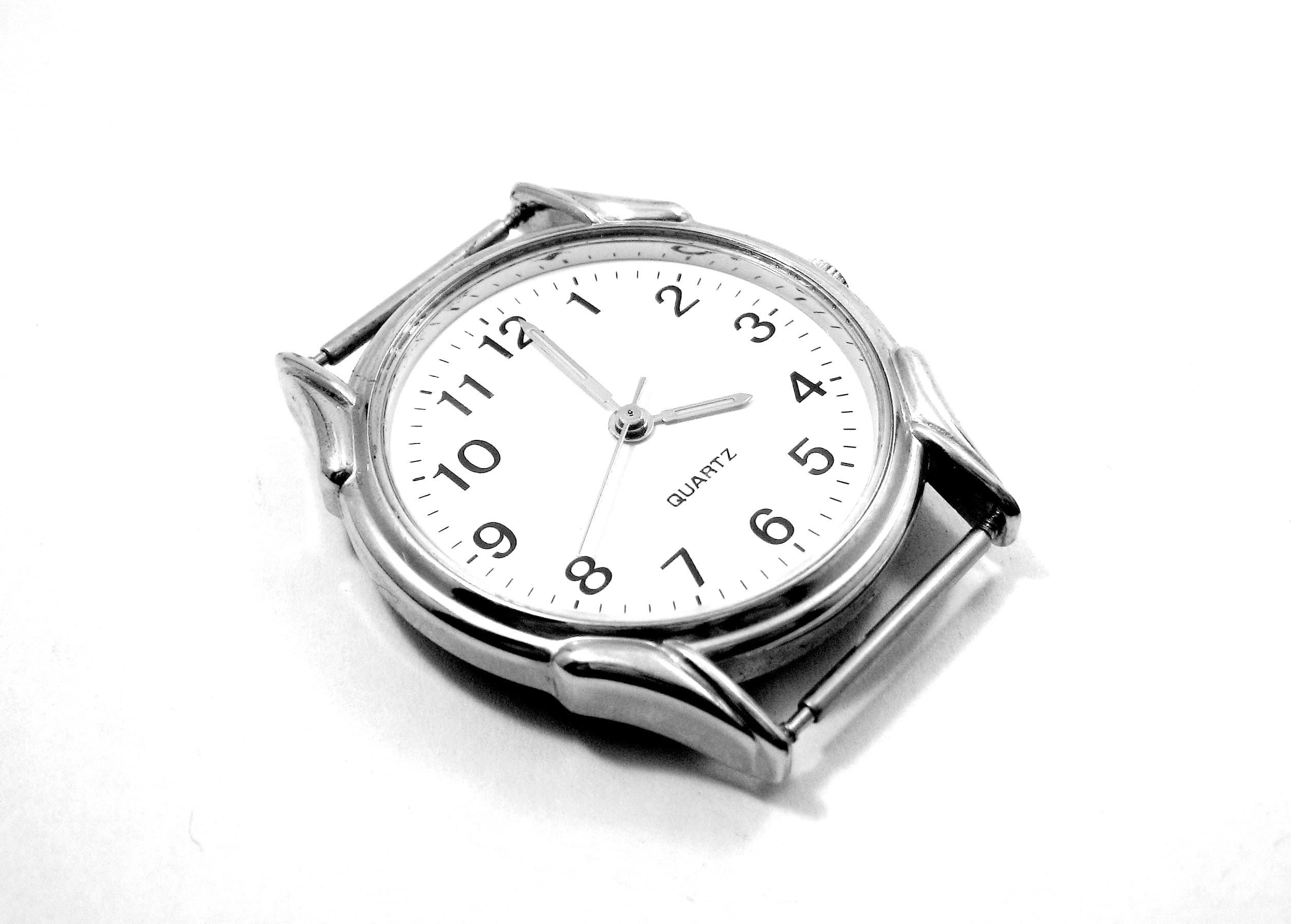
The quartz crisis was the collapse of the traditional, mechanical-watch-focused Swiss watch industry after quartz watches, which use a battery and a vibrating crystal instead of springs and gears, flooded the market in the 1970s and early 1980s. Quartz watches were cheaper to make, more accurate, and easier to mass-produce, so customers switched to them in huge numbers, and the companies that didn’t adapt fast enough nearly went bankrupt.
The word “crisis” makes it sound like a single dramatic event, but it actually played out over roughly fifteen years. It started quietly in 1969 and reached its worst point in the early 1980s, by which time the damage to Switzerland’s watchmaking towns was impossible to ignore. Entire communities that had built their economies around small workshops making tiny mechanical parts suddenly had no buyers for that work.
How Did the Quartz Crisis Start?
It started on December 25, 1969, when the Japanese company Seiko released the Astron 35SQ, the world’s first quartz wristwatch, and showed the world that a battery-powered watch could be far more accurate than any mechanical one. That single product launch is the moment most historians point to as the beginning of everything that followed.
The Astron went on sale after roughly a decade of research at Suwa Seikosha, a manufacturing arm of the Seiko Group. It wasn’t cheap: the gold-cased watch retailed for 450,000 yen, about $1,250 at the time, which was close to the price of a mid-size car. Seiko only made a small first batch, but the technology inside it was the real story. The watch kept time to within roughly 0.2 seconds a day, or about 5 seconds a month, a level of accuracy that ordinary mechanical watches of the era simply couldn’t touch.
Interestingly, Switzerland wasn’t asleep at the wheel. A consortium of Swiss watchmakers, including names like Omega, Rolex, and Patek Philippe, had actually helped develop one of the earliest quartz movements, known as the Beta 21, around the same time. The technology existed on Swiss soil too. The real problem was what happened after that.
Seiko marketed the new technology with the tagline “Someday, all watches will be made this way” — a prediction that turned out to be almost entirely correct within a decade.
Why Did Quartz Watches Hurt Swiss Watchmakers So Much?
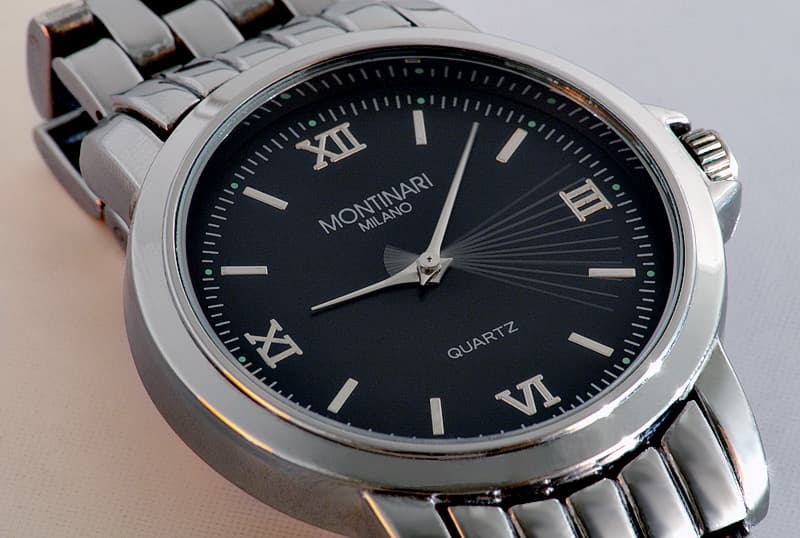
Quartz watches hurt Switzerland because the country’s watch industry was built around small, independent workshops making mechanical parts by hand, and that entire system had no fast way to switch over to mass-producing electronic movements. Japan and the United States, by contrast, already had strong electronics manufacturing bases and could scale up quartz production quickly and cheaply.
Switzerland’s watch industry had been organized since the 1930s around a horizontal system: hundreds of small, specialized family firms each made one type of part, and cooperative associations coordinated everything between them. This worked beautifully for mechanical watches, where craftsmanship and specialization were valuable. But quartz watches needed something completely different: integrated circuits, mass-produced electronic components, and factories built for volume rather than handwork. Retooling that fragmented, tradition-bound system was slow, expensive, and in some cases blocked by the very legal agreements that had protected the industry for decades.
There was also a pricing problem. As Japanese manufacturers scaled up, quartz watches got cheaper and cheaper, while Swiss mechanical watches carried the cost of skilled hand labor. By the mid-1970s, a basic quartz watch already cost less than a comparable mechanical one, and the gap kept widening.
How Bad Did It Get for the Swiss Watch Industry?
It got bad enough to be described as an economic catastrophe, with roughly two out of every three jobs in Swiss watchmaking disappearing within about thirteen years. Whole towns that depended on the industry for employment were hit hard, and hundreds of watch companies shut down entirely.
The numbers tell the story clearly. Estimates put the number of Swiss watch companies at around 1,600 in 1970, falling to fewer than 600 by the mid-1980s. Employment in the industry fell from around 90,000 workers in 1970 to somewhere in the range of 28,000 to 33,000 by the mid-1980s, depending on the exact year measured. Switzerland’s share of the global watch market, which had been over 50 percent through the 1960s, dropped to roughly a quarter of the market by 1978. Meanwhile, Seiko had grown so large that by 1977 it had become the biggest watchmaker in the world by volume.
The scale of the collapse, by the numbers:
| Measure | Around 1970 | By the Mid-1980s |
|---|---|---|
| Swiss watch companies | ~1,600 | Fewer than 600 |
| Swiss watchmaking jobs | ~90,000 | ~28,000–33,000 |
| Swiss share of world watch market | Over 50% | Roughly 24% (1978) |
It’s worth noting that some watch historians push back on the idea that quartz technology alone caused all this damage. They point out that a sharp rise in the value of the Swiss franc, combined with the industry’s outdated, fragmented structure and legal restrictions on modernizing, made the crisis far worse than new technology by itself would have. In other words, quartz watches were the trigger, but decades of underlying structural weakness are what turned a business challenge into a near-collapse.
How Did the Swiss Watch Industry Recover?
The Swiss watch industry recovered mainly through a massive restructuring led by businessman Nicolas G. Hayek, who merged the country’s two largest, debt-ridden watch conglomerates and helped launch the affordable, colorful Swatch brand to fight quartz watches on price while Swiss luxury brands repositioned mechanical watches as status symbols instead of just tools for telling time.
In the early 1980s, Swiss banks brought in Hayek to figure out whether the industry could be saved at all. His answer was that it could, but only through dramatic change. He engineered the merger of the two struggling giants, ASUAG and SSIH, into what eventually became the Swatch Group, and pushed the creation of a new, plastic-cased, mass-produced quartz watch under the Swatch name. It was inexpensive, fun, fashionable, and made in Switzerland, which directly challenged the idea that Japanese quartz watches were the only affordable option.
At the same time, high-end Swiss brands took a different path. Instead of competing with Japan on price and accuracy, they leaned into everything a machine couldn’t replicate: hand-finishing, complex mechanical engineering, heritage, and exclusivity. A mechanical watch stopped being marketed as simply a way to check the time and became a symbol of craftsmanship and status, something a quartz watch, however accurate, couldn’t claim. That repositioning is a big part of why brands like Patek Philippe, Audemars Piguet, and Vacheron Constantin remain so prestigious today.
Does the Quartz Crisis Still Affect Watches Today?
Yes, its effects are still visible everywhere in the modern watch industry, from why mechanical watches are marketed as luxury items to why so many brands proudly display “Swiss Made” and highlight hand-finishing and heritage. The crisis reshaped how the entire industry thinks about value.
Quartz movements never went away. In fact, quartz and battery-powered watches still make up the majority of watches sold worldwide by volume, because they’re reliable, low-maintenance, and inexpensive. But mechanical watches didn’t disappear either. They shifted into a different category entirely: collectible, aspirational objects where the appeal is the visible craftsmanship of tiny moving parts, not raw accuracy. That’s why a modern mechanical watch, even one that’s less accurate than a ten-dollar quartz watch, can sell for tens of thousands of dollars. Buyers aren’t paying for timekeeping. They’re paying for the story, the skill, and the tradition, which is a direct legacy of how the industry rebuilt itself after nearly losing everything.
Frequently Asked Questions
What year did the quartz crisis start?
Most historians mark the start of the quartz crisis as 1969, the year Seiko released the Astron 35SQ, the world’s first quartz wristwatch. The worst effects on the Swiss industry, however, weren’t fully felt until the late 1970s and early 1980s.
Who invented the first quartz watch?
Seiko, a Japanese watchmaker, released the first commercially available quartz wristwatch, the Quartz-Astron 35SQ, in December 1969. A Swiss consortium had also developed an early quartz movement called the Beta 21 around the same period, but it never achieved the same commercial success.
How many Swiss watchmaking jobs were lost during the quartz crisis?
Estimates vary, but most sources agree that Swiss watchmaking employment fell from around 90,000 workers in 1970 to somewhere between 28,000 and 33,000 by the mid-1980s, meaning roughly two out of every three jobs in the industry disappeared.
Did Rolex or Omega make quartz watches?
Yes. Several major Swiss brands experimented with or sold quartz watches during this period, including Rolex, which released the Oysterquartz, and Omega, which was part of the original Beta 21 consortium. These efforts show that Swiss brands weren’t rejecting the technology outright, but were struggling to compete with it at scale.
Is quartz or mechanical better today?
Neither is objectively “better,” since they serve different purposes. Quartz watches are more accurate and require far less maintenance, making them practical everyday tools, while mechanical watches are prized for their craftsmanship, engineering, and the fact that no battery is required, which is why they remain popular in the luxury watch world despite being less precise.
Conclusion
The quartz crisis wasn’t really a story about one technology beating another. It was a story about an entire industry being forced to figure out what it actually offered that a cheaper, more accurate competitor couldn’t replicate. Switzerland lost most of its watchmaking jobs and hundreds of its companies in the process, but the brands that survived came out with a much clearer identity: quartz watches would handle everyday accuracy, and mechanical watches would stand for craftsmanship, heritage, and status. That split, forged under real financial pressure in the 1970s and 1980s, is still exactly how the watch industry is organized today.