Look closely at almost any natural gemstone under a jeweler’s loupe, and something almost always turns up inside it: a tiny crystal, a wispy line, a cloudy patch, maybe even a feathery thread of another mineral entirely. These are inclusions, and the moment people hear the word, they tend to assume it means the stone is damaged or lower quality. That’s not quite right. Inclusions are simply part of how gemstones form deep in the earth, and depending on the type of stone, the kind of inclusion, and where it sits, that same tiny feature can lower a gem’s price, have almost no effect at all, or actually make it worth more.
What Is a Gemstone Inclusion?
An inclusion is anything trapped inside a gemstone while it was forming, whether that’s a mineral crystal, a bubble of gas, a pocket of liquid, or a tiny crack. It’s different from a blemish, which is a mark on the outside of the stone, like a scratch or a nick left over from cutting and polishing.
Gems form under enormous heat and pressure over thousands or millions of years, often surrounded by other minerals and mineral-rich fluids. As the crystal slowly grows, it’s common for bits of that surrounding material to get sealed inside before the stone fully hardens. Gemologists sort these features into a handful of main types:
- Crystals – tiny mineral grains trapped inside, sometimes a completely different mineral than the gem itself
- Feathers – thin, wispy fractures that catch the light and look feather-shaped
- Clouds – clusters of extremely tiny pinpoint crystals grouped so closely together they create a hazy patch
- Needles – long, thin, rod-like crystals, often made of a mineral called rutile
- Fluid or liquid inclusions – tiny pockets of liquid, sometimes with a gas bubble floating inside, left over from the gem’s growth
- Fingerprints – wandering, thread-like patterns that look like an actual human fingerprint under magnification
None of these automatically mean a stone is fake, damaged, or poorly made. In fact, it can be the opposite, since a completely inclusion-free stone in certain gem types is unusual enough to raise questions rather than settle them.
Gemologists also pay attention to when an inclusion formed. Some, called primary inclusions, were sealed inside while the crystal itself was still growing, meaning they’re essentially the same age as the gem. Others, called secondary inclusions, formed later, often when a crack in the stone partly healed itself with mineral-rich fluid passing through it. This timing matters because it helps experts read a stone’s history almost like a diary. Certain inclusions are even distinctive enough to point to a specific mine or country, which is one reason gem labs sometimes use them to help confirm where a stone actually came from.
Do Inclusions Lower a Gemstone’s Value?
No. Whether an inclusion hurts, helps, or does basically nothing to a stone’s value depends heavily on which gemstone it’s in. Gemologists sort gem species into different clarity categories precisely because “clean” means something different for a diamond than it does for an emerald.
The trade generally groups colored gemstones into three broad clarity types for this reason. A stone like tanzanite is normally expected to grow free of inclusions, so it gets graded strictly and any visible inclusion counts against it more heavily. Diamonds sit in a similarly strict category, since a clean diamond is achievable and expected at the top grades. Emeralds sit at the opposite end of the spectrum. Nearly every natural emerald grows with visible internal texture, so the trade treats that as normal and expected rather than penalizing it the way a diamond grader would. Grading these stone types differently isn’t the industry being inconsistent; it’s being realistic about what nature typically produces in each case.
Applying diamond rules to a colored gemstone is one of the fastest ways to misjudge it. A perfectly clean emerald isn’t automatically the “best” one; it’s simply the rarest, and rarity alone doesn’t always mean superior beauty.
The language used for each clarity level changes considerably between a strictly graded stone and a stone where inclusions are the norm:
| Clarity level | Diamond (strict grading) | Emerald (Type III, inclusions expected) |
|---|---|---|
| Top tier | Flawless / Internally Flawless – no inclusions even under magnification | Exceptional – rare, minimal jardin visible even with a loupe |
| High | VVS – inclusions extremely hard to see under 10x zoom | Eye-clean – no inclusions visible without magnification |
| Mid | VS to SI – inclusions visible under magnification, sometimes to the naked eye | Slightly to moderately included – jardin visible to the naked eye but doesn’t cloud the stone |
| Lower | I1 to I3 – inclusions clearly visible and may affect brilliance | Heavily included – jardin noticeably reduces transparency or brightness |
The grade names sound similar across gem types, but the bar for reaching each one is completely different, which is exactly why a “slightly included” emerald and a “slightly included” diamond can look nothing alike.
When Inclusions Hurt a Gemstone’s Value
The cases where inclusions are a real problem come down to two things: how much they block or scatter light, and whether they put the stone’s structure at risk.
Visual impact. A large cloud or a dense cluster of inclusions can make a stone look hazy, dull, or milky instead of bright and lively. Big or poorly placed inclusions can dim a gem’s sparkle noticeably, which is why jewelers pay close attention to the size and position of an inclusion, not just whether one exists at all.
Durability risk. Some inclusions are essentially small internal cracks, and if one is large or reaches close to the surface, it can make a stone more likely to chip or split if it’s knocked against something hard. This matters far more for a ring worn every day than for a pendant that mostly stays tucked under a shirt.
For diamonds, sapphires, and rubies commonly sold as “eye-clean,” the working standard is whether inclusions are visible to an unaided eye at a normal viewing distance, not just under magnification. A stone can show plenty of internal detail under 10x zoom and still look completely clear across a dinner table.
Emeralds are a useful example of both risks showing up at once. Because jardin is so common in this stone, many emeralds also contain small fractures that reach, or nearly reach, the surface. That combination of expected inclusions and fragile structure is exactly why oiling, filling surface fractures with a clear oil to make them less visible, became such a standard practice in the emerald trade rather than an occasional trick. It’s also part of why emeralds are generally treated as a gem to protect from hard knocks rather than an everyday-abuse stone, regardless of how clean or included a particular piece looks.
When Inclusions Increase a Gemstone’s Value
This is the part that surprises most people: certain inclusions aren’t just tolerated, they’re specifically sought after by collectors and command real premiums.
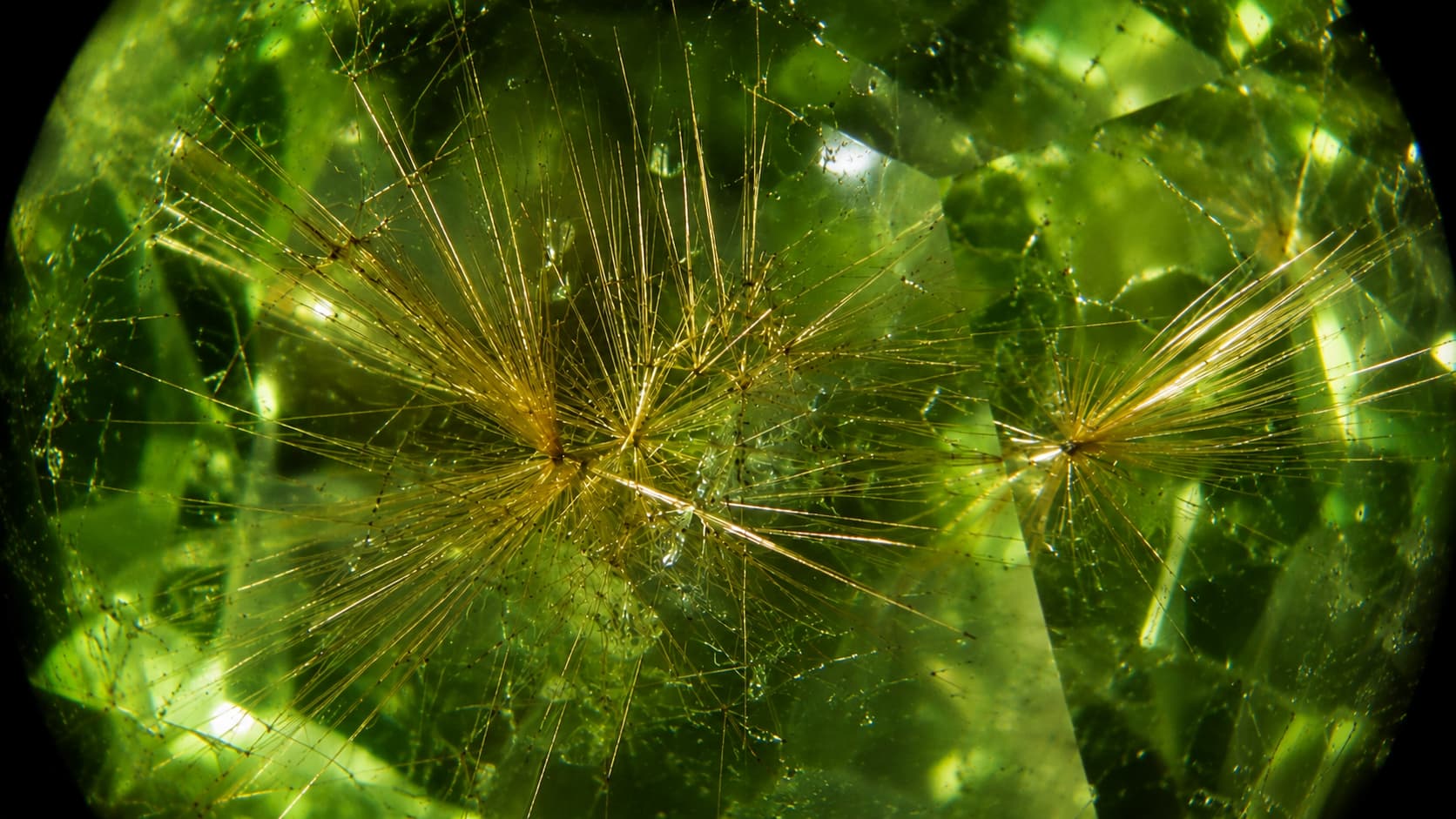
- Horsetail inclusions in demantoid garnet. Certain Russian demantoid garnets grow with fine, wavy strands of a fibrous mineral radiating out from a central point, resembling the tail of a running horse. This pattern hasn’t been documented in demantoid mined outside that region, so its presence is treated as strong evidence a stone came from Russia specifically, and collectors will pay noticeably more for a well-formed example.
- Silk in sapphires and rubies. Corundum sometimes grows with clusters of microscopic rutile crystals lined up in the same direction, an effect the trade calls silk. Rather than being a flaw, a moderate amount of this internal texture softens a stone’s brightness into a velvety glow instead of a hard glassy shine. When those same aligned crystals cross each other at the right angle, the result is a moving six-rayed star across the surface of a cut star sapphire or star ruby.
- Jardin in emeralds. The French word for “garden” describes the mossy, branching internal texture found in nearly every natural emerald. Rather than being disguised, this pattern is expected, and often welcomed, by collectors and gem experts, since it’s also part of what helps confirm a stone grew naturally rather than in a lab or under heavy treatment.
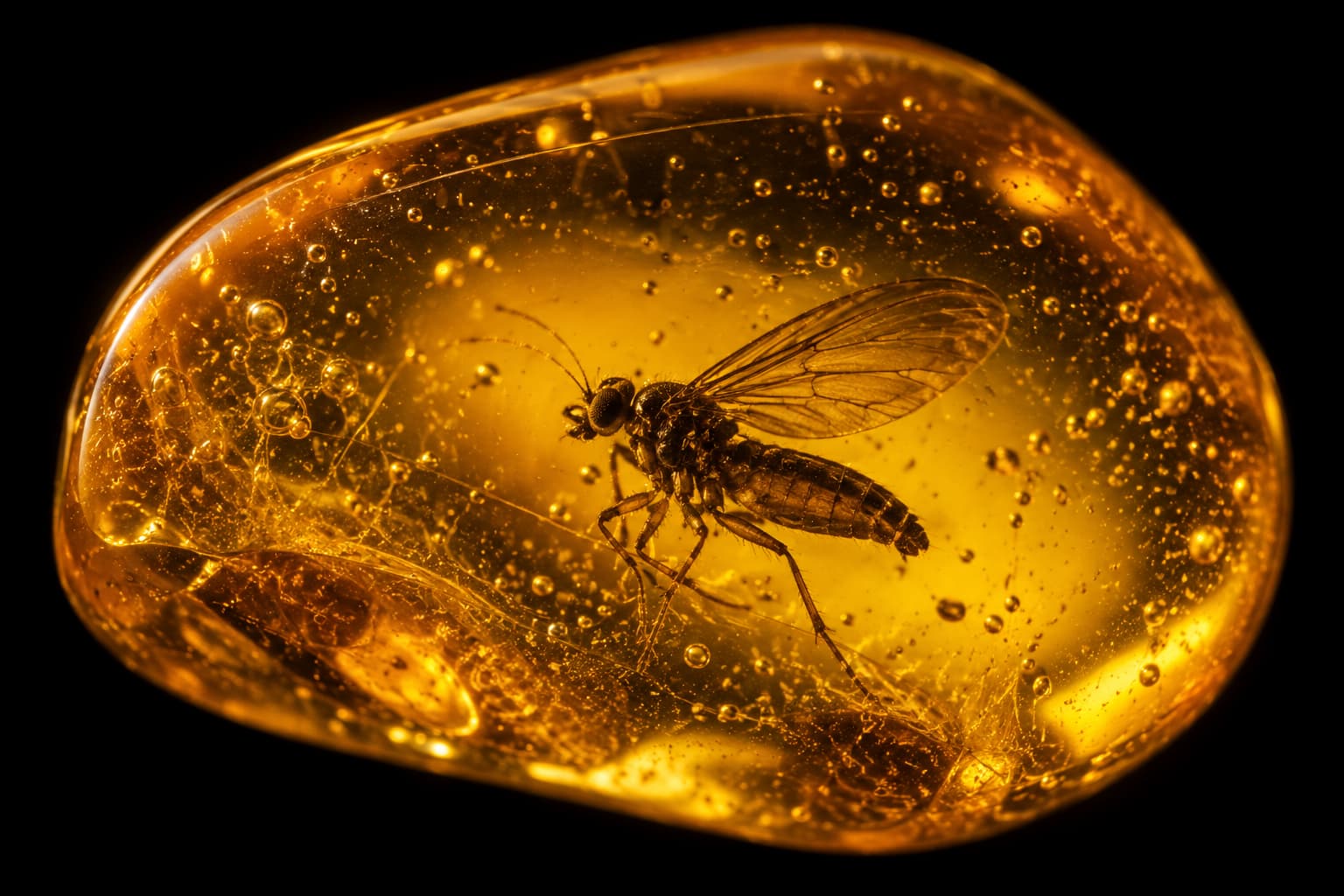
- Preserved matter in amber. Ancient insects or plant fragments trapped inside amber millions of years ago dramatically raise its value rather than lowering it, since specimens like these are essentially tiny fossils.
- Cat’s-eye and star effects. Parallel needle-like inclusions inside stones like chrysoberyl create a single sharp line of light across the surface when the stone is cut correctly, an effect collectors actively seek out and pay a premium for.
- The star pattern in trapiche emeralds. Every so often, an emerald grows with dark carbon impurities trapped along its natural crystal boundaries, forming a striking six-pointed star that radiates from the center like the spokes of a wheel. This “trapiche” pattern forms during the crystal’s growth rather than being added later, and it turns up almost exclusively in a small number of Colombian mines. Estimates of how often it occurs vary widely from source to source, but every account agrees it’s genuinely rare, which makes a clean, symmetrical trapiche pattern one of the more dramatic examples of an inclusion turning an ordinary gem into a collector’s rarity.
In each of these cases, the inclusion isn’t something the stone survived despite having — it’s part of the reason the stone is considered special in the first place.
How to Tell If an Inclusion Is a Problem
What an inclusion is doing to a stone’s brightness, color, and strength matters far more than whether it’s present at all.
| Factor | Why it matters | Good sign vs. red flag |
|---|---|---|
| Visibility without magnification | ”Eye-clean” stones look flawless in daily wear even if a loupe reveals more | Good: invisible at arm’s length. Red flag: obvious dark spots or haze at a glance |
| Effect on color or brightness | Clouds and dense clusters scatter light in a way that flattens a stone’s sparkle | Good: stone still looks lively and bright. Red flag: noticeably milky or dim in normal light |
| Whether it reaches the surface | Surface-reaching feathers and fractures are more vulnerable to chipping over time | Good: inclusion sits fully sealed inside the stone. Red flag: crack visibly meets the edge of the stone |
| Whether it’s a known “good” inclusion for that gem type | Horsetails, silk, and jardin can raise rather than lower a stone’s appeal | Good: matches a recognized pattern for that gem. Red flag: an unfamiliar dark mark a seller can’t explain |
| Whether it helps confirm the stone is natural | Certain inclusion patterns are hard to fake in a lab, reassuring buyers the stone wasn’t synthetically grown | Good: irregular, organic-looking texture. Red flag: an oddly “perfect” or suspiciously flawless stone sold at a very low price |
A jeweler or certified gemologist can examine a stone under magnification and identify which of these factors apply, a far more reliable approach than a blanket rule like “no inclusions ever.”
Frequently Asked Questions
Are all gemstones without inclusions more valuable?
Not automatically. For diamonds and stones like tanzanite that normally grow clean, a lack of visible inclusions does tend to raise value because it’s genuinely rare. But for a heavily included stone type like emerald, a completely inclusion-free specimen is so unusual that gemologists sometimes treat it as worth double-checking, since it could point to heavy treatment or a lab-grown origin rather than exceptional natural luck.
Can inclusions make a gemstone weaker or more likely to break?
Sometimes, yes. Inclusions that are actual internal cracks, especially large ones that reach near the surface, can make a stone more prone to chipping if it’s struck against something hard. Tiny crystal or fluid inclusions sealed deep inside a stone typically don’t carry the same risk.
How can I tell if a gemstone is natural just from its inclusions?
Natural gemstones often contain irregular, organic-looking inclusions, like feathery crystals, fingerprint patterns, or fluid pockets, that build up over long stretches of geologic time. Lab-grown stones tend to show different, more uniform patterns depending on how they were grown, such as curved growth lines or trapped gas bubbles from the manufacturing process. A certified gemologist with a microscope can usually tell the difference with confidence.
Do treatments remove inclusions from gemstones?
Some treatments make inclusions less visible rather than removing them entirely. Oiling, for example, is commonly used on emeralds to fill surface-reaching fractures with a clear oil, making them less noticeable without changing what’s actually inside the stone. A reputable seller should always disclose this kind of treatment upfront.
Should I avoid buying a gemstone that has visible inclusions?
Not necessarily. It depends heavily on the gem type and how the piece will be worn. A visible inclusion in a diamond might mean a lower price without much visible difference day to day, while the same kind of inclusion in an emerald is simply expected and normal. The more useful question is whether the inclusion affects the stone’s brightness or durability, not whether it exists at all.
Conclusion
Inclusions are best understood as a gemstone’s internal history rather than a simple pass-or-fail mark. In diamonds and a handful of other strictly graded stones, fewer inclusions really does tend to mean a higher grade and a higher price. But in emeralds, demantoid garnets, star sapphires, and amber, specific inclusions are part of what makes a stone authentic, identifiable, and in some cases more valuable than a flawless one would be. The real question worth asking about any included stone isn’t whether something is inside it, but what that something is doing to its color, brilliance, and long-term durability.