An old black-and-white photograph, the kind tucked into history books and family archives alike, often shows a stern gentleman in a top hat, one round piece of glass wedged into his eye socket, staring at the camera like he owns the room. That single lens is a monocle, and even though almost nobody wears one for practical reasons anymore, it remains one of the most recognizable pieces of eyewear ever invented. It shows up on cartoon mascots, in period dramas, and in Halloween costumes, yet most people who recognize it couldn’t actually explain how it stayed on someone’s face or why it existed in the first place. The monocle has a surprisingly rich backstory that stretches from Roman antique collectors to Victorian gentlemen’s clubs, and understanding it says a lot about how fashion, class, and eyesight have always been tangled up together.
Monocle Meaning: What It Is and How It Works
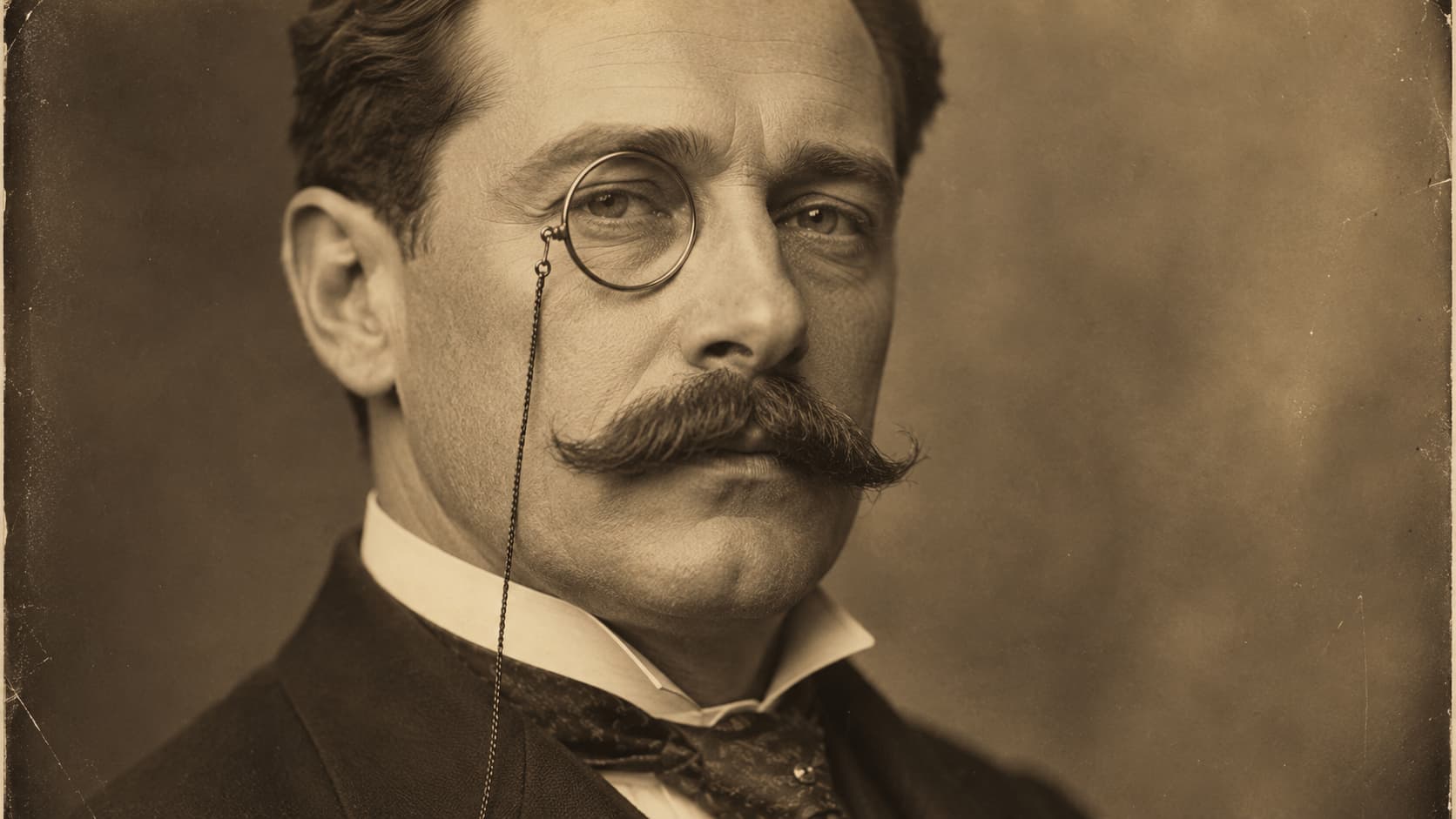
A monocle is a single round lens designed to correct or sharpen the vision in just one eye, held in place without any arms, hinges, or a bridge across the nose. Instead of hooking around the ears like regular glasses, it wedges into the eye socket between the brow bone and cheekbone, gripped by the surrounding muscles.
That’s the entire mechanism, and it’s also why monocles have a reputation for popping out at inconvenient moments. There’s no strap doing the work, no frame wrapping around the head — just the natural squeeze of the eye socket holding a disc of glass in place. Most monocles were finished off with a small cord or chain clipped to a jacket lapel or waistcoat button, so if the lens did slip free, it wouldn’t smash on the floor or get lost.
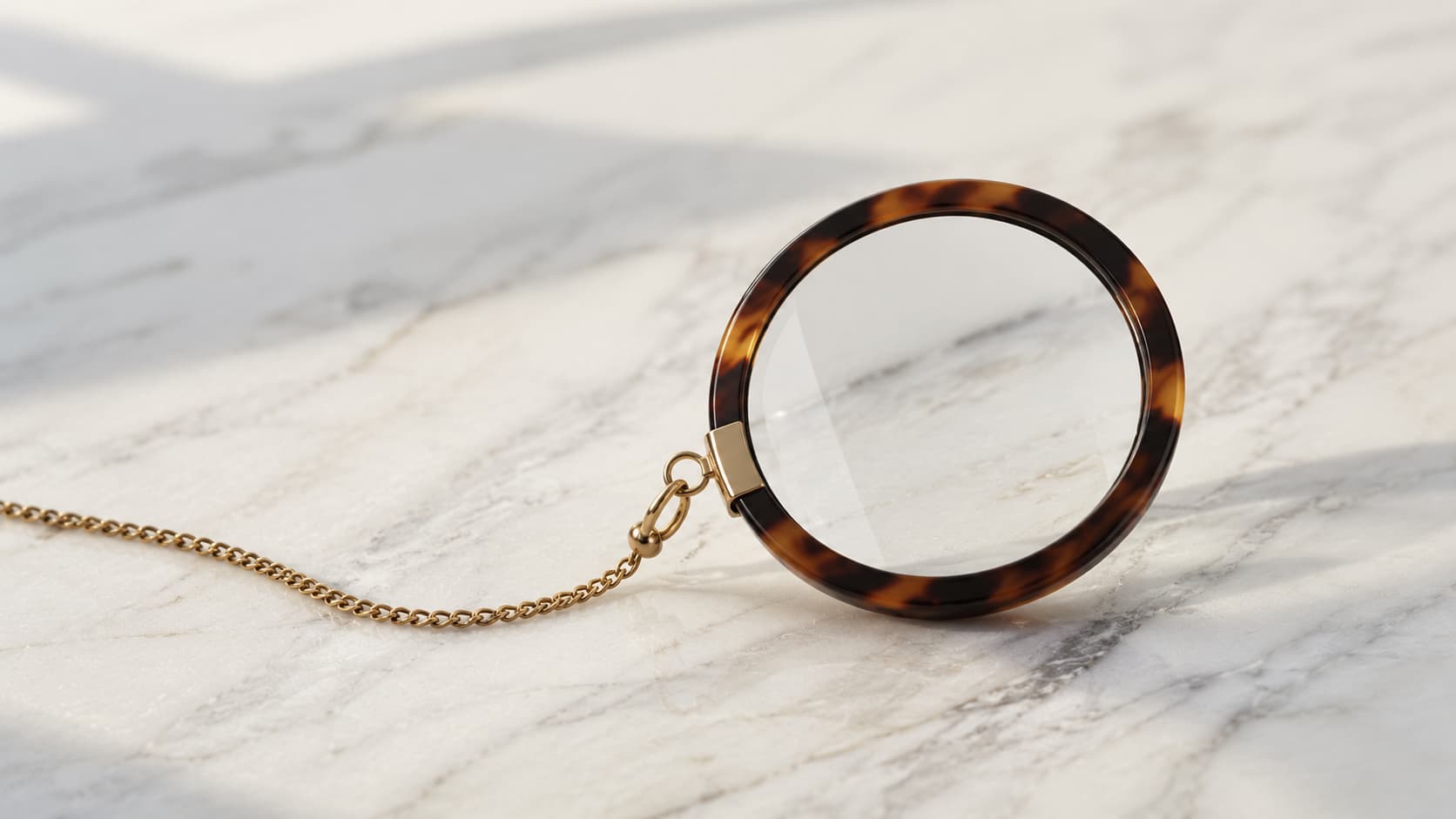
The rim around the lens also varied a lot by budget. Surviving period monocles show a real range of materials, from plain nickel-plated or steel rims to more expensive tortoiseshell, gold, and silver frames — the same materials that showed up in fine jewelry and accessories of the era, which is part of why a monocle in precious metal read as a luxury item rather than just a vision aid.
When Was the Monocle Invented?
The monocle traces back to single hand-held lenses used in the early 1700s, long before it became the fashion statement people picture today. Corrective eyewear itself dates to the 13th century, but the single-lens monocle as its own accessory has roots reaching back to the early 1700s.
One of the earliest documented monocle wearers wasn’t a fashionable aristocrat at all — he was an antiques expert. Philipp von Stosch, an antiquarian working in Rome in the 1720s, is often credited as an early monocle wearer, using it to closely study engraved gems and antique carvings. A related device from around the same broader era, the quizzing glass, served a similar purpose but worked differently — it was a handheld magnifying lens on a ribbon or chain, meant to be lifted to the eye rather than worn in the socket, and it stayed fashionable well into the 1800s before the monocle eventually eclipsed it.
The monocle in its now-familiar form — worn hands-free, wedged into the eye socket — didn’t become a true fashion item until much later. An Austrian eyewear maker named J.F. Voigtländer is often credited with introducing a rimless monocle design around 1814, at a time when spectacles of any kind still carried connotations of old age rather than style. The design kept evolving from there. Through the 1830s, a simple metal loop replaced the rimless glass, making the lens easier and more comfortable to wear. Decades later, an even more secure design appeared. By the late 1800s, monocle makers added a raised metal edge called the “gallery,” made up of two curved extensions that fit snugly into the eye socket and kept eyelashes from knocking the lens loose.
How the Monocle Became a Status Symbol
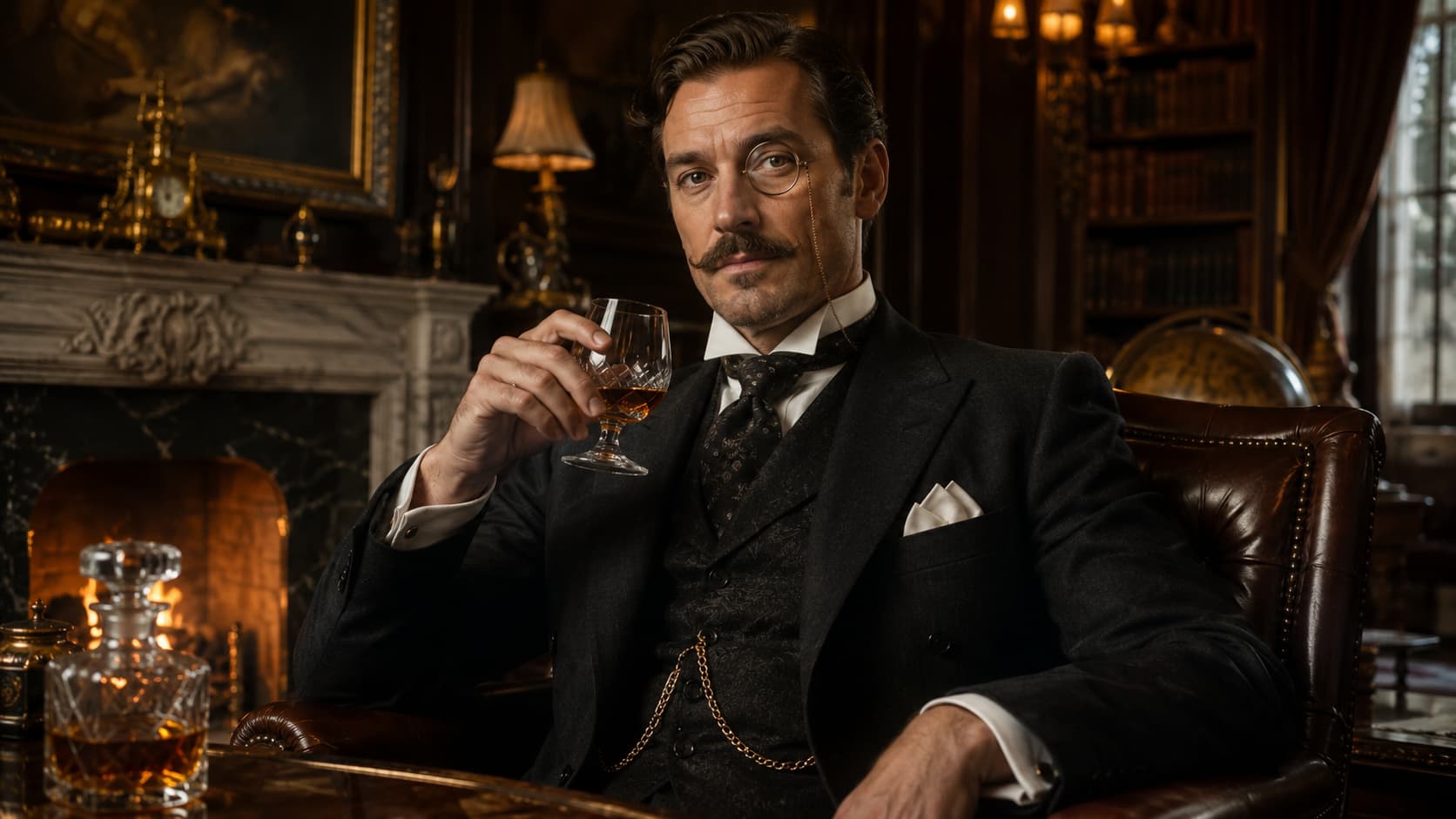
By the time the gallery design existed, the monocle had already stopped being just a vision tool. That shift had actually started decades earlier — by the 1830s, the monocle’s main job had less to do with seeing clearly and more to do with signaling that its wearer was educated, cultured, and socially well placed, and plenty of the lenses worn during this period weren’t even ground to correct anyone’s eyesight.
Cost played a big role in that shift toward status symbol. A proper monocle wasn’t something bought off a shelf — its fit had to match the exact curve of one person’s eye socket, which meant a skilled optician had to make it to order, and that kind of craftsmanship didn’t come cheap. That expense put the accessory mostly out of reach for anyone who wasn’t already comfortably well off, and owning one signaled as much.
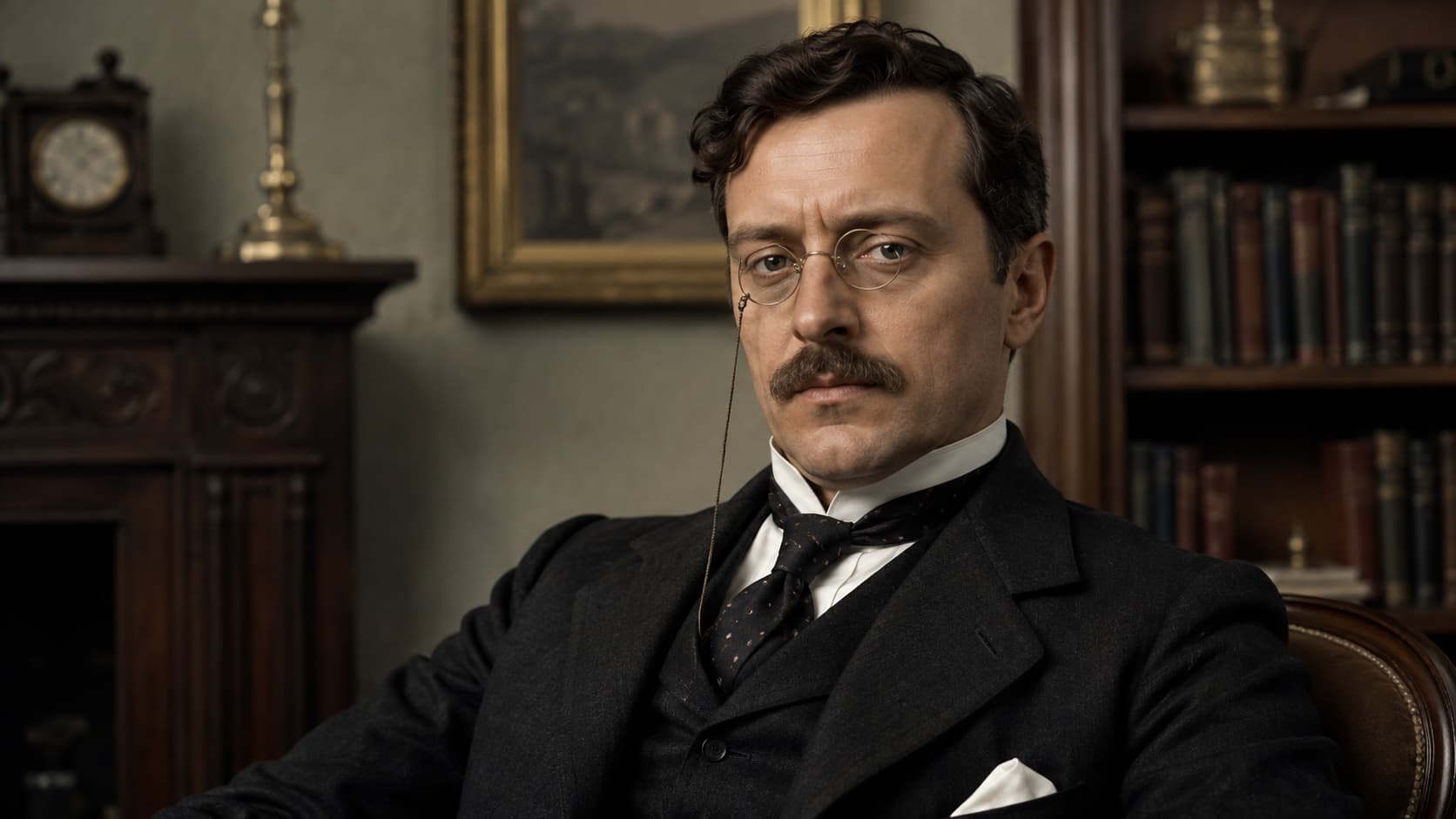
The trend spread across Europe and eventually crossed the Atlantic. By the 19th and 20th centuries, wearing a monocle had become a kind of shorthand for a sharp mind, a comfortable bank account, and a certain social polish, and it turned up constantly among the upper classes and academics of Europe, who wore it as much for image as for eyesight. American interest picked up later and never reached quite the same scale — the accessory caught on in the United States in the 1880s and kept climbing for roughly three decades before topping out around 1913, but it stayed a smaller phenomenon stateside than it ever was across the Atlantic.
How Does a Monocle Actually Stay on Without Arms?
A monocle stays put purely through muscle tension around the eye socket — the wearer has to slightly squint or tighten the brow and cheek to hold it in place, since there’s nothing hooking around the ears. This is exactly why monocles have such a reputation for comically popping out when someone laughs, sneezes, or raises their eyebrows in surprise — the muscles doing the gripping simply relax.
To make that grip more reliable, monocle frames were built with specific parts:
- The lens — ground glass, sometimes with an actual prescription and sometimes purely decorative.
- The gallery — the raised metal rim mentioned earlier, which presses gently against the brow and cheekbone to stop the monocle from sliding.
- The cord or chain — a safety line clipped to a lapel, waistcoat, or jacket button so a dropped monocle wouldn’t shatter or vanish.
When a monocle was made to actually correct someone’s eyesight, its lens strength was measured in diopters, the same unit opticians still use today to describe how strongly a lens bends light. A higher diopter number meant a stronger correction, and because every wearer’s eye socket and prescription were different, two people’s monocles were rarely interchangeable.
Because the fit depended entirely on the shape of an individual’s face, a well-made monocle really did need to be custom fitted — one person’s monocle rarely worked comfortably for anyone else.
Why Did People Stop Wearing Monocles?
Monocles fell out of everyday fashion mainly because regular eyeglasses became cheaper, more comfortable, and more socially acceptable, removing the need for a single, awkward, custom-fitted lens. Britain’s monocle craze had already cooled by the close of the 1830s, but the accessory didn’t disappear overnight — it stuck around in pockets of upper-class British life for roughly a century afterward, still turning up on members of Parliament and sharply dressed gentlemen well into the twentieth century.
The accessory’s final decline lines up with a bigger shift in eyewear generally. Monocle use dropped off sharply after World War II, once practical, mass-produced glasses became widely and affordably available to ordinary people. Once two-lens spectacles were affordable, comfortable, and no longer carried a stigma of looking elderly or clergy-like, there was little practical reason left to strap a single lens into one eye socket and hope it stayed there.
Famous People Who Wore Monocles
The monocle wasn’t just a costume prop or a cartoon gimmick — real historical figures wore them regularly. Germany’s Otto von Bismarck, the chancellor who founded and led the unified German Empire, was known for wearing one. Across the Atlantic, Canadian politician Sir Louis-Napoléon Casault was also recognized for the accessory during his career in 1800s politics, another example of how closely a monocle tracked with money and standing.
The monocle picked up a very different meaning later on, too. In the late twentieth century, it became a recognizable style choice within lesbian communities, where wearing one signaled identity and sexuality rather than money or status.
The Monocle in Pop Culture
Fiction leaned into the monocle even harder than real history did, which is a big part of why the accessory still feels instantly recognizable today. Colonel Wilhelm Klink from the 1960s sitcom Hogan’s Heroes, played by actor Werner Klemperer, is one of the most famous fictional monocle wearers, and the character’s monocle became a running gag, comically popping out whenever he got flustered or embarrassed. Batman’s cane-carrying villain The Penguin and Colonel Mustard from the board game Cluedo (known as Clue in the US) also became instantly identifiable partly through their monocles, which helped cement the accessory in pop culture as shorthand for old-money villains, eccentric aristocrats, and comic-relief characters rather than everyday eyewear.
Are Monocles Still Used Today?
Genuine, functional monocles are rare today mostly because modern eyewear has made them unnecessary. Opticians can now build lenses with a different prescription strength for each eye directly into a normal pair of glasses, and contact lenses handle single-eye vision problems even more discreetly, so there’s little practical reason left to reach for a monocle.
When monocles do show up now, it’s almost always for style, costume, or branding rather than eyesight. Several well-known brand mascots wear a monocle purely for visual flair, including the Planters Peanuts character — though, contrary to popular belief, the Monopoly board game mascot does not actually wear one. Designers have also revived the look on the runway now and then, and it periodically reappears in film and television whenever a director wants to signal old-money elegance or eccentricity in a single visual shorthand.
The monocle even resurfaced briefly in mainstream fashion during the early 2010s. When eyewear brand Warby Parker launched in 2010 with a lineup of two dozen-plus eyeglass styles, it tucked in a single tortoiseshell monocle nicknamed Colonel Mustard — an odd, slow-selling addition the company has nonetheless kept in its collection ever since. The fashion house Maison Margiela sent a large magnifying monocle down its runway that same year, treating it less like eyewear and more like a sculptural accessory, and a New York Times trend piece tying monocles to hipster style briefly made the accessory a talking point again in 2014 — though, much like earlier revivals, the moment stayed a novelty rather than turning into everyday eyewear.
Monocle vs. Other Old-Style Eyewear
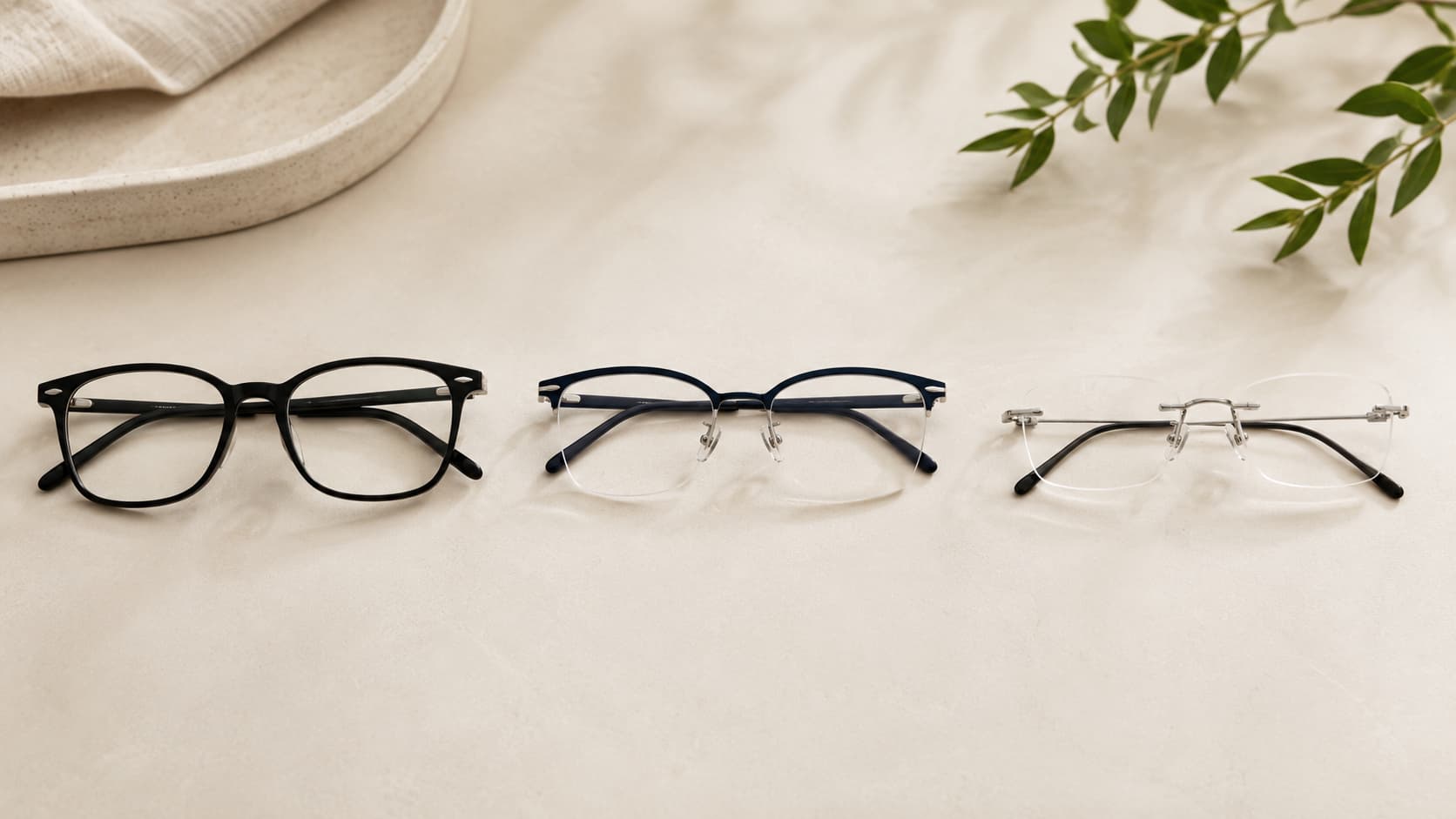
The monocle wasn’t the only unusual eyewear design history has produced, and it’s often confused with two other styles from the same era that worked quite differently.
| Eyewear | How It’s Worn | Number of Lenses | Still Made Today? |
|---|---|---|---|
| Monocle | Wedged into one eye socket, no arms or bridge | 1 | Yes, mainly for costume, theater, and collectors |
| Pince-nez | Clipped onto the bridge of the nose, no arms | 2 | Rarely — mostly found as antiques |
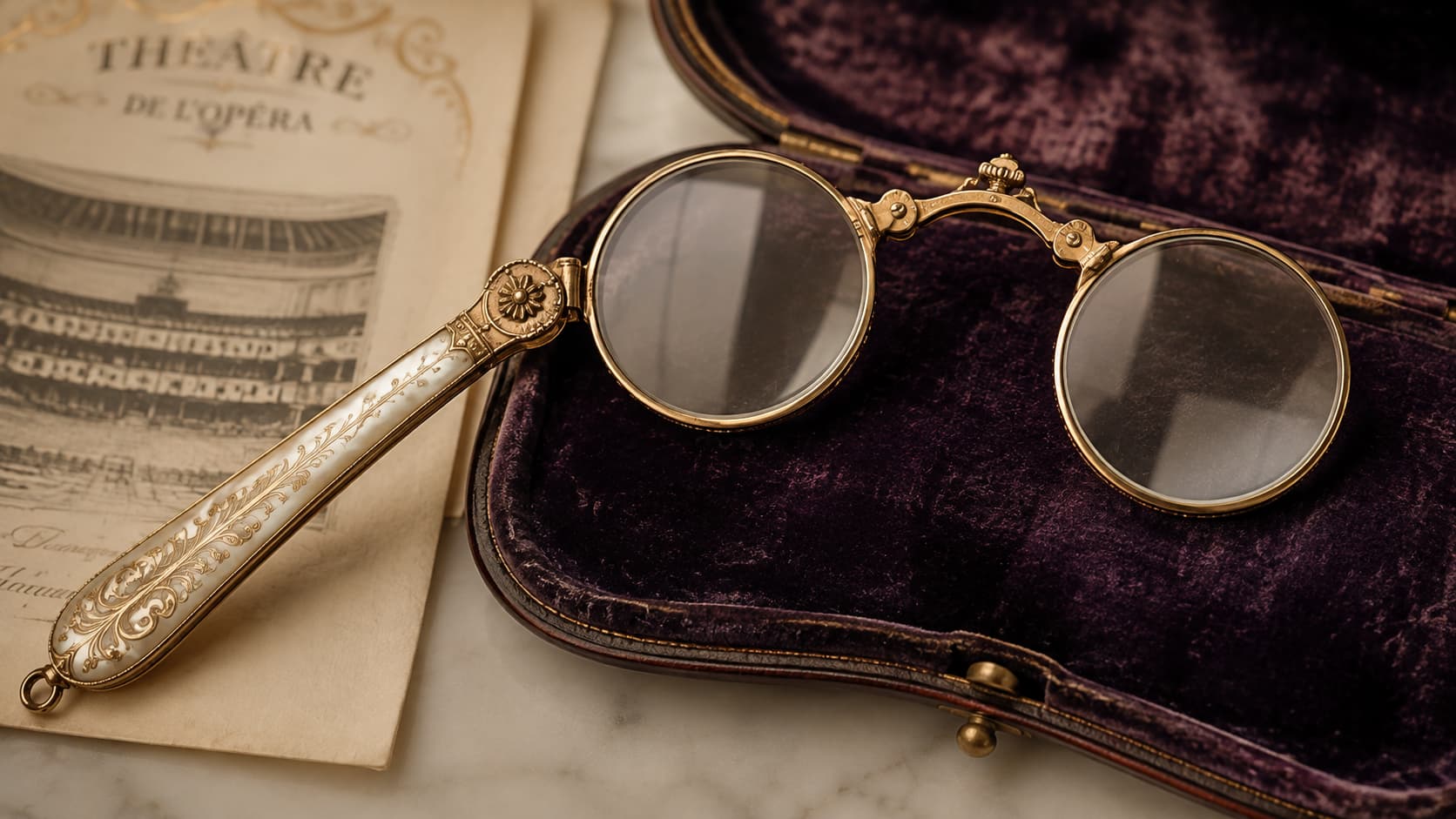
| Lorgnette | Held up to the eyes by a handle, like a mini magnifying glass on a stick | 1 or 2 | Rarely — mostly found as antiques |
The key difference is simple: a monocle covers only one eye and needs no hands at all once it’s in place, a pince-nez covers both eyes by gripping the nose, and a lorgnette has to be held up manually each time it’s used.
Frequently Asked Questions
Did monocles actually correct vision, or were they just for show?
Both. Some monocles were ground with a real prescription to correct vision in one eye, but plenty of wearers, especially once the accessory became fashionable, wore lenses made of plain, non-corrective glass purely to complete a look.
How did a monocle stay in someone’s eye without falling out?
It was held in place by gently tensing the muscles around the eye socket, helped by a raised metal rim called the gallery that gripped the brow and cheekbone. A cord attached to clothing acted as a backup so the lens wouldn’t be lost or broken if it slipped free.
Is it true the Monopoly Man wears a monocle?
No. It’s a widely believed myth, but the Monopoly mascot, formally known as Rich Uncle Pennybags, doesn’t actually wear a monocle in his official design.
Why did monocles become associated with wealthy people?
Because a proper, comfortable monocle had to be custom-fitted to the exact shape of an individual’s face, they were expensive to have made correctly. That cost naturally limited them to people with money, which cemented the monocle’s reputation as a status symbol rather than a purely practical tool.
Can you still buy a real monocle today?
Yes, though it’s a niche market. A handful of specialty eyewear makers and opticians still produce monocles, including prescription versions, mostly for costume use, theater, collectors, or people specifically seeking a vintage aesthetic rather than everyday vision correction.
Conclusion
The monocle’s story is really the story of eyewear’s reputation flipping upside down. It started as a practical magnifying tool for examining fine detail, briefly became a genuine vision aid, and then spent its most famous century as a pure status symbol worn as often for appearances as for eyesight. Cheaper, more comfortable two-lens glasses eventually made it obsolete as a medical device, but its distinctive look never quite disappeared from popular culture. Today, it survives less as something people rely on and more as an instantly recognizable symbol of old-world elegance, eccentricity, or a wink to history.