Long before anyone slid a pair of glasses onto their nose and hooked the arms behind their ears, fashionable men and women held their eyewear up to their faces like a tiny stage prop. That habit gave us the lorgnette, one of the strangest and most glamorous accessories in the history of eyewear. It was part magnifying tool, part fashion statement, and part social signal, and understanding it says a lot about how differently people once thought about glasses, vanity, and even flirting in public.
What Is a Lorgnette?
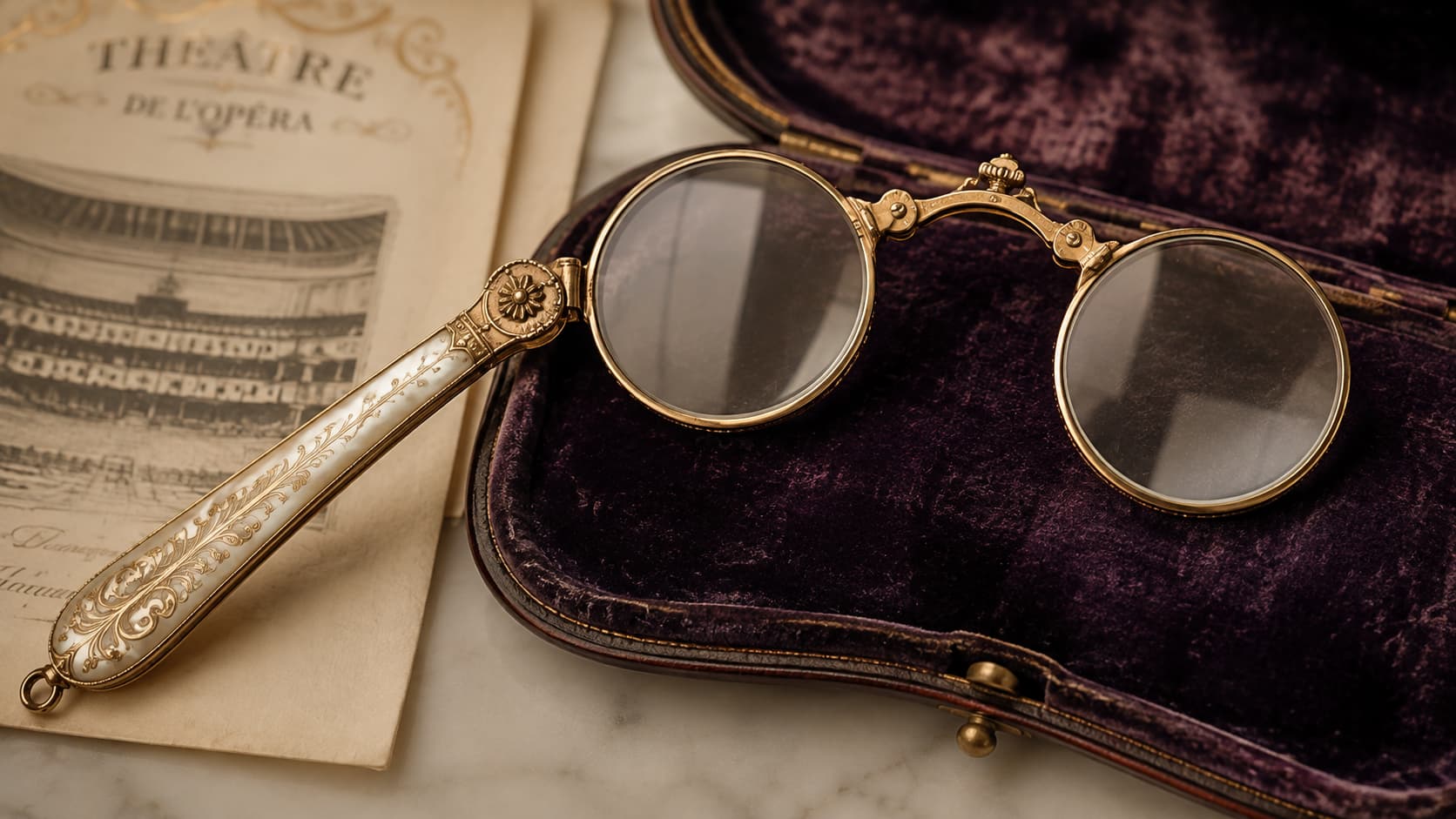
A lorgnette is a pair of glasses attached to a single handle instead of arms that wrap around the ears. Instead of wearing them all day, the wearer would lift the handle and hold the lenses up to the eyes only when something actually needed a closer look, then let them drop or fold away again.
Most lorgnettes had a small hinge or spring mechanism so the two lenses could fold flat against each other, and the handle itself often doubled as a case for storing them. On the fancier models, the folded lenses would tuck neatly away inside the handle until they were needed again. Because they weren’t worn continuously, people treated them less like medical devices and more like jewelry — something to be shown off, matched to an outfit, and passed down as an heirloom.
Why Is It Called a Lorgnette?
The word comes from French, and it has roots in the idea of sneaking a look at someone. It traces back to the French verb meaning to glance sideways at something, which in turn grew out of an older Middle French word for squinting.
That origin fits the object perfectly. A lorgnette wasn’t meant for constant wear — it was meant for quick, deliberate glances, raised to peek at a stage, study a face across the room, or read a small line of text, then lowered again. Interestingly, the French word actually means something different in modern French, where it more commonly refers to a ship captain’s telescope, so the English use of “lorgnette” for the eyeglass style is technically its own borrowed meaning.
Who Invented the Lorgnette?
Most historical accounts point to an English optician as the inventor, though there’s some debate about which family member deserves the credit. Some sources name George Adams Sr., a scientific instrument maker, as the creator, while others say it was actually his son, George Adams Jr., who took over the family business and produced the first examples in the 1780s.
At the time, wearing glasses full-time carried a real social stigma. It was seen as a sign of old age or poor health, which made the idea unappealing to fashionable young people even if their eyesight genuinely needed help. The lorgnette solved that problem cleverly, letting a wearer hide the fact that glasses were needed at all until the exact moment they were, then tuck the evidence away again.
Why Did People Start Using Lorgnettes?
The short answer is vanity mixed with practicality. People wanted to see clearly without looking like they wore glasses, and the lorgnette let them do both.
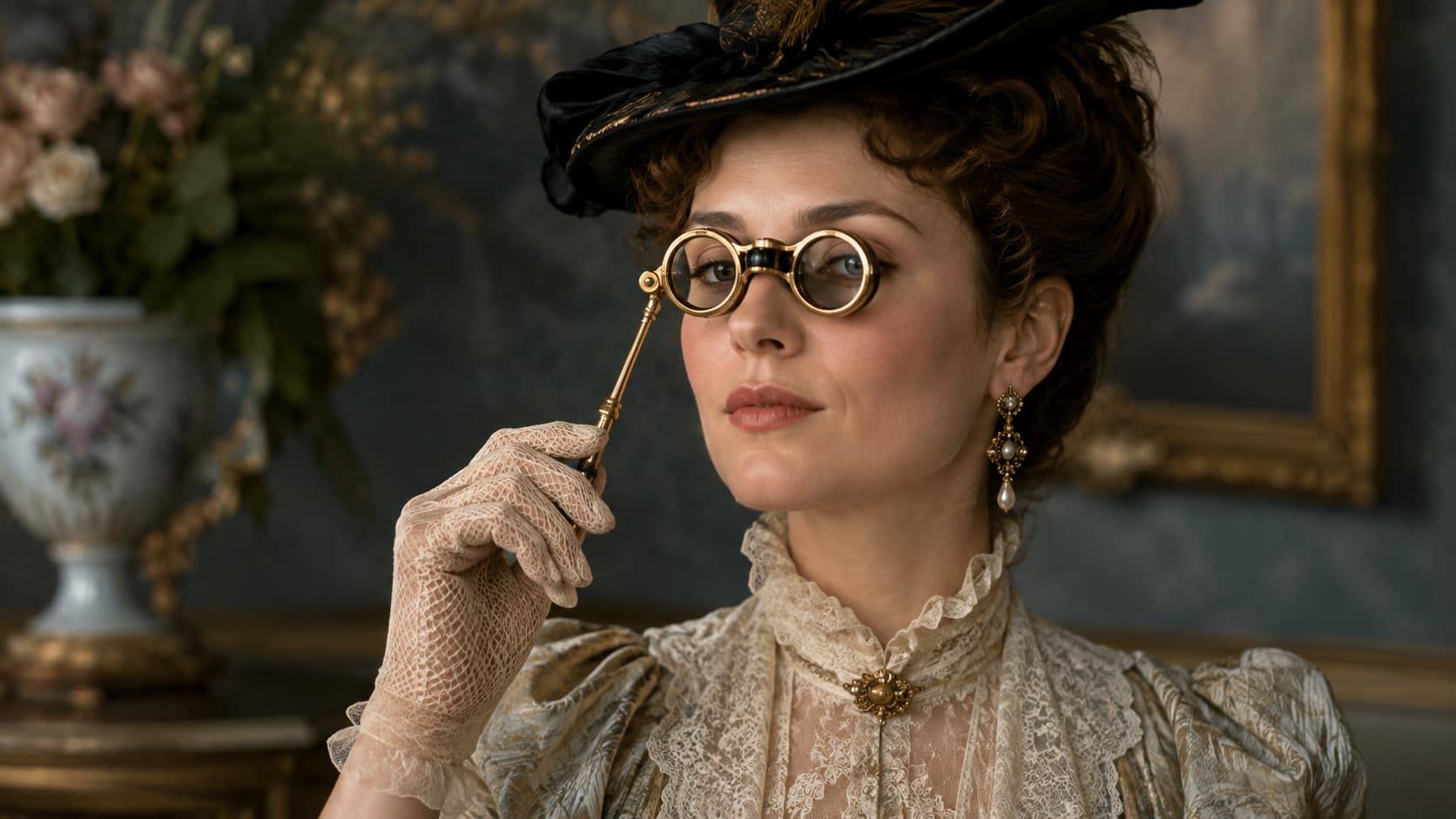
The accessory found its biggest audience at the theater and the opera, where audience members needed to see the stage clearly from a distance but didn’t want to sit through an entire performance with something clamped onto their face. It also became a tool of high-society games. During the 1700s, lorgnettes were sometimes built into other everyday objects to make them less obvious. Marie Antoinette is often credited with popularizing a version hidden inside a folding fan, and lorgnettes were also tucked into lace, rings, and other small accessories that a wealthy woman might already be carrying. Raising a lorgnette to look at someone became its own kind of social gesture, similar to how a fan could be used to signal interest or disapproval without saying a word.
The lorgnette also changed who eyewear was “for.” Before it came along, optical aids had mostly been a man’s accessory, worn by scholars, clerks, and older gentlemen. The lorgnette gave fashionable women a socially acceptable reason to carry glasses too, and it opened the door for eyewear in general to become something both sexes could wear without embarrassment.
By the 1800s, the lorgnette had shed most of that scandalous reputation and simply became a normal, practical accessory. It stayed fashionable well into the Art Deco period of the 1920s and 1930s before slowly fading out of everyday use.
How Do You Use a Lorgnette?
A lorgnette works the same way regular glasses do — the lenses bend light so the eyes can focus better — except the wearer controls exactly when that correction kicks in. There’s no earpiece holding it in place, so the timing of that lift is entirely up to whoever’s holding it.
The mechanics improved a lot over time. Early versions had a simple, rigid handle. Later ones added a hinge so the handle could fold, and eventually a spring-loaded design let the two lenses snap together and tuck neatly inside the handle for storage. That evolution mattered because it turned the lorgnette from a slightly clumsy prop into something a person could genuinely carry around all day, tucked into a pocket or hanging from a chain around the neck.
Common Types of Lorgnettes
Lorgnettes weren’t all the same shape or built from the same materials. Collectors and historians generally group them into a few recognizable styles:
- Handle lorgnettes — the classic style, with lenses on a straight rigid or folding stick.
- Chain or neck lorgnettes — smaller lenses on a short handle, meant to hang from a chain around the neck between uses.
- Fan lorgnettes — lenses concealed inside the ribs or frame of a folding fan.
- Jealousy lorgnettes — a more discreet design that let the wearer glance sideways at other people in a theater without turning their head.
The jealousy lorgnette was cleverer than its name suggests. Instead of two plain lenses, it hid an angled mirror inside the frame, so a woman looking straight ahead at the stage could secretly watch who was walking into the theater behind her without ever turning around. At the time, twisting around in one’s seat to stare at latecomers was considered rude, so the device let curious theatergoers keep their manners while still keeping tabs on the room. Two of the most famous owners of jealousy lorgnettes were the French royal favorites Madame de Pompadour and Madame du Barry, the latter reportedly owning one studded with diamonds.
“Nearly every smartly dressed woman wears a lorgnette.” — Fashion historian C. Willett Cunnington, writing about the year 1893
Materials ranged just as widely as the styles. Craftsmen worked in everything from simple tortoiseshell to gold, silver, and platinum, often finishing the piece with an elaborate chain so it could hang around the neck like a pendant between uses. Wealthier buyers commissioned pieces set with diamonds and other gemstones, and several well-known jewelry houses of the 1800s, including Tiffany & Co., produced their own lorgnette designs for high-end clients.
Lorgnette vs. Other Historical Eyewear
A handful of similar accessories are often mistaken for the lorgnette, though each one works in its own distinct way.
| Accessory | How It’s Held | Best Known For |
|---|---|---|
| Lorgnette | Handle held up to the eyes | Theater, opera, high society |
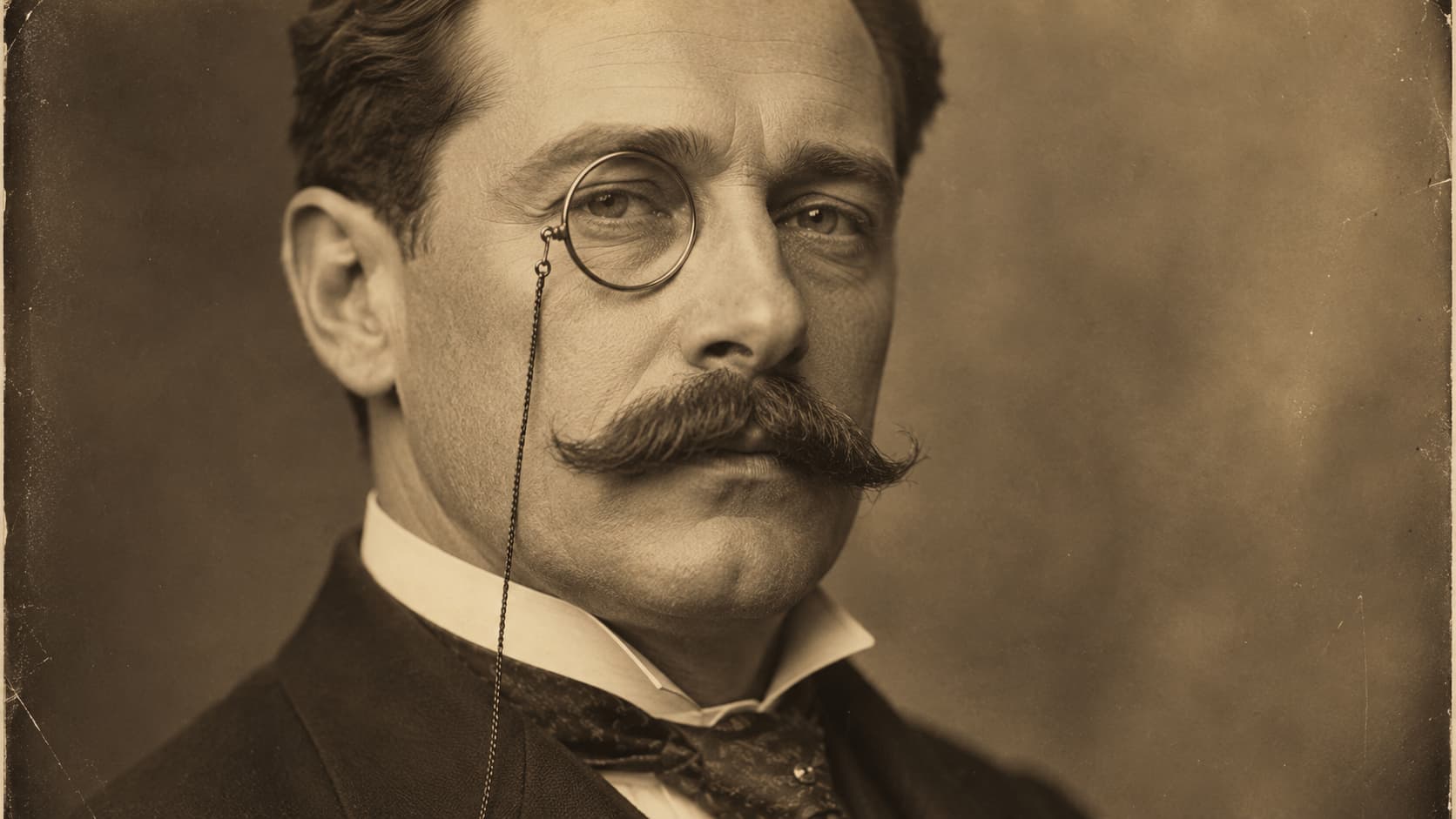
| Monocle | Wedged into one eye socket | Formal menswear, no hands needed |
| Quizzing glass | Single lens on a handle or chain | A more casual, single-eye version of a lorgnette |
| Opera glasses | Held to both eyes with two hands, like small binoculars | Watching distant stage performances |
| Modern spectacles | Rest on the nose, arms hook over the ears | Everyday, continuous wear |
The quizzing glass is probably the closest relative to the lorgnette, and the two are sometimes mixed up. The main difference is that a quizzing glass uses just one lens, while a true lorgnette always has two, mounted side by side like a proper pair of glasses.
Opera glasses get confused with lorgnettes too, and the mix-up makes sense since a lorgnette is often considered the design that opera glasses grew out of. The real difference is in how they’re used: a lorgnette is meant to be raised and lowered quickly with one hand, while opera glasses are held up with both hands for longer stretches, more like a small pair of binoculars, and were built specifically to magnify a distant stage rather than double as an everyday accessory. A monocle took the opposite approach entirely, wedging a single lens into the eye socket so it needed no hand at all.
Are Lorgnettes Still Used Today?
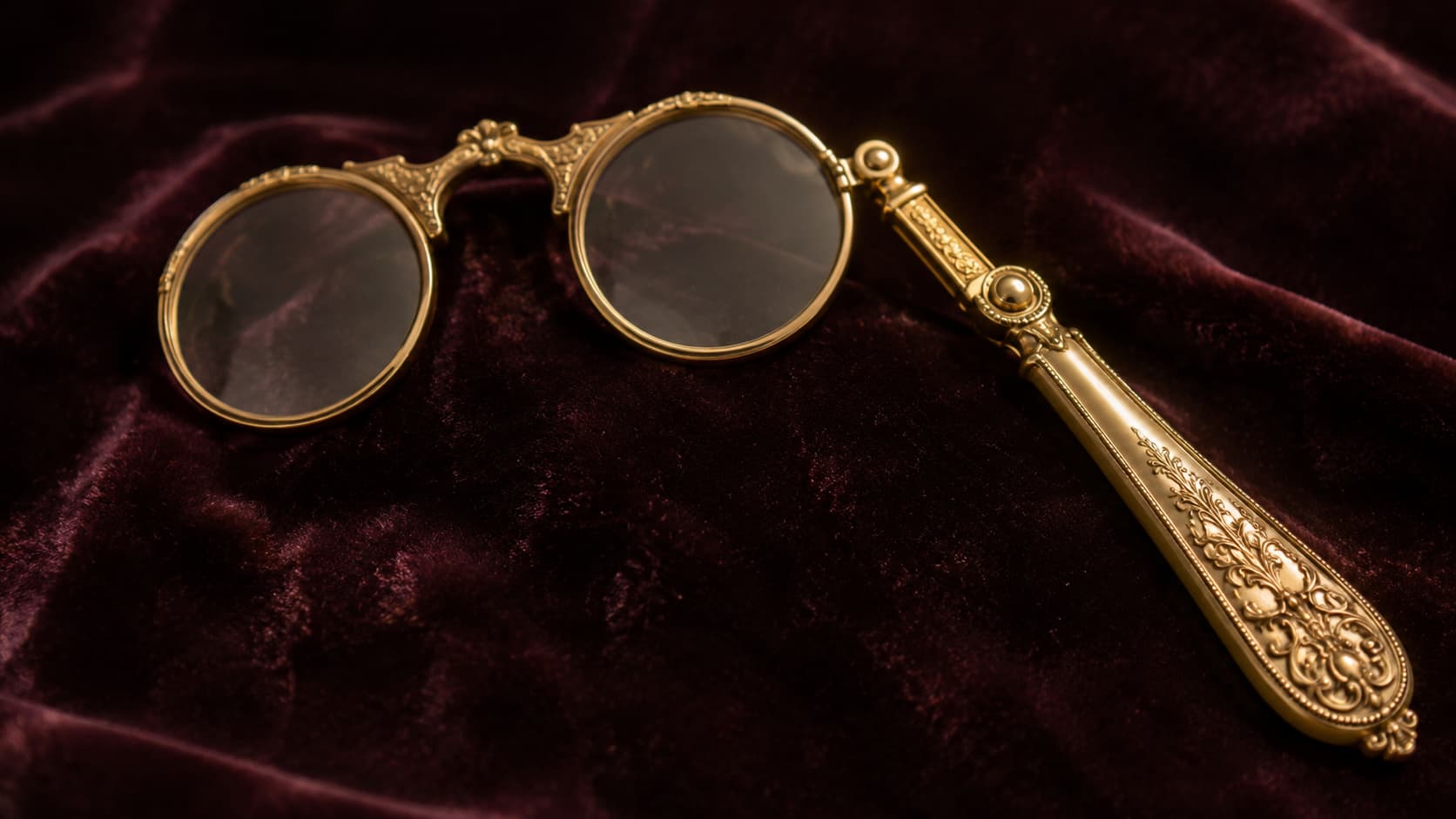
Lorgnettes aren’t a common everyday item anymore, but they haven’t completely disappeared either. Antique examples still turn up in museum eyewear collections, at estate sales, and in the hands of vintage jewelry collectors who value them as much for their craftsmanship as for their history.
A handful of independent eyewear and accessory makers have also experimented with modern takes on the design, treating it more as a fashion statement or novelty piece than a practical vision aid. The core idea — glasses held up rather than worn continuously — has even influenced some folding reading-glass designs sold today, even if they don’t use the word “lorgnette” to describe themselves.
High jewelry designers have also picked the concept back up. Hong Kong jeweler Anita So, for example, built a pendant collection with lorgnettes carved into hand-worked Burmese jadeite, including one design that conceals the lenses behind a bird carved into the stone. It’s a good reminder that the lorgnette was never really about the glass — it was about turning a practical need into a piece worth admiring.
Frequently Asked Questions
Is a lorgnette the same as a monocle?
No. A monocle is a single lens that wedges into one eye socket and stays in place without hands, while a lorgnette always has two lenses attached to a handle that gets held up to the face.
What were lorgnettes made of?
Lorgnettes were made from a wide range of materials, from simple tortoiseshell and plastic to gold, silver, and platinum set with gemstones, depending on the buyer’s budget and social status.
Why did people stop using lorgnettes?
As eyeglasses became more socially acceptable and comfortable frame designs with ear arms became standard, the need for a “disguised” way to see clearly faded, and the lorgnette slowly became a decorative antique rather than a practical tool.
Did lorgnettes actually improve someone’s vision?
Yes, in most cases the lenses were genuinely ground for vision correction, similar to regular reading glasses, though some were worn purely as an accessory with plain or lightly tinted glass.
Are antique lorgnettes valuable today?
It depends on the materials, maker, and condition, but lorgnettes crafted from precious metals, set with real gemstones, or made by a recognized jeweler tend to attract the most interest from collectors.
Conclusion
The lorgnette tells a bigger story than just an old-fashioned pair of glasses. It shows how something as ordinary as needing help seeing could get wrapped up in fashion, status, and even a bit of theater. What started as a clever way to avoid the stigma of spectacles turned into one of the most elegant accessories a person could carry, complete with jeweled handles and hidden compartments in fans. Whether displayed behind museum glass or tucked inside an antique jewelry box, it remains a small object that once said a great deal about whoever was holding it.