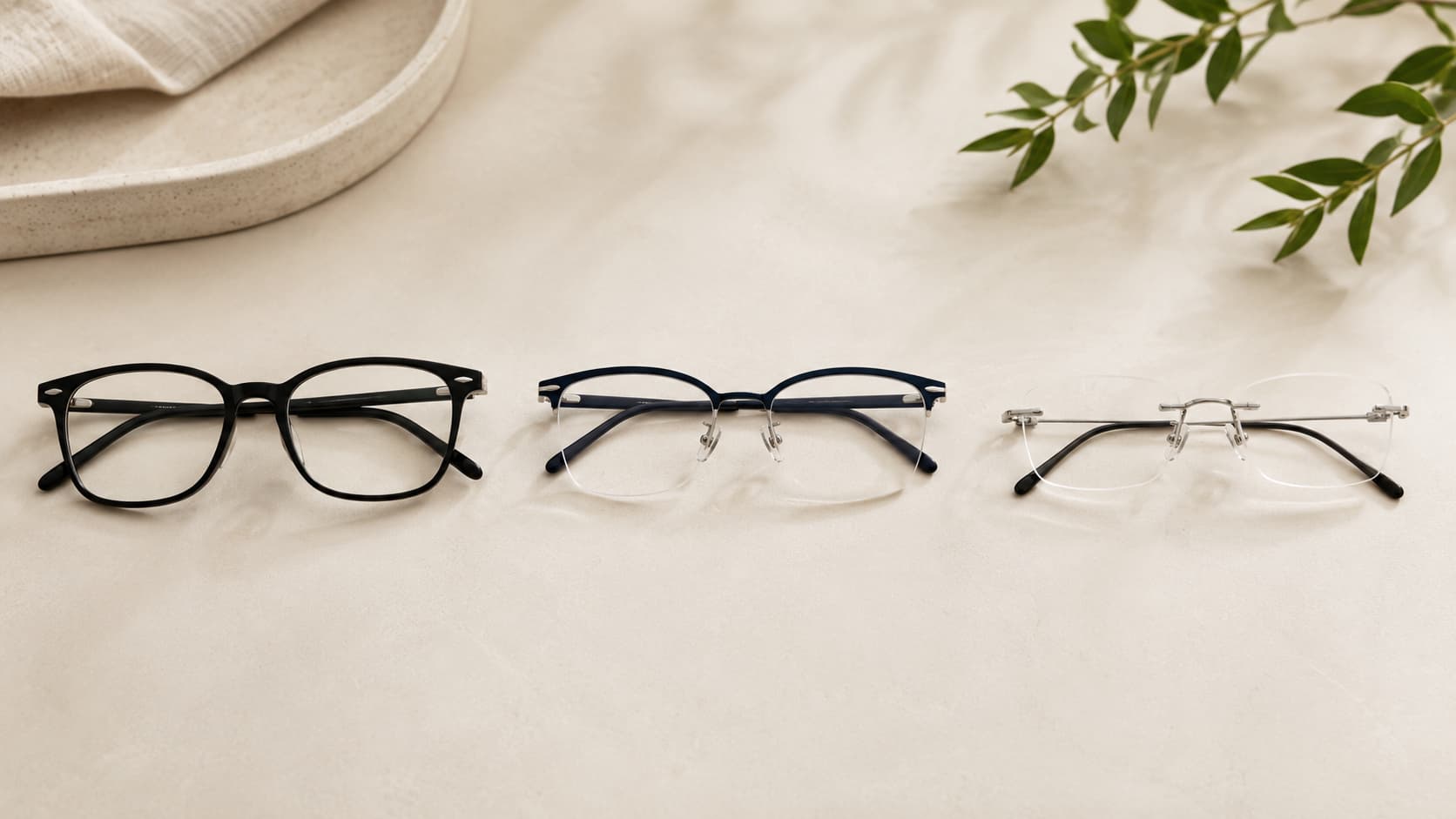
Every pair of glasses or sunglasses has to solve the same basic problem: how do you hold two curved pieces of glass or plastic in front of your eyes without them falling out or poking you in the face? It turns out there are three main answers to that question, and the one a frame uses changes almost everything about it — how heavy it feels, how tough it is, how it looks on your face, and even what kind of lenses it can hold. Once you know what to look for, spotting the difference between rimless, semi-rimless, and full-rim frames takes about two seconds, and knowing which one fits your life makes shopping for eyewear a lot less confusing.
Understanding the Three Main Frame Styles
The difference comes down to how much frame material actually touches the lens. Full-rim frames wrap all the way around each lens like a picture frame. Semi-rimless frames only cover part of the lens, usually the top edge, while a thin cord or a shallow cut holds the rest in place. Rimless frames skip the frame around the lens completely — the arms and bridge attach straight onto the lens itself with tiny screws.
A useful comparison is a window. A full-rim frame is a window with a frame around all four sides. A semi-rimless frame is like a window with a frame only on top, held steady by a wire along the bottom. A rimless frame is like a pane of glass floating in the air, attached only at a couple of points. Each setup trades off weight, toughness, and looks in a different way, which is exactly why all three styles are still around today instead of one design simply winning out.
What Are Full-Rim Frames?
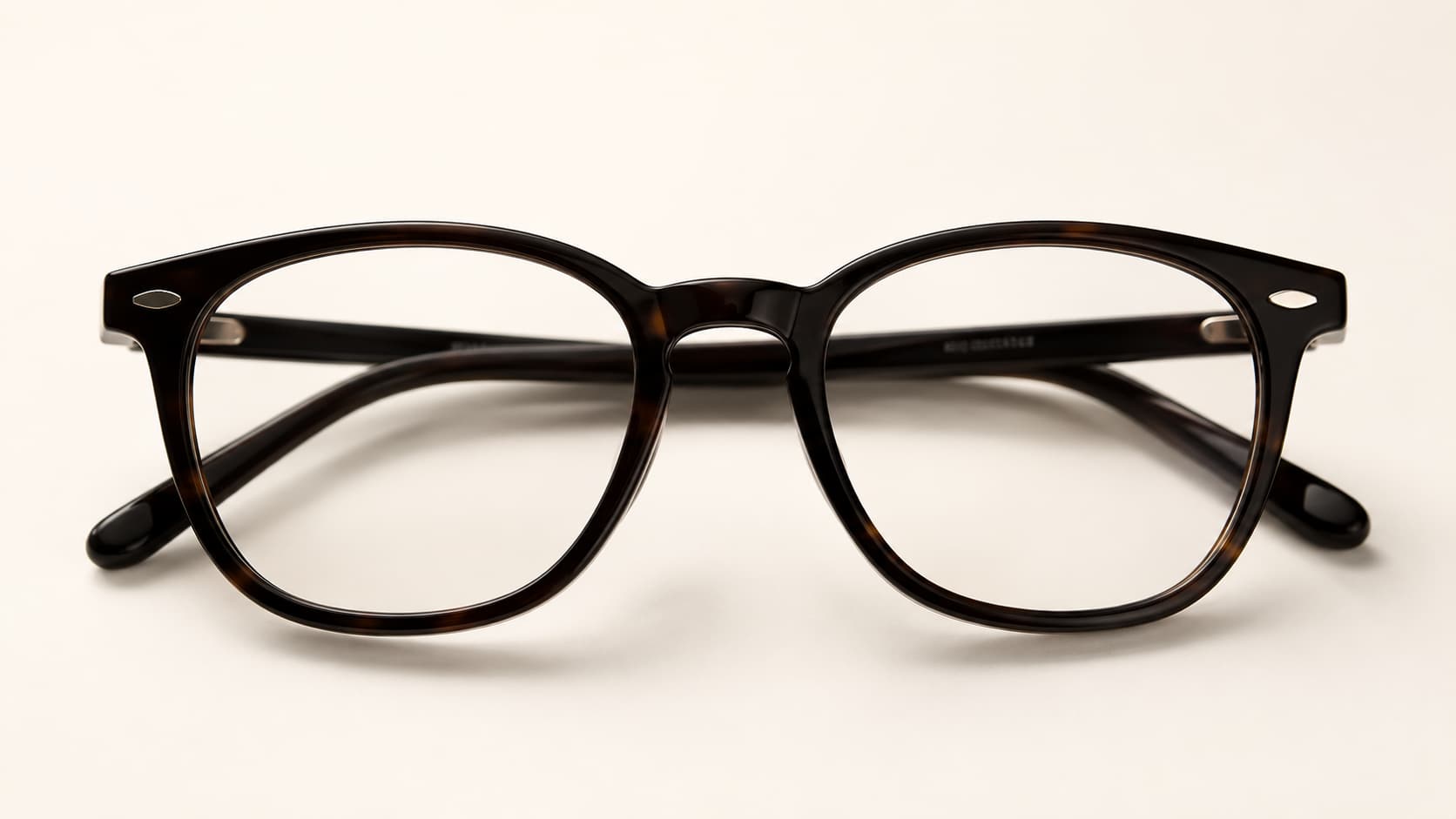
Full-rim frames are the classic style where a solid border of frame material goes all the way around each lens. This is the design most people picture when they think of glasses, and it’s still the most common frame type sold today.
Because the entire lens edge sits protected inside the frame, this style holds up to bumps, drops, and everyday roughness better than the other two. When a full-rim pair does eventually fail, it’s usually at a moving part like the hinge or the bridge rather than a cracked lens, and today’s hinge designs are built to handle years of opening and closing. That built-in protection also makes full-rim the safer bet for anyone whose glasses take a bit of a beating during the day, and it’s why this style pairs so naturally with thicker, stronger lenses. If your eyesight needs a lot of correction, the surrounding frame hides the extra bulk that a strong prescription lens tends to have, which is one reason opticians often steer people with higher prescriptions toward full-rim first.
The trade-off is weight. All that extra material has to sit somewhere, and that somewhere is your nose and ears, so a full-rim pair can start to feel noticeably heavier by the end of a long day and may creep down your nose more than a lighter style would. Choosing a lighter frame material, like titanium instead of thick acetate, narrows that gap considerably without giving up the protective ring around the lens.
How the lens actually gets held inside a full-rim frame depends on what the frame is made of. Metal frames typically use a groove-and-screw system, where the lens edge is cut at a slight angle to click into a matching groove in the frame, then locked in with a small screw. Plastic frames usually skip the screw entirely — the lens is cut a touch larger than the opening and snapped into place, relying on the frame’s own flex to hold it. This is also the style most likely to use a spring hinge, a small coiled mechanism in the temple that lets the arms flex outward slightly, which cuts down on stress and loosening from being taken on and off all day.
Quick take: full-rim frames are the toughest, most versatile choice, and the safest pick for strong prescriptions — you just accept a bit more weight in exchange.
What Are Semi-Rimless Frames?
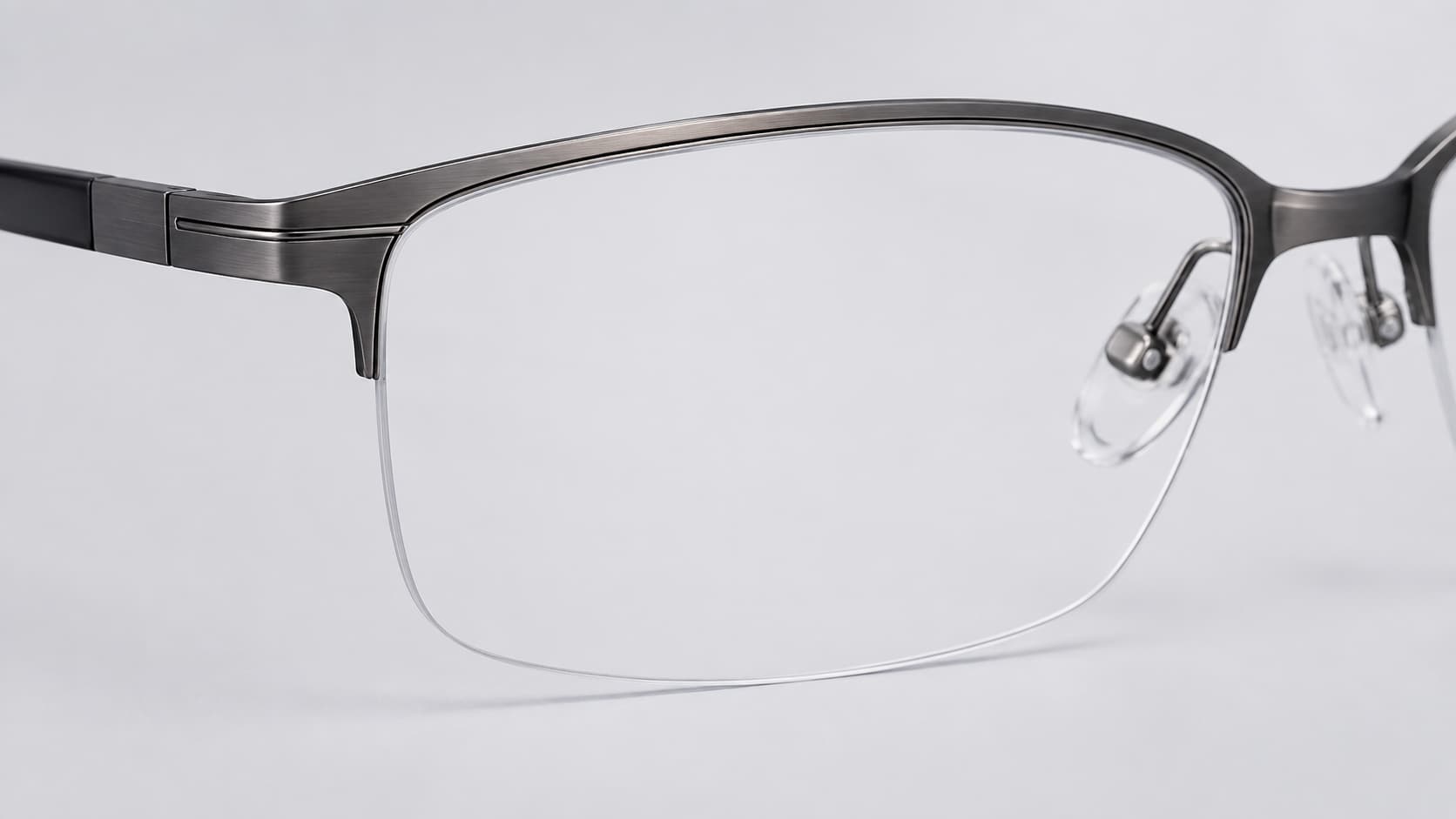
Semi-rimless frames — also called half-rim frames — use a rigid frame border along only part of the lens, usually the top, while the rest of the lens edge is held by a thin nylon cord or a groove cut into the glass itself. This leaves part of each lens exposed with no frame material touching it at all.
This half-and-half setup means less material sitting on your face, so semi-rimless glasses generally weigh less than full-rim ones while still giving your eyes a defined, structured look above the eyebrow line. That combination of lighter weight and a still-visible top frame is exactly why this style shows up so often in office settings and other polished, put-together looks. It lands in a comfortable middle spot: lighter and more modern-looking than full-rim, but sturdier and more visible than rimless.
The part to watch is that thin cord or groove holding the bottom of the lens. In the optical trade it’s often called a “supra line,” and it sits in a shallow groove cut directly into the lens edge, with tension in the cord doing the actual holding. That cord can gradually loosen or stretch with wear, and depending on how heavily the glasses are used, it may need replacing anywhere from about a year up to a few years down the line — a quick, inexpensive fix an optician can usually do on the spot. The bare edge of the lens left uncovered is also a little more likely to chip if the glasses get set down hard or dropped, though most everyday knocks won’t cause any issue.
Not every semi-rimless frame puts the rim on top. It’s the far more common layout, since it keeps the heavier-looking part of the frame near the eyebrows and leaves the lower lens looking light and open, but a less common version does the opposite, with the rigid border running along the bottom and the top of the lens left bare instead. Either way, the same trade-off applies: less material, more visible glass, and a cord or groove doing the work a full frame would otherwise do.
Quick take: semi-rimless frames give you a lighter, more modern look than full-rim glasses, with a small trade-off in long-term durability around the exposed lens edge.
What Are Rimless Frames?
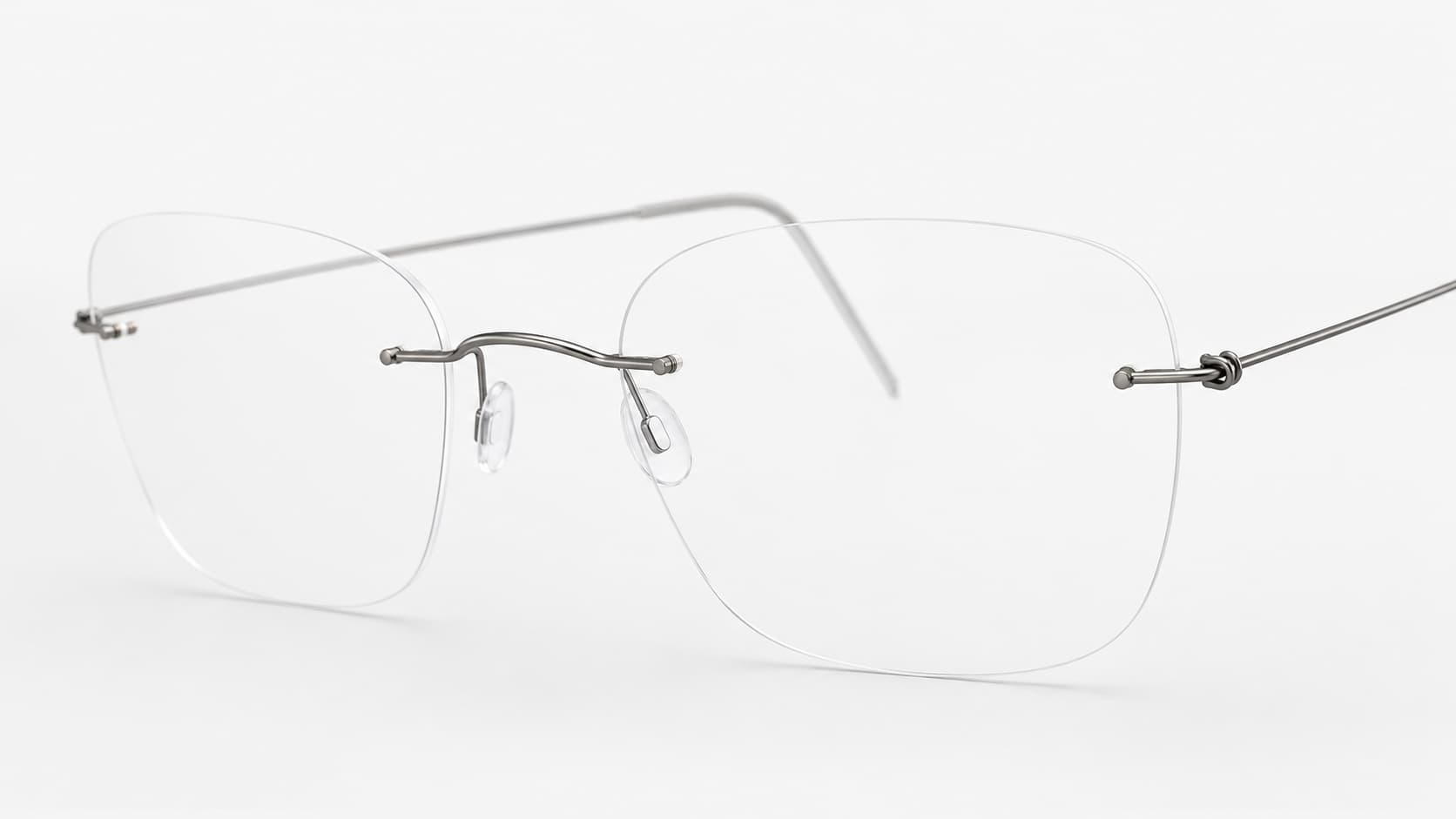
Rimless frames have no border around the lens at all. Instead, the temple arms and the bridge (the piece that sits on your nose) attach directly to the lens using small screws or mounting brackets, usually made of lightweight titanium or stainless steel.
This design creates the most minimal, almost invisible look of the three styles. Because there’s no border for the eye to catch on, someone standing a few feet away might not even register that you’re wearing glasses — the focus stays on your face instead of on your eyewear. They’re also usually the lightest option on the shelf, simply because there’s less material involved overall.
That lightness comes with a real trade-off, though. Since the lens itself is doing double duty as both the optical piece and the structural support for the bridge and arms, it’s carrying more stress than a lens tucked safely inside a frame would be. Without any surrounding material to absorb a knock, the lens edges are more prone to chipping or cracking, and the small mounting points can work loose or even damage the lens if the glasses get twisted, sat on, or bent the wrong way. There’s also nowhere to hide an unpolished lens edge, so the quality of the lens finish matters more here than it does with the other two styles.
There are actually two ways a rimless lens gets attached, and it’s worth knowing the difference. The traditional method — sometimes called drill mount or three-piece mount — involves drilling a small hole through the lens near each mounting point, with a soft nylon or silicone bushing inside the hole to cushion the lens against the screw. A newer no-drill or compression style clamps the lens between two small plates instead of drilling through it, which avoids creating a weak point in the glass or plastic altogether. Because the lens is under more physical stress in either design, opticians generally recommend polycarbonate or Trivex lenses for rimless frames rather than glass or standard plastic, since both materials resist cracking far better at the mounting points. Very strong prescriptions can also start to work against the style — once a lens gets thick enough to correct a very high level of near- or far-sightedness, the weight and edge thickness begin to cancel out the whole reason for going rimless in the first place.
Quick take: rimless frames are the lightest and most understated of the three, but they need the gentlest handling and generally work best with a mild to moderate prescription.
Comparing the Three Frame Styles
| Feature | Full-Rim | Semi-Rimless | Rimless |
|---|---|---|---|
| Lens coverage | Entire lens edge | Top edge (rest held by cord/groove) | No frame around lens |
| How the lens is held | Groove-and-screw (metal) or snap-fit (plastic) | Frame on one edge, nylon cord/groove on the rest | Drilled or clamped mounting points |
| Typical weight | Heaviest | Middle | Lightest |
| Durability | Most durable overall | Moderate; cord/groove wears over time | Most delicate; handle with care |
| Best for prescription strength | Strong prescriptions, thick lenses | Low to moderate prescriptions | Mild to moderate prescriptions |
| Recommended lens material | Most lens materials work well | Polycarbonate or Trivex preferred | Polycarbonate or Trivex strongly preferred |
| Look | Bold, defined, classic | Modern, professional, semi-minimal | Nearly invisible, minimalist |
| Maintenance | Lowest | Occasional cord/groove replacement | Careful handling required |
Which Frame Style Is Right for You?
Picking the right style really comes down to matching the frame to how someone actually lives and what their eyes need.
- Go full-rim if you have a stronger prescription, want the most durable option, or like a bolder, more defined look on your face.
- Go semi-rimless if you want something lighter and more modern than full-rim, especially for office or professional settings, and don’t mind an occasional cord replacement.
- Go rimless if your prescription is mild, you prioritize weight and a barely-there look above everything else, and you’re comfortable handling glasses a bit more gently.
Lifestyle matters just as much as the numbers on your prescription. Someone who plays sports, works with their hands, or has young kids grabbing at their face all day will usually get more out of a full-rim frame’s extra toughness. Someone who mostly wears their glasses at a desk or in meetings might prefer how light a semi-rimless or rimless pair feels by hour eight of the day.
Face shape can nudge the decision too, though trying frames on in person tends to reveal more than generic guidelines can. A bold full-rim shape can add definition to softer, rounder faces, while the understated look of rimless frames tends to soften faces with sharper, more angular features instead of adding even more structure to them.
Do These Frame Styles Work for Sunglasses Too?
Yes — all three styles show up in sunglasses just as often as they do in prescription glasses, and the same trade-offs in weight and durability carry over directly. Rimless and semi-rimless sunglasses tend to appeal to people who want the tinted lens itself to be the star of the look rather than a thick frame around it, which is why you’ll spot them a lot in minimalist and sport styles.
One small wrinkle is worth knowing if you’re set on polarized lenses in a semi-rimless frame. Fitting that style means cutting a thin groove around part of the lens for the cord to sit in, and among opticians there’s some genuine, ongoing disagreement about whether cutting into a polarized lens this way can occasionally affect the polarizing layer or cause it to separate over time. In practice this is a minor, debated risk rather than a common failure, and plenty of people wear polarized semi-rimless sunglasses for years with no issue — but if it’s a concern, full-rim or rimless mounting avoids the question entirely, since neither one requires grooving the lens.
Frequently Asked Questions
Are rimless glasses weaker than full-rim glasses?
Yes, generally. Rimless frames attach directly to the lens with small screws instead of surrounding it with protective material, so the lens edges and mounting points are more exposed to cracking or chipping if the glasses are dropped, twisted, or bent.
Do semi-rimless frames need special maintenance?
A little. The nylon cord or groove holding the bottom of the lens can stretch or wear down over months or years of use and may eventually need to be replaced or tightened by an optician, which isn’t something full-rim frames require.
Which frame style is best for a strong prescription?
Full-rim is usually the safest choice for stronger prescriptions because the frame hides the extra thickness a high-power lens tends to have, and it gives that thicker, heavier lens more physical support around its edge.
Are rimless or semi-rimless frames always lighter than full-rim?
Almost always, since there’s simply less material involved, but the gap can shrink a lot depending on what the frame is made from. A full-rim frame built from a light material like titanium can end up weighing close to what a semi-rimless frame made from a heavier material like acetate weighs.
Can I put any lens into a rimless frame?
Not quite any lens — rimless frames generally work best with lenses that are drilled or shaped to handle the mounting screws, and very high prescriptions can be trickier to fit this way since there’s no frame to help support the extra lens thickness.
Conclusion
Choosing between rimless, semi-rimless, and full-rim frames really comes down to one trade-off repeated three different ways: how much frame material you’re willing to carry in exchange for durability, and how much you’re willing to give up in exchange for a lighter, more minimal look. Full-rim wins on toughness and works with almost any prescription, semi-rimless splits the difference with a lighter, professional feel, and rimless goes all in on a barely-there appearance at the cost of some extra care. None of the three is universally “better” — the right one is simply the one that matches your prescription strength, your daily routine, and how much frame you actually want people to notice.