
Long before glasses had arms that hooked behind the ears, people wore a strange little style called the pince-nez, a pair of lenses that simply clipped onto the nose and stayed there through nothing but spring pressure. It sounds uncomfortable, and honestly, it often was, but for a stretch of about fifty years it was one of the most common ways educated, fashionable people saw the world clearly. Understanding how the pince-nez worked, and why it eventually disappeared from everyday use, says a lot about how eyewear design has changed and why the arms on a modern pair of glasses matter more than most people realize.
What Is a Pince-Nez?
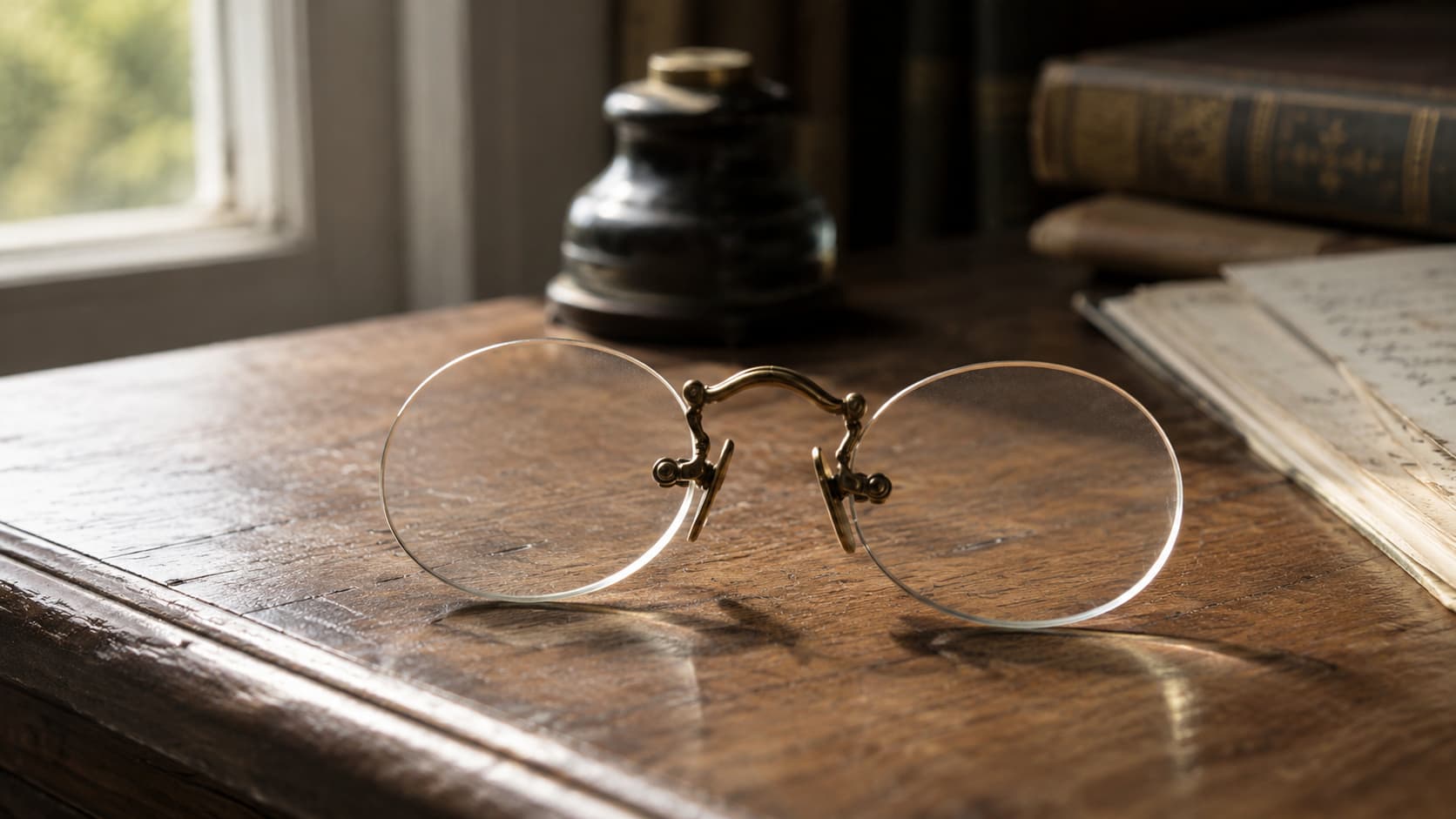
A pince-nez is a style of eyeglasses that has no arms reaching back to the ears at all. Instead, a small spring-loaded clip or bridge squeezes gently onto the bridge of the nose, and that grip alone is what keeps the lenses in place.
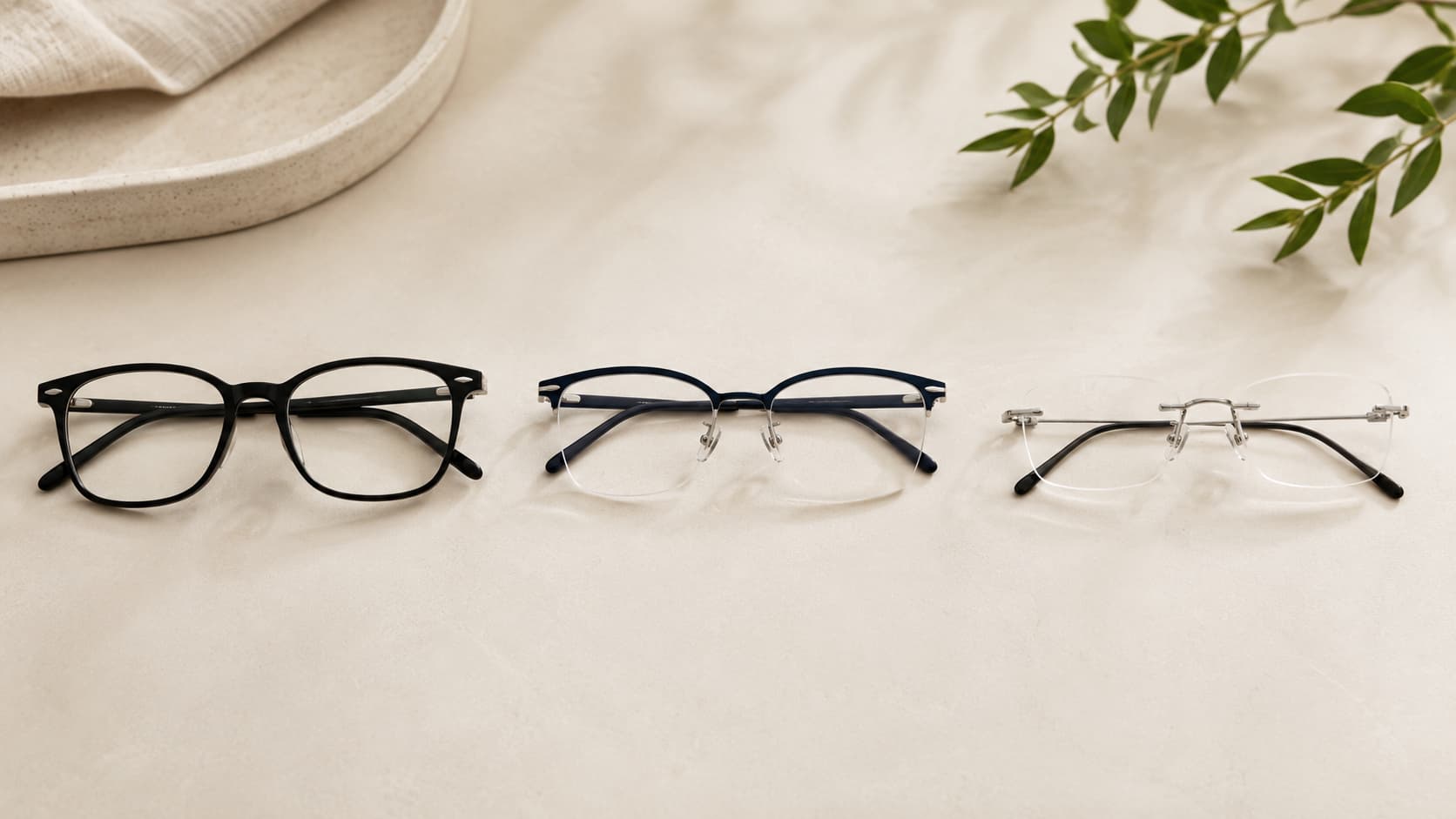
Because there is nothing wrapping around the ears, the whole device relies on tension. Two curved pads, sometimes called plaquettes, press against either side of the nose, and a metal bridge above them provides the spring force that holds everything together. Take a normal pair of glasses and remove both arms — that is essentially what a pince-nez looks like, minus the part that would normally rest behind the ears.
The Meaning Behind the Name Pince-Nez
The name is French, and it literally describes what the glasses do to the wearer’s face. “Pincer” means “to pinch” and “nez” means “nose,” so pince-nez translates to something like “nose pincher” or “pinch-nose.”
That name is not an exaggeration. The lenses are designed to squeeze the sides of the nose firmly enough to hold their own weight, plus the weight of the glass or crystal lenses inside them. Wearers in the 19th and early 20th centuries even had a joking nickname for the reddish marks the frames left behind after a long day: “nose bites.”
How Do Pince-Nez Stay on the Nose?
They stay on through spring tension alone, with a curved metal bridge pressing two small pads against the sides of the nose until friction and pressure hold the whole frame in place. There are no hooks, no arms, and no adhesive involved.
Most historical pince-nez used one of a few different bridge designs to create that pressure. The most common was called the “C-bridge,” a curved piece of metal shaped like the letter C that flexed slightly to clamp the lenses onto the nose. A second design, nicknamed the “astig,” worked more like a clothespin: a sliding bar connected the two lenses so the wearer could squeeze them apart, set the frame in place, and let go, at which point a spring pulled everything shut again. Because this design held the lenses flat instead of letting them tilt inward the way a C-bridge did, it could correct astigmatism, which is where the nickname came from.
A pince-nez has to be fitted almost like a piece of jewelry. If the spring tension is too loose, the glasses slide off. If it is too tight, wearing them for more than a few minutes becomes genuinely painful.
A different approach to the same problem was the hard bridge, sometimes credited to the French maker Jules Cottet, though the exact origin isn’t well documented outside collector circles. Rather than relying on one flexible strip of metal, this version kept the bridge itself completely rigid and instead put the springiness into two independent pads at the sides, usually faced with bone or tortoiseshell for grip. Because the bridge no longer bent under pressure, an optician could size the frame to a specific customer, and hard-bridge pince-nez were sold in fixed widths, typically somewhere between 14 and 26 millimeters, rather than being expected to flex and fit almost anyone.
Frame material varied quite a bit depending on budget. Everyday pince-nez were commonly made from gold, silver, or plain steel, while nose pads and some structural pieces were often bone, cork, or tortoiseshell for extra grip and comfort. Some opticians also sold a rimless option, where the glass itself carried almost no border of metal at all — the lenses were simply drilled and mounted directly to the bridge and two small temple studs, which shaved off weight and gave the whole frame a barer, more minimal look.
Since the grip could never be perfectly secure, especially in hot weather when skin gets slightly oily, pince-nez were often attached to a cord, chain, or ribbon connected to the wearer’s clothing so the glasses would not be lost or shattered if they slipped off. That accessory cord became so associated with the style that it eventually turned into a fashion statement of its own, worn pinned to a lapel or draped around the neck.
Putting one on took a small bit of technique that most modern wearers would need a moment to learn. The wearer pinched the two lenses together at the bridge to open the spring, positioned the pads on the flattest part of the nasal bridge, just below eye level, and then let go so the spring closed and held itself in place. Getting the angle right mattered too, since a pince-nez seated too low or too high on the nose was far more likely to slip during the day.
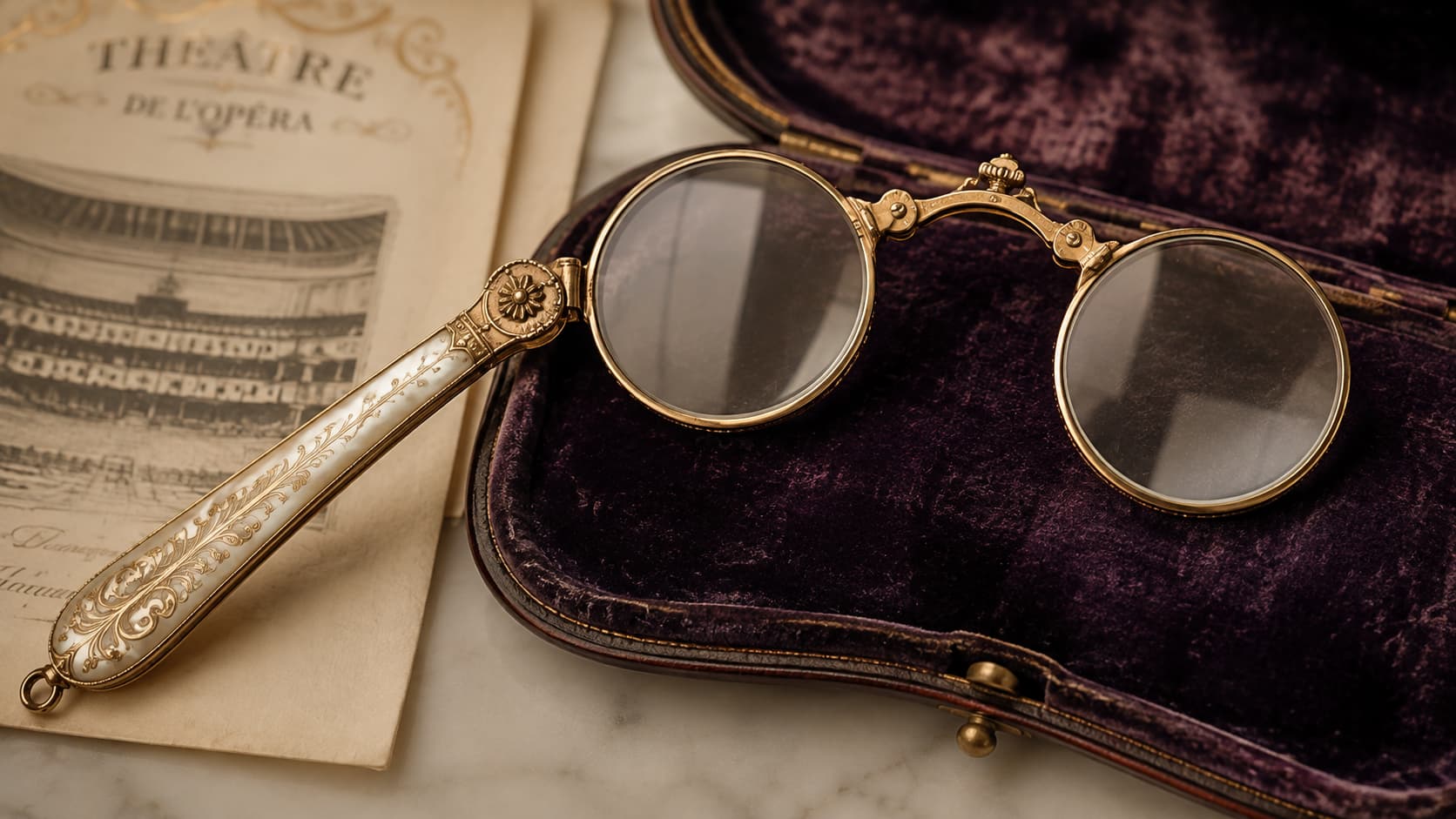
The pince-nez is often confused with another handle-free style from the same era, the lorgnette. A lorgnette is not worn on the face at all. It is a pair of lenses attached to a folding handle that the wearer holds up to their eyes only when needed, then folds shut and sets down, making it closer to a portable magnifying glass than to a true pair of glasses.
The History of the Pince-Nez
The Oldest Known Pince-Nez Glasses
Nose-clip eyewear is actually older than the glasses design most people picture today, since the earliest known example of eyewear in the archaeological record is a primitive pince-nez from the middle of the 15th century, with frames carved from bone or antler and joined by an iron rivet that created the pinching tension. Before that, if people wore corrective lenses at all, they often just held them up in front of their eyes with a handle, since attaching anything to the face was a much later idea.
The Golden Age of the Pince-Nez
The pince-nez reached the height of its popularity roughly between 1885 and 1920, becoming closely tied to intellectuals, doctors, politicians, and anyone who wanted to project an image of seriousness and education. By some estimates, the style accounted for more than two-thirds of all eyeglasses sold in the United States during that stretch, and the word “eyeglasses” itself was, for a while, used almost specifically to mean pince-nez, while frames with arms were simply called “spectacles.”
Opticians had actually been refining the pince-nez toward its modern form since around the 1840s, decades before it became fashionable. By the time large manufacturers such as American Optical were producing them at scale in the late 1800s, the design had settled into the handful of standard bridge styles that collectors still sort frames by today.
Part of the appeal was practical rather than purely stylish. Full-frame spectacles with arms could be bulky and heavy for the metal-working techniques of the time, and a pince-nez, by comparison, was lighter and easier to fold flat for storage in a pocket.
Famous People Who Wore Pince-Nez
A handful of historical figures made the pince-nez instantly recognizable, and their portraits are still the easiest way to picture the style today. Theodore Roosevelt is probably the most famous American wearer, photographed in his signature pince-nez throughout his presidency, and Woodrow Wilson wore the style as well, keeping it in the White House for another generation after Roosevelt.
The look was just as common outside the United States. Mahatma Gandhi’s small round pince-nez became part of his visual identity, and the frames turn up repeatedly in portraits of Russian writers of the era, including Anton Chekhov and Fyodor Dostoevsky, reinforcing the pince-nez’s reputation as the eyewear of choice for anyone associated with serious thought or serious writing.
Why Did People Stop Wearing Pince-Nez?
Pince-nez largely disappeared once temple-arm glasses became cheaper, sturdier, and simply more comfortable to wear for long stretches of the day. A frame that hooks behind the ears distributes weight far more evenly than one that relies on squeezing the nose.
There was also a manufacturing shift at play. Producing a working pince-nez required several tiny, precisely fitted moving parts that had to be assembled largely by hand, which made them relatively expensive compared to simpler spectacle frames with basic hinges. As mass production improved and materials became cheaper, arm-style glasses simply became the more practical and affordable option for most people, and the pince-nez slowly faded into a novelty.
The Main Types of Pince-Nez
Collectors today generally sort antique pince-nez into three families, based on how the bridge is built rather than how the lenses look. Each design held the lenses in place differently, which is why some vintage pairs are described as more secure than others.
- C-Bridge: The original and simplest style, using one continuous curved strip of flexible metal shaped like the letter C to connect the two lenses and press them onto the nose. It flexes to fit a wide range of face shapes, which made it cheap and popular, but that same flexibility meant it could shift or rotate slightly while worn.
- Hard Bridge: A more precise design where a rigid, factory-set bridge holds the lenses at a fixed width, paired with two separate spring-loaded pads that clip open and shut on the nose. Because nothing in the bridge itself bends, this style holds its position more reliably than a C-bridge, at the cost of needing to be sized correctly for the individual wearer.
- Oxford: A close cousin of the pince-nez that sits between the C-bridge and hard-bridge families, using a flexible sprung metal piece connected to separate nose pieces. Some collectors treat it as a distinct style rather than a true pince-nez, though the two are usually grouped together.
Comparing Pince-Nez, Regular Glasses, and Monocles
Pince-nez, standard glasses, and monocles are frequently confused with one another, even though each relies on a completely different mechanism to stay in place.
| Feature | Pince-Nez | Regular Glasses | Monocle |
|---|---|---|---|
| Number of lenses | Two | Two | One |
| Stays on via | Spring pressure on the nose | Arms hooked over the ears | Muscle tension around the eye socket |
| Common era | Late 1800s–1920s | Mid-1900s to today | 1800s–early 1900s |
| Typical accessory | Cord or chain to the clothing | None required | Cord or chain to the clothing |
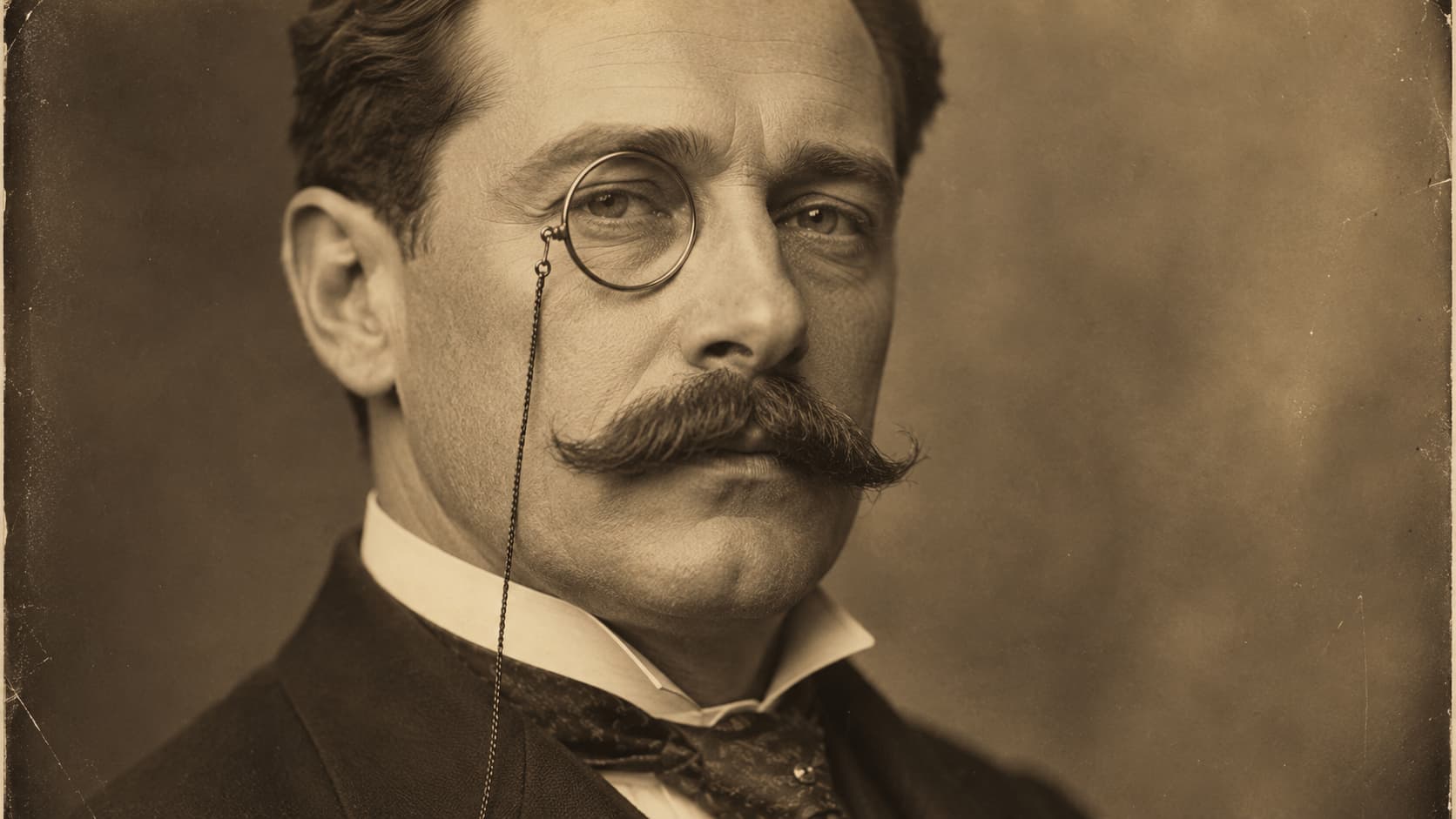
A monocle only corrects one eye and has to be held in place by squinting the muscles around the eye socket, which is a very different (and arguably harder) skill than wearing a pince-nez.
Are Pince-Nez Glasses Comfortable?
Not for long stretches of time, since a pince-nez has to press against the nose with enough force to stay put, and that same pressure is what eventually becomes uncomfortable or even mildly painful. Most historical accounts describe them as tolerable for reading or short conversations but tiring during a full day of wear.
That discomfort is also why the frames often left temporary red marks or indentations on either side of the nose after being removed. Manufacturers experimented with different pad shapes and materials, including cork-covered pads, to try to soften the pressure, but the basic physics of the design never fully solved the problem.
Are Pince-Nez Glasses Coming Back in Style?
There has been a small resurgence of interest in pince-nez among vintage eyewear collectors and people drawn to historical or “old world” aesthetics, though it remains a niche style rather than a mainstream one. Some modern opticians can still fit antique or reproduction frames, though vintage pieces are often fragile and not every optical lab is willing to work on them.
Part of the renewed curiosity comes from pop culture, since the style became visually iconic again after appearing on the character Morpheus in The Matrix. For collectors today, an authentic period pince-nez is valued as much for its craftsmanship and history as for its actual usefulness as eyewear.
Frequently Asked Questions
Can you still buy pince-nez glasses today?
Original pince-nez have not been manufactured since the 1920s, but vintage examples can sometimes be found through eyewear collectors and antique dealers, and a small number of specialty makers produce modern reproductions.
Do pince-nez actually correct vision?
Yes, historical pince-nez were made with prescription lenses just like standard glasses, and opticians of the era fitted them to correct nearsightedness, farsightedness, and astigmatism depending on the bridge style used.
Why don’t pince-nez have arms like normal glasses?
The whole design is built around avoiding the ears entirely, relying instead on a spring-loaded bridge that clips directly onto the nose, which was seen at the time as a lighter and more foldable alternative to bulkier temple-arm frames.
Is a pince-nez the same thing as a monocle?
No, a pince-nez has two lenses and clips onto the nose, while a monocle has a single lens that is held in place by tensing the muscles around one eye socket, making the two very different both in design and in how they’re worn.
Is a pince-nez the same thing as a lorgnette?
No, a lorgnette is a pair of lenses on a folding handle that the wearer holds up to their eyes and lowers again when finished, while a pince-nez clips onto the nose and stays in place on its own, without being held.
Why did people attach a cord to their pince-nez?
Because the nose-grip alone was never perfectly secure, a cord or chain gave the glasses somewhere to go if they slipped off, preventing the lenses from falling and shattering on the ground.
Conclusion
The pince-nez is a reminder that the “obvious” way of doing something isn’t always the first way it was tried. For roughly fifty years, an entire generation of doctors, presidents, and writers trusted a spring clip on their nose to hold their vision in focus, right up until arm-style frames offered something objectively easier to wear all day. What survives today isn’t really the eyewear itself so much as the image it left behind — that instantly recognizable clip-on silhouette that still reads, at a glance, as intelligence, formality, and a very particular slice of history.