Two pairs of sunglasses that look almost identical can feel completely different once they’re actually worn. One might be light as a feather, the other stiff and substantial. That difference usually has nothing to do with the lenses and everything to do with what the frame itself is made from. The material behind a pair of sunglasses shapes how comfortable they stay after six hours in the sun, how well they survive a fall onto pavement, whether they’ll irritate sensitive skin, and even how the color looks under bright light. Understanding these materials makes it much easier to explain why one pair sits perfectly on the face while another pinches the nose or slides down within an hour.
The Main Types of Sunglasses Frame Materials
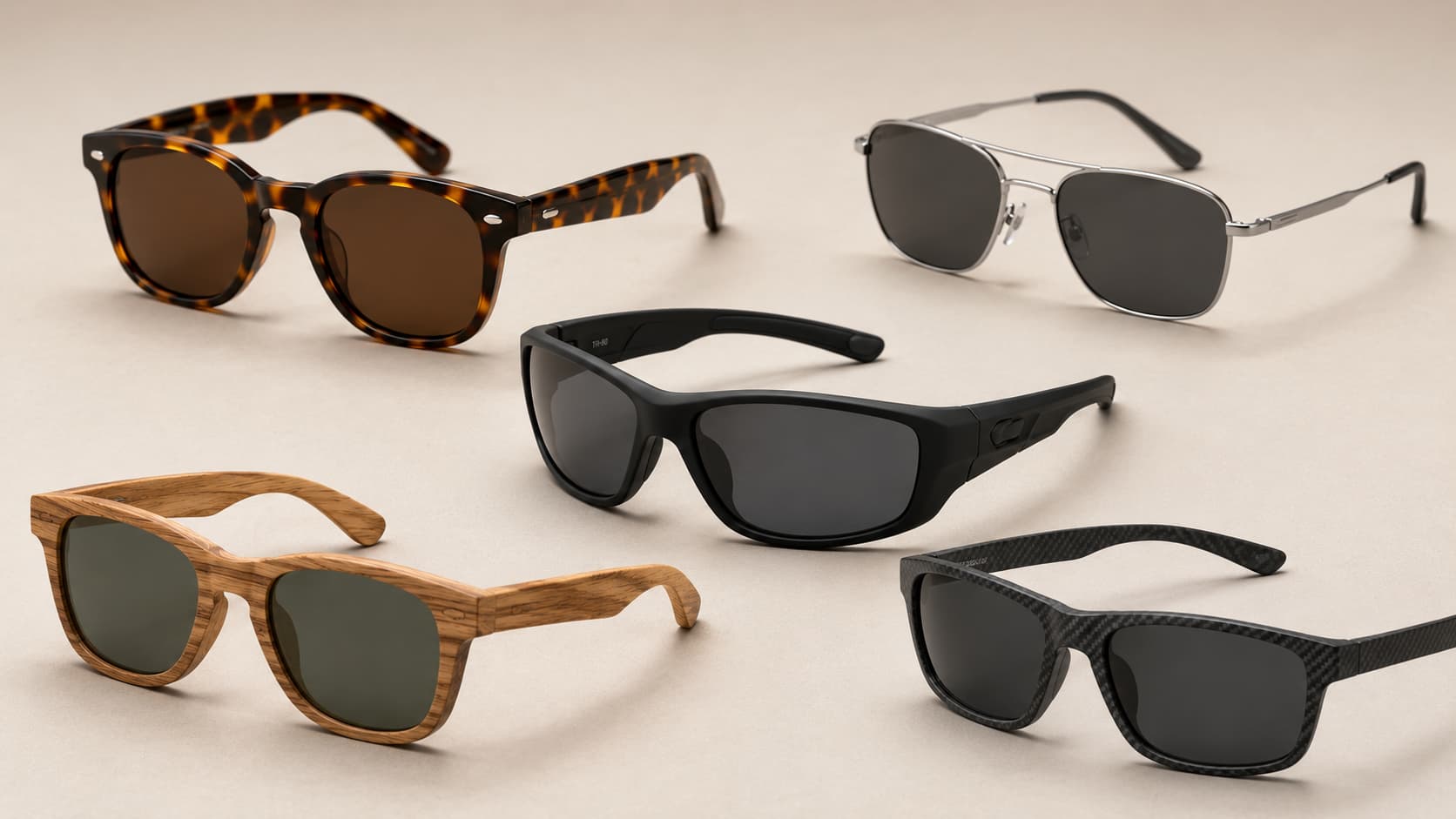
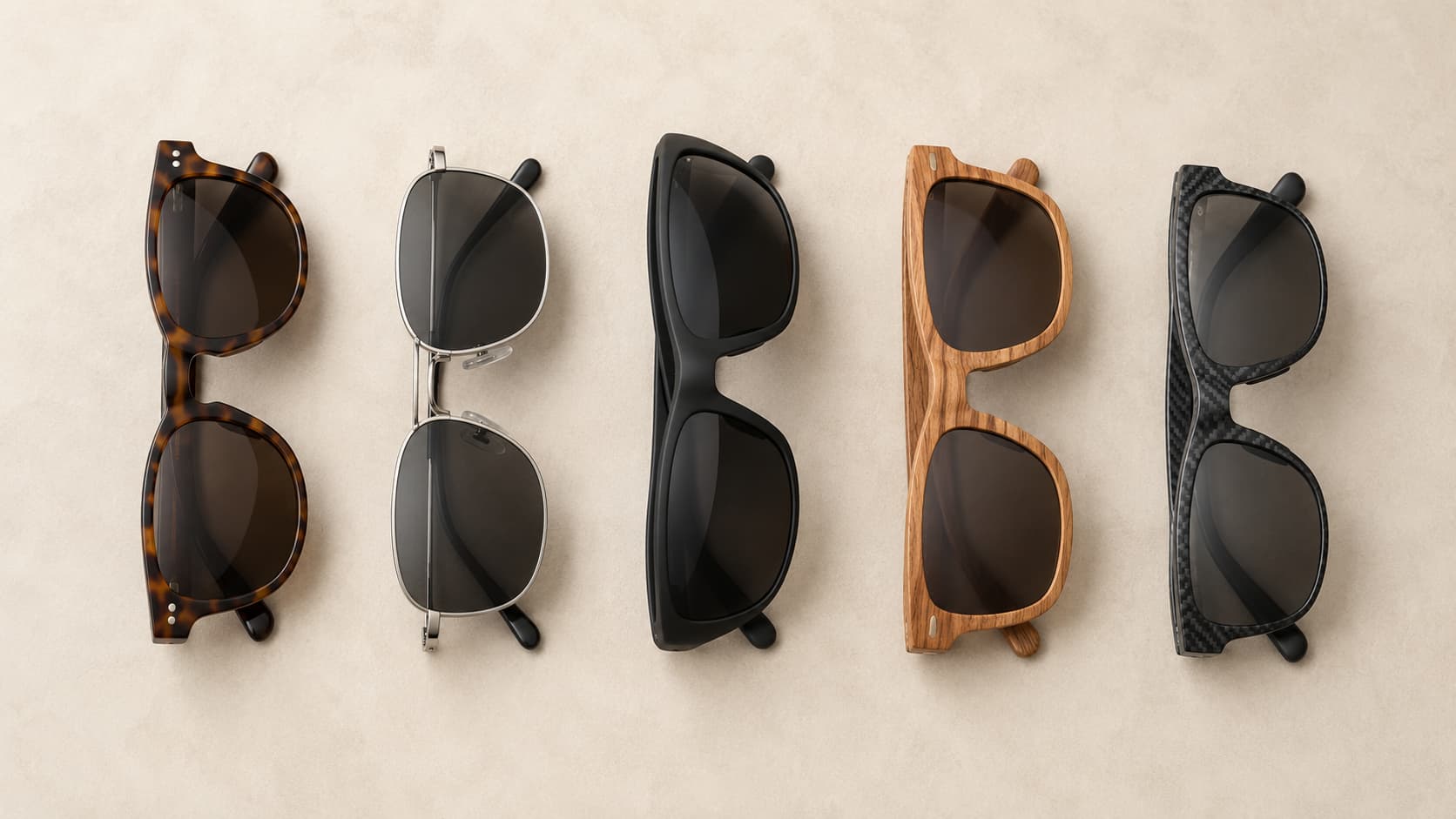
Most sunglasses frames are made from either acetate (a plant-based plastic), injected plastic, metal alloys like stainless steel or titanium, or flexible thermoplastics such as TR-90. Each material trades off weight, flexibility, durability, and price in different ways, so there’s no single “best” option — just the option best suited to how a particular pair will actually be worn.
Frame makers choose materials based on the look they’re going for and how the glasses need to perform. A pair meant for all-day beach wear needs to survive sweat, sand, and getting knocked around in a bag, while a pair meant for dressing up might prioritize a glossy finish and a bold color over raw toughness. Knowing the basic categories turns a product description from a string of jargon into something that actually explains what’s being bought.
Acetate Sunglasses Frames
Acetate frames give sunglasses their richest colors, glossiest finish, and boldest shapes, which is why most designer and fashion-forward sunglasses use it. The tradeoff is that acetate is heavier and less flexible than plastic alternatives like TR-90.
Acetate has been eyewear’s go-to plastic since the late 1940s, when frame makers moved away from the earlier, more flammable cellulose plastics used in the 1920s and 1930s. It’s technically a plant-based plastic made from cotton or wood pulp, cut and shaped from thick sheets rather than injection-molded like cheaper plastics. That sheet-cutting process is exactly why acetate frames can have deep, layered colors like tortoiseshell patterns or translucent gradients that plastic frames usually can’t replicate — the color runs all the way through the material instead of sitting on the surface. Because it’s plant-derived rather than a petroleum plastic, it also tends to sit comfortably against skin that reacts to other materials.
The downside is weight and rigidity. Compared with flexible plastics like TR-90, acetate stays relatively stiff, and that stiffness adds up in thicker frame designs — the extra bulk can press into the bridge of the nose after several hours of wear. It can also become brittle in very cold temperatures or crack if it’s dropped repeatedly, and unlike metal, bent acetate frames usually need to be gently heated by a professional before they can be adjusted. For anyone chasing a real style statement who doesn’t mind a bit more heft, acetate is hard to beat.
Acetate also tends to cost more than basic plastic, and that price difference is usually earned rather than padded. The higher price mostly comes down to labor — sheets have to be cut, shaped, and hand-polished rather than simply molded, and multi-layer or laminated color effects add even more finishing time. Some manufacturers now produce bio-based acetate made through more eco-conscious processes, which behaves the same on the face but appeals to shoppers who care about how their sunglasses are sourced. Many premium metal frames also use a thin sheet of acetate as decorative layering over the metal core, which is why some “metal” sunglasses still show off acetate-style color at the front.
Metal Sunglasses Frames
Metal frames are chosen when a brand wants a slim, minimal silhouette instead of a chunky, colorful one. Stainless steel and titanium can both be worked into narrow, low-profile shapes that read as clean and understated, which is why so many workplace-friendly and minimalist sunglasses lean on metal construction.
Not all metal is the same, though, and the specific alloy changes how the sunglasses perform:
- Stainless steel is the most common and affordable metal option. It resists rust well, holds its shape, and is strong enough for everyday wear without being especially heavy.
- Titanium is prized for being extremely light while still being strong. It resists corrosion from sweat and saltwater better than most other metals, and it rarely causes skin reactions, which makes it a favorite for people who wear sunglasses for long stretches outdoors.
- Monel is a nickel-copper alloy that’s been used in eyewear for decades because it’s easy to shape into detailed designs and takes plating well. It’s a bit more prone to corrosion over time than titanium, so monel frames are often coated to protect them.
Metal frames tend to age gracefully. A scratch on the plating can sometimes be re-polished, and because metal is naturally springy, adjustable nose pads and slightly bent temples can usually be reshaped by hand or by an optician rather than replaced.
Not All Titanium Frames Are the Same
Titanium sunglasses actually come in three different forms, and the type used changes how the frame feels and flexes. Commercially pure (CP) titanium is at least 99 percent titanium — it’s stiff, holds an adjustment precisely, and is naturally free of nickel. Beta-titanium adds small amounts of other metals like vanadium and aluminum for extra spring, so the temples flex gently against the wearer’s head and bounce back into shape rather than staying rigid. Eyewear makers refer to that flex-and-return behavior as shape memory — a specific engineered property of the alloy rather than something every titanium frame automatically has.
There’s one label worth watching for when nickel allergies are a concern: “memory metal” or “memory titanium” frames, which bend dramatically and spring back to their original shape, sound like the most nickel-free option because of the name. In practice, most “memory metal” frames are made of nitinol, a nickel-titanium alloy that’s typically close to half nickel by weight — so despite the name, it offers none of the nickel-free reassurance that CP or beta-titanium provides. Frames labeled CP titanium or beta-titanium are the safer bet for sensitive skin, rather than anything simply marketed under the “titanium” name.
TR-90 and Other Flexible Sunglasses Plastics
TR-90 frames are built for people who want their sunglasses to survive an active lifestyle — sports, travel, kids’ hands — without cracking or feeling heavy. It’s a nylon-based thermoplastic, not the same as basic injection-molded plastic, and it’s known for bending under pressure and snapping back into shape.
What makes TR-90 stand out is a combination most plastics can’t match: it flexes readily, bounces back to its original shape, and stays lightweight while doing it. The material also shrugs off temperature swings that would make other plastics stiffen or go brittle, holding its properties whether it’s baking on a dashboard or freezing on a ski slope. That combination of flexibility and toughness is why TR-90 shows up so often in sport sunglasses, kids’ eyewear, and budget-friendly everyday frames — it can take a beating that would snap a rigid acetate or plastic frame in half. On top of that, it’s naturally low-reactive against skin, which makes it a dependable fallback for anyone who’s had irritation from acetate or certain metals before.
A good way to remember the difference: acetate is chosen for how it looks, TR-90 is chosen for how it survives.
Not every plastic frame on the market is true TR-90, though. Cheaper “plastic” sunglasses that only look similar are often made from basic injected plastic that’s stiffer, shinier, and more prone to snapping at the hinge, so it’s worth checking the actual material listed rather than assuming all plastic frames behave the same way.
“TR-90” technically refers to a specific type of nylon-based copolyamide, and it’s often sold under trade names rather than the generic term. That’s why the same underlying material shows up labeled TR-90, Grilamid, or simply “nylon” or “polyamide” across different product pages — all three are describing the same family of flexible, impact-resistant plastic rather than separate materials. A listing that pairs any of those terms with “lightweight” and “flexible” is almost certainly built the same way under the hood.
Wood and Bamboo Sunglasses Frames
Wood and bamboo sunglasses are chosen for their one-of-a-kind grain patterns and eco-friendly appeal, since no two pairs ever look exactly alike. They’re usually built around a thin metal or acetate core for strength, since solid wood alone can be too brittle and heavy to hold lenses securely.
These frames need a bit more care than synthetic materials — direct sun exposure and moisture can dry out or warp untreated wood over time, so most quality wood frames are sealed with a protective finish. They’re lightweight, naturally hypoallergenic, and appeal to people who want their sunglasses to feel less mass-produced, but they’re generally not the best choice for rough, high-impact activities.
Buffalo horn is a rarer natural material that shows up mostly in luxury eyewear, and it behaves quite differently from wood. It’s dense enough to hold its shape on its own, which is unusual — most frame materials need an internal wire or core running through the temples for support, but well-cut horn generally doesn’t. It’s also a keratin-based material rather than a metal or plastic, so it tends to sit well against skin that reacts to nickel or other metal alloys. Grain and coloring vary from one piece of horn to the next, which is why two frames cut from horn rarely end up looking identical, even from the same batch. That natural origin also means horn responds to temperature much like wood does — it’s worth keeping horn frames out of a hot car and away from freezing conditions, and storing them in a case protects the material from picking up dust and moisture when they’re not being worn. Most horn frames pair the front with a metal or titanium core at the temples for extra durability, which is why “buffalo horn” frames are often technically a combination material rather than 100 percent horn.
Carbon Fiber Sunglasses Frames
Carbon fiber frames exist for one main reason: an unmatched strength-to-weight ratio that lets a frame be both rigid and extremely light at the same time. A well-made carbon fiber frame can weigh in at roughly half of what a comparable titanium frame weighs, without giving up much in the way of impact resistance.
The material itself is a composite rather than a single substance, built from thin strands of carbon set into resin and cured under heat — the same manufacturing approach used for race car bodies, bike frames, and aircraft components. That layered construction is why genuine carbon fiber frames show a distinctive woven or marbled texture instead of a flat, uniform surface, and it’s also what gives the material its rigidity. Unlike TR-90 or acetate, a finished carbon fiber frame holds its molded shape almost permanently; there’s very little give to work with, so getting an exact fit at the factory matters more than being able to bend it into place afterward.
That rigidity is a real tradeoff, not just a technical detail. Because carbon fiber barely flexes, a frame that fits slightly wrong at the temples is harder to fine-tune than a metal or TR-90 pair, and any adjustment usually needs to happen carefully and gradually rather than with a quick bend. It’s also worth knowing what’s actually being sold — plenty of sunglasses use a printed pattern that only mimics the carbon-weave look on top of ordinary plastic, rather than structural carbon fiber underneath. Listings that specify “carbon fiber composite” or “forged carbon” and note a very low weight (well under an ounce for the frame alone) are describing the real material rather than a cosmetic finish. For runners, cyclists, and anyone chasing the lightest rigid frame available, real carbon fiber is hard to beat — but it remains a specialist material more than an everyday default.
Sunglasses Frame Materials Compared
| Material | Weight | Flexibility | Best For |
|---|---|---|---|
| Acetate | Medium-heavy | Low (needs heat to adjust) | Bold color, fashion-forward shapes |
| Stainless steel | Light-medium | Low-medium | Slim, everyday, budget-friendly metal |
| Titanium (CP/beta) | Very light | Medium-high | Long wear, sensitive skin, durability |
| Monel | Light-medium | Low-medium | Detailed vintage-style shapes, budget metal |
| TR-90 | Very light | High | Sports, kids, active use |
| Wood/bamboo | Light | Low | Unique look, eco-conscious style |
| Buffalo horn | Very light | Low (heat-adjustable) | Luxury, one-of-a-kind pattern |
| Carbon fiber | Very light | Very low (rigid) | High-performance sport, minimal weight |
How to Pick the Right Frame Material
The right material comes down to matching it to how the sunglasses will actually be used, not just which one looks nicest on a shelf. Someone who wears sunglasses mainly for driving and errands has very different needs than someone who wears them hiking, running, or at the beach every weekend.
Priorities tend to sort people into a few clear groups. Anyone chasing color and shape above all else, and who treats their belongings gently, gets looks from acetate that nothing else quite matches. Active households and anyone hard on their gear get more mileage out of TR-90’s flexibility, since it holds up to drops and bends that would crack a stiffer frame. People who wear sunglasses for hours at a stretch and want something that practically disappears on the face tend to find titanium worth its higher price tag. And for sensitive skin that reacts to certain metals or plastics, both titanium and TR-90 remain generally safe, hypoallergenic choices.
Frequently Asked Questions
Is titanium or acetate better for sunglasses?
Neither is objectively better — they’re built for different priorities. Titanium is lighter, more flexible, and better for sensitive skin, while acetate offers richer colors and bolder shapes but adds more weight and doesn’t bend as easily.
What’s the most durable sunglasses frame material?
TR-90 is generally considered the most durable for everyday impact resistance because it flexes under pressure instead of cracking. Carbon fiber is more rigid and can be just as tough against impact, but because it barely bends, it’s less forgiving of a hard direct hit than TR-90’s flex-and-recover design. Titanium is the most durable metal option, resisting corrosion and metal fatigue better than stainless steel or monel.
Are acetate sunglasses good quality?
Yes, acetate is widely used by designer and premium eyewear brands specifically because of its finish and color depth. Quality varies by manufacturer, but acetate itself isn’t a lower-tier material — it’s simply heavier and less flexible than plastics like TR-90.
Do metal sunglasses frames rust?
Stainless steel and titanium both resist rust well under normal conditions. Monel and other lower-grade alloys are more prone to corrosion over time, especially with regular exposure to sweat or saltwater, which is why they’re usually coated or plated.
Can sunglasses frame material cause allergies?
Yes, some people react to nickel found in certain metal alloys, causing skin irritation where the frame touches the face. Acetate, TR-90, and true CP or beta-titanium are all considered hypoallergenic, but “memory metal” frames are the exception — they’re usually a nickel-titanium alloy, so the name alone doesn’t guarantee they’re nickel-free.
Conclusion
Each frame material earns its place by solving a different problem — acetate for color and presence, metal for a slim polished look, TR-90 for flexibility and toughness, wood and horn for a natural one-of-a-kind feel, and carbon fiber for the lightest rigid build performance demands. None of them is universally “the best,” but once what each one is actually good at becomes clear, picking the right pair stops being guesswork and starts being a simple match between the material and the way it will actually be worn.