The question “who invented jewelry?” reveals one of humanity’s most enduring mysteries – there was no single inventor, but rather a gradual evolution spanning over 150,000 years. The oldest known jewelry consists of perforated shell beads from Morocco, dating back 150,000 years ago, showing that our ancestors were creating symbolic objects long before developing agriculture or permanent settlements. Archaeological evidence shows that jewelry making emerged independently across Africa and the Middle East, driven by human needs for protection, social status, spiritual connection, and aesthetic expression. From simple shells to sophisticated metalworking by ancient Mesopotamians, Egyptians, and Chinese craftsmen, jewelry’s evolution mirrors humanity’s journey from prehistoric survival to complex civilizations.
Why Jewelry Has No Single Inventor
The simple truth is that jewelry has no single inventor because it appeared naturally wherever early humans developed the ability to think symbolically. Multiple groups of people across different continents started making decorative objects around the same time, showing that creating beautiful things to wear seems hardwired into human nature. This wasn’t one brilliant person’s eureka moment, but rather thousands of generations gradually developing the skills and desire to turn everyday materials into something special.
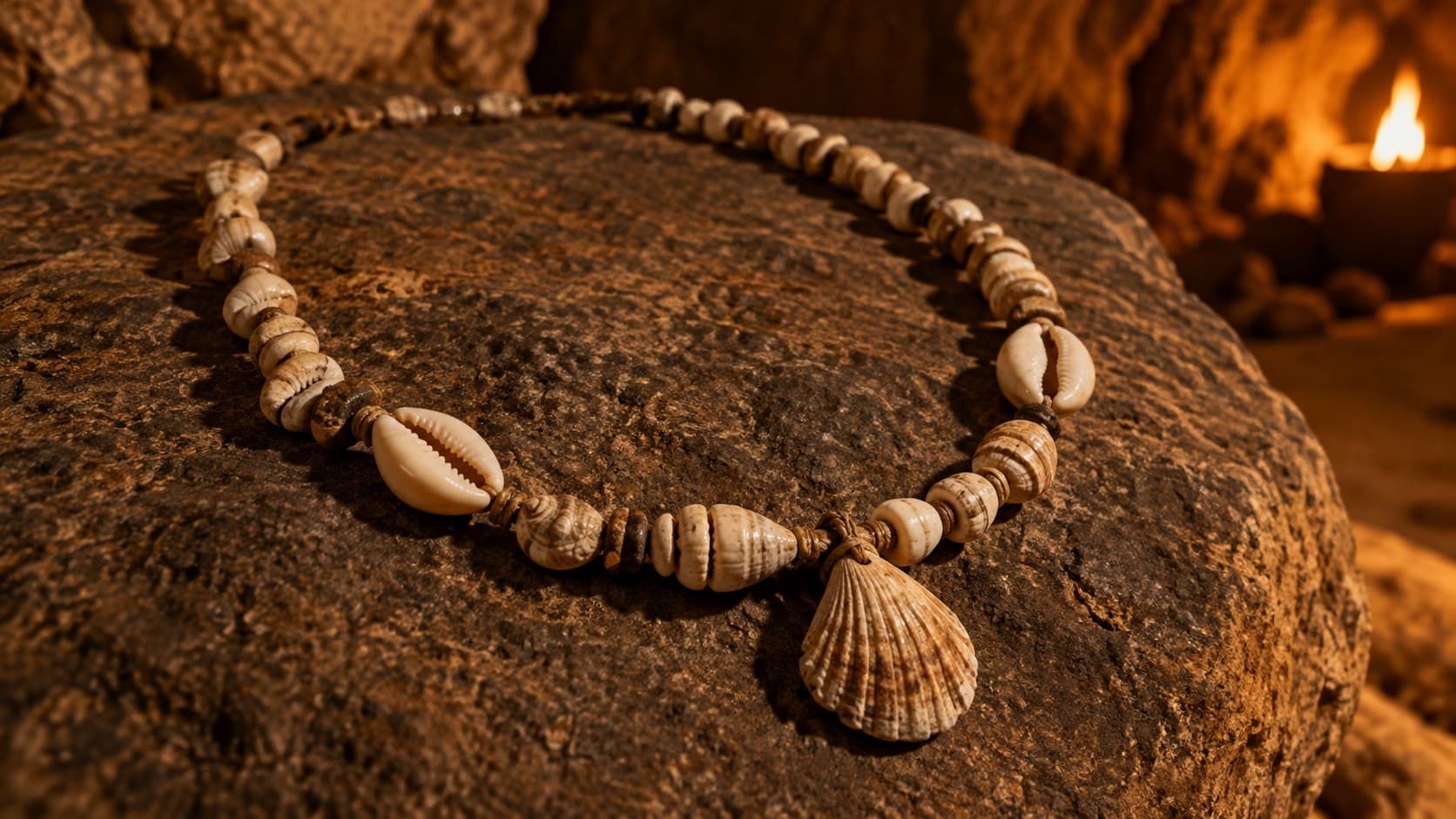
- Ancient people in Morocco were making shell jewelry 150,000 years ago, drilling holes through tiny sea snails to create what are now the world’s oldest known jewelry pieces. These 33 shells from Bizmoune Cave required careful planning and skill to make – someone had to collect the right shells, figure out how to pierce them without breaking, and string them together in a way that would last.
- Around the same time, people living in what is now Israel were doing something remarkably similar with different shells, creating beads that are between 100,000 and 135,000 years old. The fact that groups separated by thousands of miles were independently developing jewelry shows this wasn’t learned behavior spreading from one place, but something humans naturally gravitated toward.
- South African communities 75,000 years ago took things further by decorating their shell beads with red ochre, a mineral pigment that required extra effort to obtain and apply. This shows they weren’t just making functional objects but were actively trying to make them more beautiful and meaningful.
- The longest continuous jewelry tradition belongs to Africa’s ostrich eggshell beads, which people have been making for 50,000 years in basically the same way. These beads connected communities across thousands of miles, creating trade networks that lasted longer than most civilizations. When archaeologists find these beads far from where ostriches live, they know ancient people valued them enough to trade across vast distances.
- Early jewelry makers needed specialized tools that they had to invent and perfect – sharp bone awls for piercing, stone drills for enlarging holes, and various materials for smoothing and polishing. This means jewelry making was one of humanity’s first crafts that required dedicated equipment and knowledge passed down through generations.
What makes jewelry’s origin story so fascinating is that it shows our ancestors weren’t just focused on survival – they were already thinking about beauty, meaning, and self-expression when they were still living in caves. The drive to create and wear decorative objects appears to be as natural to humans as making tools or building shelters, which explains why every culture throughout history has developed its own jewelry traditions, often completely independently of outside influence.
The World’s Oldest Jewelry Discoveries
Archaeologists have uncovered jewelry pieces that push back the timeline of human creativity much further than anyone expected just a few decades ago. These ancient discoveries come from caves and burial sites across Africa and the Middle East, painted a picture of early humans who were far more sophisticated than previously imagined. The oldest pieces weren’t made from precious metals or gemstones, but from materials that were readily available yet required skill and intention to transform into wearable art.
- The record holder comes from Bizmoune Cave in Morocco, where researchers found 33 perforated shells that are between 142,000 and 150,000 years old. These Nassarius shells show clear signs of being deliberately modified – the holes were carefully drilled through the strongest part of each shell, and microscopic analysis reveals wear patterns consistent with being strung together and worn regularly over time.
- Israel’s Skhul and Qafzeh caves contain some of the most important early jewelry discoveries outside Africa, with perforated shells dating back 100,000 to 135,000 years. What makes these finds special is that they were discovered alongside human remains, giving scientists direct evidence of who was making and wearing this early jewelry. The shells had to be collected from Mediterranean beaches and carried inland to the caves, showing these early people valued them enough to transport them significant distances.
- Blombos Cave in South Africa revealed 41 shell beads from 75,000 years ago that still had traces of red ochre on them, proving that ancient people weren’t content with plain beads but wanted to add color and decoration. The ochre had to be specially prepared and applied, making these some of the earliest examples of humans adding unnecessary beauty to functional objects.
- Scientists have used advanced dating techniques like uranium-series dating and electron spin resonance to confirm these ages, methods that can accurately date materials tens of thousands of years old. These techniques measure the natural radioactive decay in the shells and surrounding sediments, giving researchers confidence in their timeline of early human creativity.
- The ostrich eggshell bead tradition from Africa represents the longest continuous jewelry-making practice in human history, with people creating these distinctive white beads for over 50,000 years using essentially the same techniques. Archaeological sites across eastern and southern Africa contain these beads, showing they were traded across thousands of miles and valued enough to include in burials with the dead.
- Analysis of these ancient beads reveals sophisticated manufacturing techniques – the shells were carefully selected for size and quality, precisely drilled with stone tools, and often polished smooth. Some show evidence of being repaired when they broke, indicating they were precious enough to fix rather than replace.
These discoveries revolutionized how scientists think about early human behavior because they show our ancestors were engaging in symbolic thinking and artistic expression much earlier than anyone realized. The consistency of techniques across different sites and time periods proves that jewelry making wasn’t an accident or occasional activity, but a deliberate cultural practice that early humans considered important enough to invest time and skill in perfecting.
Why Early Humans Invented Jewelry

Early humans didn’t start making jewelry just because they thought it looked pretty – though beauty was certainly part of it. Archaeological evidence and burial practices from around the world reveal that jewelry served multiple crucial purposes in ancient societies, from protecting against spiritual dangers to broadcasting social status to marking important life events. The fact that people were willing to spend precious time and resources creating these objects, even when survival was their primary concern, shows just how important jewelry was to early human communities.
- Protection from evil spirits and supernatural forces was one of jewelry’s most important early functions, with specific shapes, materials, and symbols believed to have magical protective powers. Ancient Egyptian scarab beetles carved from stone were thought to ensure rebirth in the afterlife, while Mesopotamian cylinder seals contained prayers and images of protective gods. Even today, many cultures maintain beliefs about protective jewelry like evil eye pendants or religious medallions that trace back thousands of years.
- Social status became visible through jewelry quality, with expensive materials and complex craftsmanship clearly indicating wealth and power within the community. The famous Varna Necropolis in Bulgaria, dating to 4600 BCE, contains the world’s oldest gold jewelry found exclusively in the graves of high-status individuals, while common people were buried with simple pottery. Roman laws actually restricted who could wear certain types of jewelry, with purple-dyed pearls reserved for the emperor and specific gold ornaments limited to the senatorial class.
- Religious ceremonies across all ancient cultures featured jewelry as essential ritual objects, from dressing temple statues in precious ornaments to wearing specific pieces during sacred festivals. Egyptian priests wore gold jewelry representing different gods during temple ceremonies, while Celtic druids used specific metal torcs during religious rites. Archaeological evidence from religious sites worldwide shows that jewelry was often permanently donated to temples, indicating its sacred significance beyond personal decoration.
- Life milestone markers helped communities celebrate and recognize important transitions like birth, coming of age, marriage, and death through specific jewelry pieces. Ancient Greek and Roman brides wore specific types of rings and necklaces during wedding ceremonies, while many cultures created special amulets for newborn babies to protect them during their vulnerable early months. Funeral jewelry found in burial sites shows that many cultures believed ornaments were necessary for the deceased’s journey to the afterlife.
- Trade networks and cultural exchange were often built around jewelry materials, with precious stones, metals, and organic materials like amber traveling thousands of miles from their sources. Afghan lapis lazuli reached Egyptian workshops over 1,500 miles away, while Baltic amber found its way to Mediterranean civilizations, creating economic relationships between distant peoples. These trade relationships often introduced new techniques and styles, with jewelry serving as both commodity and cultural ambassador.
- Personal identity and tribal affiliation could be communicated through specific jewelry styles, materials, and symbols that indicated where someone came from and which group they belonged to. Different Celtic tribes had distinctive metalwork patterns that archaeologists can still identify today, while various African cultures developed unique beadwork styles that served as cultural signatures. Even within communities, jewelry helped distinguish between professions, with different crafts and social roles having their own ornamental traditions.
The multiple purposes jewelry served in ancient societies explain why it appeared independently in cultures worldwide and why people invested so much effort in creating and perfecting it. Unlike tools or weapons that served single practical purposes, jewelry met complex human needs for protection, beauty, status, and identity all at once, making it one of the few luxury items that ancient people considered absolutely essential to their daily lives and spiritual well-being.
Ancient Civilizations That Mastered Jewelry Making
While early humans invented the basic concept of jewelry, it was the great ancient civilizations that transformed simple decorative objects into sophisticated art forms requiring advanced skills and specialized knowledge. These societies developed the fundamental techniques that jewelry makers still use today, from intricate metalworking methods to precise gemstone cutting. Each civilization contributed unique innovations based on their available materials, cultural values, and technological capabilities, creating distinct styles that influenced jewelry making for thousands of years.
- Mesopotamian civilizations between 3500 and 539 BCE established the foundation for almost every major jewelry technique used throughout history. The Sumerians invented filigree work around 3000 BCE, creating delicate patterns by soldering thin gold wires together in intricate designs that required incredible precision and steady hands. They also developed granulation, the art of decorating metal surfaces with tiny gold spheres, and perfected lost-wax casting around 3700 BCE, which allowed them to create complex three-dimensional jewelry pieces that would have been impossible to make any other way.
- The Royal Cemetery of Ur, dating to 2900-2300 BCE, revealed the incredible sophistication of Mesopotamian jewelry through Queen Pu-abi’s elaborate burial ornaments. Her headdress alone contained hundreds of individual gold leaves, flowers, and decorative elements that had to be assembled by master craftsmen who understood both metallurgy and artistic design. The cemetery also contained the world’s earliest known wire-drawing techniques, where gold was pulled through progressively smaller holes to create uniform wire thickness for detailed work.
- Ancient Egypt elevated gold working to unprecedented heights between 3100 and 30 BCE, treating gold as the divine flesh of the gods and developing techniques for working with incredibly thin sheets of the metal. Egyptian craftsmen could hammer gold so thin it became nearly transparent, yet strong enough to be shaped into complex forms like Tutankhamun’s famous burial mask. They invented cloisonné work, where thin metal strips create compartments filled with colored glass or stones, and developed sophisticated soldering techniques that left no visible joints.
- Egyptian jewelry served both decorative and religious purposes, with specific symbols like the ankh, scarab beetle, and Eye of Horus believed to provide magical protection in life and death. The Middle Kingdom period from 2055 to 1650 BCE marked the height of Egyptian innovation, when craftsmen invented swiveling scarab bezels around 2000 BCE and perfected the production of colored glass as substitutes for expensive gemstones. Tutankhamun’s tomb contained over 5,000 pieces of jewelry, demonstrating how deeply integrated ornaments were with Egyptian beliefs about the afterlife.
- Chinese civilization developed parallel jewelry traditions focused primarily on jade working from the Neolithic period onward, treating jade as more precious than gold due to its spiritual significance. The Liangzhu culture around 3000 BCE produced sophisticated jade bi disks and cong tubes representing heaven and earth, using rotary drilling techniques and advanced polishing methods that remained uniquely Chinese despite extensive contact with other cultures. Chinese jade carvers developed techniques for creating openwork patterns and paper-thin sections that showcased the stone’s natural translucency.
- Greek and Roman innovations focused on spreading existing techniques across their vast empires while developing new methods for mass production and standardization. The Etruscans, who greatly influenced Roman jewelry, achieved such mastery of granulation that their methods were lost for centuries and only rediscovered in the 19th century. Romans developed efficient workshop systems that could produce identical pieces in large quantities, used advanced gem-cutting techniques learned from conquered territories, and created the first standardized ring sizes and jewelry measurements.
- The Indus Valley Civilization between 3300 and 1300 BCE developed sophisticated bead-making industries that exported across the ancient world, inventing diamond drilling techniques and creating standardized bead sizes that facilitated long-distance trade. Their workshops produced beads from carnelian, agate, and other semi-precious stones using techniques so advanced that similar quality wasn’t achieved again until modern times. Archaeological evidence shows they operated large-scale manufacturing centers with specialized workers handling different stages of production.
These ancient civilizations didn’t just make beautiful jewelry – they established the technical foundations, artistic standards, and cultural meanings that continue to influence jewelry making today. Their innovations in metallurgy, gemstone working, and design principles created a rich heritage that modern jewelers still draw upon, proving that the greatest artistic and technical achievements often come from combining practical skill with cultural significance and spiritual meaning.
Famous Ancient Jewelry Discoveries
Archaeological excavations over the past two centuries have unearthed spectacular jewelry collections that provide windows into ancient civilizations, revealing not just incredible craftsmanship but also social structures, religious beliefs, and daily life of people who lived thousands of years ago. These discoveries often came from royal tombs, religious sites, and wealthy burials where jewelry was preserved by fortunate circumstances of burial conditions and locations. Each major find has contributed to our knowledge of ancient techniques and cultural practices, sometimes completely rewriting what historians thought they knew about past civilizations.
- King Tutankhamun’s tomb, discovered in 1922 by Howard Carter, contained the most spectacular collection of ancient jewelry ever found, with over 5,000 individual pieces ranging from his famous golden burial mask to intricate finger rings and ceremonial collars. The young pharaoh’s burial mask alone weighs 22.5 pounds of solid gold and demonstrates Egyptian mastery of repoussé work, inlay techniques, and precious stone setting that rivals modern capabilities. His jewelry collection included pieces made from gold, silver, electrum, lapis lazuli, turquoise, carnelian, and glass, showing the vast trade networks that supplied materials to Egyptian royal workshops.
- The Royal Cemetery of Ur in Iraq, excavated in the 1920s by Leonard Woolley, revealed Sumerian jewelry from 2900-2300 BCE that established many techniques still used today. Queen Pu-abi’s elaborate headdress contained hundreds of individual gold leaves, flowers, and decorative elements that had to be assembled by master craftsmen, while her attendants wore matching sets of jewelry indicating organized royal workshops. The cemetery yielded the earliest known examples of filigree work, granulation, and complex multi-part jewelry assemblies that required advanced planning and execution.
- The Varna Necropolis in Bulgaria, dating to 4600 BCE, contained the world’s oldest worked gold objects, fundamentally changing archaeologists’ understanding of early European civilization. The burials showed clear social stratification through jewelry quality and quantity, with elite graves containing elaborate gold diadems, arm bands, and ceremonial axes while common burials had simple pottery. The gold working techniques found at Varna were so advanced that they couldn’t have been recent innovations, suggesting sophisticated metalworking traditions that must have developed over centuries.
- The tomb of Philip II of Macedon, father of Alexander the Great, yielded spectacular 4th century BCE Greek jewelry including a golden oak wreath with 313 individual leaves and 68 acorns that demonstrates incredible technical skill. The tomb’s golden larnax (burial chest) shows advanced repoussé techniques creating detailed scenes from Greek mythology, while smaller jewelry pieces reveal the influence of Persian and Asian techniques brought back by Greek conquests. The discovery proved that Greek jewelry making was far more sophisticated than previously believed.
- Celtic treasures from across Europe, including the Snettisham Hoards in Britain and various bog deposits in Ireland, have revealed sophisticated Iron Age metalworking that combined technical excellence with distinctive artistic styles. The Snettisham Great Torc, made around 75 BCE, consists of eight twisted metal ropes containing over a kilogram of gold and silver alloy, demonstrating mastery of wire drawing and complex assembly techniques. These finds show that Celtic craftsmen developed unique approaches to metalworking that were equal to Roman techniques but stylistically completely different.
- The Preslav Treasure from medieval Bulgaria, discovered in 1978, contained over 170 pieces of 10th-11th century jewelry that illuminated the sophistication of Byzantine and Bulgarian court culture. The collection included elaborate gold earrings with micro-mosaic work, cloisonné enamel pieces with religious imagery, and pearl-set jewelry that required techniques for drilling and setting the irregular gems. The treasure demonstrated how Byzantine jewelry combined Roman technical traditions with Eastern decorative influences from Islamic and Asian sources.
- The Hoxne Hoard in England, found in 1992, contained late Roman jewelry from the 4th-5th centuries CE that showed how classical techniques survived the empire’s decline. The collection included gold body chains, rings with inscriptions, and bracelets that maintained sophisticated manufacturing standards even as political structures collapsed. The hoard’s survival demonstrates how wealthy families preserved their jewelry as portable wealth during uncertain times.
- Chinese tomb excavations, particularly from Han Dynasty sites, have revealed jade working techniques that were uniquely Chinese and incredibly sophisticated, including jade burial suits made from thousands of precisely cut pieces held together with gold or silver wire. The Mawangdui tombs contained silk-wrapped jewelry boxes with hundreds of individual pieces showing advanced lapidary work, metal inlay techniques, and an aesthetic completely different from contemporary Western traditions.
These discoveries continue to reshape our knowledge of ancient civilizations, often revealing that past societies were far more sophisticated and interconnected than previously imagined. The jewelry found in these archaeological contexts provides some of the most intimate connections we have to ancient peoples, since these were personal objects that were worn, treasured, and considered important enough to accompany their owners into the afterlife.
How Ancient Jewelry Making Techniques Developed
The journey from simple pierced shells to sophisticated metalworking represents one of humanity’s most impressive technological achievements, spanning thousands of years of gradual innovation and discovery. Each advancement built upon previous knowledge, with civilizations learning to work with increasingly challenging materials and develop more complex techniques. This evolution wasn’t just about making prettier objects – it required mastering fire, chemistry, physics, and engineering principles that laid the groundwork for many other technologies.
- Copper working around 6500 BCE marked humanity’s first steps into metal jewelry, initially using naturally occurring pure copper that could be hammered into shape without heating. Early copper workers discovered they could anneal the metal by heating and cooling it to make it more workable, and learned to create simple wire by cutting thin strips and rolling them between stones. These techniques spread quickly because copper was relatively abundant and forgiving to work with, allowing many communities to experiment and develop their own variations.
- The Bronze Age revolution around 3300 BCE transformed jewelry making by introducing alloy technology, where copper was mixed with tin to create a harder, more durable metal that could hold fine details. Bronze workers developed the first sophisticated casting techniques, creating clay and stone molds that could produce multiple identical pieces. They also invented the draw plate, a tool with progressively smaller holes used to create uniform wire thickness, which remained essentially unchanged for thousands of years.
- Gold working techniques reached extraordinary sophistication in ancient Egypt, where craftsmen learned to work with the metal’s unique properties of malleability and resistance to tarnishing. Egyptian goldsmiths could create wire so fine it was nearly invisible to the naked eye, and sheets so thin they were almost transparent yet strong enough to be shaped into complex three-dimensional forms. They developed granulation techniques that could attach tiny gold spheres without visible solder, and mastered repoussé work where designs were hammered from the reverse side to create raised relief patterns.
- Silver processing required more advanced knowledge than gold working because silver rarely occurs in pure form and needs to be extracted from ore through cupellation, a technique involving lead and high temperatures. Ancient craftsmen learned to separate silver from lead by heating the mixture until the lead oxidized and could be blown away, leaving pure silver behind. This process required precise temperature control and specialized furnaces, making silver jewelry initially more expensive and prestigious than gold in many cultures.
- Lost-wax casting, perfected by Mesopotamians around 3700 BCE, revolutionized jewelry making by allowing the creation of complex three-dimensional pieces that would be impossible to make any other way. The process involved sculpting the desired piece in wax, covering it with clay to create a mold, then heating the assembly until the wax melted out and could be replaced with molten metal. This technique enabled mass production of identical pieces and allowed for intricate details like hollow interiors and undercuts that hand-fabrication couldn’t achieve.
- Gemstone cutting evolved from simple polishing of natural crystal faces to sophisticated faceting that maximized brilliance and fire. Early lapidaries used abrasive powders like emery and diamond dust on rotating wheels to shape stones, initially creating simple cabochon cuts that followed the stone’s natural form. The breakthrough came around 1380 CE in France when craftsmen developed the first true faceted cuts, and Lodewyck van Bercken’s invention of the diamond skeif in 1456 enabled precision cutting that revealed gems’ full optical potential.
- Enameling techniques developed from simple glass-making knowledge into sophisticated decorative arts that could create permanent color on metal surfaces. The process required understanding the different melting points of metals and glass, precise temperature control, and knowledge of how different metal oxides created various colors. Cloisonné enameling used thin metal strips to create compartments for different colored enamels, while champlevé involved carving recesses into the metal itself to hold the glass.
- Tool development paralleled technique advancement, with jewelry makers creating increasingly specialized implements for specific tasks. Early hammers gave way to dozens of different hammer types for various forming operations, while simple stone abrasives evolved into sophisticated polishing compounds and motorized equipment. Draw plates, mandrels, forming blocks, and precision measuring tools all emerged from the need to create more complex and accurate work.
This technical evolution demonstrates how jewelry making drove innovation in metallurgy, chemistry, and precision engineering that benefited many other crafts and industries. The pursuit of beauty and perfection in personal ornaments pushed ancient craftsmen to solve problems and develop techniques that found applications far beyond jewelry, making ornament-making one of the most important drivers of technological progress in the ancient world.
The Most Important Jewelry Inventions in History

Throughout jewelry’s long history, certain breakthrough innovations completely transformed how pieces were made, what materials could be used, and what was possible to achieve artistically. These weren’t gradual improvements but revolutionary changes that opened up entirely new possibilities for craftsmen and often took generations to fully develop and spread. Many of these innovations came from solving specific technical problems, while others emerged from cultural exchanges between different civilizations or from individual craftsmen pushing the boundaries of their materials and tools.
- Diamond cutting underwent its most revolutionary change around 1380 CE in France when craftsmen developed the first true faceted cuts, moving beyond simple polishing of natural crystal faces to deliberately creating geometric surfaces that maximized light reflection. Before this innovation, diamonds were valued primarily for their hardness and rarity rather than their brilliance, since their natural octahedral crystal form didn’t display their optical properties effectively. The breakthrough came from understanding that precise angular cuts could split white light into rainbow colors and create the fire and scintillation that makes diamonds so captivating.
- Lodewyck van Bercken’s invention of the diamond skeif in 1456 revolutionized precision gem cutting by creating the first mechanical polishing wheel specifically designed for working with diamonds. This rotating iron disc coated with diamond powder and olive oil allowed craftsmen to cut facets with unprecedented accuracy and consistency, leading to the development of the table cut and eventually the brilliant cut. Van Bercken’s innovation made diamond cutting a true profession rather than a craft skill, establishing Antwerp and later Amsterdam as the world’s diamond cutting centers.
- The development of the brilliant cut in the late 17th century represented the culmination of centuries of diamond cutting innovation, with 58 precisely calculated facets designed to maximize light return through mathematical principles. This cut required understanding the relationship between angles, proportions, and light behavior that wouldn’t be fully explained scientifically until much later. The brilliant cut became the template for modern diamond cutting and established the standards of beauty that still dominate the diamond industry today.
- Spring-loaded mechanisms for jewelry clasps and moving parts emerged during the Renaissance, allowing craftsmen to create pieces with hidden hinges, secret compartments, and moving elements that added both function and surprise to their work. These mechanisms required understanding tension, leverage, and precision manufacturing that pushed metalworking skills to new levels. Poison rings, locket mechanisms, and transformable jewelry pieces became possible, adding elements of engineering to what had previously been purely artistic work.
- Electroplating, invented in the 1840s, democratized jewelry ownership by allowing inexpensive base metals to be coated with thin layers of precious metals that looked identical to solid gold or silver pieces. This process used electrical current to deposit metal atoms onto surfaces with perfect uniformity, creating durable finishes that could last for decades with proper care. Electroplating made fashionable jewelry accessible to middle-class consumers for the first time and established the foundation for modern costume jewelry industries.
- Precision gear cutting and mechanical production methods, developed during the Industrial Revolution, transformed jewelry manufacturing from purely handmade craft to semi-industrial process that could produce consistent quality at scale. Steam-powered rolling mills could create uniform metal sheets and wire, while mechanical presses could stamp out identical decorative elements. These innovations didn’t replace hand skills but augmented them, allowing craftsmen to focus on artistic design while machines handled repetitive production tasks.
- Gas torches and improved furnace technology gave jewelers much better temperature control and more concentrated heat, enabling techniques like hard soldering that created stronger, more durable joints between metal parts. Better heat control also made possible more sophisticated enameling work and allowed craftsmen to work with higher-melting metals like platinum when it was first introduced to jewelry making in the early 20th century.
- X-ray crystallography and modern gemology, developed in the 20th century, gave jewelers scientific understanding of crystal structures, optical properties, and the geological formation of gemstones. This knowledge enabled more effective cutting techniques, better stone identification, and improved treatments that could enhance natural stones’ appearance. Modern gemology also established standardized grading systems that created consistent quality measures across the industry.
- Computer-aided design and 3D printing technology, emerging in the late 20th and early 21st centuries, has revolutionized jewelry design by allowing craftsmen to visualize complex pieces before making them and create forms that would be impossible to fabricate by hand. CAD software can calculate stress points, optimize metal usage, and create precise measurements for stone settings, while 3D printing can produce wax models for lost-wax casting with incredible detail and consistency.
- Laser welding and cutting technology has enabled repairs and modifications that were previously impossible, allowing jewelers to work on finished pieces without damaging heat-sensitive stones or delicate structures. Lasers can also create precise cuts in metal and stone that open up new design possibilities and manufacturing techniques.
These innovations demonstrate how jewelry making has always been at the forefront of technological development, with craftsmen constantly pushing the boundaries of what their materials and tools could achieve. Each breakthrough built upon previous knowledge while opening up new possibilities that often took generations to fully explore and perfect.
How Jewelry Traveled Across Ancient Civilizations
The global spread of jewelry techniques and styles wasn’t a random process but followed specific patterns driven by trade routes, migration, and cultural exchange that connected distant civilizations. Ancient people valued certain materials and techniques so highly that they were willing to transport them across continents, creating networks of knowledge and commerce that lasted for millennia. These connections meant that a technique developed in one region could eventually influence jewelry making on the opposite side of the world, though often with fascinating local adaptations.
- The Silk Road network, active from the 2nd century BCE to the 15th century CE, served as the primary highway for jewelry exchange between East and West, carrying not just finished pieces but also raw materials, tools, and technical knowledge. Caravans transported Chinese pearls and jade westward while bringing Mediterranean coral and Baltic amber eastward, with each trading post adding its own techniques and styles to the mix. Documents from Silk Road cities describe specialized jewelry workshops that combined techniques from multiple cultures, creating unique hybrid styles that couldn’t be found anywhere else.
- Maritime trade routes connected continents through coastal cities that became jewelry-making centers, particularly in the Indian Ocean where monsoon winds created predictable seasonal trading patterns. Ships carried Indian Ocean pearls to Roman markets, while transporting Roman glass beads to Southeast Asian kingdoms and African ports. These sea routes were often faster and safer than overland travel, allowing for regular exchange of both luxury items and everyday jewelry that spread techniques to island communities and coastal civilizations.
- Phoenician traders between 1550 and 300 BCE acted as crucial intermediaries, carrying jewelry techniques across the Mediterranean and establishing workshops in their colonies from Spain to North Africa. They were particularly skilled at adapting foreign techniques to local tastes and materials, creating standardized products that could appeal to diverse markets. Phoenician influence explains why similar granulation and filigree techniques appear in regions as distant as Ireland and Morocco, spread by these master traders and craftsmen.
- Migration patterns carried jewelry traditions across vast distances as entire peoples moved to new territories, bringing their techniques and aesthetic preferences with them. Celtic expansions from their Swiss homeland spread distinctive La Tène metalwork styles across Europe, while Germanic tribal movements distributed cloisonné garnet work from the Black Sea region to Britain and Spain. These migrations often created lasting changes in local jewelry traditions, as immigrant craftsmen married into local communities and taught their skills to new apprentices.
- Afghan lapis lazuli mines in Badakhshan province supplied the deep blue stone to civilizations across three continents for over 6,000 years, creating some of history’s longest-lasting trade relationships. The stone traveled over 1,500 miles to reach Egyptian workshops, where it was carved into scarabs and amulets, while also reaching Mesopotamian cities where it decorated royal jewelry and religious objects. The consistent demand for this specific material created permanent trade routes that facilitated the exchange of other jewelry techniques and materials.
- Baltic amber formed another major trade network, with the golden fossilized resin traveling from northern European coastlines to Mediterranean civilizations through established routes that archaeologists call the “Amber Road.” Roman writers described amber’s journey through Germanic territories, where local tribes added their own carved decorations before trading it southward. This network operated for over 2,000 years and introduced Mediterranean craftsmen to northern European metalworking techniques in exchange.
- Regional specializations developed based on local materials and cultural preferences, creating distinctive styles that remained geographically concentrated despite extensive trade contact. Chinese jade working maintained its unique character despite importing techniques from Central Asia, while Celtic knotwork patterns stayed within Celtic cultural areas even as the metals and gems came from distant sources. African metalworking traditions developed sophisticated casting and forging techniques that remained distinctly African while incorporating imported materials.
- Cultural adaptation meant that techniques rarely transferred unchanged but were modified to suit local tastes, available materials, and existing skills. Indian cire perdue casting techniques reached Southeast Asia through maritime trade but were adapted to work with local bronze compositions and decorative preferences. Similarly, Roman cameo carving techniques spread throughout their empire but took on distinctly local characteristics in Britain, Gaul, and other provinces.
- Trading posts and cultural crossroads became innovation centers where techniques from multiple traditions combined to create entirely new approaches. Cities like Constantinople, Alexandria, and later Venice served as melting pots where Eastern and Western jewelry traditions merged, often producing techniques that were more sophisticated than their parent traditions. These cosmopolitan centers attracted craftsmen from across the known world and became laboratories for jewelry innovation.
The global spread of jewelry techniques demonstrates how the human appreciation for beauty transcended cultural and linguistic barriers, creating some of history’s most enduring trade relationships. The willingness of ancient peoples to carry heavy, fragile materials across dangerous routes shows that jewelry wasn’t considered a luxury but an essential part of human culture worth almost any effort to obtain and perfect.
How Ancient Techniques Influence Modern Jewelry
Today’s jewelry industry might use computer-controlled machines and synthetic materials, but the fundamental techniques and aesthetic principles still trace directly back to innovations developed thousands of years ago by ancient craftsmen. Modern jewelers study and recreate ancient methods not just for historical interest but because these time-tested approaches often produce superior results to purely mechanical processes. The marriage of ancient wisdom with contemporary technology has created opportunities for both mass production and individual artistry that earlier generations could never have imagined.
- Ancient Egyptian goldworking techniques remain the foundation for modern high-end jewelry manufacturing, with hand-forging, repoussé work, and granulation still considered the pinnacle of metalsmithing skill. Contemporary master jewelers spend years learning to recreate the paper-thin gold work found in Tutankhamun’s tomb, using essentially the same hammers, stakes, and hand tools that Egyptian craftsmen employed 3,000 years ago. The precision and durability of ancient Egyptian joints and connections often exceed what modern mechanical methods can achieve, leading luxury jewelers to invest in training craftsmen in these traditional skills.
- Roman cameo carving experiences regular revivals in contemporary jewelry, with modern artisans using power tools and magnification equipment to create the same layered shell and stone carvings that Roman craftsmen perfected 2,000 years ago. The techniques for selecting proper shell materials, understanding layer thickness, and creating detailed relief work remain unchanged, though contemporary carvers can achieve finer detail through improved tools. High-end jewelry houses regularly commission cameo work that follows classical Roman proportions and subject matter, proving the enduring appeal of these ancient artistic principles.
- Chinese jade polishing and carving methods have remained virtually unchanged for 5,000 years, with modern jade workers still using rotating wheels, bamboo tools, and abrasive compounds to shape the hard stone. Contemporary Chinese jade masters study classical pieces and traditional motifs, maintaining artistic traditions that stretch back to the Neolithic period while adapting designs for modern tastes. The spiritual significance of jade in Chinese culture has preserved these ancient techniques more completely than almost any other jewelry tradition.
- Medieval European chainmail techniques have found new applications in contemporary art jewelry, where craftsmen create flexible metal fabrics using the same linking and weaving methods that medieval armorers developed. Modern chain makers study historical examples to understand tension distribution, link sizing, and pattern variations that create different textures and movement characteristics. Some contemporary jewelry designers specialize entirely in chain work, creating pieces that function as both jewelry and sculptural art.
- Renaissance enameling methods experience periodic revivals among studio jewelers who appreciate the depth and richness of color that traditional techniques can achieve compared to modern alternatives. The cloisonné and champlevé processes require understanding fire control, metal expansion, and glass chemistry that connects contemporary craftsmen directly with their Renaissance predecessors. Modern enamelers often recreate historical color formulas while developing new compositions that take advantage of contemporary materials.
- Traditional gem cutting approaches influence modern lapidary work, with many contemporary stone cutters studying historical cutting styles to understand how different facet arrangements affect light behavior. The rose cut, developed in the 16th century, has experienced renewed popularity among designers who appreciate its subtle light play compared to the intense brilliance of modern brilliant cuts. Historical cutting methods often preserve more of the original stone weight and can enhance certain types of inclusions that modern cutting might eliminate.
- Ancient wire drawing and forming techniques remain essential skills for contemporary jewelers, since hand-formed wire often has character and irregularity that machine-drawn wire cannot replicate. Studio jewelers study historical examples to understand how ancient craftsmen achieved specific textures and patterns through twisting, hammering, and forming techniques that require no modern equipment. The organic quality of hand-formed wire work appeals to contemporary consumers who value handmade characteristics over mechanical perfection.
- Traditional casting methods like lost-wax and sand casting continue alongside modern techniques because they can achieve textures and surface qualities that newer methods cannot duplicate. Many contemporary jewelers deliberately choose ancient casting approaches for their unpredictability and organic results, embracing the slight variations that mass production tries to eliminate. Understanding historical casting techniques also helps modern jewelers solve problems and create effects that purely contemporary methods might not achieve.
- Cultural preservation efforts have led to formal apprenticeship programs that teach traditional jewelry techniques from various cultures, ensuring that ancient knowledge doesn’t disappear in an age of mechanization. These programs often reveal that historical methods can produce superior results to modern alternatives, leading to renewed appreciation for traditional craftsmanship. Museums and cultural organizations worldwide sponsor workshops where master craftsmen teach ancient techniques to contemporary jewelers, creating bridges between past and present.
The continuity between ancient and modern jewelry making demonstrates that the fundamental human desire for beauty, meaning, and skilled craftsmanship transcends technological change. While modern tools and materials expand possibilities, the core principles of design, proportion, and technique that ancient craftsmen developed through centuries of experimentation remain as relevant today as they were thousands of years ago.
Frequently Asked Questions About Jewelry’s Origins
People searching for information about jewelry’s origins often have specific questions that go beyond the basic history, wanting to understand practical details about how ancient people lived and worked. These questions reveal curiosity about the daily realities of early jewelry making, the social dynamics around wearing ornaments, and how we can know so much about people who lived so long ago. The answers help bridge the gap between archaeological discoveries and the human stories behind them.
- Who was the first person to wear jewelry? No specific individual can be identified as the first jewelry wearer, since the practice emerged gradually across many different groups of early humans over thousands of years. The earliest evidence comes from communities rather than individuals, with shell beads found in living sites and burial grounds suggesting that jewelry wearing was already a group practice by 150,000 years ago. Archaeological evidence shows that both men and women wore jewelry in early societies, though different cultures developed different customs about who wore what types of ornaments.
- What was the very first type of jewelry made? Simple perforated shells appear to be humanity’s first jewelry, with examples from Morocco, Israel, and South Africa all dating to over 100,000 years ago showing similar hole-drilling techniques. These shells were likely strung together as necklaces or bracelets, since wear patterns on archaeological examples show evidence of rubbing against cord or sinew. The choice of shells makes sense because they were readily available, naturally beautiful, and soft enough to pierce with primitive stone tools while being durable enough to last.
- Why did ancient people value jewelry so much? Ancient jewelry served multiple essential functions beyond decoration, including protection from evil spirits, communication of social status, religious and ceremonial purposes, and practical uses like fastening clothing. Many cultures believed specific materials or symbols could provide magical protection, making jewelry a matter of physical and spiritual safety rather than vanity. The investment of time and rare materials in jewelry also demonstrated wealth and social connections, since obtaining exotic materials required trade relationships and resources.
- How do we know how old ancient jewelry is? Archaeologists use several scientific dating methods to determine jewelry age, including radiocarbon dating for organic materials, uranium-series dating for shells, and analysis of surrounding sediment layers. When jewelry is found in controlled archaeological contexts with other datable materials like charcoal or pottery, scientists can establish reliable timelines. Advanced techniques like electron spin resonance can date materials directly, while microscopic analysis can reveal manufacturing techniques and wear patterns that provide additional evidence about age and use.
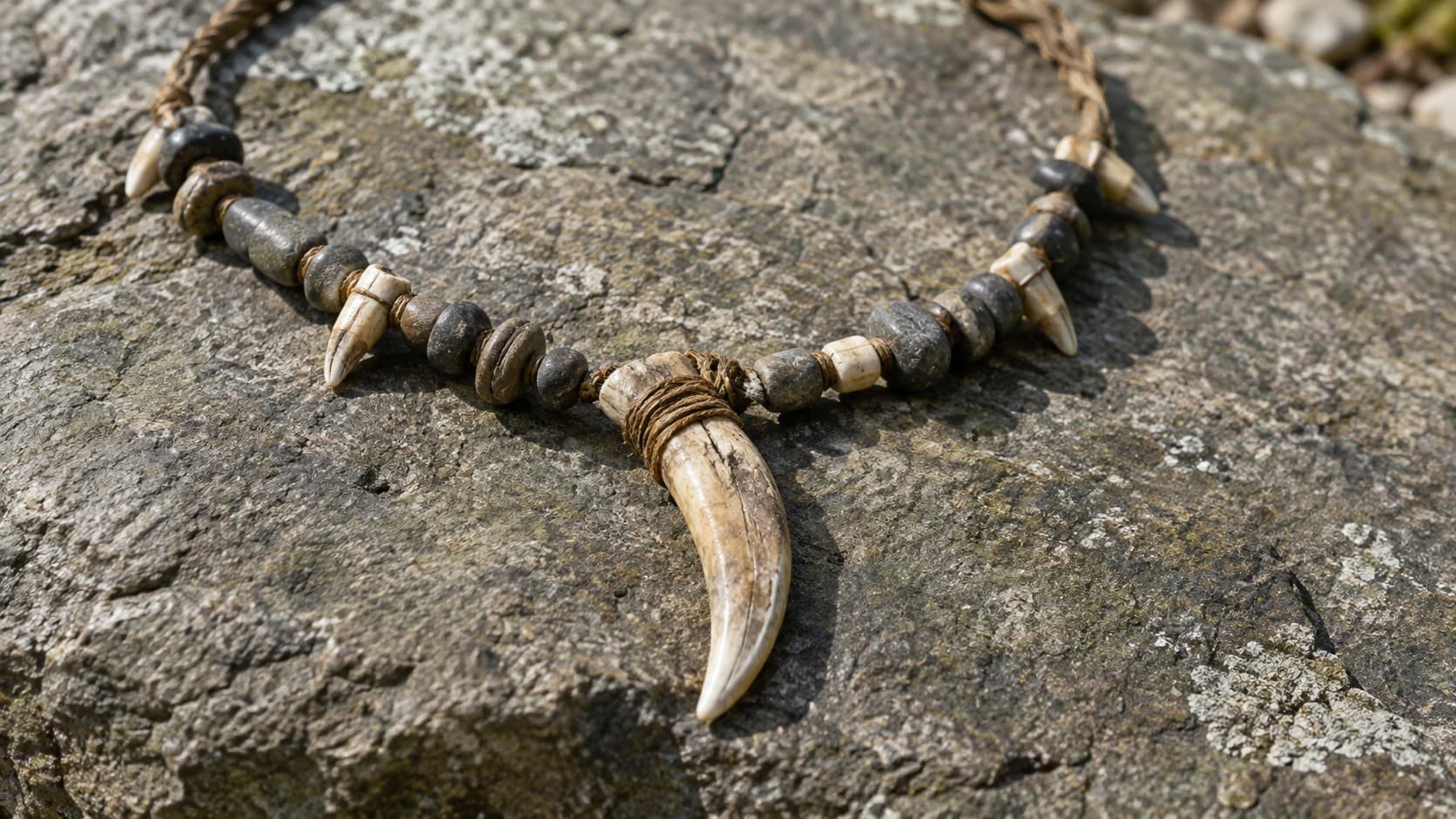
- What materials did early humans use for jewelry? The earliest jewelry makers used whatever attractive and workable materials they could find locally, including shells, animal teeth, bones, stones, seeds, and later metals as technology developed. Shells were popular because they were naturally shaped, had interesting colors and patterns, and were relatively easy to pierce and shape. Animal materials like teeth, claws, and carved bone provided both decorative and symbolic elements, often representing successful hunts or spiritual beliefs about animal powers.
- Did men wear jewelry in ancient times? Historical evidence shows that men wore jewelry extensively in most ancient cultures, often more elaborately than women in societies where male status display was important. Egyptian pharaohs, Mesopotamian kings, Celtic warriors, and Roman emperors all wore significant amounts of jewelry as symbols of power and divine connection. Many cultures had specific types of jewelry reserved for men, such as warrior torcs, ceremonial weapons, and status rings that indicated rank or profession.
- How did ancient people learn jewelry making skills? Jewelry making knowledge was typically passed down through family workshops or craft guilds, with young apprentices learning through years of observation and practice under master craftsmen. Archaeological evidence from workshop sites shows areas designated for different skill levels, suggesting formal training systems. The consistency of techniques across different sites indicates that standardized teaching methods existed, though the specific knowledge was closely guarded by craftsmen who depended on their skills for livelihood.
- Were ancient jewelry techniques really as good as modern ones? In many cases, ancient techniques achieved results that modern methods struggle to match, particularly in areas like granulation, repoussé work, and certain types of stone carving. Ancient craftsmen had time to perfect their skills over entire lifetimes and often worked with purer materials than are commonly available today. However, modern techniques excel in precision, consistency, and the ability to work with synthetic materials, creating different strengths rather than simply being better or worse than historical methods.
These questions and answers reveal how jewelry connects us to our ancestors through shared human experiences of creativity, status, spirituality, and the desire for beauty. The continuity of certain practices and the evolution of others show both how much and how little human nature has changed over thousands of years of technological and social development.
Conclusion
The story of jewelry’s invention reveals that no single person created this art form, but rather it emerged from fundamental human impulses that transcended geography, culture, and time. From the first perforated shells in Moroccan caves 150,000 years ago to the sophisticated techniques of ancient Mesopotamians, Egyptians, and Chinese craftsmen, jewelry making represents one of humanity’s longest continuous creative traditions. Each civilization built upon previous knowledge while adding their own innovations, creating a rich tapestry of techniques and meanings that connected distant peoples through trade, migration, and cultural exchange. The archaeological evidence shows that the drive to create and wear beautiful objects appeared alongside the development of symbolic thinking, making jewelry not just decoration but evidence of humanity’s cognitive evolution.
Archaeological discoveries continue to push back the timeline of human creativity and sophistication, revealing that our ancestors were far more artistically capable than previously imagined. The techniques developed by ancient craftsmen – from Egyptian goldworking to Roman cameo carving to Chinese jade polishing – remain so effective that modern jewelers still study and recreate them thousands of years later. The fact that similar innovations appeared independently across different continents demonstrates that jewelry making represents something deeper than learned behavior; it reflects intrinsic human needs for protection, status, spiritual connection, and aesthetic expression that remain constant across cultures and centuries.
Today’s jewelry industry stands on foundations laid by countless generations of craftsmen who solved technical problems, developed artistic standards, and created cultural meanings that continue to influence contemporary design. The marriage of ancient wisdom with modern technology has created unprecedented opportunities for both artistic expression and widespread accessibility, allowing people worldwide to participate in humanity’s oldest decorative tradition. Whether made from simple shells or precious metals, jewelry continues to serve the same fundamental purposes it has for 150,000 years – helping people express identity, mark important moments, and satisfy the eternal human desire to transform ordinary materials into objects of beauty and meaning.