Cartier watches represent the epitome of luxury timekeeping, where centuries of French elegance merge with Swiss precision to create some of the world’s most coveted timepieces. Since 1847, this legendary maison has crafted watches that transcend mere functionality, becoming cultural icons worn by royalty, celebrities, and discerning collectors who appreciate exceptional artistry. From the revolutionary Santos that pioneered men’s wristwatches to the architectural Tank that redefined luxury design, Cartier continues to set standards in haute horlogerie while maintaining accessibility across multiple price points. Understanding Cartier’s diverse offerings, investment potential, and ownership considerations ensures you make an informed decision that brings decades of satisfaction from these remarkable expressions of horological excellence.
What Makes Cartier Watches Special and Unique
Cartier watches hold an extraordinary position in the luxury timepiece market, distinguished by their revolutionary approach to watchmaking that began in the early 20th century. Unlike many brands that started as pure horologists, Cartier brought the refined sensibilities of a jeweler to the world of timekeeping, creating watches that function as both precision instruments and wearable art. This unique heritage has established Cartier as a maison where technical excellence meets artistic vision in ways that few other watchmakers can achieve.
- Cartier serves as the official timepiece supplier to multiple royal houses worldwide, including English, Spanish, Greek, Russian, Romanian, Belgian, Albanian, and Siamese monarchies, among others in Portugal, Serbia, Egypt, and Monaco. This unprecedented royal patronage earned the brand its legendary status as “The King of Jewelers and the Jeweler of Kings,” a title bestowed by King Edward VII himself, cementing Cartier’s position at the pinnacle of luxury craftsmanship.
- The brand revolutionized wristwatch design by introducing the world’s first practical men’s wristwatch in 1904 when the pocket watch dominated timekeeping. The Santos watch solved aviator Alberto Santos-Dumont’s need to check time while flying, featuring a flat design with a distinctive square bezel that made wrist-wearing both practical and elegant, fundamentally changing how society viewed and wore timepieces.
- Cartier’s Tank watch transformed military inspiration into timeless elegance when Louis Cartier observed tanks rolling past during World War I, creating the iconic rectangular design that has attracted celebrities like Andy Warhol, Jackie Kennedy, Elton John, and Yves Saint Laurent. This design philosophy of finding beauty in unexpected sources demonstrates Cartier’s unique ability to transform functional elements into luxury statements.
- The maison pioneered platinum use in jewelry and watchmaking, developing techniques that allowed for nearly invisible settings where diamonds and gemstones appear to float. This innovation created the signature Cartier aesthetic of understated luxury where the beauty of materials takes precedence over ostentatious display, establishing new standards for sophisticated elegance.
- Every Cartier timepiece follows “The Culture of Design” philosophy built on four principles: shape, line, details, and proportions. This methodical approach ensures each watch begins with a distinctive silhouette, eliminates superfluous elements, incorporates meaningful precious details, and maintains perfect proportional balance, resulting in instantly recognizable timepieces that transcend fashion trends.
- The brand maintains world-class manufacturing facilities in La Chaux-de-Fonds, Switzerland, where skilled artisans perform meticulous hand-finishing on movements and cases using techniques like polishing, engraving, and guilloché. Advanced quality control processes ensure every component meets exacting standards, while innovations in materials like silicon components and high-frequency movements demonstrate ongoing technical advancement.
Cartier’s exceptional status stems from successfully merging jewelry artistry with horological precision, creating timepieces that serve as both functional instruments and cultural symbols. The brand’s commitment to innovation without sacrificing elegance, combined with nearly two centuries of craftsmanship evolution, ensures that Cartier watches represent the ultimate expression of luxury timekeeping where heritage meets contemporary excellence in every piece.
Top 10 Best Cartier Watches
Cartier’s watch collection represents over a century of design innovation, with each model telling a unique story of horological excellence and artistic vision. These ten timepieces showcase the maison’s mastery across different styles, from pioneering aviation watches to avant-garde artistic statements. Each model has earned its place through distinctive design elements, historical significance, and enduring appeal that transcends fashion trends.
- Cartier Tank stands as perhaps the most iconic rectangular watch ever created, with its clean architectural lines inspired by World War I military tanks that Louis Cartier observed rolling past his window in 1917. Available in multiple variations including Tank Louis Cartier, Tank Française, Tank Américaine, and Tank Must, this collection offers sizes ranging from delicate 22mm models to substantial 41mm versions. Famous wearers include Jackie Kennedy, Andy Warhol, Princess Diana, and Muhammad Ali, cementing its status as the ultimate dress watch that seamlessly transitions from boardroom to ballroom with effortless elegance.
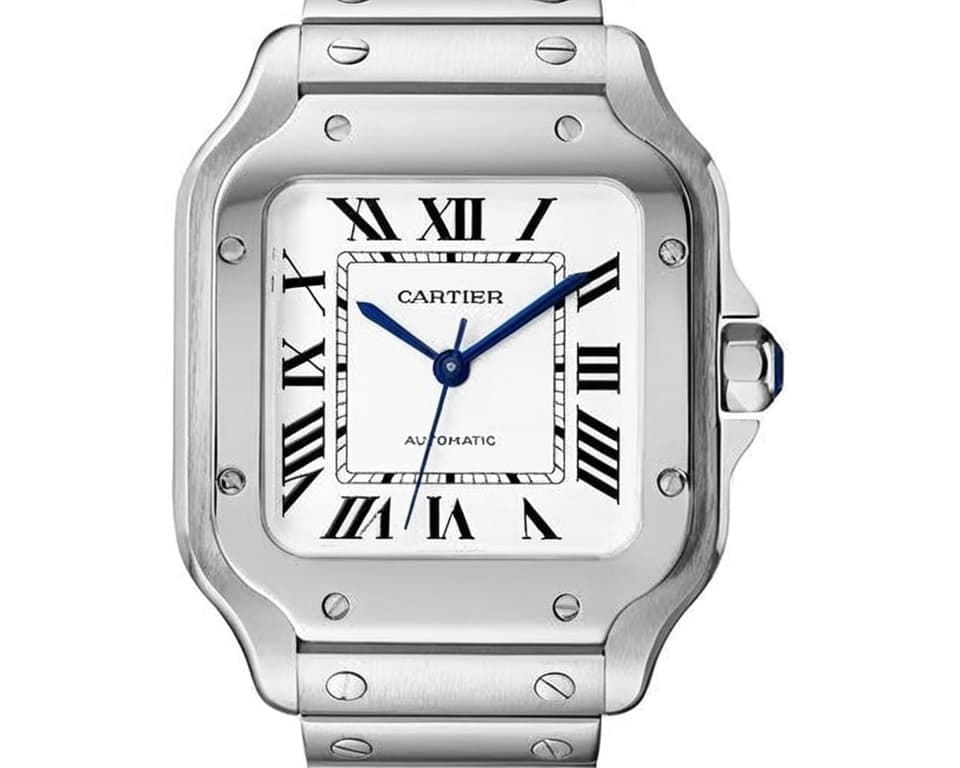
- Santos de Cartier revolutionized timekeeping as the world’s first practical men’s wristwatch, created in 1904 for Brazilian aviator Alberto Santos-Dumont who needed hands-free time checking while flying. The distinctive square case with exposed screws, integrated bracelet system, and geometric dial established the template for modern luxury sports watches. Current models feature the innovative QuickSwitch interchangeable bracelet system, automatic movements, and water resistance, making it equally suitable for aviation enthusiasts and urban professionals seeking robust elegance.
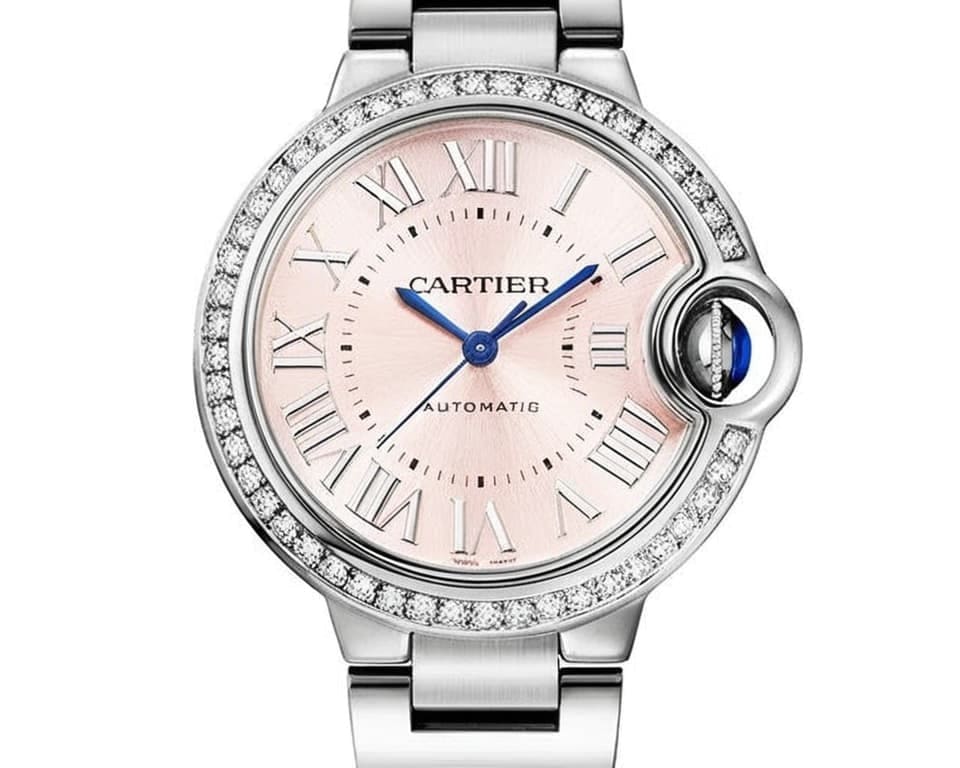
- Ballon Bleu de Cartier introduced a fresh interpretation of round watchmaking when it debuted in 2007, featuring a unique convex case with softened curves and the signature blue sapphire cabochon crown protected within a rounded crown guard. Available in sizes from 28mm to 42mm, this collection offers both quartz and mechanical movements, with dial options including classic white, sophisticated blue, and elegant pink variants. The guilloché center dial, sword-shaped hands, and Roman numerals create a contemporary timepiece that honors Cartier traditions while appealing to modern sensibilities.
- Panthère de Cartier embodies the maison’s iconic panther motif in horological form, first appearing in 1983 with its sleek square case and sophisticated integrated bracelet featuring exposed screws. The collection showcases Cartier’s jewelry expertise through its refined gold construction, precise link articulation, and feminine proportions that wrap gracefully around the wrist. Available in yellow gold, white gold, and two-tone configurations, often with diamond accents, the Panthère represents the perfect fusion of timepiece and jewelry for those who appreciate understated luxury with feline grace.
- Cartier Roadster drew inspiration from 1950s vintage automobiles, launching in 2001 with a distinctive tonneau-shaped case that evoked classic sports car contours and speedometer-inspired dials. This discontinued collection featured robust construction with 100-meter water resistance, screw-down crowns, and case sizes ranging from 30mm to 47mm across various dial colors including white, black, silver, and brown. Though production ended in 2012, the Roadster remains highly sought after by collectors who appreciate its unique automotive aesthetic and investment potential in the pre-owned market.
- Pasha de Cartier originated from a 1930s commission for the Pasha of Marrakech, featuring a distinctive round case with Arabic numerals, square minute track, and the signature crown cap attached by a chain for water protection. Designed by Gerald Genta, the same master behind the Royal Oak and Nautilus, the modern Pasha collection offers sizes from 35mm to 42mm with both time-only and chronograph complications. Some models feature the removable protective grille reminiscent of the original 1930s piece, appealing to those who value sporty functionality with exotic heritage.
- Cartier Crash represents pure artistic audacity, born in 1967 during London’s swinging sixties when a damaged Baignoire watch inspired this surreal melted timepiece design. Limited production runs and extreme rarity make authentic Crash watches among the most collectible Cartier pieces, with recent examples selling for hundreds of thousands at auction. The asymmetrical case, available in white and rose gold with or without diamonds, appeals to collectors who appreciate avant-garde design and the intersection of timekeeping with contemporary art movements.
- Drive de Cartier launched in 2016 as Cartier’s modern interpretation of automotive elegance, featuring a cushion-shaped case with subtle angles that reference vintage car dashboards and gauges. This contemporary collection bridges formal and casual wear with its 39mm size, automatic movement, and sophisticated dial featuring sword-shaped hands, sapphire cabochon crown, and guilloché center pattern. The Drive appeals to professionals seeking a distinctive dress watch that stands apart from traditional round or rectangular designs while maintaining versatility for various occasions.
- Cartier Tortue takes its name and inspiration from the French word for tortoise, featuring a unique curved case shape that has graced Cartier’s catalog since 1912. This distinctive tonneau design offers a vintage aesthetic that differs dramatically from the brand’s more famous rectangular and square models, available in precious metals with various complications including time-only, chronograph, and perpetual calendar functions. The Tortue appeals to connoisseurs who appreciate Cartier’s lesser-known shaped watches and desire something truly different from mainstream luxury timepieces.
- Ronde de Cartier presents the maison’s take on classical round watchmaking, featuring clean circular cases with minimal decoration that emphasize pure proportional harmony. Available in multiple sizes and materials from steel to precious metals, the Ronde collection offers both quartz and automatic movements with dial variations including guilloche patterns, Roman numerals, and blue sword hands. This understated collection appeals to those seeking timeless elegance without the distinctive shaped cases that define most other Cartier models, proving the brand’s versatility beyond its signature geometric designs.
These ten models represent the breadth and depth of Cartier’s watchmaking philosophy, from revolutionary firsts like the Santos to artistic statements like the Crash. Each timepiece demonstrates how the maison consistently transforms inspiration from unexpected sources into horological masterpieces that define luxury watchmaking standards. Whether seeking historical significance, investment potential, or pure aesthetic pleasure, these models offer something exceptional for every sophisticated timepiece enthusiast.
Best Cartier Watch for Your Lifestyle and Budget
Selecting the perfect Cartier watch requires thoughtful consideration of multiple factors that extend beyond simple aesthetic preference. The right timepiece should harmonize with your lifestyle, personal style, and practical needs while representing a sound investment in luxury craftsmanship. Understanding how different Cartier collections serve various purposes and occasions will guide you toward a watch that brings lasting satisfaction and functionality to your daily life.
- Define Your Lifestyle and Usage Patterns - Consider whether you need a watch for daily wear, special occasions, or specific activities like business meetings or leisure pursuits. Active lifestyles suit robust models like the Santos with 100-meter water resistance and durable construction, while formal occasions call for elegant dress watches like the Tank or Ronde collections. Determine if you prefer automatic movements that wind through wrist motion during regular wear, or quartz movements for occasional use that maintain accuracy without daily wearing.
- Establish Your Personal Style Identity - Cartier offers timepieces ranging from understated classical elegance to bold statement pieces, so identify whether you gravitate toward minimalist designs or prefer watches that showcase personality and luxury. Traditional rectangular models like the Tank appeal to those who appreciate architectural lines and timeless sophistication, while contemporary choices like the Ballon Bleu offer modern curves with classic Cartier elements. Consider whether you prefer the distinctive shaped cases that define Cartier’s reputation or would feel more comfortable with conventional round designs.
- Determine Appropriate Size and Proportions - Cartier collections span an impressive size range from delicate 22mm ladies’ models to substantial 47mm men’s pieces, ensuring proper fit for various wrist sizes and style preferences. Smaller cases between 28-35mm work well for formal occasions and petite wrists, while larger 38-42mm sizes provide commanding presence and legibility for active wear. Remember that Cartier’s shaped watches often wear larger than their measurements suggest due to distinctive case geometries that extend beyond traditional round proportions.
- Select Materials Based on Durability and Aesthetics - Stainless steel models offer exceptional durability and value while maintaining luxury appearance, making them ideal for daily wear and active lifestyles. Gold options in yellow, white, or rose provide traditional luxury appeal and excellent long-term value retention, with different gold tones complementing various skin tones and jewelry preferences. Platinum represents the ultimate in precious metal luxury with superior durability and rarity, while two-tone combinations offer versatility for those who wear both gold and steel accessories.
- Consider Movement Type and Complications - Quartz movements provide maintenance-free accuracy and thin case profiles perfect for dress watches and occasional wear, while automatic movements offer traditional mechanical charm and the satisfaction of owning precision engineering. Simple time-only models emphasize pure design and reliability, whereas complications like date displays, dual time zones, or chronographs add functionality for specific needs. Remember that Cartier’s reputation rests on design excellence rather than complex complications, so simpler models often represent the brand’s purest expression.
- Evaluate New Versus Vintage Options - Modern Cartier watches offer contemporary materials, improved water resistance, and current warranty coverage while maintaining the brand’s classic design language. Vintage models provide historical significance, unique character, and potential collectibility, though they require more careful handling and may need restoration or service. Pre-owned options from authorized dealers combine authenticity assurance with potential cost savings, while discontinued models like the Roadster offer exclusivity unavailable in current production.
- Plan Your Investment Budget Wisely - Entry-level Cartier models begin around $2,500 for quartz Tank Must pieces, providing genuine luxury at accessible prices without compromising the brand’s prestigious design heritage. Mid-range selections between $5,000-$15,000 include automatic movements and precious metal cases, offering excellent value for those seeking substantial luxury watches. High-end models exceeding $15,000 feature complications, gem-setting, or limited production runs that appeal to serious collectors and connoisseurs who prioritize exclusivity and investment potential.
Choosing the right Cartier watch ultimately involves balancing emotional appeal with practical considerations, ensuring your selection serves both as a functional timepiece and a source of personal satisfaction. The brand’s diverse collection means there’s likely a perfect match for your specific needs, whether you seek a daily companion, special occasion piece, or investment-grade collectible. Take time to experience different models in person when possible, as Cartier’s unique design language and exceptional finishing quality become most apparent through direct interaction with these remarkable timepieces.
How Much Do Cartier Watches Cost?
Understanding Cartier’s pricing structure helps buyers make informed decisions across the brand’s extensive range, from accessible luxury entry points to exclusive haute horlogerie masterpieces. The maison strategically positions different collections to serve various market segments, ensuring that Cartier’s legendary design excellence remains attainable while maintaining exclusivity for its most precious creations. Current market conditions and material costs influence specific pricing, but these ranges provide reliable guidance for planning your Cartier purchase.
- Entry-Level Options ($2,500-$5,000) - The Tank Must collection represents Cartier’s most accessible luxury timepieces, with small quartz models starting around $2,920 and large versions reaching $3,100, offering genuine Cartier design heritage at attainable prices. These models feature the iconic Tank aesthetic with Roman numerals, blue cabochon crowns, and geometric cases, though they utilize quartz movements and steel construction to achieve accessible pricing. The Must line includes contemporary colorways like green, burgundy, and navy that appeal to younger buyers, while SolarBeat models with 16-year battery life provide modern convenience within traditional Cartier styling.
- Mid-Range Selections ($5,000-$15,000) - This segment encompasses automatic Tank variants, two-tone Santos models, and steel Ballon Bleu watches that balance luxury materials with reasonable pricing. Tank Française models begin around $3,500 for steel versions and reach $7,000 with diamond accents, while Tank Américaine pieces range from $6,500 to $11,500 depending on materials and movements. Santos de Cartier automatic models in steel typically cost $6,000-$8,000, offering the QuickSwitch bracelet system and robust 100-meter water resistance alongside the collection’s pioneering aviation heritage.
- Premium Luxury Range ($15,000-$30,000) - Gold versions of core collections occupy this tier, featuring precious metal cases with automatic movements and sophisticated complications like dual time zones or enhanced water resistance. Tank Louis Cartier models in 18k gold command $15,000-$25,000, representing the refined elegance that made this collection famous among royalty and celebrities. Santos models in gold or two-tone configurations offer similar pricing, while larger complications like chronographs in the Santos or Ballon Bleu collections approach the upper end of this range.
- High-End Collectibles ($30,000-$75,000) - Limited editions, gem-set models, and platinum timepieces define this exclusive segment where Cartier’s jewelry expertise merges with horological mastery. Tank Cintrée limited editions in gold or platinum range from $20,000 to $40,000, while diamond-encrusted or skeleton dial variants reach $30,000-$75,000 depending on gem quality and movement complexity. Vintage Tank models from the pre-1970s era, particularly well-preserved examples with original papers, command $15,000-$50,000 based on rarity and condition.
- Ultra-Luxury Masterpieces ($75,000+) - Haute horlogerie complications, exceptional gem-setting, and historically significant pieces occupy Cartier’s pinnacle pricing tier. The Crash collection, with its avant-garde melted design and extremely limited production, achieves six-figure prices at auction, with 1990s examples selling for over $225,000 and original 1967 models exceeding $1 million. High jewelry watches featuring substantial diamonds, colored gemstones, or innovative complications like tourbillons showcase Cartier’s position as both master jeweler and accomplished horologist.
- Market Performance and Value Retention - Cartier watches generally retain 70-90% of their original retail value, with gold models and limited editions performing strongest in the resale market. The Tank collection shows particularly robust value retention, with vintage pieces appreciating 15-25% annually and some models delivering 10x returns over 40-50 year periods. Modern models like the Ballon Bleu maintain 70-85% of retail value for steel versions and up to 90% for gold variants, while discontinued collections like the Roadster command premium prices due to their unavailability.
- Investment Considerations by Collection - The Tank represents Cartier’s most stable investment option, with consistent demand across generations and strong auction performance for vintage examples. Santos models offer excellent entry points for new collectors while maintaining solid resale values, particularly for gold variants and special editions. The Crash collection provides the highest appreciation potential but requires significant initial investment and carries higher risk due to extreme market volatility typical of artistic avant-garde pieces.
- Factors Affecting Pricing - Materials significantly impact cost, with stainless steel providing affordability, gold offering traditional luxury appeal, and platinum commanding premium prices for its rarity and durability. Movement type influences value, as automatic calibers cost more than quartz but typically retain value better over time. Complications like chronographs, dual time zones, or moon phases add functionality and exclusivity while increasing both initial cost and long-term collectibility potential.
Cartier’s pricing strategy reflects the brand’s commitment to accessible luxury across multiple tiers while maintaining exclusivity for its most exceptional pieces. Whether seeking an entry-level luxury watch or a significant horological investment, Cartier offers options that deliver the maison’s legendary design excellence and craftsmanship quality. Understanding these price segments helps buyers select timepieces that align with both their budgets and long-term satisfaction goals while appreciating the value proposition each tier represents within luxury watchmaking.
Best Places to Buy Cartier Watches
Choosing the right source for purchasing a Cartier watch significantly impacts your ownership experience, warranty coverage, and long-term satisfaction. The luxury watch market offers several distinct purchasing channels, each with unique advantages and considerations that buyers should understand before making this significant investment. From official boutiques to gray market dealers, understanding these options helps ensure you receive an authentic timepiece that meets your expectations and provides appropriate protection.
- Cartier Boutiques and Official Stores - Cartier’s flagship boutiques in major cities like New York, Paris, and London provide the premium buying experience with access to the complete current collection, expert guidance from trained sales associates, and full manufacturer warranty coverage. These locations offer exclusive services including personalization, custom engraving, and immediate access to limited editions or special releases. While boutiques typically maintain firm pricing without negotiation, they provide unmatched authenticity assurance, comprehensive after-sales service, and the prestige of purchasing directly from the maison.
- Authorized Dealers and Jewelry Stores - Established jewelry retailers and high-end department stores provide authorized Cartier sales with legitimate warranties and service support. These dealers often offer more flexibility in pricing negotiations, with discounts ranging from 10-15% depending on the model and your relationship with the store. Authorized dealers can match competitive pricing, provide tax-free shipping to certain states, and offer additional perks like extended financing or gift cards with substantial purchases.
- Gray Market Dealers - These legitimate but unauthorized sellers offer genuine Cartier watches at significant discounts, typically 20-30% below retail prices, by sourcing timepieces from authorized dealers’ excess inventory or international markets. Gray market purchases provide authentic watches with original components but come with dealer warranties rather than manufacturer coverage, and serial numbers may be removed to protect authorized dealer identities. While legal and often reliable, these transactions require careful vetting of the seller’s reputation and understanding that Cartier may refuse warranty service on gray market pieces.
- Certified Pre-Owned Specialists - Reputable pre-owned luxury watch dealers offer authenticated vintage and contemporary Cartier models with condition guarantees and dealer warranties. These sources provide access to discontinued models like the Roadster, vintage pieces with investment potential, and current production watches at reduced prices. Professional authentication processes, detailed condition reports, and return policies make pre-owned specialists attractive for buyers seeking specific models or value-conscious luxury purchases.
- Online Marketplaces and E-Commerce - While Cartier maintains official e-commerce presence in select markets, most online sales occur through authorized dealer websites or established luxury retailers’ digital platforms. Reputable online sources offer convenience, competitive pricing, and access to detailed specifications and imagery, though buyers sacrifice the tactile experience of examining the watch in person. Exercise extreme caution with general marketplaces, where counterfeit risks increase significantly despite potential bargain pricing.
- Auction Houses and Estate Sales - Prestigious auction houses and specialized watch auctions provide access to rare vintage Cartier pieces, limited editions, and collectible models that appreciate significantly over time. These venues offer expert authentication, detailed provenance documentation, and the excitement of competitive bidding, though final prices may exceed retail depending on rarity and condition. Estate sales and local auctions occasionally yield remarkable discoveries, but require extensive knowledge to identify authentic pieces and assess fair value.
- Authentication and Warranty Considerations - Regardless of purchase source, verify authenticity through examination of the 8-character serial number, case back engravings, movement quality, and accompanying documentation including certificates of authenticity and warranty cards. Genuine Cartier watches feature precise engravings, substantial weight from quality materials, and scratch-resistant sapphire crystal glass. Contact Cartier directly for serial number verification if any doubts arise, and be wary of prices significantly below market value, missing documentation, or altered serial numbers.
- Service and Support Implications - Purchase location affects long-term service accessibility, with authorized sources providing seamless warranty claims and official Cartier service center access. Gray market and pre-owned purchases may require independent watchmakers for service, though many third-party specialists handle Cartier maintenance competently. Consider registration with Cartier Care program to extend warranty coverage up to 8 years and maintain service eligibility regardless of purchase source.
- Investment and Resale Value Protection - Maintaining original packaging, documentation, and purchase receipts maximizes resale value and collector appeal for future transactions. Authorized dealer purchases with complete documentation typically achieve higher resale prices than gray market pieces, while rare or discontinued models from any legitimate source can appreciate significantly. Build relationships with reputable dealers for future purchases, trade-ins, or consignment opportunities that leverage their authentication expertise and established customer networks.
Selecting the appropriate purchase channel depends on your priorities regarding price, warranty coverage, model availability, and long-term service needs. While authorized sources provide maximum security and support, alternative channels offer compelling value propositions for informed buyers who understand the trade-offs involved. Regardless of your chosen source, prioritize authenticity verification and documentation preservation to protect your investment in these exceptional timepieces that represent both horological artistry and enduring luxury heritage.
How to Care for Cartier Watch
Proper maintenance of your Cartier watch ensures decades of reliable performance while preserving both its aesthetic beauty and investment value. These exceptional timepieces require thoughtful daily care combined with professional servicing to maintain the precision engineering and luxurious materials that define the Cartier legacy. Understanding proper care techniques protects your watch from premature wear, costly repairs, and diminished resale value while ensuring it remains a treasured possession for generations.
- Daily Care and Handling Practices - Clean your watch regularly with a soft, dry cloth to remove oils, dust, and residue that accumulate from daily wear, paying special attention to crevices around the case, crown, and bracelet links where grime tends to collect. Avoid exposing your timepiece to extreme temperatures, direct sunlight, strong magnetic fields from smartphones and computers, and harsh chemicals including cleaning agents, perfumes, and cosmetics that can damage finishes or seals. Remove your watch before sleeping, exercising, or engaging in activities that might subject it to impacts, as even luxury timepieces can suffer damage from sudden shocks or pressure.
- Water Resistance and Moisture Protection - Ensure the crown is completely pushed in and screwed down before any water contact, as even water-resistant models lose protection when crowns are pulled out for time setting. Never operate chronograph pushers, crowns, or other functions while the watch is submerged, and immediately rinse with fresh water after swimming to neutralize harmful effects of chlorine or salt water. While many Cartier models offer water resistance, leather straps should avoid water contact entirely as moisture accelerates deterioration and weakens the material, requiring earlier replacement.
- Magnetic Field Avoidance - Keep your watch away from strong magnetic sources including smartphones, computers, speakers, magnetic handbag clasps, and airport metal detectors, which can magnetize the movement and cause timekeeping irregularities. Test for magnetization by placing your watch near a compass - if the needle moves erratically, professional demagnetization is required to restore proper function. Mechanical movements are particularly susceptible to magnetic interference, which can cause the watch to run fast, slow, or stop entirely until professionally corrected.
- Proper Storage Techniques - Store your watch in a cool, dry location away from direct sunlight, extreme temperatures, and humidity that can damage delicate components and cause dial discoloration or material degradation. Use the original box, a dedicated watch box with individual compartments, or a watch roll to prevent scratches and impacts when not wearing your timepiece. For automatic watches, consider a watch winder to maintain movement lubrication and prevent the oils from settling, though manual winding once weekly suffices if a winder isn’t available.
- Strap and Bracelet Maintenance - Metal bracelets benefit from monthly deep cleaning using warm water and mild dish soap, gently scrubbing with a soft-bristled brush to remove accumulated dirt and oils before thoroughly rinsing and drying. Leather straps require careful handling to avoid water damage, with cleaning accomplished using slightly damp cloths and immediate drying, while replacement becomes necessary every 18-24 months depending on wear frequency and environmental conditions. Rubber straps offer greater durability and water resistance but should be cleaned with soapy water while avoiding contact with cosmetic products that can cause premature aging.
- Professional Servicing Schedule - Service your mechanical Cartier watch every 3-6 years to maintain optimal performance, as movement oils gradually dry out and cause increased friction that affects accuracy and component longevity. Complete servicing involves total disassembly, cleaning, lubrication, component inspection, replacement of worn parts, and reassembly by certified Cartier technicians who ensure factory specifications are maintained. Quartz models require battery replacement every 2-3 years, with service including gasket replacement and water resistance testing to maintain protection against moisture infiltration.
- Crown and Function Operation - Avoid setting time or date between 8pm and 2am when date change mechanisms are engaged, as forcing adjustments during this period can damage gear trains and require expensive repairs. Never force the crown when winding reaches full tension, and avoid over-winding which can stress the mainspring and affect power reserve performance. For watches with complications like perpetual calendars or minute repeaters, never adjust settings while these functions are operating to prevent internal damage to delicate mechanisms.
- Professional vs. DIY Maintenance - Entrust all significant maintenance, repairs, and battery replacements to authorized Cartier service centers or certified watchmakers with luxury timepiece expertise who have access to genuine parts and proper tools. While basic cleaning can be performed at home, avoid disassembling your watch or attempting repairs that could void warranties, damage components, or compromise water resistance seals. Professional servicing maintains authenticity, preserves value, and ensures your watch receives the specialized care these sophisticated timepieces require.
- Signs Requiring Immediate Attention - Seek professional service immediately if your watch gains or loses significant time, stops functioning, develops moisture under the crystal, or shows visible damage to the case, crown, or crystal. Unusual sounds, difficulty winding, or resistance when setting time indicate internal problems that worsen without prompt attention, potentially causing more extensive and expensive damage to movement components.
Diligent care of your Cartier watch represents an investment in both its longevity and your enjoyment of this exceptional timepiece. Following these guidelines ensures your watch maintains its precision, beauty, and value while providing reliable service for decades. Remember that proper maintenance prevents problems rather than merely fixing them, making consistent care practices essential for preserving these remarkable expressions of horological artistry and luxury craftsmanship.
Are Cartier Watches Good Investments?
Cartier watches represent a compelling investment opportunity within the luxury timepiece market, combining exceptional craftsmanship with strong brand heritage that supports long-term value retention and appreciation potential. While not achieving the explosive growth rates seen with certain sports models from other manufacturers, Cartier timepieces offer steady, reliable investment performance backed by over 175 years of horological excellence and cultural significance. Understanding which models perform best and the factors driving appreciation helps investors make informed decisions about adding these sophisticated timepieces to their portfolios.
- Historical Performance and Market Position - Cartier watches generally retain 70-90% of their retail value, with vintage and limited edition models often exceeding original prices significantly over time. The brand ranks as the second-largest luxury watch manufacturer globally, providing market stability and consistent demand that supports investment viability. Examples include vintage Tank models from the 1970s originally retailing around $1,000 now commanding $10,000-$20,000, while rare Crash watches from the 1960s achieve $100,000+ at auction, demonstrating substantial appreciation potential for the right pieces.
- Top Performing Investment Models - The Tank collection leads Cartier’s investment performance, with vintage pieces showing 15-25% annual appreciation and some models delivering 10x returns over 40-50 year periods. The Santos collection, particularly gold versions and limited editions like the Santos Galbée, has shown steady growth from under $3,000 to $5,000-$7,500 range, reflecting growing vintage appeal among collectors. The Crash represents the highest risk/reward investment, with recent examples selling for $225,000-$237,000, while original 1967 models have exceeded $1 million at prestigious auctions.
- Material and Construction Impact - Solid gold models consistently outperform steel versions in investment appreciation, as precious metal content provides intrinsic value that supports pricing floors during market fluctuations. Vintage pieces often contain more gold than modern equivalents, as contemporary models frequently use steel casebacks rather than solid gold construction, making older examples more valuable to collectors. Diamond-set and gem-encrusted models command premium prices, particularly limited editions and high jewelry pieces that showcase Cartier’s dual expertise in watchmaking and jewelry craftsmanship.
- Rarity and Exclusivity Factors - Limited production runs, discontinued models, and special editions drive the strongest appreciation, as scarcity creates competitive demand among collectors worldwide. The Roadster collection, discontinued in 2012, now commands premium prices due to unavailability, while models like the Panthère from the 1980s-1990s have gained significant collector interest. Provenance and celebrity connections enhance value dramatically, with pieces owned by notable figures or featured in significant cultural moments achieving auction premiums well above standard market rates.
- Market Trends and Collector Demand - Growing interest from younger collectors, particularly in Asia, has increased demand for iconic Cartier designs as symbols of sophistication and cultural achievement. The brand’s association with royalty, celebrities, and cultural icons creates emotional connections that transcend pure financial considerations, supporting long-term collector loyalty. Recent market data shows 39% increased interest in pre-owned luxury watches, with Cartier benefiting from this trend toward alternative investments and portfolio diversification strategies.
- Condition and Documentation Requirements - Investment-grade Cartier watches require excellent condition with minimal wear, original components, and complete documentation including boxes, papers, and certificates of authenticity. Professional servicing records and maintenance history significantly impact resale values, as collectors prioritize pieces with documented care and authentic parts. Original packaging, warranty cards, and purchase receipts can add 10-20% to resale values, while missing documentation or aftermarket modifications substantially reduce investment potential.
- Comparison to Other Luxury Brands - While Cartier may not match the aggressive appreciation rates of certain steel sports watches from other manufacturers, it offers more stable, predictable returns with lower volatility risk. The brand’s diverse collection provides multiple investment entry points from $2,500 entry-level pieces to six-figure haute horlogerie complications. Cartier’s strength lies in consistent demand across all market segments rather than explosive growth in specific niches, making it suitable for conservative luxury watch investors.
- Investment Strategy Considerations - Successful Cartier investment requires patience, as appreciation typically occurs over 5-10 year periods rather than immediate gains seen in speculative markets. Focus on iconic designs with proven track records rather than newer models whose long-term appeal remains unproven. Consider purchasing pre-owned pieces that have already absorbed initial depreciation, allowing investors to benefit from future appreciation without taking retail-to-resale value hits.
- Risk Factors and Market Volatility - Watch investments carry inherent risks including market fluctuations, changing collector preferences, and potential oversupply of certain models that can depress prices. Economic downturns can temporarily reduce luxury goods demand, though historical data shows watches recover faster than traditional investments. Condition deterioration, service needs, and storage requirements create ongoing costs that impact total returns on investment.
- Long-Term Outlook and Sustainability - Cartier’s commitment to heritage preservation, limited production philosophies, and continuous innovation supports long-term investment viability as the brand adapts to changing market conditions. The maison’s expansion into emerging markets and younger demographics provides growth opportunities while maintaining exclusivity through careful distribution control. Environmental and ethical considerations increasingly influence luxury purchases, with Cartier’s sustainability initiatives positioning the brand favorably for future-conscious investors.
Cartier watches offer sophisticated investors an opportunity to combine passion for exceptional timepieces with reasonable appreciation potential backed by one of the world’s most prestigious luxury brands. While requiring careful model selection and long-term commitment, these investments provide both tangible enjoyment and financial returns that reflect the enduring appeal of French elegance combined with Swiss precision. Success depends on understanding market dynamics, choosing proven models, maintaining proper documentation, and appreciating these remarkable timepieces as both mechanical marvels and cultural artifacts that transcend mere financial considerations.
Cartier Watch FAQ
Understanding common questions about Cartier watches helps potential buyers make informed decisions and current owners properly care for their timepieces. These answers address the most frequently raised concerns from both new enthusiasts and experienced collectors seeking clarity about this prestigious brand’s offerings, value propositions, and ownership experience.
Are Cartier watches worth the money?
Yes, Cartier watches justify their pricing through exceptional craftsmanship, premium materials like 18k gold and platinum, innovative design heritage spanning over 175 years, and strong value retention. The brand offers genuine luxury at multiple price points, from $2,500 entry-level models to haute horlogerie complications exceeding $100,000. Cartier’s reputation as “The King of Jewelers and the Jeweler of Kings” reflects consistent quality that has attracted royalty, celebrities, and discerning collectors for generations, making these timepieces worthwhile investments in both personal satisfaction and long-term value.
Which Cartier watch is best for beginners?
The Tank Must collection provides the ideal entry point, starting around $2,920 for steel quartz models that offer authentic Cartier design heritage including Roman numerals, blue cabochon crowns, and geometric cases. The Santos de Cartier in steel (approximately $6,000-$8,000) represents another excellent choice for newcomers, combining historical significance as the world’s first men’s wristwatch with modern features like the QuickSwitch bracelet system and robust construction. Both collections provide genuine Cartier luxury without requiring massive initial investments while maintaining strong resale values.
Do Cartier watches hold their value?
Cartier watches generally retain 70-90% of their retail value, with vintage and limited edition models often exceeding original prices significantly over time. The Tank collection demonstrates particularly strong performance, with vintage pieces showing 15-25% annual appreciation and some delivering 10x returns over 40-50 year periods. While not matching the explosive growth seen with certain sports models from other manufacturers, Cartier offers steady, reliable investment performance backed by consistent collector demand and cultural significance that transcends fashion trends.
How often should I service my Cartier watch?
Mechanical Cartier watches require complete servicing every 3-6 years to maintain optimal performance, as movement oils gradually dry out and affect accuracy. This involves total disassembly, cleaning, lubrication, component inspection, and reassembly by certified technicians who ensure factory specifications. Quartz models need battery replacement every 2-3 years, including gasket replacement and water resistance testing. Regular servicing prevents costly repairs while maintaining warranty coverage and preserving the watch’s investment value through proper maintenance documentation.
What’s the difference between quartz and mechanical Cartier watches?
Quartz Cartier watches offer maintenance-free accuracy, thin profiles perfect for dress occasions, and affordability in entry-level collections like the Tank Must. Mechanical movements provide traditional horological charm, the satisfaction of owning precision engineering, and typically better long-term value retention among collectors. Automatic movements wind through wrist motion during regular wear, while manual movements require daily winding but offer thinner cases. Choose quartz for convenience and lower cost, mechanical for traditional luxury appeal and investment potential.
Can I swim with my Cartier watch?
Water resistance varies significantly across Cartier models, with most dress watches offering minimal protection while sports models like the Santos provide 100-meter resistance suitable for swimming. Always ensure the crown is completely pushed in and screwed down before water contact, never operate pushers or crowns while submerged, and rinse with fresh water after swimming to neutralize chlorine or salt damage. Leather straps should avoid water entirely as moisture accelerates deterioration, while metal bracelets handle water exposure better with proper care.
Are there fake Cartier watches, and how can I avoid them?
Counterfeit Cartier watches are prevalent, but authentic pieces feature specific characteristics including 8-character serial numbers (6 numbers, 2 letters), precise engravings rather than etched markings, substantial weight from quality materials, and scratch-resistant sapphire crystal. Purchase only from authorized dealers, certified pre-owned specialists, or reputable auction houses that guarantee authenticity. Prices significantly below market value, missing documentation, altered serial numbers, or poor finishing quality indicate potential counterfeits that should be avoided.
What size Cartier watch should I choose?
Cartier offers sizes ranging from delicate 22mm ladies’ models to substantial 47mm men’s pieces, with most collections spanning 28-42mm to accommodate various wrist sizes and preferences. Consider that Cartier’s shaped watches often wear larger than measurements suggest due to distinctive case geometries extending beyond traditional round proportions. Try different sizes in person when possible, as comfort and visual proportion matter more than specific measurements. Smaller cases (28-35mm) suit formal occasions and petite wrists, while larger sizes (38-42mm) provide commanding presence for active wear.
Can I buy Cartier watches online safely?
Yes, but only from authorized dealers with legitimate e-commerce platforms or established luxury retailers with authentication guarantees and proper return policies. Avoid general marketplaces where counterfeit risks increase dramatically, and verify dealer authorization through Cartier’s official website. Reputable online sources offer detailed specifications, high-resolution imagery, and comprehensive warranties, though you sacrifice the tactile experience of examining watches in person. Always confirm return policies, warranty coverage, and authentication procedures before purchasing expensive timepieces online.
What makes Cartier different from other luxury watch brands?
Cartier uniquely combines jewelry expertise with horological mastery, creating timepieces that function as both precision instruments and wearable art through distinctive shaped cases that define luxury watch design. The brand’s royal patronage history, cultural significance among celebrities and style icons, and pioneering role in wristwatch development set it apart from pure horologists. Cartier’s “Culture of Design” philosophy emphasizing shape, line, details, and proportions creates instantly recognizable timepieces that transcend gender boundaries and fashion trends while maintaining broad appeal across different market segments.
These frequently asked questions address the primary concerns of Cartier watch enthusiasts while providing practical guidance for making informed purchasing decisions. Whether you’re considering your first luxury timepiece or adding to an established collection, understanding these fundamentals helps ensure your Cartier watch provides lasting satisfaction and appropriate value for your investment in this exceptional expression of French elegance and Swiss precision.
Conclusion
Cartier watches represent the pinnacle of luxury timekeeping, where French elegance meets Swiss precision in timepieces that transcend mere functionality to become cultural icons. From the revolutionary Santos that introduced the world to men’s wristwatches in 1904 to the architectural Tank that transformed military inspiration into timeless sophistication, each Cartier creation embodies over 175 years of design innovation and horological excellence. The brand’s unique position as both master jeweler and accomplished watchmaker ensures that every timepiece delivers not only reliable performance but also the refined aesthetic sensibility that has attracted royalty, celebrities, and discerning collectors for generations.
Understanding the diverse Cartier landscape—from accessible Tank Must models starting around $2,500 to exclusive haute horlogerie complications exceeding six figures—enables buyers to select timepieces that align with their style preferences, lifestyle needs, and investment goals. Whether choosing the sporty versatility of the Santos, the dress watch elegance of the Ballon Bleu, or the bold femininity of the Panthère, each collection offers distinct characteristics that serve different occasions while maintaining the signature Cartier DNA of exceptional craftsmanship and timeless design. Proper selection, authentication, care, and maintenance ensure these sophisticated timepieces provide decades of reliable service while preserving their significant investment value.
The enduring appeal of Cartier watches lies in their ability to combine practical timekeeping with artistic expression, creating objects that enrich daily life while serving as tangible connections to horological history and cultural heritage. As luxury accessories that retain value, conversation pieces that reflect personal style, and precision instruments that mark life’s important moments, Cartier watches offer multifaceted rewards that justify their premium positioning in the luxury market. For those seeking timepieces that embody the perfect synthesis of form and function, technical excellence and aesthetic beauty, Cartier continues to set the standard for what luxury watchmaking can achieve when guided by vision, craftsmanship, and an unwavering commitment to excellence.