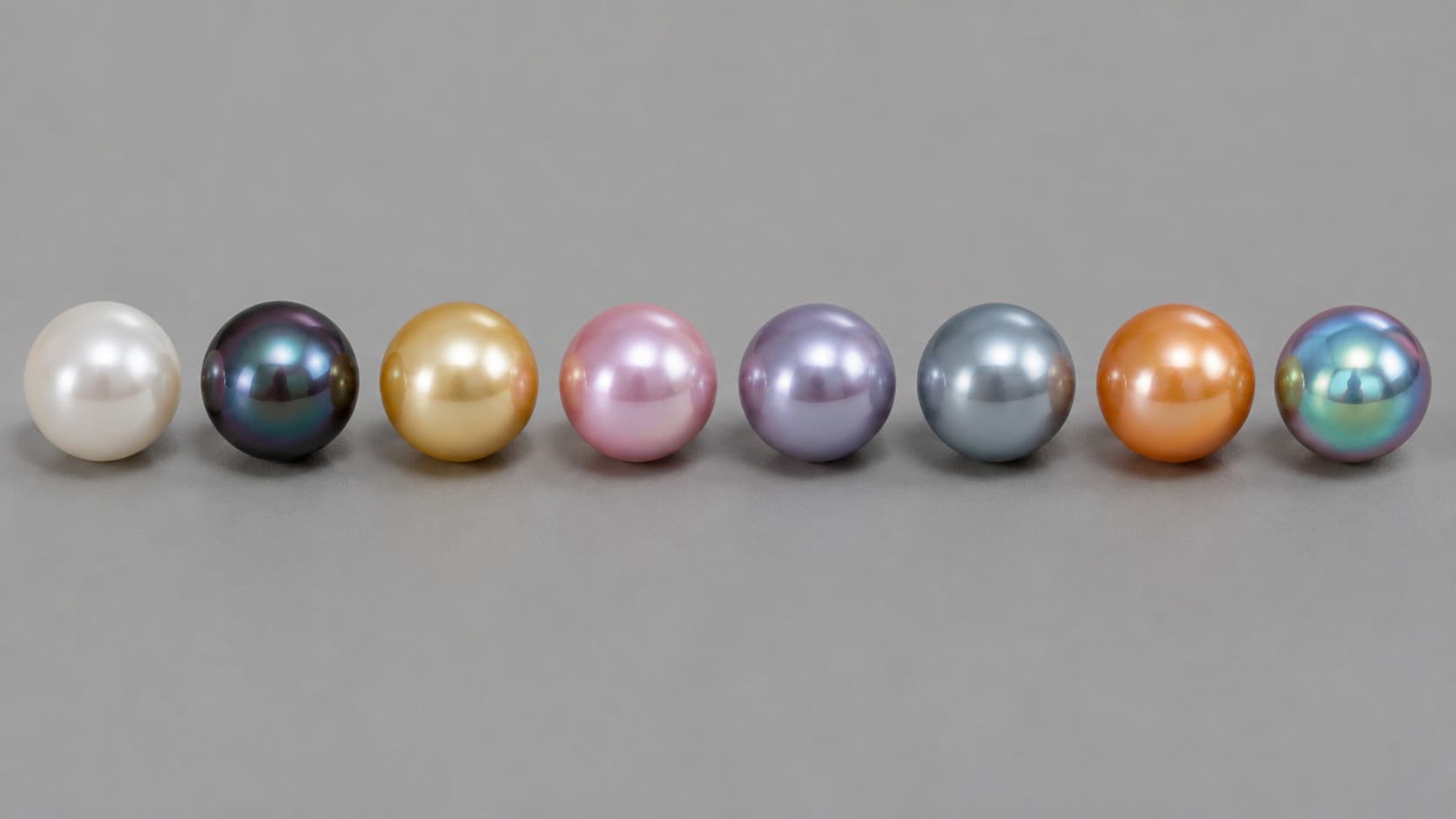
Most people picture a pearl as round and white, strung on a simple necklace. Nature had other plans. Pearls grow in black, gold, pink, blue, green, and even orange, and almost none of it requires a drop of dye. The color comes from the animal that made the pearl, the water it lived in, and the minerals it absorbed while building layer after layer of shell. Understanding what causes each color turns a pearl from a plain white bead into a small record of the creature and the ocean it came from.
Why Do Pearls Have Different Colors?
A pearl’s color comes from three things layered together: body color, overtone, and orient. Body color is the main, most obvious shade, like white, black, or gold. Overtone is a lighter, translucent tint that sits on top of the body color, such as a rosy pink glow over white. Orient is a shimmer of rainbow color that seems to move across the surface as the pearl tilts in the light.
These three layers come from real, physical causes. The type of oyster or mollusk sets the base color, because different species line their shells with different pigments. Water temperature, mineral content, and even the thickness of the nacre (the crystal layers that build up the pearl) all change how light bounces back off the surface. Thicker, more evenly stacked nacre reflects light in tighter, brighter bands, which is part of why luster and color always get discussed together.
A pearl’s color is less like paint and more like the layered mother-of-pearl inside its shell — built-up mineral layers, not a coating on top.
White and Cream Akoya Pearls
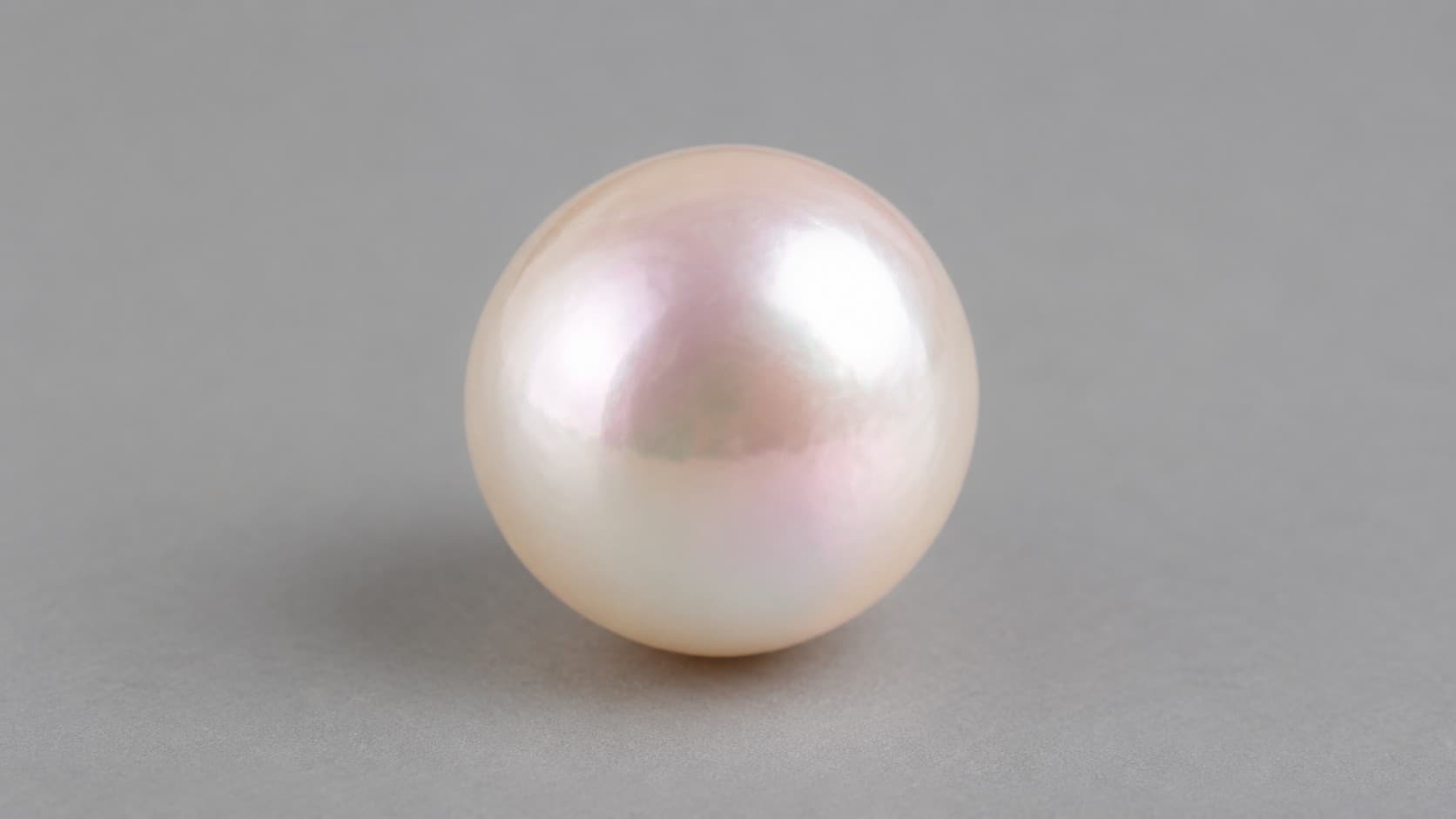
White with a hint of pink is the natural color of most Akoya pearls, the small, round, mirror-bright pearls used in classic strand necklaces. Akoya pearls grow inside the Pinctada fucata oyster, farmed mainly in the cool bays of Japan, along with China and Vietnam. Their natural range runs from bright white to cream, often carrying a soft rosé (pink) or silver overtone.
This white-with-pink combination became so popular over the last century that many people assume it’s the only “real” pearl color. It isn’t. It’s simply the color one specific oyster species tends to produce, and it happens to match what jewelry buyers wanted for decades. Akoya pearls are prized for having the sharpest, most mirror-like shine of any pearl type, and that shine has a physical explanation: the oyster lives in cold water, which slows down nacre production and lets each crystal layer form thin and tight, so light bounces back in cleaner, brighter bands.
Akoya pearls owe their popularity to one person: Kōkichi Mikimoto, who grew up in the coastal Japanese town of Toba as the child of a noodle-shop owner, then spent years experimenting with oyster grafting before finally producing the world’s first cultured pearl in 1893. Full-scale production followed by 1916. Before Mikimoto’s work, natural pearls of any kind were rare and expensive enough to belong mostly to royalty. His technique made a consistent, high-luster pearl available to ordinary buyers for the first time, and the small, round, white-rosé Akoya strand became the template most people still picture when they hear the word “pearl.”
Akoya oysters are small, rarely growing shells wider than 8 centimeters, which puts a natural ceiling on pearl size. Most Akoya pearls measure between 6mm and 8mm, though the full range runs from tiny 2mm pearls up to a rare 10mm or 11mm. Because the oyster can only support one pearl at a time and needs roughly 10 to 14 months to finish it, Akoya pearls take patience to farm, but that slow, steady process is exactly what gives them their signature shine.
Black and Peacock Tahitian Pearls
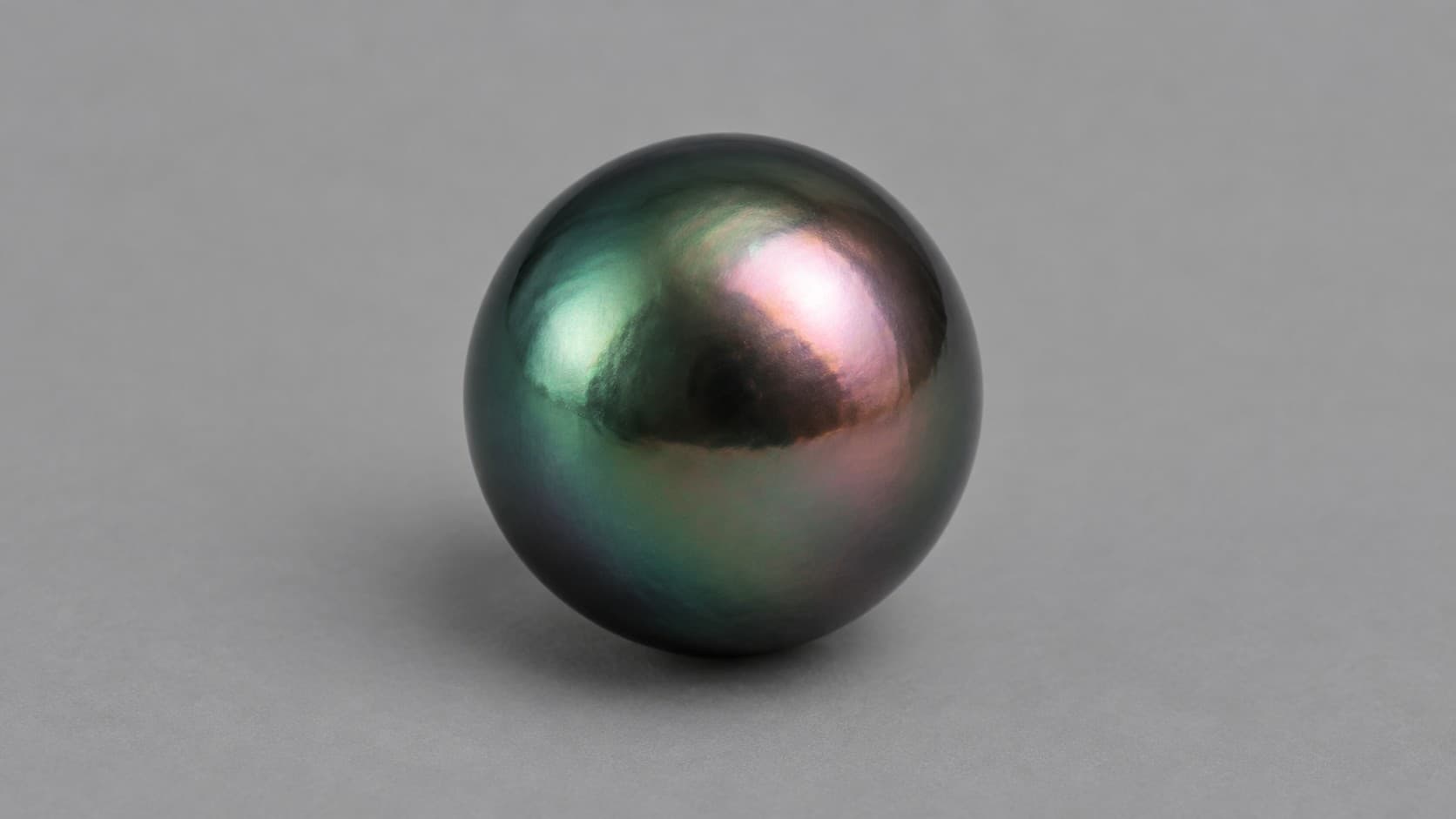
Tahitian pearls are often called “black pearls,” but true solid black is actually rare among them. Most Tahitian pearls run from silvery gray to charcoal, green, blue-green, or a deep aubergine (purple-brown), grown inside the black-lipped oyster, Pinctada margaritifera, farmed around French Polynesia.
The most famous and valuable color in this group is called “peacock.” A peacock Tahitian pearl has a dark body color with an overtone that flashes green, rose, and gold depending on the angle of light, similar to the shimmer on a peacock’s feathers. This color is completely natural. It comes from pigment in the oyster’s mantle tissue, the same tissue that lines the inside of its shell, which is dark itself. Because the color comes from the animal and not a treatment, no two peacock Tahitian pearls look exactly alike.
Despite the name, Tahitian pearls rarely come from Tahiti itself. Most are farmed around the coral atolls of the Tuamotu and Gambier archipelagos, then shipped to Tahiti, the region’s commercial hub, for sorting and export. The oyster takes at least two years to reach a size where it can safely carry a pearl, and growing the pearl itself takes another one to three years, which is part of why Tahitian pearls typically run larger than Akoya, often between 8mm and 14mm.
A close relative of the Tahitian pearl comes from Fiji, grown in a smaller variety of the same black-lipped oyster species. Fijian pearls tend to run warmer than their French Polynesian cousins, with golds, bronzes, and pistachio greens showing up alongside the more familiar blues and aubergines. Fijian pearl farming is tiny compared to Tahiti’s, which is why these warmer-toned pearls show up far less often in stores.
Golden and White South Sea Pearls
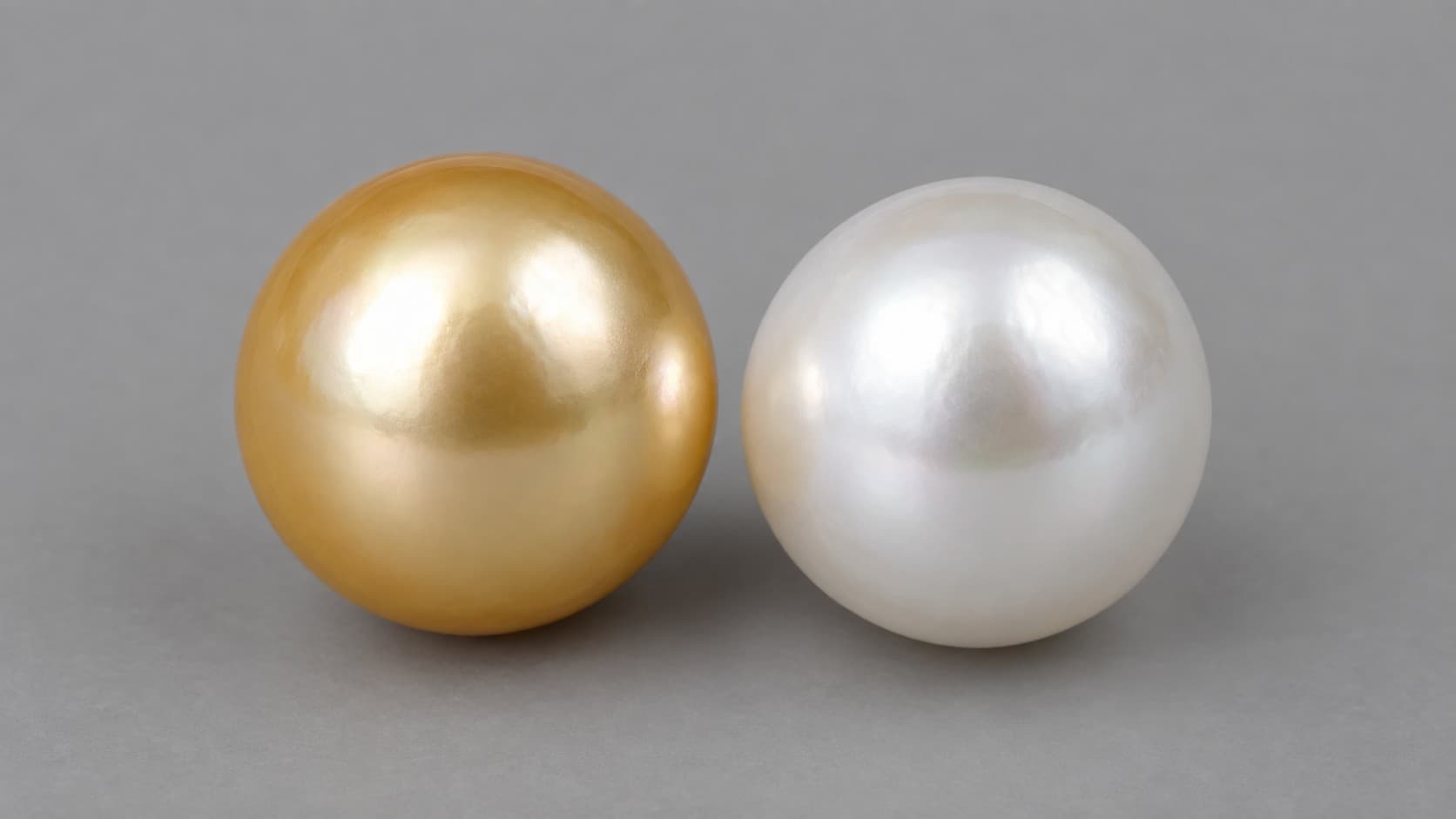
South Sea pearls grow in Pinctada maxima, the largest pearl-producing oyster in the world, and come naturally in white, silver, or gold. This oyster can grow large enough for its shell alone to span close to a foot across, and it produces the biggest cultured pearls sold today.
The color split comes down to the oyster’s own shell lip. Silver-lipped Pinctada maxima, farmed mostly along Australia’s northwest coast, produce white and silver South Sea pearls. Gold-lipped Pinctada maxima, farmed mostly around Palawan in the Philippines and across eastern Indonesia, produce the golden variety. A deep, saturated gold is considered one of the rarest and most valuable colors within the South Sea category itself, commanding a real premium over the more common champagne and pale gold tones.
A bigger oyster can safely hold a bigger bead, and the pearl needs two to three years of steady nacre growth to reach full size, nearly twice as long as an Akoya pearl. Most South Sea pearls measure between 9mm and 16mm, with exceptional harvests reaching 18mm to 20mm, which makes them the biggest cultured pearls sold anywhere.
Because each oyster can only carry one or two pearls at a time and so many die or reject their implant along the way, only a small share of any harvest reaches jewelry quality. That combination of size, years of growth, and low survival rates is why South Sea strands, especially matched, round, high-luster ones, sit near the top of the pearl price scale.
Pink, Peach, and Lavender Freshwater Pearls
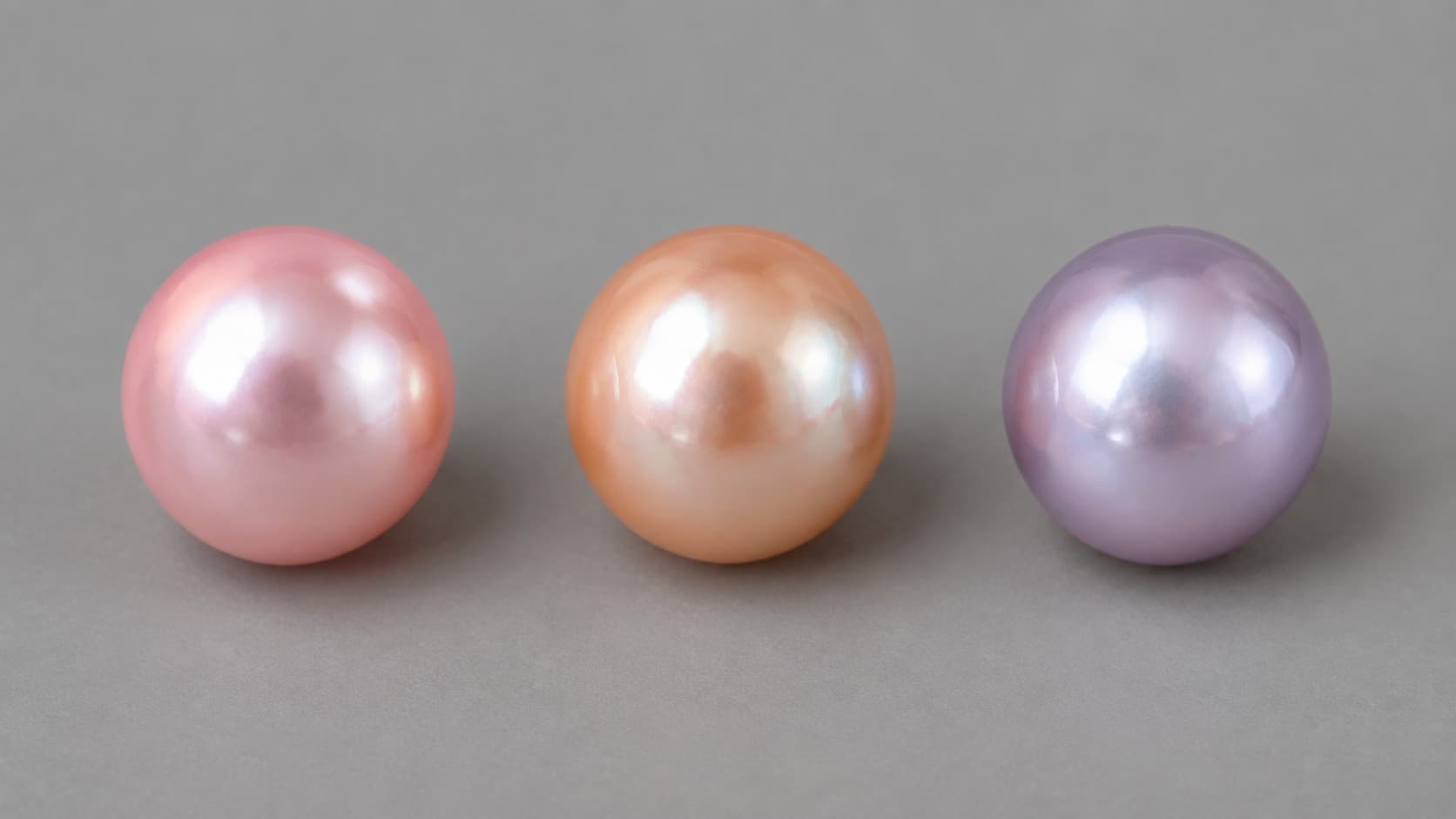
Freshwater pearls, grown mainly in mussels in Chinese lakes and rivers, produce the widest natural color range of any pearl type. Their most common natural shades are white, cream, pink, peach, and lavender, and rarer harvests can include green, blue, bronze, or deep plum.
Because freshwater mussels can be seeded with multiple pearls at once, sometimes twenty or more per mussel, and grow pearls faster than saltwater oysters, farmers have had decades to refine breeding and technique, which has pushed natural freshwater color quality up dramatically. A high-grade pink or lavender freshwater pearl today can rival the color depth of far more expensive pearl types, even though freshwater pearls remain the most affordable option overall.
A newer type called the Edison pearl, first developed in China in the early 2010s, has pushed freshwater color even further. Unlike older freshwater pearls, which grow around a small sliver of donor tissue, Edison pearls are grown around a round bead nucleus, the same basic method used for Akoya and South Sea pearls. That change lets a single mussel grow one large, thickly coated, near-round pearl instead of many small ones, and Edison pearls can reach 20mm across in natural colors that include deep purple, bronze, and metallic tones rarely seen in older freshwater varieties.
Blue and Silver Akoya Pearls
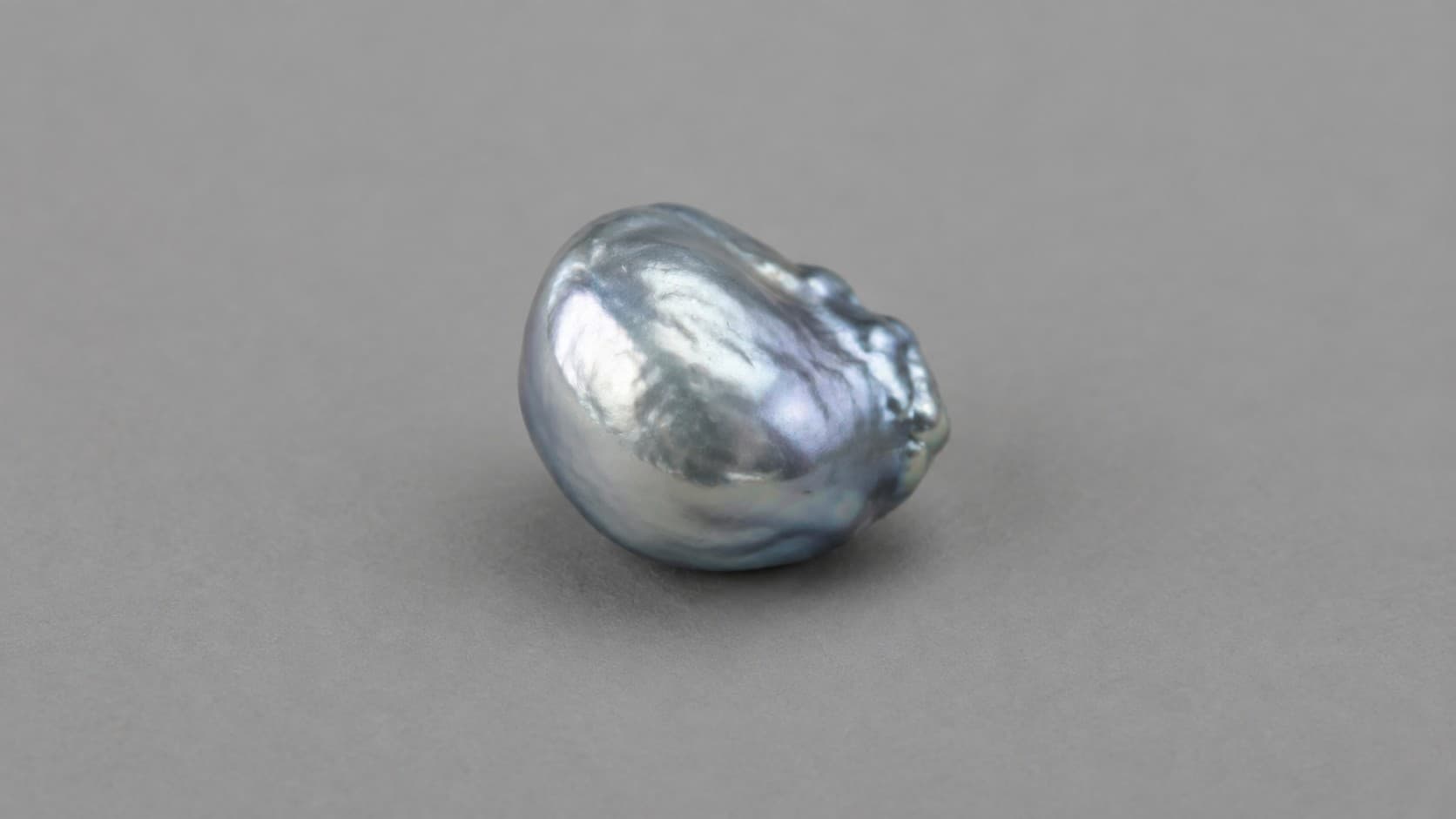
Natural blue and silver-blue Akoya pearls exist, and they form because of a dark conchiolin layer that grows underneath the nacre while the pearl develops. Conchiolin is a protein material the oyster also uses to build its shell, and when a darker layer sits underneath thinner, translucent nacre, it shows through as a cool blue-gray tint.
Because this effect depends on an unpredictable layer forming in just the right spot, blue Akoya pearls are almost never perfectly round. Most form as baroque (irregularly shaped) pearls, and no two look quite alike. Collectors and jewelers value them specifically because the color can’t be manufactured or dyed to match; it’s a byproduct of exactly how that individual pearl grew.
Iridescent Abalone Pearls
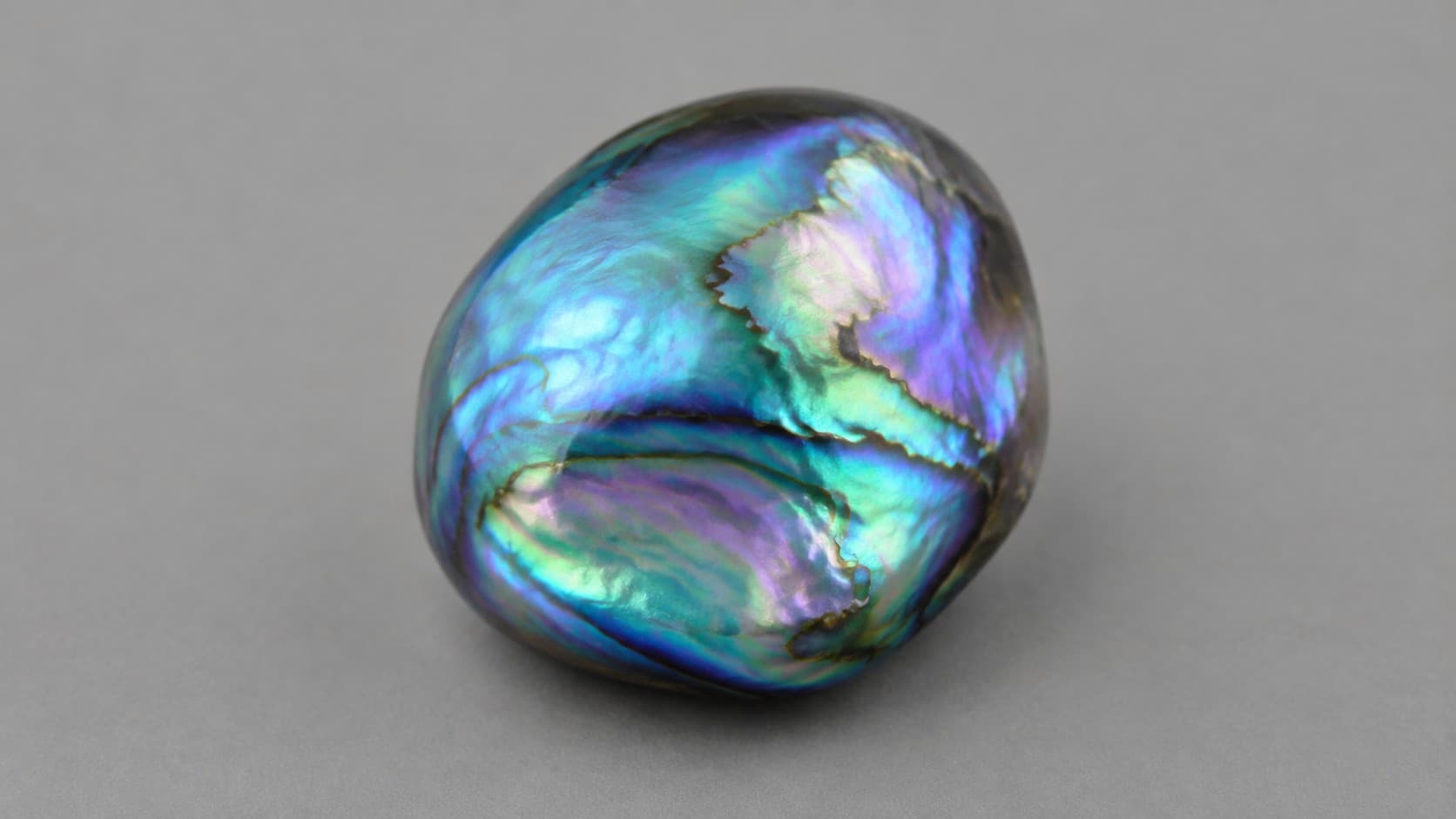
Abalone pearls form inside abalone, a marine snail, and grow naturally in vivid blue, green, purple, and pink, often shifting between several of those colors on the same pearl. Unlike conch and melo pearls, abalone pearls are nacreous, built from the same crystal layers as oyster pearls, which is exactly why their color runs so much deeper and shifts so much more with light.
The most prized abalone pearls come from Haliotis iris, a species native to New Zealand’s cold coastal waters and known locally as pāua. Its shell is famous among collectors for an unusually saturated, electric blue-green-violet iridescence, and pearls that form inside it carry that same coloring. Other abalone species around California, Mexico, Japan, and South Korea produce their own, generally softer, color ranges.
Natural abalone pearls almost never come out round. Because they usually form as blister-like growths against the inside of the shell rather than free-floating inside soft tissue, they tend to grow as baroque, horn-shaped, or tooth-like forms instead. Farming them on purpose is difficult, since abalone bleed easily and often die from the kind of surgical implant used on oysters, so most abalone pearls that reach the market were found rather than deliberately grown, which keeps them rare and usually one-of-a-kind in any piece of jewelry.
Natural Pink Conch Pearls
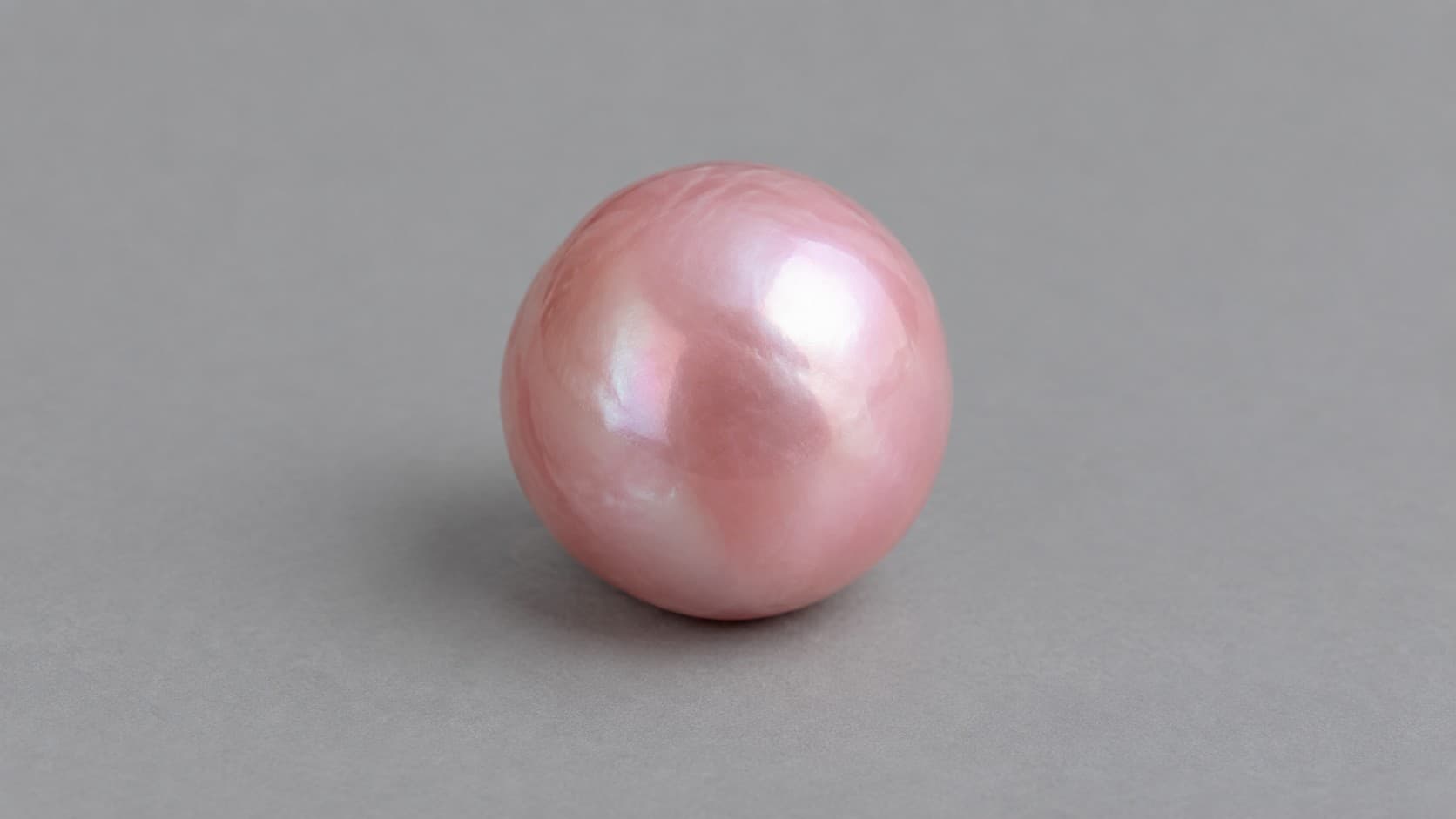
Conch pearls form inside the Queen conch, a large sea snail, and are naturally pink, though they can also appear in white, orange, or brown. They form the same basic way a pearl does, as layers built up around an irritant, but the conch doesn’t produce nacre. Instead it builds the pearl from calcium carbonate in fibrous layers, which is why gemologists classify conch pearls as non-nacreous rather than “true” pearls, even though the word “pearl” has stuck.
Fine conch pearls show a wavy, flame-like pattern across the surface and a soft, porcelain-like glow instead of the layered shine of a nacreous pearl. They cannot be farmed or cultured; every one comes from a wild-caught conch, found among seagrass beds in the Caribbean and nearby Atlantic waters, usually turning up by chance when the animal is harvested for food. That, combined with their soft coloring, makes them one of the rarest and most collected pink gems in jewelry, and large, well-colored examples have appeared in historic pieces made by houses like Cartier as far back as the 1920s.
Rare Orange Melo Pearls
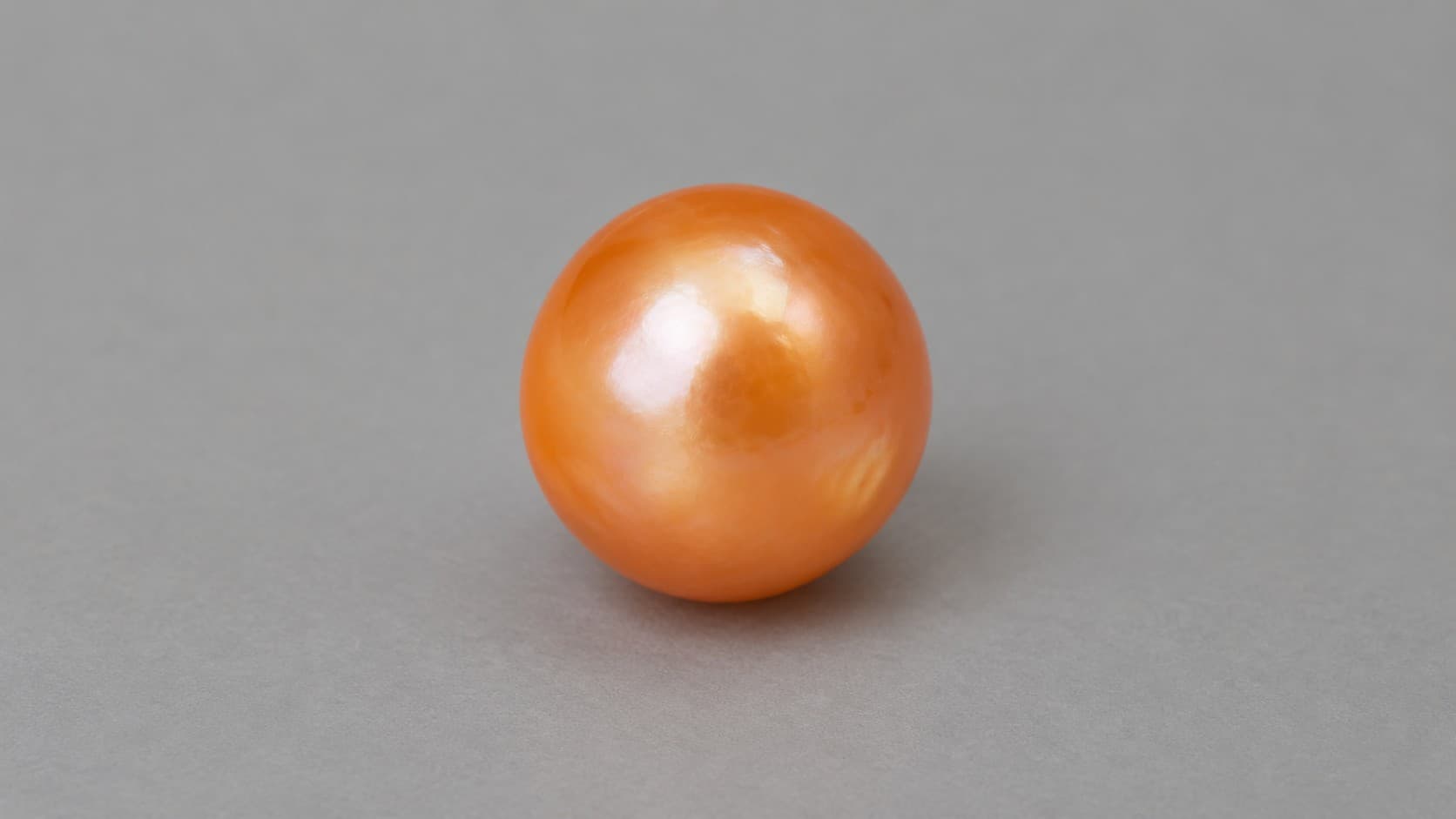
Melo pearls form inside the melo melo sea snail and grow naturally in shades of orange, yellow, tan, and brown, with a deep, fiery orange being the most prized. Like conch pearls, melo pearls are non-nacreous, made of tightly packed calcium carbonate rather than nacre, and they can show a similar flame-like surface pattern.
Melo melo snails live in warm waters across Southeast Asia, including the South China Sea and the Bay of Bengal. Nobody has succeeded in farming them, so every melo pearl in existence was found by chance, usually when the snail was harvested for food. That complete reliance on luck is a big part of why a fine, deep-orange melo pearl can be worth hundreds of thousands of dollars.
Are Black Pearls Always Dyed?
No, genuine black pearls are almost always natural, but a lot of cheap “black pearls” on the market are dyed. True dark colors are natural in Tahitian pearls, caused by pigment from the black-lipped oyster itself. What’s commonly dyed is black Akoya and black freshwater pearls, which don’t naturally reach a deep black shade on their own, so sellers treat them to imitate the Tahitian look at a much lower price.
The confusion happens because “black pearl” gets used loosely to describe several different products. A genuine Tahitian pearl in dark peacock or charcoal tones is natural. A uniform, flat, jet-black Akoya or freshwater pearl almost never is.
How to Tell If a Pearl Is Dyed
Dyed pearls tend to look too uniform, with color that’s flat and identical from every angle, while natural color always has some depth or variation. Real Tahitian, blue Akoya, and colored freshwater pearls show overtone and orient, that shifting, layered glow caused by the color coming from within the pearl’s structure. Dye sits on the surface, so it can’t recreate that same depth of light.
- The drill hole. Dye sometimes pools or looks darker right at the hole, since that’s where the surface was pierced.
- Unnatural uniformity. A strand where every pearl is the exact same shade with no variation is a warning sign, since real natural color always varies slightly pearl to pearl.
- Species information. A seller who can identify which oyster or mollusk produced the pearl, and where it was farmed, is far more likely to be selling a natural-color pearl.
- Price against rarity. Deep-black or vividly colored pearls priced far below typical market rates for that type are more likely treated.
Frequently Asked Questions
Are all white pearls natural, or are some bleached?
Most white pearls, especially Akoya and white South Sea, are naturally white and untreated. However, bleaching is a common and accepted treatment in the industry, used mainly on freshwater pearls to even out blemishes and lighten their natural tone. Reputable sellers should disclose if a pearl has been bleached.
Why are golden South Sea pearls so expensive?
Golden South Sea pearls are expensive because only gold-lipped Pinctada maxima oysters produce that color, and reaching a deep, even gold takes the oyster several years of growth. Combined with the overall rarity and large size of South Sea pearls in general, a saturated gold pearl is one of the most valuable natural pearl colors available.
What is the rarest natural pearl color?
Solid, deep orange melo pearls and highly saturated golden South Sea pearls are generally considered the rarest natural colors, since both depend on a single species and, in the case of melo pearls, on pure chance rather than farming. Blue Akoya pearls are also extremely rare because of how unpredictably their color forms.
Can one oyster produce pearls in more than one color?
Not typically. An oyster’s species and the color of its own shell lining largely determine what color range it can produce, so a black-lipped oyster won’t suddenly grow a gold pearl. Variation happens within that species’ natural range, not outside of it.
Do pearl colors fade over time?
Some natural colors can fade slightly with heavy sun exposure or contact with chemicals like perfume and lotion, especially in delicate pearls like melo. Well-cared-for pearls, kept away from direct sunlight and harsh chemicals, generally hold their color for generations.
The Bottom Line
Pearl color isn’t decoration added after the fact. It’s a direct result of which species made the pearl, where that animal lived, and how its shell layers happened to form. White and rosé Akoya, peacock and charcoal Tahitian, white and gold South Sea, and the wide pastel range of freshwater pearls cover almost everything most jewelry buyers will ever see, while blue Akoya, iridescent abalone, conch, and melo pearls sit at the rare, chance-driven edge of what nature produces. Knowing that difference is what separates a pearl bought for its label from one bought for what it actually is.