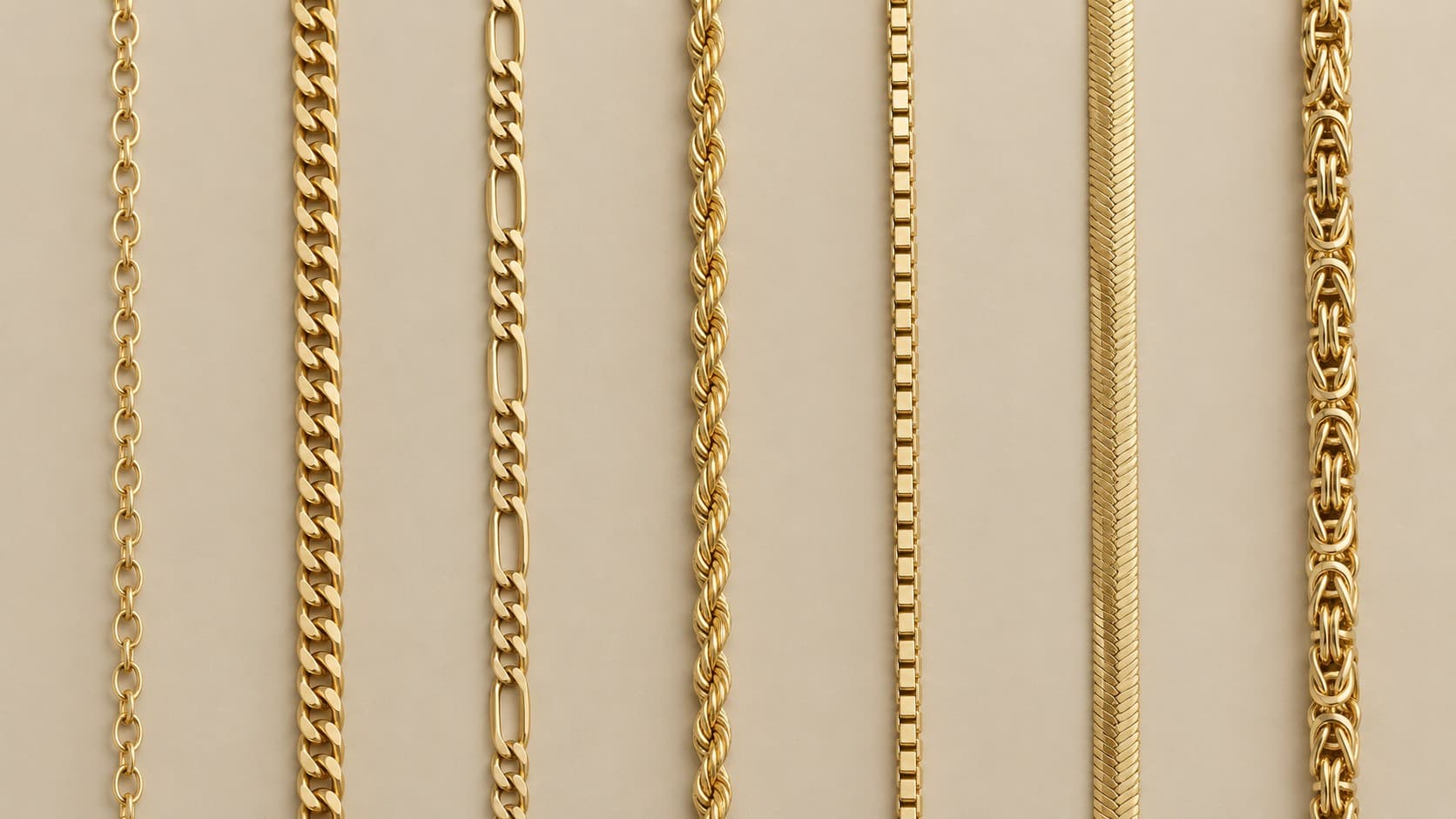
A chain looks like a simple thing at first glance. It is just metal links joined together, after all. But the shape of those links changes everything about how a chain looks, feels, and holds up over time. Some chains are flat and shiny. Some are round and bendy. Some are strong enough to carry a heavy pendant, while others will snap under too much weight. Understanding the difference makes it easier to recognize quality, know what a piece is actually made of, and match a chain to the right purpose.
What Metal Is Used for Jewelry Chains?
A jewelry chain is made of small metal links joined one after another, usually in gold, silver, or platinum. Each link is shaped, cut, and connected to the next one using heat, pressure, or soldering, depending on the style.
The metal used affects how heavy and durable the chain is. Gold chains come in different karats, like 14k or 18k, which changes how soft or hard the metal is. Sterling silver is a common and more affordable choice. Platinum is heavier and more durable but also more expensive. The link shape, on top of the metal choice, is what gives every chain its own personality.
Cable Chain
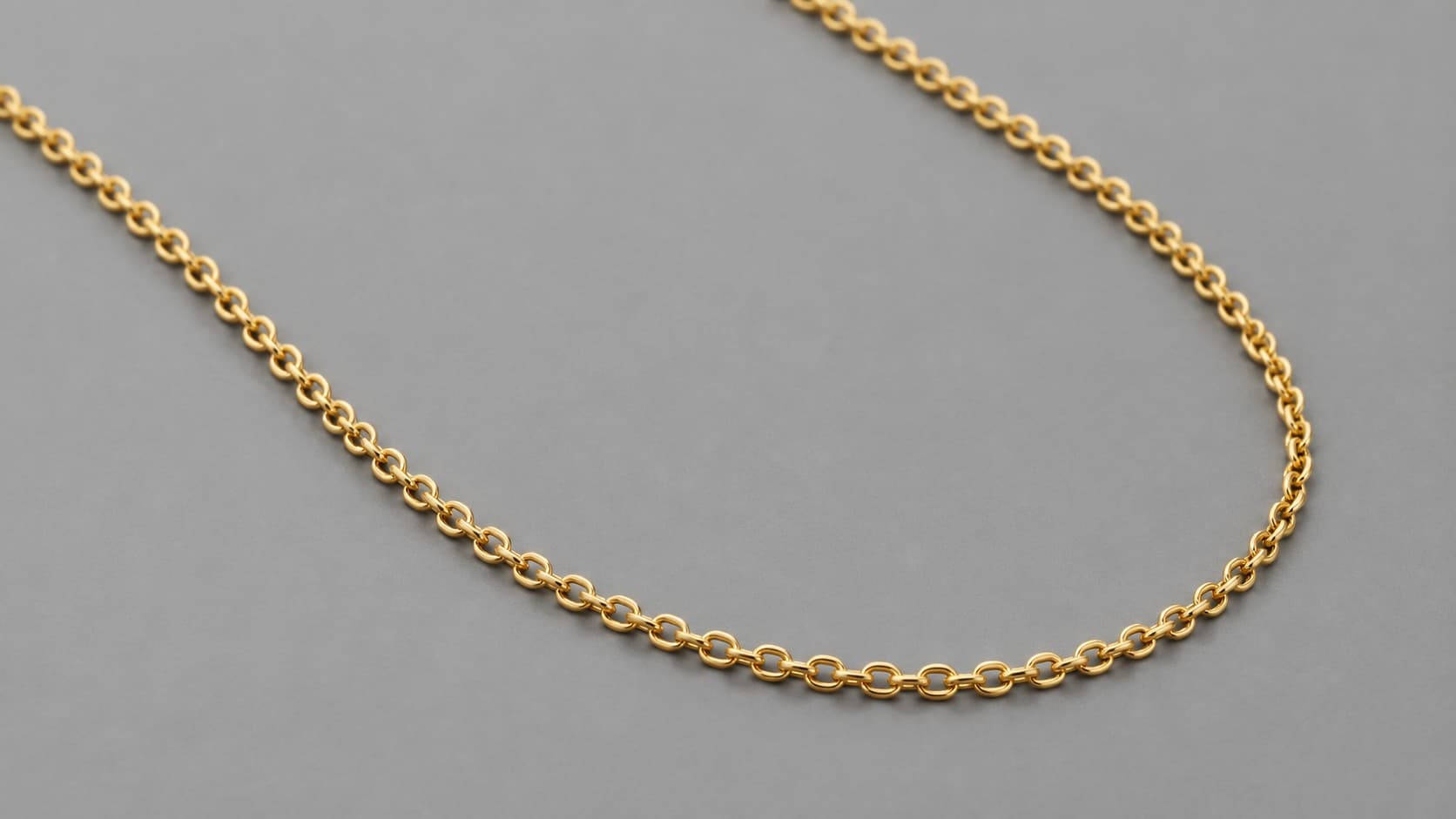
A cable chain is made of simple oval or round links, each one connected to the next in a repeating loop. It’s one of the most basic and most common chain styles, which is why it shows up everywhere from thin layering necklaces to thick statement pieces.
Because the links are uniform and interlock cleanly, cable chains are sturdy and resist twisting better than many other styles. They’re a safe choice for everyday wear and for holding pendants, since the round links don’t put uneven pressure on a bail (the small loop that attaches a pendant). Cable chains are typically labeled by their link size in millimeters, since a small cable chain looks delicate while a thick one looks bold.
Cable is also considered the “starter” link shape in jewelry making, since curb, rope, and several other styles are really just a cable chain that has been twisted, flattened, or woven further. That’s part of why it’s so widely available and usually one of the more affordable chain options at any given weight, since the link shape itself is quick and simple to produce.
Curb Chain
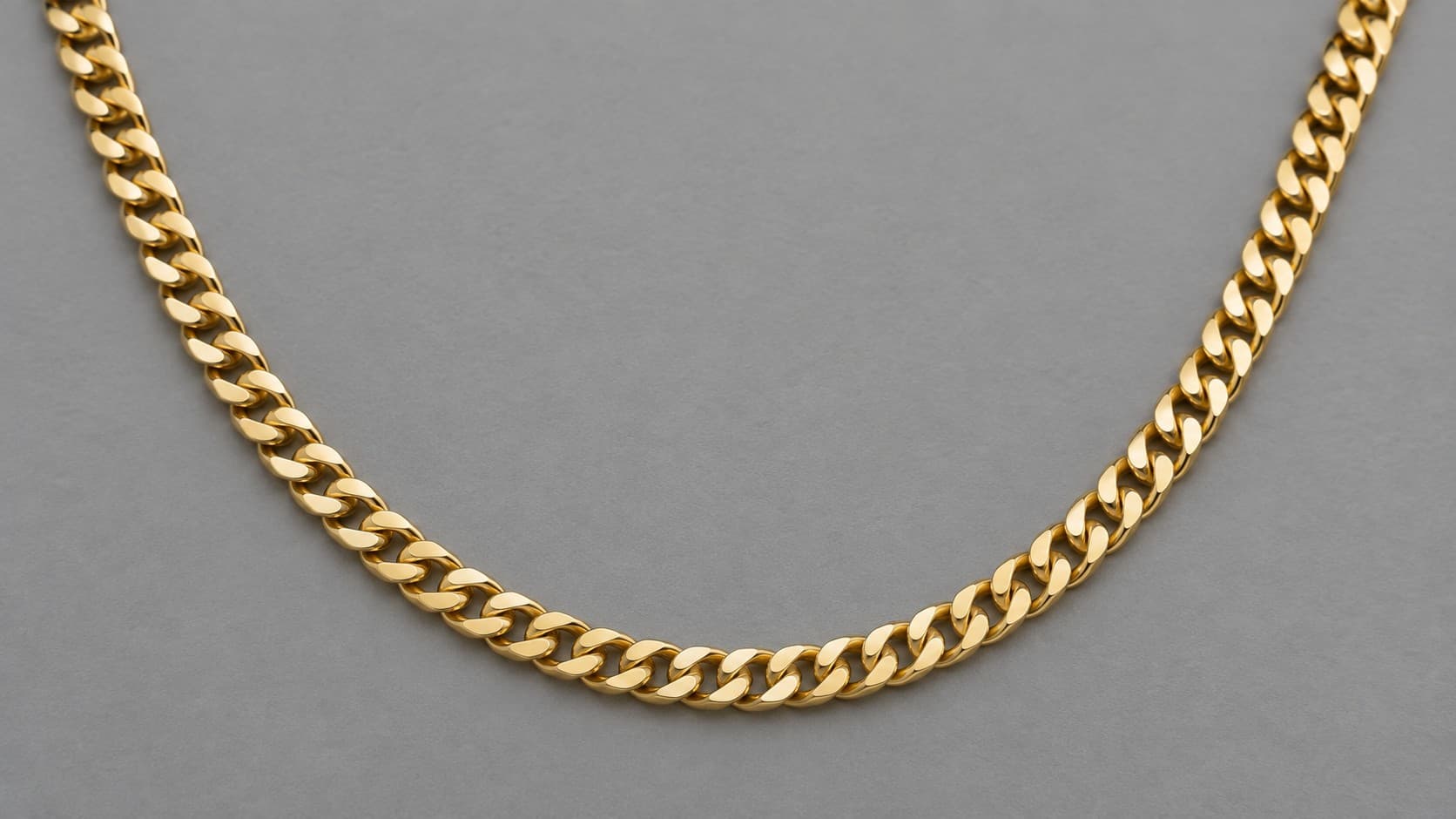
A curb chain uses links that are twisted and flattened before being joined, so each link lies flat against the next instead of standing upright. This gives the chain a smooth, almost interlocking look, and it’s one of the most durable styles on the market.
Curb chains are a favorite for men’s jewelry because the flattened links create a sturdy, chunky look without adding too much weight.
Because the links sit flat, curb chains resist kinking, which means they hold their shape well over years of wear. They also work well for pendants since the flat surface distributes weight evenly.
This is one of the oldest chain shapes around. Flat, interlocking links like these show up in jewelry from ancient Egypt and were also worn in ancient Rome, long before modern machinery made production faster and links smaller and more refined. That long track record is part of why curb chains feel so familiar even today. It’s also worth knowing that what many people now call a “Cuban link” chain is essentially a heavier, more rounded version of a curb chain, just marketed under a different name, so the two aren’t as different as the separate labels suggest.
Figaro Chain
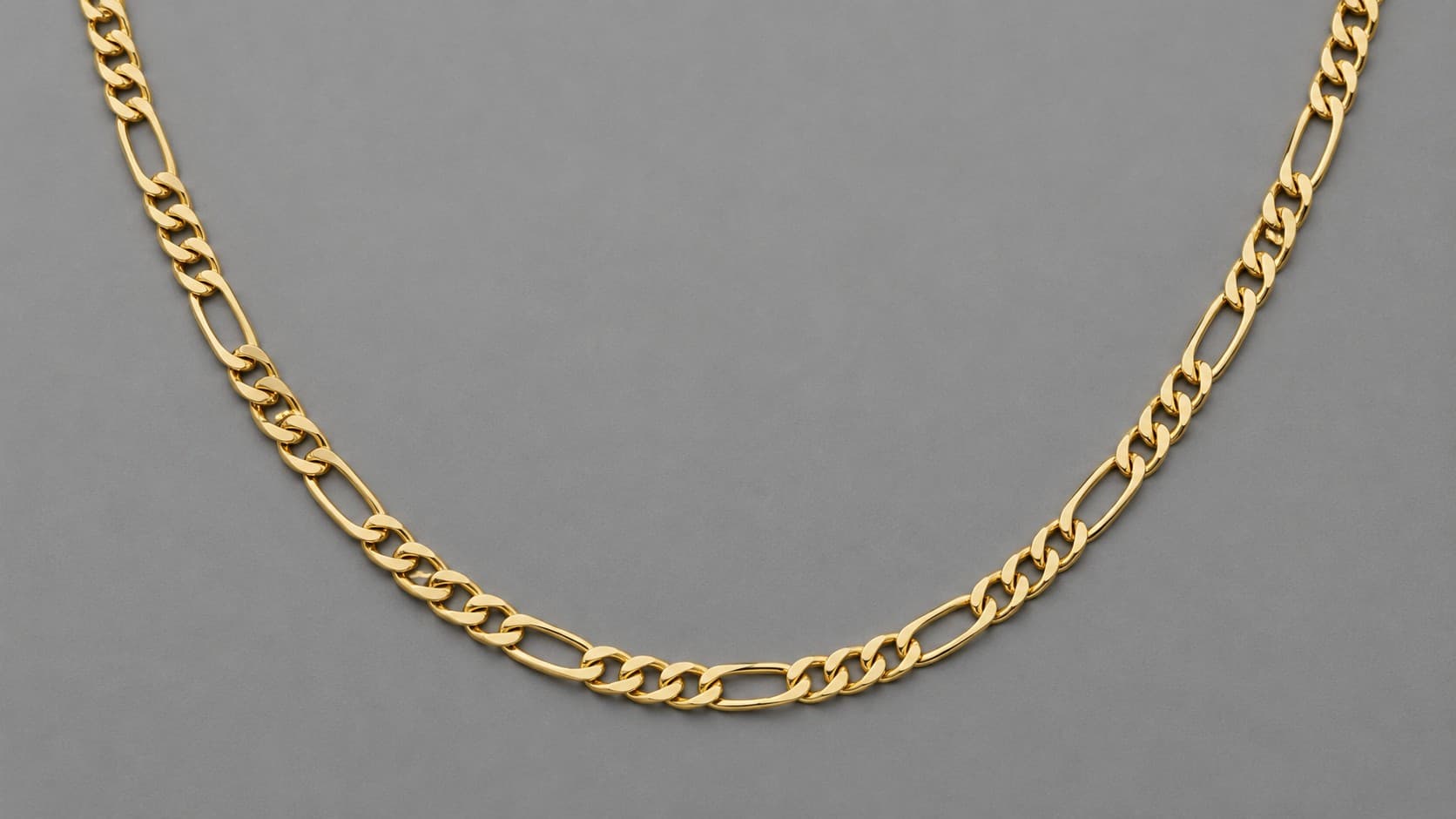
A figaro chain repeats a pattern of one longer oval link followed by several shorter round links, usually three to five of them. This creates a distinctive rhythm along the chain instead of one uniform look.
The design traces back to Italy, where the pattern was first shaped by hand before it spread more widely across Europe. Its name is often tied to the character Figaro, who appears in more than one famous opera, though sources don’t agree on which one actually deserves the credit. Whichever story is true, the name held on, and the style eventually became a mainstay of men’s jewelry worldwide by the mid-to-late 20th century.
Because it shares the same flattened-link construction as a curb chain, a figaro chain is just as strong, but the varied link pattern gives it more visual interest. It’s a good pick for anyone who wants something sturdy that still stands out a little from a plain cable or curb chain. Figaro chains are also worn by women in thinner widths, so the style isn’t locked into one gender or one era, which is part of why it’s stayed popular for so long.
Rope Chain
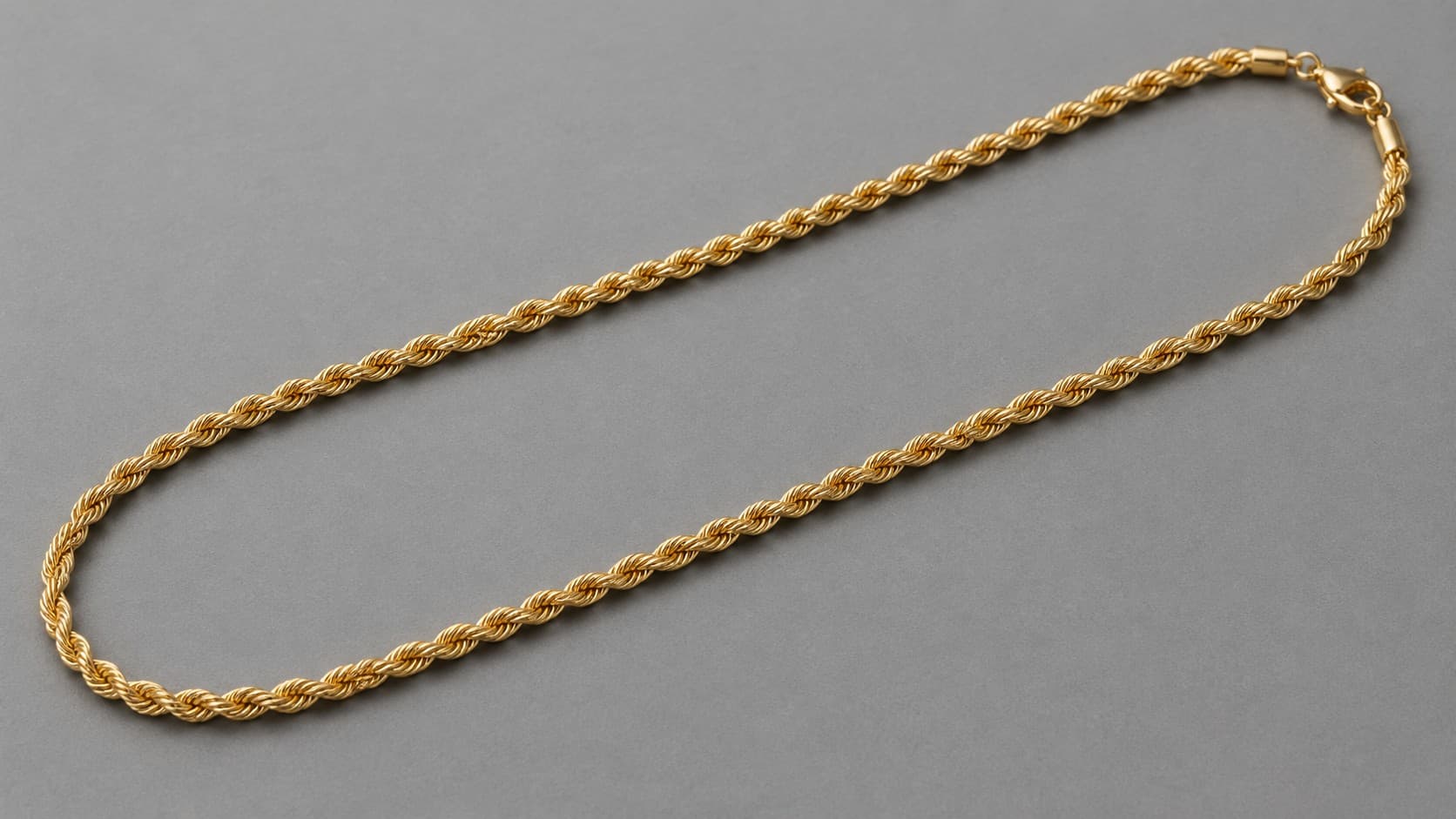
A rope chain is made from small links twisted together so tightly that the whole chain looks like a length of actual rope. The twist catches light from many angles, which gives rope chains a noticeably brighter sparkle than flatter styles.
This twisted construction also makes rope chains one of the strongest and most durable options available, able to hold up under regular wear and support heavier pendants. The trade-off is that if a rope chain does break, it can be trickier to repair because of how tightly the links are wound. Jewelers with the right tools can usually fix it without a problem.
The idea behind rope chains is thought to go back to ancient Egypt, where metalworkers twisted wires together to make decorative pieces, a technique that later carried on into the Roman Empire. Today’s versions range from thin, delicate rope chains made for pendants to thick, heavy ones meant to be worn as the main event. Many are also diamond-cut, meaning tiny angled facets are cut into the twisted surface to bounce even more light around, which is why a rope chain often looks brighter than a plain cable chain of the same metal.
Box Chain
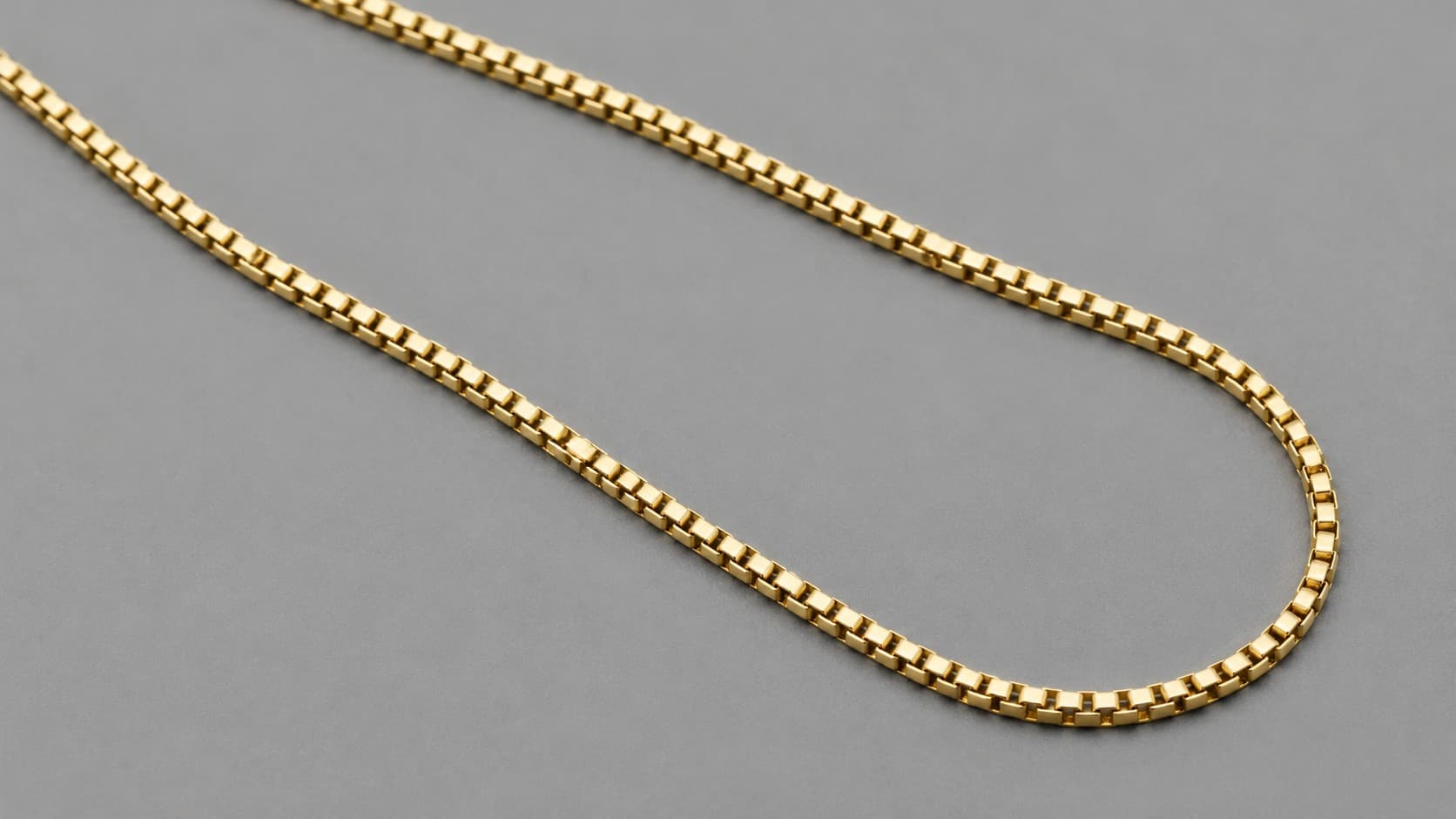
A box chain is built from square-shaped links connected so that each one sits at a right angle to the next, forming a continuous, geometric tube. The result is a clean, minimal look that reads as modern and understated.
Despite its simple appearance, a box chain is quite sturdy and can support a decent amount of pendant weight. It doesn’t kink as easily as some rounder chains, which makes it a solid daily-wear option. Its straight lines and quiet, no-fuss look are usually what draw people to it in the first place.
The square link isn’t a new invention. Decorative chains built from this shape have been traced back to ancient Egypt, and a similar version was worn during the Roman Empire under the name “box link.” Thinner box chains are especially popular in women’s jewelry, usually as a base for a pendant, while thicker versions are worn by anyone who wants a bold, geometric statement piece with no pendant at all.
The same style is also sold as a “Venetian chain.” Both names generally point to the same square-link build, though a few jewelers reserve “Venetian” for a version with tighter, more uniform squares and use “box chain” when the links run a bit longer and more oblong. In practice, that’s a labeling habit more than a meaningful construction difference.
Snake Chain
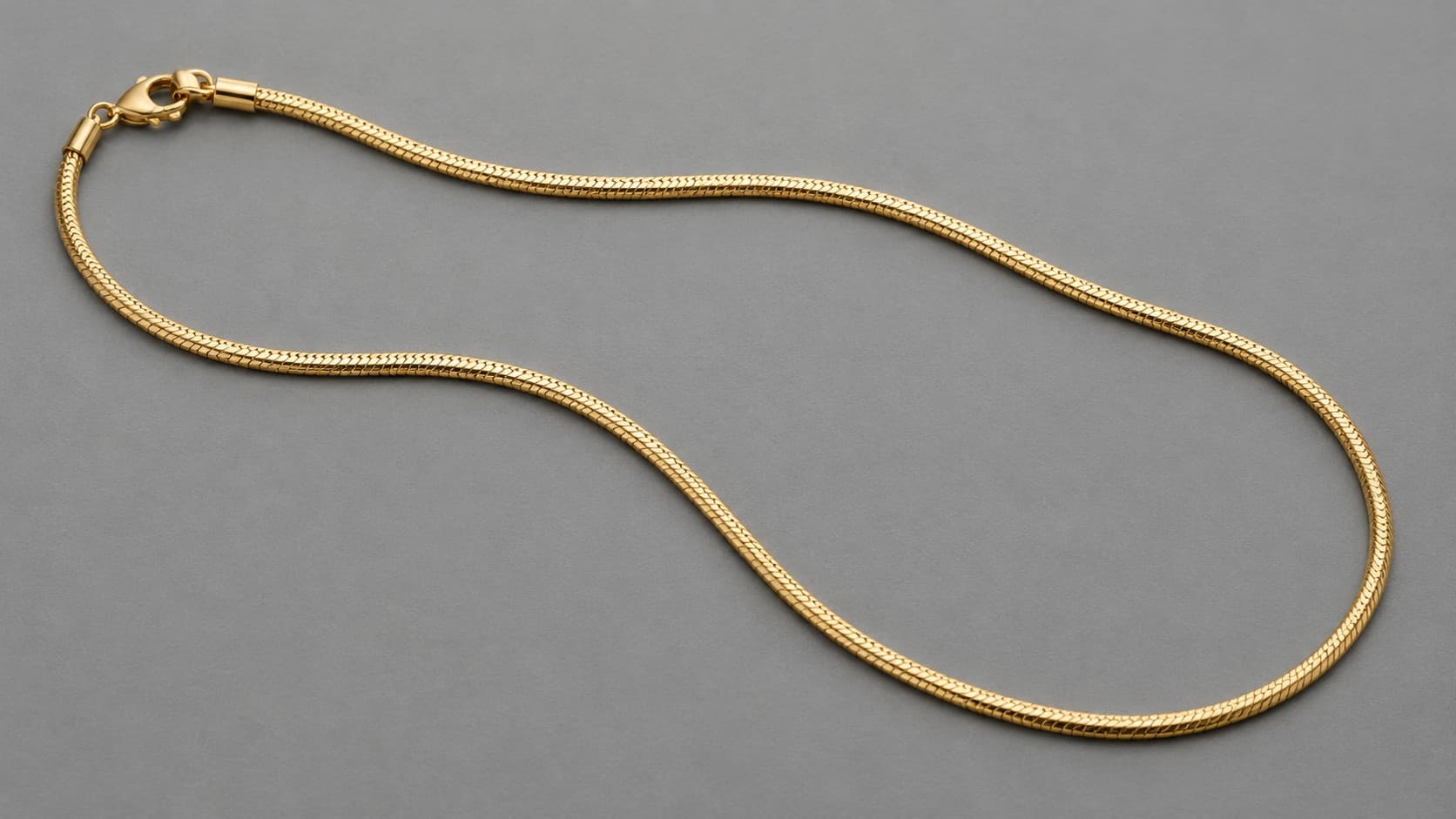
A snake chain is made by tightly joining small, curved plates or links into a smooth, rounded tube with no visible individual links. Touching one feels almost like tracing a solid ribbon of metal rather than separate pieces.
This tight, seamless construction is what gives it the name, since the surface pattern can resemble snakeskin, especially in versions with a diamond-cut finish. Snake chains work best for lighter pendants and gentle daily wear. They aren’t the best choice for heavy pendants or rough use, because the tight links can kink permanently if bent sharply.
Because the surface is so smooth and continuous, a snake chain doesn’t have the same flex-and-recover quality as a looser chain like cable or rolo. Once a kink sets in, it usually stays, so it helps to lay the chain flat or coil it loosely when storing it rather than letting it bunch up in a drawer or jewelry box.
Herringbone Chain
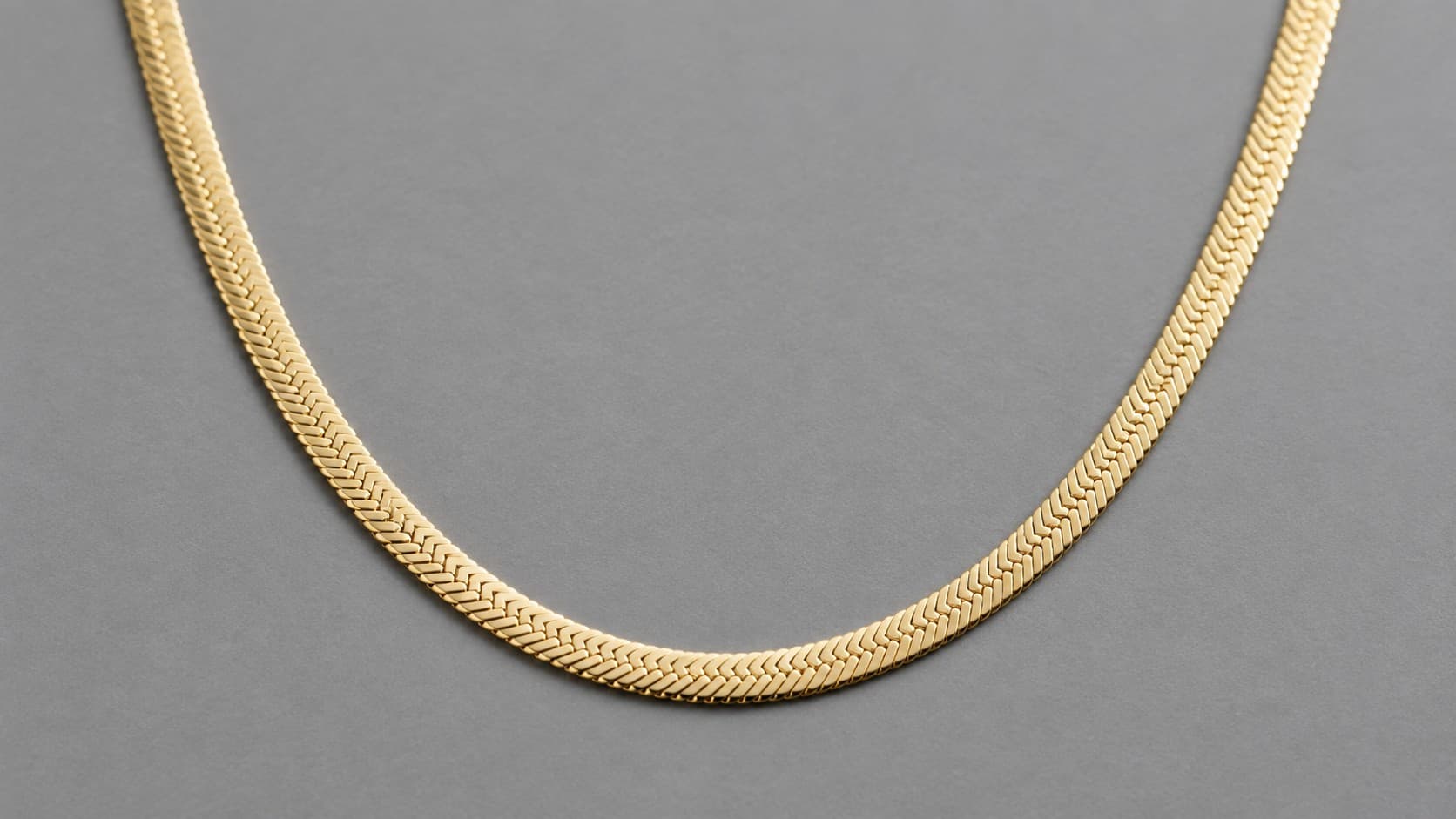
A herringbone chain is made of flat links pressed tightly side by side, creating a wide, ribbon-like chain that lies completely flat against the skin. It has a soft, silky look that catches light in long, smooth streaks rather than sharp glints.
Because it’s so flat and flexible, a herringbone chain usually stands on its own as a necklace rather than carrying a pendant. It also needs a bit more care than sturdier styles like curb or rope, since a hard kink can be difficult or impossible to smooth back out. Store it flat or coiled loosely to keep it looking its best.
Each individual link has a slight point, and when hundreds of them are pressed together, they form a zig-zag pattern similar to the bones of a fish, which is where the name comes from. That same flat, wide surface is also why herringbone chains are almost never recommended for pendants: a bail simply can’t grip or hang properly on such a flat, rigid strip of metal, so this style is best appreciated exactly as it is.
Wheat Chain (Spiga)
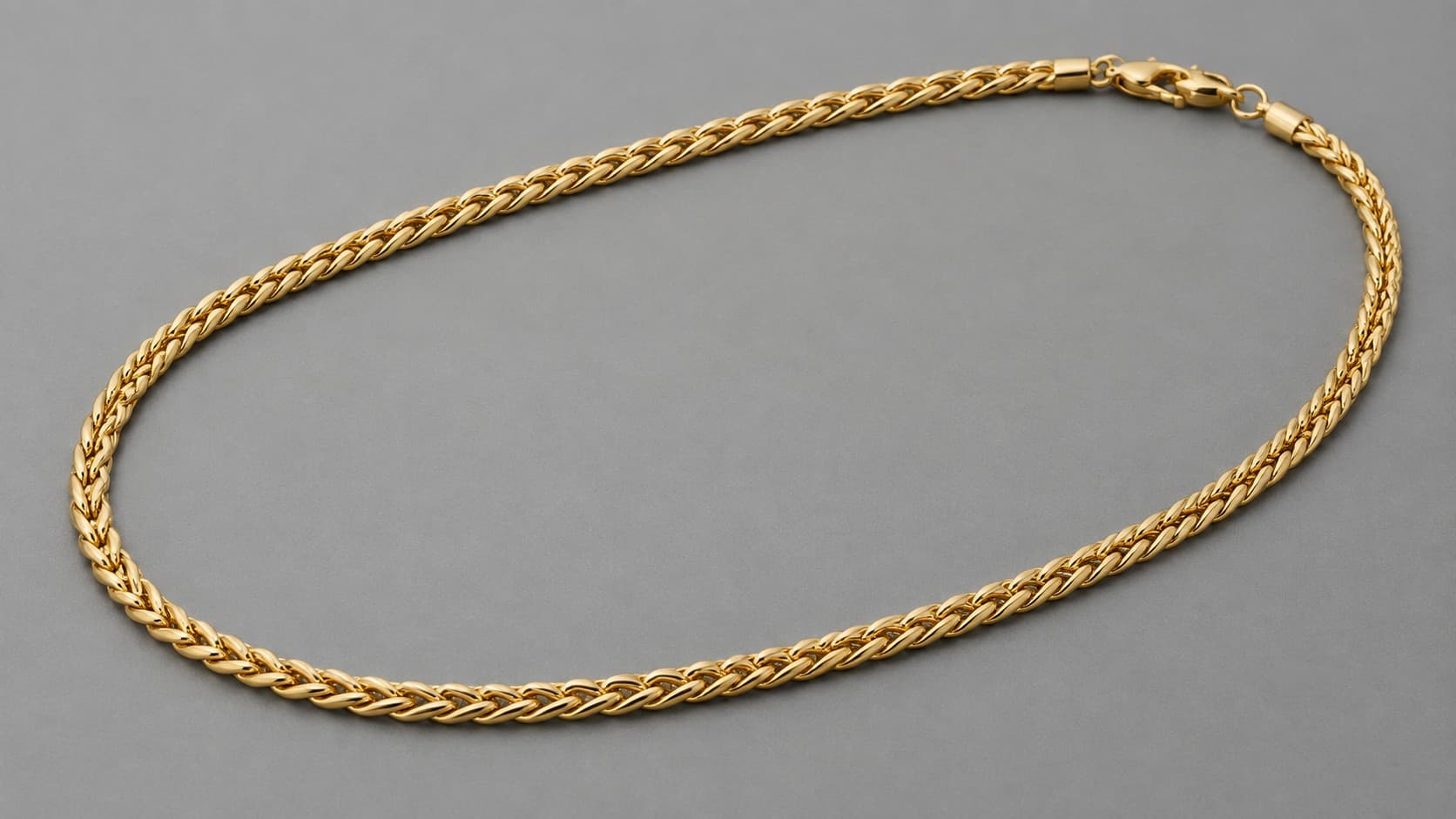
A wheat chain, also called a spiga chain, is made from small figure-eight-shaped links arranged so they all point in the same direction. This creates a braided, textured look with a slightly squared profile.
The interlocking design makes wheat chains surprisingly strong for their delicate appearance, and they resist tangling better than many thinner chains. This combination of strength and detail makes wheat chains a popular choice for both simple pendant chains and chains meant to be worn alone.
A closely related style called the foxtail chain gets mistaken for wheat chain fairly often, since both rely on a similar woven, textured surface. Looking closely at the links tells them apart: a foxtail’s links sit at a slant and press into a flatter, more angular profile, while a wheat chain’s figure-eight links stay rounder and hold their shape all the way through. The practical result is that a foxtail chain tends to lie flatter against the skin, while a wheat chain keeps a bit more dimension.
Byzantine Chain
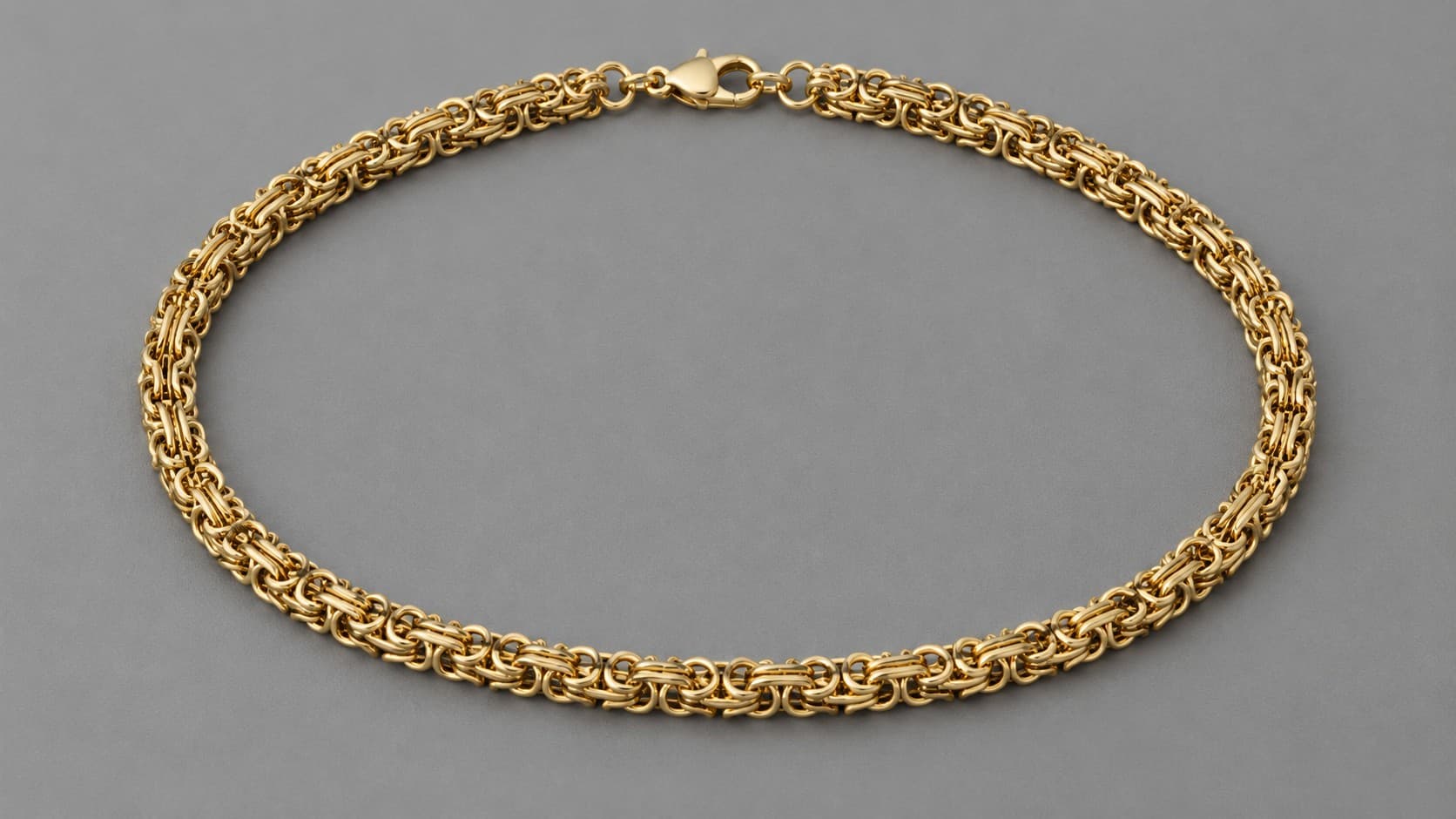
A Byzantine chain is made from multiple small links woven together in a complex, interconnected pattern, giving it a rich, textured, almost fabric-like appearance. It’s heavier and more intricate than most other chain styles.
Because of how many links are interlocked at each point, Byzantine chains are strong and hold up well over time, but they’re also more expensive to produce because of the labor involved. This style tends to be worn as a statement piece on its own rather than paired with a pendant, since its texture is already the main attraction.
That extra labor is really the whole story with Byzantine chains. Each link has to be threaded through several neighboring links by hand or with careful machine assistance, which takes far longer than joining simple oval or square links one after another. That’s the trade-off buyers are making when they choose this style: more weight, more detail, and a higher price, in exchange for a necklace that looks noticeably richer and more dimensional than a plain chain of the same length.
The same style is also sold as a “Turkish chain,” another name for the same woven, interlocking construction. As with other naming overlaps in the chain world, it’s the identical build under a different label rather than a separate style.
Rolo Chain
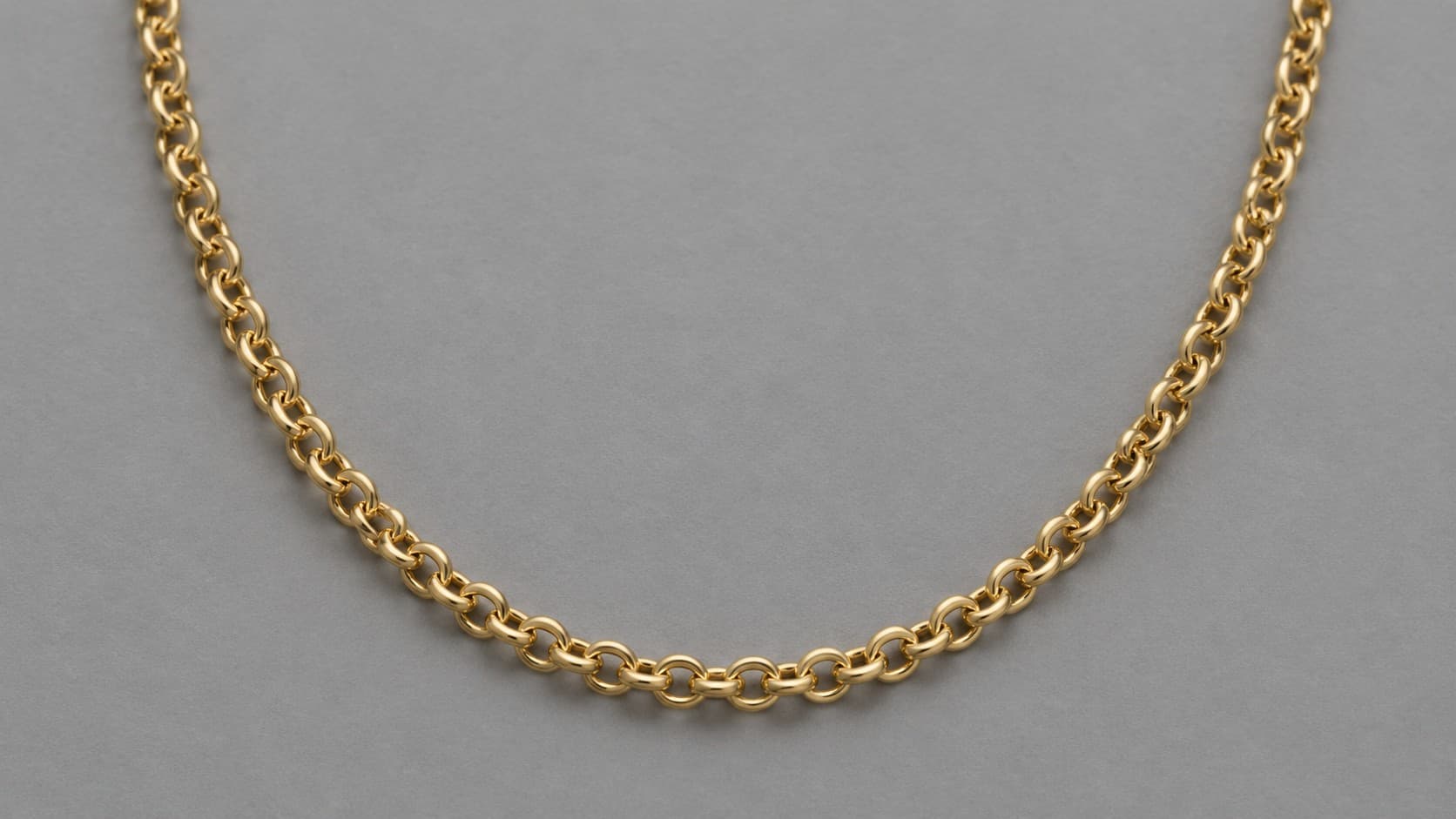
A rolo chain is made of small, round links joined in a simple, uniform pattern, similar to a cable chain but with slightly rounder, more consistent links. It has a classic, timeless look that works well for both delicate and thicker designs.
Rolo chains are known for holding pendants securely because the round, even links don’t twist easily. This makes them one of the more practical choices for pieces where charms or pendants get added or swapped over time, since the smooth links let a bail slide and sit naturally.
In some markets, this same style is sold under the name “belcher chain,” referring to essentially the same round, uniform link design. Because rolo links are large enough to grip but still smooth, this chain is also a common base for charm bracelets, where several small charms need to hang and move freely without the chain itself catching or twisting.
Paperclip Chain
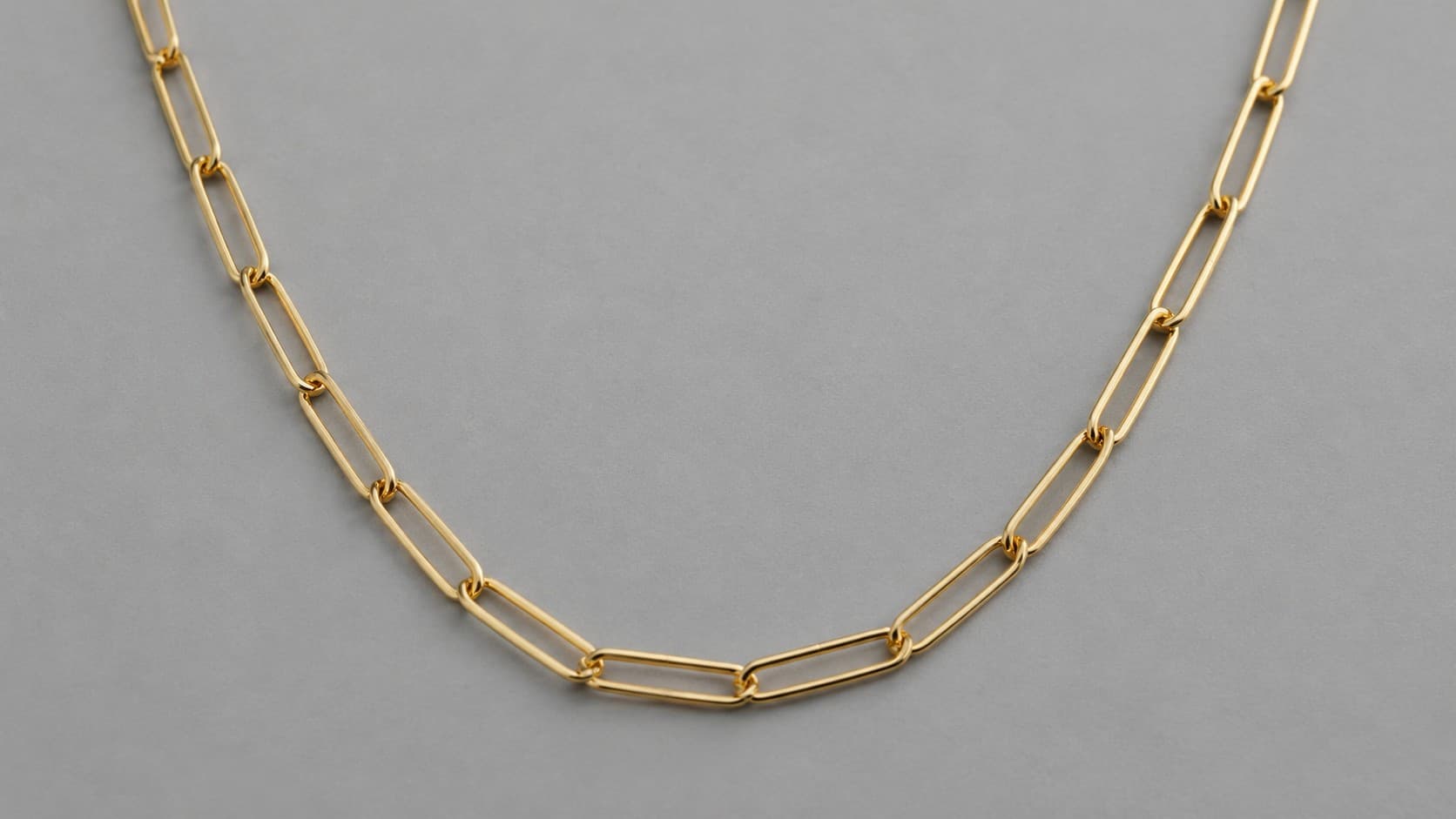
A paperclip chain uses elongated, rectangular links that resemble a stretched-out paperclip, connected end to end. The larger, flatter links create a modern, editorial look that has become popular in recent years.
Because the links are bigger than most traditional styles, a paperclip chain shows off the metal’s shine more openly. It’s generally sturdy for everyday wear, though the open, larger links mean it can catch on fabric more easily than a tighter chain like cable or curb.
The design borrows its name and shape from the everyday office paperclip, generally credited to Norwegian inventor Johan Vaaler in the late 1800s, though the jewelry version has been reimagined many times since. While the shape itself isn’t new, it became especially trendy in mainstream fashion in recent years, often worn thick and oversized as a standalone necklace rather than tucked away as a simple pendant chain.
Mariner Chain
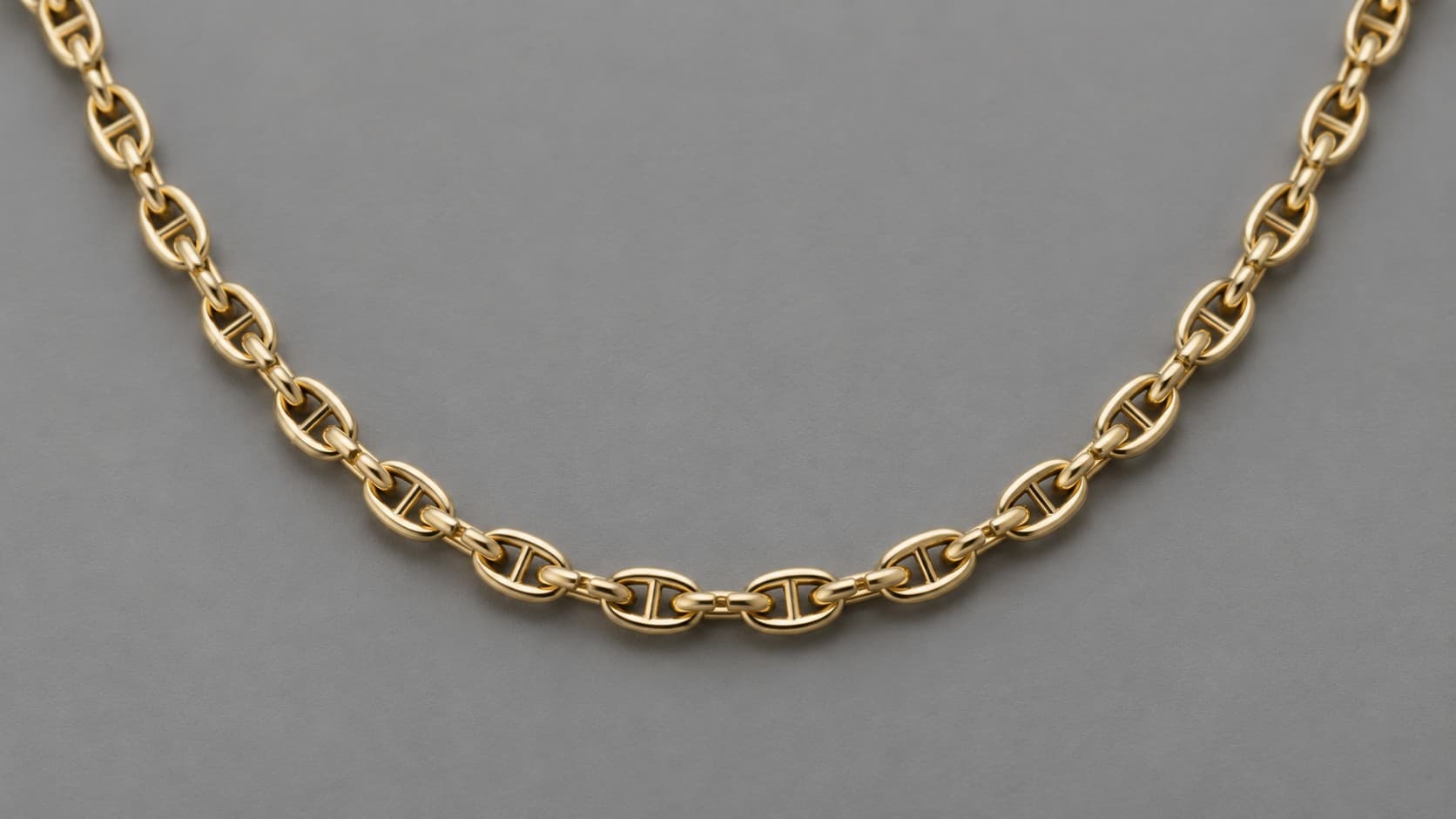
A mariner chain is built from oval links, each one braced by a straight metal bar running across its middle, a reinforcement borrowed from the heavy-duty chains once used to secure a ship’s anchor. That bar adds structure and strength to every link.
This chain style has a bold, slightly vintage feel and is often used for thicker, statement-style necklaces and bracelets. The reinforced links make mariner chains quite durable, so they hold up well even in wider, heavier designs.
Jewelry design records show mariner-style links being sketched out as far back as the 1860s, during the Victorian era, which explains the slightly old-world, nautical character the style still carries today. The center bar isn’t just decorative either. It braces each oval link from the inside, which is part of why mariner chains can be made wide and heavy without becoming floppy or losing their shape.
This exact link shape is also sold under the name “anchor chain,” a label that leans more on the style’s nautical roots than the polished, jewelry-store name “mariner” does. Both terms describe the same reinforced oval link, so there’s no meaningful difference between them beyond which name a given seller prefers.
Franco Chain
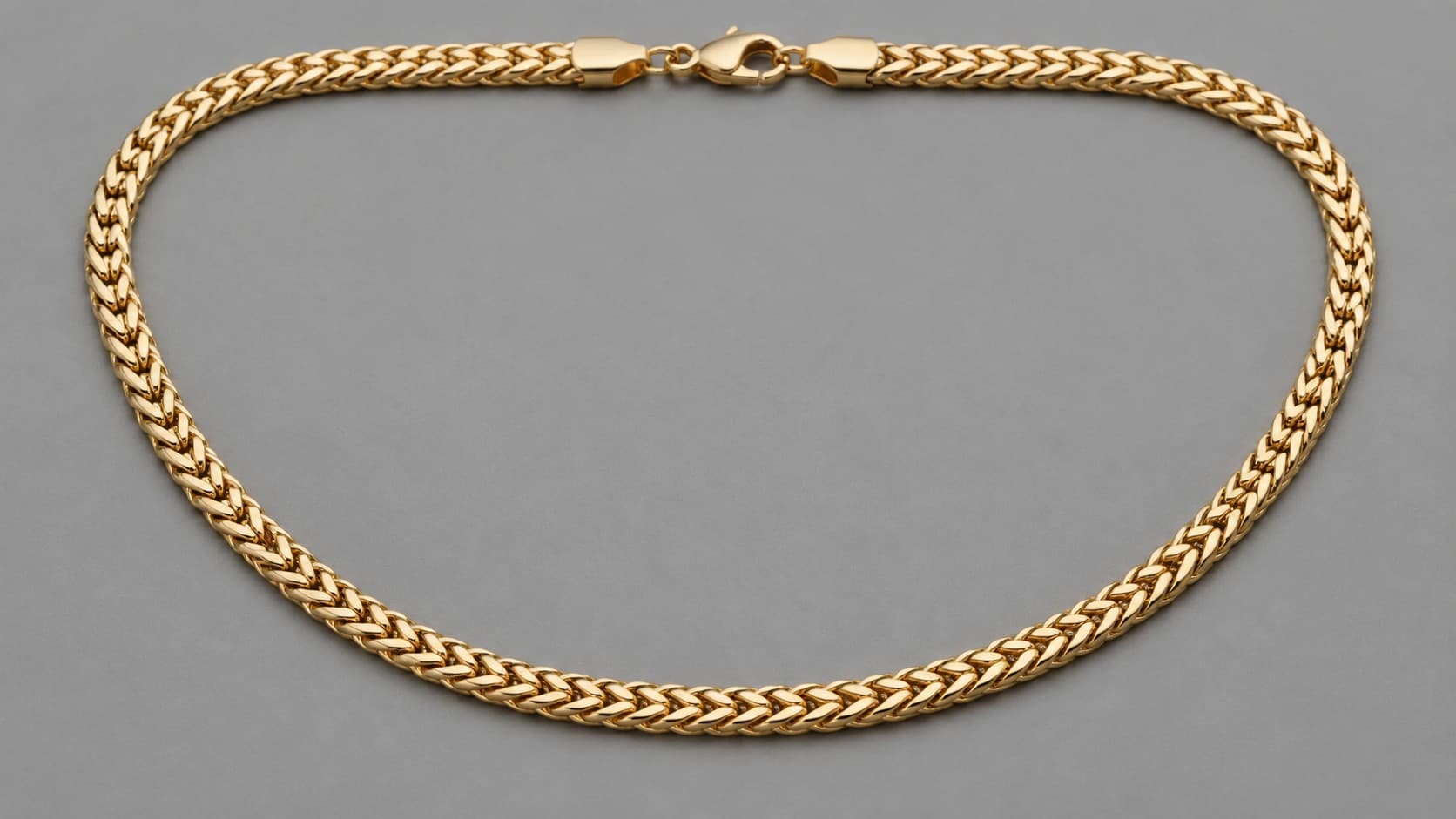
A Franco chain is built by interlocking rows of small V-shaped wire segments so densely that almost no gap shows between them, producing a boxy, faceted surface that often carries a light diamond-cut shimmer. Visually, it lands somewhere between the twist of a rope chain and the flat geometry of a box chain.
The tight weave makes Franco chains sturdy enough to support heavier pendants, and the squared shape helps them keep their form instead of twisting during wear. They’re a popular choice when someone wants a chain with texture that’s still tough enough for daily use.
Side by side, the difference from a box chain comes down to shape: a box chain uses flat square links stacked at right angles, while a Franco chain weaves V-shaped links together for a more textured, faceted surface. Compared to a rope chain, a Franco chain looks less twisted and more structured, which is why it’s often described as the middle ground between the two styles.
Singapore Chain
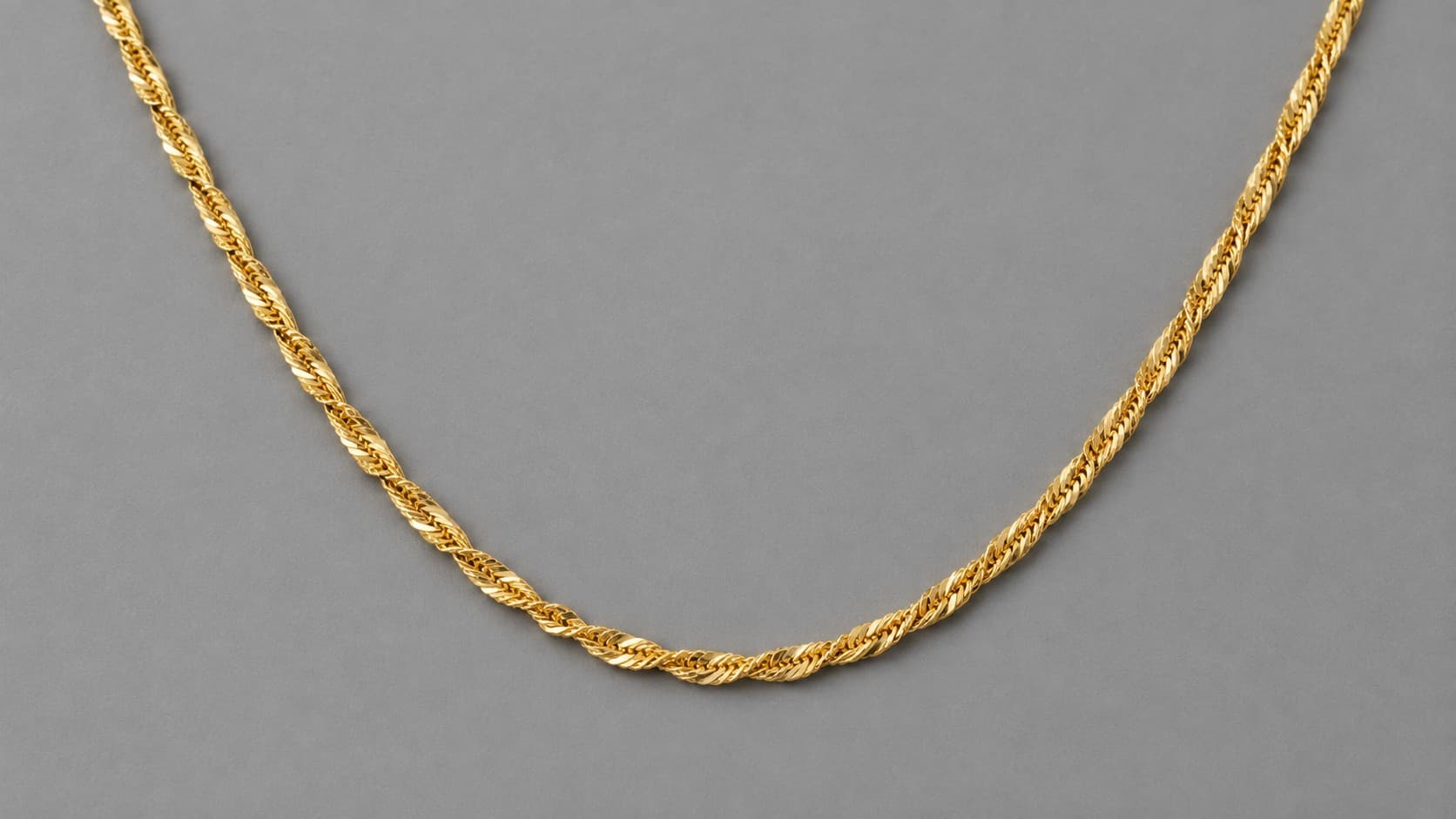
A Singapore chain is made from small, flat, diamond-cut links that are woven together and then twisted into a spiral, giving the whole chain a subtle wave-like ripple. That twist is what sets it apart from a straight cable or curb chain, and it’s also what makes it sparkle more than most simple chain styles.
Because the individual links are diamond-cut, meaning they have tiny angled facets rather than a smooth surface, a Singapore chain throws light in several directions at once as it moves. This makes it a popular pick for people who want a delicate pendant chain with extra shine, since the twist and the cut work together to catch light even on a thin, lightweight chain. It’s rarely used for heavy pendants, though, since the woven links are built more for shimmer than raw strength.
Bead Chain (Ball Chain)
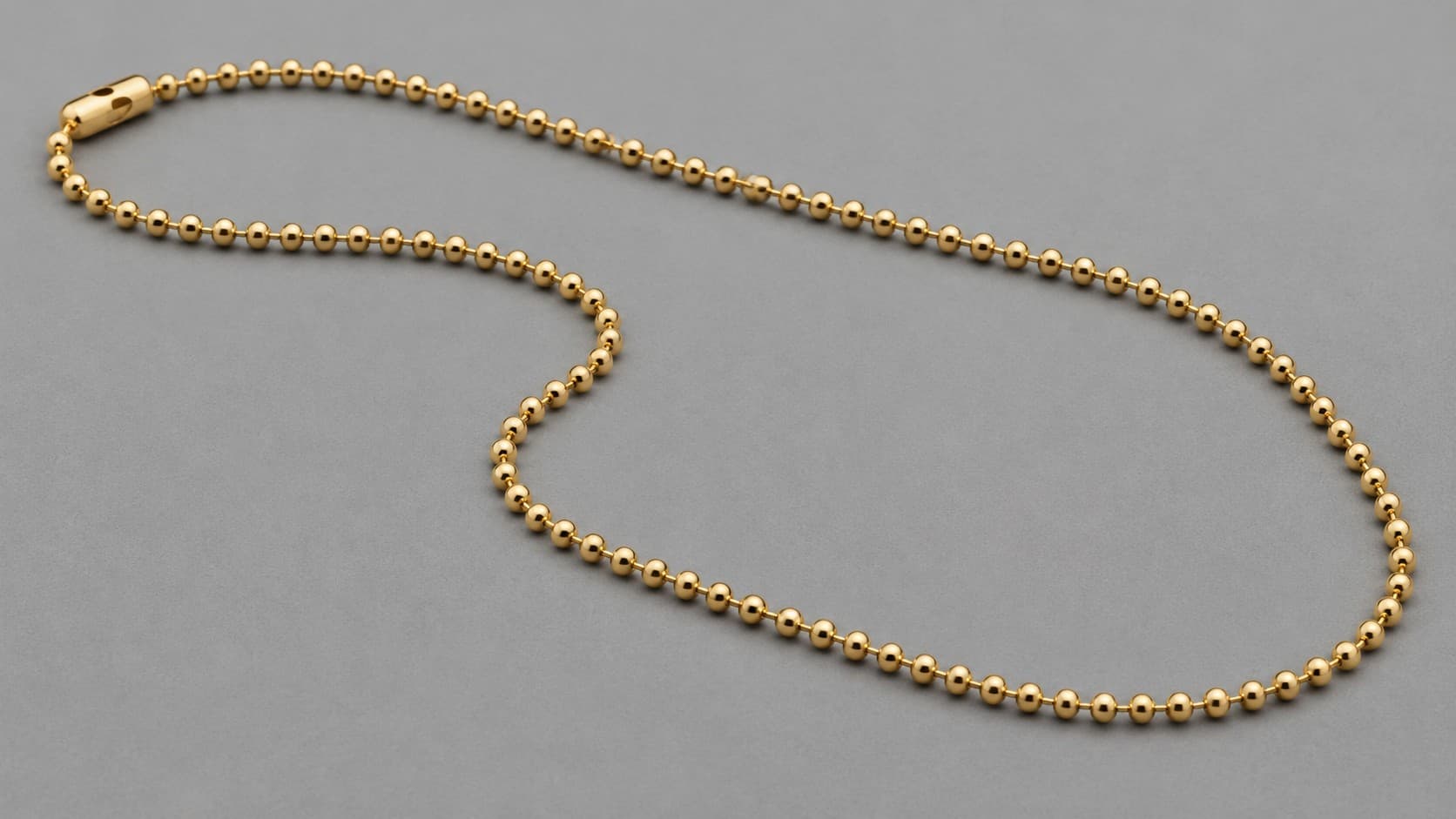
A bead chain, also called a ball chain, is made of small metal spheres strung together and separated by thin connecting bars rather than traditional links. It’s the same basic style used on military dog tags, which is probably where most people have seen it before, even if they didn’t know its name.
Because there are no interlocking links to catch or twist, a ball chain moves smoothly and resists tangling better than many woven or textured styles. The individual beads can be made solid or hollow; hollow versions keep even a larger-sized chain light enough for comfortable, all-day wear. This style isn’t built for heavy pendants, since the connecting bars are thin, but it works well for lightweight tags, small charms, or as a simple, casual necklace on its own.
Omega Chain
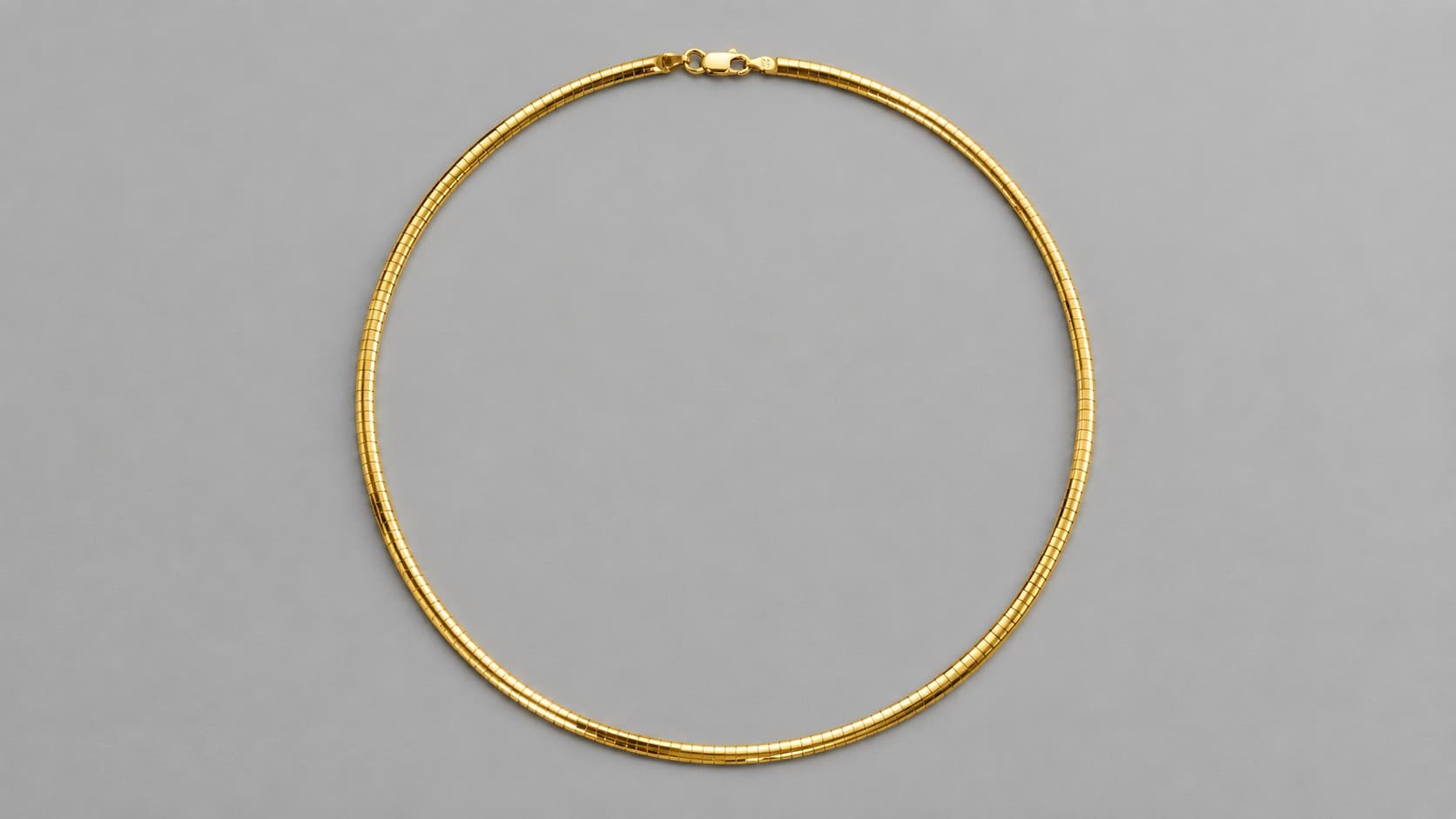
An omega chain hides its individual links almost entirely. Dozens of short, curved metal segments are lined up edge to edge and anchored to a flexible mesh strip underneath, so from the outside it reads as one continuous, polished band rather than a series of joined pieces, which is where its collar-like look comes from.
This construction makes omega chains sit close to the neck and drape more like a collar than a typical necklace, which is why they’re often chosen for pendant displays or worn as a bold piece on their own. The trade-off for that smooth, structured look is flexibility: an omega chain is stiffer than a snake chain, which has a similar rounded surface but bends far more easily. Omega chains also shouldn’t be paired with heavy or oversized pendants, since the flat plates aren’t designed to flex under uneven weight.
How to Select a Chain Style
The right chain depends on three simple things: how it will be worn, how much weight it needs to hold, and how much upkeep the wearer is prepared to do. Those three questions narrow the options quickly.
For everyday wear with a pendant, sturdier styles like cable, curb, box, or rolo make sense because they resist kinking and hold weight evenly. For a necklace meant to be worn on its own as a statement piece, flatter and more decorative styles like herringbone, Byzantine, or a thick rope chain work well since their texture is the whole point. For layering multiple necklaces, mixing a smooth chain like cable with a textured one like wheat or Franco creates contrast without the chains tangling into each other constantly. When two styles look almost identical on a product page, such as mariner and anchor, the difference usually comes down to a manufacturer’s naming choice rather than any real change in how the chain looks or wears.
| Chain Style | Best For | Care Level |
|---|---|---|
| Cable | Everyday wear, pendants | Low |
| Curb | Daily wear, bold looks | Low |
| Figaro | Daily wear, statement style | Low |
| Rope | Heavier pendants, sparkle | Low |
| Box | Minimalist daily wear | Low |
| Snake | Light pendants | Medium |
| Herringbone | Standalone statement piece | High |
| Wheat | Pendants, layering | Low |
| Byzantine | Standalone statement piece | Medium |
| Rolo | Pendants, charms | Low |
| Paperclip | Modern standalone or pendant | Medium |
| Mariner | Bold, wider necklaces | Low |
| Franco | Heavier pendants, texture | Low |
| Singapore | Delicate pendants, sparkle | Medium |
| Bead/Ball | Dog tags, light charms | Low |
| Omega | Standalone or pendant display | Medium |
Frequently Asked Questions
Which chain style is the strongest?
Rope, curb, wheat, and cable chains are generally considered the strongest everyday options because their link construction resists twisting and spreads weight evenly across the chain. Flatter, more delicate styles like herringbone or snake chains look elegant but are more prone to kinking if bent or pulled sharply.
Can any chain hold a pendant?
Not quite. Chains with smooth, even, and flexible links, such as cable, box, rope, and wheat, work well with pendants because the bail can move and sit naturally. Very flat or rigid styles like herringbone are usually best worn alone, since a pendant bail can’t grip or slide on them properly.
Why do some chains kink more than others?
Kinking happens when a chain’s links are tightly packed and flat, since there’s less room for the metal to flex before it bends out of shape. That’s why snake, herringbone, and omega chains, all known for their smooth, tight construction, need gentler handling than looser, rounder styles like cable or rolo.
Is a thicker chain always stronger?
Usually, yes, since more metal generally means more resistance to bending and stretching. But the link style matters too. A thick herringbone chain can still kink more easily than a thinner rope or curb chain, because the shape of the links plays as big a role as the width.
What stops a chain from tangling?
Storing chains flat, separated, or hanging individually rather than piled together in one spot helps prevent tangling. Clasping a chain closed before storing it, or using a small jewelry box with dividers, also keeps thinner styles like cable or wheat chains from knotting themselves around each other.
Conclusion
Every chain style covered here solves a slightly different problem, whether that’s holding a pendant securely, catching light in a certain way, or standing up to daily wear without much fuss. Cable, curb, and rolo chains earn their popularity through sheer practicality, while rope, herringbone, Byzantine, and omega chains lean into texture and drama for pieces meant to be noticed on their own. Nautical-inspired styles like mariner chains sit in between, sturdy enough for daily wear but bold enough to stand alone, while simpler builds like bead chains and Singapore chains prove that a chain doesn’t need complicated links to earn its keep. Once the difference between a curb link and a figaro link, or a snake chain and an omega chain, is clear, choosing jewelry stops being a guessing game and starts being a decision based on exactly what a piece needs to do.