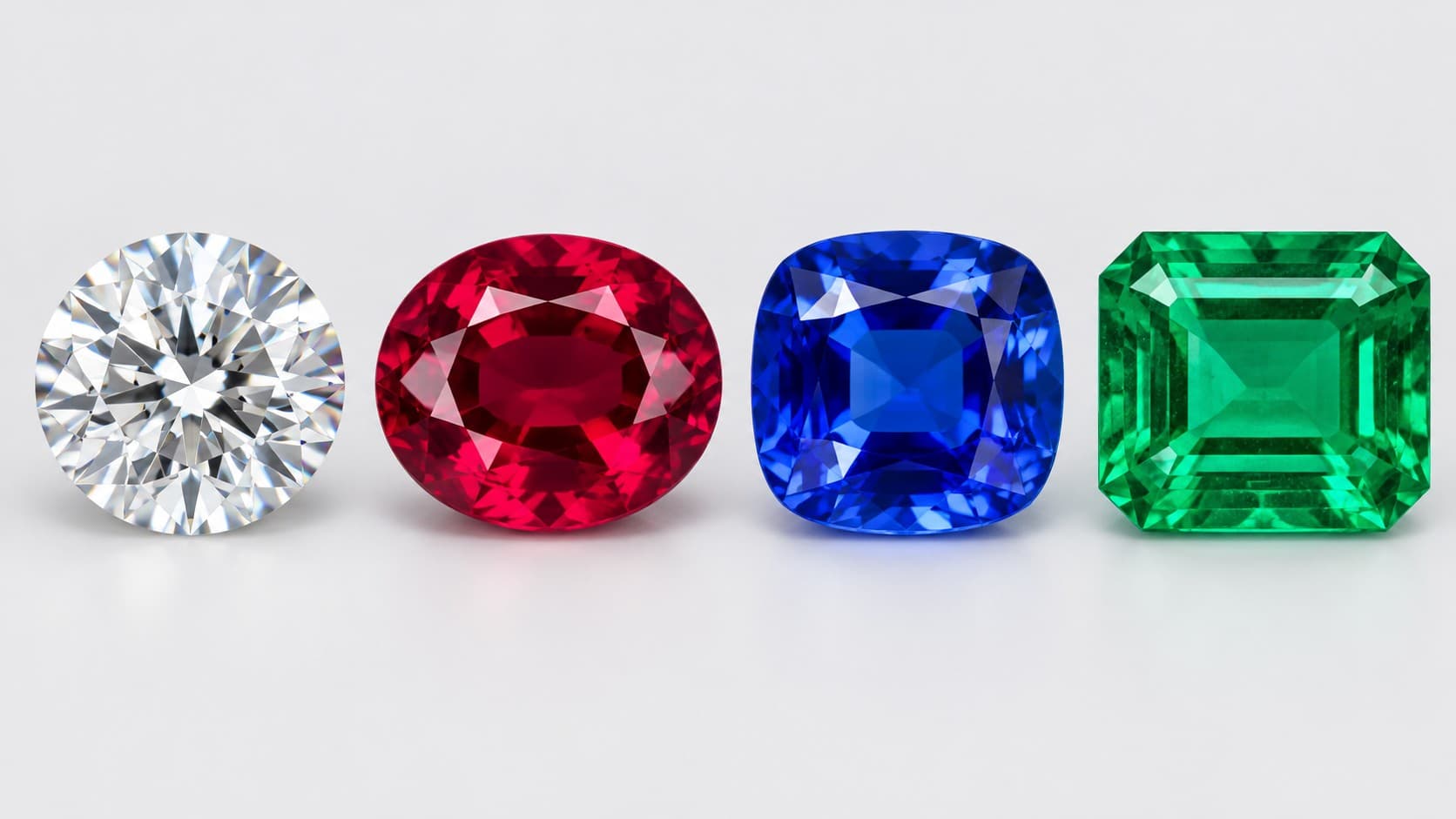
Step into almost any jewelry store and the word “precious” turns up attached to just four stones: diamond, ruby, sapphire, and emerald. It sounds like a scientific fact, the kind of thing a geologist measured with a machine. It is not. The label is centuries old, it was never applied consistently, and some of the gemstones left out of the club are rarer and more expensive than the ones inside it. Where this idea came from, and what actually separates a dazzling stone from an ordinary rock, says a lot about how the jewelry trade has always mixed real science with old habits of marketing.
Why Are Some Gemstones Called “Precious”?
A gemstone is called precious if it belongs to one of four traditional groups: diamond, ruby, sapphire, or emerald. That is the short answer, and it surprises a lot of people because it sounds more like a list than a rule.
The split between “precious” and “semi-precious” stones goes back to the 1800s, when European jewelers needed a quick way to separate the most sought-after gems from everything else. Diamond, ruby, sapphire, and emerald were rare, hard enough to survive daily wear, and in heavy demand from royal courts and wealthy buyers. Everything else, including stones like amethyst, topaz, and garnet, got filed under “semi-precious,” even though several of them are strikingly beautiful and, in some cases, genuinely rare. Amethyst is actually a good example of how shaky the system was: it was once ranked alongside the big four, until large deposits were discovered in Brazil in the 1800s and its price dropped, bumping it down into the “semi-precious” group even though nothing about the stone itself had changed.
That old system still shows up in store signage and casual conversation, but most gemologists today treat it as a historical label rather than a grading standard. A gem’s true value depends on its rarity, hardness, color, and demand, not on which side of a 19th-century dividing line it happens to fall.
The Traditional Big Four Gemstones
These four stones share a few things in common: hardness, worldwide name recognition, and a very long history of being set into crowns, rings, and royal treasuries. Each one earned its reputation for different reasons.
Diamond
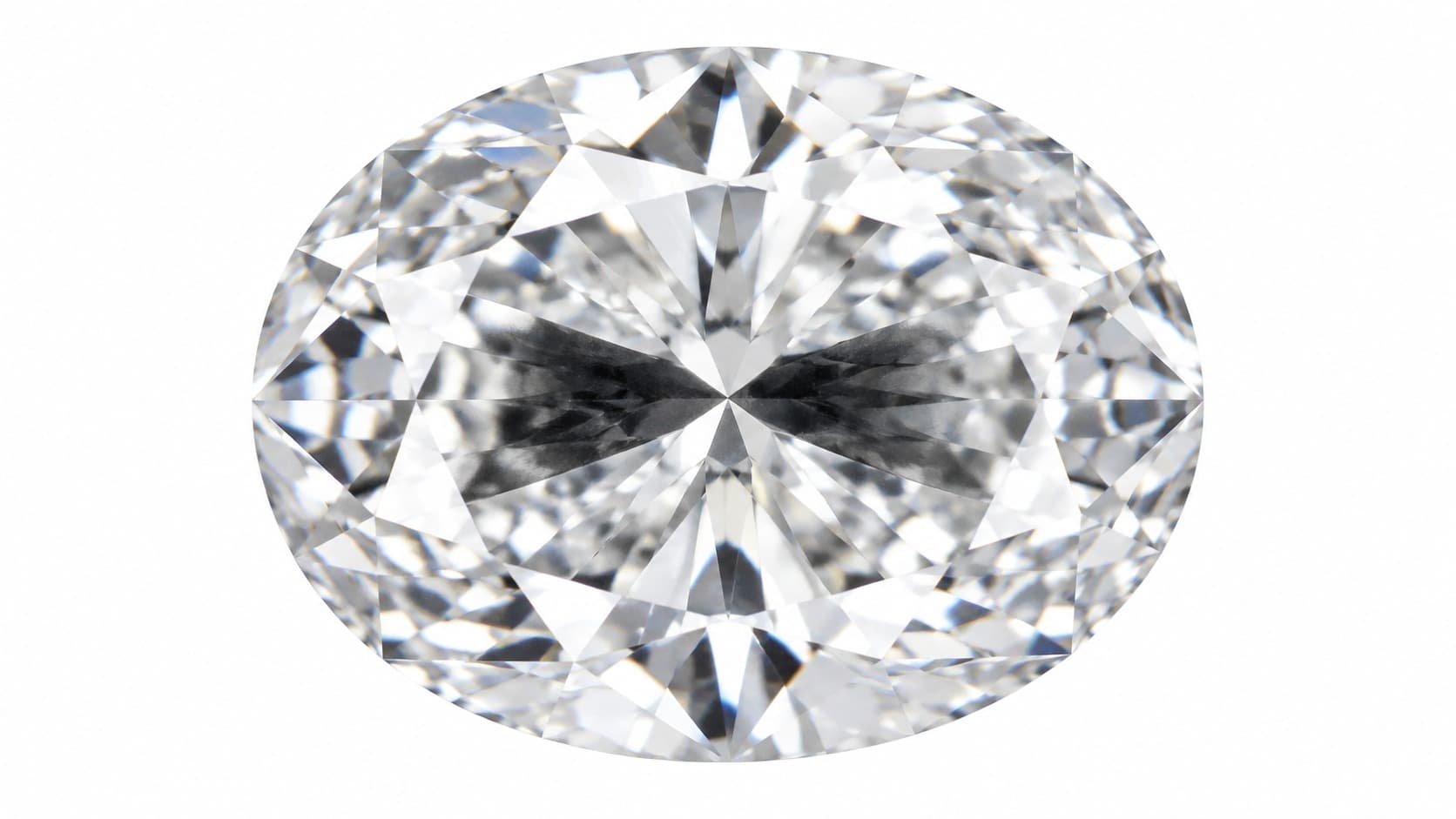
Diamond is the hardest natural material on Earth, scoring a perfect 10 on the Mohs hardness scale. That hardness is exactly why diamonds became the standard choice for engagement rings. A ring gets bumped, scratched, and knocked against things every single day, and diamond shrugs off nearly all of it.
Diamonds are made of pure carbon, squeezed under extreme heat and pressure more than 90 miles below the surface, and volcanic activity eventually pushes them up toward the crust inside a rock type called kimberlite. While most people picture a colorless stone, diamonds actually occur in many colors, including pink, blue, yellow, and a famously rare red. Fancy colored diamonds, especially pinks and blues, routinely sell for far more per carat than colorless ones because so few of them exist.
The biggest gem-quality rough diamond ever found is the Cullinan, discovered at South Africa’s Premier Mine in January 1905. It weighed an enormous 3,106 carats before being cut into nine major stones, the largest of which, the 530-carat Cullinan I, now sits in the British Sovereign’s Sceptre. For comparison, a typical engagement ring diamond today weighs about one carat, which shows just how extraordinary that single rough stone really was.
Ruby
Ruby is a red variety of the mineral corundum, and its color comes from traces of chromium trapped inside the crystal as it formed. The deeper and more vivid the red, the more valuable the stone, and gemologists use the term “pigeon blood” to describe the most prized shade.
With a hardness of 9 on the Mohs scale, ruby is the second-hardest natural gemstone after diamond, which makes it a tough and practical choice for rings worn every day. Fine rubies, particularly those from Myanmar’s Mogok region, are genuinely rare at large sizes, which is part of why top-quality rubies can outprice diamonds of similar carat weight. Mozambique has become a major modern source of ruby since large deposits were discovered there in the early 2000s, and stones from that region now account for a significant share of the rubies sold worldwide.
Sapphire
Sapphire is also corundum, the same mineral family as ruby, but any color other than red gets the sapphire name instead. Blue is the most familiar shade, but sapphires naturally occur in pink, yellow, green, and a rare orange-pink combination called padparadscha.
Because sapphire shares ruby’s 9-out-of-10 hardness, it holds up extremely well to everyday wear, which is one reason it has become a popular alternative to diamond for engagement rings. Kashmir and Burmese sapphires are considered the most desirable by collectors, largely because the mines that produced them are mostly exhausted, making old stones increasingly hard to find. Most sapphires sold today, including the majority of blue ones, have been heat treated to improve their color and clarity, a long-accepted practice in the trade as long as the seller discloses it.
Emerald
Emerald is the green member of the beryl family, and its color comes from traces of chromium or vanadium. Unlike diamond, ruby, and sapphire, emerald almost always contains visible internal characteristics, sometimes called a “jardin” (French for garden), and these are considered a normal part of the stone rather than a flaw.
Emerald sits lower on the hardness scale, between 7.5 and 8, which means it is more prone to chipping and should be treated with extra care. Most emeralds on the market have been treated with oil or resin to improve their clarity, a widely accepted industry practice as long as it is disclosed to the buyer. Colombia’s Muzo and Chivor mines are generally considered the source of the finest emeralds in the world, and stones from these deposits carry a noticeable price premium over material from other sources such as Zambia or Brazil.
Centuries ago, the Roman writer Pliny the Elder described diamond as the single most valuable thing in existence, ranking it above every other gemstone, metal, or material known at the time.
Is the Precious vs. Semi-Precious Label Still Accurate?
The old four-stone category leaves out gems that are far rarer than anything on the traditional list. That single fact is why most gemologists now avoid the term “semi-precious” altogether.
Tanzanite, a violet-blue gemstone found in only one place on Earth, a small area near Mount Kilimanjaro in Tanzania, is a clear example. So is alexandrite, a stone that appears green in daylight and red under incandescent light, and is scarce enough that fine specimens can rival ruby in price. Jadeite, the most valuable form of jade, has sold at auction for prices that beat many diamonds of comparable size. None of these stones made the traditional “precious” list, simply because they were not well known to European jewelers in the 1800s.
Major industry groups, including the American Gem Trade Association, now encourage retailers to drop the precious and semi-precious labels entirely and instead describe stones by their actual rarity, durability, and quality. A gem’s price tag today is set by supply, demand, and condition, not by a category invented 200 years ago.
The Four Cs: How Gemstone Value Is Measured
Jewelers judge gemstone quality using four main factors: color, clarity, cut, and carat weight. These are often called the Four Cs, a framework the Gemological Institute of America (GIA) developed for diamonds in the mid-20th century and which the wider trade later adapted to describe colored gemstones as well.
Color is usually the most important factor for colored stones like ruby, sapphire, and emerald, because a vivid, even hue is much rarer than a pale or uneven one. Clarity describes how many internal marks, called inclusions, the stone contains, though standards differ by gem type since emeralds are expected to show more inclusions than diamonds. Cut refers to how well the stone’s angles and proportions were shaped to reflect light, which has a huge effect on sparkle regardless of how good the rough material was. Carat weight simply measures the stone’s mass, with one carat equal to 0.2 grams, and prices tend to jump sharply once a stone crosses certain size thresholds, since larger clean stones are disproportionately rarer than small ones.
| Factor | What It Measures | Why It Matters |
|---|---|---|
| Color | Hue, tone, and saturation | Usually the biggest price driver for colored gems |
| Clarity | Visible inclusions or blemishes | Affects brilliance and how “clean” the stone looks |
| Cut | Shape and proportion quality | Controls how much light the stone reflects back |
| Carat | Weight of the stone | Larger stones are rarer, so price rises faster than size |
Rarity and origin round out the picture. A ruby from Myanmar’s Mogok Valley, a sapphire from Kashmir, or an emerald from Colombia can sell for multiples of an otherwise identical stone from a more common source, simply because of where it was mined and how limited that supply has become. For important purchases, a gemstone report from an independent lab such as GIA or the American Gemological Laboratories can confirm these details in writing, which matters a great deal if a stone is later insured, resold, or passed down as an heirloom.
The World’s Most Expensive Gemstones Ever Sold
Record-breaking gemstone sales show just how far rarity can push a price. In April 2017, Sotheby’s sold the Pink Star, a 59.60-carat fancy vivid pink diamond, for $71.2 million in Hong Kong, the highest price ever paid for any gemstone at auction. That works out to roughly $1.2 million per carat, a figure that was actually considered reasonable for a stone this rare and this large.
Colored stones have set their own records too. A Burmese ruby known as the Sunrise Ruby sold for $30.3 million in 2015, the highest price ever paid for a ruby at auction, while a flawless Kashmir sapphire later broke $240,000 per carat in a separate Hong Kong sale. The Rockefeller Emerald, an 18.04-carat Colombian stone with exceptional clarity, set its own per-carat record at over $300,000 when it sold at Christie’s in 2017. These numbers sit in an extreme tier of the market, far beyond what a typical jewelry purchase involves, but they make the underlying point clearly: size, color intensity, and documented origin can multiply a stone’s value many times over.
How to Clean and Store Precious Gemstones
Proper care depends mostly on hardness, since softer stones need more caution than harder ones. A few general rules apply across diamond, ruby, sapphire, and emerald jewelry alike.
- Store each piece separately in a soft pouch or lined box so stones cannot scratch each other.
- Remove rings before heavy manual work, gym sessions, gardening, or swimming in chlorinated pools.
- Clean most pieces with warm water, a drop of mild dish soap, and a soft toothbrush.
- Avoid ultrasonic cleaners on emeralds, since the vibrations can worsen existing inclusions or loosen oil treatments.
- Have prongs and settings checked by a jeweler once a year to catch loose stones before they fall out.
Emeralds deserve special attention because of their lower hardness and common oil treatments. Harsh chemicals, including many household cleaners and even hot tubs, can strip the oil and make existing inclusions more visible, so a gentle wipe with a soft cloth is usually the safest routine. Diamonds, rubies, and sapphires are far more forgiving thanks to their higher hardness, but even these stones can chip if struck at the wrong angle against a hard surface, so a little caution goes a long way regardless of which gem is set in the piece.
Frequently Asked Questions
Are there only four precious gemstones?
Only four stones, diamond, ruby, sapphire, and emerald, carry the traditional “precious” label, though that category dates back to the 1800s and is now considered outdated by most gemologists, since several other gems are rarer and more valuable.
What is the rarest precious gemstone?
Among the traditional four, emerald is generally considered the rarest, especially in large sizes with strong color and good clarity, which is why fine Colombian emeralds command such high prices per carat.
Is a semi-precious stone lower quality than a precious one?
Not necessarily. The semi-precious label refers to historical popularity, not quality or rarity, and stones like tanzanite, jadeite, and fine spinel can be rarer and pricier than some precious gems.
What is the hardest precious gemstone?
Diamond is the hardest, scoring a 10 on the Mohs hardness scale, which is why it remains the top choice for rings that get worn every single day.
Why are Colombian emeralds, Kashmir sapphires, and Burmese rubies worth more?
These specific origins are tied to historically small mining regions that have mostly stopped producing large quantities of fine material, so stones from these sources are genuinely scarcer, and collectors pay a premium for documented origin.
The Bottom Line
The “precious” label survives mostly as a habit of language rather than a meaningful grading system. Diamond, ruby, sapphire, and emerald earned their reputations through real hardness, real rarity, and centuries of royal demand, but the four factors that actually set a gemstone’s price today are color, clarity, cut, and carat weight, applied the same way whether the stone is a diamond or a tanzanite nobody had heard of 50 years ago. A stone’s actual rarity and hardness, not which side of a 19th-century label it falls on, remain the only measures that have ever really mattered.