A lot of jewelry damage doesn’t happen while it’s being worn. It happens in the sink, during a well-meaning cleaning attempt with the wrong tools. Gemstones are not all built the same way, and a method that makes a diamond sparkle can leave an opal cracked or a pearl dull within seconds. Knowing which stones can take a scrub, a soak, or an ultrasonic machine, and which ones can only handle a soft cloth, is the difference between jewelry that lasts a lifetime and jewelry that gets ruined by accident.
Not All Gemstones Can Be Cleaned the Same Way
Gemstones differ in hardness, structure, and treatment history, so a method that’s safe for one stone can destroy another. A diamond is one of the toughest materials on Earth, while an opal contains water inside its own structure and a pearl is made of the same soft material as a seashell. Treating every gemstone the same way ignores those basic physical differences, and that’s exactly how good jewelry gets damaged during routine cleaning.
Three things decide whether a gemstone can handle a deep clean: how hard it is, how porous it is, and whether it’s been treated in a way that changes how it reacts to water, heat, or chemicals. A stone can be objectively hard and still be risky to clean aggressively if it’s been filled with oil or resin to hide internal cracks, which is extremely common with emeralds and turquoise. That’s why checking the specific stone matters more than judging by how expensive or how tough a piece looks.
There’s also the setting to consider. A gemstone might be perfectly safe to clean, but if the prongs holding it in place are worn or loose, cleaning it, especially in an ultrasonic machine, can shake it right out. A quick visual check of the setting before cleaning is worth the extra thirty seconds it takes.
Use the Mohs Scale to Check If a Stone Is Safe to Clean
The Mohs hardness scale ranks minerals from 1 to 10 based on how easily they scratch, and it’s the quickest way to judge how much handling a gemstone can take. Diamond sits at 10, the hardest natural material known, while soft stones like pearl or amber sit closer to 2 or 3. As a rough rule, stones rated 8 and above can usually handle more contact, stones between 6 and 7.5 need a gentler routine, and anything softer than that should really only get a wipe with a damp cloth.
Hardness alone doesn’t tell the whole story, though. Some stones rated fairly high, like emerald at around 7.5 to 8, are almost always treated with oil to fill tiny surface-reaching cracks, and that oil can be stripped out by soap, heat, or vibration even though the stone itself is fairly hard. Turquoise is similar: it’s often stabilized with wax or resin to strengthen a naturally porous stone, and that coating can break down in water long before the mineral itself would ever scratch. So a stone’s number on the scale is a useful starting point, not the final word on how to clean it.
When a stone’s identity or treatment history is uncertain, a jeweler can confirm it before any cleaning begins. A thirty-second check can save a stone that took millions of years to form.
Gemstones That Are Safe to Clean at Home
These stones are dense enough to tolerate soaking, soft brushing, and in most cases an ultrasonic cleaner, as long as they haven’t been heavily treated. This is the group people wear every day without much worry, and it includes some of the most common gemstones in jewelry boxes worldwide.
| Gemstone | Mohs Hardness | Ultrasonic | Steam | Watch Out For |
|---|---|---|---|---|
| Diamond | 10 | Yes | Yes | Skip both if there are visible internal cracks reaching the surface |
| Sapphire | 9 | Yes, if untreated | Yes, if untreated | Fracture-filled or heavily dyed stones can’t handle either method |
| Ruby | 9 | Yes, if untreated | Yes, if untreated | Same rule as sapphire — treatment matters more than raw hardness |
| Alexandrite | 8.5 | Yes | Usually | Generally low-risk, even with ultrasonic cleaning |
| Aquamarine | 7.5–8 | With caution | Risky if fractured | Warm soapy water is safer if fractures are visible |
Even within this durable group, the cut of the stone can matter. Diamonds and sapphires with faceted, closed surfaces clean up easily in both an ultrasonic machine and a steam cleaner, but stones with deep inclusions or filled fractures close to the surface are more vulnerable to either method, since heat and vibration can each widen a crack that would otherwise never cause a problem. When in doubt about a specific stone’s treatment history, warm soapy water and a soft brush is a safe fallback for the whole group, and it’s also the method a jeweler will usually reach for first before deciding whether ultrasonic or steam is worth the risk.
Gemstones That Need Gentle Cleaning
Stones in this middle range can usually handle warm soapy water and a soft brush, but ultrasonic and steam cleaners become a gamble. Amethyst, citrine, garnet, and tourmaline fall here, and while they look fairly durable on paper, internal fractures or sensitivity to heat make aggressive cleaning riskier than it seems.
Citrine, for example, can fade or shift color if it gets too hot, which rules out steam cleaning even though the stone itself is reasonably hard. Tourmaline is prone to fine internal cracks that vibration from an ultrasonic machine can widen over time, turning an invisible flaw into a visible one. Garnet is usually more forgiving than the others in this group, but it’s still safer to stick with the gentle method rather than assume it can take a full ultrasonic cycle.
The safest approach for this entire group is the simplest one: mild, fragrance-free soap, lukewarm water, and a brush with soft bristles, followed by a gentle pat dry with a lint-free cloth. There’s rarely a good reason to reach for anything stronger with these stones, since the gentle method cleans them just as effectively without the added risk.
Gemstones You Should Never Soak or Scrub
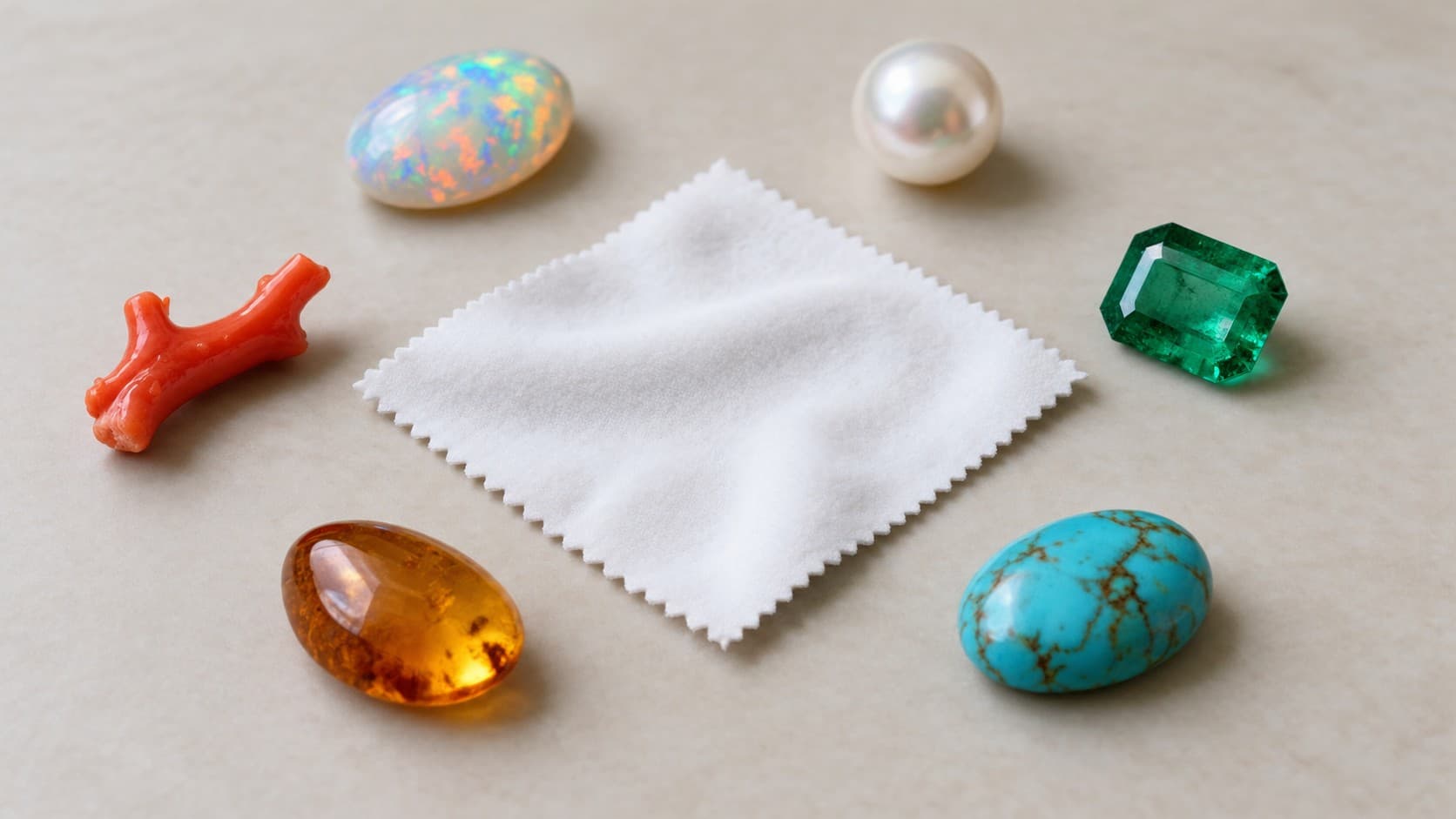
Some of the most popular gemstones in jewelry are also the most fragile when it comes to cleaning, and this is where most at-home damage happens. Opals, pearls, emeralds, turquoise, coral, amber, and lapis lazuli all fall into this category, each for a slightly different reason.
- Opal contains up to 20% water inside its own structure, so sudden temperature changes, direct heat, or drying out can cause it to crack from the inside.
- Pearls are organic and soft, around 2.5 to 4.5 on the Mohs scale, and they’re damaged just as easily by perfume, hairspray, and skin oils as they are by cleaning chemicals.
- Emerald is almost always treated with oil to hide surface-reaching fractures, and soap, heat, or ultrasonic vibration can strip that oil out, suddenly making the internal flaws visible.
- Turquoise is porous and frequently stabilized with wax or resin, both of which can break down in water or household chemicals.
- Amber and coral are both soft, organic materials that scratch, cloud, and lose their shine easily, and neither should ever go near an ultrasonic machine.
For each of these gemstones, the safest method is a barely damp, soft cloth wiped gently across the surface, followed immediately by drying with another soft cloth. No soaking, no scrubbing, no machines. Visible buildup or dullness that persists despite regular wiping is a sign to see a jeweler rather than reach for a stronger cleaning method at home.
The Risks of Ultrasonic and Steam Cleaning
Ultrasonic cleaners work by creating tiny, rapid vibrations in water that shake dirt loose from tight spaces like under a prong or inside a filigree setting. Those same vibrations can widen existing cracks, dislodge loose stones, and strip away oils or resins used to treat softer gems, which is exactly why they’re a bad match for so many popular stones. Steam cleaners cause damage a different way: the combination of high heat and moisture can crack heat-sensitive stones, fade color-treated ones, and shock stones like opal that hold water inside their own structure.
The confusion happens because both tools are marketed as fast, professional-grade solutions, and for a narrow group of hard, untreated stones, they genuinely are convenient and effective. In reality, each one is a specialized tool that helps a small list of gemstones and actively harms a much longer one, including favorites like pearl, opal, emerald, turquoise, and tanzanite. When there’s any doubt about what a stone is or how it was treated, skipping both machines is always the safer choice, since gentle hand-cleaning works for almost everything without the risk.
The mechanics of each machine, and how different metals and settings hold up alongside the gemstones themselves, are covered in more depth in Nobbier’s guides to cleaning jewelry with an ultrasonic cleaner and steam cleaning jewelry safely.
The Safest At-Home Gemstone Cleaning Method
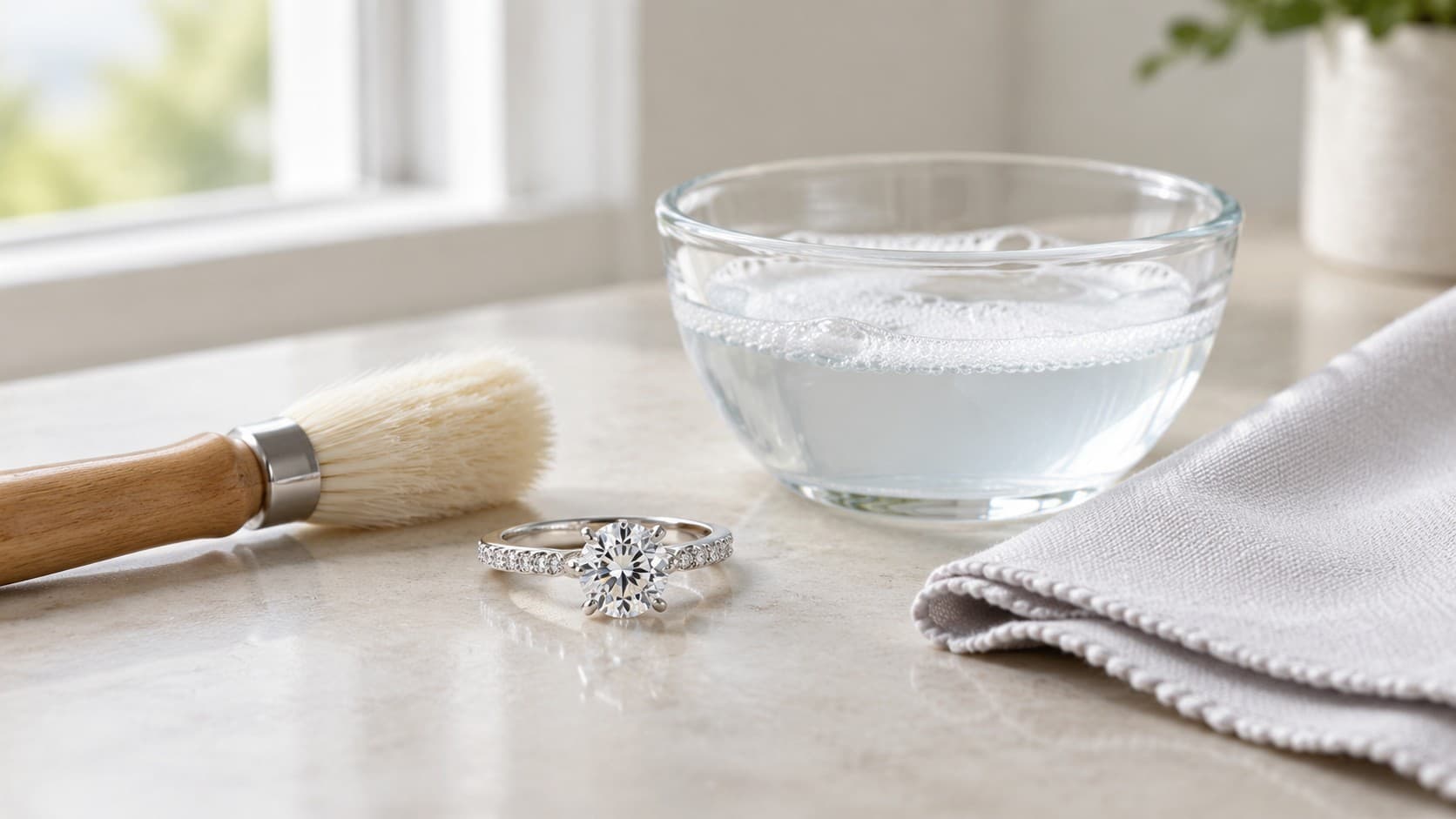
When a gemstone’s category isn’t clear, this gentle method works for the widest range of stones and precious metals without much risk. It takes about ten minutes and only needs a few basic supplies.
- Check the setting first. Look closely at the prongs or bezel holding the stone in place. If anything feels loose or looks bent, skip cleaning and see a jeweler before it gets worse.
- Mix a mild solution. Add a few drops of fragrance-free dish soap to a bowl of lukewarm (not hot) water.
- Brush gently. Dip a soft-bristled brush, a baby toothbrush works well, into the solution and gently clean around the stone and underneath the setting, where dirt and lotion tend to build up.
- Rinse carefully. Rinse under lukewarm running water with the drain closed or covered, so nothing gets lost if a stone happens to come loose.
- Dry immediately. Pat the piece dry right away with a soft, lint-free cloth rather than letting it air dry, which can leave water spots on metal.
This method is gentle enough for most mid-hardness stones and every precious metal, though it should still be skipped for soft, porous, and organic gems such as opal, pearl, emerald, and turquoise, which only need a damp cloth rather than any soaking.
How to Keep Gemstones Clean Between Washes
How a gemstone is treated day to day often matters more than how it’s cleaned once a month. Perfume, hairspray, and lotion are some of the biggest causes of dullness in pearls, opals, and other porous stones, since these products settle into the stone’s surface and setting over time. Getting dressed and finishing hair and makeup before putting on jewelry, rather than after, avoids most of this buildup in the first place.
Sunlight is another factor people often overlook. Extended exposure can fade or dull certain stones, including amethyst, topaz, and pearls, so pieces worn daily shouldn’t be left sitting in direct sun when they’re not on. Similarly, chlorine from pools and hot tubs can react badly with porous and organic gems, so it’s worth taking jewelry off before swimming rather than cleaning up the damage afterward.
Storage matters too. Keeping gemstones in a lined box or a soft pouch, separated from other pieces, prevents the kind of everyday scratching that happens when harder stones rub against softer ones in a jewelry drawer. None of these habits take much extra effort, but together they cut down on how often deep cleaning is even needed.
Common Gemstone Cleaning Mistakes to Avoid
Most gemstone damage isn’t caused by wearing jewelry too often. It happens during cleaning attempts that seemed harmless at the time.
- Using hot water on stones like opal or emerald, which can cause sudden temperature shock and cracking.
- Scrubbing with a stiff brush or toothpaste, which scratches softer stones even when it looks harmless.
- Soaking porous stones like turquoise or lapis, which can strip away stabilizing wax or resin treatments.
- Using household chemical cleaners like ammonia or bleach on anything other than diamonds, since these can dull or discolor most other gems.
- Skipping the setting check, which means a loose stone can fall out during cleaning, especially inside an ultrasonic machine.
Avoiding these five mistakes prevents the vast majority of at-home cleaning damage, and none of them require special tools to avoid, just a little more caution before starting.
When Professional Cleaning Is Worth It
A professional cleaning is worth it whenever a stone is valuable, heavily treated, antique, or simply unidentified. Jewelers have access to steam cleaners set to safe, calibrated temperatures and can visually inspect a setting under magnification for looseness before any cleaning even begins.
It’s also worth a professional visit if a gemstone looks cloudy, has visible cracks, or the piece hasn’t been cleaned in years and has heavy buildup around the setting. Trying to fix visible damage at home, rather than doing routine light maintenance, is where the highest risk of making things worse comes in, since a jeweler can identify exactly what’s causing the problem before choosing a method.
Frequently Asked Questions
Can I clean all my jewelry the same way?
No. Hardness, porosity, and treatment history vary too much between gemstones for one method to be safe across the board. Durable, untreated stones like diamond and sapphire tolerate more handling, while porous or organic stones like opal and pearl need a much gentler approach.
Is it safe to use toothpaste to clean gemstones?
It’s not recommended. Toothpaste contains mild abrasives that can scratch softer gemstones and dull the polish on harder ones over time, even though it’s sometimes suggested as a household trick.
How often should gemstone jewelry be cleaned?
Light, gentle cleaning every few weeks keeps most jewelry looking its best, while a professional check and clean once or twice a year catches loose settings or buildup before they turn into bigger problems.
Why did my emerald look cloudy after I cleaned it?
Most emeralds are treated with oil to hide small internal fractures, and soap, heat, or vibration can strip that oil away. This makes the natural inclusions inside the stone suddenly more visible, which reads as cloudiness.
Can pearls go in an ultrasonic cleaner?
No. Pearls are soft, organic, and layered, and the vibrations from an ultrasonic cleaner can crack their surface or loosen the nacre layers that give them their shine.
The Bottom Line
Cleaning gemstones safely comes down to one habit: identifying the stone before choosing a method, rather than assuming a technique that worked once will work everywhere. Durable stones like diamond, sapphire, and ruby can handle soaking and even ultrasonic cleaners in most cases, mid-range stones like amethyst and citrine do best with a gentle soap-and-brush routine, and soft or porous stones like opal, pearl, emerald, and turquoise should only ever get a barely damp cloth. Pair that with a few everyday habits, keeping perfume and lotion away from porous stones, checking settings regularly, and storing pieces separately, and most gemstone jewelry will stay in good shape for decades without ever needing repair.