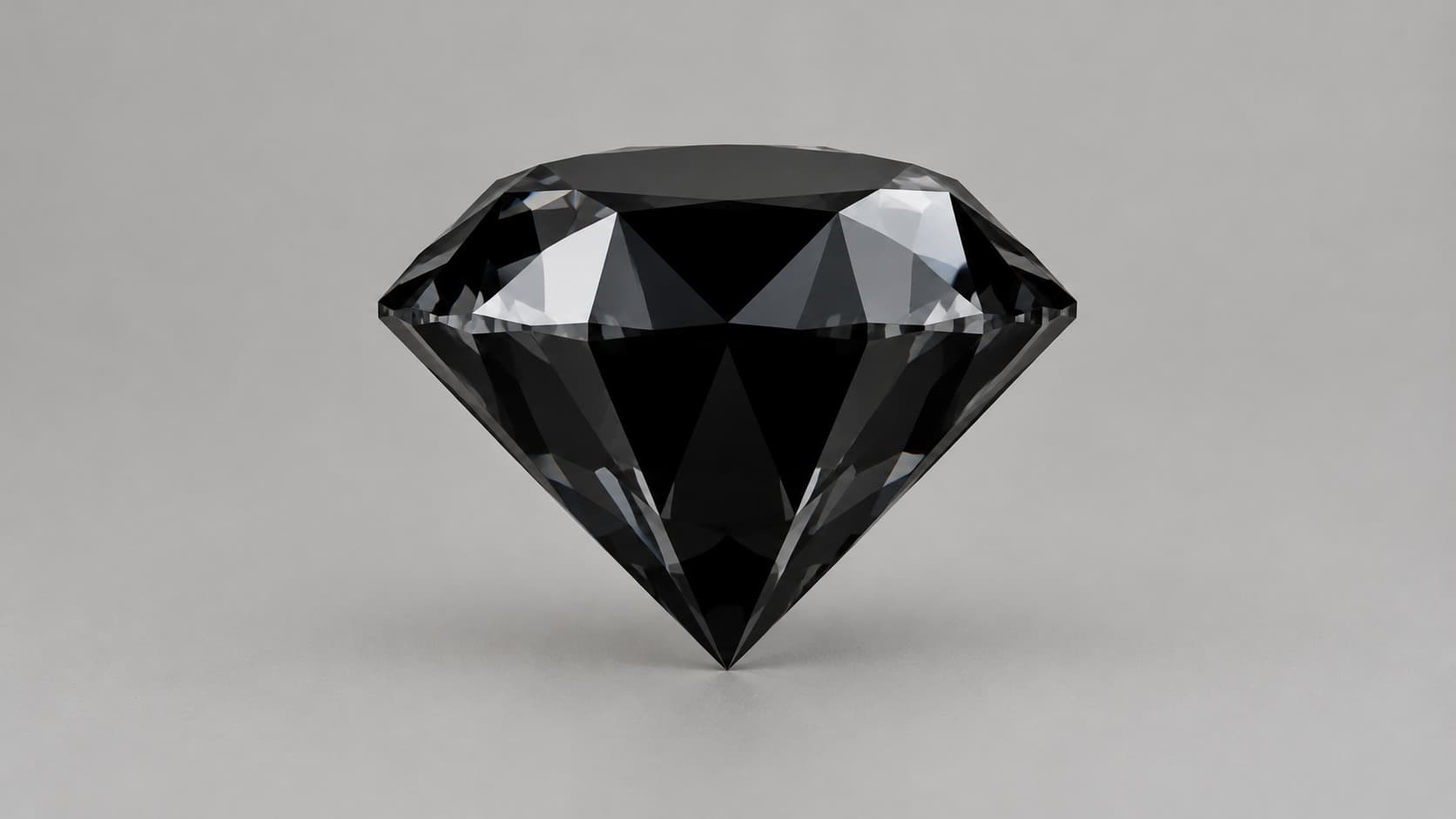
A black diamond looks nothing like the sparkly, see-through stone most people picture when they hear the word “diamond.” It’s dark, almost metallic, and sometimes doesn’t sparkle at all. That surprises a lot of shoppers, because black diamonds are chemically the exact same mineral as the clear diamonds in engagement rings. The difference is in how they formed, what’s trapped inside them, and in most cases, how a lab changed them. Understanding that difference matters, because it directly affects what a buyer pays and how rare a given stone actually is.
What Causes a Black Diamond’s Color?
A diamond turns black because of what’s packed inside it, not because of a different chemical recipe. Every diamond is made of carbon atoms arranged in a crystal pattern, and that’s still true for black ones. What changes the color is the presence of thousands of tiny dark mineral specks, called inclusions, scattered throughout the stone.
A colorless diamond is almost pure carbon with very few inclusions. A black diamond is often so packed with inclusions that light can’t pass through it at all.
Most natural black diamonds get their color from graphite, which is another form of carbon, along with tiny bits of iron oxide and other minerals trapped during formation. These inclusions block light, which is why black diamonds usually look solid and opaque instead of letting light bounce around inside like a clear diamond does. Instead of fire and sparkle, a black diamond gives off a dull, almost metallic shine called luster.
Some natural black diamonds also have a different internal structure than most gem-quality diamonds. Instead of growing as one continuous crystal, they can form as a mass of many microscopic diamond crystals fused together, called a polycrystalline structure. That structure traps even more light and adds to the deep, solid black look.
Natural vs. Treated Black Diamonds
Both exist, but most black diamonds sold today are treated, not naturally black. Treated stones start out as low-quality colorless or lightly colored diamonds that aren’t attractive enough to sell as white diamonds. Jewelers then use heat or radiation to force the color to darken permanently.
That doesn’t make them fake. A treated black diamond is still a real diamond, just one that’s had its color changed on purpose, the same way some sapphires or topaz are heat-treated to improve their color. The difference between natural and treated black diamonds comes down to rarity and price, not authenticity.
Natural Black Diamonds
Natural black diamonds form the same way every other diamond does: deep underground, under extreme heat and pressure, over millions of years. What makes them black is simply an unusually heavy dose of graphite and mineral inclusions picked up during that process.
They’re genuinely uncommon. Most mined diamonds come out colorless or lightly tinted, so a stone that forms with enough dark inclusions to look solid black is a rare outcome, not the normal one. When a gem lab certifies one, it’s graded on the fancy color scale and labeled “Fancy black,” with the report separately confirming that the color is natural rather than treated. One of the most famous examples is the Black Orlov, a 67.5-carat natural black diamond with a dramatic (and largely unverified) legend attached to its past.
Carbonado: The Rarest Black Diamond
Carbonado is a separate, even rarer type of natural black diamond, and scientists still don’t fully agree on where it comes from. Unlike typical diamonds, carbonado isn’t one single crystal. It’s a porous, charcoal-like mass made up of countless microscopic diamond grains fused together, along with graphite and other minerals.
It’s found almost exclusively in Brazil and the Central African Republic, two regions that were once connected as part of an ancient supercontinent. That odd, scattered location is part of why its origin is debated. One theory suggests carbonado formed from an asteroid impact or even arrived from space, based on unusual elements inside it, like osbornite, a mineral more commonly seen in meteorites. A competing, more grounded theory points to formation deep in the Earth’s crust from organic carbon under intense pressure. Neither theory has been proven, which keeps carbonado one of the genuinely unsolved mysteries in gemology.
Carbonado’s fused, interlocking structure also makes it tougher than a typical single-crystal diamond, since there are no clean internal planes for a crack to follow. That extreme toughness is exactly why large carbonados historically ended up in industrial drilling tools rather than jewelry; they were simply too hard to facet with older cutting methods. The largest one ever found, a 3,167-carat Brazilian specimen nicknamed “the Sergio,” was pulled from the ground in Bahia in 1895 and remains the largest rough diamond of any kind ever recorded.
Treated Black Diamonds
Most black diamonds in jewelry stores are treated using one of two methods: high heat (known as HPHT, for high pressure, high temperature) or irradiation, sometimes a combination of both. Both processes are applied to diamonds that already have a lot of internal flaws, which is exactly why they turn solid black so easily; those existing flaws absorb and spread the treatment’s effect through the whole stone.
The resulting color is permanent under normal wear. It won’t fade from sunlight, everyday heat, or regular washing, because the color-causing damage has become a stable, structural part of the diamond rather than a surface coating.
Lab-Grown Black Diamonds
Lab-grown black diamonds are grown black from the start, not darkened afterward. Scientists use one of two methods, CVD (chemical vapor deposition) or HPHT, to grow a diamond crystal in a controlled chamber, and they introduce enough internal defects and graphite during that growth process for the stone to come out solid black.
They’re real diamonds in every chemical and physical sense, just like natural and treated black diamonds, but they typically cost less than both. A lab-grown stone skips the mining process entirely and the growth process is faster and more predictable than waiting on a natural inclusion-heavy diamond to form underground. This is the third category a gemological report checks for: a GIA colored diamond report’s color-origin line will state “natural,” “treated,” or “laboratory-grown,” since appearance alone can’t reliably separate the three.
Black Diamonds vs. White Diamonds
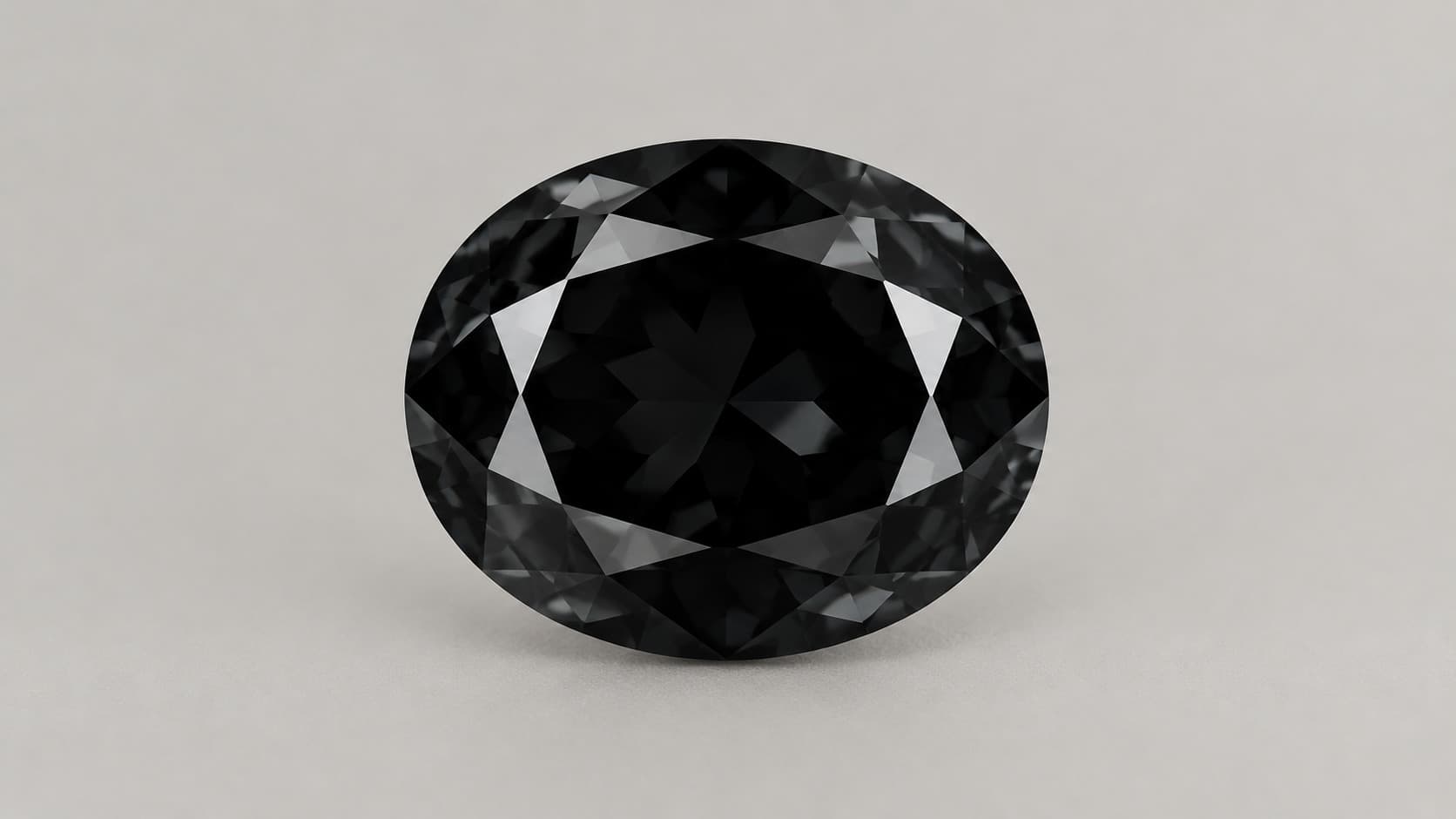
The biggest practical difference isn’t sparkle, it’s structure. Most white diamonds are a single, continuous crystal. Natural black diamonds and carbonado, on the other hand, are often polycrystalline, meaning they’re built from many tiny diamond crystals fused together rather than one solid piece.
That structural difference changes how the stone is graded, too. Because black diamonds are opaque, the usual clarity grades used for white diamonds (based on how clean and transparent the stone is) don’t really apply. Instead, labs like GIA issue a colored diamond report that states the fancy color grade and, most importantly, whether the color origin is natural, treated, or laboratory-grown.
It also changes how the stone gets cut. A white diamond is faceted to maximize brilliance, bouncing light back out through the top. Since no light travels through an opaque black diamond, cutters optimize for outline and surface shine instead, which is why black diamonds are frequently cut as rose cuts, cabochons, or simple faceted shapes rather than the standard round brilliant.
| Feature | White Diamond | Black Diamond |
|---|---|---|
| Transparency | Usually transparent | Usually opaque |
| Structure | Typically single crystal | Often polycrystalline |
| Color source | Lack of inclusions | Heavy graphite/mineral inclusions |
| Clarity grading | Standard GIA clarity scale | Not applicable; graded as fancy color |
| Most common origin | Natural | Treated |
How Durable Are Black Diamonds?
Black diamonds still rank a 10 on the Mohs hardness scale, the same as every other diamond, because hardness measures scratch resistance, and that comes from the diamond’s carbon structure, not its color. Nothing but another diamond can scratch a diamond.
Hardness isn’t the whole story, though. Durability also depends on toughness, meaning how well a stone resists chipping or breaking under a direct knock, and black diamonds can be a bit more vulnerable here. Because natural black diamonds are often packed with inclusions and fractures, they can be slightly more prone to chipping along those internal weak points than a clean white diamond. Carbonado is actually the exception to this; its fused, interlocking crystal structure makes it tougher overall, with no clear plane for a crack to travel along.
This doesn’t make black diamonds fragile for everyday jewelry, but it’s a reason jewelers are often extra careful when cutting and setting them, and why a protective setting style, like a bezel that wraps around the stone’s edge, is sometimes recommended for rings worn daily.
What Determines a Black Diamond’s Price?
Price comes down almost entirely to one question: natural or treated? Treated black diamonds are the most affordable type of diamond on the market, often priced close to low-quality colorless melee diamonds, because the starting material was never valuable to begin with.
Natural black diamonds and carbonado sit at the opposite end. Their rarity, combined with how hard it is to scientifically confirm a stone’s color is natural rather than treated, pushes certified natural black diamonds to command a real premium, especially in larger sizes. When two black diamonds look identical to the eye, the one with a lab report confirming natural color origin will almost always cost significantly more.
The World’s Most Famous Black Diamonds
A handful of natural black diamonds have become famous enough to have their own documented histories:
- The Black Orlov – A 67.5-carat cushion-cut stone, widely considered the most celebrated natural black diamond, though much of its “cursed” backstory is unverified folklore rather than documented fact.
- The Sergio – At 3,167 carats, the largest carbonado and the largest rough diamond of any kind ever found, discovered in Bahia, Brazil, in 1895.
- The Enigma – A 555.55-carat cut carbonado, currently the largest cut diamond of any color in the world, which sold at auction for roughly $4.3 million in 2022.
- The Korloff Noir – An 88-carat black diamond owned by the French jewelry house Korloff, one of the largest cut black diamonds in private hands.
- The Spirit of de Grisogono – Cut from a rough stone of over 587 carats down to a 312.24-carat finished black diamond, it’s set in a ring alongside hundreds of white diamonds.
Black Diamond Cleaning and Care Tips
Clean black diamond jewelry with warm water, a small amount of mild dish soap, and a soft brush, the same approach that works for standard diamonds. Soak the piece for a few minutes, gently brush around the setting, rinse well, and dry with a soft, lint-free cloth.
Because many black diamonds (especially natural and treated stones carrying a lot of internal fractures) can be more delicate than they look, it’s worth being cautious with ultrasonic or steam cleaners. These devices use vibration or heat that can sometimes stress an already-included stone. A jeweler can determine, based on the specific diamond, whether those methods are safe to use on it. Store black diamond jewelry separately from other pieces to avoid surface scratches from contact with harder gems or metal clasps, and have the setting checked periodically to make sure prongs haven’t loosened.
Frequently Asked Questions
Is a black diamond a real diamond?
Yes. A black diamond has the exact same chemical makeup and hardness as a colorless diamond. The only difference is the amount of dark inclusions inside it, whether that happened naturally or through heat and irradiation treatment.
Can black diamonds sparkle like white diamonds?
Not in the same way. Because black diamonds are opaque, light can’t travel through and bounce around inside the stone the way it does in a transparent diamond. Instead of fire and brilliance, black diamonds have a subtle, metallic-looking shine on the surface.
Are natural black diamonds rarer than white diamonds?
Yes, significantly. Most diamonds mined around the world come out colorless or faintly tinted. A stone with enough natural inclusions to appear solid black is an unusual outcome, which is why natural black diamonds carry a price premium over treated ones.
How can a black diamond’s origin be confirmed?
The only reliable way is a laboratory report. Gemological labs like GIA issue colored diamond reports that state a clear color-origin line reading “natural,” “treated,” or “laboratory-grown.” Appearance alone isn’t a safe way to tell, since polished treated stones can look very similar to natural ones.
Will a black diamond’s color fade over time?
No. Whether natural or treated, the color is a permanent, structural part of the stone under normal wear. Regular exposure to sunlight, everyday heat, and routine cleaning won’t change or lighten the color.
The Bottom Line
Black diamonds earn their color from what’s trapped inside them, not from a different kind of carbon, and that one fact explains almost everything else about them. Natural black diamonds and carbonado are genuinely rare, scientifically debated, and priced accordingly, while the treated black diamonds filling most jewelry store cases are affordable precisely because they started out as lower-grade white diamonds. Neither version is fake, but knowing which one is in hand, confirmed by a lab report rather than appearance, is the difference between a fair price and an overpaid stone that isn’t as rare as it looks.