Midi rings are small rings worn on the upper part of a finger, between the first and second knuckle, instead of down at the base where rings normally sit. They’ve been a recognizable jewelry trend for over a decade, showing up on red carpets, in street style photos, and on jewelry counters everywhere from fast fashion stores to fine jewelers. Because they sit higher up and look so different from a traditional ring, a lot of people see them and aren’t quite sure what to call them or how they’re supposed to be worn, and sizing works differently once a ring sits above the knuckle instead of around the wider base of the finger.
What Is a Midi Ring?
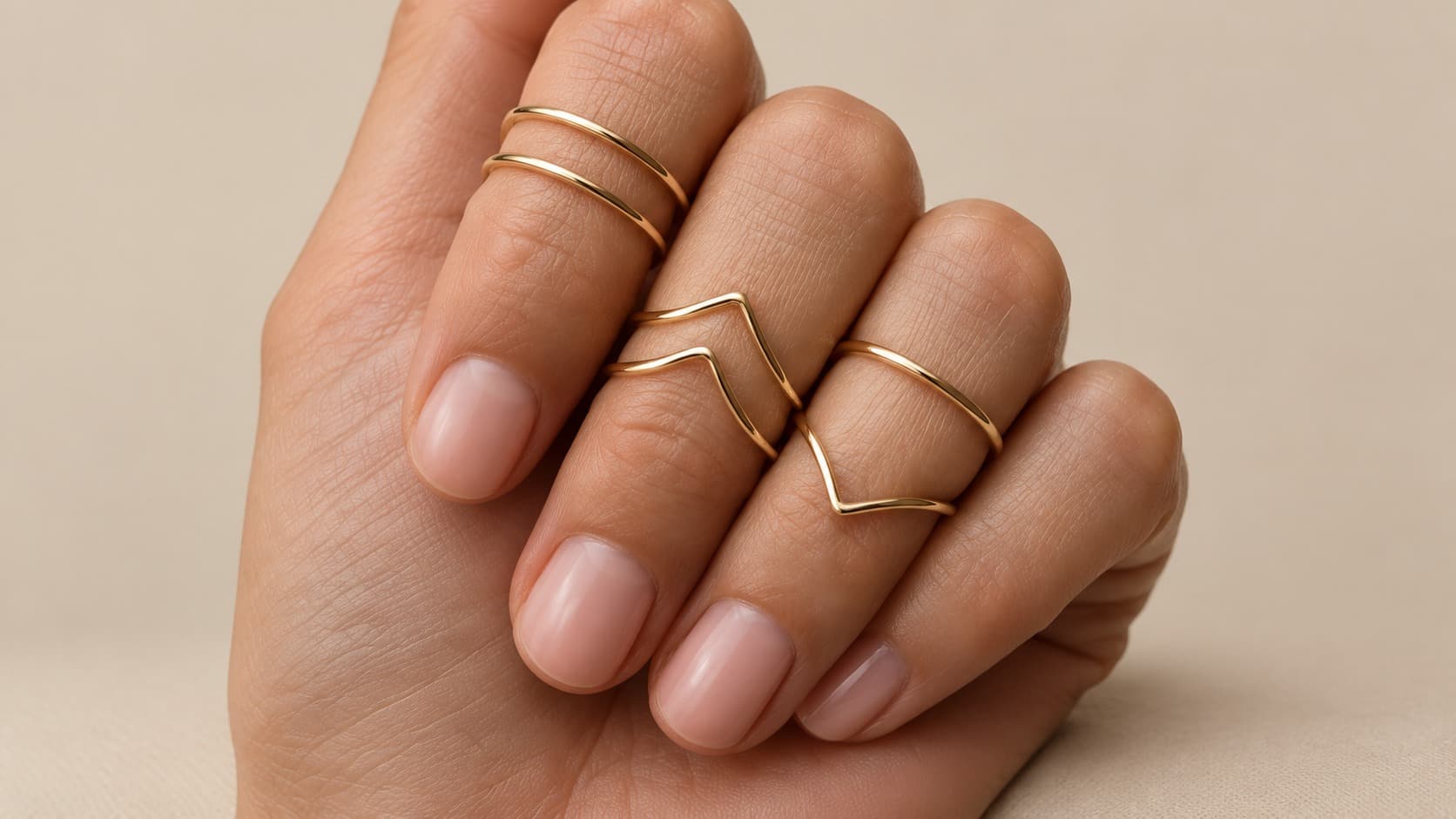
A midi ring is a ring designed to be worn above the knuckle, on the middle or upper segment of a finger, rather than at the base near the palm. Because fingers get noticeably thinner the higher up you go, midi rings are made smaller and more delicate than standard rings. Most are simple, thin bands, though some feature small stones, engraved patterns, or stacked designs.
The word “midi” refers to the middle part of the finger, not a specific finger or hand. The style is also called a knuckle ring, which means the same thing, though “midi ring” is the more common name in jewelry listings today. Midi rings can be worn on almost any finger except the thumb, since the thumb’s upper segment is usually too short and wide for a ring to sit securely.
The style became especially popular in the early 2010s, when it spread through bohemian and festival fashion alongside layered necklaces and stacked bracelets, and celebrity street-style photos helped push it into mainstream jewelry lines soon after. It has stayed in steady rotation ever since, often worn stacked with two or three at once on the same finger or spread across different fingers on one hand.
Midi Ring vs. Regular Ring
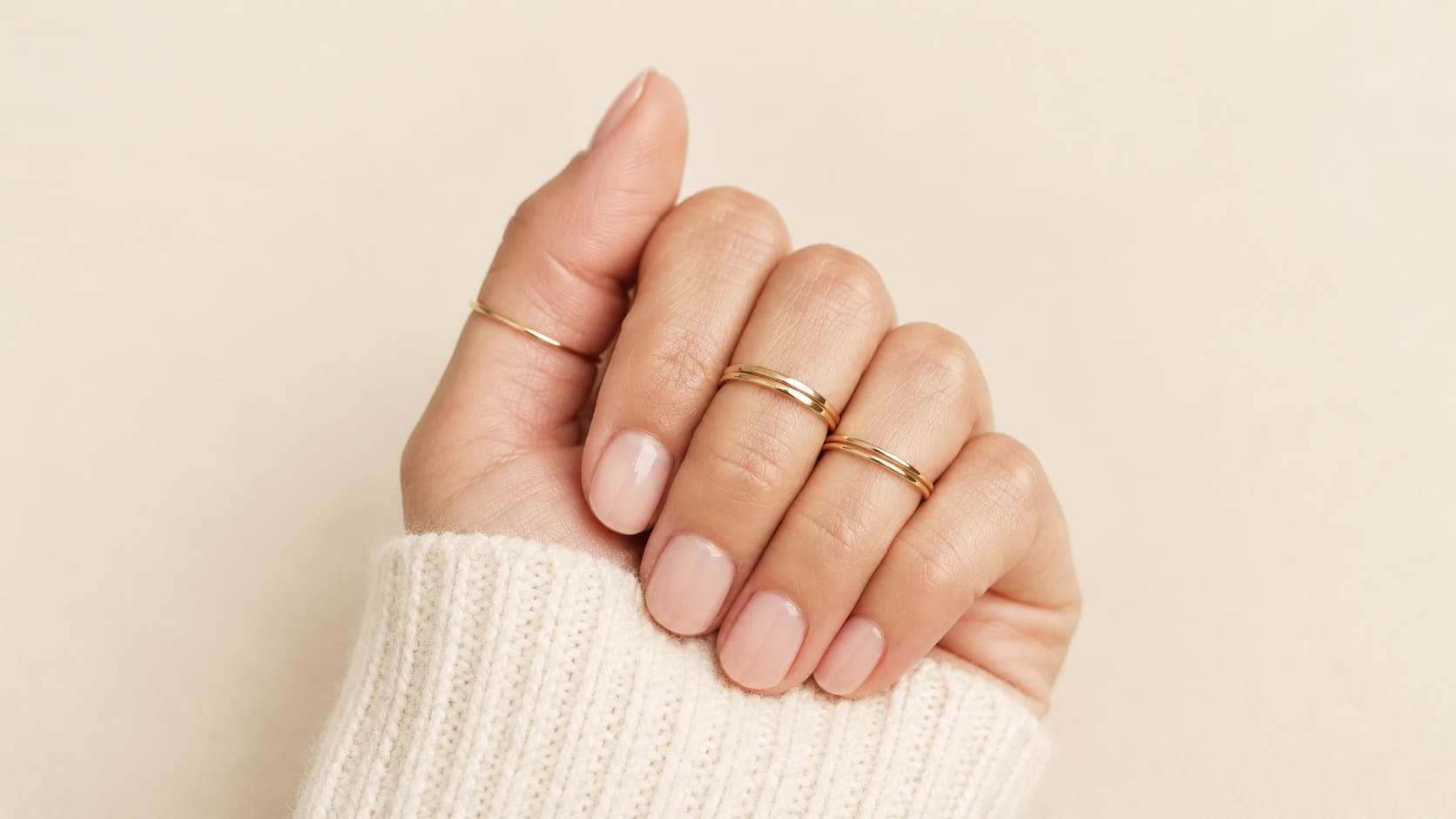
The biggest difference is placement and size, not the basic design of the ring itself. A regular ring sits at the base of the finger, where the finger is at its widest, while a midi ring sits higher up, above the first knuckle, where the finger narrows considerably.
Because of that narrower width, midi rings are usually one or more full sizes smaller than the ring worn on the same finger lower down. A ring that fits comfortably at the base of the ring finger will almost always be too loose to stay in place above the knuckle. Midi rings also tend to be thinner and lighter in overall design. A chunky statement ring works fine at the base of a finger, but the same bulky design would look oversized and feel heavy on the slimmer upper segment, so most midi rings stick to delicate bands, small studs, or thin stacked designs instead.
Because knuckle width varies more from person to person than finger-base width does, midi ring sizing is far less standardized than regular ring sizing — which is why most midi rings are sold as adjustable or in a small cluster of sizes rather than exact numbered sizes.
How to Size a Midi Ring
A midi ring is sized by measuring the knuckle it needs to pass over, not the base of the finger where the ring will ultimately rest. Because the ring has to slide past the knuckle to get into place, and the knuckle is almost always wider than the skin just above or below it, that knuckle measurement is what determines whether the ring will fit at all.
Many midi rings solve this sizing problem by being slightly adjustable, with a small open gap in the band (sometimes called an open band or cuff-style ring) that can be pinched narrower or wider by a small amount. This isn’t possible with every material: a solid, fully closed metal band can’t be adjusted without a jeweler reshaping it, so those styles rely on being bought in the correct size from the start. Most closed midi rings fall in a narrow range, roughly US sizes 3 to 5, since that covers the knuckle width most adult hands need.
For online orders where the right size isn’t obvious, measuring the knuckle with a strip of string or paper works well: wrapped snugly around the widest point, marked where it overlaps, then measured in millimeters. Most sellers list a size chart that converts that measurement into a ring size, and when a measurement falls between two sizes, sizing up slightly is usually safer than sizing down, since a ring that’s a touch loose can still be adjusted or worn with a friction-adding insert, while one that’s too tight simply won’t go over the knuckle.
Where Should a Midi Ring Be Worn?
Midi rings generally work best on the index, middle, and ring fingers, since those fingers have knuckles narrow enough for a small ring to clear without the gap above it being too loose. The pinky finger can also work, though its smaller overall size means midi rings made for other fingers often won’t fit it without adjustment.
The thumb is the one finger midi rings typically skip entirely. Its upper segment is usually too short and wide relative to its knuckle for a midi ring to sit securely, so it tends to slide back down toward the base instead of staying put. Beyond finger choice, a lot of the trend’s visual appeal comes from stacking: wearing two or three midi rings on the same finger at slightly different heights, or spreading single midi rings across several fingers on one hand. Mixing a midi ring with a regular ring on the same finger — one at the base, one above the knuckle — is another common way the style gets worn, and it’s a simple way to try midi rings without committing a whole hand to the look.
Common Midi Ring Styles and Materials
Midi rings come in the same basic materials as regular jewelry, including sterling silver, gold, gold vermeil, and various plated metals, with silver and gold-toned pieces being the most common because they pair easily with other jewelry. Because midi rings are worn in multiples more often than standard rings, affordability and mixing are usually bigger priorities than with a single statement piece, which is part of why so many midi rings use lighter-weight metals and simple plating rather than solid precious metal.
Design-wise, the most common styles are thin plain bands, delicate bands with a single small stone, and rings with simple engraved or textured patterns like dots, lines, or twisted metal. Because the upper finger is a small, visible space, midi rings with busy or oversized designs tend to look cluttered rather than elegant, so simplicity is generally what works best for the style. That said, some people do use a slightly bolder midi ring as a single statement piece on one finger, paired with plainer rings elsewhere on the hand to balance it out.
Because midi rings sit against skin that bends and rubs more than the base of the finger does, cheap plated metals tend to wear through faster there than on a standard ring, and lower-quality metals are more likely to cause irritation in that spot. Sterling silver, solid gold, and gold vermeil (a thicker gold layer over sterling silver) hold up better for daily wear than thin costume plating.
Frequently Asked Questions
Do midi rings stay on, or do they fall off easily?
A properly sized midi ring stays in place through normal hand movement, since it should fit snugly around the knuckle it sits above. If a midi ring is too loose, it will slide down toward the base of the finger during the day, which is the most common complaint people have with the style and almost always means the ring is a size too big.
Can midi rings be worn every day?
Yes, midi rings can be worn daily as long as the material holds up to regular contact with water, soap, and friction from everyday tasks. Sterling silver and solid gold hold up better long-term than heavily plated pieces, which can wear thin and show the base metal underneath after months of daily use.
Are midi rings only for women?
No, midi rings aren’t limited to any one gender. They’re worn across all genders, though marketing and mainstream styling have leaned more toward women’s fashion, which is why they’re more commonly found in women’s jewelry sections.
How many midi rings can be worn at once?
There’s no fixed rule, but most styling advice suggests one to three midi rings per hand to keep the look intentional rather than cluttered. Spreading single rings across a few fingers, or stacking two on one finger, are both common approaches that avoid overwhelming the hand.
Can a regular ring be worn as a midi ring?
Sometimes, if the regular ring happens to be small enough to clear the knuckle and sit snugly above it, but most standard rings are sized for the base of the finger and will be too large to work as a midi ring. True midi rings are made specifically in smaller sizes for this reason, so buying one designed for the purpose is more reliable than repurposing a standard ring.
What’s the difference between a midi ring and a stacking ring?
The difference is where on the finger they sit, not how they’re designed. A stacking ring is a thin ring meant to be worn in a group at the base of the finger, in its normal sized position, while a midi ring is worn higher up, above the knuckle. The two styles are often confused because they’re both thin, simple, and frequently worn several at a time, but a stacking ring uses a regular ring size and a midi ring uses the (usually smaller) knuckle size.
The Bottom Line
A midi ring is simply a smaller ring made to sit above the knuckle instead of at the base of the finger, and getting the style right comes down to two things: sizing it to actual knuckle width rather than standard ring size, and keeping the design light enough to suit that narrower part of the finger. Index, middle, and ring fingers are the easiest to wear them on, while the thumb generally doesn’t work for the style. Whether worn as a subtle accent or stacked several across one hand, the rings that hold up best over time are the ones sized correctly and made from materials sturdy enough for daily wear.