A diamond ring in a jewelry store window can carry a six-figure price tag and still not be “high jewelry.” The term gets thrown around a lot, often as a stand-in for “very expensive,” but it actually points to a specific, much smaller category of jewelry making — one built on one-of-a-kind design, rare materials, and hundreds of hours of hand craftsmanship. Understanding what separates high jewelry from everything else helps explain why a handful of pieces sell for the price of a house, and why the biggest jewelry houses in the world still treat it as their most important work.
What Does “High Jewelry” Mean?
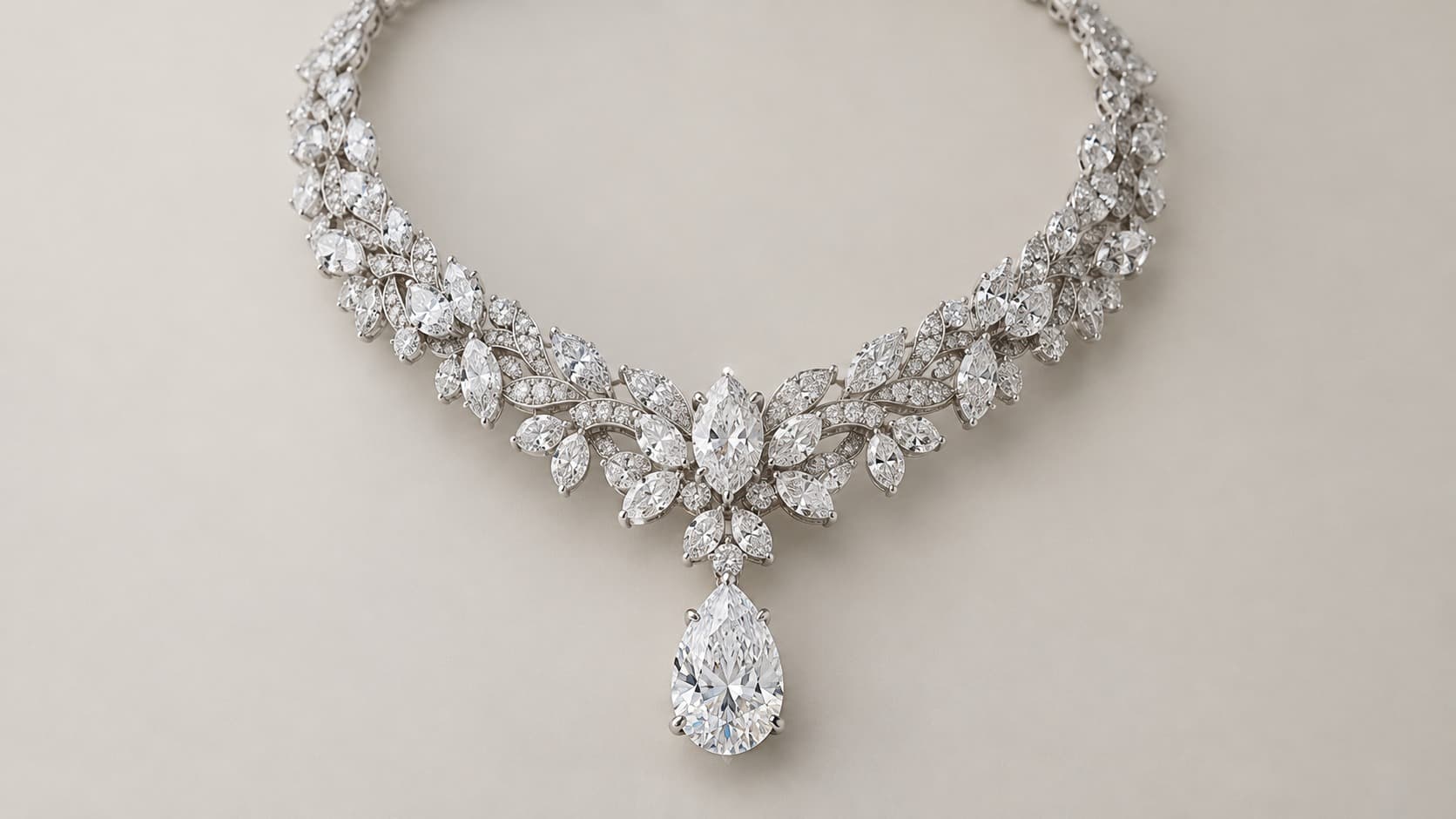
High jewelry refers to one-of-a-kind pieces made by hand from the rarest gemstones and precious metals available, usually produced by a small number of famous jewelry houses. In French, the term is haute joaillerie, and it works a lot like haute couture does in fashion — it sits above regular, everyday production as the most exclusive and labor-intensive tier of the craft.
A piece earns the label by meeting a few conditions at once:
- Unique or extremely limited. Most pieces are made once and never repeated.
- Entirely handmade. No casting a design dozens of times from a mold.
- Built around an exceptional gemstone. The stone is chosen first, for its rarity and quality, before the design exists.
- Produced by a recognized maison or master jeweler. The craftsmanship has to be traceable to real expertise, not just a brand name.
High jewelry isn’t defined by a price tag. It’s defined by the fact that nothing quite like it exists anywhere else.
High Jewelry vs. Fine Jewelry: What’s Different?
Fine jewelry is made with genuine precious metals and gemstones, but it’s often produced in small batches and designed to be sold to many different customers. High jewelry is the step above that, built as a single, unrepeatable piece around a specific stone or idea.
The gap between the two shows up most clearly in how each one gets made. A fine jewelry ring might be designed once and then cast dozens of times in a factory, with a jeweler setting a similar-quality diamond into each copy. A high jewelry necklace starts the opposite way: the jeweler finds an extraordinary stone first, then designs the entire piece around that one gem’s shape, color, and personality. Nothing about the process is repeated, because no two rare stones are identical.
| Fine Jewelry | High Jewelry | |
|---|---|---|
| Production | Small batches, repeatable | One piece, never repeated |
| Design process | Design first, then source a matching stone | Stone first, design built around it |
| Making | Often cast, with some handwork | Entirely handmade |
| Typical price | Hundreds to low tens of thousands | Hundreds of thousands to tens of millions |
| Availability | Sold in boutiques and online | Shown by invitation in private salons |
Price plays a role too, but it isn’t the deciding factor. A fine jewelry diamond ring can still cost tens of thousands of dollars. High jewelry pieces, by comparison, often start in the hundreds of thousands of dollars and can reach into the tens of millions, because of how rare the materials are and how many specialized hours go into making just one object.
The Origins of High Jewelry
High jewelry grew out of Paris in the 1800s and 1900s, when a cluster of jewelry houses set up shop around Place Vendôme, a grand square in the city’s first arrondissement. That address is still considered the heart of the high jewelry world today.
Cartier was one of the first names to establish itself there, founded in 1847 when Louis-François Cartier took over his mentor’s small Paris workshop. Decades later, in 1906, Alfred Van Cleef and his brother-in-law Charles Arpels opened a boutique at 22 Place Vendôme, launching what became Van Cleef & Arpels. Both houses built their reputations on royal commissions and society clients, which is part of why the square earned its nickname as the capital of high jewelry.
Through the 20th century, these Paris houses pushed the craft forward with genuinely new engineering, not just new looks. One of the clearest examples is Van Cleef & Arpels’ Mystery Set technique, first patented in 1933 and registered under that name in 1936. It hides the metal mount entirely inside the gemstones themselves — each stone is cut with tiny grooves that slide onto a hidden rail, so from the outside a whole surface of color appears to have no metal holding it in place at all. Decades later, that same technique is still used in only a handful of pieces a year, because so few jewelers are trained to do it.
Top High Jewelry Houses to Know
A small, well-established group of Paris-based or Paris-trained houses dominates high jewelry, including Cartier, Van Cleef & Arpels, Chaumet, Boucheron, Chanel, Chopard, Bulgari, and Tiffany & Co.
Each house tends to release a new high jewelry collection once or twice a year, often tied to a theme — a place they’ve traveled to, a piece of history, or a particular gemstone they’ve managed to acquire. These collections are usually shown first in private salons to a small list of invited clients before any public exhibition happens. A handful of smaller, independent designers also work in this space, building reputations around a single signature technique or an unusually personal design style rather than a historic maison name.
Not everything a famous jewelry brand sells counts as high jewelry, however. Most of these houses also produce fine jewelry and ready-to-wear collections, which are more accessible and far more widely available. High jewelry sits as a separate, much smaller line within their business — often with its own dedicated workshop and its own designers who work on nothing else.
How Long Does High Jewelry Take to Make?
A single high jewelry piece can take anywhere from several months to a few years to complete, depending on how complex the design is and how long it takes to source the right gemstones.
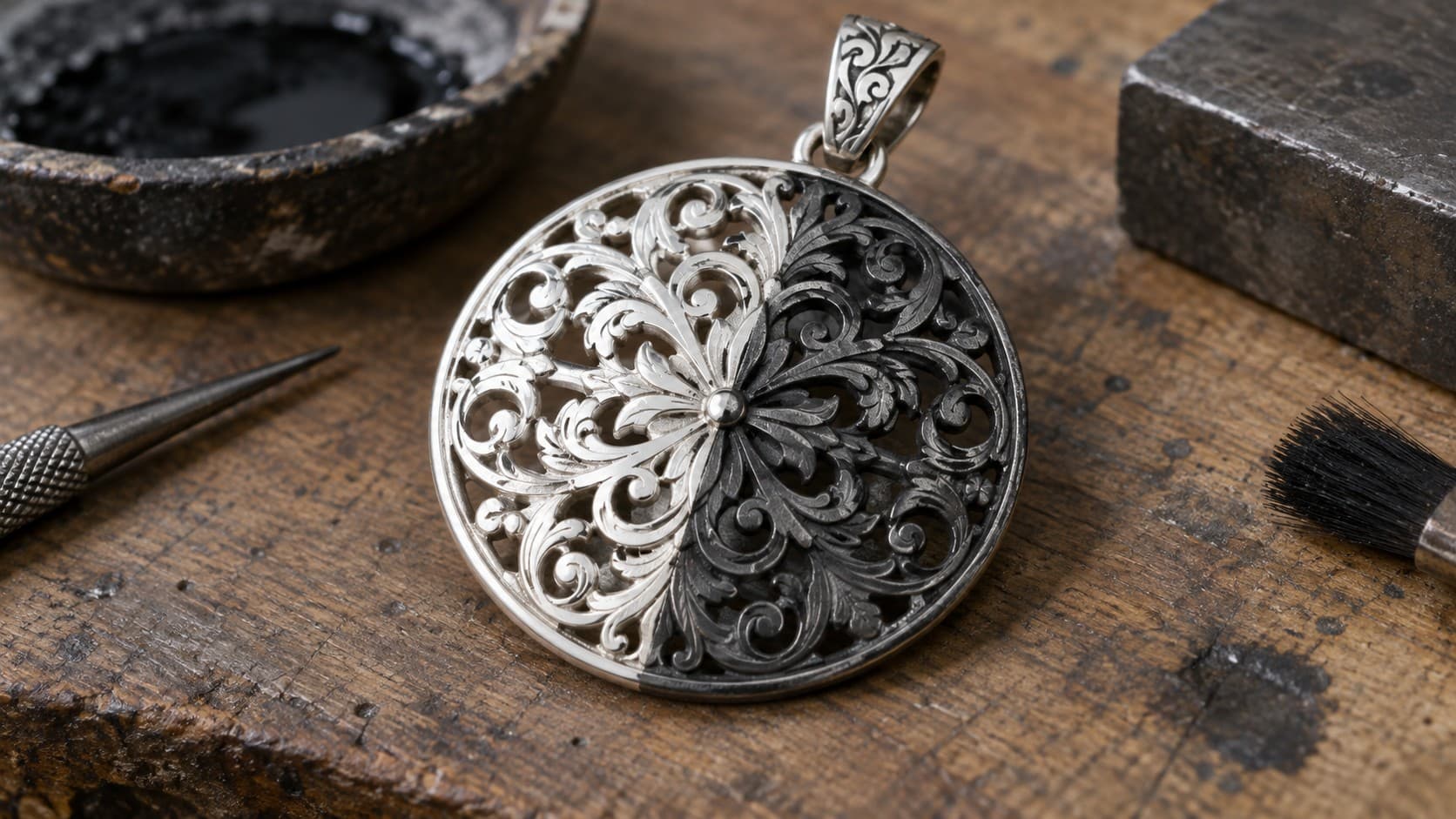
The process usually starts with the stone, not the sketch. A house might search for years to find a gem with the exact color, size, or clarity its designers have in mind. Once the stone is in hand, designers sketch multiple concepts, gemologists study how the light should move through the piece, and master jewelers — sometimes several of them, each specializing in a different skill like stone-setting or metalwork — spend hundreds of hours assembling the final object entirely by hand. A single necklace can pass through the hands of a designer, a gemologist, a goldsmith, a stone-setter, and a polisher before it’s finished, and each of those roles is typically a separate, years-trained specialty rather than one person doing everything. Nothing is mass-produced or machine-cast in this process, which is a big part of why it takes so long.
Why Does High Jewelry Cost So Much?
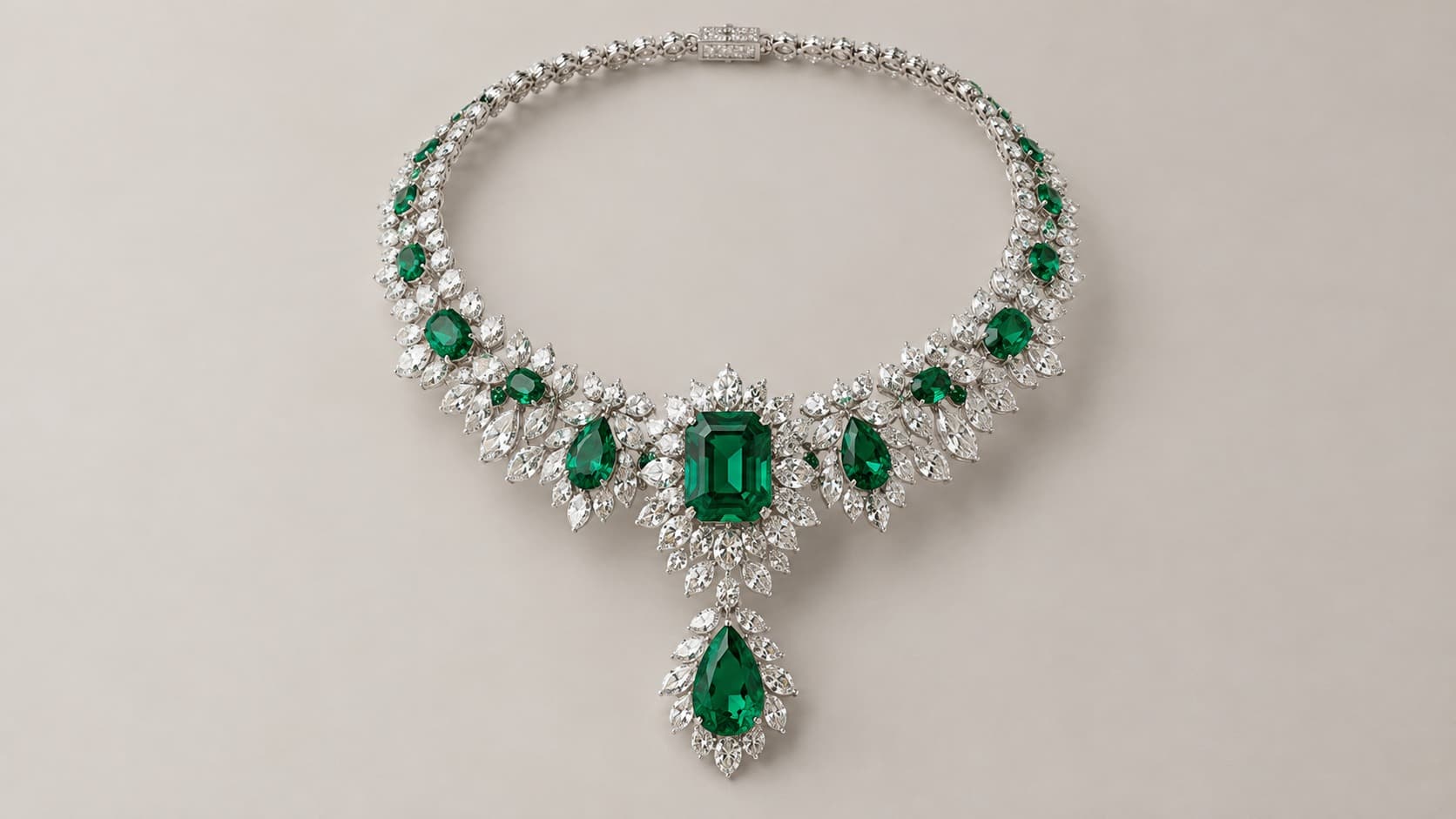
High jewelry costs what it does because of three things working together: the rarity of the gemstones, the number of skilled hours required to make the piece, and the fact that it will never be made again.
Rare, high-quality gemstones are limited by nature, not by a company’s production schedule. A flawless colored diamond over a certain size, for example, might only surface a handful of times in a decade. Because the jeweler is building around one specific stone rather than ordering a batch of similar ones, there’s no way to bring costs down through volume. Add in the dozens or hundreds of hours of specialized handwork — cutting, setting, polishing, and finishing — and the final price reflects genuine scarcity rather than marketing.
Record auction prices for individual stones reflect that scarcity directly:
- The Pink Star — a 59.6-carat pink diamond that sold for $71.2 million at a Hong Kong auction in 2017, the highest price ever paid for any diamond or jewel at auction.
- The Oppenheimer Blue — a 14.62-carat blue diamond ring that sold for $57.5 million at Christie’s Geneva in 2016.
- The Estrela de Fura — a 55.22-carat ruby that sold for $34.8 million at Sotheby’s New York in 2023, the current record price for any ruby.
Buying high jewelry is less like buying an accessory and more like commissioning a small sculpture that happens to be wearable.
Can the Public See High Jewelry Pieces?
Yes. While high jewelry collections are usually shown privately to clients first, many pieces later go on public display through museum exhibitions, brand retrospectives, and major jewelry auctions.
Houses like Cartier and Van Cleef & Arpels regularly lend historic pieces to institutions such as the Victoria and Albert Museum in London or the Smithsonian in Washington, D.C. Auction houses including Christie’s and Sotheby’s also hold previews before their big jewelry sales, where the public can view pieces up close even if they have no intention of bidding. These are usually the easiest and most affordable ways to see high jewelry in person, since most salon viewings are reserved for established clients by invitation.
Is High Jewelry Worth It as an Investment?
High jewelry can hold or grow in value over time, but it isn’t a guaranteed investment the way people sometimes assume, and most financial advisors don’t recommend buying it purely to make money.
Value tends to depend on a few specific factors: the rarity of the gemstone, the historical importance of the piece, whether it carries a well-documented provenance, and how desirable that particular house or designer is at auction. A ring with an exceptional, certified natural stone from a famous maison is far more likely to hold its value than a piece bought mainly because it looked impressive. Because this market moves on taste and rarity rather than predictable financial metrics, anyone considering high jewelry as an investment should treat it the way they’d treat fine art — something to enjoy first, with value appreciation as a possible bonus rather than the main goal.
Frequently Asked Questions
Is high jewelry the same as haute joaillerie?
Yes. Haute joaillerie is simply the French term for high jewelry, and the two phrases describe the exact same category of one-of-a-kind, handcrafted pieces built around exceptional gemstones.
What’s the difference between high jewelry and fine jewelry?
Fine jewelry uses genuine precious metals and gemstones but is often produced in small, repeatable batches. High jewelry is built as a single, unrepeatable piece designed entirely around one rare gemstone.
Do high jewelry houses ever reuse the same design?
Almost never for the exact piece. A house might revisit a theme or technique in a future collection, but because each piece is built around a specific, one-of-a-kind stone, the finished design itself typically isn’t repeated.
What gemstones show up most often in high jewelry?
Can anyone buy high jewelry, or is an invitation required?
Anyone with the means to purchase a piece can generally do so, but the private salon showings where new collections debut are usually by invitation, reserved for a house’s established clients. Pieces that go to auction are open to any registered bidder.
The Bottom Line
High jewelry isn’t just expensive jewelry with a fancier name — it’s a specific kind of craftsmanship built around one rare stone, one design, and one chance to get it right. That’s what separates a Place Vendôme salon piece from something sold off a shelf: the materials can’t be reordered, the design won’t be repeated, and the hours of handwork behind it can’t be rushed. Whether or not anyone ever owns a piece, understanding what actually goes into it changes how those glass display cases look at a museum exhibit or an auction preview.