Jewelry doesn’t always have to look brand new to look good. A lot of the pieces people love most — old family rings, worn signet rings, lockets passed down for generations — have a soft, dark, slightly uneven shine that only comes with age. Antiquing is how jewelers recreate that same look on purpose, without waiting decades for it to happen naturally. It’s a real craft technique used by goldsmiths and silversmiths, not a trick or a shortcut, and understanding how it works explains why certain pieces are designed to look a little weathered from the start.
What Is Jewelry Antiquing?
Antiquing jewelry is a technique that darkens parts of a metal surface to make a piece look older and more detailed. Jewelers do this by letting a chemical react with the metal, which turns the surface gray or black in a controlled way.
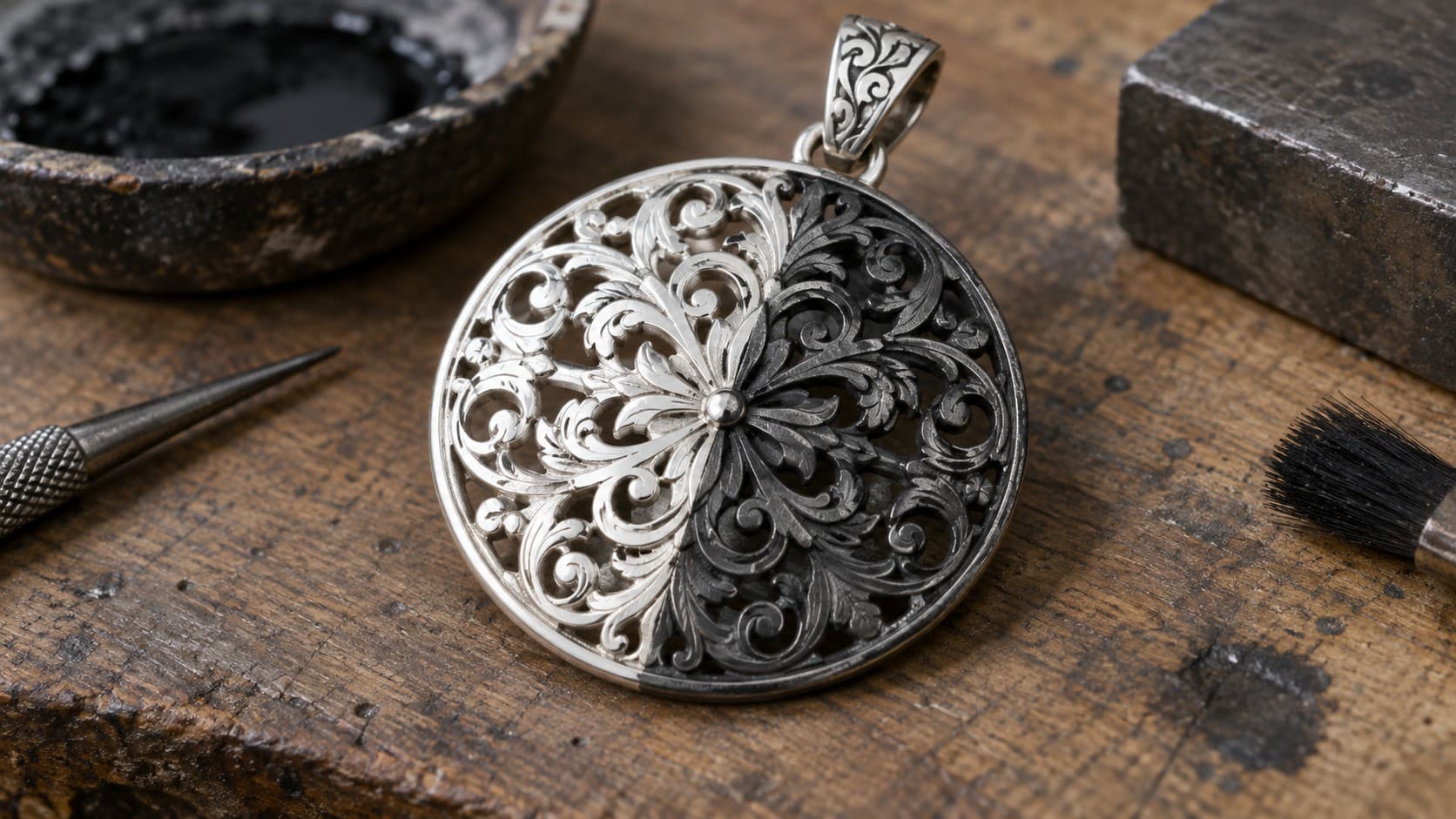
The goal isn’t to make the jewelry look damaged. It’s to make the design pop. Most antiqued jewelry has texture — engraving, filigree, stamped patterns, or raised details — and the darkening settles into the low, recessed parts of that texture while the raised, polished parts stay bright. That contrast is what gives antiqued pieces their depth. Without it, a lot of intricate designs would look flat under normal light.
Real antique jewelry gets its patina from decades of handling, light, and air. Antiqued jewelry gets the same look applied by a jeweler in minutes, using the same basic chemistry that happens naturally over time.
How Does the Antiquing Process Work?
Jewelers darken metal by applying a chemical called liver of sulfur, which reacts with the surface to form a layer of dark metal sulfide. This is the most common method used for antiquing.
Liver of sulfur is a mix of potassium sulfides, and despite jewelers often calling the process “oxidizing,” it has nothing to do with oxygen at all. The real reaction is between sulfur and the metal’s surface. As the piece sits in the solution, the color typically moves through a quick sequence — pale straw, then bronze, then purple and blue, and finally black the longer it’s left in. Jewelers watch this shift closely and pull the piece out at the exact shade they want, since a few extra seconds can be the difference between a soft vintage gray and a flat black.
The process generally follows a few set steps:
- The piece is cleaned and polished first, since any leftover oil or residue will cause the patina to form unevenly.
- The jeweler dips the piece into a warm liver of sulfur solution, or brushes it on directly.
- The metal darkens within seconds to a couple of minutes, depending on the strength of the solution and the shade being aimed for.
- The piece is rinsed in a neutralizing solution to stop the chemical reaction at the right moment.
- The raised surfaces are gently polished again with a soft cloth or buffing wheel, which removes the dark coating from the high points but leaves it sitting in the grooves and recesses.
That last step is really what creates the antique effect. It’s the same reason an old engraved ring looks striking — the detail is outlined in dark shadow while the rest of the metal still shines.
What Metals Work Best for Antiquing?
Sterling silver, fine silver, copper, and bronze all respond well to antiquing, while brass generally resists the process and is harder to darken evenly.
Silver is the most common metal for this technique because it already tarnishes naturally through the same sulfur reaction, so the artificial process just speeds up something the metal would eventually do on its own anyway. Copper and bronze react the same way and are popular with jewelry makers who want deep, earthy tones rather than the grayish-black that silver typically produces.
Gold can also be antiqued, though it’s less common and usually only applied to gold plating rather than solid gold, since pure gold doesn’t react with sulfur the way silver and copper do. Some jewelers achieve a similar “aged gold” look using black rhodium plating instead, which is a completely different process explained below.
Is Antiquing the Same as Black Rhodium?
No, antiquing and black rhodium plating are two different techniques that can produce a similar dark, vintage appearance, but they work in opposite ways.
Antiquing is a chemical reaction that happens directly on the metal’s own surface — nothing new is added, the existing metal simply changes color. Black rhodium plating adds an entirely new layer of a different metal on top of the base piece, the same way white gold jewelry is often rhodium-plated to stay bright. The main differences between the two come down to how they’re applied and how they hold up over time:
| Antiquing (Liver of Sulfur) | Black Rhodium Plating | |
|---|---|---|
| How it works | Chemical reaction darkens the existing metal surface | A new layer of darkened rhodium is electroplated on top |
| Best suited for | Silver, copper, bronze | Any base metal, often white gold or silver |
| Look | Soft, slightly uneven, organic shading | Even, uniform dark coating |
| Durability | Wears down with handling, can be reapplied easily | More durable, but eventually needs re-plating once worn through |
| Reversible? | Yes, can be polished off | Yes, but requires re-plating by a jeweler |
Neither option is “better” across the board — it mostly comes down to whether a softer, more natural-looking patina or a crisp, even black finish suits the piece.
How Long Does an Antiqued Finish Last?
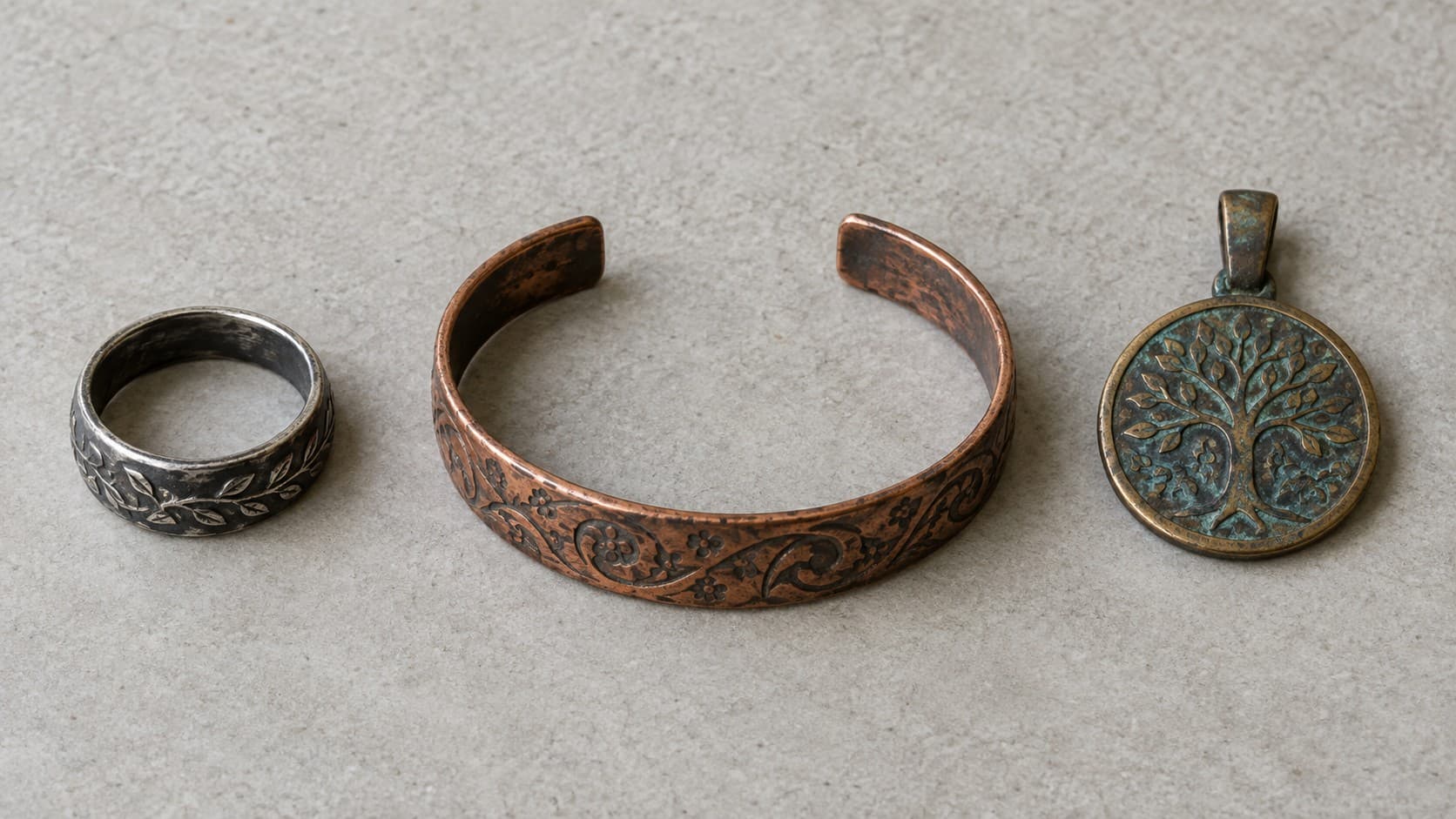
Antiquing is a surface-level treatment, so it doesn’t weaken the metal underneath, but the dark finish itself can fade with handling over time.
Because the patina only sits on the outer layer of the metal, everyday contact — skin oils, lotion, friction from clothing, regular washing — can gradually wear it down, especially on the parts of a ring or bracelet that get touched or rubbed the most. This is actually expected and even welcomed by people who like a piece to develop its own unique wear pattern over the years, similar to how a leather bag or a pair of jeans ages with use. A piece can also be refreshed by a jeweler whenever the contrast fades, since the same liver of sulfur process can simply be reapplied.
Cleaning methods made for shiny jewelry, like ultrasonic cleaners or strong polishing compounds, can strip the antiqued finish right off when used carelessly. A soft cloth and gentle spot cleaning is usually the safer approach for pieces with an intentional patina.
Why Antiquing Looks So Good on Jewelry
People are drawn to antiqued jewelry because it gives new pieces a sense of history and highlights intricate design work that would otherwise be harder to see.
There’s also a practical side to it. Engraved, filigree, or heavily textured jewelry can sometimes look muddled or hard to read when it’s fully polished and shiny, because light bounces around the whole surface evenly. Darkening the recessed areas creates natural shadow and outline, so the pattern reads clearly even from a distance. It’s part of why antiquing shows up so often on signet rings, detailed pendants, and designs inspired by Victorian-era jewelry, where fine engraving was already common.
Frequently Asked Questions
Can antiquing be removed if I don’t like it?
Yes. A jeweler can polish the dark patina off, or in some cases heat the piece gently to lighten it, restoring the metal closer to its original bright finish.
Is antiqued jewelry the same as vintage or antique jewelry?
No. Vintage generally means a piece is at least 20 to 30 years old, and antique means at least 100 years old. Antiqued jewelry is new jewelry made to look older through a chemical treatment, not jewelry that has actually aged over time.
Will antiquing wear off over time?
Yes, with regular wear the darkened areas can gradually lighten, especially on spots that get the most friction. This is normal and the finish can be reapplied by a jeweler if desired.
Is the antiquing process safe for the metal?
Yes, liver of sulfur only reacts with the surface of the metal and doesn’t weaken or damage the piece structurally. It’s a widely used, standard technique in jewelry making.
Can I antique jewelry myself at home?
Some people try DIY methods using boiled eggs or liver of sulfur kits sold for hobbyists, but results can turn out blotchy or uneven without proper technique. A professional jeweler can apply it more evenly and control exactly how dark the finish turns out.
The Bottom Line
Antiquing jewelry comes down to one simple idea: using a controlled chemical reaction to recreate, in minutes, the kind of dark patina that would otherwise take a piece decades to develop naturally. It’s most often done with liver of sulfur on silver, copper, or bronze, and it works best on jewelry with texture or engraving, since the contrast between dark recesses and bright polished edges is what brings the design to life. The finish isn’t permanent and can wear down or be restored over time, which is part of what makes it feel so true to the real aging process it’s imitating.