Earrings are one of the only pieces of jewelry made to sit right next to the face, which means hair has more influence over how they look than almost anything else a person wears. A pair of earrings that looks stunning on a store shelf can disappear completely once hair falls over the ears, while a plain stud can suddenly look like a showstopper the moment hair is pulled back the right way. Getting the two to work together isn’t about learning a complicated styling trick — it comes down to a few simple habits that stylists and jewelry lovers rely on to make sure earrings actually get seen.
Best Hairstyles for Statement Earrings
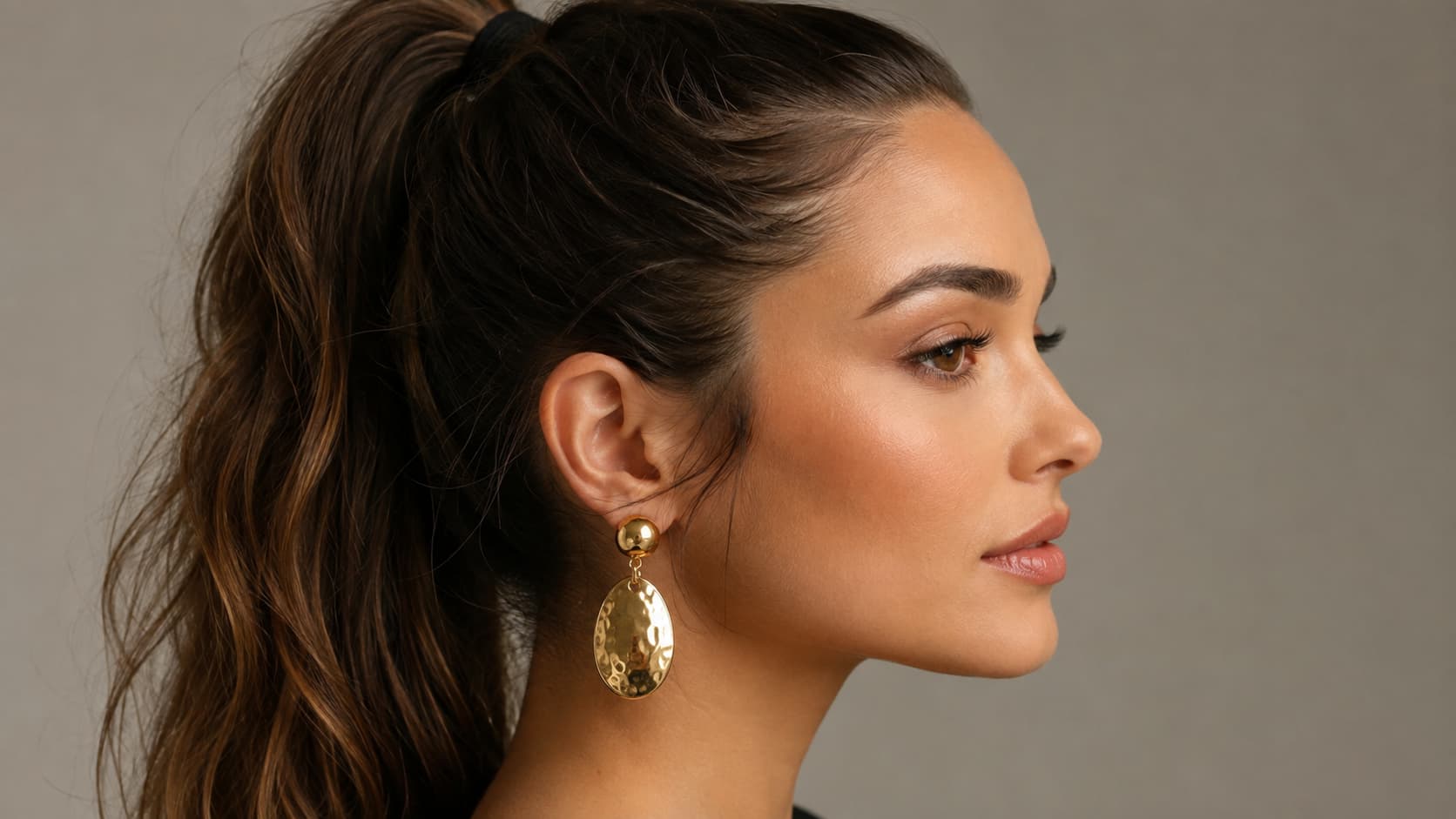
The fastest way to show off big or eye-catching earrings is moving all hair away from the ears and neck with a ponytail, bun, or slicked-back style. This works because statement earrings — chandeliers, hoops, drop styles — are designed to catch light and move, and hair covering even the top of the earlobe blocks most of that effect.
A high ponytail or a sleek low bun both work well, and the detail people miss most often is tightness specifically around the ears. The whole style doesn’t need to be tight, just the section at the temples and behind the ears. A few loose face-framing pieces can still fall forward without hiding the earrings, since those pieces usually sit further out from the ear than the earring itself.
Stylists often call this “clearing the ear line” — meaning nothing rests directly against or over the earlobe, even if hair is styled elsewhere on the head.
Earring backs deserve some attention before hair gets pulled back tightly. A ponytail or bun means hair brushes past the ear all day, and loose strands can snag on open hoops or dangly designs, tugging at the earlobe or pulling an earring loose. Push backs and screw backs hold up fine on their own, but lever-back and French wire styles are worth closing properly first, since those clasps are more likely to catch on hair.
The Easiest Way to Show Off Earrings Daily
Pulling the top section of hair up and back while leaving the rest down shows off earrings without committing to a full updo. This suits almost any earring size and works on days when hair stays down for warmth or comfort but shouldn’t swallow the jewelry underneath.
Where the half-up section gets gathered makes the biggest difference. Hair pulled from just above the ears keeps that area clear even though the rest still falls past the shoulders, which is different from a standard half-up style gathered higher on the crown, where strands often end up hanging in front of the ears anyway.
The accessory holding the half-up section matters too. A small, plain clip or a thin elastic near the crown stays out of the way, while a large claw clip or a decorated barrette placed too far forward can end up competing with the earrings for attention. Statement earrings tend to read more clearly when the hair accessory stays simple and sits higher on the head.
Best Hairstyle for Small Stud Earrings
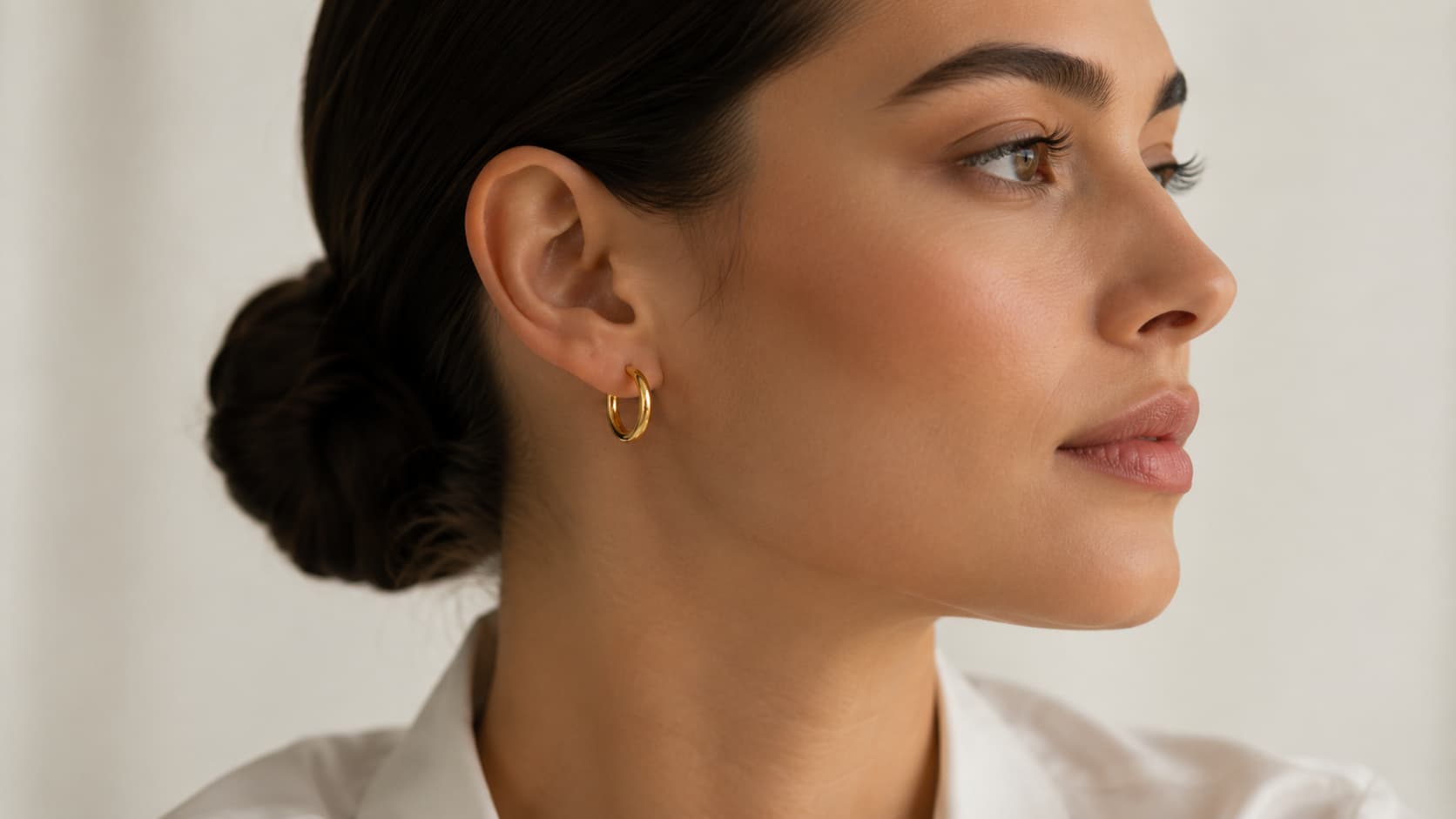
For dainty studs, a simple tuck behind the ear does the job better than any updo, since tiny earrings only need a small clear space to be visible rather than a fully pulled-back style. It’s the quickest fix and works on almost any hair length past the chin.
Slippery hair often needs backup to hold a tuck through the day — a small amount of texturizing spray or a bobby pin placed just behind and above the ear keeps it in place. Fine or slippery hair types tend to lose a plain tuck fastest, so pairing it with one small pin makes a bigger difference than adding more product.
Multiple piercings along the ear, like a second lobe hole or a cartilage piercing, usually all show up at once with a basic tuck, since it clears the whole outer ear rather than just the lobe. That’s part of why curated ear looks with several small studs and hoops have become so popular — the styling needed to show them off stays minimal compared to a single statement piece.
Braided Hairstyles That Keep Ears Visible
A French braid or Dutch braid starting at the hairline and moving back over the crown keeps hair pulled tight against the scalp near the ears while still leaving length and movement lower down. This shows off earrings from nearly every angle, since nothing rests against the side of the head.
Smaller braids, like a single skinny braid pulled back from each temple and clipped behind the head, suit medium-sized earrings such as huggies or small hoops especially well, acting almost like a frame that draws attention toward the ear area instead of away from it.
A crown braid, wrapping all the way around the head, keeps hair fully off the ears from every angle, making it a solid choice for events where earrings need to stay visible no matter which way someone turns. Fishtail braids look intricate but are looser by nature, so a few strands tend to work their way out near the temples over time — braiding it slightly tighter near the top helps it hold its shape around the ears longer.
Best Hairstyles by Hair Length
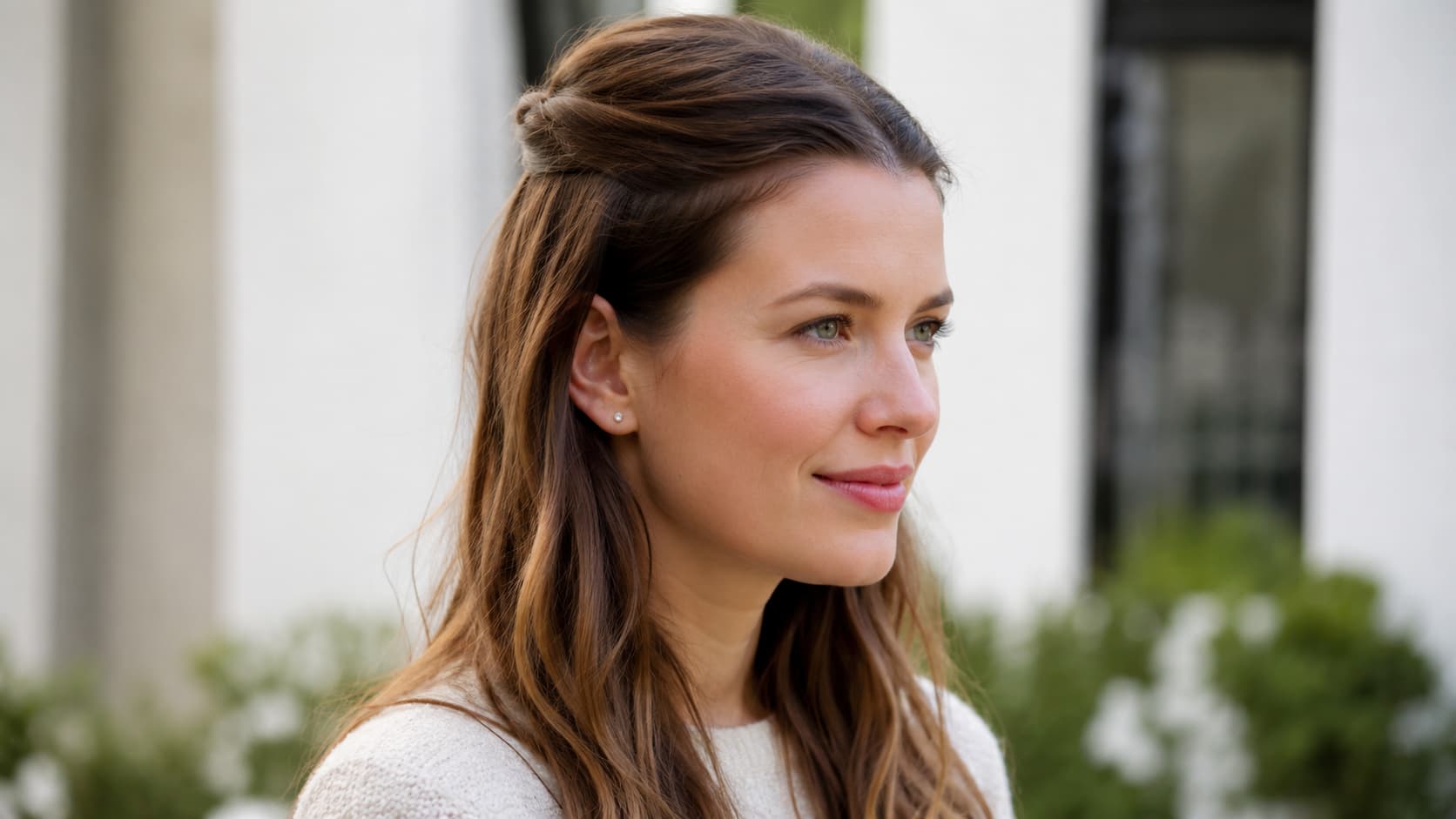
Short hair, above the chin, usually shows off earrings automatically since there’s often not enough length to fully cover the ear, though styling products can still push hair forward and block the view. A light hold gel or pomade swept back and slightly up keeps short styles from drooping toward the ears throughout the day.
Medium-length hair, between the chin and shoulders, is the trickiest to manage because it’s just long enough to fall forward but often too short to stay in a secure updo. A low half-up style or a few strategic pins usually solves this better than forcing a full ponytail.
Long hair, past the shoulders, gives the most styling freedom but also hides earrings fastest without a pull-back. Braids, buns, and ponytails all work reliably, and even a simple twist secured with a clip at the back of the head clears the ears completely.
| Hair Length | Best Everyday Option | Best for Statement Earrings |
|---|---|---|
| Short (above chin) | Light gel, swept back | Slicked-back with texture spray |
| Medium (chin to shoulder) | Half-up style, ear tuck | Low ponytail or clipped-back sides |
| Long (past shoulders) | Ear tuck, side braid | High ponytail, bun, or full updo |
Best Hairstyles for Curly Hair and Earrings
Curly and coily hair often naturally lifts away from the ears at the roots, which can show off earrings even when the hair itself is worn down. The challenge tends to sit at the sides, where curls can swing forward and cover the lobe depending on the shape and density of the curl pattern.
A wide headband pushed back from the hairline, or two small twists pinned back at the temples, both work well without flattening curl volume the way a tight elastic might. Wash-and-go styles benefit from a small amount of product applied to just the front pieces and pushed back while drying, training those sections to stay off the face.
Protective styles like twists, braids, or locs already clear the ears well on their own, which is part of why layered earring looks are so common alongside these styles. Weight and rest matter most here — long, heavy earrings paired with a style like box braids can pull on the earlobe if the braids themselves rest against or drag on the earring, so it helps to check that hair isn’t looped over or resting directly on the jewelry.
Best Hairstyles for Earrings by Occasion
Everyday wear calls for low-effort options like a tuck or half-up style, since most people aren’t spending fifteen minutes on their hair before running errands. These same simple styles work fine for small studs and huggies, which don’t need a fully cleared ear to be noticeable.
Weddings, parties, and job interviews call for a bun or sleek ponytail to make larger earrings the clear focal point of an outfit, especially when paired with hair that’s smooth rather than textured. This matters most when earrings are meant to coordinate with an outfit’s overall formality, since a messy style can undercut how polished a statement earring looks.
A good rule of thumb: the more detailed or expensive-looking the earring, the smoother and more pulled-back the hairstyle should be around it.
Frequently Asked Questions
Does hair type affect which earrings show up best?
Yes. Fine, straight hair tends to fall flat against the ears and needs more deliberate styling to stay clear, while curly or coily hair often lifts naturally at the roots and can show off earrings even in some down styles.
What’s the easiest style for showing off earrings without much effort?
A simple ear tuck is the fastest option for most hair lengths past the chin, and it works especially well for small studs, huggies, and thin hoops that don’t need a lot of open space to be visible.
Do bigger earrings always need an updo?
Not always, but they usually look better with hair pulled back at least partially. Chandelier and long drop earrings need room to move and catch light, so even a simple low ponytail or half-up style makes a noticeable difference compared to wearing hair fully down.
Can bangs work with earrings?
Bangs generally don’t interfere with earrings since they sit above the eyes rather than near the ears, though side-swept bangs can sometimes fall forward and partially cover the top of the ear depending on their length and styling.
Will product buildup make earrings harder to see?
Heavy product can weigh hair down and cause it to fall forward over the ears rather than staying pulled back, so a lighter hold is usually better around the hairline when the goal is keeping earrings visible.
Conclusion
Showing off earrings really comes down to keeping the hair right at the ear line clear, whether that’s through a full updo, a half-up style, or something as simple as a tuck behind the ear. Small studs need the least effort and often show up fine with just a tuck, while statement pieces like chandeliers or hoops benefit from pulling hair back more fully so they can move and catch light the way they’re designed to. Matching the styling approach to hair length and earring size eventually becomes second nature rather than something to think through every morning.