Picking an anniversary gift can feel harder than it should be, especially once the first few years pass and a nagging feeling sets in that there’s some “correct” answer being missed. There is, sort of: for well over a century, western culture has attached a specific material or gemstone to each wedding anniversary year, and jewelry shows up again and again on that list. Knowing which years call for a ring, a strand of pearls, or a pair of ruby earrings takes the guesswork out of the search and gives the gift a little extra meaning beyond just being pretty.
What Is Anniversary Jewelry?
Anniversary jewelry is a piece given to mark a wedding anniversary, often tied to a traditional or modern gift theme assigned to that specific year. The custom has roots in 18th-century Germany, where reaching a 25th wedding anniversary meant receiving a wreath made of silver, an event known as the silberne Hochzeit, while a 50th anniversary called for a matching wreath in gold, the goldene Hochzeit. That pairing of silver with 25 years and gold with 50 stuck, and it’s the reason those two milestones still carry the same metal names in English today.
Once silver and gold were established for the big milestones, people started looking for ways to mark the years in between, and the list grew from there. The Old Farmer’s Almanac had a version of the full sequence in print as early as 1859, with lighter materials like paper and wood covering the earlier years before working up to silver at the quarter-century mark and gold at the half-century mark. The 60th anniversary got its own diamond theme later, generally traced to 1897, when Queen Victoria marked sixty years on the British throne with her Diamond Jubilee, a celebration that made “diamond” and “sixty years” synonymous in the public imagination.
The order isn’t identical everywhere, either. In the United Kingdom, the first two years are flipped relative to the American version, so cotton marks year one and paper marks year two, with both lists converging again once they reach the bigger milestones like silver and gold. The list exists in two versions that run side by side today. The traditional list uses older materials like paper, wood, and tin, while the modern list, popularized in the United States during the 1930s, swaps in more current alternatives such as clocks, appliances, and jewelry. Because both lists are widely recognized, couples usually pick whichever theme fits their taste rather than following one version strictly.
Neither list is “official” in a legal sense. They developed through custom, retail marketing, and jewelry industry associations, which explains the small differences that show up between sources.
Which Anniversary Years Are Jewelry Years?
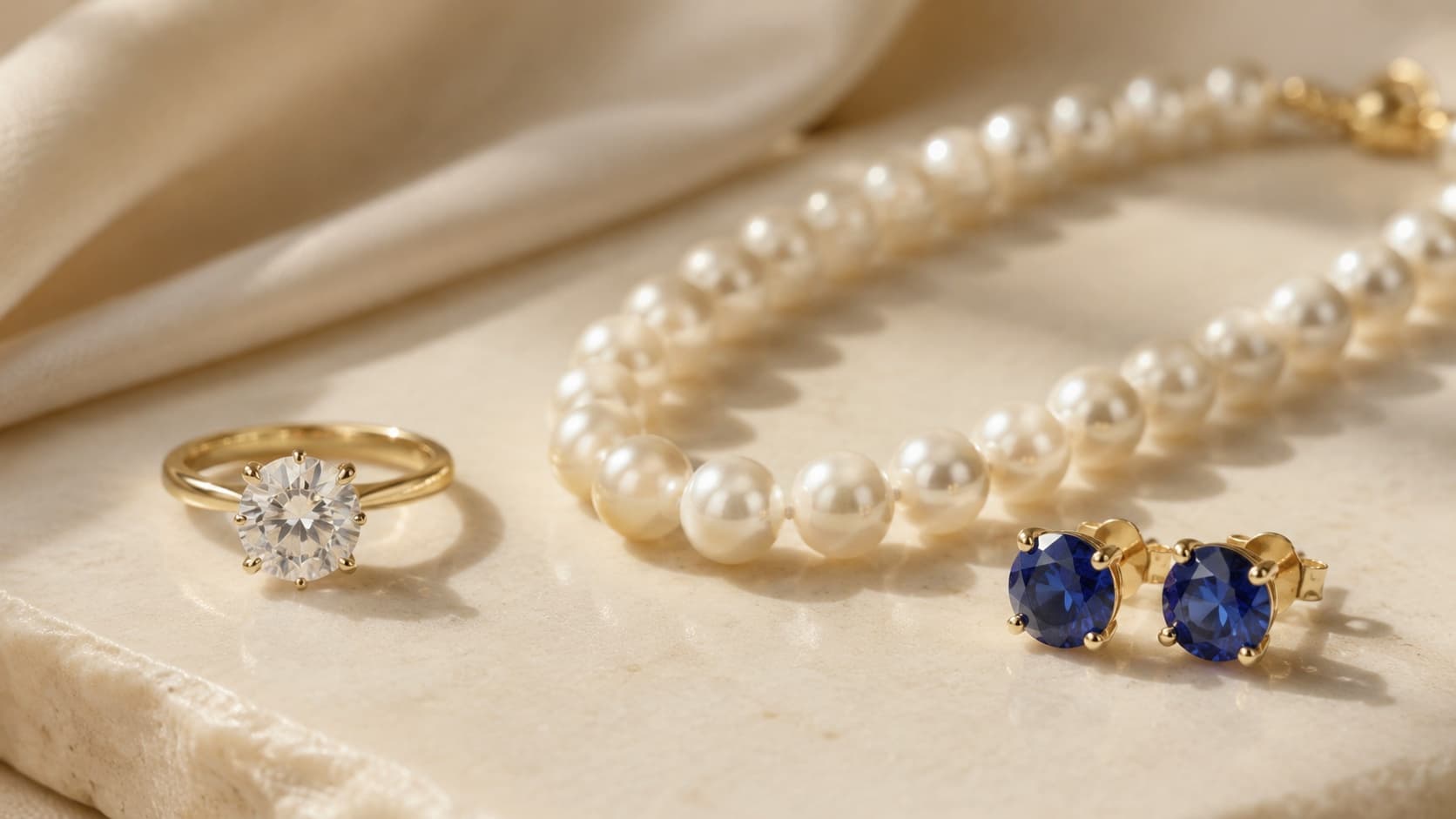
Jewelry becomes the go-to gift for several specific milestones, starting with the 10th anniversary and appearing regularly after that. The clearest jewelry years are the 10th (diamond), 14th (gold jewelry, on the modern list), 20th (platinum), 25th (silver), 30th (pearl), 35th (jade), 40th (ruby), 45th (sapphire), 50th (gold), 55th (emerald), and 60th (diamond again). Several other years also carry gemstone associations that people use loosely, even if they aren’t on every list. The anniversaries most closely linked to jewelry break down this way:
| Anniversary | Traditional Gift | Modern Gift |
|---|---|---|
| 10th | Tin or aluminum | Diamond jewelry |
| 14th | Ivory | Gold jewelry |
| 20th | China | Platinum |
| 25th | Silver | Silver |
| 30th | Pearl | Diamond |
| 35th | Coral | Jade |
| 40th | Ruby | Ruby |
| 45th | Sapphire | Sapphire |
| 50th | Gold | Gold |
| 55th | Emerald | Emerald |
| 60th | Diamond | Diamond |
Earlier years like the 1st (paper/clocks), 5th (wood/silverware), and 7th (wool/copper) usually skip jewelry entirely, though plenty of couples give a meaningful piece regardless of what the “official” theme suggests. Jewelry years tend to cluster around the bigger milestones rather than spreading out evenly, which lines up with how the whole list was built: smaller, everyday materials early on, and increasingly valuable ones as the marriage gets longer.
Why Silver, Gold, and Diamonds Land on Specific Years
The pattern isn’t random. Milestone anniversaries received the rarer, more valuable materials, while earlier years were assigned humbler, everyday items. Twenty-five years of marriage earned silver because silver was historically precious but attainable, and fifty years earned gold because it represented something even rarer and longer-lasting, matching the achievement of half a century together.
Diamonds appear at both the 10th and the 60th because diamonds symbolize durability and endurance, fitting for a marriage that has survived either a full decade or six full decades. Diamond sits at the very top of the Mohs hardness scale, a 10 out of 10, meaning it’s the hardest known natural material and effectively can’t be scratched by anything except another diamond. That physical toughness is exactly why it became shorthand for a bond that has lasted.
The gemstone years in between, like ruby at 40 and sapphire at 45, follow a similar logic. Rubies and sapphires are both varieties of the mineral corundum, which sits at a 9 on the Mohs scale, just below diamond, and that near-top hardness is part of why both stones were chosen to represent long, durable marriages rather than something softer and more delicate.
How to Choose Anniversary Jewelry for Him or Her
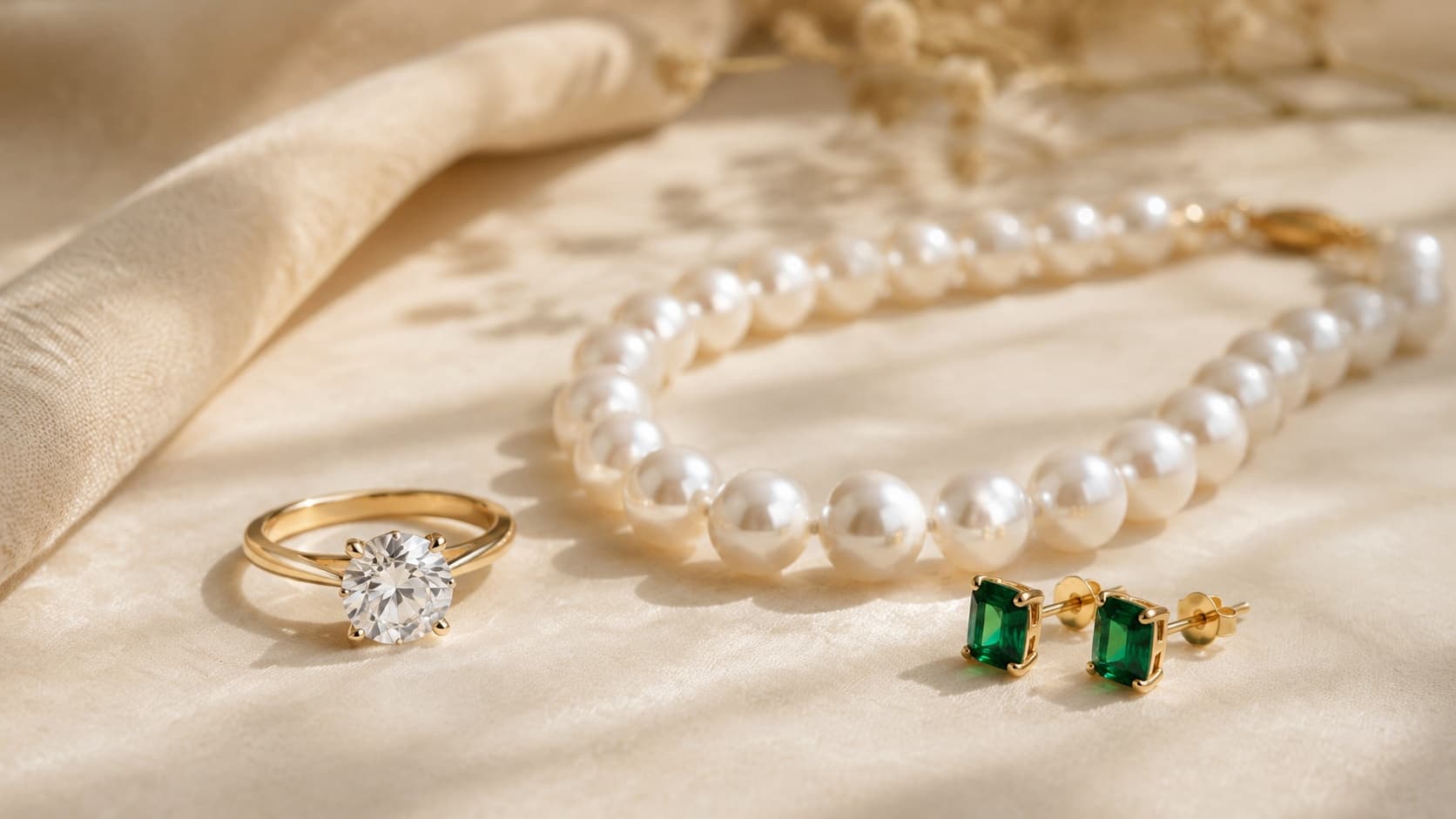
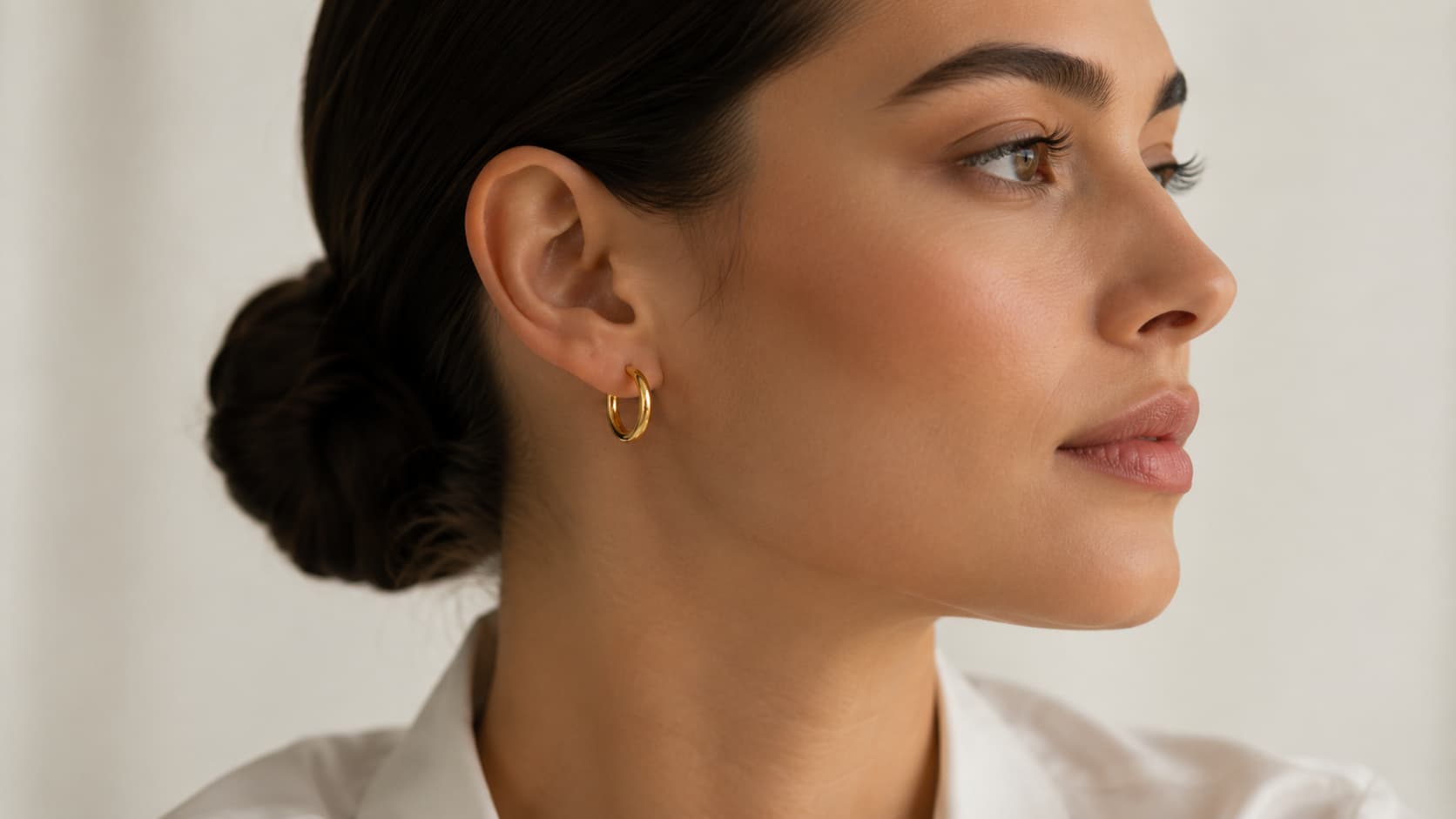
The single biggest factor in choosing anniversary jewelry is the recipient’s existing style, not the theme of the year. A themed gift only feels special if it’s also something the person will reach for on a normal Tuesday, which makes the strongest starting point what they already wear most: hoops or studs, thin bands or bold ones, warm metals or cool ones.
A few factors help narrow the choice further:
- What metal do they already wear daily? Matching it avoids the common problem where a piece in the “other” tone ends up sitting unused in a drawer.
- Do they wear jewelry with stones, or plain metal? Someone who prefers minimalist pieces might not want a large statement gem, even if the year “calls for” one.
- Is this a piece meant for daily wear or special occasions? A ring for daily wear needs a comfortable band and a setting that won’t snag on clothing, while an occasion piece can afford to be more elaborate.
- What’s the budget, realistically? Anniversary jewelry doesn’t need to be expensive to be meaningful. A modest piece chosen thoughtfully will always beat an expensive piece chosen carelessly.
- Does their skin react to certain metals? For anyone who has dealt with itchy or discolored skin under a ring or earring before, hypoallergenic options like platinum, titanium, or high-karat gold tend to hold up better than lower-karat alloys or nickel-heavy metals.
Ring sizing is the detail that trips up surprise gifts most often. Borrowing a ring already worn on the correct finger and having it measured at a jewelry counter, or checking the fit of a piece of string or paper wrapped snugly around the base of the finger, avoids the single most common reason anniversary rings end up needing a resize.
None of this is limited to shopping for a wife or girlfriend. Anniversary jewelry for a husband, boyfriend, or same-sex spouse follows the same logic, just with a different set of usual pieces: watches, bracelets, signet rings, cufflinks, and tie bars tend to see the most everyday wear, and the same “what do they already wear” question applies just as much. A chunky chain bracelet in the year’s traditional or modern metal, or a watch with a small engraved detail on the caseback, hits the same note as a themed ring or pendant does for anyone else.
The safest approach, when in doubt, is looking at what someone already owns and wears often. That reveals more about the right gift than any year-based theme ever will.
Is the Anniversary Gift List a Strict Rule?
No, following the anniversary gift list is entirely optional, and most couples treat it as inspiration rather than a rule. The list works well as a starting point for anyone stuck on ideas, but it was never meant to restrict what counts as a meaningful gift.
Plenty of couples mix traditional and modern themes, pick whichever material they personally like better for a given year, or ignore the list altogether in favor of something personal, like a piece engraved with a wedding date or an anniversary trip instead of a physical object. The list is a tool, not a test.
Personalization has also become a popular middle ground between “follow the theme” and “ignore the theme entirely.” A ring in the year’s traditional metal but engraved with a wedding date, or a pendant that swaps the year’s assigned gem for the couple’s birthstones instead, nods to the tradition while still making the piece feel specific to the relationship rather than generic.
Frequently Asked Questions
What is the 25th anniversary gemstone?
The 25th wedding anniversary doesn’t have an official gemstone, but it’s traditionally represented by silver rather than a specific stone. Some modern lists pair the 25th with sapphire as an alternative, though silver jewelry is the far more common and widely recognized gift for this milestone.
What jewelry is given for a 1-year anniversary?
Jewelry isn’t part of the traditional or modern theme for a first anniversary, which is represented by paper and clocks instead. That said, many couples still choose to give a small, meaningful piece of jewelry for their first year together, since the anniversary list is a guide rather than a strict rule.
Is the 50th anniversary always gold?
Yes, both the traditional and modern gift lists agree on gold for the 50th anniversary, making it one of the most consistent milestones across every version of the list. This makes gold jewelry, such as a ring, bracelet, or pendant, one of the safest and most widely recognized 50th anniversary gifts.
What’s the difference between traditional and modern anniversary gifts?
Traditional anniversary gifts follow an older list of materials like paper, wood, and tin that dates back generations, while modern gifts were introduced in the 1930s as more current, easier-to-find alternatives such as clocks, china, and jewelry. Both lists are still in wide use today, and it’s common to blend the two rather than pick strictly one or the other.
Can diamond jewelry be given for any anniversary?
Diamond jewelry can be given for any anniversary, though it’s officially tied only to the 10th and 60th years on the modern gift list. Giving diamonds outside those specific milestones doesn’t break any rule, since the anniversary list is a tradition rather than a requirement.
The Bottom Line
Anniversary jewelry works best when it draws on the traditional list for inspiration, not obligation. The clearest jewelry milestones, the 10th, 25th, 30th, 40th, 45th, 50th, and 60th, each carry a specific material or gem tied to what that stretch of marriage represents, from diamond’s durability at year ten to gold’s rarity at the half-century mark. But the strongest anniversary gift is still the one that matches how the recipient actually dresses and lives day to day, whether or not it lines up with the year on the chart.