Every person has a gemstone tied to the month they were born, and that detail has turned into one of the most popular ways to give a gift that feels personal without much guesswork. Birthstone jewelry works for birthdays, graduations, new babies, or no occasion at all, since the stone already carries meaning before a single word is added. Some months even share more than one official stone, which spreads the color and price options across almost any budget. What matters most for gift-giving is less the stone’s chemistry and more how well it matches the recipient’s style, the occasion, and the price range in mind.
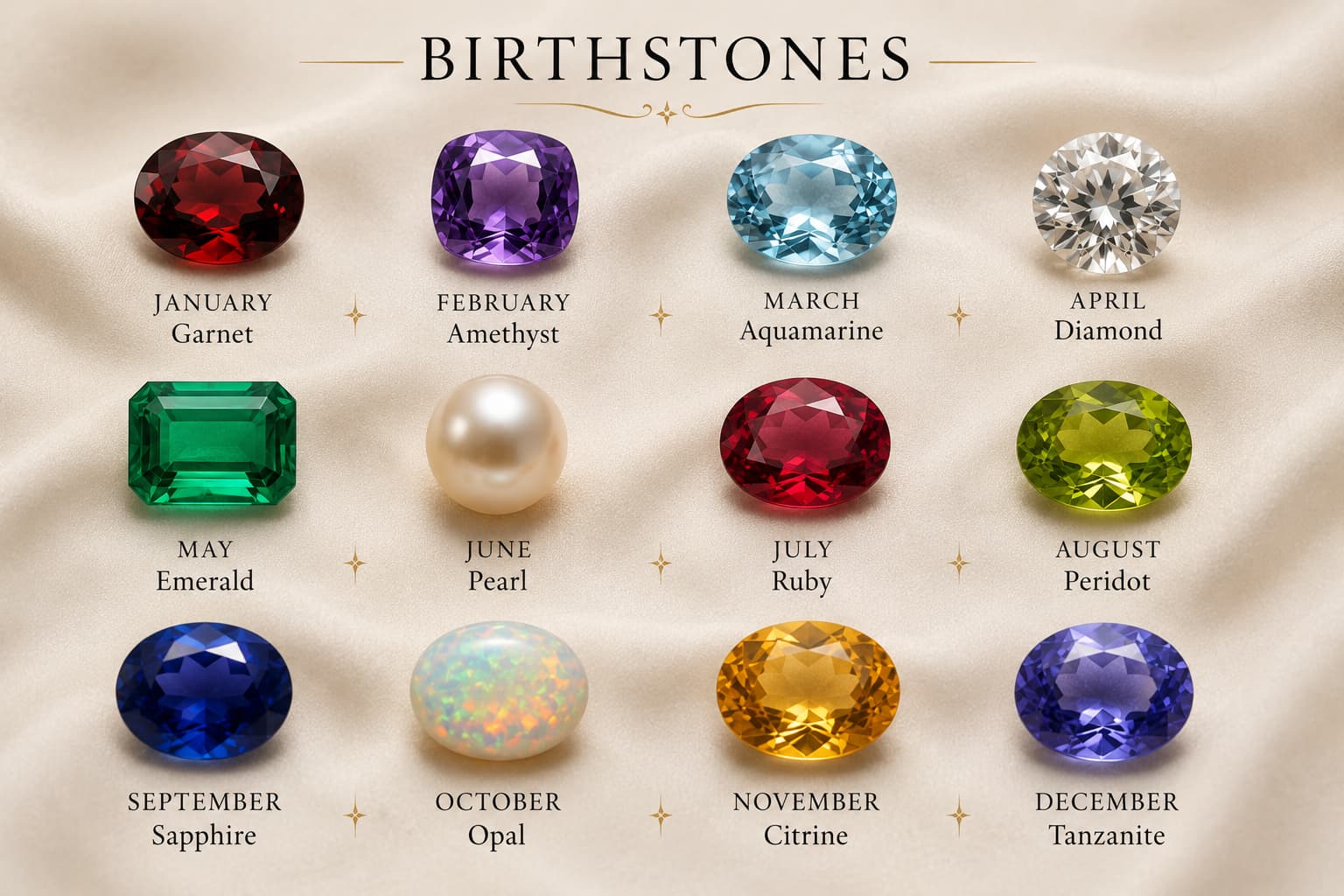
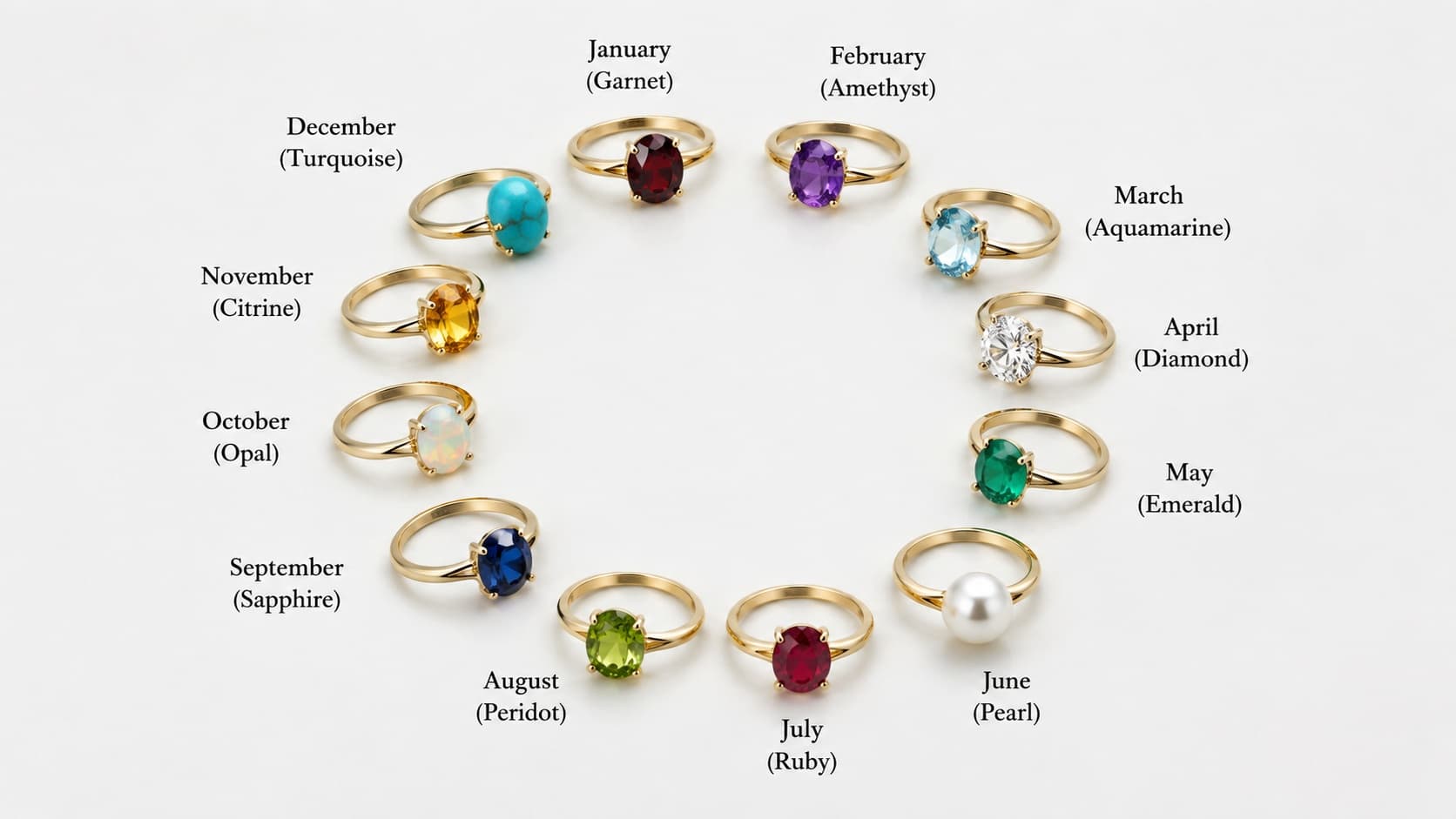
Full List of Birthstones by Month
| Month | Modern Birthstone | Typical Color |
|---|---|---|
| January | Garnet | Deep red |
| February | Amethyst | Purple |
| March | Aquamarine | Pale blue-green |
| April | Diamond | Clear (or fancy colors) |
| May | Emerald | Green |
| June | Pearl, Alexandrite, or Moonstone | White, color-changing, or glowing white |
| July | Ruby | Red |
| August | Peridot or Spinel | Yellow-green or vivid colors |
| September | Sapphire | Blue (or nearly any color) |
| October | Opal or Tourmaline | Rainbow play of color, or wide color range |
| November | Topaz or Citrine | Golden yellow |
| December | Turquoise, Tanzanite, or Zircon | Blue-green, violet-blue, or clear/gold |
January Birthstone: Garnet
Garnet symbolizes protection and lasting friendship, making it a thoughtful choice for someone starting something new, whether that’s a big move, a new job, or a long trip. It also spans a wide range of budgets, since garnet is one of the more affordable birthstones without looking cheap.
Garnet comes in colors beyond its classic deep red, including green and orange varieties, so matching the stone to the recipient’s usual style is worth doing before settling on a piece. A garnet pendant or a pair of stud earrings both make easy, low-risk choices for a first birthstone gift.
February Birthstone: Amethyst
Amethyst represents calm and clarity, and its purple tone reads as elegant without being flashy, which makes it a safe, well-loved gift for almost any February birthday. It’s also budget-friendly, offering a piece that feels special without a large price tag.
Amethyst looks good set in yellow gold, white gold, or silver, so the metal choice can follow whatever the recipient already wears daily rather than being dictated by the stone itself. It suits rings just as well as necklaces, since it holds up fine to regular wear.
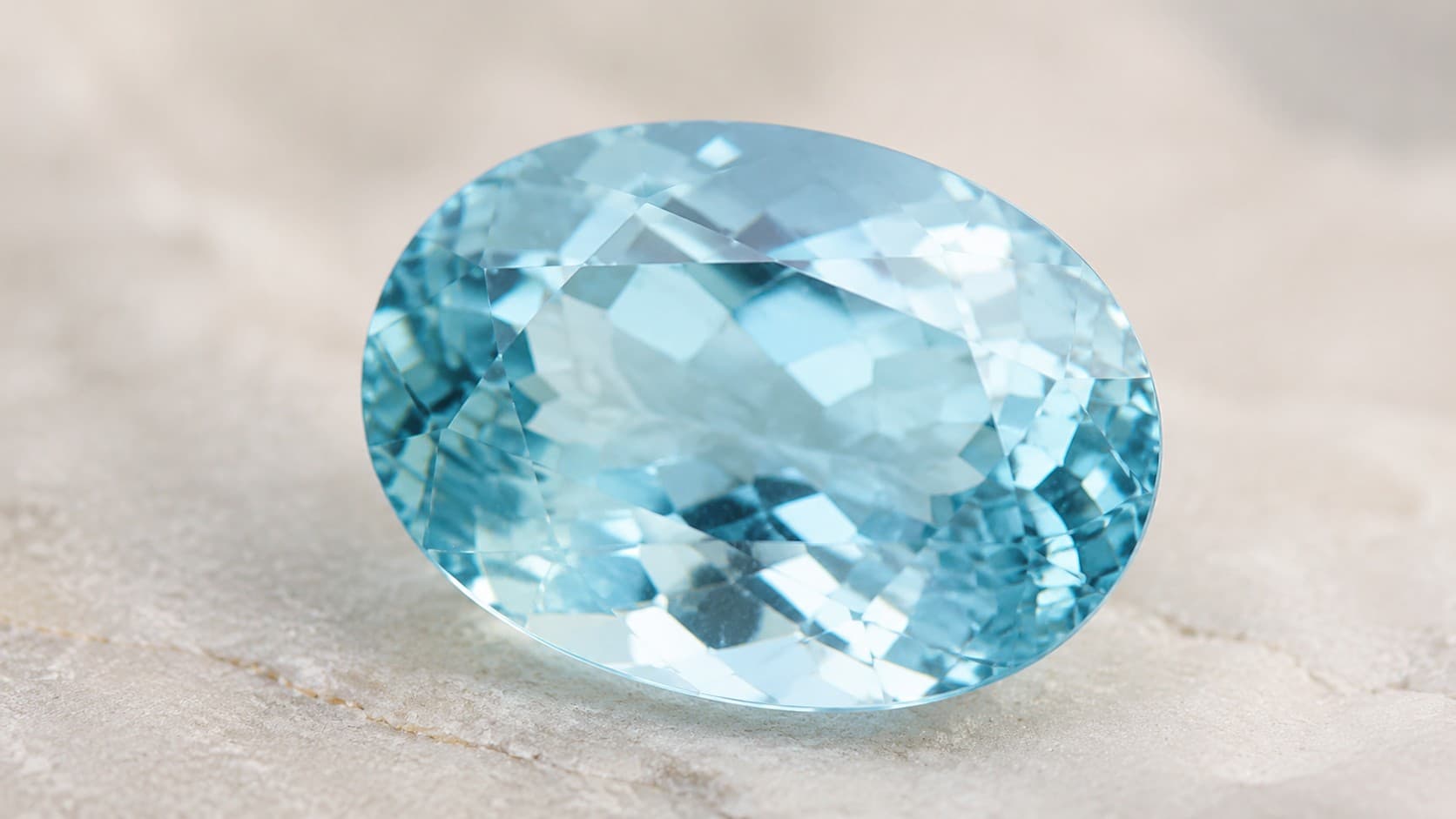
March Birthstone: Aquamarine
Aquamarine is tied to calm and safe travel, making it a fitting gift for someone who travels often or is about to take a big trip. Its pale, clear blue color also gives it a light, easy-to-wear look suited to someone who prefers understated jewelry over bold statement pieces.
Because aquamarine crystals can grow quite large, a noticeably bigger center stone often costs about the same as a much smaller diamond or emerald, which matters for a gift meant to make a visual impression.
April Birthstone: Diamond
Diamond is the classic choice for milestone gifts, associated with strength and lasting commitment, and its clear sparkle suits almost any personal style. It’s also the most flexible birthstone on price: a small diamond pendant or a pair of stud earrings can be an accessible gift, while a larger center stone moves into more significant, once-in-a-while territory.
Where budget matters more than the occasion, a lab-grown diamond offers the same look and durability as a mined one for meaningfully less money, a practical option for a straightforward, no-fuss recipient.
May Birthstone: Emerald
Emerald stands for renewal and new beginnings, making it a fitting gift for a graduation, a new job, or another fresh start. Its rich green color also gives it a more luxurious, dressed-up feel than most other birthstones, so it tends to read as a bigger gesture even at a moderate size.
Emerald suits earrings, pendants, and other pieces that avoid daily bumps better than an everyday ring, since it’s a softer stone than diamond or sapphire. That makes it a better fit for occasional wear than for a ring worn to work every day.
June Birthstones: Pearl, Alexandrite, and Moonstone
June rewards a closer look at the recipient’s personality, since its three official birthstones send very different signals as a gift. Pearl is the classic, elegant choice and the easiest on the budget; alexandrite is rare and genuinely impressive for someone drawn to a standout, harder-to-find gift; moonstone has a soft, glowing look that suits someone drawn to romantic or dreamy jewelry.
When the choice between the three isn’t obvious, a simple pearl pendant or stud earrings tend to be the safest starting gift, since pearls pair easily with nearly any outfit or jewelry already owned.
July Birthstone: Ruby
Ruby is linked to passion and courage, and its bold red color makes it one of the more attention-grabbing birthstone gifts, well suited to an anniversary or another gift meant to feel significant. It’s also durable enough for a ring worn every single day, making it a fit for a birthstone gift meant to double as a piece that’s never taken off.
Ruby’s price range is wide, from approachable to genuinely investment-grade, which makes settling on a budget useful before comparing pieces rather than after.
August Birthstones: Peridot and Spinel
Peridot’s bright yellow-green color is linked to strength and friendship, and it’s one of the more affordable birthstones, making it an easy, low-pressure gift for a casual birthday. Spinel, August’s second option, comes in far more colors, including vivid reds, pinks, and blues, making it worth considering for a recipient who wants something less commonly seen.
Both stones are durable enough for rings worn daily, so the choice mostly comes down to color preference rather than practicality.
September Birthstone: Sapphire
Sapphire is tied to wisdom and loyalty, and its association with royal engagement rings gives it a built-in sense of occasion, even outside of engagements. Because sapphire comes in nearly every color, not just blue, it’s one of the easier birthstones to personalize to a favorite color rather than settling for the expected shade.
It’s also one of the toughest gemstones available, so a sapphire piece holds up well as an everyday ring rather than something saved for special occasions only.
October Birthstones: Opal and Tourmaline
Opal’s shifting rainbow of color makes it one of the most visually unique birthstone gifts, suited to someone who wants jewelry that looks like nothing else in their collection. Tourmaline, October’s other option, comes in an unusually wide range of colors on its own and tends to be the sturdier, more everyday-friendly choice of the two.
A recipient who wears jewelry constantly and rarely takes it off is generally better matched with tourmaline, while opal’s unusual look suits a piece more likely to be saved for special occasions and given a bit of extra care.
November Birthstones: Topaz and Citrine
Both of November’s birthstones lean into warm, golden tones, making them a natural fit for an autumn birthday or anyone who favors gold and amber shades over cooler colors. Citrine tends to be the more budget-friendly of the two and works well as an affordable alternative to a yellow diamond, while topaz carries a slightly more traditional, dressed-up feel.
Since natural citrine is genuinely rare, most citrine jewelry on the market is heat-treated quartz, a completely normal, disclosed practice that doesn’t make it a lesser gift.
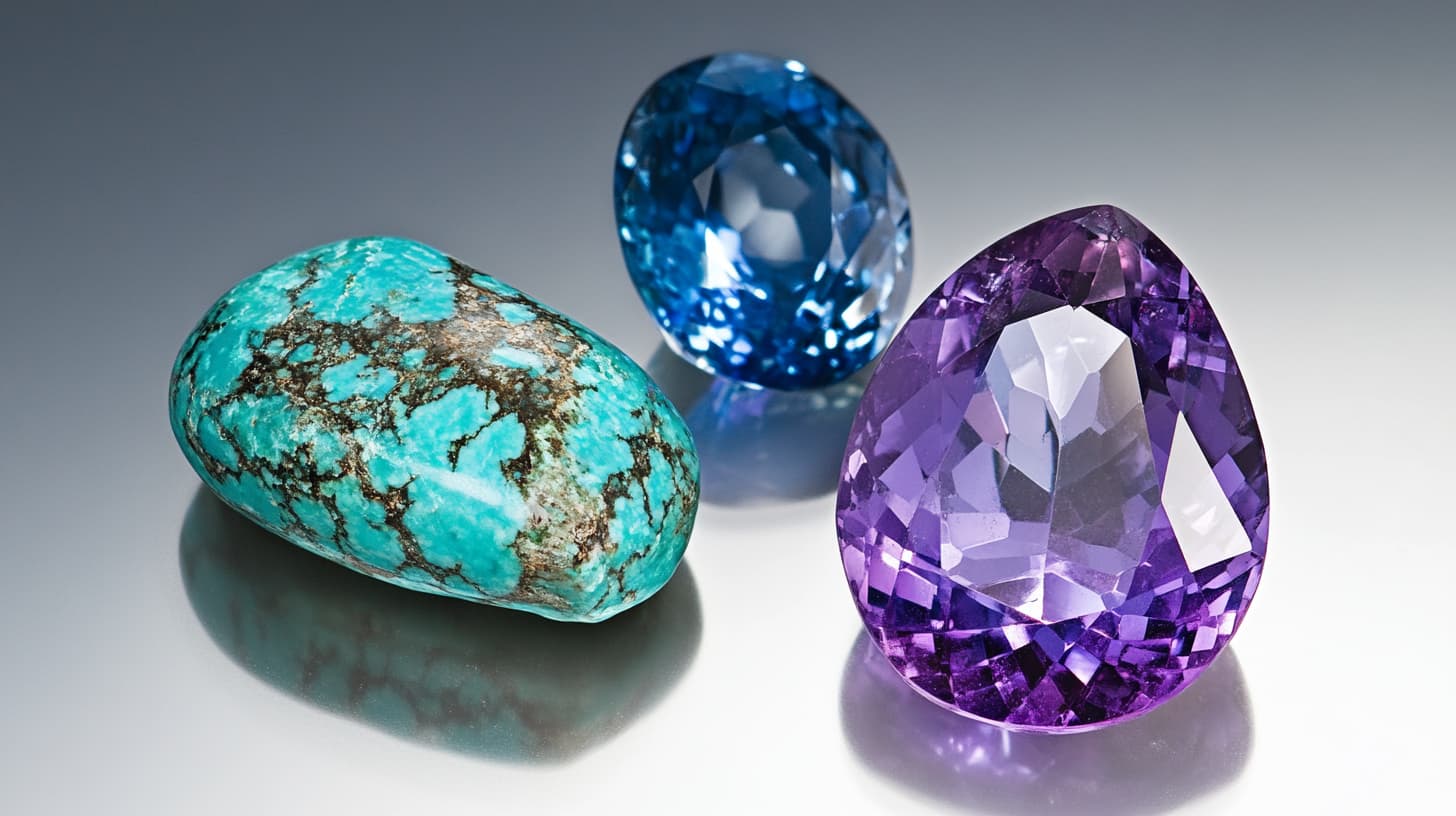
December Birthstones: Turquoise, Tanzanite, and Zircon
December’s three birthstones cover very different price points and looks, so style and budget end up deciding between them. Turquoise has a warm, vintage, boho feel and tends to be the most affordable; tanzanite is genuinely rare, since it comes from only one mining region in the world, making it a strong choice for a bigger, more memorable gift; zircon offers bright, diamond-like sparkle at a much lower price than a diamond of the same size.
For a recipient who likes jewelry that stands out, tanzanite carries the most special-occasion feel of the three, while turquoise and zircon suit a more relaxed, everyday choice.
Tips for Choosing a Birthstone Gift
The stone matters, but the setting and jewelry type decide whether someone actually wears the piece day to day. Several practical factors shape that decision.
- Durability determines the setting. Softer stones like opal, pearl, and emerald hold up better in earrings, pendants, or brooches than in rings, since rings take the most daily impact.
- Metal choice affects how often a piece gets worn. A birthstone set in whatever metal the recipient already wears daily tends to see more use than one that doesn’t match.
- Size matters more for younger recipients. A smaller, simpler setting, like a stud earring or a thin pendant, tends to get worn more often by kids or teens than a large statement piece.
- Multi-stone months add a decision point. Months like June and December each carry more than one official stone, spreading the choice across different looks and prices under the same birth month.
- Budget range varies widely, even within one month. Knowing a ceiling in advance keeps the search focused, since birthstone prices for a single month can span from affordable to significant.
A birthstone doesn’t have to be the center of the piece to count. Small birthstone accents on an existing necklace or a cluster ring with a few different birth months, sometimes called a “mother’s ring” style, can represent more than one person at once.
Frequently Asked Questions
Can a birthstone gift be for a month that isn’t the recipient’s own?
Yes. There’s no rule requiring a gift to match the recipient’s exact birth month, and plenty of buyers choose a stone for its color or how it pairs with jewelry already worn, regardless of the date.
Which birthstones make the most affordable gifts?
Garnet, amethyst, peridot, and citrine tend to be the most budget-friendly options, since all four are relatively abundant and don’t carry the premium pricing of stones like diamond, emerald, ruby, sapphire, or tanzanite.
Why do some months have more than one birthstone to choose from?
Some months carry both a modern and a traditional stone, and others gained extra modern options over the decades as new gems became easier to cut and source. That range also helps with gift-giving, since it offers more than one price point and look for the same birth month.
Is birthstone jewelry only appropriate for birthdays?
No. Birthstone pieces work for graduations, anniversaries, new babies, or as a way to represent family members on one piece, like a pendant with each child’s birthstone set side by side.
Should a birthstone gift be a natural stone or a lab-grown one?
Either works well as a gift. Lab-grown versions of stones like diamond, sapphire, and ruby share the same chemical makeup and durability as the mined version, just at a lower price, making them worth considering for a bigger-looking stone on a tighter budget.
Conclusion
Choosing a birthstone gift comes down to three questions: what the month’s stone means, how well it suits the way the recipient actually lives and dresses, and whether it fits the budget in mind. Some months make that easy with a single obvious stone, like April’s diamond or July’s ruby, while others hand over a genuine choice, like June or December, where price and personality point toward a different pick. Starting with the meaning and checking it against the recipient’s everyday style is usually enough to narrow the right piece down fast.