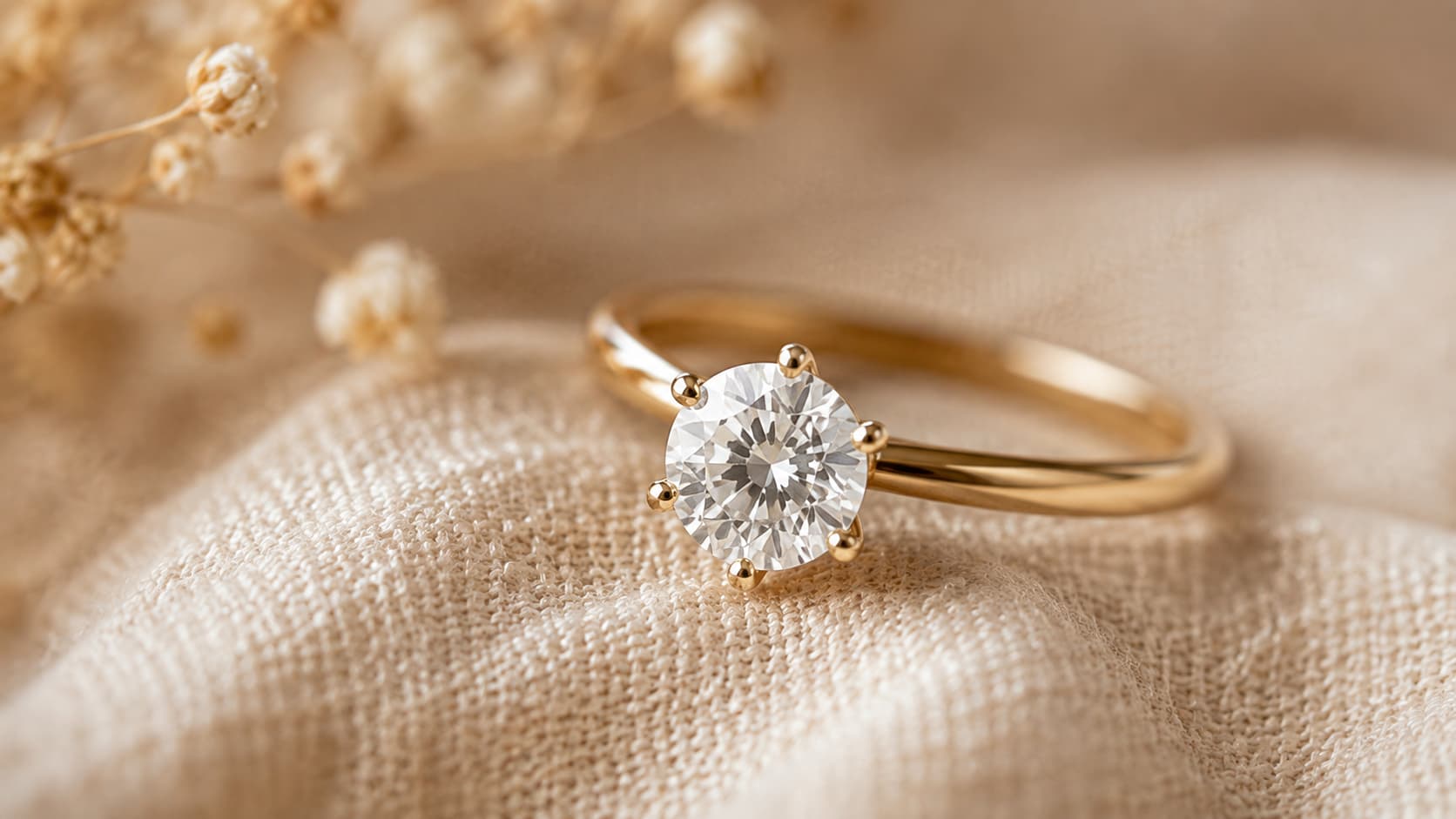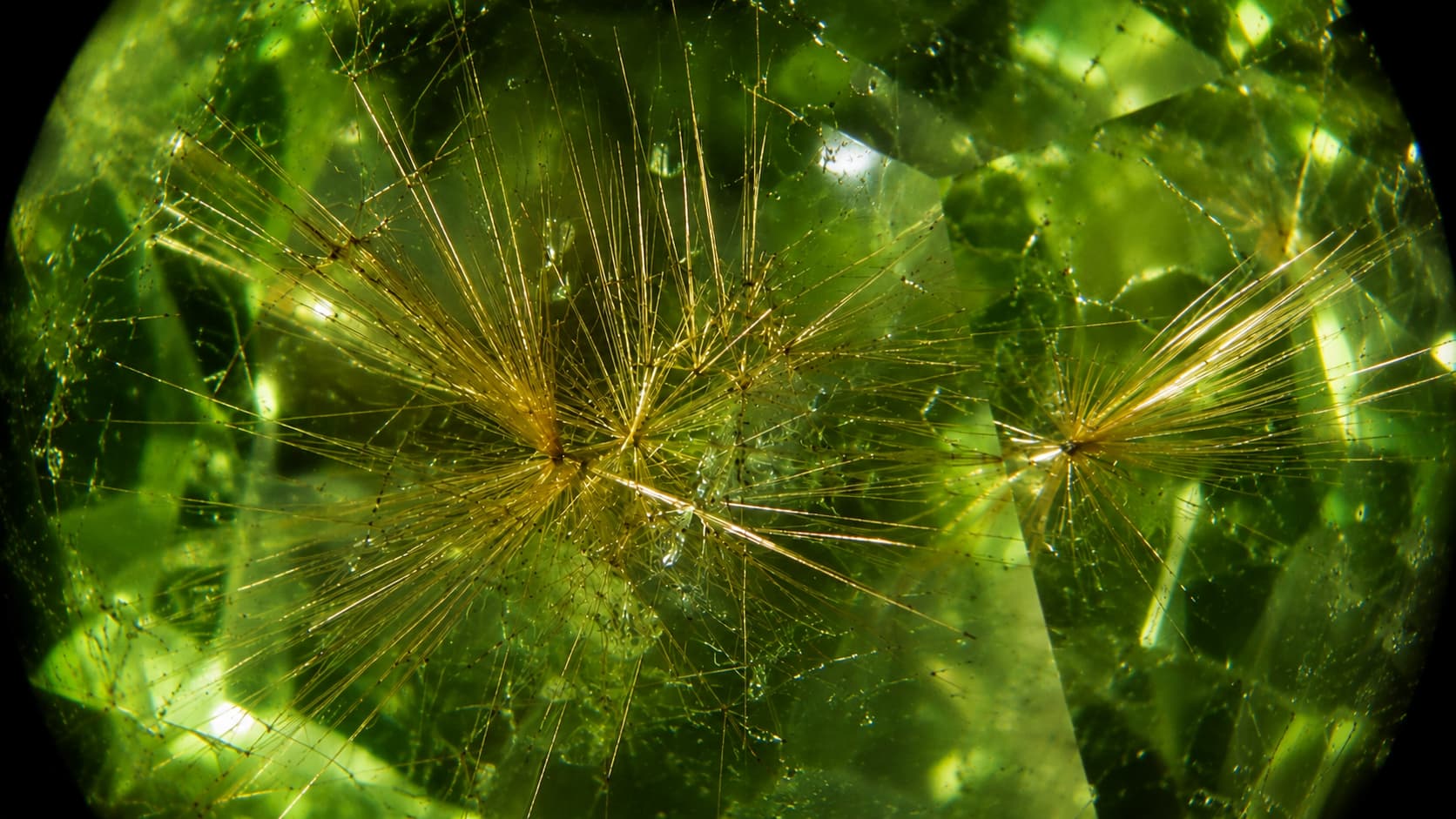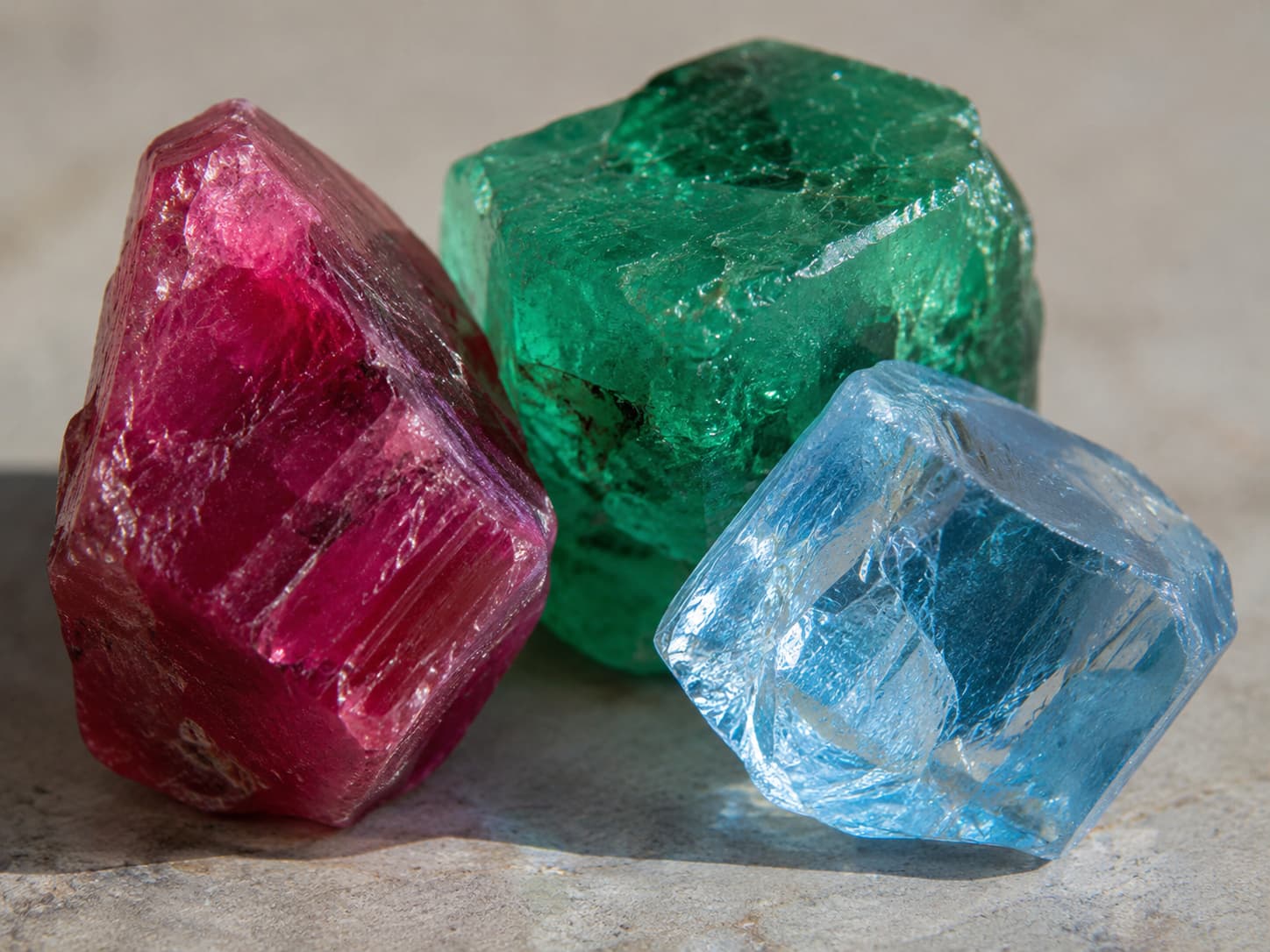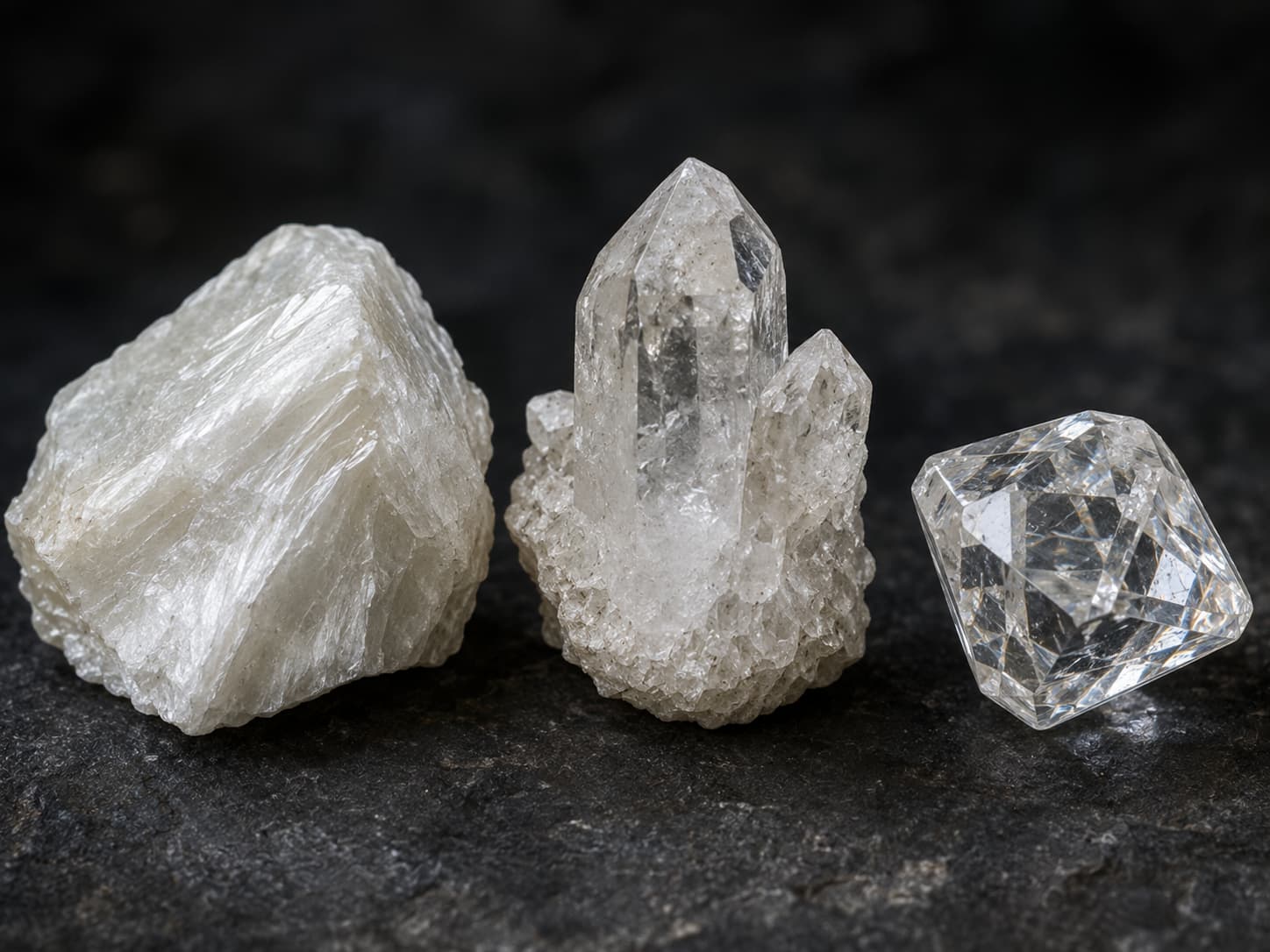
Every gemstone on earth carries a number, and that number quietly decides how well a piece of jewelry holds up over the years. It measures how easily a stone gets scratched, which becomes especially important once that stone is set into a ring worn every day. The Mohs hardness scale is the simple, two-hundred-year-old tool that assigns every mineral this number, and it remains one of the most practical ways to understand why some gemstones stay pristine for generations while others need a gentler kind of care.
What Is the Mohs Hardness Scale?
The Mohs hardness scale ranks minerals from 1 to 10 based on how easily they get scratched, with talc at the soft end and diamond at the hard end. A mineral higher on the scale can scratch anything below it, but nothing below it can scratch back.
A German scientist named Friedrich Mohs came up with this idea in 1812. He had been sorting through a collection of minerals and grew frustrated that arguing over chemical makeup often led nowhere, so he grouped them instead by something anyone could test by hand: how hard they were. He set aside ten minerals whose hardness he could tell apart by feel, spanning from something a fingernail could dent to the hardest substance found in nature, then put them in order. That ordering is still taught in classrooms today, well over two hundred years on.
The scale is often misunderstood as a measure of overall strength, but it only measures resistance to scratching. A gemstone can rank high on the Mohs scale and still crack if dropped, since scratching and cracking are two entirely different kinds of damage.
How Does the Mohs Scale Work?
The test itself is simple: the sharp point of one mineral is pressed against another to see which one leaves a mark. If mineral A scratches mineral B but B cannot scratch A, then A ranks higher on the scale.
Gemologists determine where an unknown stone sits by testing it against materials of known hardness. If a stone gets scratched by a certain reference mineral but not by the one just below it, its hardness falls somewhere between those two numbers. This is why gemstone hardness is often listed as a range, such as “6 to 6.5,” rather than a single number — individual specimens of the same mineral can be slightly harder or softer depending on small differences in how they formed.
The numbers on the scale are also not evenly spaced like a ruler. The jump in actual hardness between each number is neither equal nor strictly mathematical. The gap between a 9 and a 10 — corundum and diamond — is far larger than the gap between a 1 and a 2, which is part of why diamond isn’t just “a little harder” than the mineral below it but sits in a category of its own.
The Original 10 Minerals on the Mohs Scale
Mohs built his scale using ten reference minerals: talc, gypsum, calcite, fluorite, apatite, orthoclase, quartz, topaz, corundum, and diamond, arranged from softest to hardest.
| Mohs Number | Mineral | Everyday Comparison |
|---|---|---|
| 1 | Talc | Scratched by a fingernail |
| 2 | Gypsum | Also scratched by a fingernail |
| 3 | Calcite | Scratched by a copper coin |
| 4 | Fluorite | Scratched easily by a steel knife |
| 5 | Apatite | Scratched by a knife with some pressure |
| 6 | Orthoclase (feldspar) | Scratches glass, resists a steel knife |
| 7 | Quartz | Scratches glass and steel easily |
| 8 | Topaz | Scratches quartz |
| 9 | Corundum (ruby & sapphire) | Scratches almost everything except diamond |
| 10 | Diamond | The hardest known natural mineral |
Household dust is one of the sneakiest scratchers around, since it is usually loaded with tiny quartz particles. Because quartz sits at a 7, ordinary dust can slowly dull any gemstone softer than that through nothing more than normal daily wear.
Mohs did not choose these ten minerals at random. Each one needed to be common enough for other mineralogists to obtain easily, and each needed a hardness clearly distinct from its neighbors so the scratch test would give a reliable result every time. This is also why diamond sits alone at the very top — at the time, and still today, nothing else found in nature comes close to matching it, making it a natural and permanent ceiling for the scale.
Why Gemstone Hardness Matters for Everyday Wear
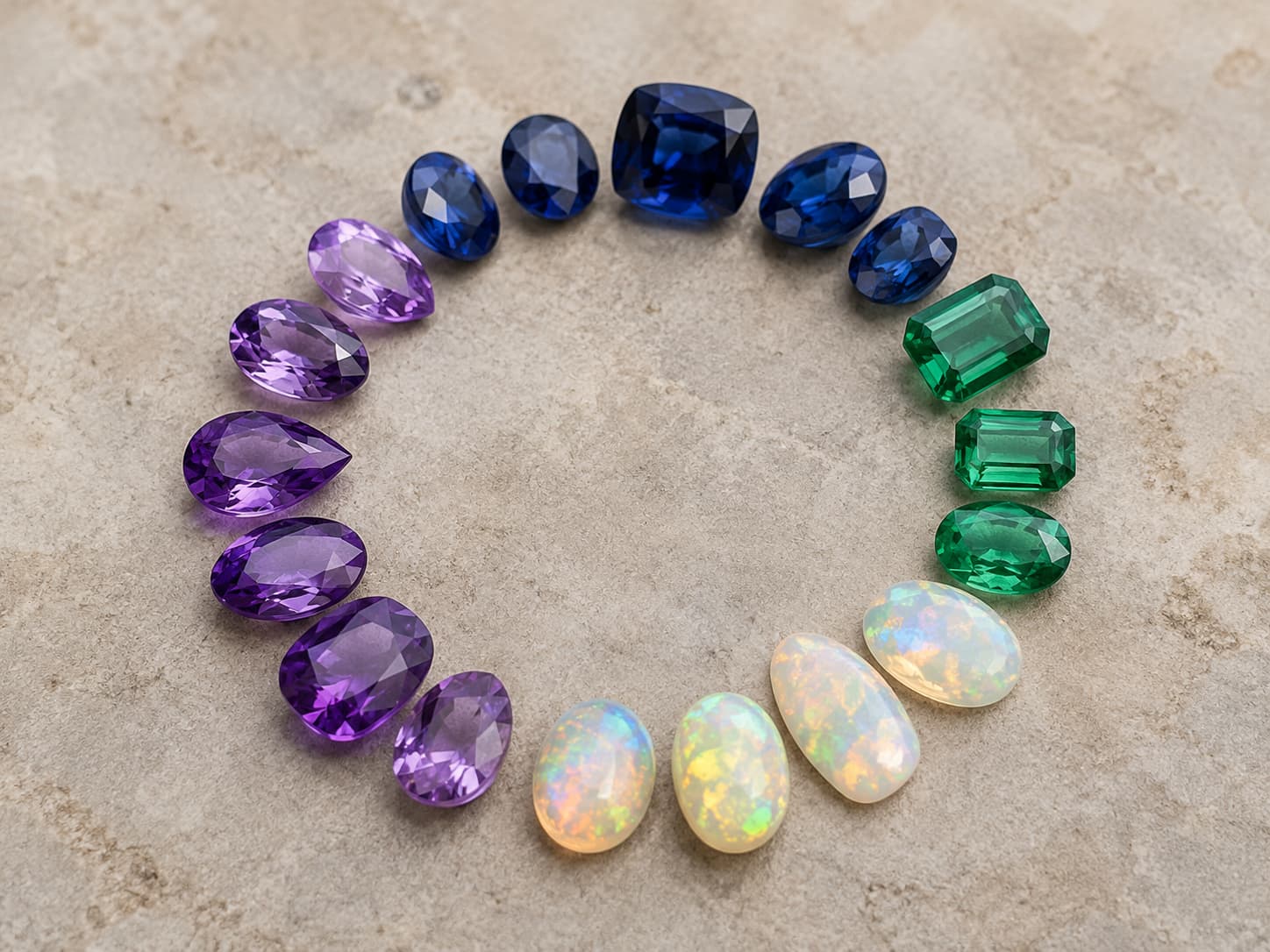
The Mohs scale predicts how well a gemstone will hold up to daily wear, which matters most for rings since hands come into contact with hard surfaces constantly. Stones ranked 8 and above, such as diamond, sapphire, and topaz, resist scratching from almost anything they encounter in normal life.
Softer stones call for smarter choices rather than avoidance. A gem ranked 5 or 6, such as opal or moonstone, can still be striking in jewelry, though it performs better as an earring, pendant, or occasional-wear ring than as something scraping against countertops and doorknobs every day. Setting style plays a role as well: a bezel setting, which wraps protective metal around the edge of a softer stone, shields it far better than a setting that leaves the stone’s edges exposed.
Jewelers also draw a distinction between “hardness” and “toughness,” and confusing the two is a common mistake. Hardness concerns scratch resistance, while toughness concerns resistance to chipping or cracking from a knock. A gem can be hard yet not tough — topaz sits at an 8 but splits cleanly along certain internal planes when struck at the wrong angle, and emerald ranks a solid 7.5 to 8 yet is often brittle because of natural internal fractures. Jade, by contrast, ranks lower on hardness at around 6 to 7, but its tightly interlocked crystal structure makes it remarkably resistant to chipping, which is why it has been carved into intricate shapes for thousands of years without falling apart.
Mohs Hardness Chart for Popular Gemstones
The gemstones most commonly used in fine jewelry span a wide range on the scale, from diamond at the very top to organic gems like pearl and amber near the bottom.
| Gemstone | Mohs Hardness | Best Suited For |
|---|---|---|
| Diamond | 10 | Everyday rings, heirloom pieces |
| Ruby & Sapphire | 9 | Everyday rings |
| Topaz | 8 | Daily wear, with care around hard knocks |
| Emerald & Aquamarine | 7.5–8 | Rings, with gentle handling |
| Quartz, Amethyst & Citrine | 7 | Rings and everyday jewelry |
| Tourmaline & Garnet | 7–7.5 | Regular wear |
| Peridot | 6.5–7 | Rings, with some care |
| Jade | 6–7 | Rings and carved pieces (low hardness, high toughness) |
| Moonstone & Sunstone | 6 | Earrings and pendants |
| Opal | 5.5–6.5 | Earrings, pendants, occasional-wear rings |
| Turquoise & Lapis Lazuli | 5–6 | Earrings, pendants |
| Pearl | 2.5–4.5 | Earrings, necklaces, occasional-wear pieces |
| Amber | 2–2.5 | Earrings, pendants |
| Talc | 1 | Not used in jewelry |
Nearly everything comfortable for daily rings sits at 7 or above, which lines up with quartz dust being the everyday threat described earlier. Gemstones below that line are not lesser stones — they simply fill a different role in a jewelry collection, usually pieces that spend less time in contact with hard surfaces.
How to Test Gemstone Hardness at Home
A true scratch test is destructive by nature, which is why gemologists rarely perform it on finished, set jewelry. Understanding the method, however, explains what a jeweler is doing when identifying a loose or rough stone.
Gemologists rely on a handful of everyday items as rough hardness checkpoints, since their hardness is well established and consistent.
| Household Item | Approximate Mohs Hardness |
|---|---|
| Fingernail | 2.5 |
| Copper penny | 3.5 |
| Steel knife blade or window glass | 5.5 |
| Steel file | 6.5 |
| Quartz | 7 |
The corner of a known test point is pressed gently against an inconspicuous spot on the stone, checking for a genuine groove rather than a light powder mark that wipes away. A stone that scratches a steel knife but not quartz, for instance, has a hardness somewhere between 5.5 and 7.
A scratch test should never be performed on jewelry someone intends to keep wearing. Even done correctly, it leaves a permanent mark, which is why professionals reserve it for rough, unset material set aside specifically for testing.
Frequently Asked Questions
Is a higher Mohs number always better for jewelry?
Not necessarily. A higher number means better scratch resistance, but it says nothing about how a stone handles a hard knock, sudden temperature change, or exposure to chemicals. A well-chosen lower-hardness stone in a protective setting, worn thoughtfully, can last just as long in a collection as a harder stone worn carelessly.
What is the hardest gemstone used in jewelry?
Diamond, at a full 10 on the Mohs scale, is the hardest gemstone used in jewelry and the hardest natural mineral known to science. Ruby and sapphire, both forms of the mineral corundum, follow closely at a 9.
Can a diamond scratch another diamond?
Yes. Since diamond and diamond share the same hardness, one diamond is capable of scratching another. This is in fact how diamond cutters shape and polish diamonds, using diamond dust and diamond-tipped tools, because nothing else is hard enough to do the job.
Why do soft gemstones like opal and pearl still get used in jewelry?
Beauty and rarity do not depend on hardness. Opal’s shifting play of color and the pearl’s natural glow are prized regardless of how easily they scratch, so jewelers simply choose settings and placements — earrings, pendants, brooches — that protect these softer stones from the kind of daily contact a ring endures.
Does the Mohs scale apply to metals like gold and silver too?
Yes, though metals are rarely discussed with the same precision as gemstones. Pure gold sits around 2.5 to 3, which is why it is usually alloyed with other metals to make it more durable for jewelry, while platinum and most gold alloys land somewhat higher, offering better day-to-day scratch resistance — a contrast covered in more depth when comparing gold and silver jewelry directly.
Conclusion
The Mohs hardness scale is a straightforward, scratch-based ranking system from 1 to 10 that Friedrich Mohs devised in 1812, and it still shapes how gemstones are chosen and cared for today. A high number like diamond’s 10 or corundum’s 9 means a stone can handle constant contact, which is exactly why those gems dominate everyday rings, while stones lower on the scale, such as opal, turquoise, and pearl, are just as valuable but belong in settings and pieces that shield them from routine bumps and scratches. Hardness measures scratch resistance alone, not overall toughness — a distinction that ultimately matters most when choosing a gemstone meant to last.