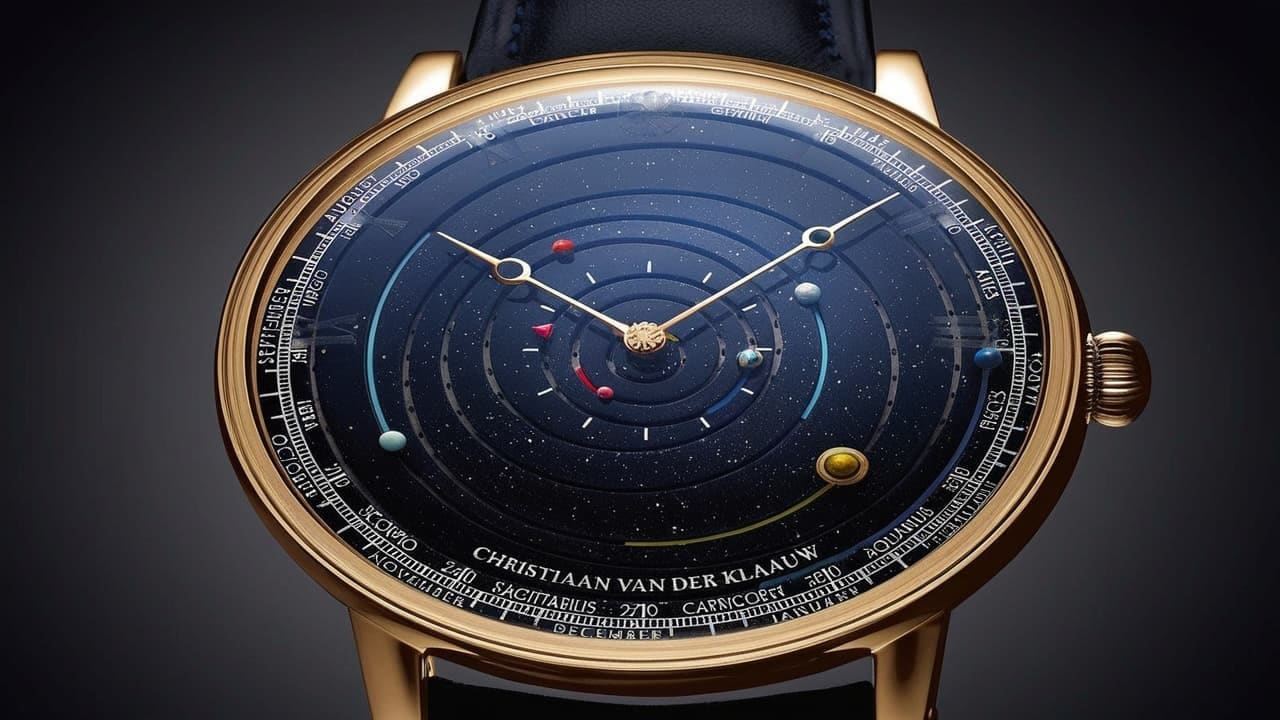
When it comes to astronomical watches, no brand comes close to the specialized mastery of Christiaan van der Klaauw. This Dutch atelier is the only atelier in the world that is completely devoted to the design and the production of exclusive, hand-made astronomical watches, creating timepieces that bring the cosmos directly to your wrist. Winner of the most prestigious watch prize in the world: the Grand Prix d’Horlogerie de Geneve (GPHG) Calendar & Astronomy Award in 2021, these watches represent the pinnacle of horological achievement in celestial complications. From the smallest mechanical planetarium in the world to the most accurate 3D moon phases, Christiaan van der Klaauw watches transform complex astronomical phenomena into wearable art that any watch enthusiast can appreciate and understand.
Who was Christiaan van der Klaauw?
Born in 1944 in the historic Dutch city of Leiden, Christiaan van der Klaauw grew up in a place steeped in scientific tradition - the very same city where the legendary Christiaan Huygens began his studies centuries earlier. This connection to one of history’s greatest astronomers would prove to be more than coincidence, as van der Klaauw would go on to revolutionize the world of astronomical timekeeping. His journey from a young instrument maker to becoming the world’s most celebrated astronomical watchmaker is a story of passion, precision, and an unwavering dedication to bringing the cosmos to the human wrist.
- After finishing his studies at the Leiden Instrument Makers School and completing specialized clockmaking training, van der Klaauw relocated to the village of Joure in Friesland in 1967. This move placed him in what was then known as “little Switzerland” - a region famous for its concentrated community of skilled clockmakers and artisans. Working alongside a master horologist who specialized in traditional Friesian grandfather clocks, he absorbed centuries-old techniques that would later serve as the foundation for his groundbreaking astronomical creations.
- The pivotal moment came in 1974 when van der Klaauw established his own workshop and unveiled his first astronomical clock. This wasn’t just the beginning of a business - it marked the birth of what would become the world’s only atelier completely dedicated to astronomical timepieces. His early work immediately caught attention for its innovative approach to displaying celestial phenomena in mechanical form.
- Recognition from the international watchmaking community came swiftly and at the highest levels. In 1989, he received honorary membership in the prestigious Swiss Académie Horlogère des Créateurs Indépendants (AHCI), joining an exclusive circle that included legendary figures like François-Paul Journe and Frank Muller. Remarkably, he remains the only Dutch watchmaker ever invited to join this elite organization.
- His technical brilliance reached new heights in 1992 when his revolutionary Pendule Variable clock earned the prestigious Innovation Design Award at Basel, Switzerland. This groundbreaking timepiece featured a rotating sun and moon combined with an astrolabe - a complexity that had never been achieved in such elegant form.
- The transition from clocks to wristwatches came in 1994 with his first wristwatch creation, the Satellite du Monde. This extraordinary piece displayed not only time, date, and moon phases, but also showed exactly where on Earth it was noon at any given moment - a feat of miniaturization that pushed the boundaries of what was thought possible in wristwatch complications.
- Perhaps his most celebrated achievement came in 1999 with the introduction of the CVDK Planetarium, featuring the world’s smallest mechanical planetarium showing the real-time positions of Mercury, Venus, Earth, Mars, Jupiter, and Saturn around the Sun. This masterpiece would later inspire prestigious collaborations, including exclusive planetarium watches created for Van Cleef & Arpels.
After decades of pioneering work, van der Klaauw made the strategic decision in 2009 to pass his life’s work to the capable hands of longtime friends and collaborators Daniël and Maria Reintjes. This transition wasn’t just a business transaction - it was the careful preservation of a legacy by someone who understood that true craftsmanship extends beyond individual achievement to ensuring continuity for future generations. Under new leadership, the brand has continued to honor van der Klaauw’s vision while pushing astronomical complications to even greater heights, including winning the ultimate recognition in 2021 with the Grand Prix d’Horlogerie de Genève Calendar and Astronomy Award.
Why Are Christiaan van der Klaauw Watches So Expensive?
In a world where most luxury watch brands chase the latest trends or compete on generic complications, Christiaan van der Klaauw stands completely apart as the singular atelier dedicated exclusively to astronomical watchmaking. Their uniqueness isn’t just about what they make, but how they approach the fundamental concept of timekeeping itself - viewing time not as mere hours and minutes, but as humanity’s connection to the vast cosmos that surrounds us. This philosophical foundation, combined with extraordinary technical mastery and uncompromising craftsmanship, creates timepieces that transcend traditional luxury watches to become wearable windows into the universe.
- The brand holds the extraordinary distinction of being the only watchmaking atelier in the world completely devoted to astronomical complications. While other manufacturers might include a moon phase or star chart as one option among dozens of models, every single Christiaan van der Klaauw timepiece tells a story about celestial mechanics. This singular focus allows their watchmakers to achieve levels of astronomical accuracy and innovation that would be impossible for brands dividing their attention across multiple complications.
- Their technical achievements set world records in miniaturization and precision. The CVDK Planetarium contains the smallest mechanical planetarium ever created, displaying the real-time orbits of Mercury, Venus, Earth, Mars, Jupiter, and Saturn with stunning accuracy. Meanwhile, their Real Moon collection features the most precise 3D moon phase indicator in the world, requiring adjustment only once every 11,000 years - a level of accuracy that demonstrates their commitment to perfection over mere novelty.
- The manufacturing approach remains rooted in traditional hand craftsmanship that has virtually disappeared from modern watchmaking. Operating from their atelier in Naarden, Netherlands, master craftsmen still cut gear teeth individually by hand from brass bars - a painstaking process where a single Planetarium complication requires cutting 700 individual teeth across 45 wheels. This method produces mechanical components with tolerances and character that mass production cannot replicate.
- Recognition from the highest levels of the horological establishment validates their exceptional status. The brand earned inclusion on the Fondation Haute Horlogerie’s exclusive list of only 65 manufacturers worldwide qualified to use the “Haute Horlogerie” designation. More significantly, they won the 2021 Grand Prix d’Horlogerie de Genève Calendar and Astronomy Award - considered the “Oscars” of watchmaking - cementing their position as the world’s premier astronomical watchmaker.
- Their design philosophy creates instantly recognizable timepieces through strict astronomical principles. Every watch features the signature CVDK sun logo at 12 o’clock, Roman numerals positioned only above an imaginary horizon, and prominent astronomical complications at 6 o’clock. This consistency isn’t about brand marketing - it reflects their deep understanding of how astronomical instruments should be organized for optimal readability and symbolic meaning.
- The production model prioritizes exclusivity and personal connection over volume. Creating watches in such limited quantities that each timepiece effectively becomes a numbered limited edition, the atelier ensures that owning a Christiaan van der Klaauw watch means joining an extremely select community of collectors who appreciate the intersection of fine watchmaking and cosmic wonder.
- Their expertise attracts collaborations with the world’s most prestigious jewelry houses. When Van Cleef & Arpels wanted to create their most complicated watch ever - the Midnight Planetarium - they turned to Christiaan van der Klaauw for the astronomical movement. This three-year collaboration resulted in a 396-component masterpiece that showcased planetary orbits in unprecedented detail, proving that even legendary Parisian jewelers recognize Dutch astronomical watchmaking supremacy.
The combination of these factors creates something truly unique in luxury watchmaking - timepieces that function as both precision instruments and philosophical statements about humanity’s place in the cosmos. While other luxury watches might impress with their engineering or craftsmanship, Christiaan van der Klaauw watches inspire wonder about the universe itself, making every glance at the time a moment of cosmic contemplation.
Top 5 Best Christiaan van der Klaauw Watches
Selecting the finest timepieces from a brand that exclusively creates astronomical masterpieces presents a delightful challenge - every watch in their collection represents years of development and uncompromising craftsmanship. However, certain models stand out as exceptional examples of what makes Christiaan van der Klaauw unique in the horological world. These five watches showcase the full spectrum of their astronomical expertise, from the revolutionary planetarium complications to the most precise lunar indicators ever created, each representing a different facet of their mastery over celestial mechanics.
- CVDK Grand Planetarium Eccentric Manufacture - The crown jewel of astronomical watchmaking, this 2024 masterpiece celebrates the brand’s 50th anniversary by achieving what no other mechanical watch has accomplished: displaying all eight planets of our solar system in their accurate elliptical orbits. Housed in a 44mm case available in platinum or rose gold, this watch transforms the entire dial into a working model of the solar system, with Mercury completing its orbit in 87.97 days while Neptune takes an astounding 165 years. The complexity requires 3,338 gear teeth working in perfect harmony, making it arguably the most sophisticated astronomical complication ever miniaturized for the wrist. Priced around €208,000 for rose gold and €227,000 for platinum, this timepiece represents the absolute pinnacle of what’s possible when traditional watchmaking meets astronomical precision.
- CVDK Planetarium Eise Eisinga - The watch that won the 2021 Grand Prix d’Horlogerie de Genève and established Christiaan van der Klaauw as the world’s premier astronomical watchmaker. This 40mm timepiece features the smallest mechanical planetarium ever created, displaying the real-time orbits of Mercury, Venus, Earth, Mars, Jupiter, and Saturn around a central sun. Named after the Dutch amateur astronomer who built the world’s oldest functioning planetarium in 1781, this watch pays homage to centuries of Dutch astronomical achievement. The aventurine glass dial creates a starry sky backdrop that makes the colored planetary indicators appear to float in space, while the CVDK manufacture movement provides 60 hours of power reserve to keep the cosmos in motion.
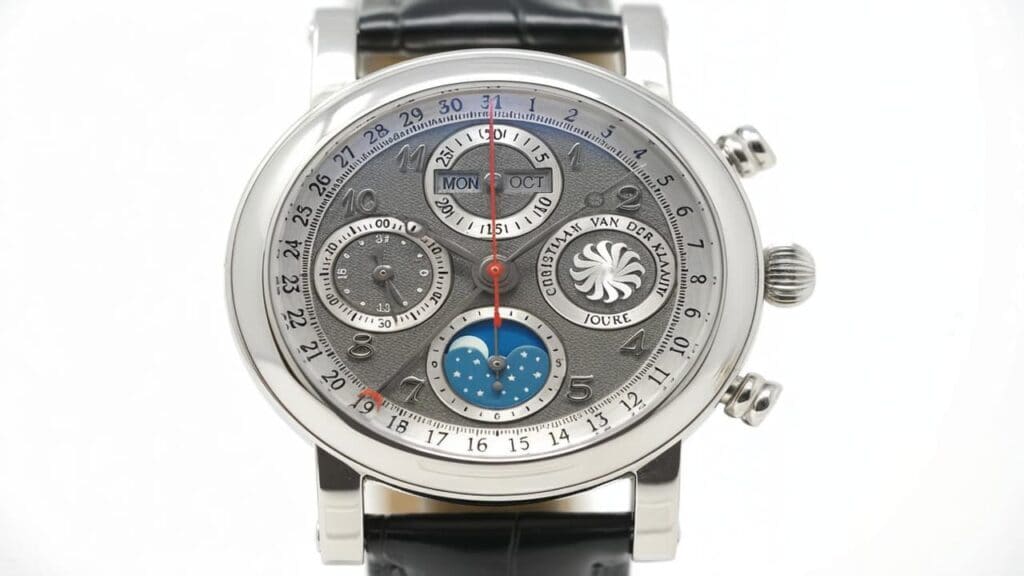
- CVDK Real Moon Joure - Representing the most accurate lunar complication ever achieved in mechanical watchmaking, this elegant 40mm timepiece features a three-dimensional moon that requires adjustment only once every 11,000 years. The handcrafted miniature moon rotates to show the exact lunar phase visible in the night sky, creating an almost magical connection between the watch and the cosmos above. The watch earned unanimous recognition as “European Watch of the Year 2014” from an international jury, cementing its status as a modern classic. Available with aventurine glass or traditional dial options, this watch proves that astronomical precision can coexist with understated elegance and daily wearability.
- CVDK Ariadne - The newest addition to the collection and the first watch released under CEO Pim Koeslag’s leadership, this innovative timepiece successfully merges astronomical complications with contemporary sports chronograph functionality. The 40mm steel case houses a complex dial featuring chronograph subdials, complete calendar displays, moon phases, and day/night indicators arranged in perfect symmetrical harmony. What sets this watch apart is its ability to appeal to both traditional astronomical watch collectors and modern sports watch enthusiasts, proving that celestial complications can enhance rather than complicate daily functionality. The hand-engraved rotor by master engraver Jochen Benzinger adds an extra touch of artisanal excellence to this already remarkable timepiece.
- CVDK Real Moon Tides - Perhaps the most poetic expression of astronomical watchmaking, this unique complication translates the gravitational dance between Earth, moon, and sun into a visual representation of ocean tides. The watch features animated waves that rise and fall in a dedicated window, synchronized with the actual tidal periods of 12 hours, 25 minutes, and 14 seconds. Combined with the brand’s signature ultra-precise 3D moon phase display, this watch appeals to sailors, surfers, and anyone who feels a connection to the ocean’s rhythms. The technical achievement of mechanically reproducing tidal motion demonstrates how astronomical complications can extend beyond pure celestial display to capture the cosmic forces that shape life on Earth.
Each of these timepieces represents a different approach to astronomical watchmaking, from the scientific precision of the planetarium models to the poetic interpretation of tidal forces. What unites them is the unwavering commitment to accuracy, craftsmanship, and the belief that a wristwatch can serve as both a precision instrument and a window into the wonder of the universe. Whether you’re drawn to the technical mastery of planetary mechanics or the romantic appeal of lunar phases, these watches offer something that no other brand can provide: the opportunity to carry a piece of the cosmos with you wherever you go.
Christiaan van der Klaauw Astronomical Features Explained
For many watch enthusiasts, astronomical complications represent the most mysterious and fascinating aspects of haute horlogerie - mechanical marvels that transform abstract cosmic movements into tangible, wearable displays. These intricate mechanisms go far beyond simple timekeeping, serving as miniaturized observatories that track celestial events with precision that often surpasses what ancient astronomers could achieve with room-sized instruments. Understanding how these complications work reveals not only the technical mastery required to create them, but also humanity’s enduring fascination with our place in the cosmos.
- Moon Phase Indicators represent the most accessible entry point into astronomical complications, displaying the lunar cycle as it appears from Earth. The mechanism typically uses a disc with two moons that rotates beneath an aperture, showing the illuminated portion of the moon. While standard moon phase complications require adjustment roughly twice per year, Christiaan van der Klaauw’s revolutionary Real Moon series features a three-dimensional miniature moon that rotates to show the exact phase visible in the night sky, requiring correction only once every 11,000 years through incredibly precise gear ratios.
- Planetarium Complications transform the wrist into a working model of our solar system, with tiny colored spheres representing planets that orbit around a central sun at their actual relative speeds. The technical challenge lies in creating gear trains that can handle the vast differences in orbital periods - while Mercury completes an orbit in just under 88 days, Saturn takes nearly 30 years. Christiaan van der Klaauw’s planetarium modules achieve this through hand-cut gear teeth and complex reduction systems that maintain accuracy over decades of operation.
- Sidereal Time Displays reveal the difference between solar time (our standard 24-hour day) and star time (approximately 23 hours, 56 minutes, and 4 seconds). This complication proves essential for astronomers who need to locate celestial objects, as stars return to the same position in the sky after one sidereal day rather than one solar day. The mechanism requires an additional gear train that runs slightly faster than normal timekeeping, demonstrating how astronomical complications often work in parallel with standard watch functions.
- Day and Night Indicators show whether it’s daytime or nighttime at any given location on Earth, often represented by a rotating disc with light and dark halves or by the sun’s position relative to a horizon line. More sophisticated versions can indicate the sun’s height above the horizon throughout the year, accounting for seasonal variations that affect daylight hours. These complications connect the wearer to the natural rhythm of day and night that artificial lighting often obscures in modern life.
- Tidal Displays represent one of the most poetic astronomical complications, translating the gravitational dance between Earth, moon, and sun into visual representations of ocean tides. The complication typically shows the rise and fall of tides through animated elements that move according to the principal lunar semi-diurnal tide cycle of approximately 12 hours and 25 minutes. Understanding tides requires accounting for both the moon’s gravitational pull and its elliptical orbit, making this complication both technically challenging and deeply meaningful for anyone connected to the sea.
- Calendar Functions extend beyond simple date displays to encompass complex astronomical relationships between Earth’s orbit and human timekeeping systems. Annual calendars automatically adjust for months with 30 and 31 days, while perpetual calendars account for leap years. The most sophisticated versions track the equation of time - the difference between sundial time and mechanical clock time throughout the year - caused by Earth’s elliptical orbit and axial tilt.
The beauty of astronomical complications lies not just in their technical achievement, but in their ability to make abstract astronomical concepts tangible and personal. When you glance at a planetarium watch and see Jupiter approaching Saturn in their cosmic dance, you’re witnessing the same celestial event that ancient astronomers tracked with careful observation and mathematical calculation. These complications serve as constant reminders that time itself flows from cosmic rhythms far greater than human experience, yet small enough to carry on your wrist.
History of Christiaan van der Klaauw Watch Brand
The story of Christiaan van der Klaauw reads like a perfect convergence of Dutch scientific tradition, artisanal craftsmanship, and cosmic wonder spanning half a century. From its humble beginnings in a small Frisian village to becoming the world’s most celebrated astronomical watchmaking atelier, this brand represents not just the evolution of one man’s passion, but the preservation and advancement of centuries-old Dutch astronomical expertise. The journey from handcrafted clocks in a garage workshop to winning the horological world’s highest honors illustrates how authentic dedication to a singular vision can create something truly extraordinary in an increasingly homogenized luxury market.
- The Foundation Years (1974-1989) marked the beginning of what would become a revolutionary approach to timekeeping. After completing his education at the prestigious Leiden Instrument Makers School and apprenticing with traditional Friesian grandfather clock makers in Joure, Christiaan van der Klaauw established his own atelier in 1974. This timing proved fortuitous - the 1970s represented the final golden age of mechanical clockmaking before quartz technology transformed the industry. Van der Klaauw’s early astronomical clocks, including his groundbreaking Foucault’s Pendulum designs and Renaissance-inspired table clocks, immediately distinguished him from conventional clockmakers through their integration of celestial mechanics.
- International Recognition (1989-1999) brought van der Klaauw into the elite circle of world-class horologists. His 1989 invitation to join the Swiss Académie Horlogère des Créateurs Indépendants made him the only Dutch watchmaker ever honored with AHCI membership, placing him alongside legends like François-Paul Journe and George Daniels. The 1992 Basel Innovation Design Award for his revolutionary Pendule Variable clock - which combined rotating sun and moon displays with an astrolabe - confirmed his status as a master of astronomical complications and opened doors to international collectors who had never heard of the small Dutch village where these marvels were created.
- The Wristwatch Revolution (1994-2009) transformed van der Klaauw from a respected clockmaker into a pioneering force in wristwatch complications. His 1994 Satellite du Monde marked the transition from clocks to wristwatches, featuring the remarkable ability to show exactly where on Earth it was noon at any given moment. The 1999 introduction of the CVDK Planetarium created the world’s smallest mechanical planetarium and established the template for all future astronomical wristwatches. During this period, van der Klaauw proved that the most complex astronomical calculations could be miniaturized into wearable form without sacrificing accuracy or beauty.
- The Reintjes Era (2009-2023) brought strategic focus and design excellence that elevated the brand to new heights. When van der Klaauw entrusted his life’s work to longtime friends and collaborators Daniël and Maria Reintjes, the transition represented more than business succession - it marked the evolution from individual artisanship to sustainable brand building. The Reintjes couple’s background in design and branding transformed the workshop into a cohesive brand identity while maintaining absolute fidelity to astronomical excellence. Their decision to add “Astronomical Watches” to the company name and focus exclusively on celestial complications created the world’s only atelier dedicated entirely to astronomical timekeeping.
- Award-Winning Innovation (2010-2021) saw the brand achieve unprecedented recognition in international competitions. The 2014 GPHG win for the Real Moon 1980 model in the “Best Calendar Watch” category demonstrated the technical superiority of their lunar complications. The development of the most accurate 3D moon phase mechanism, requiring adjustment only once every 11,000 years, pushed precision to levels that exceeded astronomical necessity to achieve horological perfection. The crowning achievement came in 2021 with the GPHG Calendar and Astronomy Award for the Planetarium Eise Eisinga, earning recognition as the finest astronomical watch in the world.
- The Koeslag Leadership (2023-Present) represents the brand’s evolution into manufacturing independence and technical innovation. Master watchmaker Pim Koeslag’s takeover as CEO brought decades of movement development experience from Frederique Constant and Ateliers deMonaco. His introduction of the CVDK Manufacture Movement and the groundbreaking Grand Planetarium Eccentric Manufacture - the world’s only mechanical watch displaying all eight planets - celebrates 50 years of astronomical complications while pointing toward an even more ambitious future. The 2024 launch of this ultimate planetarium watch, showing elliptical planetary orbits with unprecedented accuracy, demonstrates that the brand continues pushing boundaries rather than resting on past achievements.
- Prestigious Collaborations and Recognition throughout the brand’s history highlight its unique position in haute horlogerie. The exclusive partnership with Van Cleef & Arpels, resulting in the celebrated Midnight Planetarium collection, proved that even legendary Parisian jewelers recognize Dutch astronomical watchmaking supremacy. Official recognition by the Fondation Haute Horlogerie as one of only 65 brands worldwide qualifying for “Haute Horlogerie” designation confirms the brand’s technical and artistic excellence meets the industry’s most stringent standards.
This remarkable journey from a one-man clock workshop to the world’s premier astronomical watch brand demonstrates how authentic passion, combined with uncompromising quality standards, can create something that transcends mere luxury to become cultural heritage. The brand’s history reflects the broader story of Dutch scientific achievement - from Christiaan Huygens’ discovery of Saturn’s rings to Eise Eisinga’s revolutionary planetarium - carried forward through mechanical artistry that makes the cosmos accessible to anyone fortunate enough to wear these extraordinary timepieces. Each watch represents not just fifty years of continuous innovation, but centuries of Dutch astronomical tradition transformed into wearable art.
How Christiaan van der Klaauw Watches Are Made
In an era where most luxury watch brands have embraced industrial manufacturing techniques to increase production and reduce costs, Christiaan van der Klaauw stands as a defiant bastion of traditional craftsmanship that borders on the archaic. Their manufacturing philosophy represents something increasingly rare in modern horology - the belief that true excellence can only be achieved through painstaking hand work, where every component is shaped by skilled artisans rather than programmed machines. This commitment to artisanal production methods not only ensures exceptional quality but creates timepieces with a level of character and precision that mass production simply cannot replicate.
- Hand-Cut Gear Manufacturing represents the most extraordinary aspect of their production process, where master craftsmen still cut individual gear teeth from brass bars using traditional techniques that most manufacturers abandoned decades ago. The process begins with solid brass stock that is carefully shaped and measured before each tooth is individually cut by hand. For a single Planetarium complication, this translates to 45 wheels containing a total of 700 individual teeth, meaning craftsmen must make 700 precise cuts to create just one astronomical module. This painstaking approach ensures tolerances and gear mesh quality that exceeds what modern CNC machinery can achieve, while creating the unique characteristics that give each watch its individual personality.
- The Naarden Atelier Environment provides the perfect setting for this meticulous work, housed within Het Arsenaal, a historic 1688 fortress in the fortified city of Naarden near Amsterdam. This monumental building, originally designed for military precision, now serves as the backdrop for horological precision of the highest order. The workshop’s location below sea level, surrounded by Dutch countryside, creates an atmosphere of calm concentration essential for the delicate work of astronomical watchmaking. The modern facilities within these historic walls represent the perfect marriage of traditional craftsmanship and contemporary precision tools.
- Limited Production Philosophy deliberately constrains output to approximately 250 watches per year, ensuring that each timepiece receives the individual attention it deserves. This production ceiling isn’t driven by market demand or financial considerations - it reflects the physical limitations of hand craftsmanship and the time required to achieve astronomical precision. Every watch undergoes countless quality tests throughout the manufacturing process, with each component inspected and refined until it meets the exacting standards that have earned the brand recognition among the world’s most discerning collectors.
- Signature Design Implementation follows strict guidelines that ensure every CVDK watch is instantly recognizable while maintaining the flexibility for individual expression. The iconic design language includes hour indexes positioned only above an imaginary horizon line, the distinctive 12-clawed sun logo at 12 o’clock, and astronomical complications prominently displayed at 6 o’clock. The signature aventurine glass dials require specialized techniques to achieve the starry sky effect that serves as the perfect backdrop for celestial complications, with each dial hand-selected for optimal light reflection and cosmic appearance.
- Bespoke Manufacturing Capabilities through their Collection of the Atelier program allows clients to commission completely unique astronomical watches tailored to personal preferences. This service goes far beyond simple customization - skilled artisans work directly with clients to select materials, complications, dial configurations, rotor designs, and finishing techniques that reflect individual taste and requirements. The process can take 3-6 months from initial consultation to delivery, during which the watch exists as a unique creation that will never be duplicated.
- Quality Control and Testing subjects every timepiece to rigorous evaluation that goes well beyond standard watch testing protocols. Astronomical complications require verification not just of timekeeping accuracy, but of celestial precision over extended periods. Moon phase mechanisms are tested for their 11,000-year accuracy cycles, while planetarium modules must demonstrate correct planetary positioning over periods that can span decades. The three-year warranty on both movement and case reflects the manufacturer’s confidence in their quality control processes.
- Materials and Finishing Standards employ only the finest components available, from high-grade steel cases to precious metal applications in gold and platinum. Each case undergoes hand-finishing processes that create the distinctive CVDK aesthetic, while movements receive decorative treatments that rival the finest Swiss manufactures. The signature skeletonized rotors, crafted in the shape of the CVDK logo and often featuring hand-engraving by master engraver Jochen Benzinger, exemplify the attention to detail that characterizes every aspect of production.
- Collaborative Expertise extends the atelier’s capabilities through carefully selected partnerships with specialists who share their commitment to excellence. Case manufacturing partnerships with suppliers who serve only Patek Philippe, Audemars Piguet, and CVDK ensure access to the highest quality components, while collaborations with master engravers and dial specialists bring additional layers of artisanal excellence to the finished timepieces.
This manufacturing approach represents more than mere production methodology - it embodies a philosophy that views watchmaking as an art form where human skill and dedication create objects that transcend their purely functional purpose. The result is timepieces that carry the unmistakable mark of human craftsmanship, where slight variations and individual characteristics become part of their charm rather than manufacturing defects to be eliminated. In a world increasingly dominated by industrial efficiency, Christiaan van der Klaauw proves that the pursuit of astronomical perfection still requires the human touch.
Investment Potential of Christiaan van der Klaauw Watches
For discerning collectors seeking timepieces that combine exceptional craftsmanship with genuine rarity, Christiaan van der Klaauw watches represent one of the most compelling opportunities in contemporary horology. Unlike many luxury brands that artificially create scarcity through limited production runs of otherwise standard watches, CVDK’s exclusivity stems from the fundamental nature of their manufacturing process and their unwavering commitment to astronomical complications. This creates a collecting landscape where every piece possesses inherent rarity, historical significance, and technical achievement that appeals to both serious horological enthusiasts and those drawn to the romance of celestial mechanics.
- Inherent Rarity Through Production Constraints makes every Christiaan van der Klaauw watch essentially a limited edition, with annual production capped at approximately 250 pieces across all models. This limitation isn’t driven by marketing strategy but by the physical requirements of hand-cutting gear teeth and assembling complex astronomical complications. When a single planetarium module requires 700 individually cut gear teeth, production speed becomes secondary to precision and quality. Collectors benefit from knowing that their timepiece represents weeks or months of skilled craftsmanship that simply cannot be rushed or mass-produced.
- Award-Winning Provenance adds significant collector appeal through the brand’s unprecedented success at the most prestigious horological competitions. The 2021 Grand Prix d’Horlogerie de Genève Calendar and Astronomy Award for the Planetarium Eise Eisinga represents the highest possible recognition in watchmaking, often called the “Oscars of horology.” Similarly, the 2014 GPHG victory for the Real Moon 1980 model established the brand’s reputation for technical excellence in astronomical complications. These awards create historical significance that enhances long-term collector value beyond mere mechanical achievement.
- Exclusive Collaboration History demonstrates the brand’s recognition among the world’s most prestigious jewelry houses, particularly the ongoing partnership with Van Cleef & Arpels. The development of exclusive planetarium modules for the Midnight Planetarium collection proves that even legendary Parisian jewelers recognize Dutch astronomical watchmaking supremacy. These collaborations create additional collecting categories for enthusiasts interested in the intersection of haute horlogerie and high jewelry, while validating the technical capabilities that make CVDK watches so special.
- Technical Innovation Leadership positions early examples of groundbreaking complications as historically significant collector pieces. The original 1999 Planetarium watch represents the first successful miniaturization of a mechanical planetarium for wristwatch use, while the Real Moon Joure series established new standards for lunar phase accuracy that competitors still struggle to match. Collectors who acquire early examples of these innovations own pieces that represent genuine horological breakthroughs rather than mere variations on existing themes.
- Haute Horlogerie Recognition through official inclusion on the Fondation Haute Horlogerie’s exclusive list of only 65 qualifying brands worldwide provides institutional validation of the brand’s collector worthiness. This recognition, based on three years of research by 46 experts using 29 distinguishing criteria, offers collectors confidence that their investment meets the industry’s most stringent quality and craftsmanship standards. The FHH designation serves as an objective measure of excellence that transcends subjective collecting preferences.
- Investment Potential Considerations reflect the brand’s unique position in the luxury watch market, where genuine astronomical complications command premium prices and demonstrate strong value retention. The combination of limited production, award-winning recognition, and technical innovation creates multiple value drivers that appeal to different collector segments. However, collectors should focus primarily on personal enjoyment and horological appreciation rather than pure financial returns, as the greatest value lies in owning and experiencing these extraordinary timepieces.
- Community and Expertise Access connects collectors with a passionate community of astronomical watch enthusiasts, master craftsmen, and industry experts who appreciate the technical achievement these watches represent. The brand’s educational approach to astronomical complications creates opportunities for collectors to deepen their understanding of both horology and astronomy, while the personal scale of production often allows direct interaction with the craftsmen who create these masterpieces.
- Future Collectibility Factors suggest that certain models and periods may achieve particular significance over time, including transition pieces between the van der Klaauw, Reintjes, and Koeslag eras, award-winning models, and the pioneering examples of new complications. The recent introduction of the Grand Planetarium Eccentric, representing the world’s only mechanical watch displaying all eight planets, marks another potential milestone for future collectors seeking historically significant pieces.
- Collecting Strategy Recommendations for serious enthusiasts include focusing on complications that demonstrate the brand’s core competencies, seeking pieces with clear provenance and documentation, and considering the educational value of astronomical functions alongside pure collectibility. The brand’s coherent design language means that a focused collection can demonstrate the evolution of astronomical complications while maintaining aesthetic consistency across different periods and models.
The most compelling aspect of collecting Christiaan van der Klaauw watches lies in their dual nature as both exceptional timepieces and educational instruments that connect wearers to cosmic phenomena. Unlike many luxury watches that derive their appeal primarily from brand prestige or aesthetic beauty, these pieces offer genuine substance through their technical achievements and astronomical accuracy. For collectors who appreciate the intersection of science and art, few alternatives provide such a perfect synthesis of horological excellence and cosmic wonder in forms that can be worn and enjoyed daily.
How to Buy Christiaan van der Klaauw Watches
Acquiring a Christiaan van der Klaauw watch represents far more than a typical luxury purchase - it’s an investment in exceptional craftsmanship, astronomical precision, and a piece of horological history that connects you to centuries of Dutch scientific tradition. The decision to purchase one of these extraordinary timepieces requires careful consideration of multiple factors, from understanding the various complications available to ensuring authenticity and proper service support. This comprehensive guide will help you navigate the unique aspects of buying astronomical watches and make an informed decision that brings decades of satisfaction and cosmic wonder to your wrist.
- Budget Planning and Price Structure requires understanding the substantial range between entry-level and flagship models, with prices spanning from approximately €7,800 for steel Ariadne models to over €700,000 for the limited-edition Grand Planetarium Eccentric Meteorite. The Ariadne collection represents the most accessible entry point into CVDK ownership, offering astronomical complications like moon phases and day/night indicators in stainless steel cases. Mid-range options include the Hypernova series around €9,000, while the Real Moon collections typically range from €30,000-50,000 depending on materials and specific complications. The pinnacle Planetarium models command €60,000-200,000, with the ultimate Grand Planetarium Eccentric starting at €208,000 for rose gold versions.
- Authorized Dealer Network ensures authenticity and proper warranty coverage through carefully selected retailers worldwide who understand the technical complexities of astronomical watches. Official dealers include prestigious names like Ethos Watch Boutiques in India, Ace Jewelers in Amsterdam, Seddiqi in Dubai, and specialized retailers across Europe, Asia, and North America. These authorized partners provide expert guidance on complications, sizing, and can often arrange viewing appointments to experience the astronomical functions in person. Purchasing from unauthorized sources risks receiving counterfeit pieces or voiding warranty coverage.
- Understanding Astronomical Complications becomes crucial when selecting the right model for your interests and lifestyle, as each complication serves different purposes and requires varying levels of interaction. Moon phase displays offer romantic appeal and require minimal adjustment, while planetarium functions provide fascinating cosmic education but demand understanding of their operation. Tidal indicators appeal to sailors and coastal enthusiasts, while day/night functions suit frequent travelers. Consider which astronomical phenomena most capture your imagination and how often you’ll engage with the complications.
- Sizing and Wearability Factors merit careful consideration, as astronomical watches typically require larger cases to accommodate complex complications, with most models ranging from 40mm to 44mm in diameter. The brand’s design philosophy emphasizes legibility and complication visibility, resulting in watches that wear larger than their measurements suggest. The 14-15mm thickness of complex models like the Grand Planetarium may challenge those accustomed to dress watches, while the substantial presence suits collectors who appreciate bold, distinctive timepieces.
- Warranty and Service Considerations provide exceptional peace of mind through the brand’s comprehensive three-year warranty covering both movement and case defects, reflecting their confidence in hand-built quality. The warranty requires purchase from authorized dealers with proper documentation, and covers manufacturing defects while excluding normal wear, accident damage, or unauthorized servicing attempts. Service can be performed through authorized dealers or directly at the Naarden atelier, where master craftsmen understand the intricate astronomical complications that generic service centers cannot properly address.
- Delivery Timeframes and Customization require patience and planning, as most models need 3-6 months for completion due to hand-manufacturing processes and limited production capacity. The Collection of the Atelier offers bespoke creation possibilities, allowing selection of materials, complications, dial configurations, and personal engraving options that create truly unique pieces. Custom orders require 30% deposits with final payment due upon completion, and Dutch law exempts made-to-order timepieces from standard return policies.
- Investment and Resale Considerations suggest strong value retention potential based on the brand’s award-winning reputation, limited production numbers, and growing international recognition. GPHG-winning models and limited editions typically command premium prices in secondary markets, while the brand’s exclusive focus on astronomical complications creates a dedicated collector base. However, purchasing decisions should prioritize personal enjoyment over investment potential, as the greatest value lies in experiencing these remarkable timepieces daily.
- Authenticity Verification Methods become essential when considering pre-owned pieces, focusing on the distinctive CVDK design elements, movement decorations, and documentation quality. Authentic pieces feature the signature 12-clawed sun logo, aventurine glass dials on appropriate models, hand-engraved rotors, and precise astronomical complications that operate smoothly. Original documentation includes detailed instruction manuals, warranty certificates, and often Swiss Kubik winders for complex pieces. The limited production numbers and numbered pieces make verification easier than with mass-produced luxury watches.
- Lifestyle Integration Planning helps determine which complications best suit your daily routine, travel patterns, and personal interests in astronomy or navigation. Frequent travelers benefit from models with day/night indicators and world time functions, while those living near coastlines appreciate tidal complications. The educational value of planetarium models suits those interested in astronomy, while simpler moon phase indicators appeal to romantic sensibilities without requiring technical engagement.
The most important consideration when buying a Christiaan van der Klaauw watch is understanding that you’re acquiring a piece of functional art that connects you to cosmic rhythms and Dutch scientific heritage. These timepieces reward owners who appreciate their technical achievements and engage with their astronomical functions, creating a deeper relationship between wearer and watch than typical luxury timepieces provide. Take time to visit authorized dealers, experience the complications in person, and choose the model that most closely aligns with your fascination with the cosmos and appreciation for exceptional craftsmanship.
How to Care for Christiaan van der Klaauw Watch
Owning a Christiaan van der Klaauw watch means becoming the guardian of an extraordinary mechanical universe that requires thoughtful care to maintain its astronomical precision for generations. These timepieces represent some of the most complex mechanisms ever miniaturized for the wrist, where hundreds of hand-cut components work in perfect harmony to track celestial movements with incredible accuracy. Proper maintenance ensures that your investment continues to function flawlessly while preserving both its technical performance and collector value for decades to come.
- Service Intervals for Astronomical Complications differ significantly from standard timepieces due to their increased complexity and delicate gear trains. While basic mechanical watches typically require servicing every 3-5 years, astronomical complications like the CVDK Planetarium should ideally be serviced every 3-4 years due to the additional stress placed on the movement by multiple gear trains running at different speeds. The intricate planetary mechanisms contain hundreds of microscopic components that depend on precise lubrication, and any degradation of oils can affect the accuracy of orbital calculations that take decades to complete their cycles.
- Daily Handling Requires Extra Caution when dealing with astronomical functions, particularly during vulnerable hours when date and calendar mechanisms are actively changing. Never adjust date, day, or astronomical complications between 9 PM and 3 AM, as the gears are typically in motion during these hours to advance the calendar displays overnight. For models with perpetual calendars or complex moon phase displays, incorrect setting during these danger zones can damage delicate switching mechanisms that are incredibly expensive to repair or replace.
- Environmental Protection Becomes Critical for watches containing sensitive astronomical modules that can be affected by external factors beyond normal watch concerns. Keep your timepiece away from strong magnetic fields, which can disrupt the precise timing of planetary gear trains and affect the accuracy of long-term astronomical calculations. Temperature extremes pose particular risks - high heat can thin lubricating oils and cause expansion of delicate parts, while extreme cold can thicken oils and slow down the intricate mechanisms that track celestial movements over years or decades.
- Proper Winding and Power Reserve Management ensures continuous operation of astronomical complications that can be complex to reset if stopped. Christiaan van der Klaauw provides Swiss Kubik winders with their most complex pieces precisely because these complications benefit from continuous operation. If your watch does stop, consult the manual carefully before attempting to reset astronomical functions, as improper adjustment can damage gear trains that took master craftsmen months to assemble and calibrate by hand.
- Regular Cleaning Maintains Both Beauty and Function while protecting the delicate astronomical displays from dust and debris that could interfere with precision mechanisms. Use a soft, dry cloth for general cleaning, and for water-resistant models, a slightly damp cloth can remove accumulated oils and dirt. Pay special attention to the area around the crown and pushers, where dust and moisture can eventually work their way into the movement and affect the astronomical modules’ long-term accuracy.
- Professional Service Requirements demand specialized expertise that only authorized Christiaan van der Klaauw service centers or highly qualified independent watchmakers can provide. These astronomical complications require specific knowledge about gear ratios, calibration procedures, and the intricate relationships between different planetary mechanisms. Attempting service with unqualified technicians risks permanent damage to irreplaceable hand-cut components that may be impossible to recreate exactly.
- Storage Considerations become particularly important when astronomical watches aren’t worn regularly, as these complex mechanisms benefit from consistent operation to maintain their calibration. If storing for extended periods, ensure the watch is fully wound and consider using the provided watch winder to keep the astronomical complications running accurately. Store in a clean, dry environment away from magnetic fields, and avoid rapid temperature changes that could cause condensation or affect the precision of delicate gear trains.
- Insurance and Documentation prove essential for these highly valuable and specialized timepieces that represent significant investments in horological artistry. Maintain detailed records of purchase dates, service history, and any modifications or repairs, as this documentation affects both insurance coverage and resale value. Consider specialized watch insurance that covers the full replacement value, as these astronomical complications are often irreplaceable works of art that appreciate in value over time.
The three-year warranty provided by Christiaan van der Klaauw on both movement and case reflects their confidence in build quality, but this protection only applies when the watch receives proper care and authorized service. Remember that these astronomical timepieces represent centuries of accumulated knowledge in mechanical engineering, astronomy, and craftsmanship - treating them with appropriate respect ensures they continue to inspire wonder for generations while maintaining their status as functional works of art that connect us to the cosmos above.
Conclusion
Christiaan van der Klaauw watches represent the pinnacle of astronomical watchmaking, where centuries of Dutch scientific tradition meet extraordinary mechanical artistry. These timepieces transcend ordinary luxury watches by offering genuine connections to cosmic phenomena - from the most accurate moon phases requiring adjustment only once every 11,000 years to complete mechanical planetariums tracking real planetary orbits on your wrist. Each watch serves as both a precision instrument and a philosophical statement about humanity’s eternal fascination with the cosmos above.
The brand’s unwavering commitment to astronomical excellence, combined with traditional hand-craftsmanship that borders on the archaic, creates timepieces that simply cannot be replicated by mass production methods. Whether you’re drawn to the scientific precision of the award-winning Planetarium models or the poetic beauty of tidal indicators, these watches reward owners who appreciate the intersection of technical mastery and cosmic wonder. Their limited production of approximately 250 pieces per year ensures that every owner joins an exclusive community of collectors who understand that true luxury lies in rarity, complexity, and meaningful connection to something greater than ourselves.
For those seeking a timepiece that offers more than mere status or aesthetic appeal, Christiaan van der Klaauw watches provide daily reminders of our place in the universe while showcasing the highest levels of mechanical achievement possible in wristwatch form. These astronomical masterpieces prove that watches can serve as windows into the cosmos, making every glance at the time a moment of wonder about the celestial mechanics that govern our existence.