Anyone who spends time reading about luxury watches will eventually run into the phrase “Big Four.” It sounds like a title someone made up to sound official, and in a way, it is exactly that — but it is also backed by real sales numbers, market share reports, and buying data from the world’s most active watch collectors. The term gets used a little differently depending on the source, and it is easy to confuse with a couple of other industry groupings that sound almost identical. What follows is a breakdown of what the Big Four actually means, where the name came from, and why these particular four brands hold that title instead of any other well-known name.
What Is the “Big Four” in Watches?
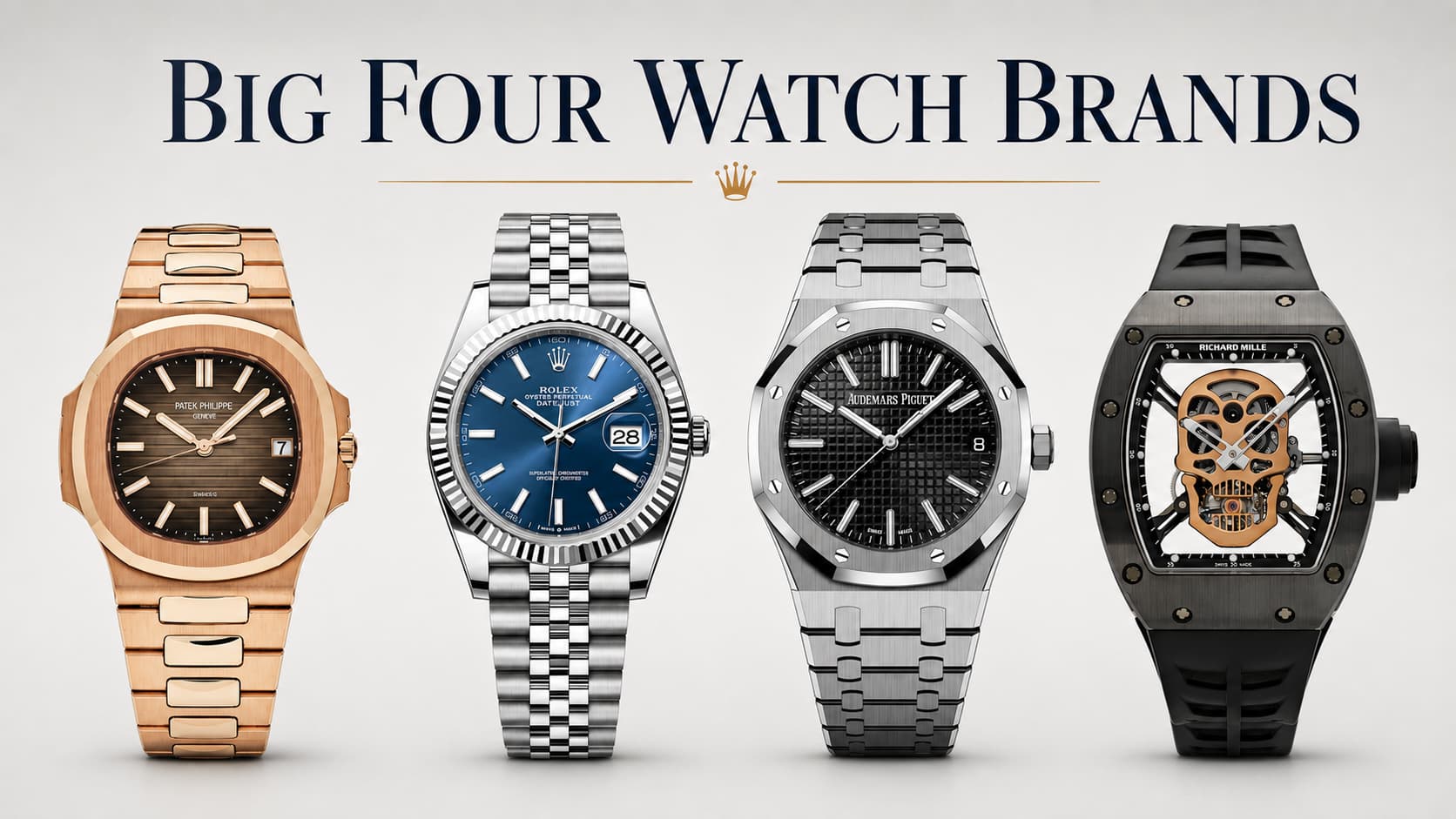
The “Big Four” refers to Rolex, Patek Philippe, Audemars Piguet, and Richard Mille — four privately owned watch brands that, together, control a huge share of the entire luxury watch market. According to Morgan Stanley and LuxeConsult research, these four brands held a combined 43.9% market share of the Swiss watch industry as of their most recent report, a number that keeps climbing year after year.
Out of the hundreds of Swiss watch brands on the market, four companies pull in nearly half of all the money spent on luxury watches worldwide. No other group of four brands comes close, which is why the industry settled on a name of its own for them.
The Origin of the “Big Four” Label
The “Big Four” label isn’t an official title handed out by a watchmaking association — it grew out of an annual industry report that tracks Swiss watch sales and market share brand by brand. Morgan Stanley and the consulting firm LuxeConsult publish this report every year, and it specifically studies the buying habits of serious collectors: people wealthy enough to purchase more than one watch a year priced above CHF 50,000.
Once that report started showing the same four brands pulling dramatically ahead of everyone else, watch dealers, collectors, and journalists picked up the shorthand “Big Four” to describe them. The term has since spread well beyond the report itself and is now used casually across the entire watch industry, even among people who have never read the original data.
Why These Four Brands?
Three factors set the Big Four apart from every other watch brand, including other famous luxury names.
- Private ownership. Rolex, Patek Philippe, Audemars Piguet, and Richard Mille are all controlled by a family, founder, or private foundation rather than public shareholders. That independence allows them to prioritize long-term brand image over short-term sales targets, and none of them face pressure to grow faster than they are comfortable with.
- Deliberately limited supply. All four brands make fewer watches than demand would allow, which keeps waitlists long and resale prices high. This is a strategic choice rather than a manufacturing limitation — each of these brands could produce more watches if it chose to.
- Growing market share. The combined share held by the Big Four grew from roughly 36.9% before the COVID-19 pandemic to 43.9% afterward, according to the same Morgan Stanley and LuxeConsult data. The gap between them and the rest of the industry has been widening rather than shrinking.
Other extremely well-known brands like Omega, Cartier, and TAG Heuer are excluded from the Big Four for a simple reason: they are owned by giant public conglomerates — the Swatch Group and Richemont, respectively — rather than a family or private foundation. Popularity alone does not earn a spot in this group; ownership structure matters just as much as sales.
How Big Four Differs From “Holy Trinity”
Watch collectors also refer to a group called the “Holy Trinity,” which is easy to confuse with the Big Four since two brands — Patek Philippe and Audemars Piguet — appear in both. The Holy Trinity is a much older term made up of Patek Philippe, Audemars Piguet, and Vacheron Constantin, and it has nothing to do with sales or market share. It reflects a reputation earned through generations of technical watchmaking excellence, particularly complicated movements like minute repeaters, perpetual calendars, and tourbillons.
The Big Four, by contrast, is a modern, data-driven grouping based on private ownership and market dominance. Richard Mille, despite being founded in 2001, qualifies for the Big Four because of its sales figures and independence, even though it lacks the multi-generational heritage that earns a brand a spot in the Holy Trinity. The two groups measure entirely different things, which is why a brand can belong to one without belonging to the other.
The Other “Big Four”: Watch Groups
“Big Four” is also sometimes used to describe an entirely different set of companies: Rolex Group, Richemont, Swatch Group, and LVMH, the four corporate groups that collectively own the majority of major watch brands on the market. This is a separate concept from the Big Four of individual watch brands, even though it uses the identical nickname.
Rolex itself sits inside “Rolex Group” alongside Tudor and Bucherer in that corporate version of the term, while Richemont owns brands like Cartier, Vacheron Constantin, IWC, and Panerai, and Swatch Group owns Omega, Longines, and Tissot, among others. When “Big Four” appears in coverage of corporate ownership within the watch industry, it typically refers to these four conglomerates rather than the four brands.
The Older Version of the Big Four
Before Richard Mille grew into a major sales force, some collectors and dealers used “Big Four” to describe Rolex, Patek Philippe, Audemars Piguet, and Vacheron Constantin instead. As Richard Mille’s sales and independence-focused reputation grew through the 2010s, the term shifted in most current usage to reflect that, leaving Vacheron Constantin — now part of the Richemont group rather than privately held — more closely associated with the heritage-based Holy Trinity instead.
How Much of the Market Does Each Brand Hold?
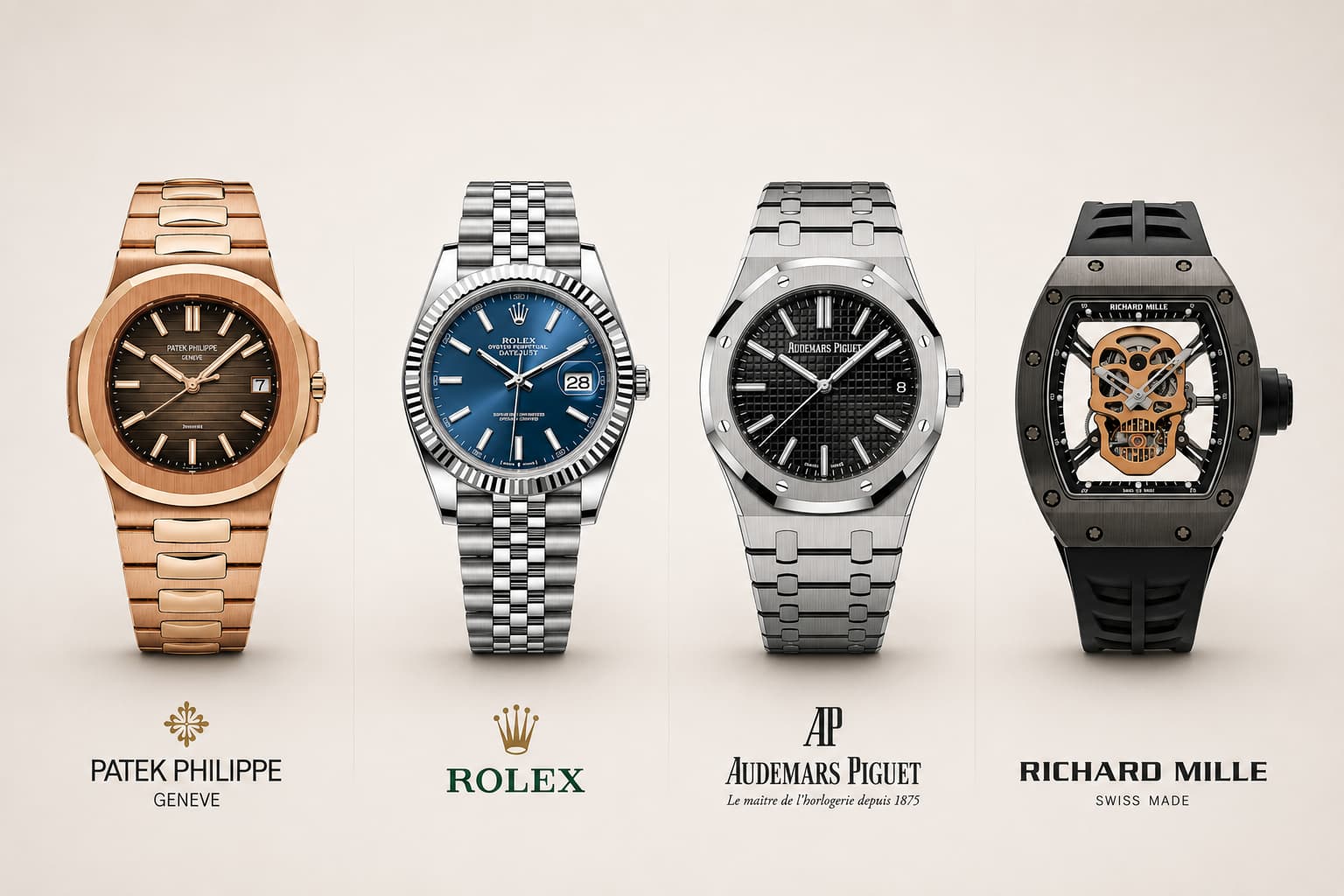
The 43.9% combined figure splits unevenly between the four brands. Rolex alone makes up the bulk of it, sitting near the top of the entire Swiss watch industry with an estimated 30.3% share — a single brand outselling the next five largest names put together. Patek Philippe and Audemars Piguet trail well behind at an estimated 5.6% and 4.9% respectively, and Richard Mille rounds out the group with roughly 3.1%, a striking figure for a brand not even old enough to have existed before the year 2000.
That gap between Rolex and the other three is part of the reason some industry observers argue Rolex deserves a category of its own rather than being grouped in with the rest. Even setting Rolex aside, Patek Philippe, Audemars Piguet, and Richard Mille combined still outsell most other individual luxury brands on the market, which is why all four continue to be treated as one group rather than “Rolex plus three others.”
| Brand | Est. Market Share | Ownership | Belongs to Holy Trinity? |
|---|---|---|---|
| Rolex | ~30.3% | Hans Wilsdorf Foundation (private) | No |
| Patek Philippe | ~5.6% | Stern family (private) | Yes |
| Audemars Piguet | ~4.9% | Audemars & Piguet families (private) | Yes |
| Richard Mille | ~3.1% | Richard Mille & Guenat families (private) | No |
What This Means for Watch Buyers
When four brands control nearly half of an entire luxury market, that concentration changes how the market behaves for everyone shopping in it. Waitlists for the most popular models from these brands can run for years rather than months, and authorized dealers often limit sales to customers with an established purchase history. That scarcity is precisely why watches from these four brands are among the very few consumer products that regularly sell secondhand for more than their original retail price.
Price trends set by the Big Four also tend to ripple outward across the rest of the industry. When collector demand shifts toward a certain style, material, or complication among these brands, smaller independent watchmakers and even other conglomerate-owned brands often follow suit within a year or two, chasing the same design language behind the Big Four’s latest release.
Frequently Asked Questions
Is Rolex considered part of the Big Four?
Yes. Rolex is not just part of the Big Four — it is the largest of the group by a wide margin, holding a bigger share of the Swiss watch market than the other three brands combined.
Why isn’t Omega part of the Big Four?
Omega is a hugely popular and respected brand, but it is owned by the Swatch Group, a publicly traded conglomerate. The Big Four label specifically refers to privately or family-owned brands, so Omega and other conglomerate-owned names like Cartier and TAG Heuer are excluded regardless of their sales numbers.
Is the “Big Four” the same as the “Holy Trinity”?
No. The Holy Trinity (Patek Philippe, Audemars Piguet, and Vacheron Constantin) is based on multi-generational watchmaking heritage and craftsmanship, while the Big Four is based on current market share and private ownership. Patek Philippe and Audemars Piguet happen to belong to both groups, but the two terms measure entirely different things.
Is Vacheron Constantin still one of the Big Four?
Not in the current, sales-based version of the term, though older definitions from before Richard Mille’s rapid growth sometimes include it instead. Vacheron Constantin’s ownership by the Richemont group, rather than a private family or foundation, is generally considered the reason it no longer fits the modern definition.
Does “Big Four” ever mean something other than these four brands?
Yes. “Big Four” is also used to describe Rolex Group, Richemont, Swatch Group, and LVMH — the four corporate groups that own most of the watch industry’s major brands. That is a separate concept from the Big Four of privately owned watch brands.
Conclusion
The Big Four earned their title through a combination of independence, deliberately limited supply, and consistent growth that has left the rest of the luxury watch industry further behind every year. Rolex leads on sheer scale, Patek Philippe and Audemars Piguet bring generations of watchmaking heritage, and Richard Mille proves a brand can join the group in only two decades if demand is strong enough. Whichever version of the term comes up — the four brands, the Holy Trinity, or the four corporate groups — the distinction is the key to understanding who actually runs the watch world today.