Rolex stands as the quintessential luxury watch brand, synonymous with precision, prestige, and timeless design. Founded in 1905 by Hans Wilsdorf, the company has become not only a status symbol but a benchmark for excellence in watchmaking. What distinguishes Rolex from other luxury manufacturers is their unwavering commitment to craftsmanship, innovation, and quality control—each timepiece undergoes rigorous testing before leaving the factory. With annual production estimated at around 800,000 watches, Rolex maintains exclusivity while establishing a global presence. We’ll explore the most iconic models in the Rolex collection, examining their histories, distinctive features, and what makes each worthy of consideration for both enthusiasts and collectors alike.
How Rolex Became the Ultimate Luxury Watch Brand
Rolex’s journey began in London when Hans Wilsdorf envisioned creating wristwatches that could match pocket watches in precision—a revolutionary concept at the time. The company established itself through a series of groundbreaking innovations that changed the watchmaking industry forever and laid the foundation for its legendary status today.
- The company was founded in 1905 as Wilsdorf & Davis in London, before the Rolex name was officially registered in 1908. Wilsdorf chose the name for being short, easily pronounced in any language, and memorable when displayed on watch dials—demonstrating his early understanding of brand identity.
- Rolex relocated to Geneva, Switzerland in 1919 to avoid heavy post-World War I luxury taxes in England, strategically positioning itself in the heart of Swiss watchmaking tradition while maintaining British design influence in its aesthetics.
- The introduction of the “Oyster” case in 1926 marked a watershed moment in watchmaking history—the world’s first truly waterproof wristwatch case featured a patented system with a screw-down crown and case back that formed a hermetic seal, protecting the movement from water, dust and environmental damage.
- The Perpetual self-winding mechanism, developed and patented in 1931, solved the problem of consistent power in wristwatches by using a half-moon shaped rotor that could rotate freely and convert natural wrist movements into energy to wind the mainspring automatically.
- Rolex’s commitment to precision led to widespread chronometer certifications from the 1910s onward, culminating in the brand’s watches earning the designation “Superlative Chronometer Officially Certified”—a standard that Rolex has continually redefined with stricter tolerances than official Swiss testing requirements.
The legacy of these early innovations continues to influence modern Rolex design and technology. From the waterproof Oyster case that remains a cornerstone of nearly every model to the Perpetual movement technology that has evolved but maintains its core principles, Rolex has built its reputation on practical advancements that improve the reliability and functionality of their timepieces. This foundation of innovation, combined with exceptional marketing and strategic positioning, established Rolex as not just a watchmaker but a cultural icon that represents achievement and excellence across the globe.
Selecting Your First Rolex
Selecting the ideal Rolex involves careful consideration of both practical and personal factors. With a diverse collection spanning dressy elegance to robust tool watches, understanding your needs and preferences will guide you toward the perfect timepiece that you’ll cherish for generations.
- Consider your lifestyle needs carefully—for active individuals who swim or dive, models like the Submariner or Sea-Dweller offer superior water resistance; business professionals might prefer the versatility of a Datejust or Day-Date; frequent travelers benefit from the GMT-Master II’s dual time zone functionality.
- Budget considerations are essential as Rolex models range significantly in price—entry-level models like the Oyster Perpetual start around $6,000, mid-tier sports models like the Submariner range from $8,500-$40,000 depending on materials, while precious metal Day-Date models can exceed $50,000.
- Size preferences matter significantly—Rolex offers cases ranging from 28mm (traditionally for women) to 44mm (for larger sports models), with many models available in multiple size options; the classic 36mm diameter works well for most wrists as a timeless choice.
- Material selection affects both aesthetics and price—Oystersteel (Rolex’s 904L stainless steel) offers durability and value retention; Rolesor (two-tone) combines steel with gold for a distinctive look; while solid 18k gold and platinum models represent luxury investment pieces.
- Dial designs vary dramatically across the collection—consider color preferences, date functionality, index styles (applied markers versus Arabic or Roman numerals), and special features like the sunburst effect or meteorite dials that significantly impact the watch’s character.
- Movement specifications differ between models—newer references feature the latest generation calibers with extended power reserves (up to 72 hours) and enhanced magnetic resistance; vintage enthusiasts might appreciate historically significant movements despite potentially shorter service intervals.
- Bracelet options include the sporty three-link Oyster, the five-link Jubilee with its dressier appearance, and the prestigious President bracelet reserved for certain gold models—each offering different levels of comfort, formality and heritage.
- Resale value and investment potential vary widely—limited production sports models like the Daytona, GMT-Master II, and Submariner typically hold value better than dress models, with certain references appreciating substantially over time.
- Authentication concerns necessitate purchasing from authorized dealers or highly reputable secondary market sources—with Rolex being the most counterfeited watch brand globally, ensuring authenticity through proper documentation and expert verification is crucial.
Choosing a Rolex represents more than just selecting a timepiece—it’s an investment in craftsmanship and heritage that can be passed down through generations. Whether drawn to the historical significance of the Explorer that summited Mount Everest, the maritime legacy of the Submariner, or the executive prestige of the Day-Date, your selection should reflect both your practical needs and personal connection to the model’s unique story. Many enthusiasts find that their first Rolex purchase becomes the foundation for a growing collection, each piece marking significant milestones or representing different facets of their lifestyle and personality.
Best and Most Iconic Rolex Models
Certain Rolex watches have achieved legendary status through their groundbreaking innovations, historical significance, and timeless design. These iconic models have proven their capabilities in the most challenging environments while establishing distinctive aesthetics that have influenced the entire watchmaking industry. Each maintains its core identity while evolving through subtle refinements—showcasing Rolex’s commitment to perfecting rather than reinventing its classics. The following models represent the cornerstones of the Rolex collection, each with a unique heritage and specialized purpose that has earned them an enduring place in horological history.
Rolex Submariner
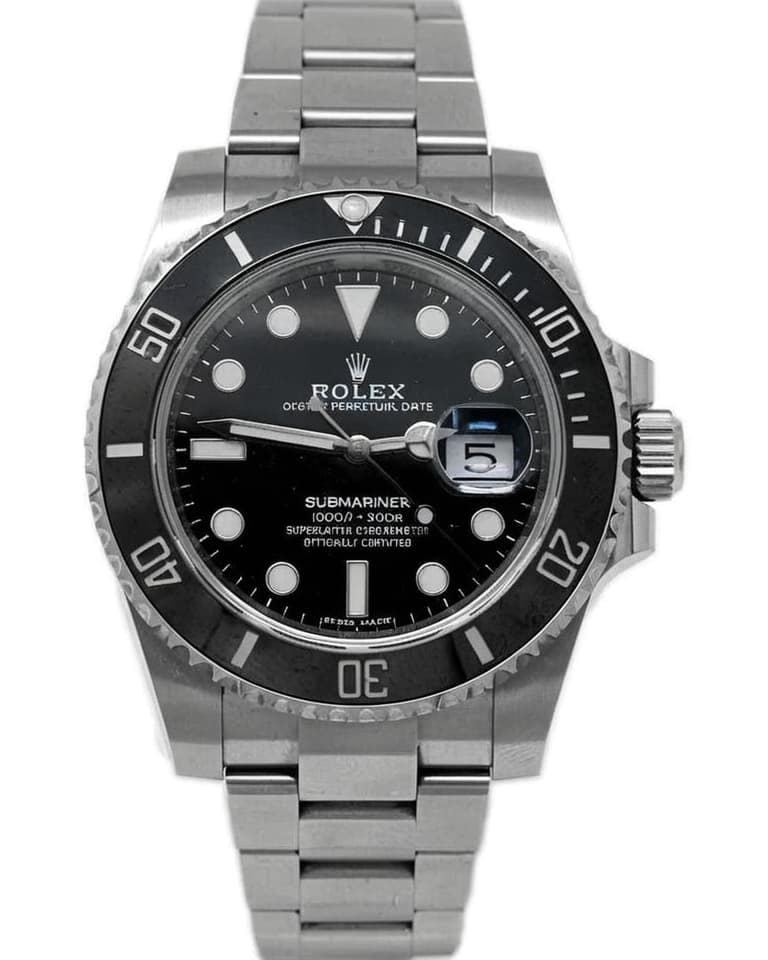
The Rolex Submariner stands as perhaps the most influential dive watch ever created, setting standards that the entire industry has followed since its 1953 debut. Originally engineered as a professional tool for underwater exploration, it has transcended its utilitarian origins to become a cultural icon worn by everyone from professional divers to James Bond, from boardroom executives to casual enthusiasts.
- The Submariner was officially introduced in 1953 and showcased at the 1954 Basel Watch Fair as the first dive watch waterproof to 100 meters (330 feet), though modern versions are rated to 300 meters (1,000 feet)—demonstrating Rolex’s commitment to continuous improvement.
- Revolutionary features of the original Submariner included its rotating bezel with minute markings to track immersion time, highly luminous dial for underwater visibility, and the signature Oyster case that protected the movement from water infiltration.
- The first Submariner models included references 6204, 6205, and 6200, released in close succession during the early 1950s, with variations in crown size, dial configurations, and case dimensions—creating an ongoing debate among collectors about which reference truly came first.
- Crown guards were introduced to the Submariner in 1959 with reference 5512, providing protection for the winding crown and establishing the silhouette that would define the model for decades to come.
- The Submariner Date (reference 1680) debuted in the late 1960s, adding a date function and Cyclops magnifier to the crystal—a controversial addition for purists but one that has become a signature Rolex feature.
- Materials evolved beyond the original stainless steel to include two-tone Rolesor (steel and gold) variants in the 1980s and solid 18k gold models, expanding the collection from purely tool watches to luxury sports watches.
- The “Hulk” Submariner (reference 116610LV) with its green bezel and matching green dial introduced in 2010, and the “Kermit” (reference 16610LV) with black dial and green bezel launched in 2003, represent highly sought-after collector’s pieces.
- Modern ceramic “Cerachrom” bezels replaced aluminum inserts beginning in 2008, offering superior scratch and fade resistance, while maintaining the iconic look of the diving scale—demonstrating how Rolex evolves while preserving heritage design elements.
- Movement advancements include the current caliber 3230 (no-date models) and 3235 (date models) with paramagnetic Parachrom hairsprings, Chronergy escapements, and extended 70-hour power reserves—significant upgrades from earlier generations.
The Submariner’s enduring appeal lies in its perfect balance of form and function. Its distinctive design—characterized by the Mercedes handset, luminous hour markers, and unidirectional rotating bezel—has remained remarkably consistent while incorporating technological improvements. This evolutionary rather than revolutionary approach has allowed the Submariner to maintain its identity while becoming increasingly refined. Whether chosen for its robust capabilities, investment potential, or simply its iconic aesthetic, the Submariner represents Rolex’s philosophy of creating timepieces that are both purposeful tools and enduring symbols of achievement.
Rolex Datejust
The Rolex Datejust epitomizes timeless elegance and versatility, earning its status as the quintessential everyday luxury watch since its introduction in 1945. Created to commemorate Rolex’s 40th anniversary, it made horological history as the first self-winding chronometer wristwatch with an automatically changing date display. Its balanced proportions and adaptable aesthetic have allowed it to remain relevant through changing fashion trends for over 75 years.
- Introduced in 1945, the Datejust was a revolutionary timepiece featuring the first automatically changing date mechanism in a waterproof self-winding wristwatch—a genuine innovation that established the template for how date complications would function in watches going forward.
- The Cyclops lens, a magnifying bubble over the date window, was added in 1953 to improve date legibility—now one of Rolex’s most recognizable design features and widely imitated throughout the watch industry.
- Available in more size, material, dial, and bracelet combinations than any other Rolex model, the Datejust offers remarkable variety—case sizes range from 28mm to 41mm, with materials spanning from stainless steel to platinum, and dozens of dial options including mother-of-pearl, meteorite, and diamond-set versions.
- The Jubilee bracelet was specifically designed for and debuted with the Datejust in 1945, featuring a distinctive five-piece link design that balances comfort and elegance—though many references are also available with the sportier Oyster bracelet or formal President bracelet.
- The fluted bezel, originally functional for screwing the bezel to the case to ensure waterproofness, has become a signature aesthetic element of the Datejust—now crafted exclusively in precious metals like white, yellow, or Everose gold to signify luxury.
- Movement evolution includes significant milestones like the introduction of the quick-set date feature in 1977 (caliber 3035), which allowed independent adjustment of the date without cycling the main hands, and modern calibers 2236 and 3235 with 70-hour power reserves.
- The Datejust II was introduced in 2009 as a larger 41mm alternative to the traditional 36mm model, later refined and replaced by the Datejust 41 in 2016 with more balanced proportions while maintaining the larger diameter for contemporary tastes.
- Special dial variations have gained collector followings, including “pie-pan” dials of early models, the “Buckley” dial with printed Roman numerals, and the “Jubilee” dial with its intricate repeating pattern—each representing different eras in Datejust history.
- The Datejust has been worn by an impressive roster of influential figures including U.S. Presidents Dwight D. Eisenhower and Ronald Reagan, Martin Luther King Jr., Winston Churchill, and Paul Newman—cementing its status as a watch of achievement and significance.
The enduring appeal of the Datejust lies in its perfect balance between dress and sport sensibilities. Neither overtly casual nor excessively formal, it transitions seamlessly from business settings to weekend activities. This versatility, combined with its instantly recognizable design, has made it Rolex’s best-selling model throughout much of the company’s history. While it may lack the specialized features of Rolex’s professional models, the Datejust compensates with unmatched adaptability and a refined presence that has defined the archetypal luxury watch for generations. For many, it represents the ideal “one watch collection” that can be passed down as an heirloom while remaining perpetually in style.
Rolex GMT-Master II
The Rolex GMT-Master II stands as the definitive luxury travel watch, designed for a world increasingly connected by international flight. Originally developed in collaboration with Pan American Airways in the 1950s, this iconic timepiece allows pilots and global travelers to track multiple time zones simultaneously through its innovative bezel and additional 24-hour hand—functionality that remains as relevant today as when it was first conceived.
- The original GMT-Master was introduced in 1954 in partnership with Pan American Airways, which requested a watch that could simultaneously display two time zones for their pilots on transatlantic flights—showcasing Rolex’s ability to create purpose-built professional timepieces.
- The signature red and blue “Pepsi” bezel on the original models served a practical purpose, with the blue half representing nighttime hours (18:00-6:00) and the red half representing daytime hours (6:00-18:00)—this visual distinction helped pilots quickly identify whether it was day or night in their reference time zone.
- The GMT-Master II debuted in 1982 (reference 16760, nicknamed “Fat Lady” or “Sophia Loren” due to its thicker case), introducing the independently adjustable hour hand—this key advancement allowed travelers to adjust local time without disturbing the home time reference or 24-hour hand.
- Iconic bezel color combinations beyond the original “Pepsi” include the black and red “Coke” (introduced in the late 1980s), the blue and black “Batman” (introduced in 2013), and the brown and black “Root Beer” (available in various iterations since the 1970s)—each with dedicated collector followings.
- Ceramic “Cerachrom” bezels replaced aluminum inserts starting in 2005, initially available only in solid black, as Rolex claimed creating two-color ceramic bezels was “technically impossible”—a challenge they eventually overcame in 2013 with the blue/black Batman bezel and in 2018 with the return of the iconic red/blue Pepsi.
- Current GMT-Master II models feature the caliber 3285 movement with enhanced power reserve (approximately 70 hours), improved magnetic resistance, and the efficient Chronergy escapement—offering significant performance improvements over previous generations.
- The distinctive design elements include a 24-hour hand with triangular tip (originally bright orange, now in various colors depending on the model), a fixed 24-hour scale on the bidirectional rotatable bezel, and the date display with Cyclops lens.
- GMT functionality allows tracking of three time zones: local time via the main hands, reference/home time via the 24-hour hand against the bezel, and a third time zone by rotating the bezel and calculating the offset from the 24-hour hand—making it especially useful for international business travelers.
- Historical significance extends beyond aviation, with the GMT-Master worn by notable figures including NASA astronauts during Apollo missions, Fidel Castro, Marlon Brando in “Apocalypse Now,” and the character Magnum P.I., played by Tom Selleck—contributing to its cultural icon status.
The GMT-Master II represents Rolex’s ability to create watches that solve real-world problems while becoming style icons in their own right. Its functional design has remained remarkably consistent over nearly seven decades, with improvements focused on materials, movement technology, and refinement rather than radical redesigns. This evolutionary approach has allowed the GMT-Master II to maintain its distinctive identity while incorporating modern innovations. For travelers, business professionals, and watch enthusiasts alike, it remains the definitive multi-timezone watch—as practical and relevant today as it was during the golden age of commercial aviation, while commanding increasing respect among collectors for its heritage and investment potential.
Rolex Day-Date “President”
The Rolex Day-Date, colloquially known as the “President,” represents the pinnacle of Rolex prestige and exclusivity since its introduction in 1956. As the first waterproof, self-winding chronometer wristwatch to display both the date and day of the week spelled out in full, it broke new ground in watchmaking functionality while establishing itself as the ultimate status symbol worn by world leaders, business titans, and cultural icons for nearly seven decades.
- Introduced in 1956, the Day-Date made horological history as the first wristwatch to display both the date and the full day of the week, with the day available in 26 different languages—demonstrating Rolex’s technical prowess and international perspective.
- Exclusively crafted in precious metals since its inception—never produced in stainless steel—the Day-Date is available in 18k yellow, white, or Everose (Rolex’s proprietary rose gold alloy) gold, as well as 950 platinum, cementing its position as Rolex’s flagship luxury model.
- The nickname “President” originated from the bracelet designed specifically for this model—featuring semi-circular three-piece links—though the association strengthened when U.S. President Lyndon B. Johnson wore one, following a tradition of Rolex watches in the White House that included Eisenhower and Kennedy.
- Classic proportions have remained remarkably consistent with the traditional 36mm case diameter maintained from 1956 until 2008, when Rolex introduced the Day-Date II at 41mm, later refined as the Day-Date 40 in 2015—offering options for both traditional and contemporary tastes.
- Dial variations are more extensive than any other Rolex model, spanning from classic silver, champagne, and black to exotic materials like meteorite, coral, and rare hardstones such as lapis lazuli, malachite, and onyx—many available with diamond hour markers or fully paved settings.
- The “hidden” Crownclasp on the President bracelet, developed specifically for this model, conceals the opening mechanism for a seamless appearance—a sophisticated detail that showcases Rolex’s attention to both aesthetics and engineering.
- Movement innovations include the introduction of the quick-set day and date functions (first separately, then together), the double quick-set caliber 3155 in 1988, and the current generation caliber 3255 with the efficient Chronergy escapement and 70-hour power reserve.
- Special editions like the 50th Anniversary “Green Day-Date” with a distinctive olive green dial and the ice-blue dials exclusively reserved for platinum models have become highly sought-after by collectors—with the latter serving as a subtle indicator of the most precious metal in the Rolex collection.
- Cultural impact extends beyond politics to entertainment and business, with notable wearers including Warren Buffett, Jay-Z, Tony Soprano (fictional character), and countless world leaders—establishing it as the definitive watch of achievement and influence.
The Day-Date represents the culmination of Rolex’s philosophy—combining practical innovation with prestigious materials and meticulous craftsmanship. Its enduring design has changed remarkably little over its 65-year history, a testament to the perfection of its original concept. While other Rolex models may offer specific technical capabilities for diving, aviation, or exploration, the Day-Date stands apart as a pure expression of success and accomplishment. For many, acquiring a Day-Date represents the pinnacle of a collection or a capstone achievement. Beyond its material value, it carries historical gravitas as the chosen timepiece of those who have shaped global affairs, earning its informal title as “the watch of presidents” through decades of association with power and influence.
Rolex Daytona
The Rolex Cosmograph Daytona has transformed from an initially overlooked chronograph into perhaps the most coveted luxury sports watch in existence. Born from Rolex’s connection to motorsport and the famous Daytona International Speedway in Florida, this precision chronograph combines sophisticated timing capabilities with a design that has achieved iconic status, worn by racing drivers, celebrities, and discerning collectors who often wait years for the privilege of ownership.
- The Daytona’s origins trace back to earlier Rolex chronographs, but the model officially debuted in 1963 as the Cosmograph Reference 6239, designed specifically for racing drivers with its tachymeter scale engraved on the bezel for calculating average speeds—a placement that improved legibility compared to previous chronographs with scales printed on the dial.
- The “Daytona” name wasn’t initially part of the watch—appearing on the dial only around 1965 after Rolex became the official timekeeper of the Daytona International Speedway, emphasizing the connection between the chronograph and motorsport heritage.
- Paul Newman’s personal Daytona (Reference 6239 with an exotic “Paul Newman” dial) sold at auction in 2017 for $17.8 million—setting a record for a wristwatch at the time and cementing the model’s exceptional collectibility and cultural significance.
- The distinctive “Paul Newman” dial variant, characterized by contrasting colored seconds tracks, block markers in the subdials, and a distinct font, was originally unpopular when introduced but has become among the most valuable vintage watches, with authentic examples regularly commanding prices exceeding $200,000.
- Early Daytona models (1963-1988) featured manual-wind movements based on the Valjoux caliber 72, requiring daily winding—a factor that contributed to relatively slow sales during this period despite the exceptional quality of these movements.
- The introduction of the automatic Daytona in 1988 (Reference 16520) marked a turning point in the model’s popularity, using a modified Zenith El Primero movement (Rolex caliber 4030) and featuring a larger 40mm case, sapphire crystal, and updated aesthetics that began to establish the modern Daytona design language.
- The first in-house chronograph movement from Rolex, caliber 4130, debuted in 2000 in the Reference 116520, featuring a vertical clutch and column wheel for precise chronograph operations, fewer parts for improved reliability, and a 72-hour power reserve—showcasing Rolex’s technical expertise.
- The introduction of the ceramic “Cerachrom” bezel to the Daytona line in 2011 for precious metal models and 2016 for stainless steel versions (Reference 116500LN) created unprecedented demand, with waiting lists at authorized dealers extending to several years for the steel model with white dial.
- Special editions include the Rainbow Daytona with color-graduated sapphire bezels, leopard print dials, meteorite dials, and various gem-set versions—demonstrating how Rolex can transform even a sports chronograph into a luxury statement piece.
The Daytona’s journey from slow-selling professional instrument to status symbol represents a fascinating case study in how desirability in luxury watches evolves. Its appeal spans both technical appreciation—with its precise chronograph function and superlative movement—and cultural cachet reinforced by associations with racing, celebrity, and exclusivity. While the early manual-wind models now command premium prices for their historical significance and rarity, modern versions represent the pinnacle of contemporary chronograph design and engineering. The Daytona’s trajectory from specialized tool to luxury icon mirrors Rolex’s own evolution, as the company has masterfully balanced professional credibility with luxury positioning. For many collectors, obtaining a Daytona represents not just acquiring a exceptional timepiece, but gaining entry into a select brotherhood of enthusiasts who appreciate both its technical merits and cultural significance.
Rolex Explorer
The Rolex Explorer embodies the spirit of adventure and human achievement in its purest form. Born from Rolex’s association with mountaineering expeditions and forever linked to the first successful summit of Mount Everest in 1953, this understated timepiece represents the brand’s philosophy of creating watches that combine elegant simplicity with rugged durability. The Explorer has remained remarkably consistent in its design principles throughout its seven-decade history, offering a refreshing minimalism among Rolex’s professional models.
- The Explorer’s genesis is tied to the historic first successful ascent of Mount Everest by Sir Edmund Hillary and Tenzing Norgay on May 29, 1953. While Rolex was a sponsor of the expedition and provided Oyster Perpetual watches for testing in extreme conditions, there is some historical debate about exactly which watches were worn at the summit itself.
- Launched officially in 1953 following the Everest expedition, the Explorer featured a highly legible black dial with a distinctive 3-6-9 numeral layout and luminous markers—a design optimized for readability in extreme conditions that has remained the model’s signature aesthetic.
- The Explorer maintained a conservative 36mm case size from 1953 until 2010, bucking industry trends toward larger watches—though Rolex did introduce a 39mm version (Reference 214270) in 2010 before returning to the classic 36mm size with the current Reference 124270 in 2021.
- The “pre-Explorer” models of the early 1950s, including References 6098 and 6150, featured the “Oyster Perpetual” designation before the Explorer name was officially adopted—these rare transitional models are highly prized by collectors for their historical significance.
- The legendary Reference 1016 had an extraordinarily long production run from 1963 to 1989, maintaining consistent design while incorporating technical improvements—making it one of the most iconic and collectible Explorer references with its matte dial and painted indices.
- Modern upgrades include a shift from painted luminous numerals to applied white gold 3-6-9 numerals filled with Chromalight luminescent material, which emits a distinctive blue glow and provides up to eight hours of visibility in darkness—enhancing both luxury and functionality.
- Current Explorer models feature the caliber 3230 movement with a Parachrom hairspring for enhanced magnetic resistance, the efficient Chronergy escapement, and an extended 70-hour power reserve—significant technical improvements housed within the classic design.
- The Explorer II was introduced in 1971 as a distinct model with a larger case, fixed 24-hour bezel, and additional GMT hand, designed specifically for cave explorers (speleologists) who could lose track of day and night—evolving into its own model line parallel to the original Explorer.
- Notable Explorer wearers included author Ian Fleming (creator of James Bond), who owned a Reference 1016 that likely inspired the watch he described Bond wearing in his novels—reinforcing the model’s association with adventure and capability.
The Explorer’s enduring appeal lies in its restrained design philosophy and authentic heritage. Unlike more specialized Rolex professional models with additional complications and distinctive bezels, the Explorer achieves its purpose through simplicity and reliability. Its clean aesthetic allows it to transition seamlessly from outdoor adventures to business settings—a true “go anywhere, do anything” timepiece. While it may lack the immediate recognition factor of the Submariner or Daytona, the Explorer commands respect among watch enthusiasts for its historical significance, design integrity, and the genuine adventures it has accompanied. For those who appreciate understatement and authenticity in their timepieces, the Explorer represents Rolex at its most essential—a perfectly executed tool watch that has earned its place in horological history not through flash, but through unwavering competence and classic design.
Best Affordable Rolex Watches
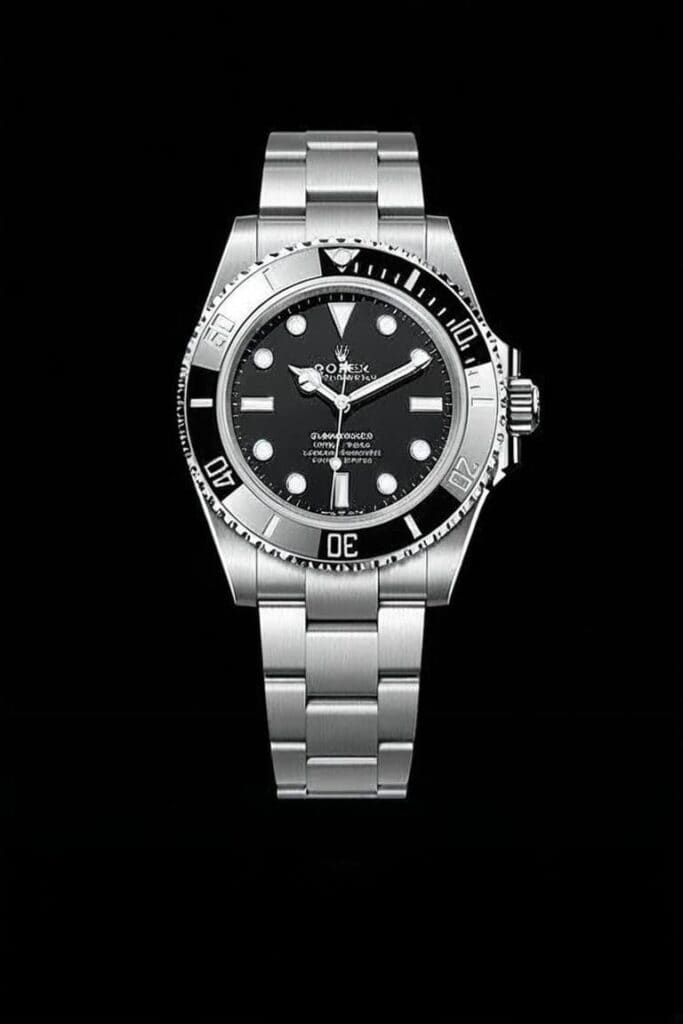
For those beginning their journey into Rolex ownership, the entry-level models offer the brand’s legendary quality and prestige at more accessible price points. These watches deliver the full Rolex experience—from exceptional movements to iconic design elements—while serving as excellent foundation pieces for a growing collection.
- The Oyster Perpetual represents Rolex at its most essential, offering the perfect blend of simplicity and sophistication without any additional complications—available in sizes from 28mm to 41mm and a variety of vibrant dial colors introduced in 2020, it provides the core Rolex DNA at the brand’s most approachable price point (starting around $5,700).
- The Air-King (Reference 126900) connects to Rolex’s aviation heritage while offering distinctive styling with its unique dial featuring prominent 3, 6, and 9 numerals alongside minute markers—the current model includes crown guards and a redesigned case with improved magnetic resistance, making it a distinctive entry point to the professional collection at approximately $7,400.
- The Explorer (Reference 124270) combines heritage appeal with the most accessibly priced professional model in the lineup—its 36mm size, clear legibility, and versatile design make it suitable for virtually any occasion, offering a rich connection to Rolex’s adventurous spirit for around $7,200.
- The Datejust 36 in stainless steel provides the iconic Rolex aesthetic and date function in its most versatile configuration—while premium configurations with fluted bezels and jubilee bracelets command higher prices, the smooth bezel variant on an Oyster bracelet offers tremendous value with prices starting around $7,650.
- The 34mm Oyster Perpetual Date serves as a compact alternative with date functionality—slightly smaller than the Datejust but larger than traditional women’s models, it represents an excellent value proposition for those who prefer a more modest case size.
- Certified pre-owned options can provide entry to Rolex ownership at lower price points—particularly discontinued models like the 34mm Date, older 36mm Datejust references, or Air-King models prior to the current design can often be found 20-30% below comparable new models.
- Women’s models, particularly the Lady-Datejust 28mm and 31mm variants, often represent value opportunities—these watches contain the same quality movements and materials as their larger counterparts but sometimes command lower prices on the secondary market.
- Vintage references from the 1980s and 1990s offer another entry path—models like the Explorer 14270, Datejust 16200 series, or Air-King 14000 provide classic Rolex design elements and quality while typically ranging from $4,000-$7,000 in good condition with proper service history.
Entry-level Rolex models prove that accessibility needn’t mean compromise. These watches contain the same engineering excellence, materials, and attention to detail found in their more expensive counterparts. What they may lack in complications or precious metals, they make up for in versatility and timeless design. For many owners, these models become cherished daily companions rather than occasional pieces, demonstrating how Rolex’s core qualities—precision, durability, and understated elegance—shine through at every price point. While obtaining these models from authorized dealers can still involve waiting lists due to high demand, they represent the most accessible way to experience Rolex’s legendary approach to watchmaking firsthand.
Best Rolex Watches for Investment
While Rolex watches should first and foremost be purchased for personal enjoyment, their potential as investments cannot be ignored. Certain models have demonstrated remarkable value appreciation over time, outperforming many traditional investment vehicles. Understanding which models hold and potentially increase in value can be an important consideration for collectors who view their timepieces as part of a diversified portfolio.
- Professional sports models, particularly the stainless steel Submariner, GMT-Master II, and Daytona, have consistently shown the strongest appreciation—these models often sell significantly above retail on the secondary market due to limited supply and overwhelming demand, with the stainless steel Daytona (Reference 116500LN) commanding premiums, though these have moderated since their peak in 2021-2022.
- Limited production models and special editions typically appreciate faster than standard production models—the green dial “Hulk” Submariner (discontinued in 2020), the “Batman” GMT-Master II on Jubilee bracelet, and anniversary models like the Submariner “Kermit” have all demonstrated significant value increases following their discontinuation.
- Vintage Rolex sports watches from the 1960s and 1970s have seen extraordinary price growth over the past decade—early Submariner, Explorer, and GMT-Master references in original condition with period-correct parts have appreciated by several hundred percent, with rare variants commanding six-figure prices.
- Condition and originality significantly impact investment potential—watches with original dials, hands, and bezels in well-preserved condition command substantial premiums over refinished examples, as collectors increasingly value authenticity over cosmetic perfection.
- Complete sets with original box, papers, warranty cards, hang tags, and accessories can increase value by 15-30% compared to the watch alone—documentation proving provenance has become increasingly important in the vintage and collectible watch market.
- Certain discontinued features create collector appeal—models with tritium dials (indicated by “T<25” on the dial), drilled lugs, acrylic crystals, or distinctive production variations often attract premium prices as they represent specific eras in Rolex’s evolution.
- Women’s models and precious metal dress watches typically appreciate more slowly than stainless steel sports models—though certain exceptions exist, such as rare dial variants or historically significant pieces, these categories are generally purchased more for enjoyment than investment potential.
- Market timing matters—Rolex values experienced significant growth from 2016-2021 before seeing corrections in some models during 2022-2023, demonstrating that watch investments, like all asset classes, experience cycles of expansion and contraction influenced by broader economic conditions.
- Storage, insurance, and periodic service costs should be factored into investment calculations—proper storage in a temperature and humidity-controlled environment, specialized insurance coverage, and service costs averaging $800-1,200 every decade impact the total return on investment.
While past performance doesn’t guarantee future results, Rolex watches have demonstrated remarkable resilience as tangible assets that combine utility with collectibility. Their value derives from a combination of brand prestige, limited production relative to global demand, exceptional quality, and cultural significance that transcends mere horology. The most successful Rolex investors typically combine deep knowledge of the market with genuine passion for the watches themselves. Rather than purchasing solely for investment potential, the best approach is often acquiring pieces that personally resonate while being informed about their likely value trajectory. This balanced approach ensures enjoyment regardless of market fluctuations while positioning collectors to benefit from the historical tendency of rare, desirable Rolex models to appreciate over extended timeframes.
Best Rolex Watches for Every Lifestyle
Rolex built its reputation creating purpose-built timepieces for specific activities and environments. While most modern Rolex watches are versatile enough for daily wear, certain models excel in particular contexts due to their specialized features, capabilities, and designs tailored to specific uses.
- For diving and water sports, the Submariner and Sea-Dweller offer uncompromising waterproof integrity—the Submariner’s 300-meter water resistance suits recreational divers and swimmers, while the Sea-Dweller’s 1,220-meter rating and helium escape valve make it ideal for professional saturation diving and extreme underwater conditions.
- For frequent travelers, the GMT-Master II provides intuitive time zone tracking capabilities—the independent hour hand adjustment allows easy setting of local time upon arrival at a destination, while the 24-hour hand and rotatable bezel maintain reference to home time and can track a third time zone when needed.
- For motorsport enthusiasts and timing needs, the Daytona offers exceptional chronograph functionality—the tachymeter scale allows calculation of average speeds, while the precise chronograph mechanism can time events up to 12 hours with 1/8-second accuracy.
- For formal business environments, the Day-Date and Datejust project executive presence and professionalism—the Day-Date in precious metals represents the pinnacle of achievement, while the Datejust offers versatility with options ranging from conservative stainless steel configurations to diamond-set bezels and dials.
- For extreme environments and expeditions, the Explorer and Explorer II provide robust reliability and specialized features—the Explorer’s simple, highly legible design functions across diverse conditions, while the Explorer II’s 24-hour hand helps maintain time orientation in environments without day/night cues, such as polar regions or caves.
- For scientific and high-electromagnetic environments, the Milgauss offers exceptional protection against magnetic fields up to 1,000 gauss—its unique lightning bolt seconds hand and green sapphire crystal make it both functional for professionals in medical, research, or engineering fields and visually distinctive.
- For yacht racing and regatta timing, the Yacht-Master II features a sophisticated regatta chronograph with programmable countdown and mechanical memory—allowing precise synchronization with race start sequences through its innovative Ring Command bezel that interacts with the movement.
- For vintage aesthetic in modern packaging, the Air-King offers aviation heritage with contemporary reliability—its distinctive dial design with prominent minute numerals pays homage to Rolex’s aeronautical history while modern construction ensures everyday wearability.
- For women seeking versatility, the Lady-Datejust and 36mm Datejust models balance feminine proportions with robust functionality—available in numerous configurations from sporty stainless steel to diamond-set precious metals, they adapt seamlessly across professional and social contexts.
- For collectors seeking a blend of dress and sport elements, the Yacht-Master presents a unique proposition—its bidirectional rotatable bezel with raised numerals, sandblasted platinum or matte black Cerachrom insert, and slightly more refined case proportions make it sportier than a Datejust but more elegant than a Submariner.
Rolex’s approach to purpose-built watches extends beyond mere technical specifications to thoughtful design considerations that enhance functionality in specific contexts. The unidirectional bezel on diving models prevents accidental extension of dive times; the Easylink extension on modern bracelets accommodates wrist expansion in hot climates; the Chromalight display ensures legibility in diverse lighting conditions. While technological advances have somewhat blurred the distinct purposes of these models—with most contemporary Rolex watches offering water resistance, shock protection, and magnetic resistance sufficient for everyday activities—the specialized capabilities engineered into each model continue to benefit users engaged in their intended pursuits. This purposeful design philosophy explains why Rolex watches continue to be chosen by professionals across diverse fields, from exploration and aviation to medicine and maritime activities, despite the availability of more affordable alternatives.
How to Care for Your Rolex
Proper care ensures your Rolex will maintain its performance and appearance for generations. While Rolex watches are built to withstand daily wear, regular maintenance will preserve both their functionality and value as potential heirlooms or investments.
- Rolex recommends a complete service every 10 years, though watches used in harsh conditions (saltwater, dust, extreme temperatures) may benefit from more frequent servicing—this includes complete disassembly, cleaning, replacement of worn parts, lubrication, and timing adjustment.
- Authorized service centers use specialized equipment and genuine Rolex parts for maintenance—while independent watchmakers may offer lower prices, using non-authorized service providers can affect the watch’s value and may void warranties.
- Regular cleaning prevents dirt buildup that can damage the finish—after exposure to saltwater, rinse the watch in fresh water; for daily cleaning, use a soft cloth slightly dampened with mild soapy water on closed-system models (with screwed-down crown).
- The crown is a vulnerability point where water and dust can enter—ensure it’s fully screwed down before exposing the watch to water, and never operate the crown (changing date/time) when the watch is wet as this can allow moisture to penetrate the case.
- Automatic Rolex watches require regular winding to maintain accuracy—if not worn daily, wind manually by unscrewing the crown to position one and rotating it clockwise approximately 20-40 times until resistance is felt.
- Avoid magnetic fields from speakers, refrigerators, and electronic devices which can affect timekeeping accuracy—while modern Rolexes have improved magnetic resistance, prolonged exposure can still impact performance.
- Temperature extremes can affect lubricants and movement precision—avoid leaving your Rolex in direct sunlight for extended periods or exposing it to sudden temperature changes like wearing it in a sauna.
- Rolex bracelets benefit from periodic cleaning to remove dirt from between links—use a soft brush with mild soapy water for steel bracelets, followed by thorough rinsing and drying (leather straps should never be submerged in water).
- Keep service records and original documentation including warranty cards, receipts, and boxes—complete provenance significantly enhances resale value and authenticity verification for collectible models.
Investing in proper care for your Rolex not only preserves its functionality but protects its value over time. These timepieces are engineered to last for generations when properly maintained—many vintage Rolex watches from the 1950s and 1960s continue to keep excellent time today thanks to the quality of their construction and appropriate service throughout their lifetime. While the robust nature of Rolex watches allows them to withstand conditions that would damage lesser timepieces, treating them with respect ensures they will continue to serve as both precision instruments and treasured possessions. The cost of regular maintenance should be viewed not as an expense but as an investment in preserving both the performance and value of these exceptional timepieces.
Conclusion
The legendary status of Rolex watches stems from their perfect combination of innovation, precision, durability, and timeless design. Each model represents a unique heritage—from the ocean-exploring Submariner to the executive Day-Date—with specialized features that elevate them beyond mere timekeeping devices to cultural icons. What began as Hans Wilsdorf’s vision for wristwatch accuracy has evolved into the world’s most recognized symbol of horological achievement, coveted by enthusiasts and worn by pioneers across every field of human endeavor.
Whether you choose a rugged Explorer with its mountaineering pedigree, a precisely engineered Daytona born on the racetrack, or a versatile Datejust that transitions effortlessly between environments, you’re not simply acquiring a watch but joining a legacy of excellence that spans generations. With proper care, your Rolex will serve as both a daily companion and a potential investment, its value possibly appreciating while its functionality remains undiminished by time—a rare combination of practical utility and enduring prestige that few luxury products can match.