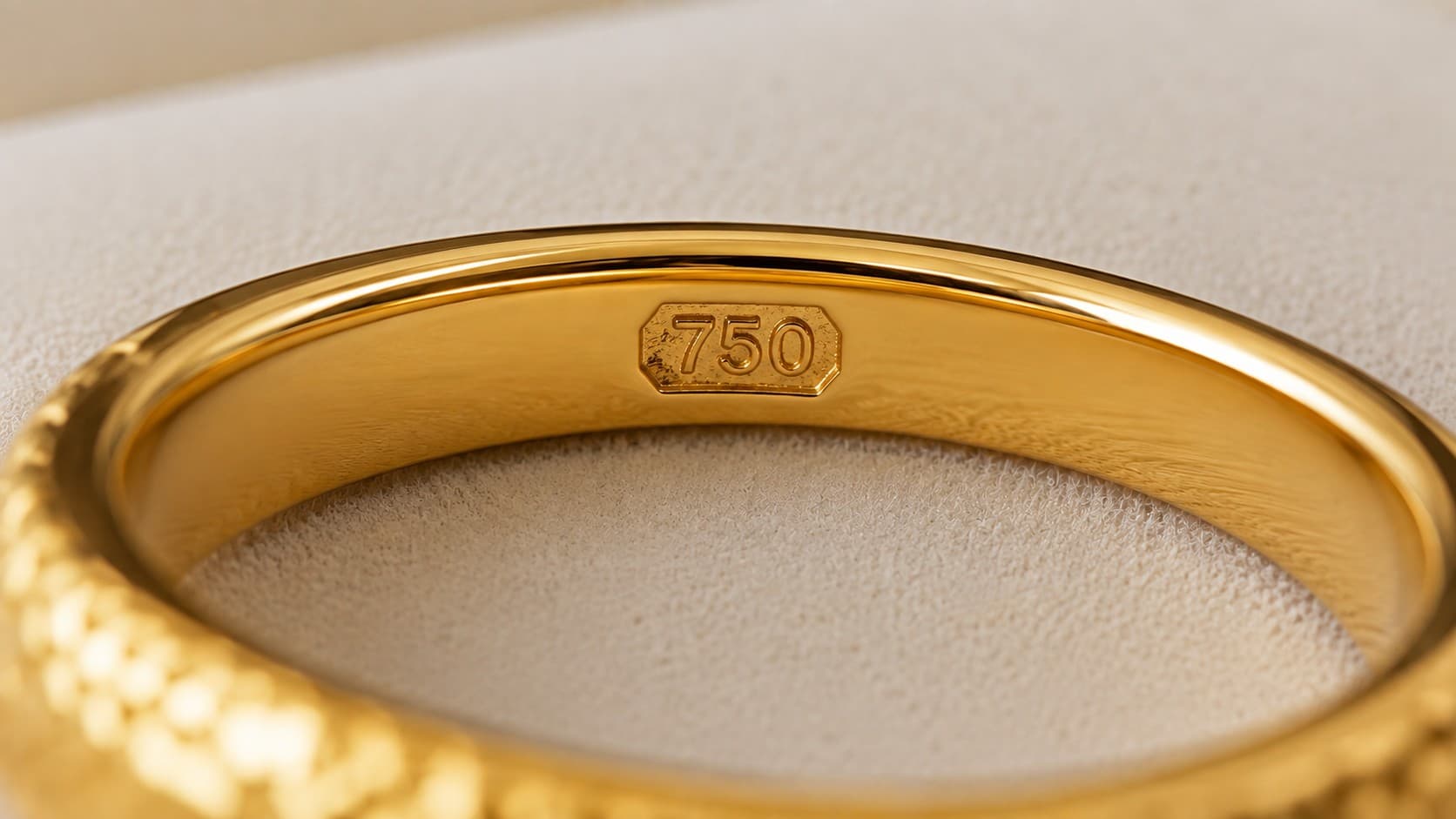
A tiny stamp reading “750” often turns up inside rings, near necklace clasps, and on the backs of earrings, easy to overlook unless someone is looking for it. The mark looks small, but it reveals something important about the piece: exactly how much real gold it contains. Understanding this one number matters for anyone shopping for gold jewelry, caring for a piece already owned, or trying to work out what an inherited item is worth.
What Does 750 Mean on Jewelry?
A 750 stamp means a piece of jewelry is made of 18 karat gold — 75% pure gold mixed with 25% other metals. Jewelers use this number because it comes from a system that measures gold out of 1,000 parts rather than out of 24 karats.
Picture gold purity divided into 1,000 tiny parts. If 750 of those parts are pure gold and the other 250 are different metals, the result is “750” gold. This system, called millesimal fineness, is used by jewelers, assay offices, and gold buyers worldwide because it offers more precision than the karat system alone.
The other 25% isn’t filler or a way to cheat buyers out of gold. It’s added on purpose, using metals like copper, silver, nickel, or palladium, to make the piece stronger and more wearable. Pure gold on its own is quite soft, almost like a thick candy bar, so mixing it with other metals helps a ring or bracelet hold its shape through years of wear.
Why Is 750 Gold Also Called 18K?
18K and 750 describe exactly the same gold purity, just written in two different number systems. Karats measure purity out of 24 parts, so 18 out of 24 parts pure gold works out to the same 75% as the 750 stamp.
The math is straightforward: 18 divided by 24 equals 0.75, or 75%. Multiplied by 1,000, that becomes 750. A piece stamped “18K” and one stamped “750” are therefore identical in quality. American and British jewelers tend to use the karat system, while European, Asian, and many international jewelers favor writing out the 750 number directly.
750 Gold Compared to Other Purity Stamps
Gold jewelry comes in several common purity levels, each with its own stamp:
| Stamp | Karat | Pure Gold Content |
|---|---|---|
| 999 | 24K | 99.9% (pure gold) |
| 916 | 22K | 91.6% |
| 750 | 18K | 75.0% |
| 585 | 14K | 58.5% |
| 417 | 10K | 41.7% |
Moving down the list, jewelry contains less pure gold and more added metal. Lower karat gold, like 14K or 10K, tends to be tougher and more affordable, while higher karat gold, like 18K or 24K, carries a richer color and higher value but scratches more easily. Many fine jewelry designers treat 18K as the sweet spot: it has a noticeably deeper gold color than 14K while still standing up well to everyday wear.
Why Is Gold Mixed With Other Metals?
Jewelers mix gold with other metals because pure gold is too soft for daily wear. On its own, 24K gold can bend, dent, or scratch from ordinary activities like typing, opening doors, or shaking hands.
Adding metals such as copper, silver, zinc, nickel, or palladium changes gold’s hardness, its resistance to scratching, and even its color. This blend, called an alloy, is what allows a gold ring to survive years of wear without losing its shape. The 25% of non-gold metal in an 18K piece does real structural work, not just fill space.
An 18K gold ring keeps about three-quarters of its weight in pure gold while gaining enough strength from the alloy to survive daily life — that balance is exactly why it remains such a popular choice for engagement rings and other pieces meant to be worn for decades.
Where to Find the 750 Stamp on Jewelry
The 750 stamp is usually small and tucked into a spot that doesn’t show while the piece is being worn. On rings, it typically sits inside the band. On necklaces and bracelets, it appears near the clasp. Earrings often carry the stamp on the post or the back of the earring itself.
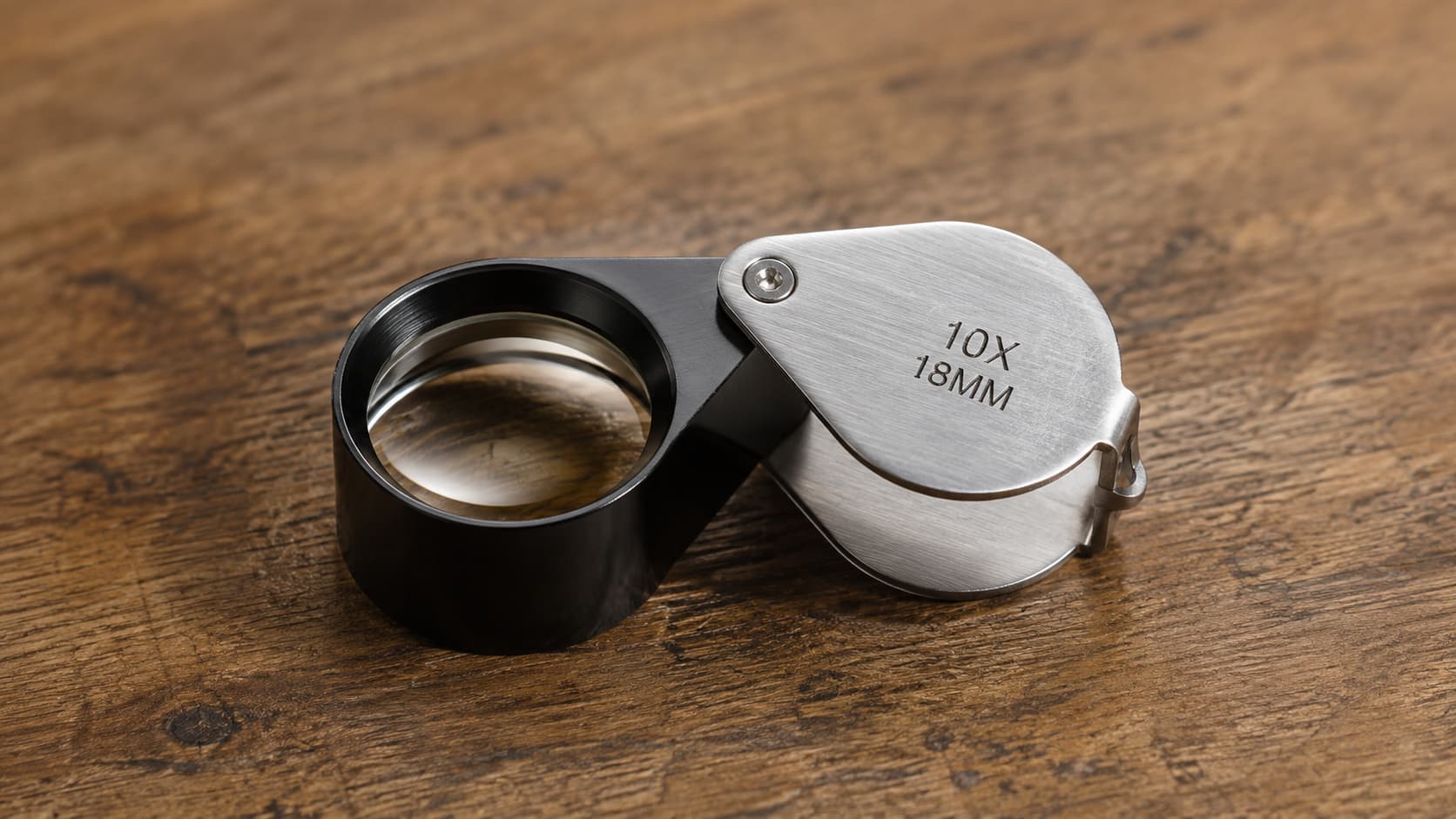
Because the stamp is tiny, good lighting or a magnifying glass is often needed to read it clearly. Some pieces also include a small “AU” next to the number — AU being the chemical symbol for gold — so “AU750” sometimes appears instead of just “750.” Both mean the exact same thing.
What sits alongside the 750 mark can also reveal where a piece came from, since not every country regulates gold stamping the same way. In the UK, most gold jewelry over a small weight threshold must legally be tested and marked by one of four official assay offices, so a genuine British piece often carries extra symbols too, like a leopard’s head for London or an anchor for Birmingham, alongside the 750 fineness mark. In the United States, stamping isn’t mandatory at all, but a maker who chooses to stamp the karat or the 750 number must add a registered trademark right next to it. Italian gold, meanwhile, is often marked with a small star followed by a number and a province code, since Italy requires every gold item over one gram to be traceable back to a specific registered goldsmith.
What Colors Does 750 Gold Come In?
750 gold comes in yellow, white, and rose, with the color depending entirely on which metals are mixed in, not on the amount of gold. All three colors contain the same 75% pure gold; only the alloy recipe changes.
- Yellow gold uses a traditional mix of silver and copper, giving it the classic warm gold look. A typical 18K yellow gold recipe is about 75% gold, 12.5% silver, and 12.5% copper.
- White gold is blended with metals like palladium or nickel, then often coated with a shiny metal called rhodium for a bright, silvery finish. A common formula is roughly 75% gold combined with 25% palladium, silver, or a mix of white metals.
- Rose gold uses a higher amount of copper, which is what creates its soft pink or reddish tone. It’s usually around 75% gold, 20% copper, and 5% silver — the more copper in the mix, the deeper and redder the pink becomes.
Since gold content stays at 75% no matter the color, none of these options is inherently more valuable than the others based on shade alone. The choice comes down to personal style.
Is 750 Gold Real Gold?
Yes, 750 gold is real, genuine gold. At 75% pure gold content, it sits well above the legal minimums required in most countries for jewelry to even be called “gold” at all.
Some assume that because it isn’t 24K, it must be fake or watered down. That isn’t true. The 750 hallmark is a recognized international quality standard, used by reputable manufacturers and checked by official assay offices in many countries. It simply describes a gold alloy built for real-world wear, not a lesser or counterfeit product.
How to Tell If a 750 Stamp Is Authentic
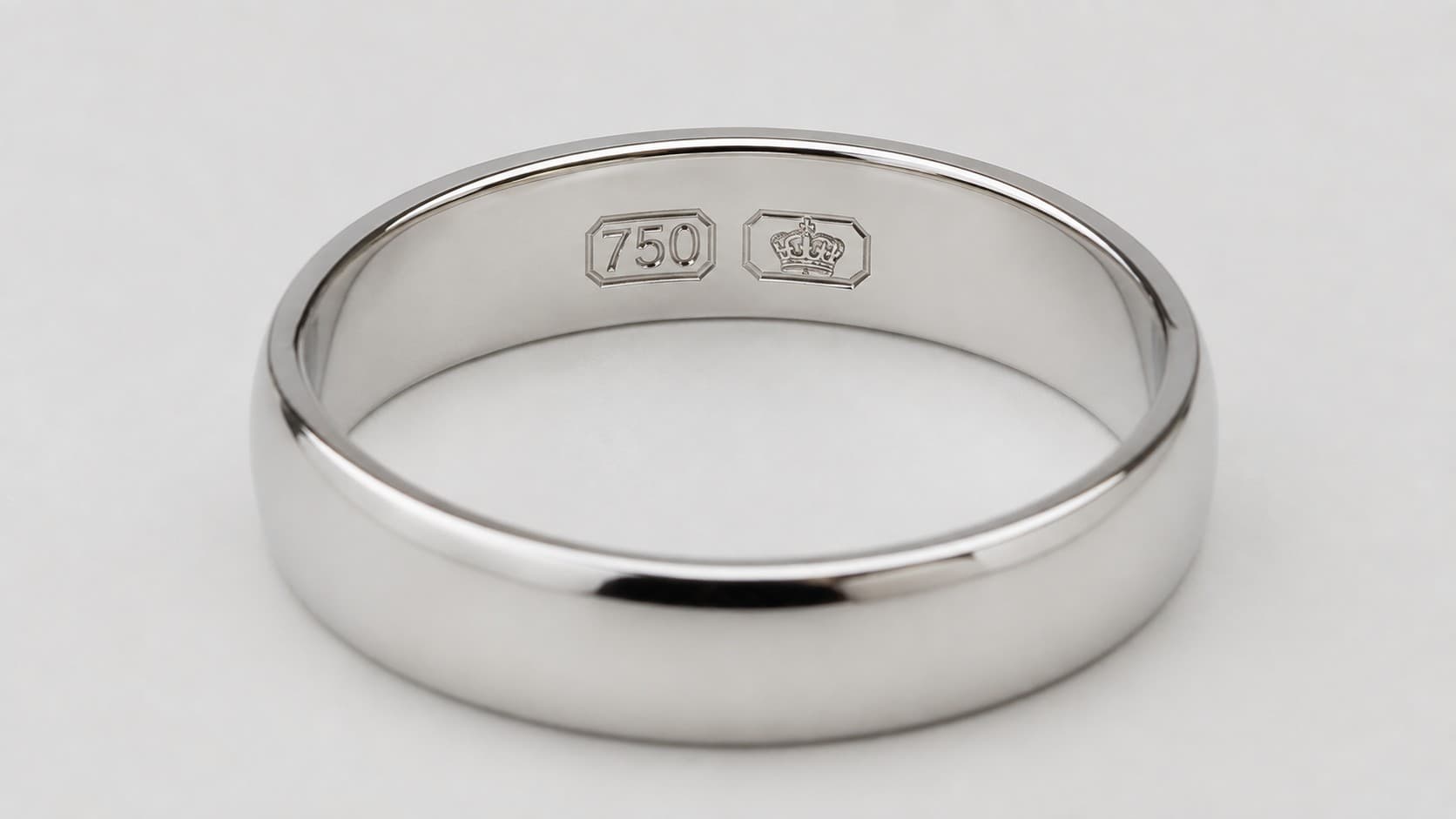
Fake stamps are often blurry, uneven, or oddly placed compared to genuine ones, so a close look at the stamp itself is a useful first step. A legitimate 750 mark is usually crisp, small, and consistent in its lettering.
Visual checks only go so far, since counterfeiters can stamp “750” onto gold-plated or completely fake metal. Real certainty requires testing with tools like an XRF machine, which reads a metal’s makeup without damaging the piece, or acid testing performed by a professional. Buying, selling, or insuring a piece based on its gold content is usually worth backing up with a professional test.
A 750 stamp also carries different legal weight depending on where it was made. A hallmark from an official UK assay office means an independent, government-linked body already tested the metal before it reached a store shelf, which is a strong guarantee on its own. A US-made piece stamped “750” without a matching trademark is technically breaking labeling rules, making a missing or mismatched trademark a small red flag worth raising with a jeweler.
How Much Is 750 Gold Worth?
The value of 750 gold jewelry is based mainly on the current market price of gold, multiplied by the piece’s weight and its 75% purity, plus anything added for design or craftsmanship. This is often called the piece’s “melt value,” since it’s roughly what the raw gold would be worth if melted down.
Melt value is usually just the starting point, though. A well-known designer name, fine craftsmanship, gemstones, or a piece’s age and history can push its real-world worth well beyond the value of the metal alone, which is why an appraisal from a professional jeweler is worthwhile before selling or insuring an 18K gold item.
How to Care for 750 Gold Jewelry
750 gold holds up better than lower-karat gold, but it still benefits from a bit of regular care to stay bright. Warm water, a few drops of mild soap, and a soft toothbrush are usually enough to clean off everyday buildup like lotion, oil, and dust.
Taking 18K gold off before swimming, cleaning the house, or working out is also worthwhile, since chlorine and harsh chemicals can react with the alloy metals over time and dull the shine. White gold pieces need one extra step: the rhodium coating that gives them their bright, silvery look wears down gradually, so jewelers commonly recommend having it re-plated every year or two to keep the color looking fresh.
Frequently Asked Questions
Is 750 gold better than 585 gold?
750 gold (18K) contains more pure gold than 585 gold (14K), so it typically has a richer color and higher gold value. 585 gold, on the other hand, is generally more scratch-resistant and budget-friendly, so “better” really comes down to whether purity or everyday durability matters more.
Does 750 gold tarnish?
750 gold resists tarnishing much better than lower-karat gold because it contains a higher percentage of pure gold, which doesn’t react with air or moisture. It isn’t completely immune to dulling over time, especially with heavy exposure to lotions, chlorine, or sweat, but it holds its shine longer than 14K or 10K pieces.
Can 750 gold be white, yellow, or rose?
Yes, 750 gold can be any of these colors. The color comes from the specific metals alloyed with the gold, not from the purity level, so an 18K white gold ring and an 18K yellow gold ring both contain the same 75% pure gold.
Is AU750 the same as 750?
AU750 and 750 mean exactly the same thing. “AU” is simply the chemical symbol for gold, so adding it in front of the number is just another way of labeling the same 18K, 75% pure gold standard.
Why isn’t jewelry made from 100% pure gold?
Pure gold (24K, or a 999 stamp) is too soft for everyday jewelry because it bends and scratches easily. Mixing in other metals, as is done to create 18K or 750 gold, adds strength and durability so a ring or bracelet can actually survive daily wear.
Conclusion
A 750 stamp isn’t just a random number tucked inside a piece of jewelry — it’s a direct, honest label showing that the piece is 18 karat gold, made of 75% pure gold blended with 25% other metals for strength. That blend is exactly why 18K gold has remained such a trusted choice for rings, necklaces, and bracelets meant to last for years, offering a rich, genuine gold color without the fragility of pure gold. A tiny “750” stamped inside a band or clasp is a small mark carrying a clear, precise meaning.