For most of watchmaking history, the biggest names came from Switzerland, Germany, or Japan. CIGA Design broke that pattern. Founded in Shenzhen in 2016 by industrial designer Zhang Jianmin, the brand built watches that looked nothing like anything else on the market, then backed up the bold looks with real mechanical engineering. In 2021, CIGA Design became the first Chinese watch brand to win a prize at the Grand Prix d’Horlogerie de Genève, an award often compared to the Oscars of watchmaking. That single win changed how the watch world talks about Chinese manufacturing, and it’s why so many people now search for CIGA Design’s best models before buying one.
What Is CIGA Design?
CIGA Design is a watch brand from Shenzhen, China, founded in 2016 by Zhang Jianmin. Before starting the company, Zhang spent over two decades working as an industrial and graphic designer, including projects on wayfinding systems for public spaces. He also spent five straight years as an invited judge at a clock and watch fair in Shenzhen, which left him convinced the industry had gone stale, with too many brands recycling old-fashioned layouts instead of trying anything new. That frustration is what pushed him to start his own label.
The company’s early growth looked very different from a traditional watch launch. Instead of opening boutiques, CIGA Design sold its first models through Chinese crowdfunding and e-commerce platforms, including a collaboration with Xiaomi’s Youpin marketplace that set a sales record for mechanical watches on the platform within its first 14 hours online. This e-commerce-first approach let the brand build a following quickly and price its watches lower than a typical boutique launch would allow.
Zhang built a core team of designers from multiple countries who follow Bauhaus principles, the “form follows function” philosophy popularized by the German art school of the same name. Instead of chasing tradition, CIGA Design treats watches as wearable art objects first and timekeeping tools second. That philosophy has paid off: the brand has now collected more than a dozen international design honors, including awards from the Red Dot Awards, the iF Design Awards, and the German Design Awards.
What Makes CIGA Design Watches Different?
CIGA Design watches stand out because they reimagine how a watch shows time, rather than just decorating a standard dial. Most watch brands work within familiar formats: round cases, two or three hands, a date window. CIGA Design frequently throws that formula out entirely.
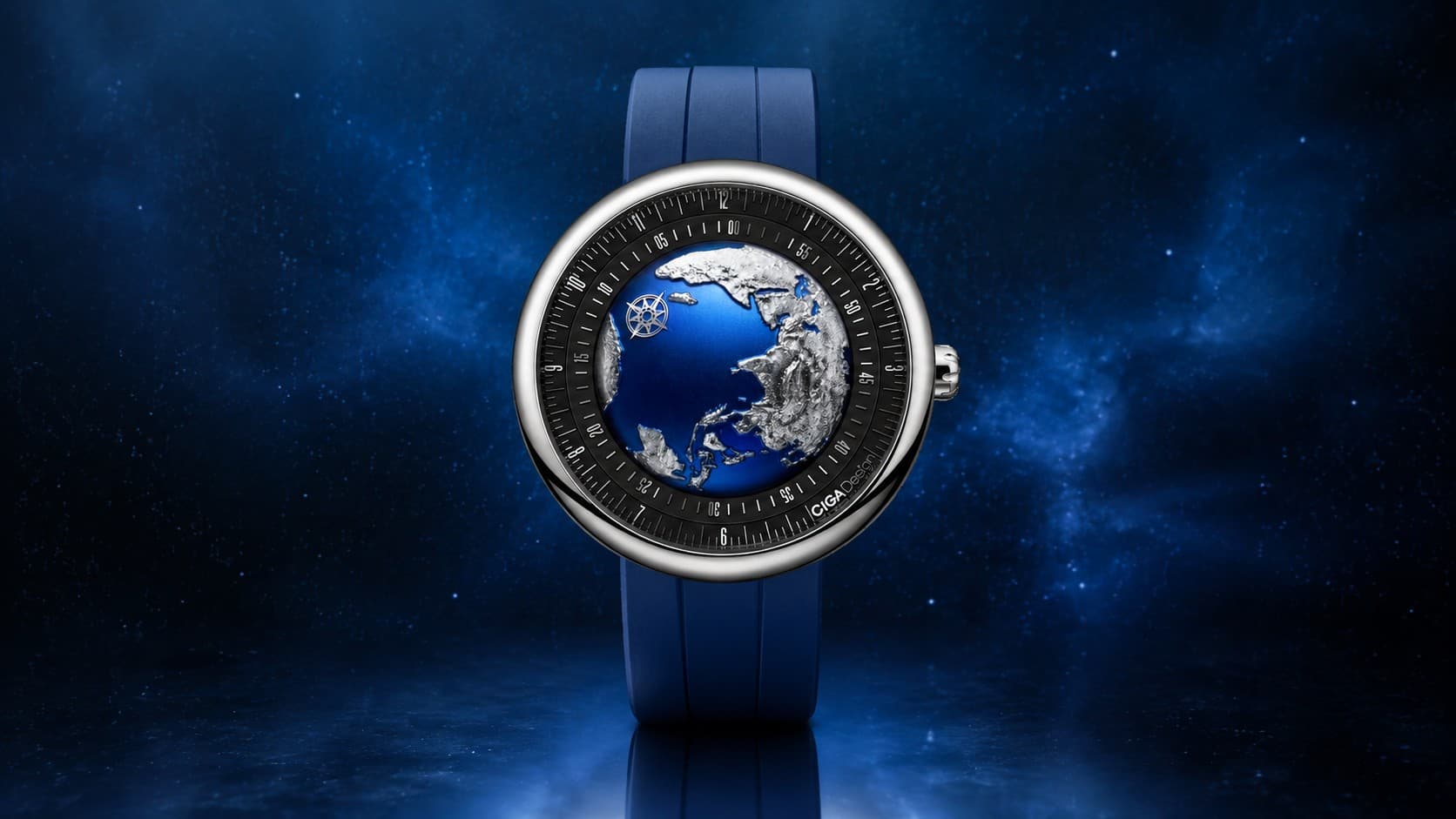
The clearest example is the Asynchronous-Follow Movement Technology used in the Blue Planet line. Instead of separate hour and minute hands, the watch uses a single pointer shaped like a compass rose. As it moves, the hour ring stays fixed while the minute ring rotates beneath it, so the hour hand only travels 30 degrees while the minute hand travels 390 degrees to complete a full lap. It takes a moment to learn how to read, but it turns basic timekeeping into something closer to a small mechanical sculpture on the wrist.
That design thinking is what won the brand its GPHG award in 2021, when the Blue Planet took the Challenge Watch Prize against 208 entries from around the world, making CIGA Design the first Chinese-founded brand to win in the competition’s 21-year history. The recognition didn’t stop there. In June 2022, the brand donated an award-winning Blue Planet to Geneva’s Musée d’Art et d’Histoire, one of Switzerland’s largest museums, making it the first Chinese watch ever added to the museum’s permanent collection.
CIGA Design also leans hard into skeleton design, where the dial is cut away to expose the gears, springs, and bridges working underneath. This isn’t unique to CIGA Design, but the brand made it accessible at a much lower price than most skeleton watches from established Swiss houses, which is a major reason collectors on a budget started paying attention.
“Original design is the foundation of creating the extraordinary.” That’s the core belief behind CIGA Design’s approach, and it explains why the brand rarely makes a watch that looks like anyone else’s.
The Best CIGA Design Watch Collections
CIGA Design organizes its watches into named series rather than one continuous lineup. Each series carries its own design identity, price range, and typical buyer, ranging from entry-level skeleton pieces to award-winning flagships and rare tourbillon editions.
Series U: Blue Planet
The Blue Planet is CIGA Design’s flagship and the watch that won the brand its GPHG award. The dial is a detailed 3D relief map of Earth, viewed as if from space, with the compass-shaped pointer circling it like a satellite tracking time across the globe. The idea actually started years earlier as a sundial-inspired single-hand prototype, before evolving into the Earth-themed version that launched in 2019 and won its GPHG prize in 2021.
The case measures 46mm across but wears smaller than that number suggests, because it has no lugs sticking out to add extra length on the wrist. Inside, the watch runs on an automatic movement built by Sea-Gull, one of China’s oldest movement makers, engineered to CIGA Design’s specifications for the modified gear train the display needs. It offers a 40-hour power reserve, a 30-jewel movement, and beats at 28,800 vibrations per hour, numbers that are competitive with movements from far more expensive brands. The rotor and plates carry decorative perlage and striping, visible through a screw-down display caseback engraved to mark the watch’s GPHG win.
Case options include titanium and stainless steel, with prices for the standard titanium version landing around $1,000 to $1,200 before tax, depending on the specific edition and current promotions. CIGA Design has since expanded the line with a Blue Planet II successor and several limited collaborations, including gold-dial “Gilded Age” editions, showing the brand continues to build on its most famous design rather than retiring it.
Series Z
Series Z is CIGA Design’s most accessible line and the one most likely to appear on a “watches under $500” list. It uses a tonneau-shaped case, meaning it’s rounded but slightly rectangular instead of a perfect circle, and it fully exposes the automatic movement through an open-heart skeleton dial.
The Series Z case comes in a few material options, including brushed 316L marine-grade stainless steel, black diamond-like carbon (DLC) coating, and titanium. DLC is applied as a thin, extremely hard coating that resists scratches better than standard black PVD finishes while staying safe against skin contact. Inside, it uses a customized Sea-Gull automatic caliber with around 24 to 25 jewels and a 40-hour power reserve. Depending on the case material and market, prices from authorized retailers generally run from around $150 up to roughly $400. It won the German Design Award in 2020 and has become the brand’s best-known entry point for people trying mechanical skeleton watches for the first time.
Series X
Series X takes a different shape entirely, using a square-ish case built around bioceramic material rather than metal. Bioceramic is a ceramic-based composite that has become popular in modern watchmaking because it is noticeably lighter than steel, highly resistant to scratches, and generally gentle on skin for people who react to certain metals. The “Eye of Horus” naming reflects the watch’s dial layout, which frames the visible movement like a symmetrical eye shape, and the model has sold through crowdfunding platforms similar to how CIGA Design launched its earliest watches. Prices for Series X pieces typically sit in a similar entry-level range to Series Z, generally under $400.
Series Y
Series Y brings a different cultural reference point, drawing on jade, a stone with deep significance in Chinese history and craftsmanship. The watch pairs a ceramic case with jade-inspired coloring and a skeletonized dial, blending the brand’s mechanical transparency with a material story that ties back to its home country. It’s a smaller, more understated release than the brand’s headline collections, aimed at buyers who want a CIGA Design piece with a quieter design story than the Blue Planet or Series X. Pricing for Series Y was not confirmed against an authorized retailer at the time of writing, though listed retail prices suggest it sits closer to Series X than to the flagship Blue Planet.
Tourbillon and Limited Editions
CIGA Design also produces higher-end, self-developed tourbillon watches, a complex mechanism originally created to counteract the effects of gravity on pocket watches. The brand’s central tourbillon models use a self-developed caliber, the CD-05, running at 21,600 vibrations per hour with a lengthy 120-hour power reserve and 33 jewels. One notable release, the Central Tourbillon Mount Everest Homage Edition launched in December 2023, sold out within three hours of going on sale.
These pieces sit well above the brand’s usual pricing, with tourbillon models like the Everest Summit and Everest 70th Anniversary editions retailing around $3,999. They’re aimed squarely at collectors chasing a rare release rather than someone buying their first mechanical watch.
How Much Do CIGA Design Watches Cost?
CIGA Design watches typically range from around $150 for entry-level skeleton pieces to roughly $4,000 for self-developed tourbillon editions. Where a watch falls in that range depends mostly on the movement complexity and case material rather than the collection name alone.
| Series | Typical Price Range | Best For |
|---|---|---|
| Series Z | $150–$400 | First-time skeleton watch buyers |
| Series X | $150–$400 | Fans of bold, geometric case shapes |
| Series Y | Similar to Series X (unconfirmed) | Buyers who want a cultural design story |
| Series U (Blue Planet) | $1,000–$1,500 | Collectors who want the GPHG-winning flagship |
| Central Tourbillon editions | $3,999+ | Serious collectors chasing rare, self-developed complications |
This pricing puts CIGA Design well below Swiss brands offering comparable skeleton or tourbillon complications, which is a big part of why the brand built a following among younger watch enthusiasts.
Is a CIGA Design Watch Worth Buying?
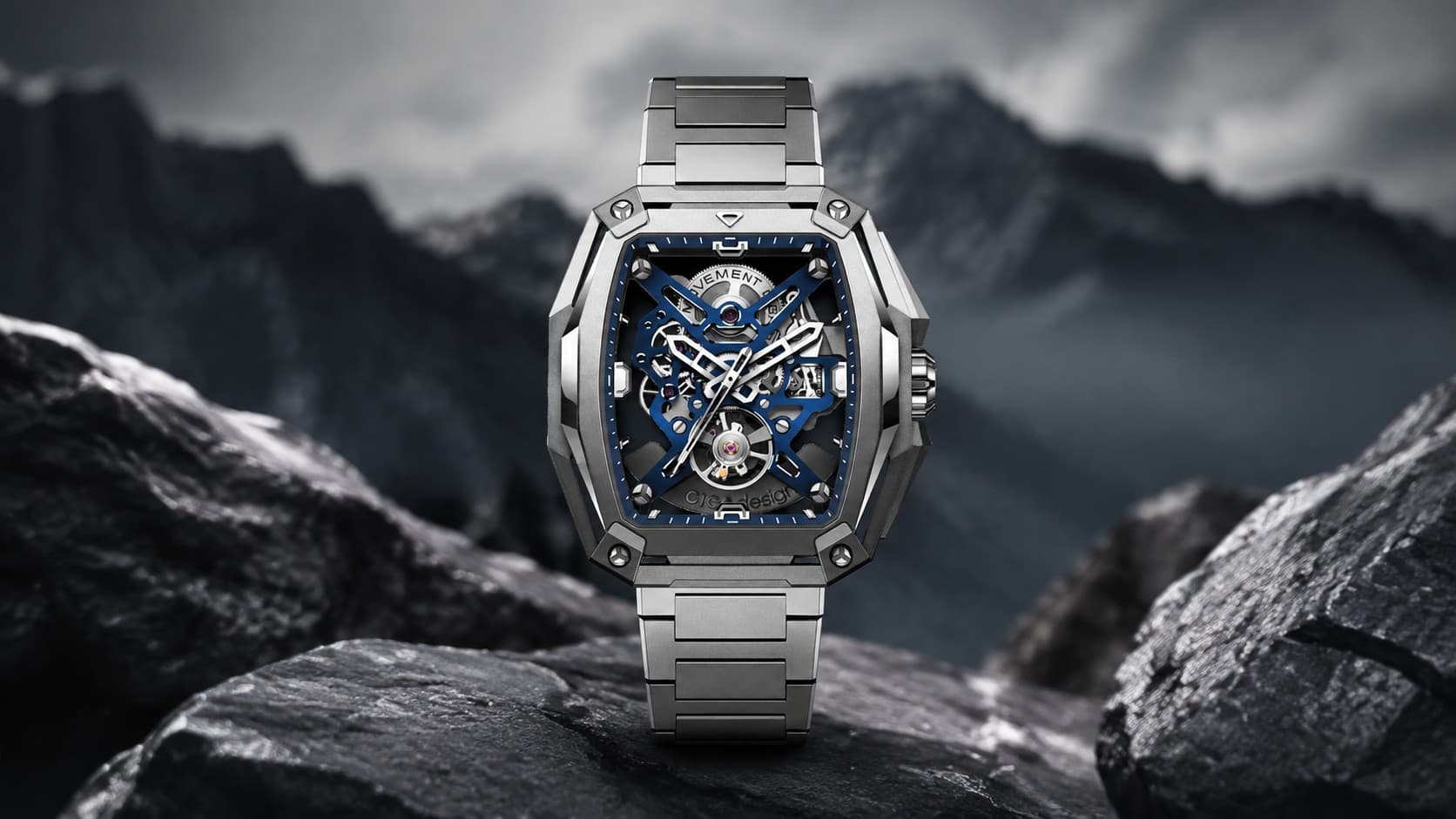
CIGA Design watches suit buyers who value distinctive design and mechanical transparency over traditional watchmaking heritage. The brand doesn’t have a century of history behind it, and it won’t carry the same resale reputation as Rolex or Omega. What it does offer is real automatic and tourbillon movements, unusual case engineering, and design risks that bigger brands rarely take.
CIGA Design backs its watches with a two-year warranty from the date of purchase, covering defects in materials and workmanship, plus a 15-day return window on most direct purchases. Warranty coverage for water resistance depends on the crown being properly screwed down or sealed during use, and leaving it unsealed while the watch gets wet can void that part of the coverage.
The trade-off is practical daily use. Watches like the Blue Planet aren’t built for a quick glance to check the time; the unconventional display takes a bit of learning. Larger case sizes, like the Blue Planet’s 46mm, also won’t suit every wrist, even with a lugless design that helps it wear smaller. Buyers who want a watch that’s easy to read at a glance and blends into a formal outfit may find CIGA Design’s more artistic pieces a poor match for that need. For a conversation-starting watch with genuine mechanical substance underneath, the brand has few real competitors at its price point.
Frequently Asked Questions
Is CIGA Design a real watch brand?
Yes. CIGA Design is a legitimate watch brand founded in Shenzhen, China, in 2016. It has won recognized international design awards, including the Red Dot Award, the iF Design Award, and a category win at the Grand Prix d’Horlogerie de Genève in 2021, one of the most respected competitions in the watch industry.
Where are CIGA Design watches made?
CIGA Design designs its watches in-house and manufactures them using a mix of components sourced from China, Japan, and Switzerland. Many models use automatic and tourbillon movements built by Sea-Gull, a well-established Chinese movement manufacturer, customized to CIGA Design’s specifications.
What is CIGA Design’s most famous watch?
The Blue Planet, part of the Series U collection, is CIGA Design’s most famous watch. It won the Challenge Watch Prize at the 2021 GPHG, making CIGA Design the first Chinese brand to win an award at the event, and its Earth-themed dial with a single rotating pointer remains the brand’s signature design.
Are CIGA Design watches good quality for the price?
For the price, CIGA Design watches use genuine automatic or tourbillon mechanical movements, sapphire crystal on many models, and durable case materials like titanium, DLC-coated steel, and bioceramic. They also come with a two-year warranty against manufacturing defects. Reviewers have generally praised the fit and finish relative to cost, though buyers should expect a shorter service history and warranty network compared to long-established Swiss brands.
How do I read the time on a Blue Planet watch?
The Blue Planet uses a single compass-shaped pointer instead of separate hour and minute hands. The outer ring shows minutes and rotates, while the inner ring shows hours and stays fixed, so the pointer’s position relative to both rings tells the full time. It takes a bit of practice compared to a standard three-hand watch, but most owners adjust within a few days.
Conclusion
CIGA Design earned its reputation the hard way, by winning an internationally respected design competition rather than relying on decades of heritage. Its strength lies in mechanical creativity: single-pointer timekeeping, fully exposed skeleton movements, self-developed tourbillon calibers, and case materials like bioceramic and titanium, all offered at prices far below comparable Swiss competitors. Anyone drawn to watches as design objects rather than status symbols will find a genuine, award-backed option here, whether that’s an entry-level Series Z skeleton or a flagship Blue Planet.