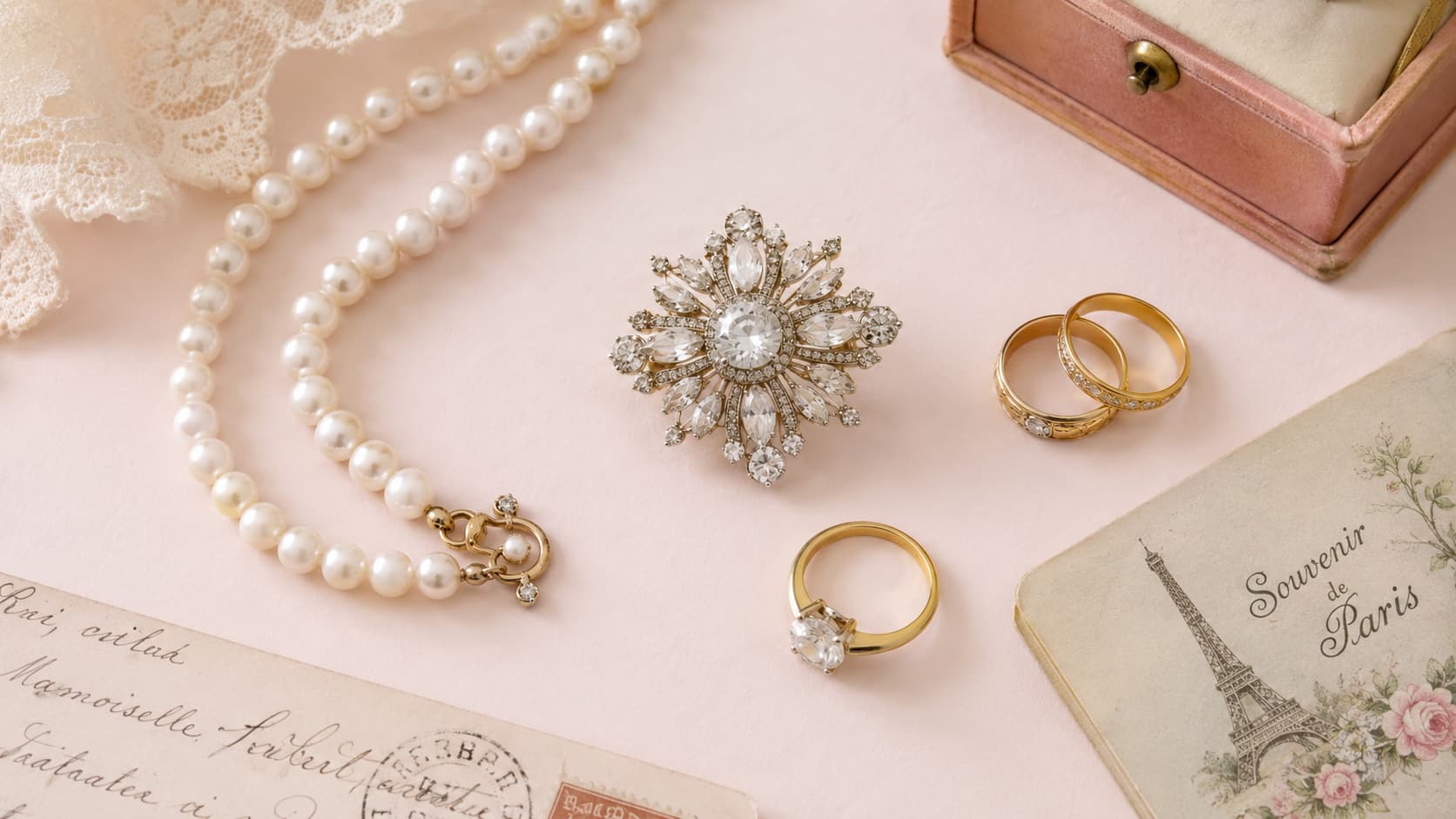
The 1950s was a decade when jewelry stopped being just an accessory and became a full-on symbol of hope. After years of war and rationing, people finally had money to spend again, and they spent it on looking polished, put-together, and glamorous. Hollywood stars like Audrey Hepburn, Marilyn Monroe, and Grace Kelly showed the world what elegance looked like, and everyday women wanted a piece of that sparkle for themselves. The result was a decade packed with pearls, gold, sparkling rhinestones, and jewelry sets so coordinated they looked like they belonged in a magazine spread.
Why the 1950s Changed Jewelry So Much
The short answer is money and mood. World War II had just ended, factories that once made military supplies switched back to making consumer goods, and wages went up across the United States and much of Europe. That combination of extra cash and a craving for optimism sent people straight toward jewelry counters.
Before the war, jewelry had often been simple out of necessity. Metal and gemstones were expensive, and many families didn’t have spare income for extras. Once the economy bounced back, jewelry became one of the easiest ways to show that things were finally good again. Designers responded with pieces that felt intentionally cheerful and refined, moving away from the plainer, more practical styles of the previous decade.
Fashion played a huge role too. Christian Dior’s “New Look,” first shown in 1947 with his Corolle collection, brought back a nipped-in waist and a full skirt after years of boxy, fabric-rationed wartime clothing. That hourglass shape became the blueprint for the entire decade, and jewelry followed its lead. Pieces were designed to highlight a defined waist and a feminine silhouette rather than compete with it, which is one reason brooches, fitted necklaces, and delicate earrings suited the era so well.
Why Pearls Ruled 1950s Fashion
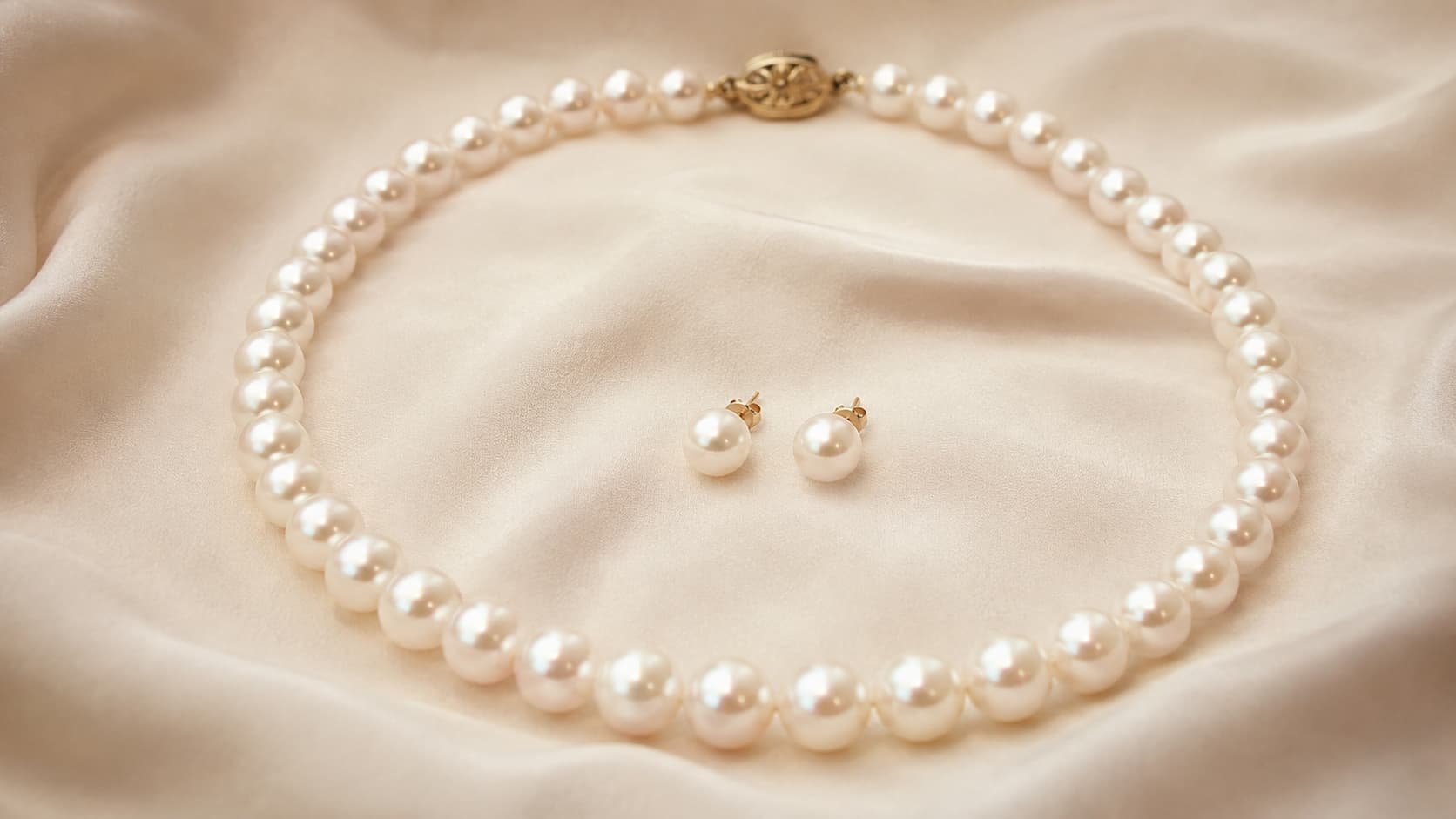
If there’s one gem that defines the 1950s, it’s the pearl. A single strand of pearls with a matching stud earring was considered the standard, polished look for almost any daytime outfit, from tailored suits to simple day dresses.
Pearls were so central to 1950s style that fashion writers of the era treated them as a basic wardrobe requirement, not a luxury.
Pearls came in more than just classic white, too. Cream, grey, champagne, and even soft yellow pearls were all popular because they could be matched to an outfit or a woman’s skin tone. Necklace lengths varied a lot. Choker-length single strands, sitting right at the base of the neck, were the height of daytime fashion, while by the middle of the decade, longer waist-length pearl necklaces became a striking evening trend, often worn wrapped or doubled for extra drama.
Not every pearl was real, and that was completely fine by 1950s standards. Faux pearls, made from glass or plastic beads coated to mimic a real pearl’s glow, had already been popularized in earlier decades and remained hugely popular because they let women wear multiple strands at once without the expense of genuine pearls. Multi-strand faux pearl necklaces, sometimes bundled together in three or four rows, became a signature look of the decade alongside the classic single strand.
Why Gold Replaced Silver in the 1950s
Warm-toned yellow gold was the dominant metal setting of the decade, with rose gold showing up often too, especially paired with rubies and other warm-colored stones. This was a shift away from the platinum and white metal looks that had been popular in earlier decades.
Jewelers also experimented with texture during this period. Instead of smooth, polished gold, pieces started showing up with visibly textured surfaces that caught the light differently than a flat finish would. This textured gold trend gave rings, bracelets, and necklaces a richer, more dimensional look compared to the flatter metalwork of previous eras.
How Sparkly Rhinestones Took Over the 1950s
Around 1955, the crystal company Swarovski partnered with fashion house Christian Dior to create a coated rhinestone known as “Aurora Borealis,” named after the Northern Lights because of its rainbow shimmer. It quickly became one of the most recognizable jewelry finishes of the decade.
The coating was applied to the back of a rhinestone or glass bead and created a shifting, iridescent glow that looked different depending on the angle of the light. Because the technique wasn’t introduced until 1955, jewelry historians and collectors today use Aurora Borealis stones as a handy clue for dating vintage pieces. If a costume jewelry item has that rainbow shimmer, it almost certainly wasn’t made before the mid-1950s.
The finish started out as an exclusive feature of Dior’s own jewelry line, but it didn’t stay exclusive for long. Swarovski soon licensed the coating to other costume jewelry manufacturers, and brands like Trifari, Schiaparelli, Coro, and Eisenberg all began working Aurora Borealis stones into their own designs. That’s a big part of why the effect became such a defining look of the era rather than a one-brand novelty. Early Aurora Borealis stones leaned toward bluish tones, and it took a few years of refinement before the wider rainbow of colors people associate with the finish today became available.
How Matching Jewelry Became Popular
A “parure” is a matching jewelry set, usually including a necklace, earrings, and sometimes a bracelet or brooch, all designed with the same stones and style. In the 1950s, wearing a full matching set was considered the well-groomed, coordinated look that fashionable women aimed for.
This obsession with matching wasn’t limited to fine jewelry. Costume jewelry brands made affordable parures so that women without a big budget could still achieve the same polished, put-together effect. Owning a few complete sets in different colors let someone match their jewelry to nearly any outfit in their closet.
How Charm Bracelets Became Trendy
The trend traces back to the 1940s, when it became common for soldiers stationed overseas to mail small charms home as keepsakes marking where they’d been. By the 1950s, women had turned that wartime habit into a full-blown craze, collecting charms that represented trips, milestones, hobbies, and memories.
What made charm bracelets special was how personal they were. Two bracelets could look completely different because every woman built hers around her own life. A tiny heart might mark an anniversary, while a small ship or landmark charm might commemorate a vacation. It turned a piece of jewelry into something closer to a wearable scrapbook.
Handmade Silver Jewelry Had a Moment
Not every 1950s trend was about polish and sparkle. Running alongside the pearls and rhinestones was a quieter, artsy movement known as modernist studio jewelry, built around handcrafted, mostly silver pieces with clean lines, geometric shapes, and a minimalist look.
This trend grew out of fine artists getting curious about jewelry as a medium. In the years leading into the 1950s, figures like Man Ray, Salvador Dalí, and Georges Braque had all experimented with designing jewelry, treating it as a legitimate branch of fine art rather than just an accessory. That opened the door for independent studio jewelers to prioritize personal creativity over flashy materials.
One of the best-known names from this world is Sam Kramer, an American jeweler whose work leaned into the strange and sculptural. He used unconventional materials, including taxidermy glass eyes, moose teeth, buttons, and rough gemstone fragments, set into silver to make pieces that were closer to wearable art than traditional jewelry. While it never rivaled pearls or parures in mainstream popularity, this handmade, artist-driven approach to jewelry-making laid groundwork that later influenced studio and art jewelry movements for decades afterward.
Cocktail Rings and Colored Gemstones Took Over Evenings
The rise of cocktail parties in the post-war years created demand for bold, eye-catching rings meant to be noticed across a room. These cocktail rings often featured large clusters of stones and dramatic settings, a big contrast to the smaller, more restrained rings worn during the day.
Diamonds remained the top choice for engagement rings, usually cut in round or marquise shapes, but colored gemstones had a real moment in evening jewelry. This wasn’t an accident of taste alone. De Beers had launched its now-famous “A Diamond is Forever” advertising campaign in 1947, right at the start of the decade, and it played a real part in cementing diamonds as the expected choice for an engagement ring during this era. Rubies, emeralds, and sapphires were all popular for cocktail rings and statement necklaces, giving women a way to add a pop of color to their all-black or all-white evening outfits.
Brooches Were a Wardrobe Must-Have
A well-dressed woman in the 1950s almost always had a brooch somewhere on her outfit, whether pinned to a lapel, a collar, or the waistline of a fitted dress. Brooches were valued because they could highlight the era’s popular hourglass silhouette without competing with it.
Floral designs were especially common, built up in layers of metal to suggest petals and leaves, then finished with small pavé-set stones for extra sparkle. Because brooches were so versatile, a single piece could be moved from a jacket to a scarf to a handbag depending on the occasion, which made them a practical favorite as well as a stylish one.
Costume jewelry brands leaned hard into this trend with playful, collectible designs. Trifari became known for whimsical fruit and vegetable-shaped brooches alongside its signature crown pins, while Coro produced “duette” brooches, clever two-piece designs that could be worn together as one large brooch or split apart and worn as two separate clips. Both remain firm favorites with vintage jewelry collectors decades later.
Clip-On Earrings Became the Standard
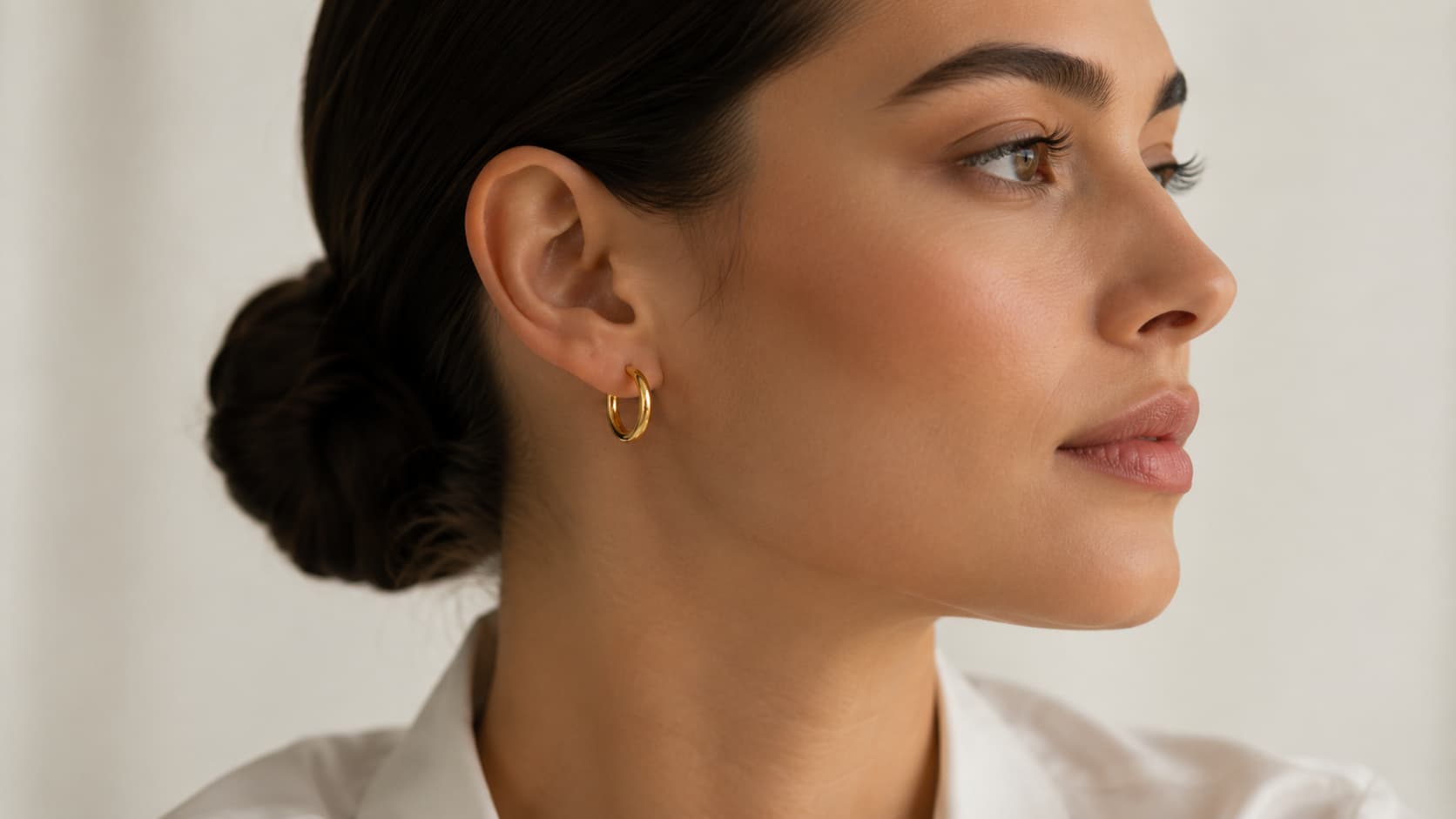
Clip-on earrings were extremely popular in the 1950s, largely because ear piercing wasn’t nearly as common or as socially accepted as it is today. Clip-ons let women wear bold, eye-catching earring styles without needing pierced ears at all.
This mattered because earrings during this decade were rarely subtle. Even though pearls dominated daytime looks, evening earrings could be much bigger and more decorative, often matching the rhinestones or gemstones used in a woman’s necklace or brooch as part of a coordinated set.
Atomic Design Brought a Futuristic Look
The 1950s was also the beginning of the space race, and that fascination with rockets, atoms, and the cosmos showed up in jewelry design. Starburst and “atomic” motifs, featuring radiating spikes, orb-like centers, and abstract sprays of diamonds, became a genuinely futuristic-looking trend within an otherwise classic, feminine decade.
These designs stood out because they leaned into geometry and movement rather than florals or traditional shapes. A starburst brooch or cocktail ring could sit right next to a set of classic pearls in the same jewelry box, showing just how many different styles were coexisting during this era.
Costume Jewelry Became Truly Fashionable
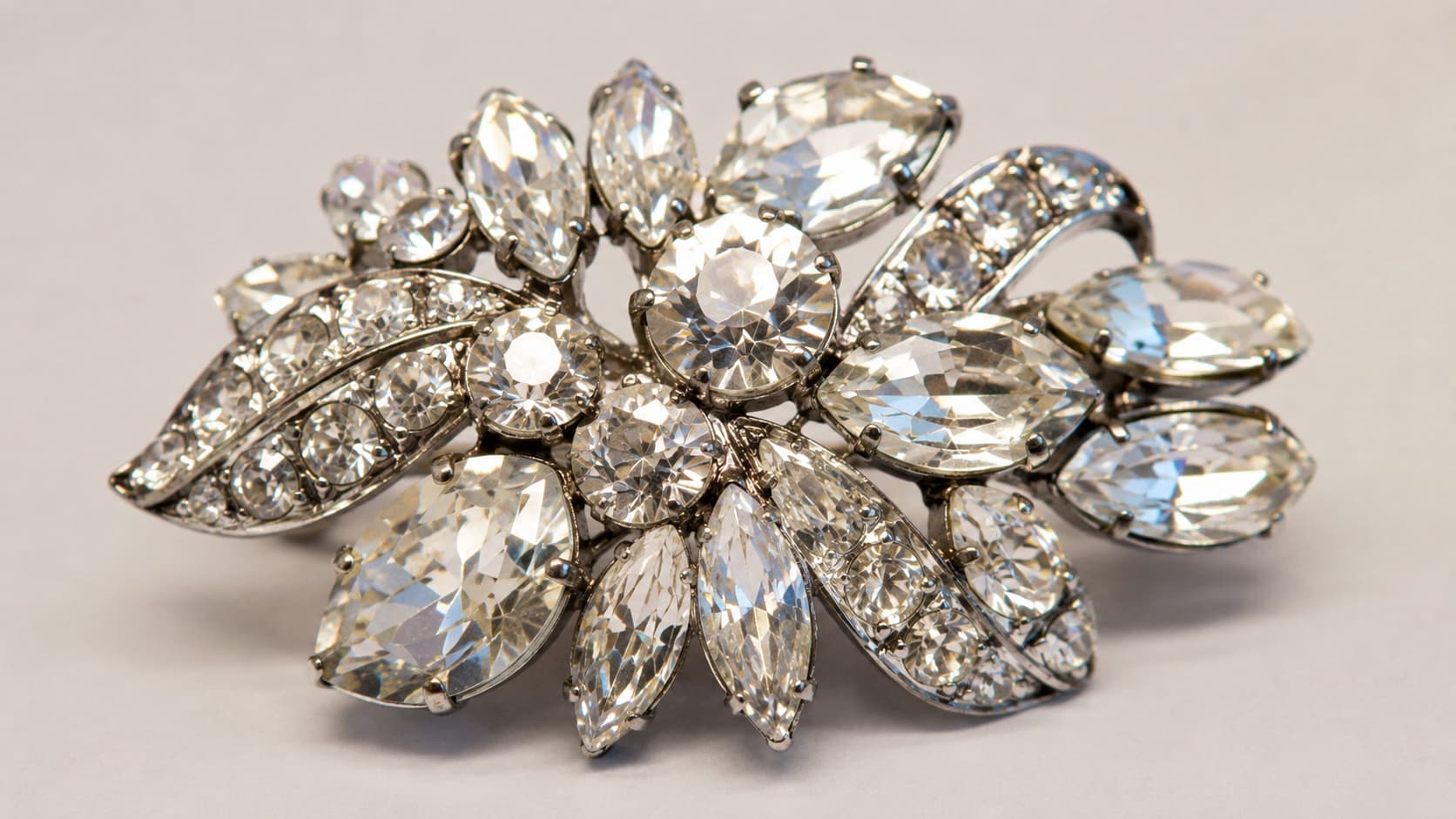
Before the 1950s, costume jewelry, meaning jewelry made from non-precious materials like glass, rhinestones, and base metals, was often looked down on as a cheap stand-in for the real thing. That changed fast once designers started treating it as a legitimate fashion category of its own.
Rising incomes meant more women could afford jewelry in general, and costume pieces let them experiment with bold colors, big statement designs, and trend-driven looks without the cost of fine jewelry. Brands leaned into this shift by producing well-made, well-designed costume pieces that were meant to be stylish on their own terms, not just imitations of fine jewelry.
A handful of manufacturers came to define this golden era of costume jewelry, and their names are still well known among collectors today:
- Trifari – led by designer Alfred Philippe, a former Cartier designer, known for crown pins and novelty brooches
- Coro – one of the largest costume jewelry makers of the era, famous for duette brooches and matching sets
- Miriam Haskell – known for intricate, handmade pieces featuring faux pearls and filigree metalwork
- Schiaparelli – founded by designer Elsa Schiaparelli, known for bold, unconventional designs
- Weiss – recognized for exceptionally sparkly, high-quality rhinestone work
Many of these companies used top-tier materials, including genuine Swarovski crystal, and hired skilled designers away from fine jewelry houses. That’s exactly why so many signed 1950s costume pieces are still actively collected and traded today, decades after they were made to be an affordable alternative.
Lucite Added Color and Fun to Jewelry
Not everything sparkled with rhinestones or gleamed in gold. A big part of plastic jewelry’s story in the 1950s belongs to Lucite, a lightweight, colorful acrylic that manufacturers used to make bangles, earrings, and necklaces at a fraction of the cost of metal and stone.
Two Lucite styles stood out. “Moonglow” pieces had a soft, pearly glow built into the plastic itself, making them a cheap but convincing stand-in for moonstone. “Confetti” pieces went the opposite direction, with tiny flecks of glitter or even small seashells suspended right inside clear plastic beads and cabochons. Trifari even used clear Lucite for the bellies of its whimsical “Jelly Belly” animal brooches, giving little gold-plated frogs, poodles, and birds a glassy, translucent center. Lucite jewelry was cheap enough for nearly anyone to buy, which made it a fun, low-stakes way to try out bold colors without touching a fine jewelry budget.
How Daytime and Evening Style Differed
One thing that stands out about the 1950s is how clearly jewelry rules shifted between day and night, with each occasion calling for its own materials and scale.
| Occasion | Typical Jewelry | Common Materials |
|---|---|---|
| Daytime | Choker-length pearls, small stud earrings, a single brooch | Yellow gold, faux and cultured pearls |
| Evening | Waist-length pearl ropes, statement cocktail rings, large clip-on earrings | Rhinestones, Aurora Borealis crystal, colored gemstones |
This split wasn’t arbitrary. Daytime looks were meant to feel polished but understated for work, errands, and social calls, while evening looks were designed to catch the light under restaurant and party lighting, which is exactly why bigger stones and sparklier finishes were saved for after dark.
Frequently Asked Questions
What was the most popular jewelry material in the 1950s?
Pearls and yellow gold were the two most defining choices of the decade. Pearls were considered a daily essential for most outfits, while yellow and rose gold were the dominant metal tones used in rings, brooches, and necklaces.
How can I tell if a piece of jewelry is really from the 1950s?
The clearest signs are Aurora Borealis rhinestones, which weren’t produced before 1955, along with matching parure sets, textured gold finishes, and starburst or atomic-inspired shapes. Clasps and findings on the back of a piece are another useful clue for dating, since hardware styles changed over the decades.
Why were charm bracelets so popular in the 1950s?
Charm bracelets let people build a piece of jewelry that told their own personal story, one charm at a time. The trend had grown out of soldiers sending home souvenir charms in the 1940s, and by the 1950s it had become a mainstream way to commemorate trips, milestones, and memories.
What is a parure in jewelry?
A parure is a matching set of jewelry, typically a necklace and earrings, sometimes paired with a bracelet or brooch, all made in the same style and stones. Wearing a full matching set was considered the polished, well-put-together look of the decade.
Are 1950s jewelry styles still popular today?
Yes. Pearl necklaces, statement cocktail rings, and matching jewelry sets have all made repeated comebacks in modern fashion, and vintage 1950s pieces remain highly sought after by collectors for their craftsmanship and unmistakable style.
Conclusion
The 1950s left behind a jewelry legacy built on optimism, polish, and coordination, from pearl strands and gold parures to the shimmer of Aurora Borealis rhinestones and the bold geometry of atomic design. What ties all of it together is a simple idea the decade seemed to believe in wholeheartedly: after years of hardship, looking put-together wasn’t vanity, it was a celebration. That’s why so many of these styles, especially pearls, matching sets, and statement rings, still feel timeless enough to wear today.