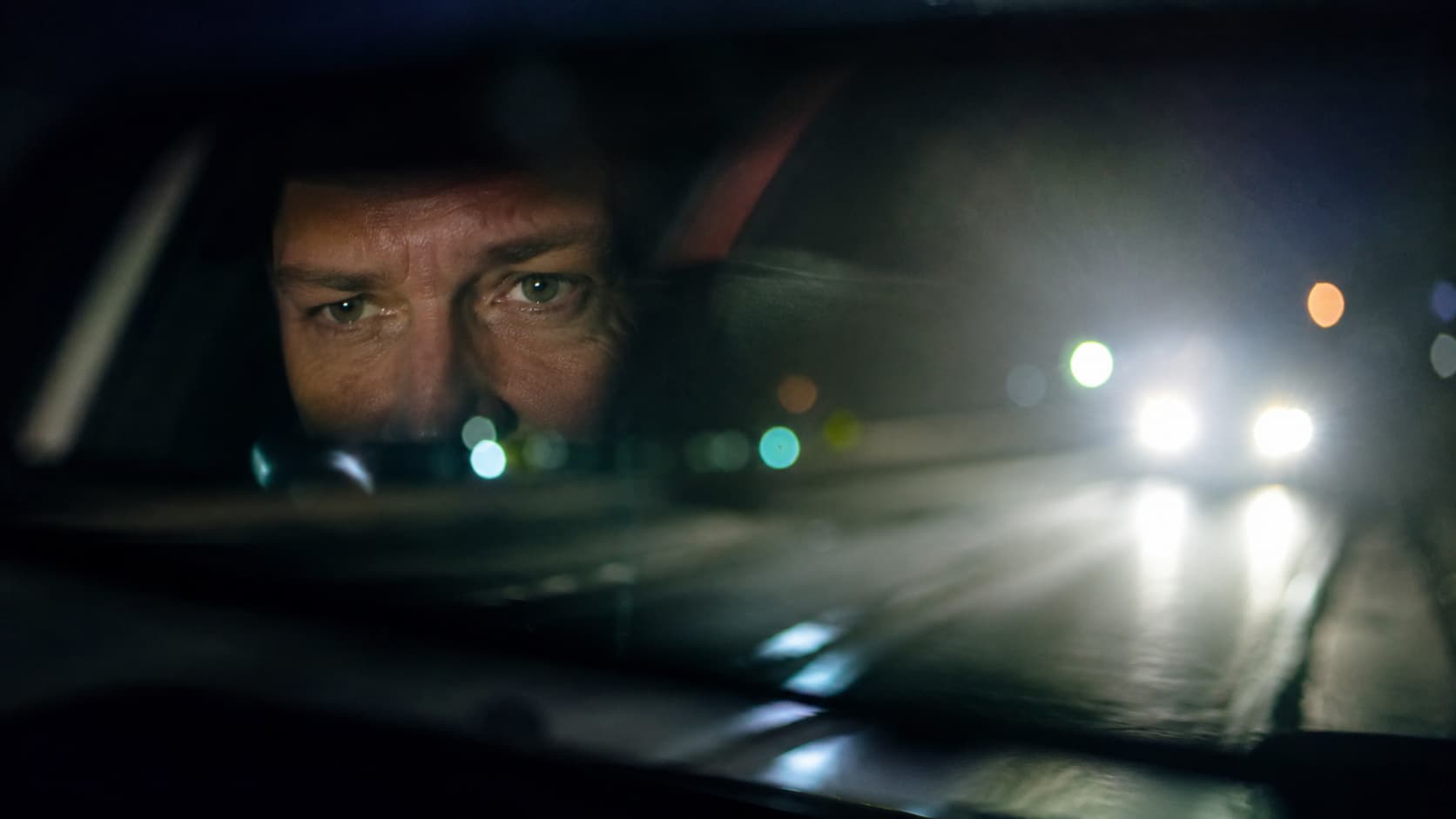
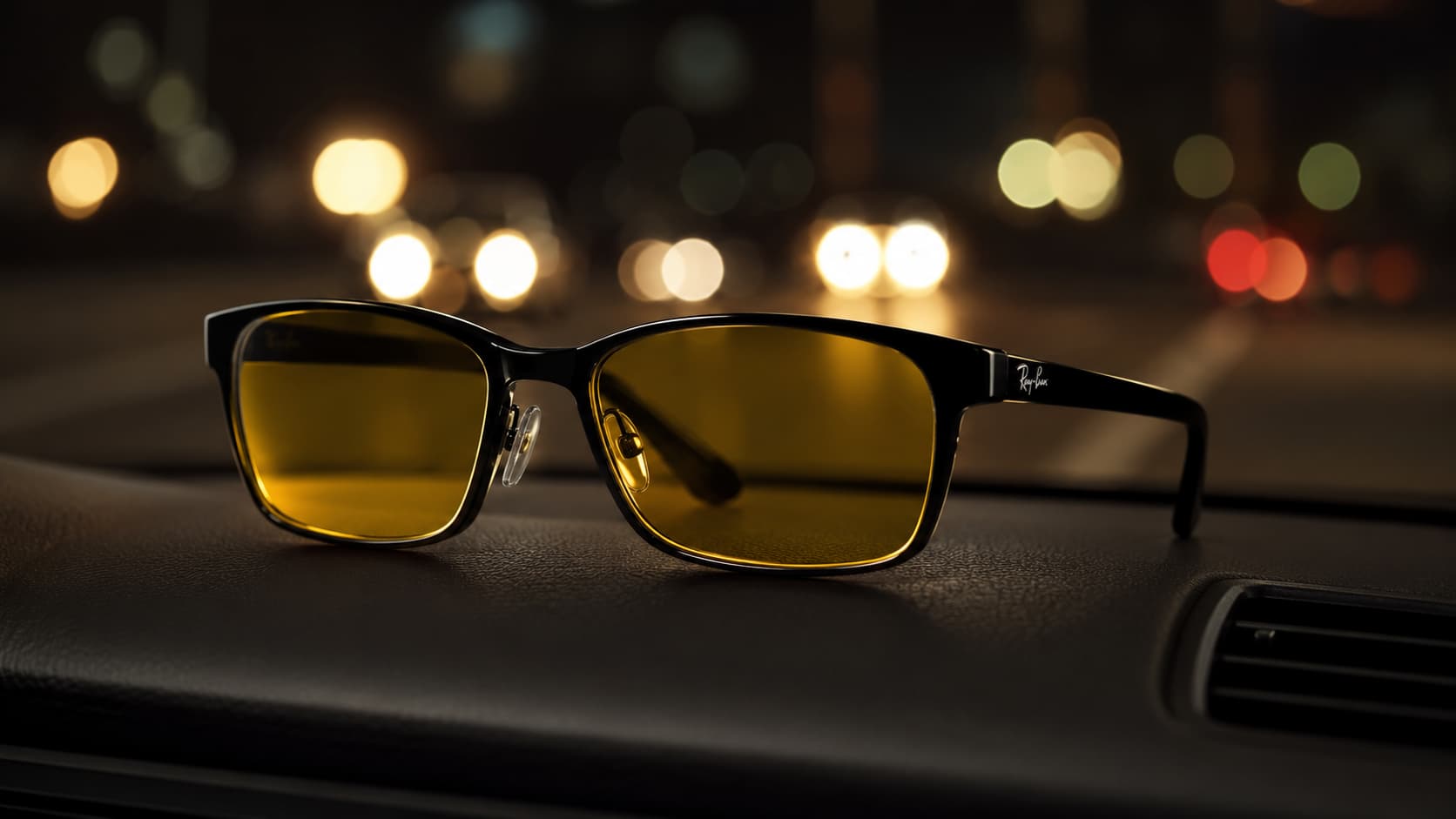
Driving after dark can feel harder than it should be. Headlights bloom into starbursts, street signs blur, and everything outside your windshield seems a little murkier than it did an hour earlier. Somewhere along the way, a whole category of eyewear showed up promising to fix all of that: yellow-tinted “night-driving glasses,” sold online and in gas stations with big claims about cutting glare and sharpening your view of the road. The idea sounds reasonable on paper, but reasonable-sounding isn’t the same as true, and eye researchers have actually put these glasses through real tests to find out.
Do Night-Driving Glasses Improve Your Vision at Night?
No — multiple controlled studies have found that yellow-tinted night-driving glasses do not improve visibility, reduce glare, or help drivers spot hazards faster after dark, and in some cases they made things slightly worse. That’s not a matter of opinion or one bad study either. It’s a conclusion researchers have reached more than once using actual driving simulators instead of just asking people how they felt.
The most cited study came out of the Schepens Eye Research Institute, affiliated with Harvard Medical School, and was later published in the journal JAMA Ophthalmology. Researchers put 22 people through nighttime driving simulations, testing three different commercial brands of yellow-lens glasses against a pair of plain clear lenses. Most participants were in their late twenties, with a smaller group in their seventies added to see whether age changed the results. Each person ran through eight different driving scenarios, some with simulated headlight glare turned on and some without, while researchers timed how quickly they spotted a pedestrian standing in the roadway wearing either a navy or an orange shirt.
The result: lens color made no meaningful difference in how fast people noticed the pedestrian, in any lighting condition. Yellow lenses didn’t cut down glare from headlights either, and in a few scenarios, reaction times were actually a touch slower with the tinted glasses on than with clear ones.
The same study also revealed something worth paying attention to about glare itself, separate from lens color entirely. When the simulated headlight glare was switched on, older participants’ response times slowed by a full 1.5 seconds compared to their glare-free runs, while younger participants only slowed by about 0.3 seconds. Neither group’s yellow lenses did anything to close that gap. Age, not eyewear, was the real factor driving how much glare affected reaction time.
Why Do People Think Night-Driving Glasses Work?
Because yellow and amber tints boost contrast, which your brain reads as “brighter” even when your eyes are technically taking in less light. This is a genuine optical effect, not a trick of marketing — yellow lenses filter out a portion of blue light, and doing so can make edges and shapes stand out more crisply against their background.
The catch is that this contrast boost works best when there’s already plenty of light around, like on an overcast afternoon. At night, there isn’t much light to begin with, so any tinted lens — yellow, blue, or otherwise — simply blocks out some of the little light you do have. Researchers involved in these studies have pointed out that wearing a tinted lens after dark is functionally similar to putting on sunglasses to drive at night. It might feel more comfortable in the moment, but comfort and clarity aren’t the same thing, and the perceived brightness can trick a driver into feeling more confident than their actual vision supports — which researchers consider the riskiest part of the whole effect.
This style of lens actually started out in a completely different sport. Yellow and amber tints were originally developed for hunters and target shooters, who still use them today because they make a bird or clay pigeon stand out more clearly against an overcast sky. Somewhere along the way, marketers borrowed that same lens and repackaged it as a driving accessory, often sold through mail-order ads making bold claims about night vision. Regulators eventually stepped in over exactly this kind of marketing: in 1997, the U.S. Federal Trade Commission took action against a company that had advertised its yellow-lens glasses as making night driving safer, fining the company and requiring it to notify customers that those safety claims weren’t backed by evidence.
Could Any Tinted Lenses Help With Night Driving?
Tinted lenses aren’t the answer, but the coating on a lens can matter more than its color. An anti-reflective (AR) coating, applied to a clear lens, cuts down on the internal reflections and halos that show up when light hits the front and back surfaces of a lens at certain angles — which is a real source of extra glare for people who already wear prescription glasses at night.
What’s the Difference Between a Tint and a Coating?
| Feature | What It Does | Helps at Night? |
|---|---|---|
| Yellow/amber tint | Boosts contrast, blocks some blue light | No — reduces total light reaching the eye |
| Polarized lens | Cuts glare off flat, reflective surfaces (water, wet roads) | Not recommended for driving; can obscure LCD dashboard displays |
| Anti-reflective coating | Reduces internal lens reflections and halos | Can help, especially for glasses-wearers |
| Clean, scratch-free lens | Removes light-scattering surface damage | Yes, in a very practical way |
An anti-reflective coating works differently from a tint. Instead of blocking light on its way in, it’s a microscopically thin layer applied to the lens surface that cuts down on the light bouncing around inside the lens itself — the same bouncing that creates those ghostly halo rings around streetlights and headlights for some glasses-wearers. Because it doesn’t dim the overall amount of light reaching your eye, it doesn’t come with the same trade-off a tint does.
Polarized sunglasses are often confused with night-driving glasses, but the two work very differently. Polarized lenses are excellent at cutting glare off flat, reflective surfaces like water or a wet road during the day, since they filter out light waves vibrating in one particular direction. That same filtering effect is genuinely unsafe for nighttime driving, though. Polarized lenses darken overall vision at the exact time a driver needs every bit of available light, and they can make it hard to read the polarized LCD screens used on some car dashboards and phone mounts, so they belong in the glovebox for daytime use only.
What Actually Helps You See Better While Driving at Night
The things that make the biggest real difference are unglamorous, but each one addresses a genuine cause of poor night vision instead of just a feeling of glare:
- Clean your windshield and headlights, inside and out. A film of dust or road grime scatters light in every direction, turning a normal headlight beam into a diffuse glow that’s much harder to see through.
- Have your headlight aim checked. Headlights that are angled even slightly too high blind oncoming drivers and contribute to the exact glare problem night-driving glasses claim to solve.
- Keep your regular glasses clean and scratch-free. Smudges and fine scratches scatter light the same way a dirty windshield does, and they’re an easy thing to overlook in a quick glance in the mirror.
- Ask your optician about an anti-reflective coating. If you already wear prescription glasses, this is the upgrade that actually targets glare, without the light-blocking downside of a tint.
- Get your eyes checked regularly. Conditions like early cataracts develop gradually and often show up as worsening night vision years before they’re noticeable during the day, so a routine exam can catch it early.
If your glasses already have an anti-reflective coating and you keep the lenses clean, you’ve covered most of what a specialty pair of “night glasses” claims to offer, minus the tint that actually works against you after dark.
Vision naturally changes with age too. By your fifties, your eyes typically need roughly double the amount of light to see as clearly as they did in your twenties, which is part of why headlight glare feels so much more intense to older drivers. That’s a reason to slow down and give yourself more following distance at night, not a reason to reach for a yellow lens that dims things further.
Frequently Asked Questions
Are night-driving glasses a scam?
Not exactly a scam, since the contrast-boosting effect of yellow tints is real — it’s just misapplied to a situation with too little light for it to help. The glasses do what tinted lenses do; they just don’t do what nighttime driving actually needs.
Do any doctors recommend night-driving glasses?
Eye doctors and researchers who’ve studied them generally advise against wearing tinted lenses of any color while driving after dark, since any tint reduces the total light reaching your eyes when you already have very little to work with.
What should I wear instead if I struggle with headlight glare?
Clear, clean prescription lenses with an anti-reflective coating are the better option if glare from other headlights bothers you. Getting your eyes examined is also worthwhile, since glare sensitivity is sometimes an early sign of a treatable issue like cataracts.
Is it even legal to drive at night wearing tinted lenses?
This depends entirely on where you live. Many places set legal limits on how dark a lens can be for a driver, often described in terms of how much visible light the lens lets through, and some of those rules apply specifically to nighttime driving. Since these limits vary by country, state, or province, and are set locally, it’s worth checking your own region’s traffic or motor vehicle authority rather than assuming a pair of glasses sold as “night-driving glasses” is automatically road-legal everywhere.
Do blue-light glasses help with night driving?
Blue-light glasses are designed for screen use, not driving, and they work on a similar tint-based principle as yellow night-driving glasses. There’s no solid evidence they improve night vision behind the wheel either.
Is it just older drivers who struggle at night, or does everyone?
Everyone’s night vision is somewhat worse than their daytime vision, since the eye simply has less light to work with — but the effect becomes more pronounced with age as the eye’s lens and retina become less efficient at gathering light.
Conclusion
Night-driving glasses are a good example of a product that sounds like it should work and genuinely feels like it works in the moment, while controlled testing tells a different story. The yellow tint that makes daylight contrast pop is the same tint that dims things further when the sun goes down, and the research on this is unusually consistent for a consumer eyewear product. If glare and dim visibility are a real problem on your evening drives, the more reliable fixes are boring but effective: clean lenses, a proper anti-reflective coating if you wear glasses, well-aimed headlights, and a regular eye exam — not a yellow tint that trades away the light you need most.