Almost everyone cleans their sunglasses the wrong way at some point, usually without even realizing it. A quick wipe on a t-shirt, a puff of breath and a rub with a napkin, or a swipe across a paper towel all feel harmless in the moment, but each one can leave tiny scratches behind. Those scratches build up slowly, so by the time the lenses start looking foggy or scuffed, months of small mistakes have usually already added up. The good news is that cleaning sunglasses properly only takes a minute or two once the right order of steps is clear.
Rinse the Lenses First, Before Wiping Anything
The first step is running sunglasses under lukewarm water, not to scrub them, just to rinse them off. Dust, sand, and grit sit on the surface of a lens, and skipping straight to wiping basically drags those hard little particles across the lens like sandpaper.
Lukewarm water matters because water that’s too hot can weaken the coatings that many sunglasses have on their lenses, like anti-reflective or anti-scratch layers. Holding the frame in one hand while letting water run over both the front and back of each lens, along with the frame and hinges, clears out the dirt that likes to hide in those small corners.
Very hard or mineral-heavy tap water calls for bottled or distilled water instead. Hard water can leave behind spots that make lenses look cloudy even after cleaning.
Hinges and nose pads collect their own buildup of sweat, sunscreen, and skin oil, and this grime doesn’t rinse away as easily as dust on the lens. A soft-bristled brush, like an old toothbrush kept just for this job, loosens dirt from those small gaps without any risk of scratching the lens, since the brush stays on the frame rather than the glass or plastic itself. Sunglasses with removable nose pads benefit from having them popped out occasionally for a closer clean, since that’s a spot grime tends to build up unnoticed.
Use Mild Dish Soap, Not Glass Cleaner
A tiny amount of gentle, lotion-free dish soap rubbed on with the fingertips is the safest way to actually clean the lens surface. This works so well because dish soap is designed to break down oils, and the smudges on sunglasses are almost always oil from skin, sunscreen, or fingerprints.
Household glass cleaners, alcohol-based sprays, and anything containing acetone should be kept far away from sunglasses. These products can eat through lens coatings over time, sometimes causing the coating to peel or cloud in patches that can’t be undone. Rubbing the soap gently in small circles with the fingers, covering the entire lens on both sides, then rinsing everything off again with lukewarm water finishes the job.
Dry With a Microfiber Cloth, Not Fabric or Paper
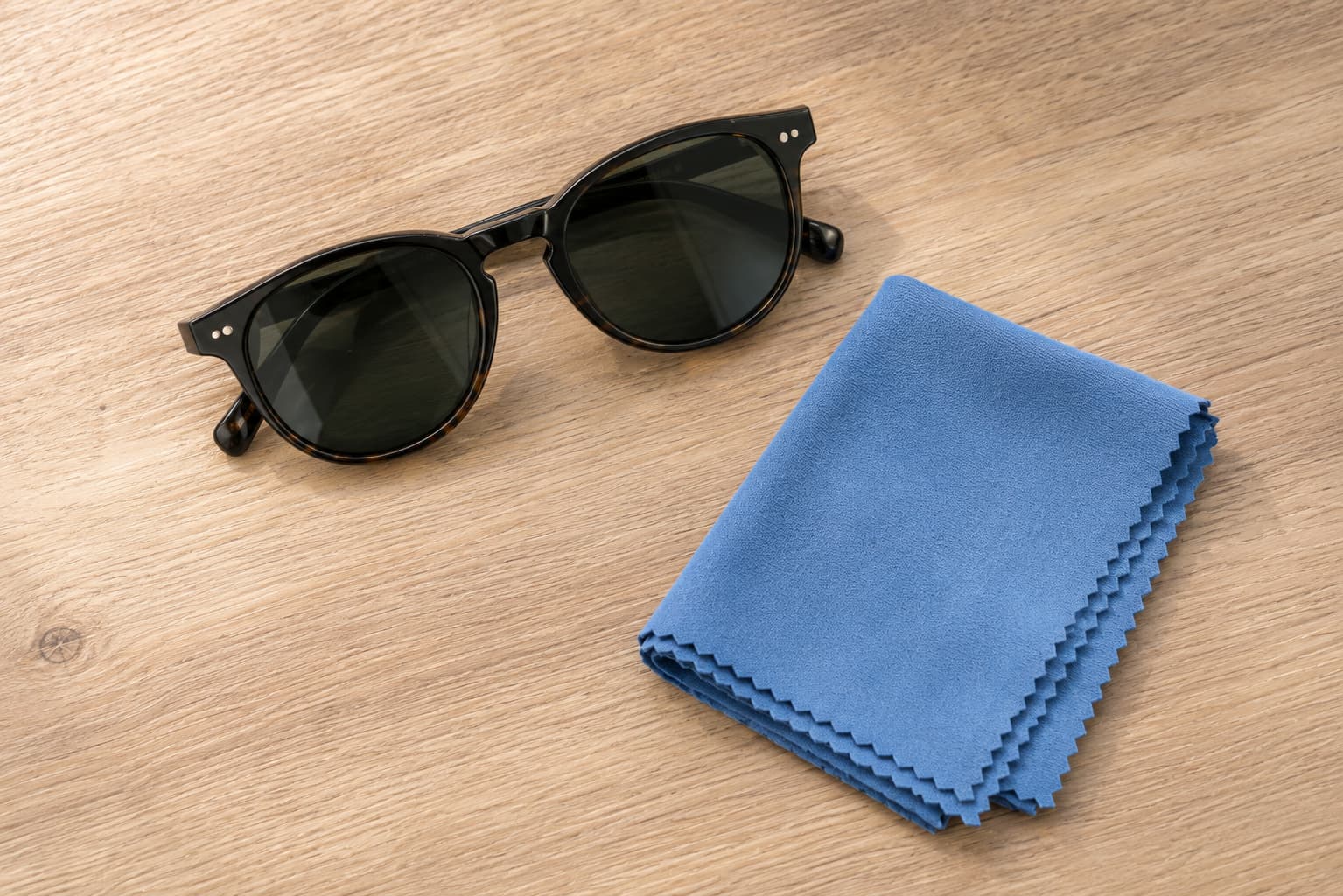
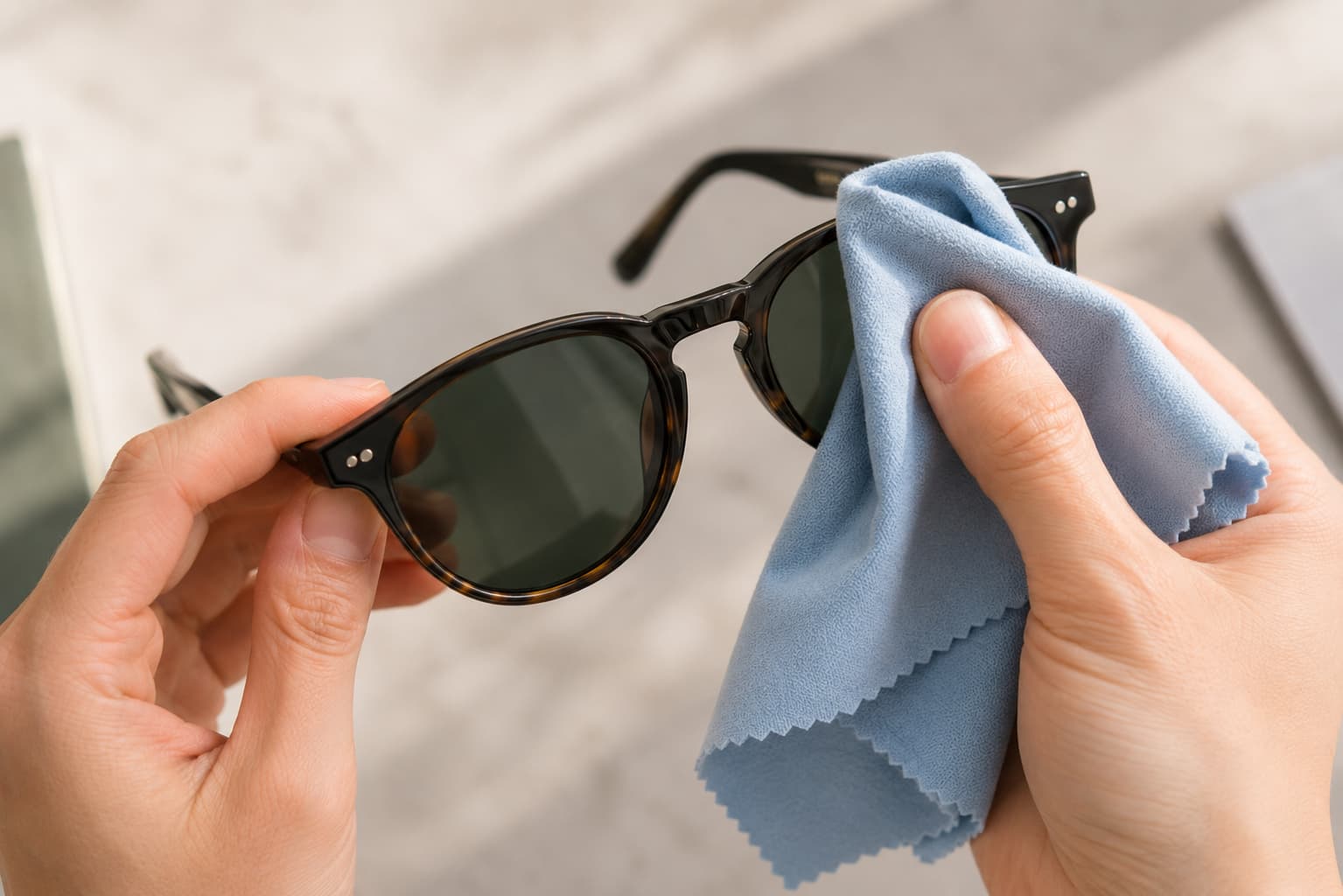
Once the lenses are clean and rinsed, patting them dry with a proper microfiber cloth is the step that prevents almost all scratching. Microfiber cloths are woven from extremely fine fibers that pick up dust and oil without dragging anything across the glass or plastic.
Cotton shirts, tissues, paper towels, and napkins might feel soft to the touch, but under a microscope they’re rough and full of loose fibers. Those fibers, along with any dust already trapped in them, act like fine sandpaper when pressed against a lens. Storing the microfiber cloth somewhere clean, like inside the sunglasses case, and washing it every so often by hand keeps it from building up its own layer of grime that could scratch lenses on the next use.
Why Breathing and Wiping Isn’t Enough
Fogging up a lens with a breath of warm air and wiping it dry might seem like the fastest fix, but it skips the rinsing step entirely, which is the part that actually protects against scratches. Breath alone doesn’t remove grit, so wiping over dry dust with any cloth, even a microfiber one, still carries some risk. It’s fine in a pinch when nothing else is available, but it shouldn’t replace a real cleaning with water and soap.
Does Lens Material Affect How Easily It Scratches?
Yes, some lenses are naturally tougher than others, so the same small mistake can leave a mark on one pair and do nothing to another. Most sunglasses today use polycarbonate or another lightweight plastic, and these materials are soft enough that they scratch fairly easily on their own, which is why manufacturers coat them with a hard, scratch-resistant layer before the glasses ever reach a store.
Glass lenses work the opposite way. Glass is naturally hard and resists scratching well without needing an extra coating, but it’s heavier and far more likely to crack or shatter if the sunglasses are dropped. Either way, the coating or the glass itself is still just a surface layer, and pressing hard with a rough cloth or scrubbing at dried dirt can wear through it over time on any lens material. Following the same gentle rinse-soap-microfiber routine protects both types equally well.
Mirrored or flash-coated lenses need a little extra thought. That reflective finish is an additional thin layer sitting on top of the normal scratch-resistant coating, and it’s noticeably more delicate than a plain tinted lens. It’s not that mirrored sunglasses need different cleaning products, they just show wear faster if the same small mistakes happen, so being consistent about the gentle rinse-and-microfiber routine matters even more on a mirrored pair.
How to Remove Stubborn Smudges and Residue
For dirt that doesn’t come off with soap and water, like dried sunscreen or sticky residue, a specialized lens cleaning solution is the next step up. These sprays are formulated specifically to be safe on coated lenses, unlike general household cleaners.
Spraying a small amount directly onto the lens rather than onto the cloth, then wiping gently with a fresh microfiber cloth, clears up most of what soap and water leave behind. A lens that still looks hazy or streaky after that calls for patience rather than harder scrubbing, since extra pressure is exactly what causes scratches.
At that point it’s worth taking the sunglasses to an optical shop, as many opticians have ultrasonic cleaning machines built for this kind of deep clean. These machines use sound waves to create tiny vibrations in a cleaning solution, which gently shakes grime loose from tight spots like hinges and lens edges without anyone having to scrub or apply pressure at all. It’s a good option every so often for sunglasses worn daily, even if nothing looks obviously dirty on the surface.
Everyday Habits That Scratch Sunglasses
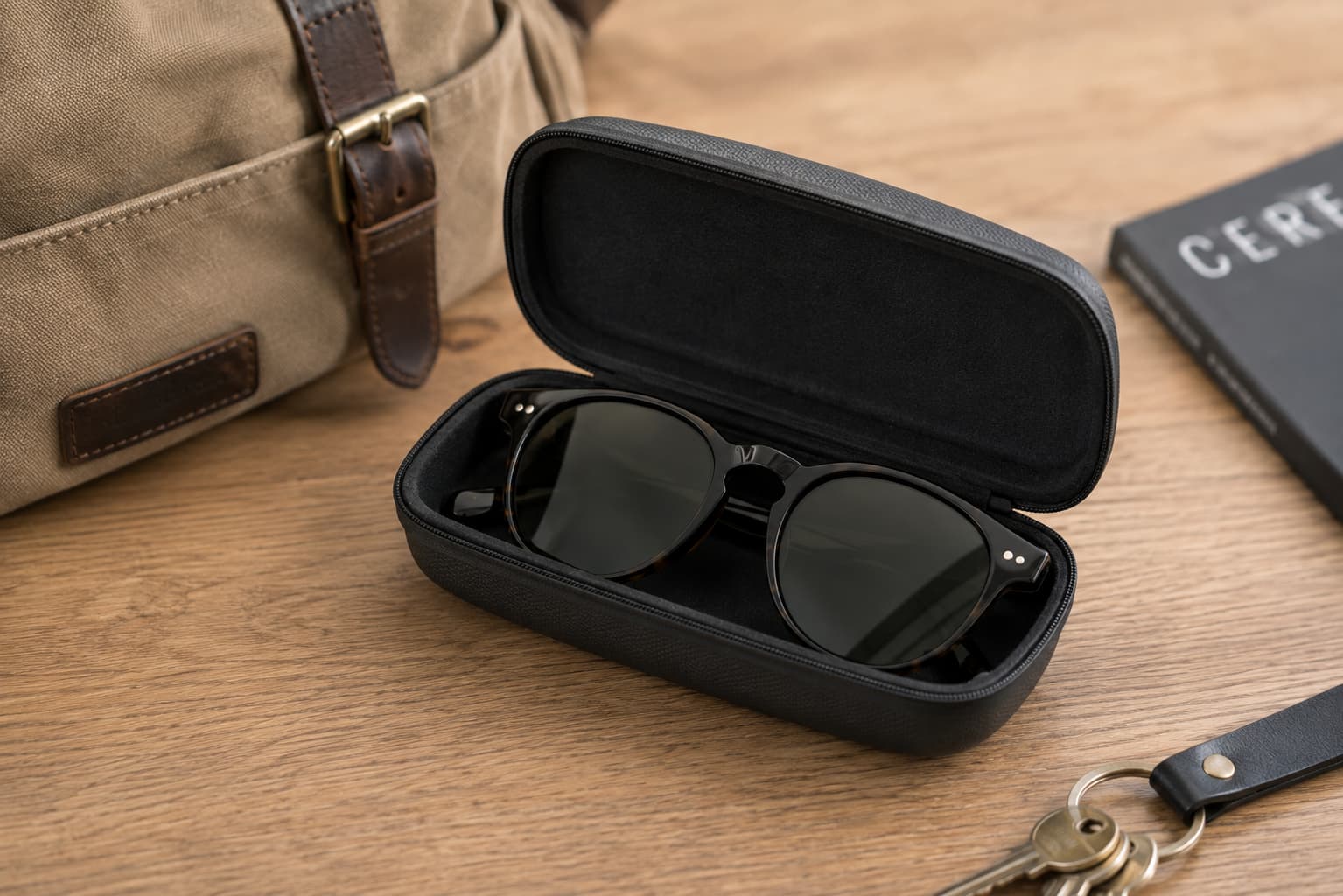
A handful of daily habits, separate from the cleaning process itself, are responsible for most of the scratches people find on their sunglasses.
- Tossing them in a bag or pocket loose — keys, coins, and phones knock against lenses constantly when there’s no case involved.
- Setting them lens-down on a table or counter — even smooth surfaces carry invisible grit that scuffs the coating.
- Leaving them in a hot car — extreme heat can warp frames and stress lens coatings, making them more prone to cracking or peeling.
- Cleaning them with whatever’s nearby — shirts, napkins, and paper towels all count, even if they feel soft.
- Skipping the case entirely — a hard protective case is the single easiest way to prevent scratches when the glasses aren’t on your face.
Storing sunglasses lens-up in a hard case, even for a short break at a restaurant table, prevents the vast majority of everyday scratches before they ever happen.
Frequently Asked Questions
Can I use hand sanitizer to clean my sunglasses?
It’s best to avoid it. Hand sanitizer is alcohol-based, and alcohol can break down anti-reflective and anti-scratch coatings over time, leaving lenses cloudy or peeling. Mild dish soap and water remains the safer choice.
Is it safe to clean polarized sunglasses the same way?
Yes, the rinse, soap, and microfiber cloth method is safe for polarized sunglasses as well. The polarizing filter sits beneath the outer coating, so gentle cleaning won’t affect how well it blocks glare.
Why do my sunglasses look scratched even though I use a cloth every time?
The cloth itself may be the problem if it isn’t a proper microfiber cloth, or if it’s picked up dust and grit from being stored loose in a bag or pocket. Washing microfiber cloths regularly and storing them somewhere clean keeps them from scratching lenses on future use.
Can toothpaste or baking soda remove scratches from sunglasses?
These home remedies are commonly suggested online, but they’re mildly abrasive and can make scratches worse or damage the lens coating further. A true scratch in the coating generally can’t be buffed out safely at home, and an optical shop is the safer option if vision is affected.
How often should sunglasses actually be cleaned?
Rinsing them whenever they’re visibly dirty, and doing a full soap-and-water clean every few days with regular wear, keeps oils and grit from building up. Sunglasses worn at the beach or during workouts benefit from a rinse the same day, since sunscreen, sweat, and salt water can dry onto the lens and become harder to remove later.
Conclusion
Keeping sunglasses scratch-free really comes down to two habits: rinsing before wiping, and drying with a clean microfiber cloth instead of whatever fabric happens to be closest. Everything else, from choosing mild soap over glass cleaner to storing lenses up in a hard case, exists to support those two basics. With that routine in place, a good pair of sunglasses can stay clear and scratch-free for years of regular wear.