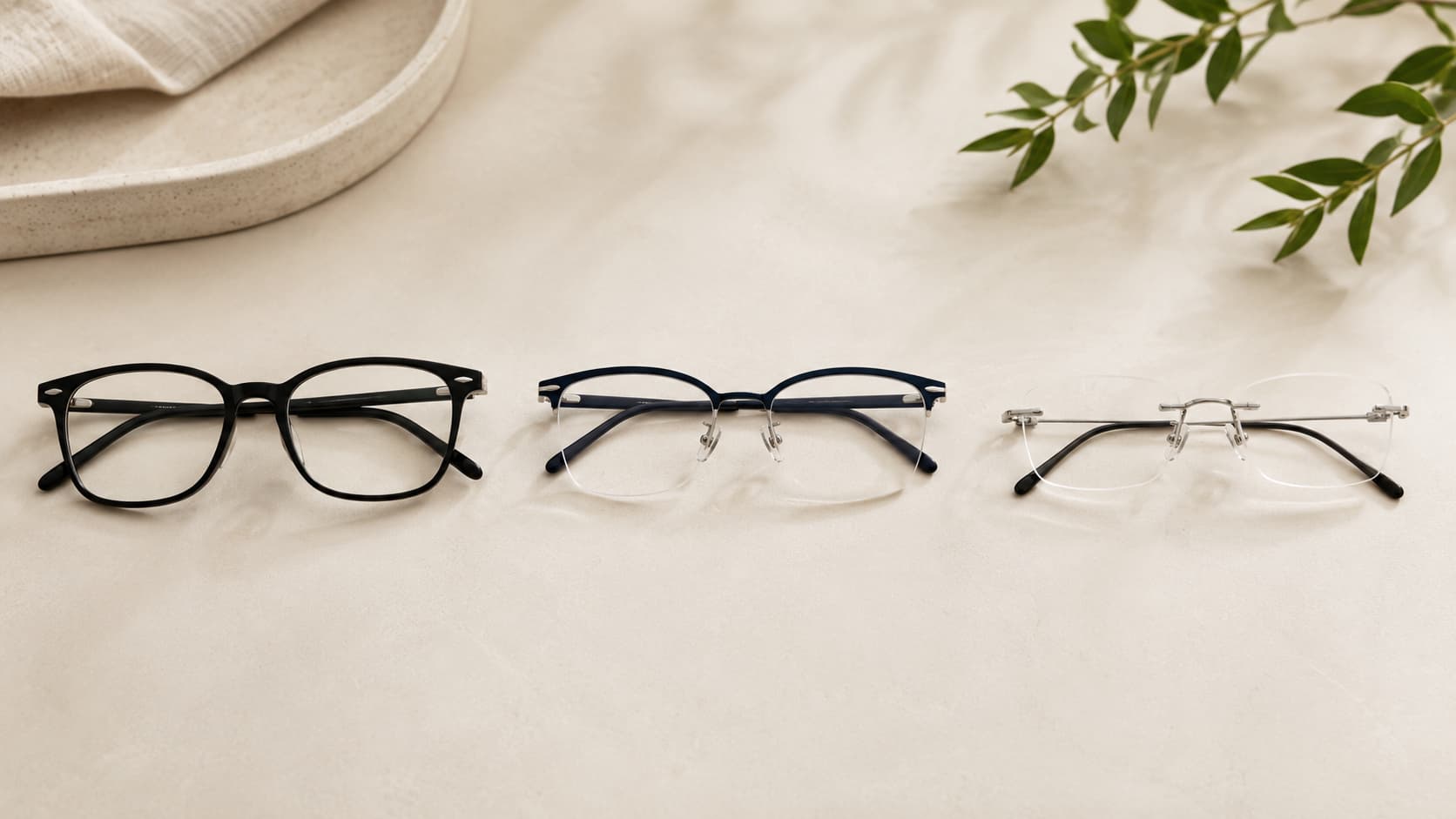

Walk into almost any eyewear shop or scroll through any online store and you will spot a pair of blue light glasses staring back at you, usually with a promise attached: less eye strain, better sleep, healthier eyes. They have become one of the most talked-about accessories of the screen-filled 2020s, worn by office workers, gamers, and kids doing homework on tablets alike. But the popularity of a product does not always match the science behind it, and blue light glasses are a perfect example of a trend where the marketing has moved a lot faster than the research. Understanding what blue light actually is, what these lenses do to it, and what large clinical studies have found is the only way to know whether a pair is worth wearing.
What Is Blue Light?
Blue light is a type of visible light with a short wavelength, roughly between 380 and 500 nanometers, sitting near the high-energy end of the light spectrum humans can see. It comes from the sun in huge amounts, and in much smaller amounts from LED lights, phone screens, computer monitors, and tablets.
Light is measured in wavelengths, and the shorter the wavelength, the more energy it carries. Blue light sits close to ultraviolet light on that scale, which is part of why it earned the nickname “high-energy visible” or HEV light. Sunlight remains by far the biggest source of blue light a person encounters in a normal day. Screens add extra exposure, but according to the American Academy of Ophthalmology, the amount of blue light coming from a phone or laptop is roughly a thousandth of what the eyes take in from a few minutes outside on a sunny day. That comparison matters a lot when weighing how worried anyone should be about screen-based blue light specifically.
What Do Blue Light Glasses Do?
Blue light glasses use special lens coatings or tints designed to filter out a portion of blue light before it reaches the eye. Some lenses look completely clear, others have a faint yellow tint, and the amount of blue light they actually block varies a lot between brands.
There is no single industry standard for how much blue light a pair needs to filter to earn the label “blue light glasses.” Most commercial lenses block somewhere in the 10 to 25 percent range, typically targeting wavelengths around 415 to 450 nanometers, while stronger amber-tinted versions are designed to block a noticeably larger share of that same range. Because there is no regulated benchmark, two pairs marketed the same way can perform very differently, which is one reason results reported by wearers are so inconsistent.
“Blue light glasses” and “computer glasses” are not always the same product, even though stores sometimes use the terms interchangeably. Blue light glasses are built specifically around filtering blue wavelengths, while computer glasses often bundle in other features, like anti-glare coatings or a mild magnification tuned for screen distance, that address different causes of screen fatigue entirely.
Do Blue Light Glasses Really Reduce Eye Strain?
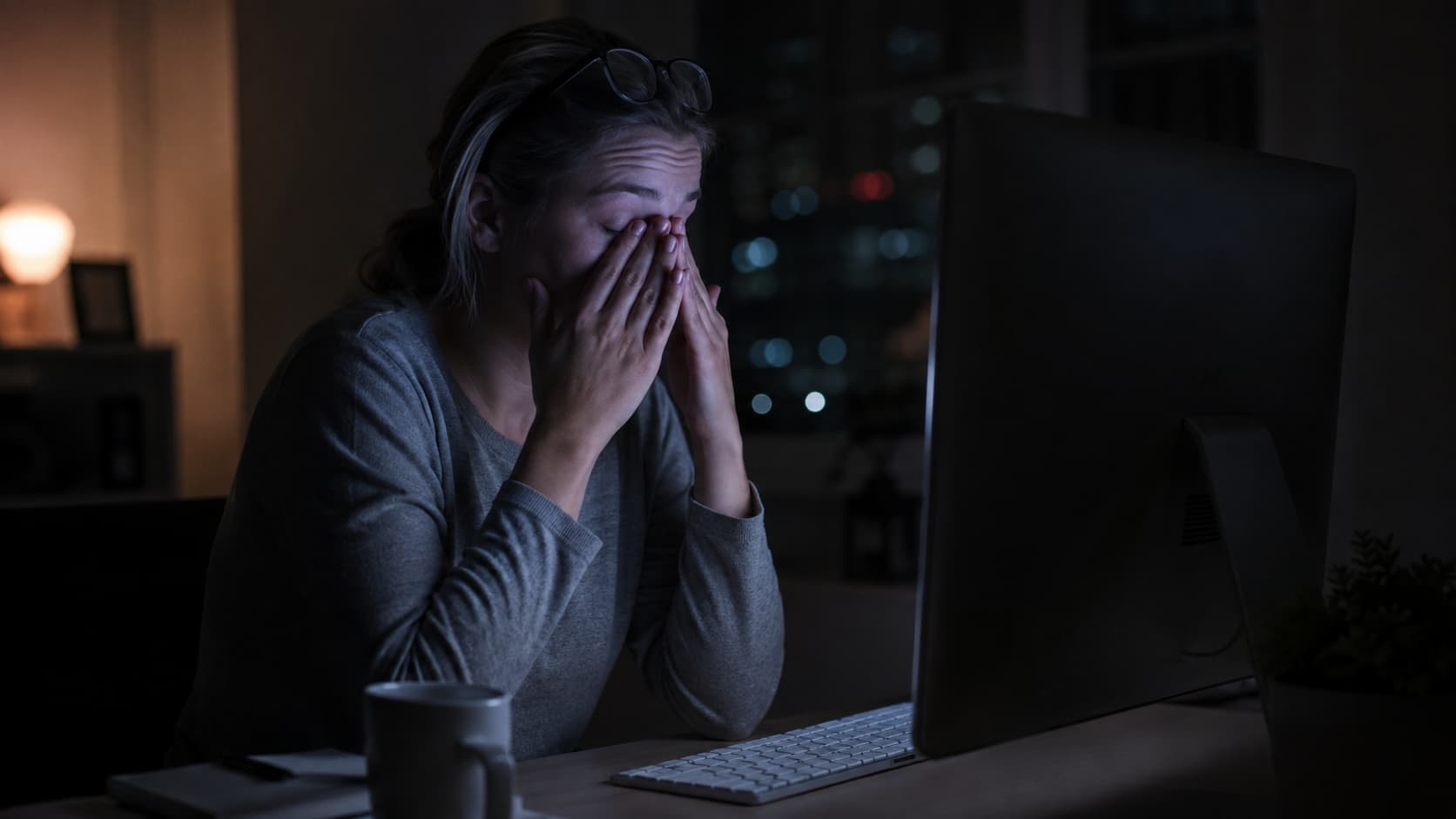
The best available evidence says no, not in any way that shows up reliably in controlled studies. A major 2023 Cochrane review, one of the most trusted forms of medical research because it combines data from many independent trials, looked at 17 randomized controlled trials involving 619 people and found no significant difference in eye strain between people wearing blue light filtering lenses and people wearing regular clear lenses.
Cochrane reviews are considered the gold standard in medical research because they pool results from multiple independent, tightly controlled studies rather than relying on one single trial that could be an outlier.
That does not mean digital eye strain is not real. Symptoms like dry, tired, or blurry eyes after a long day of screen use are common and well documented. Researchers just found that the actual cause is usually not the blue light itself. It comes down to how people use screens: staring at a fixed distance for hours, blinking less often, and not looking away regularly. One detail researchers have highlighted is that people do not necessarily blink less often while using a screen, but the quality of each blink tends to drop, meaning the eyelid does not fully close and spread moisture across the eye the way it should. That is a mechanical habit problem, not a light-wavelength problem, so a tinted lens cannot fix it.
The factors researchers actually link to digital eye strain include:
- Incomplete blinking — the eyelid not fully closing during screen use, drying out the eye’s surface faster than normal.
- Sustained close-up focusing — hours of near-vision work strain the eye muscles responsible for focus and alignment.
- Screen glare and poor lighting — reflections and harsh overhead lighting force the eyes to work harder to see clearly.
- Uncorrected or outdated prescriptions — an eye already compensating for blur will tire faster during long screen sessions.
- Poor ergonomics — a screen positioned too close, too high, or too low adds unnecessary strain over a full day.
Can Blue Light Glasses Improve Sleep?
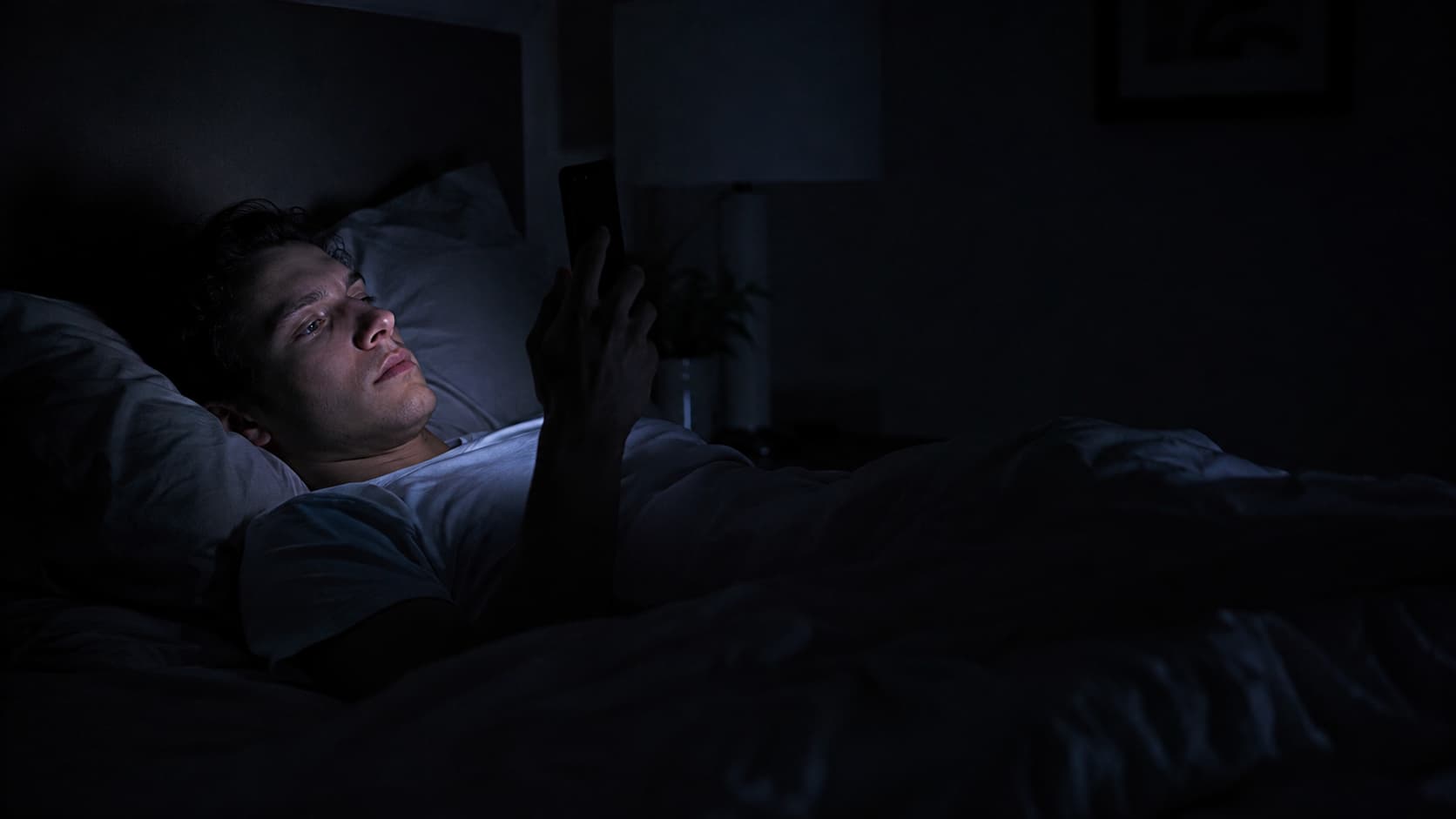
This is the one area where the science is more mixed rather than a flat no. Blue light does play a real, well-established role in regulating the body’s internal clock, so the underlying biology behind the sleep claim is solid, even if the glasses themselves show inconsistent results in trials.
Special cells in the retina, called intrinsically photosensitive retinal ganglion cells, are especially sensitive to blue wavelengths around 460 to 480 nanometers. When these cells detect light in the evening, they signal the brain to delay the release of melatonin, the hormone that makes a person feel sleepy. That is why looking at a bright phone screen right before bed can make it harder to fall asleep. Some smaller studies have found that wearing blue light blocking glasses in the hour or two before bedtime modestly improved sleep onset and quality, while other trials found no meaningful difference at all. Larger meta-analyses reviewing this specific question describe the trial evidence as inconsistent, often because studies use small sample sizes and different lens strengths. If sleep is the main concern, simply dimming screen brightness, turning on a device’s built-in night mode, or putting the phone away entirely an hour before bed tends to be at least as effective, and it is free.
Do Blue Light Glasses Protect Your Eyes?
There is currently no solid evidence that everyday screen use damages the retina, and there is no evidence that blue light glasses prevent retinal harm, mainly because researchers have not found a real problem for them to solve at typical screen brightness levels. None of the 17 trials in the 2023 Cochrane review even measured retinal health as an outcome, and separate research on retinal safety has found that ordinary screen brightness sits nowhere near the exposure levels needed to injure retinal tissue in laboratory settings.
Concerns about blue light and the retina mostly trace back to lab experiments using intense, concentrated blue light exposure far beyond anything a phone or monitor produces during normal use. The American Academy of Ophthalmology has stated it does not recommend blue light blocking glasses for protecting eye health, precisely because the level of risk from screens has not been demonstrated. Decades of widespread, all-day computer use have not produced any noticeable increase in retinal disease among heavy screen users, which is roughly the pattern doctors would expect to see by now if screen-emitted blue light were quietly causing long-term harm.
Why Do Some People Feel Blue Light Glasses Help?
Personal experience and controlled science do not always line up, and there are a few real reasons someone might genuinely feel better wearing a pair, even without the blue light filtering doing the heavy lifting.
If the glasses include an updated or corrected prescription, the improvement in comfort likely comes from clearer vision, not from the tint. Some blue light glasses are sold as non-prescription reading glasses with mild magnification, which can genuinely ease strain for people doing lots of close-up screen work. There is also a well-known effect in research called the placebo response, where believing a product will help can genuinely reduce how strongly someone notices discomfort. None of this means people are imagining their relief; it means the cause of that relief may not be the specific mechanism advertised on the box.
Are Blue Light Glasses Worth It?
Blue light glasses are not harmful to wear, but for most people, the specific claims about eye strain and retina protection are not well supported by current research, while the sleep-related benefits are possible but inconsistent. If a pair is comfortable, does not distort colors too much, and someone likes how it looks, there is little downside to trying one. The main marketing claims and the supporting evidence diverge across a few key areas:
| Claim | What the Evidence Shows |
|---|---|
| Reduces digital eye strain | Not supported — no significant difference vs. clear lenses in the 2023 Cochrane review |
| Protects the retina from screen damage | No evidence of harm to prevent; screen light levels are far below damaging thresholds |
| Improves sleep when worn in the evening | Possible, modest effect — results are inconsistent across trials |
| Safe to wear all day | Yes — no evidence of harm from wearing them |
The stronger, evidence-backed habits for reducing digital eye strain do not involve any lens at all:
- The 20-20-20 rule — looking at something roughly 20 feet away for at least 20 seconds every 20 minutes gives the eye’s focusing muscles a break.
- Screen distance and height — keeping a screen at arm’s length and roughly eye level reduces unnecessary focusing effort.
- Lighting adjustments — cutting glare and avoiding harsh overhead lighting eases how hard the eyes work to see clearly.
- Conscious blinking — blinking fully and more often during long screen sessions keeps the eye’s surface properly moist.
- Regular prescription checks — uncorrected vision is a common hidden cause of screen-related strain.
For sleep, cutting screen brightness and stepping away from devices before bed tends to matter more than any lens tint. Anyone with an actual prescription need or persistent eye discomfort is better served by an eye exam than by a pair of glasses bought based on marketing copy alone.
Frequently Asked Questions
Are blue light glasses bad for your eyes?
No, wearing blue light glasses is not harmful. The lenses simply filter out a portion of blue wavelength light, and there is no strong evidence this causes negative effects, aside from a very mild yellow color shift some wearers notice with stronger tints. A small number of trial participants in the Cochrane review reported headaches or discomfort getting used to the lenses, but the evidence behind those reports was rated low-certainty and not considered a reliable safety concern.
What percentage of blue light do blue light glasses block?
It varies widely by brand and lens type, generally somewhere between 10 and 50 percent, with stronger amber tints blocking more than nearly clear lenses. There is no regulated industry standard, so the number can only be trusted if the manufacturer specifies it clearly.
Do blue light glasses help with headaches from screens?
There is no strong clinical evidence that blue light glasses specifically reduce screen-related headaches. Headaches tied to screen use are more commonly linked to eye strain from focusing habits, poor posture, glare, or an outdated prescription, so those factors are worth addressing first.
Should kids wear blue light glasses for school screens?
There is no established evidence that children need blue light glasses for typical classroom or homework screen use. Encouraging breaks, good lighting, and proper screen distance is a more evidence-backed approach for kids than a specialty lens.
Is it better to wear blue light glasses all day or only at night?
Since the clearest, though still modest, evidence points toward a possible sleep benefit from evening use, wearing them in the hour or two before bed is where they are most likely to do something. All-day wear is not harmful, but the research does not show a strong reason it would help more than nighttime use alone.
Conclusion
Blue light glasses sit in an unusual spot: the biology behind the marketing pitch is real, but the product itself has not held up well when tested in rigorous trials. Large reviews of the evidence have not found meaningful benefits for eye strain or retina protection, and the sleep-related results remain mixed rather than clearly positive. The habits that actually reduce digital eye strain, taking regular breaks, blinking fully, adjusting lighting, and stepping back from screens before bed, cost nothing and are backed by consistent research. Anyone drawn to blue light glasses for their look or comfort can wear them without worry, just without expecting them to be a fix for screen fatigue on their own.