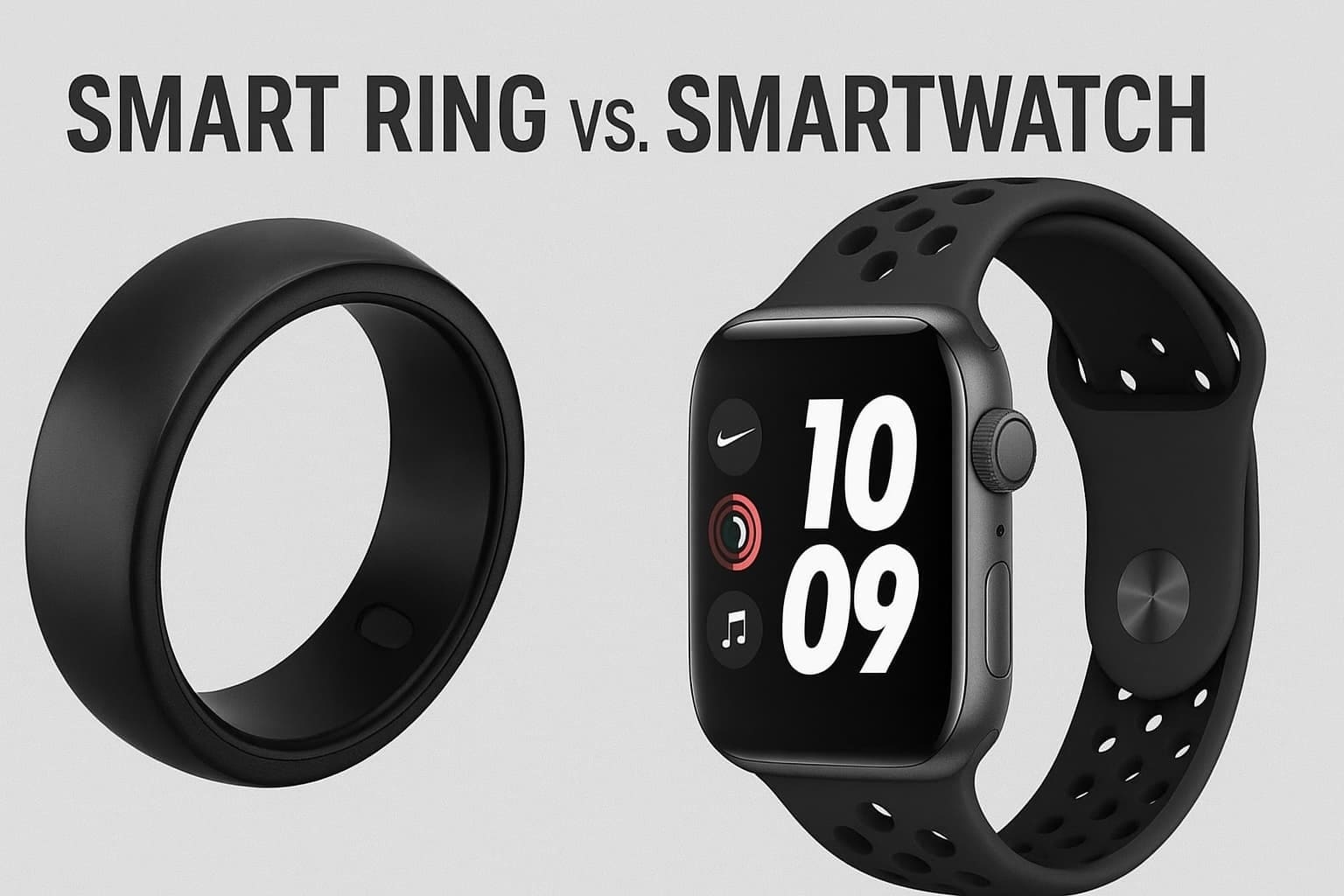
Wearable technology has moved far beyond simple step counters. Today, devices like smart rings and smartwatches can track your health, keep you connected, and even replace your wallet. Yet, the choice between these two isn’t as straightforward as one being better than the other — it’s about matching features to lifestyle. For some, a sleek smart ring offers a discreet, always-on solution. For others, a smartwatch provides the versatility and display real estate they can’t live without. Understanding what each offers is the first step toward choosing the right fit.
What is a Smart Ring?
A smart ring is a small piece of wearable technology shaped like a regular ring but equipped with miniature electronics that can track activity, monitor health, and even perform certain everyday tasks. It’s built for people who want useful features in a device that doesn’t draw attention or take up space. Instead of a screen on the wrist, a smart ring quietly collects data and offers quick interactions without interrupting your day.
- Looks and feel – Most smart rings are designed to resemble standard jewelry, available in different finishes and styles so they don’t stand out as a gadget. They’re lightweight and slim, which makes them comfortable to wear around the clock — whether you’re at work, exercising, or sleeping. Their unobtrusive design also means they’re less likely to snag on clothing or get in the way during physical activities.
- Health and wellness tracking – Many models can monitor steps, heart rate, and blood oxygen levels, while some go further by tracking skin temperature changes or providing detailed sleep analysis. Because the sensors rest against the finger, they can capture certain measurements more directly than wrist devices. This positioning can improve readings like heart rate variability or blood flow changes, which are useful for spotting patterns in stress, recovery, or overall fitness.
- Payments and quick actions – A number of smart rings include NFC technology, allowing you to make tap-to-pay purchases without pulling out a phone or wallet. Beyond payments, they can sometimes be set up to unlock devices, pass through secured doors, or interact with compatible smart home systems — essentially acting as a wearable key.
- Battery life and charging – One of the biggest strengths of a smart ring is its long battery life. Without a display or heavy-duty processors, most can last several days to over a week before needing a recharge. Charging usually involves a small dock or magnetic base, and because you only need to do it occasionally, it’s easier to fit into a busy routine.
- Subtle notifications – While smart rings aren’t designed for reading messages, they can alert you to calls, texts, or calendar events with a gentle vibration or small light indicator. This approach keeps interruptions minimal, letting you stay aware without constantly checking a screen.
Smart rings combine the convenience of wearable tech with the subtlety of everyday jewelry. They’re best for people who want health tracking and quick interactions without committing to a larger device. While they won’t replace the in-depth features of a smartwatch, their comfort, battery performance, and discreet style make them a strong choice for anyone who values a low-profile approach to technology.
What is a Smartwatch?
A smartwatch is a wrist-worn device that combines traditional timekeeping with the capabilities of a connected digital tool. It acts as an extension of your smartphone, offering access to apps, notifications, and health tracking in a format that’s easy to glance at during the day. While they come in many designs, their main draw is the ability to deliver a lot of information and features right on your wrist.
- Design and build – Smartwatches are available in countless shapes, materials, and styles, from sporty rubber straps to premium metal bracelets. Many feature touchscreens for direct interaction, while others combine physical buttons or rotating bezels with digital displays. Water resistance is common, meaning most can handle splashes or workouts, and higher-end models may even support swimming or diving.
- Health and activity features – Most smartwatches include built-in sensors for tracking steps, heart rate, and calories burned. Many go beyond the basics with GPS for outdoor workouts, ECG readings, fall detection, or stress monitoring. Because they’re worn on the wrist, they can continuously track daily activity and exercise sessions, while also storing a detailed history in companion apps.
- Smartphone connectivity – One of a smartwatch’s strongest advantages is its link to your phone. It can display incoming calls, texts, and app alerts in real time. Some models even let you answer calls, reply to messages, or use voice assistants without touching your phone. Wi-Fi, Bluetooth, and sometimes cellular connections make them versatile for staying in touch while on the move.
- App ecosystem – Depending on the platform, a smartwatch can run a wide range of apps, from fitness trackers and navigation tools to music streaming and payment systems. This flexibility means the watch can be tailored to suit individual routines, whether that’s for training, productivity, or entertainment.
- Battery performance – Battery life varies widely. Feature-rich models with bright displays may need daily charging, while simpler ones with energy-efficient screens can last several days. Charging methods usually include magnetic connectors or wireless docks, making the process quick and straightforward.
A smartwatch is essentially a compact, wearable computer built for quick access to information and tools. It appeals to those who want an all-in-one device for communication, fitness, and convenience without always reaching for their phone. While it may require more frequent charging than smaller wearables, its flexibility and range of features make it a central hub for many people’s daily tech use.
Comparing Smart Rings and Smartwatches
Smart rings and smartwatches may both belong to the wearable tech family, but the way they deliver their features — and the experience you get from them — is quite different. A smartwatch is designed to be an interactive tool that you check and control throughout the day, while a smart ring is made to work quietly in the background with minimal involvement from you.
| Feature | Smart Ring | Smartwatch |
|---|---|---|
| Size & Weight | Extremely small and lightweight, feels like regular jewelry. | Larger and more noticeable, similar to a traditional wristwatch. |
| Display & Interaction | Usually no screen; uses lights or vibrations for alerts. | Full display for viewing and interacting with apps and notifications. |
| Health Tracking | Strong for specific metrics like heart rate variability and sleep; limited workout tracking. | Broad health and fitness tracking, including workouts, GPS, and advanced sensors. |
| Notifications | Subtle cues without detailed message viewing. | Full message previews, calls, and quick replies. |
| Battery Life | Often 4–7 days or more between charges. | Typically 1–3 days for high-end models, sometimes longer for basic versions. |
| Payments & Access | Tap-to-pay and device unlocking on certain models. | Contactless payments plus more integrated security and access features. |
| Durability | Compact size makes it less prone to impacts; water resistance varies. | Built for daily wear, often water-resistant and rugged, but more exposed to scratches. |
| Price Range | Mid-range to premium depending on brand and features. | Wide range from budget-friendly to luxury-tier. |
- Portability and presence – Smart rings are so small and light that many people forget they’re wearing one. They don’t interfere with clothing, workouts, or sleep, and they won’t draw attention in professional settings. Smartwatches, on the other hand, are always visible on the wrist. While this makes them more noticeable, it also gives you instant access to information without pulling out your phone.
- Function scope – A smartwatch is built to take on many tasks beyond health tracking. You can read and reply to messages, answer calls, run apps, use GPS navigation, and control media — all directly from your wrist. Smart rings are more specialized, focusing on core tasks like wellness monitoring, simple alerts, and payments. For those who prefer fewer interruptions, the ring’s limited scope can actually be a benefit.
- Fitness and sports use – If you need real-time workout tracking, route mapping, or advanced sport metrics, the smartwatch is better equipped. Many models have dedicated exercise modes, automatic workout detection, and the ability to show your performance stats as you go. Smart rings can still track basic activity like steps, heart rate, and sleep patterns, but they don’t replace the detailed workout feedback that a smartwatch provides.
- Battery habits – Battery life is one of the clearest differences. Smart rings can often run for almost a week between charges because they lack battery-draining screens and complex processors. Smartwatches, especially those with bright displays and active GPS use, typically need charging every day or two. This difference can be decisive for people who travel often or simply don’t want another daily charging routine.
- Interaction style – Wearing a smartwatch means actively using it throughout the day, swiping through screens, tapping icons, and speaking to voice assistants. It’s designed for ongoing engagement. A smart ring, by contrast, is more of a passive companion — it gathers data, sends subtle notifications, and stores information for you to check later on your phone.
Choosing between them depends on whether you want a device that blends into your life without asking for much attention, or one that becomes an active, interactive part of your daily routine. Both have their strengths, but how much you want to interact with your wearable will likely be the deciding factor.
Comparing Health Features in Smart Rings and Smartwatches
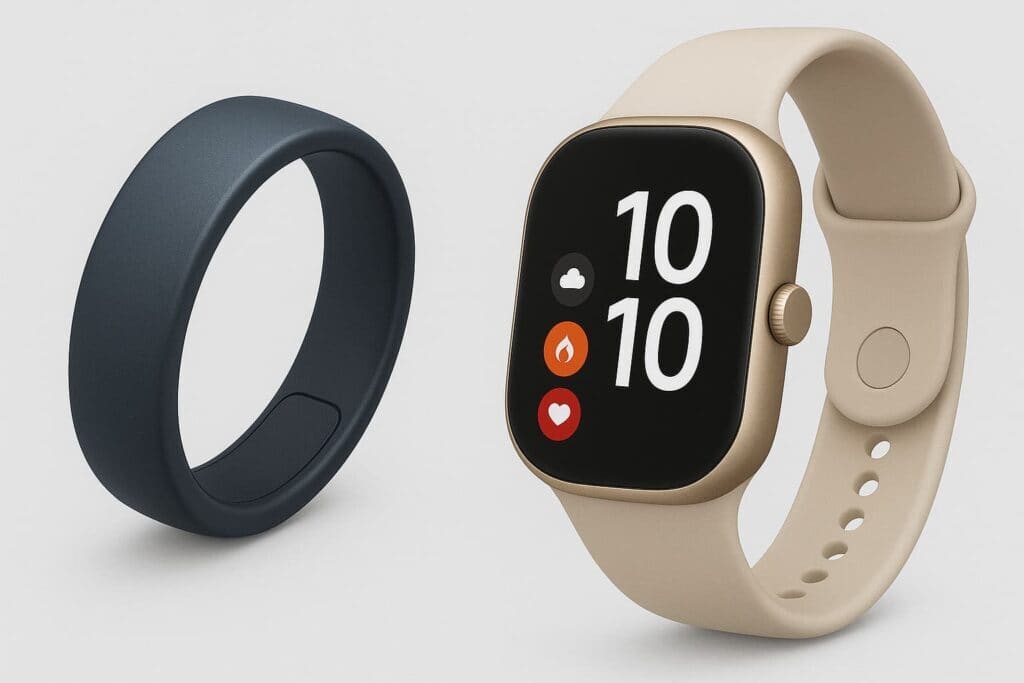
One of the biggest reasons people choose wearable tech is to keep track of their health and activity. Both smart rings and smartwatches can gather valuable data, but the type of information they provide, how they collect it, and how you access it can be very different. The choice between them often comes down to how detailed you want the data to be and how actively you plan to use it.
- Sensor placement and accuracy – A smart ring’s sensors rest directly against the skin on your finger, where blood vessels are closer to the surface. This position can give certain readings, like heart rate variability and blood oxygen levels, a higher degree of accuracy compared to wrist-based devices. Smartwatches still perform well for most users, but the wrist can be affected by movement, sweat, or loose fitting during workouts, which may slightly impact readings.
- Daily activity tracking – Both devices can record steps, calories burned, and general movement throughout the day. A smartwatch will often display this information instantly on its screen, while a smart ring typically sends the data to a companion app for you to review later. If you like seeing live progress toward your daily goals, the smartwatch offers that at a glance. If you’re fine with checking it when you have a moment, the ring works just as well.
- Workout monitoring – Smartwatches have a clear edge for sports and exercise. Many have built-in GPS, allowing you to track outdoor runs or cycling routes without carrying your phone. They also often include specific exercise modes, from swimming and hiking to strength training, each with tailored metrics. Smart rings are more limited here — while they can log movement and heart rate during workouts, they generally don’t provide route tracking or sport-specific breakdowns.
- Sleep analysis – Smart rings tend to excel at sleep tracking because they are small and comfortable enough to wear through the night without being noticed. They can monitor sleep stages, duration, and even nighttime heart rate with minimal disruption. Some smartwatches do a good job here too, but wearing a bulkier device to bed isn’t comfortable for everyone, and battery life can be a limiting factor if the watch needs charging overnight.
- Recovery and wellness insights – Many smart rings are designed with recovery in mind, using data like resting heart rate, temperature changes, and activity balance to suggest when to push harder or rest. Smartwatches can provide similar insights, especially higher-end models, but their focus often leans more toward encouraging activity and tracking performance than emphasizing recovery patterns.
- Health alerts and monitoring – Some smartwatches include features like ECG recording, irregular heart rhythm alerts, or fall detection, which are particularly valuable for users with specific health concerns. Smart rings don’t usually have ECG capability, but their constant biometric monitoring can still provide early indicators of changes in wellness.
When it comes to health and fitness, both options are capable, but they serve different priorities. A smartwatch is better for people who want detailed, real-time workout tracking and instant access to performance stats. A smart ring is ideal for those who want continuous health and recovery monitoring without wearing something bulky or needing to interact with a screen.
Connectivity Features in Smart Rings vs. Smartwatches
One of the main benefits of wearable devices is the ability to stay updated without constantly checking your phone. Smart rings and smartwatches both offer ways to receive alerts, but the way they handle them — and how much control you have — is very different. This can be a deciding factor for people who rely heavily on staying connected during the day.
- How notifications are delivered – A smart ring keeps things minimal. Instead of showing full messages, it uses small LEDs or gentle vibrations to signal that something needs your attention. The meaning of these alerts is often customizable, such as a certain color light for calls and another for texts. A smartwatch goes further by displaying the content of messages, emails, or app alerts directly on its screen, allowing you to read them instantly.
- Interaction with alerts – With a smartwatch, you can act on notifications right away. You can answer calls, reply to texts with quick responses, check calendar invites, or control music playback — all without picking up your phone. Smart rings can’t respond to notifications directly; they simply alert you so you can decide whether it’s worth checking your phone. This difference makes the smartwatch more interactive, while the smart ring keeps interruptions brief.
- Connection to your phone – Both devices rely on a Bluetooth link to your smartphone for most notification features. Higher-end smartwatches may also connect via Wi-Fi or even have their own cellular capabilities, meaning they can function independently for calls and messages if your phone isn’t nearby. Smart rings generally don’t offer standalone connectivity — they work entirely through your phone’s connection.
- Compatibility with apps and services – Smartwatches support a wide range of third-party apps, so you can get alerts from social media, navigation tools, and productivity apps. Many also let you control connected devices, like smart home systems, directly from your wrist. Smart rings have more limited app compatibility, focusing mainly on core alerts such as calls, texts, and calendar reminders, plus any fitness or payment features the manufacturer includes.
- Privacy and discretion – A smart ring offers a more private way to receive alerts since vibrations or light indicators aren’t visible to others unless they’re looking closely. A smartwatch screen, while easy to read, can be visible to anyone nearby — which may not be ideal for personal or sensitive messages.
The choice here depends on how actively you want to manage notifications. If you like to see and respond to alerts instantly, a smartwatch puts those tools right on your wrist. If you prefer a quick nudge that tells you something’s happened without pulling you into constant screen time, a smart ring keeps it simple and discreet.
Battery Performance in Smart Rings and Smartwatches
How often you need to recharge a wearable can have a big impact on how convenient it feels in everyday life. Some people don’t mind plugging in their device daily, while others prefer something they can forget about for a week. Battery performance is one of the clearest areas where smart rings and smartwatches differ, and it can influence which is more practical for your lifestyle.
- Typical battery life – Smart rings are known for lasting several days to a week or more on a single charge, depending on the model and how often certain features are used. The absence of a power-hungry display and the use of efficient sensors allow them to run far longer between charges. Most smartwatches, especially those with bright, full-color touchscreens and GPS, average one to three days of use before needing a recharge. Simpler or hybrid smartwatch models can stretch that time, but the gap is still noticeable.
- Charging methods – Many smart rings charge through a small dock, magnetic cradle, or USB-connected base designed to hold the ring securely in place. The compact battery size means they can recharge quickly, often in under two hours. Smartwatches usually rely on magnetic charging cables or wireless charging pads. Some models can reach a decent charge in an hour, but a full recharge may take longer due to the larger battery capacity.
- Impact of features on battery – On a smartwatch, using GPS, continuous heart rate tracking, or an always-on display will drain the battery faster. For smart rings, battery life can drop more quickly if features like constant SpO₂ monitoring or frequent haptic alerts are enabled. The difference is that rings typically have fewer energy-hungry functions, so battery drain is more gradual.
- Travel and daily routine – A smart ring’s long battery life makes it appealing for people who travel often or dislike carrying chargers everywhere. You can wear it through multiple days of activities — including sleep tracking — without worrying about a low battery warning. With a smartwatch, daily or near-daily charging is part of the routine, so it works best for people who already keep their devices topped up alongside a phone or laptop.
- Battery health over time – Both device types use rechargeable lithium-based batteries, which naturally lose capacity after years of use. Smart rings often have sealed designs, meaning battery replacement may require professional service or isn’t possible at all. Many smartwatches allow for battery servicing, but it can still be costly depending on the brand.
For anyone who values low-maintenance tech, the smart ring’s long battery life and fast recharging give it a clear edge. A smartwatch offers more features, but the trade-off is keeping it charged regularly, especially if you rely on it heavily for workouts, navigation, or notifications.
Smart Ring vs. Smartwatch: Style, Comfort & Wearability
A wearable isn’t just about features — it’s something you keep on your body for hours, sometimes all day and night. Comfort, how it fits into your personal style, and whether it feels natural to wear are all factors that can determine if you’ll actually enjoy using it long-term. Smart rings and smartwatches take very different approaches to design and wearability, and these differences can matter as much as the technology inside.
- Overall look and fashion appeal – Smart rings are often made to resemble traditional jewelry, with smooth finishes, polished metals, or matte coatings that blend seamlessly with other accessories. This makes them easy to pair with both casual and formal outfits without looking like a piece of tech. Smartwatches vary widely in design — sporty silicone straps suit workouts, while metal bracelets or leather bands give them a dressier feel. The display itself becomes part of the look, which can be a statement piece for some but too obvious for others.
- Comfort during everyday use – Because of their size and weight, smart rings are almost unnoticeable once worn, making them comfortable for activities like typing, cooking, or sleeping. They don’t press against the skin in the same way a watch might when the wrist is bent. Smartwatches can also be comfortable, but larger models may feel bulky for smaller wrists, and wearing one to bed can be awkward for some people. Strap material plays a big role here — soft silicone or fabric bands tend to be more breathable than metal or leather.
- Suitability for different activities – A smart ring is less likely to get in the way during exercise, manual work, or water activities, as it stays close to the hand and doesn’t catch on clothing or equipment. Smartwatches are better suited for sports where on-the-go data is useful, but their size means they can bump against objects or feel restrictive during certain movements.
- Customization options – Many smartwatches allow you to swap straps and change digital watch faces, so you can adapt the look to different occasions. Smart rings typically come in fixed designs, so the customization is more about choosing the right style and color at purchase. Some brands offer multiple finishes or engravings to make them more personal.
- Long-term wear and skin comfort – Both devices need to be worn snug enough for accurate sensor readings but not so tight that they leave marks or cause irritation. Rings with smooth inner surfaces tend to be very comfortable for continuous wear, while watches with heavier casings or less breathable straps may need occasional adjustments to avoid discomfort.
If you see your wearable as a subtle addition to your outfit and want something that disappears into your daily look, a smart ring is hard to beat for its discreet, jewelry-like design. If you prefer a device that can double as both a fashion statement and a functional screen, a smartwatch offers more visual presence and customization — though at the cost of added bulk.
Security Features in Smart Rings and Smartwatches
Wearable devices don’t just track steps and heartbeats — they also handle sensitive information about your health, location, and sometimes even your finances. How that data is stored, transmitted, and protected can be just as important as the features themselves. Smart rings and smartwatches each have their own approach to privacy and security, and understanding those differences can help you decide which feels safer for your needs.
- Types of data collected – Both smart rings and smartwatches can gather personal health metrics such as heart rate, sleep patterns, and activity levels. Smartwatches often collect more varied data, including location tracking via GPS, workout routes, and in some cases voice recordings for voice assistants. This broader range of data can be valuable but also increases the need for strong protections.
- Data storage and syncing – Most devices store information locally until it syncs with a companion app on your phone. From there, the data is often backed up to cloud servers. Some brands encrypt the information on the device and during transfer, making it much harder for anyone to intercept or misuse it. Others may offer only basic protections, so it’s worth checking a manufacturer’s privacy policy before buying.
- Payments and access control – Many smartwatches and some smart rings allow for contactless payments. This feature usually relies on tokenization, meaning your actual card number is never stored or transmitted during a transaction. If your device is lost, payment functions can be disabled remotely through your phone or account. In addition to payments, some wearables can unlock your phone or computer, making security settings like passcodes or biometric locks essential.
- Risk of loss or theft – Smart rings are small and easy to misplace, which makes features like remote deactivation or requiring a paired phone for access especially important. Smartwatches are harder to lose but more visible, which could attract unwanted attention. Wearing either device in unfamiliar or crowded places may call for extra caution.
- User control over data – Some brands allow you to delete stored data from the app or prevent certain metrics from being collected. Others may keep anonymized data for product improvements or research. Knowing what control you have over your information can help you choose a brand that matches your comfort level.
When it comes to privacy and security, both device types can be safe to use if you’re mindful of the brand’s policies, keep software up to date, and make use of available security settings. A smartwatch generally handles more types of personal data, so it demands greater attention to settings and permissions. A smart ring collects less overall, but because it’s easier to lose, physical security and quick deactivation options matter just as much.
Which Is Better Value: Smart Ring or Smartwatch?
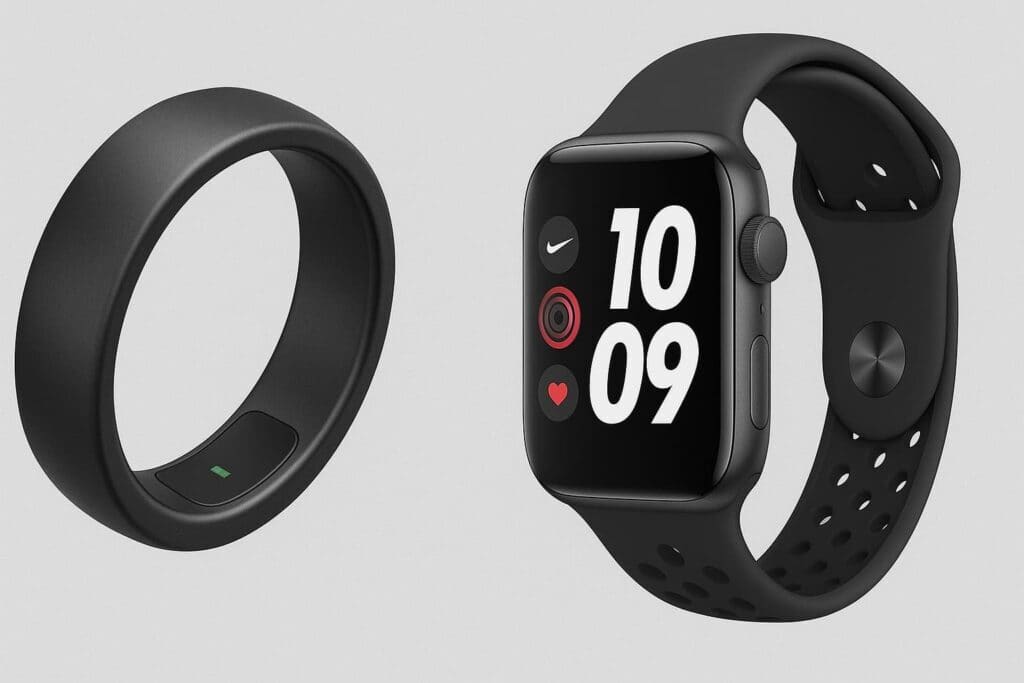
Cost is often one of the biggest factors in choosing between a smart ring and a smartwatch. While both come in a wide range of prices, the features you get for the money — and whether those features are worth it to you — can be very different. Thinking about not just the initial price but also the long-term value can help you make a choice you’ll be happy with.
- Price range for smart rings – Most smart rings fall in the mid to high price bracket for wearables. You can expect to pay more than a basic fitness tracker but often less than a flagship smartwatch. The cost typically reflects the use of miniaturized sensors, durable materials like titanium or ceramic, and features such as advanced sleep tracking or NFC payments. Some models require a subscription to unlock all data insights, which can add to the total cost over time.
- Price range for smartwatches – Smartwatches have a much wider price spread. Entry-level models with essential fitness tracking and notifications can be surprisingly affordable, while top-tier versions from major brands can be among the most expensive wearables on the market. Premium materials, larger displays, LTE connectivity, and a robust app ecosystem usually push the price higher.
- Feature value comparison – With smartwatches, you’re often paying for a broad set of capabilities: a full display, app support, GPS navigation, workout tracking, and in some cases, medical-grade health features. Smart rings focus on fewer but more specialized functions, so the value comes from accuracy, battery life, and the discreet form factor rather than the number of features.
- Longevity and durability – A higher upfront cost can be worth it if the device lasts several years. Smart rings tend to have fewer moving parts and no screen to crack, which can help with durability, though their sealed design may make battery replacement tricky. Smartwatches, while more repairable in some cases, are more exposed to scratches and bumps, especially if worn daily during physical activities.
- Ongoing costs – Subscription services, accessory straps, replacement chargers, and battery servicing can all add to the total cost of ownership. Rings typically have fewer optional extras, while smartwatches may tempt you with multiple straps, protective cases, or new watch faces.
If you want the maximum range of functions and don’t mind paying more for a full-featured device, a smartwatch offers strong value — especially if you’ll use most of what it can do. If you prefer a smaller investment in a device that excels at specific tasks, a smart ring can be a cost-effective choice in the long run, provided its feature set aligns with your priorities.
Best Situations for a Smart Ring or Smartwatch
While both smart rings and smartwatches are capable devices, they shine in different situations. Matching the device to your lifestyle and habits will make the difference between something you wear every day and something that ends up in a drawer.
- When a smart ring is the better fit – Smart rings work best for people who want technology to stay in the background. They’re ideal for those who value discreet health tracking, such as monitoring heart rate variability, sleep patterns, or recovery without being distracted by a screen. They’re also a good match for people who often attend formal events or work in professional settings where minimal, jewelry-like accessories are preferred. Frequent travelers may appreciate the long battery life and the ability to make quick contactless payments without pulling out a phone or wallet. They’re also comfortable enough for 24/7 wear, making them well-suited for round-the-clock data collection.
- When a smartwatch makes more sense – A smartwatch is the better choice for those who want an all-in-one companion that offers instant access to information and tools. It’s especially useful for people who rely on seeing and responding to notifications quickly, tracking workouts in detail, or using GPS for outdoor activities. Sports enthusiasts, runners, and cyclists benefit from the live performance metrics and navigation. For those who prefer leaving their phone behind during certain activities, cellular-enabled smartwatches can handle calls, texts, and streaming music on their own.
- Situations that highlight the differences – Imagine a business meeting where you only need a subtle vibration to know your phone is ringing — that’s where a smart ring excels. Now picture a hiking trip where you want to see your route, pace, and elevation in real time — that’s where a smartwatch proves its worth.
Choosing between them is less about which one is “better” and more about which one complements your daily routine. For some, the quiet efficiency of a smart ring will be exactly right; for others, the versatility of a smartwatch will outweigh the extra size and shorter battery life.
Conclusion
Choosing between a smart ring and a smartwatch comes down to how you want your wearable to fit into your life. If you prefer technology that works quietly in the background, focuses on a few key features, and blends seamlessly into your style, a smart ring delivers exactly that. It’s small, discreet, and long-lasting — a companion you barely notice until you need it.
On the other hand, if you value a device that keeps you fully connected, gives you detailed real-time feedback during workouts, and offers a wide range of apps and tools, the smartwatch is hard to beat. It’s designed for active interaction and instant access to information, even if that means more frequent charging and a more noticeable presence on your wrist.
Ultimately, the best choice depends on your daily habits, your priorities, and how much you want to engage with your device. Think about whether you want subtle support or hands-on control — that’s the key to picking the wearable that will serve you best in the long run.