Most people know their zodiac sign, but far fewer know that astrology actually gives each of us three signs that matter, not just one. Jewelry designers have picked up on this, and pieces built around a person’s “big three” — sun, moon, and rising signs — have become one of the more thoughtful ways to wear something personal instead of something generic. Understanding what each placement means makes it much easier to pick jewelry that actually says something true about the wearer, rather than just grabbing whatever piece matches their birth month.
What Are the Sun, Moon, and Rising Signs?
Your sun, moon, and rising signs are three separate zodiac placements calculated from the exact date, time, and location of your birth, and together they’re known as your “big three.” The sun sign is the one most people already know, since it only depends on your birthday. The moon and rising signs require a birth time and location because they shift much faster across the sky than the sun does.
Astrologers use something called a birth chart, which is basically a map of where the sun, moon, and other planets were sitting in the sky at the precise moment someone was born. The sun and moon are actual, easy-to-picture objects, while the “rising sign” refers to whichever zodiac constellation was climbing over the eastern horizon at that same moment. Because the sky is divided into twelve zodiac sections and the Earth rotates once a day, the rising sign changes roughly every two hours, which is why even two siblings born on the same day can have completely different rising signs.
Sun Sign Jewelry: What It Represents
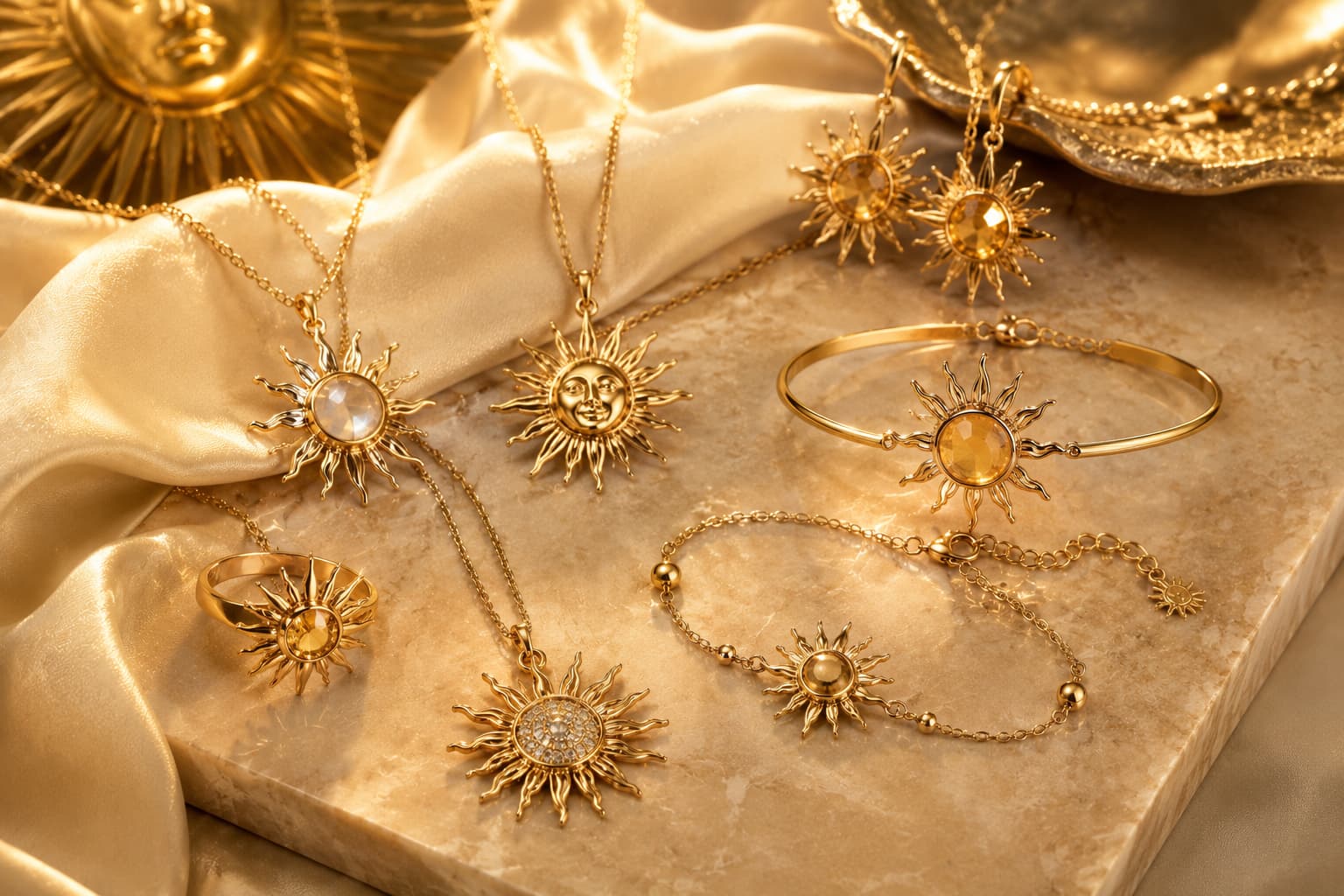
Sun sign jewelry represents the identity a person shows to the world and the traits they’re usually most comfortable claiming as their own. This is the sign most jewelry already caters to, since it’s the one printed in horoscope columns and the one people give when someone asks “what’s your sign?” A Leo pendant or an Aries ring is really a sun sign piece, even if nobody calls it that.
Because the sun sign reflects confidence, drive, and personal identity, jewelry tied to it tends to lean bold — think a zodiac constellation charm, a glyph pendant, or a birthstone that lines up with the sign’s traditional ruling stone. A Scorpio might gravitate toward warm topaz tones, while a Gemini might prefer something lighter and more playful, like citrine or agate. The point isn’t that the stone has magical powers; it’s that the piece becomes a small, wearable statement about how someone sees themselves.
Think of the sun sign as the headline of a person’s astrological story — it’s the part most visible to everyone else.
| Category | Sun Sign |
|---|---|
| What it reflects | Core identity, confidence, ego, life purpose |
| How often it changes | Roughly every 30 days |
| What you need to calculate it | Birth date only |
| Common jewelry motifs | Zodiac glyphs, constellation charms, sign-specific animals or symbols |
| Common gemstones | The sign’s traditional ruling birthstone (e.g., topaz for Scorpio, citrine for Gemini) |
Moon Sign Jewelry: What It Represents
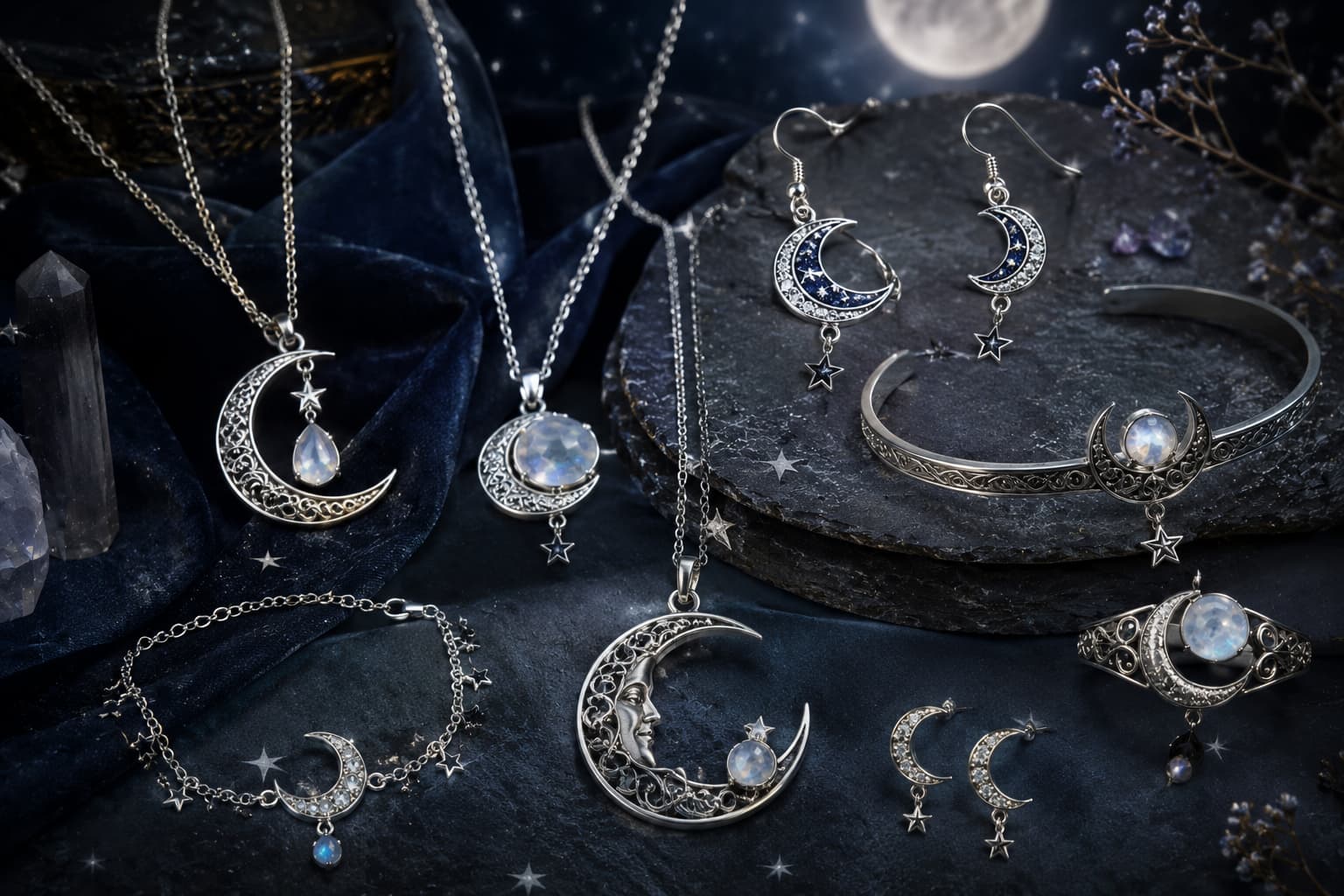
Moon sign jewelry represents the emotional, private side of a person that doesn’t always show up in daily life. Where the sun sign is public and easy to spot, the moon sign is quieter — it’s tied to comfort, instinct, and the way someone processes feelings rather than how they present themselves outwardly.
Because the moon moves through all twelve zodiac signs in about a month, changing signs roughly every two and a half days, two people born a week apart can easily have different moon signs even if they share a sun sign. This makes moon jewelry feel more personal and less predictable than sun sign pieces. Moonstone is the obvious material for this placement, both because of the shared name and because of its soft, shifting glow, but pearls and opals are also popular since they carry that same idea of something calm and layered rather than loud — all three are softer stones, so they’re worth a bit of extra gemstone care compared to harder options. A crescent moon pendant is one of the simplest ways to nod to this placement without needing to spell out an entire zodiac sign.
| Category | Moon Sign |
|---|---|
| What it reflects | Emotions, instincts, inner comfort, subconscious needs |
| How often it changes | Roughly every 2.5 days |
| What you need to calculate it | Birth date and approximate time |
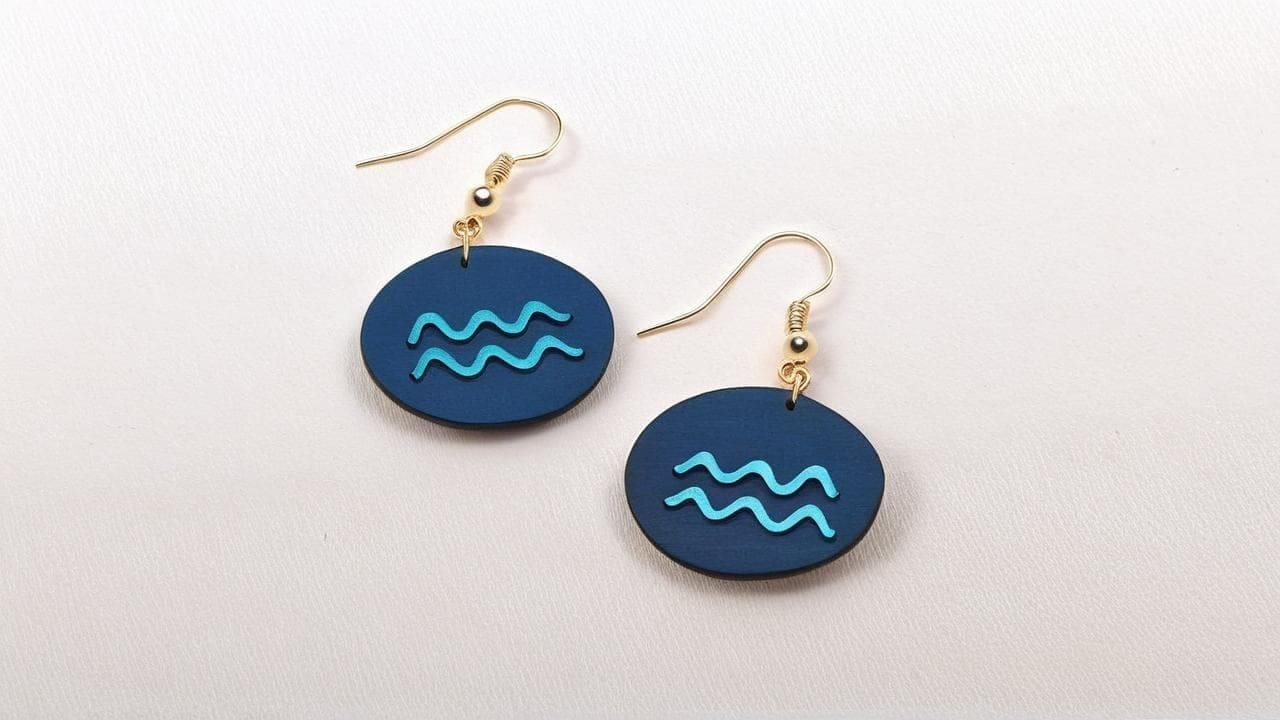
| Common jewelry motifs | Crescent moons, phase-of-the-moon charms, wave or water imagery |
| Common gemstones | Moonstone, pearl, opal |
Rising Sign Jewelry: What It Represents
Rising sign jewelry represents the version of a person that strangers meet first, before they know anything else about them. Astrologers sometimes describe the rising sign, also called the ascendant, as a kind of social mask — not because it’s fake, but because it’s the instinctive way someone responds to new people and new situations before their deeper personality has a chance to show.
Rising sign jewelry is the least common of the three simply because fewer people know their rising sign off the top of their head — it requires an accurate birth time, unlike the sun sign. For people who do know it, a rising sign piece can feel like the most surprising and personal choice of the three, since it’s rarely something a stranger could guess. Sunrise-toned stones such as amber, citrine, or sunstone are sometimes chosen for this placement as a nod to the “rising” imagery, paired with the wearer’s actual zodiac symbol for that placement.
| Category | Rising Sign |
|---|---|
| What it reflects | First impressions, outward energy, instinctive social behavior |
| How often it changes | Roughly every 2 hours |
| What you need to calculate it | Exact birth time and birth location |
| Common jewelry motifs | Sunrise or horizon imagery, the sign’s zodiac symbol |
| Common gemstones | Sunstone, amber, citrine |
How to Calculate Your Sun, Moon, and Rising Signs
To find all three placements, you need your exact birth date, birth time, and birth location, then you can run that information through a free online birth chart calculator. Most hospitals and birth certificates record the exact time of birth, so that’s the first place to check if it isn’t already known — an estimated time won’t give an accurate result, since even a difference of an hour can shift the rising sign into a different zodiac constellation entirely.
Finding your sun sign is the easiest part, since it only needs a birth date and can usually be confirmed without any calculator at all — it’s simply whichever zodiac sign covers that day on a standard horoscope calendar. Finding your moon sign takes a bit more, since it requires a birth date and at least an approximate birth time entered into a birth chart calculator, after which the result will be labeled “Moon” alongside its own zodiac sign. Finding your rising sign is the most demanding of the three, since it needs an exact birth time and birth location, and on a calculated chart it will usually appear under the label “Ascendant” or the abbreviation “ASC” rather than “Rising” itself.
| Sign | Chart Label | Required Info |
|---|---|---|
| Sun Sign | ”Sun” | Birth date |
| Moon Sign | ”Moon” | Birth date and approximate time |
| Rising Sign | ”Ascendant” or “ASC” | Exact birth time and birth location |
How to Style Sun, Moon, and Rising Jewelry Together
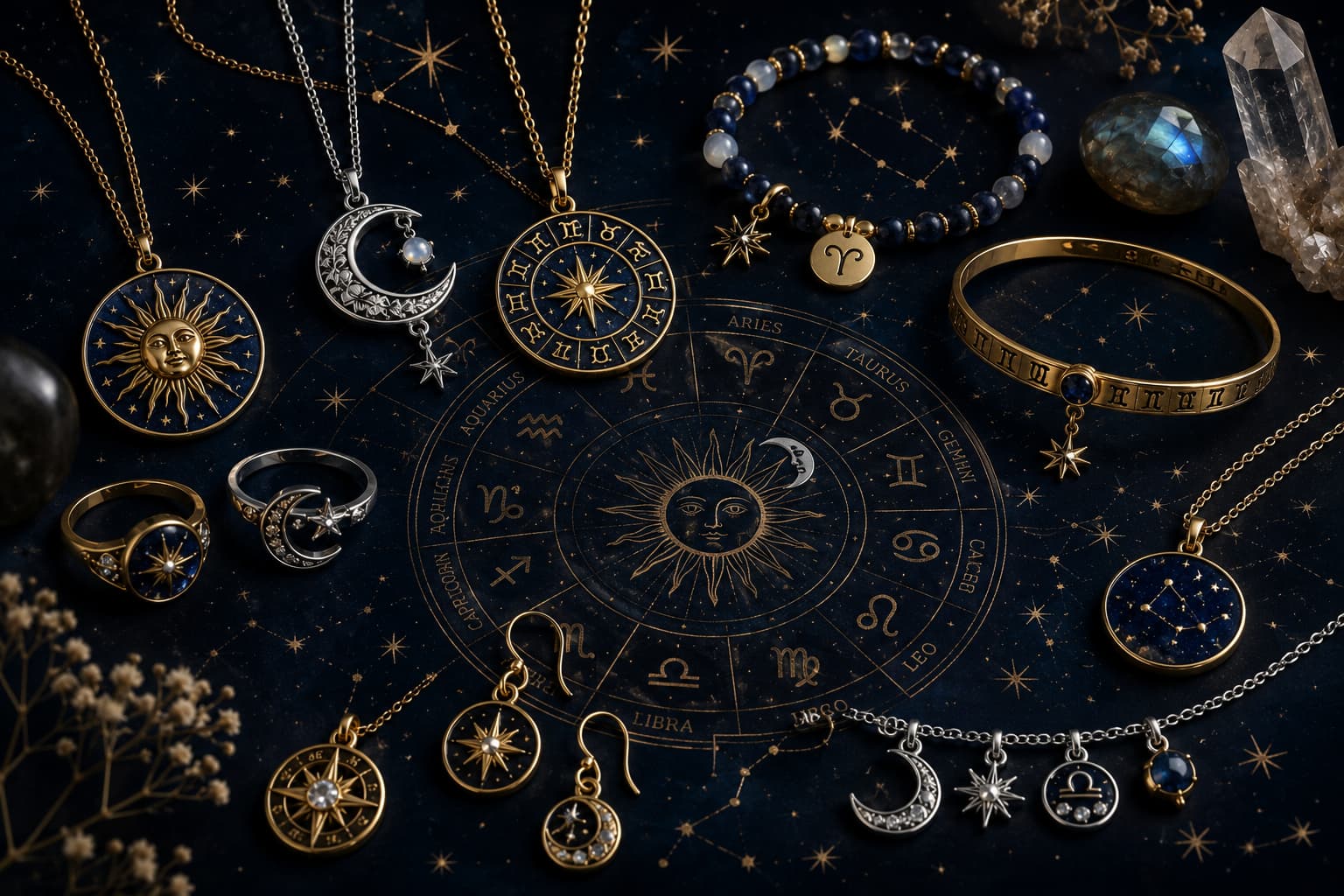
Layered necklaces and multi-charm bracelets are the most common way to combine sun, moon, and rising sign jewelry into a single set without cluttering the design. Instead of trying to cram three zodiac symbols onto one pendant, many people wear three separate small charms — often on a layered chain or a stacked ring set — so each placement gets its own space rather than competing for attention.
A simpler approach some people take is choosing one material or color palette that ties the pieces together, even if the actual symbols are different. For example, someone might pick a sun-sign glyph in gold, a moon-sign charm in silver, and a rising-sign piece in rose gold, letting the metal tone rather than the symbolism do the work of tying the set together. There’s no single correct way to combine them — the goal is a set that feels personal rather than following a strict formula.
Frequently Asked Questions
Do I need my exact birth time to know my rising sign?
Yes, an accurate birth time is required to calculate a rising sign correctly, since it changes roughly every two hours throughout the day. Without a real birth time, any rising sign result is just a guess, while the sun sign only needs a birth date and the moon sign is accurate enough with a birth date and general time of day.
Is moon sign jewelry the same as birthstone jewelry?
No, moon sign jewelry and birthstone jewelry are based on two completely different systems. Birthstones are tied to a person’s birth month on a fixed calendar, while a moon sign depends on which zodiac constellation the moon was passing through at the exact time someone was born, which can be any of the twelve signs regardless of birth month.
Can twins have different big three placements?
Yes, twins can have different moon and rising signs even though they share the same sun sign, because these placements can shift within minutes or hours of each other. Twins born a few minutes apart, especially close to a sign change, may end up with entirely different rising signs.
What’s the most popular big three jewelry piece?
Sun sign jewelry remains the most popular of the three simply because it’s the easiest to identify and doesn’t require any extra information beyond a birthday. Moon and rising sign jewelry have grown in popularity as more people calculate their full birth charts online, but sun sign pieces are still the most widely recognized and purchased.
Does the metal or gemstone in the jewelry have to match my placement exactly?
No, there’s no strict rule that ties a specific metal or gemstone to a placement — the associations described for sun, moon, and rising sign jewelry are traditions and preferences rather than fixed requirements. Many people choose materials based on personal taste or skin tone first, then let the symbolism follow.
Conclusion
Sun, moon, and rising sign jewelry works because it turns three fairly abstract astrological ideas into something a person can actually hold and wear. The sun sign speaks to identity, the moon sign to emotion, and the rising sign to first impressions, and each one lends itself naturally to different materials and symbols — bold glyphs for the sun, moonstone and pearl for the moon, and sunrise-toned stones for the rising sign. Once someone knows their full birth chart, picking pieces that reflect these three sides of their personality becomes a lot more meaningful than reaching for a single, generic zodiac charm.