Jute jewelry beautifully combines sustainable fashion with traditional craftsmanship, providing an eco-friendly alternative to conventional accessories. With growing environmental awareness, natural fiber jewelry made from jute has become increasingly popular. Jute accessories offer unique aesthetic appeal while aligning with values of sustainability and ethical production, making them a thoughtful choice for environmentally conscious consumers seeking both beauty and purpose in their adornments.
What Is Jute Jewelry?
Jute jewelry encompasses a diverse range of accessories crafted from the natural fibers of the jute plant. These pieces often feature the distinctive golden-brown hue and textural qualities of jute, sometimes combined with beads, metals, or other natural elements. The rise of jute jewelry coincides with growing interest in sustainable fashion and handcrafted accessories, offering consumers beautiful options that align with eco-conscious values. Though jute has been used for thousands of years in utilitarian items like rope and sacks, its transformation into decorative jewelry represents a creative reimagining of this versatile material.
- Jute jewelry typically includes necklaces, bracelets, earrings, anklets, and even rings, often incorporating traditional techniques like macramé, weaving, braiding, and knotting to create intricate designs.
- The global market for jute jewelry has expanded significantly in the last decade, with artisans in countries like India, Bangladesh, Nepal, and various parts of Africa and South America creating distinctive regional styles.
- Many jute jewelry pieces combine the natural fiber with complementary materials such as wooden beads, seeds, shells, recycled glass, ceramic pieces, and sometimes precious or semi-precious stones.
- Unlike conventional jewelry production, jute jewelry making typically has a low environmental impact, requiring minimal electricity, producing little waste, and using biodegradable materials.
- Jute jewelry often supports traditional artisanal communities, providing economic opportunities in regions where jute is grown and preserving cultural craft traditions.
As fashion continues to evolve toward more sustainable practices, jute jewelry stands out as an accessible entry point for consumers looking to make eco-friendly choices without sacrificing style. The versatility of jute allows for countless design possibilities, from minimalist everyday pieces to elaborate statement accessories, making it a material that can adapt to changing fashion trends while maintaining its inherent sustainable qualities.
What Is Jute?
Jute is a natural, vegetable fiber that comes from the stem and outer skin of jute plants, primarily Corchorus capsularis (white jute) and Corchorus olitorius (tossa jute). This remarkable plant fiber has been cultivated for centuries, particularly in the Bengal region spanning Bangladesh and parts of India, where warm, humid conditions create the ideal growing environment. Jute fiber is known for its natural golden-brown color, silky texture, and impressive strength despite its lightweight nature.
- Jute is the second most abundant natural fiber in the world after cotton, with global production exceeding 3 million tons annually, primarily from Bangladesh (over 1.6 million tons) and India (approximately 1.4 million tons).
- The jute plant grows remarkably quickly, reaching heights of 8-12 feet in just 4-6 months, making it one of the most renewable fiber sources available for commercial use.
- Harvesting jute involves cutting the plants near the ground, bundling them, and submerging them in slow-moving water for 10-15 days (a process called retting) to allow bacteria to dissolve the gummy substances binding the fibers.
- After retting, workers strip the jute fibers from the stem by hand, wash them in clean water, and hang them to dry before processing them into various forms from rough twine to smooth, polished yarn suitable for jewelry making.
- Jute cultivation is considered environmentally friendly because it enriches the soil for future crops, requires minimal pesticides or fertilizers, absorbs large amounts of carbon dioxide, and releases oxygen during growth at a rate several times higher than many trees.
- Unlike synthetic fibers, jute is 100% biodegradable and compostable, breaking down naturally without releasing harmful substances into the environment.
The natural properties that make jute ideal for industrial applications—strength, durability, and flexibility—also make it an excellent material for jewelry creation. As global concerns about plastic pollution and environmental sustainability grow, jute offers a time-tested alternative that connects modern consumers with traditional natural materials and ancient craft techniques.
Common Jute Jewelry Styles and Designs
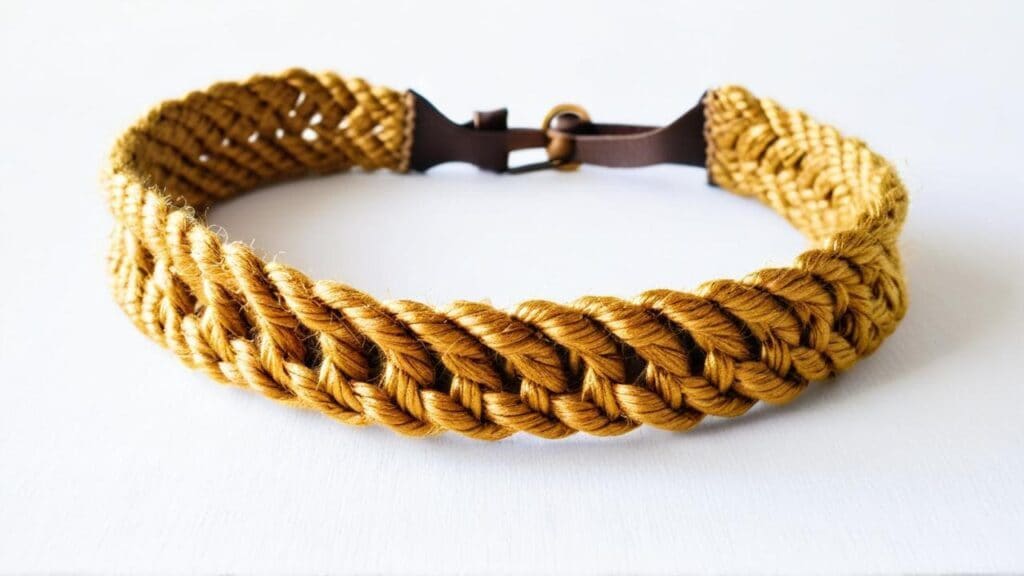
Jute jewelry encompasses a wide range of styles and designs, from simple bohemian pieces to intricate artistic creations. The versatility of jute fiber allows artisans to craft everything from casual everyday accessories to more elaborate pieces for special occasions. The natural texture and earthy appearance of jute make it particularly suitable for nature-inspired and bohemian fashion aesthetics.
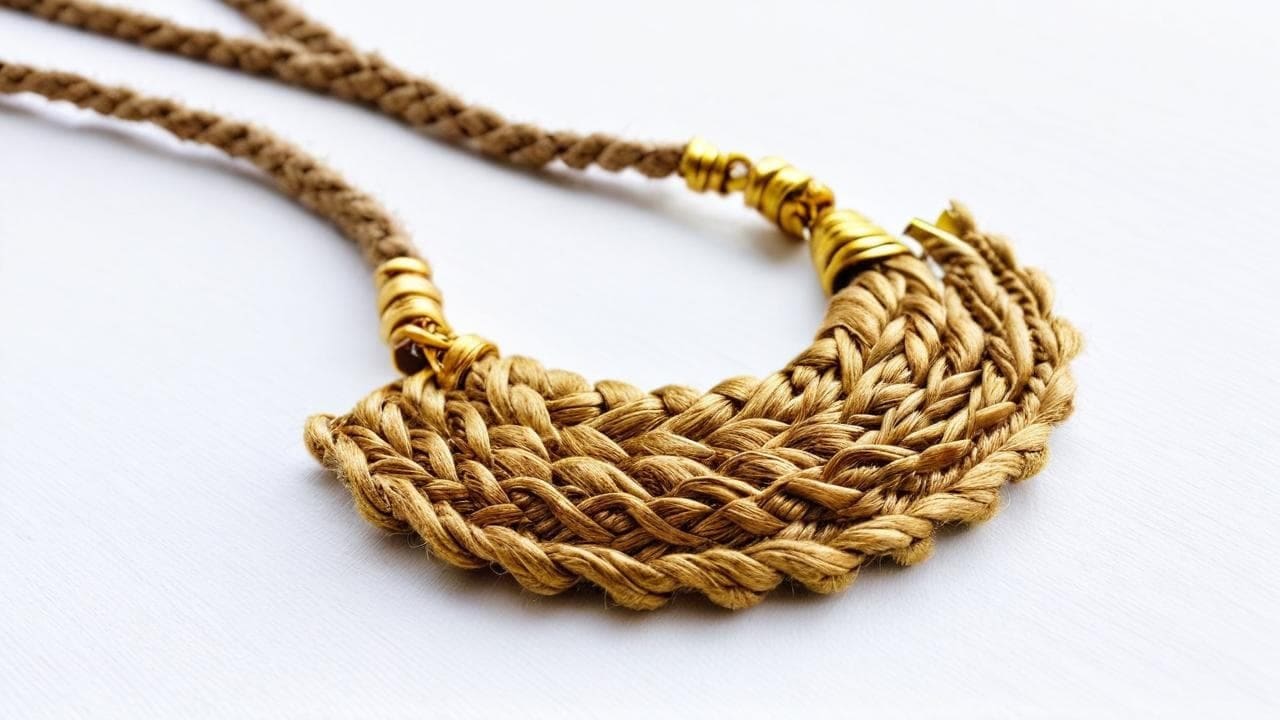
- Jute necklaces range from simple pendants on jute cord to elaborate multi-strand designs, often incorporating natural elements like wooden beads, seeds, shells, or stone pendants that complement jute’s organic texture.
- Bracelets and anklets represent some of the most common jute jewelry forms, with techniques including simple braiding, complex macramé patterns, or wrapped designs that may incorporate beads, charms, or metal elements.
- Jute earrings usually feature lightweight designs due to the material’s natural properties, often styled as hoops, tassels, or elaborate dangles that incorporate complementary beads or metal findings.
- Statement pieces like large jute collar necklaces, cuffs, or elaborate earrings often incorporate dying techniques to add color variation to the natural fiber or feature intricate weaving and knotting patterns.
- Mixed-media jute jewelry combines the fiber with materials like leather, metals, fabric, or even recycled elements to create unique textural contrasts and contemporary designs.
- Macramé jute jewelry represents a significant subcategory, utilizing various knot patterns to create intricate designs without requiring tools or equipment beyond the artisan’s hands.
- Ceremonial or special occasion jute jewelry may include more elaborate embellishments like semi-precious stones, metallic threads, or even gold or silver elements for a luxurious take on the natural fiber.
The diversity of jute jewelry styles reflects the material’s adaptability and the creativity of artisans worldwide who continue to find new ways to transform this humble fiber into wearable art. From minimalist designs that showcase jute’s natural beauty to complex creations that demonstrate exceptional craftsmanship, jute jewelry offers options for various tastes, occasions, and price points while maintaining its inherent sustainability.
Benefits of Choosing Jute Jewelry
Jute jewelry offers numerous advantages beyond its aesthetic appeal, making it an increasingly popular choice among environmentally and socially conscious consumers. These benefits span environmental impact, personal comfort, health considerations, and economic aspects, creating a compelling case for choosing jute over conventional jewelry materials in many situations.
- Jute jewelry is fully biodegradable and compostable, leaving no long-term waste footprint, unlike metal, plastic, or synthetic jewelry that may persist in landfills for hundreds or thousands of years.
- For people with metal allergies or sensitive skin, jute jewelry provides a hypoallergenic alternative that rarely causes skin irritation or allergic reactions due to its natural, non-toxic properties.
- The lightweight nature of jute makes it exceptionally comfortable for all-day wear, particularly for larger pieces like statement earrings or chunky necklaces that might cause discomfort if made from heavier materials.
- Purchasing handcrafted jute jewelry often supports artisanal communities and small-scale makers, creating economic opportunities in regions where mass manufacturing jobs may be limited.
- Jute’s natural heat regulation properties mean it doesn’t become uncomfortably cold against the skin in winter or hot in summer, making it suitable for year-round wear in various climates.
- The production of jute jewelry typically has a significantly lower carbon footprint than conventional jewelry, requiring minimal processing, few chemical treatments, and little energy-intensive manufacturing.
- Jute jewelry’s affordability makes sustainable fashion accessible to a broader range of consumers, offering eco-friendly options at price points significantly lower than fine jewelry.
- The natural variations in jute fiber create subtle uniqueness in each piece, meaning wearers can enjoy truly one-of-a-kind accessories rather than mass-produced identical items.
When choosing jute jewelry, consumers can enjoy fashionable, comfortable accessories while aligning their purchases with environmental and social values. This combination of practical benefits and ethical considerations explains the growing popularity of jute accessories in an era increasingly defined by conscious consumption and sustainability concerns.
How to Clean and Maintain Jute Jewelry
Jute jewelry requires specific care to maintain its appearance and extend its lifespan. While jute is naturally durable, its organic nature means it responds differently to environmental factors than metal or plastic jewelry. With proper attention and maintenance, jute accessories can remain beautiful and wearable for many years, though they will naturally age over time.
- Keep jute jewelry dry whenever possible, as prolonged exposure to moisture can cause the fibers to weaken, swell, or develop mildew; remove before swimming, showering, or engaging in activities that cause heavy perspiration.
- Clean jute jewelry by gently wiping with a slightly damp cloth to remove dust or light soiling, then allow to air dry completely before storing; never use harsh detergents, bleach, or chemical cleaners.
- Store jute pieces in a cool, dry place away from direct sunlight, which can fade the natural color and potentially weaken the fibers over time.
- Avoid hanging heavy jute necklaces or bracelets when not in use, as this can cause stretching or distortion; instead, lay them flat in a jewelry box or drawer.
- Apply perfumes, lotions, or oils before putting on jute jewelry, as these products can transfer to the fibers, potentially causing discoloration or affecting the fiber’s integrity.
- If jute jewelry becomes misshapen, you can gently reshape it while slightly damp and then allow it to dry completely in the desired form.
- For jute jewelry that incorporates beads or metal elements, inspect the connections periodically and re-tie or repair as needed to prevent losing components.
- Consider occasionally applying a very light misting of diluted fabric stiffener to elaborate jute pieces to help them maintain their shape, especially for intricate macramé designs.
With mindful care, jute jewelry can serve as a sustainable, beautiful addition to your accessory collection for years. While it won’t last forever like precious metals might, this natural lifecycle aligns with jute’s eco-friendly nature—eventually returning to the earth rather than persisting as waste. This impermanence reminds us of the beauty in choosing natural materials that harmonize with environmental cycles.
Basic Techniques for DIY Jute Jewelry Making
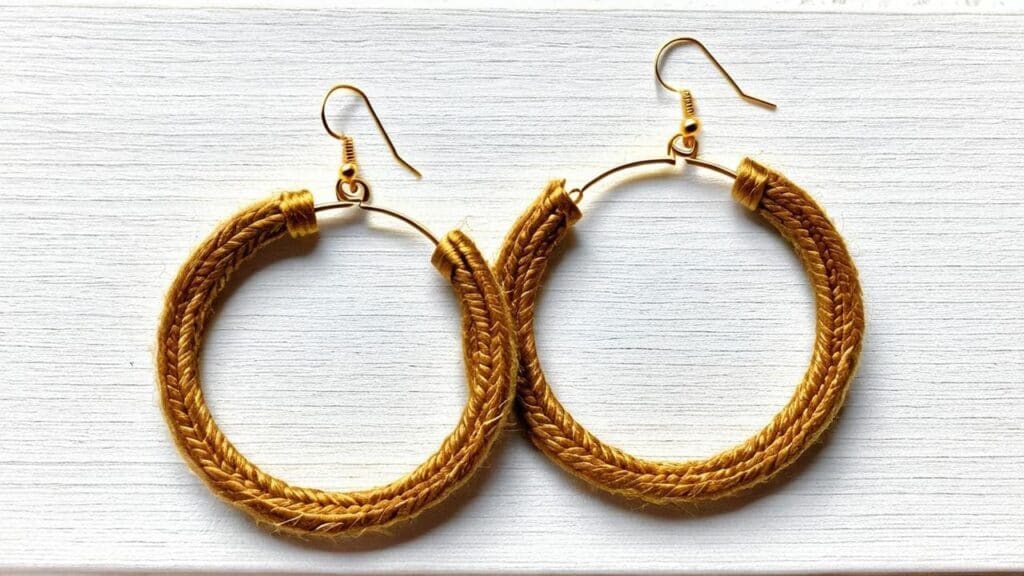
Creating your own jute jewelry offers a rewarding way to explore this sustainable material while developing practical craft skills. The accessibility of jute, combined with relatively simple techniques, makes this an ideal entry point for beginners interested in jewelry making. With basic supplies and some patience, you can create unique, personalized accessories that reflect your own aesthetic preferences.
- Start with high-quality jute cord or twine specifically made for craft projects rather than rough industrial jute, as craft-grade jute is usually softer, more flexible, and available in various thicknesses suitable for different jewelry applications.
- Essential tools for basic jute jewelry making include sharp scissors, a measuring tape, a clipboard or board with pins for securing work, and basic jewelry findings like clasps, jump rings, earring hooks, and head pins depending on your project.
- Master fundamental techniques like basic braiding (3-strand and 4-strand), simple macramé knots (square knot, half hitch, spiral knot), and various finishing methods before attempting more complex designs.
- For beginners, start with simple projects like braided bracelets or basic knotted necklaces before progressing to more intricate patterns that require greater precision and practice.
- Incorporate wooden beads, natural stones, or metal accents by stringing them onto the jute before knotting or by incorporating them into the pattern as you work, creating visual interest and personalizing your designs.
- Natural jute can be dyed using fabric dyes, tea staining, or natural dyes like turmeric or beetroot to add color variation to your pieces; pre-test dye absorption and colorfastness on small samples before committing to full projects.
- Finishing jute jewelry properly is crucial for durability—secure ends with tight knots covered with a small dot of clear, non-toxic glue, or use heat-sealed metal findings specifically designed for cord jewelry.
- Common beginner mistakes include using inappropriate jute thickness for your design (too thick for delicate work or too thin for structural pieces), making knots too loose, or not allowing sufficient material for finishing techniques.
The process of creating jute jewelry connects makers with ancient craft traditions while producing sustainable accessories that express personal creativity. As you develop skills and confidence, you can experiment with combining jute with other natural materials, creating more complex patterns, or even developing your own signature techniques and designs that showcase the unique properties of this versatile natural fiber.
How to Style Jute Jewelry
Jute jewelry’s natural appearance and textural qualities offer unique styling opportunities across various fashion contexts. From casual everyday outfits to special occasion ensembles, jute accessories can add organic warmth, textural interest, and eco-conscious appeal to your look. Understanding how to effectively integrate these pieces into your wardrobe helps maximize their versatility and impact.
- Jute jewelry pairs exceptionally well with natural fabrics like linen, cotton, hemp, and raw silk, creating a cohesive organic aesthetic perfect for warm-weather or casual settings.
- Layer jute necklaces of different lengths with each other or mix with delicate metal chains for an interesting textural contrast that works beautifully with simple tops and dresses.
- For workplace settings, choose more structured jute pieces with refined finishes, like a slim braided bracelet or small jute earrings with metal accents, rather than larger bohemian styles.
- Jute accessories complement earth-tone color palettes naturally but can also provide appealing contrast against bright colors or black and white ensembles.
- Consider the scale of your jute pieces relative to your frame and outfit—larger, more textural jute items work best as statement pieces with otherwise simple clothing, while more delicate jute jewelry can be incorporated into complex outfits.
- Seasonally, jute jewelry works especially well in spring and summer but can transition to fall when paired with richer colors and textures; in winter, combine with wool and heavier fabrics for interesting textural layering.
- For beach vacations or tropical settings, jute jewelry with shell, coral, or coastal-themed elements creates an appropriate and stylish resort wear accessory option.
- When wearing multiple jute pieces, maintain balance by varying scales—pair larger jute earrings with a more delicate bracelet, or a statement jute necklace with simple jute studs, rather than wearing bold pieces together.
Jute jewelry’s versatility allows it to transition between different fashion contexts while maintaining its distinctive character. By treating these pieces as thoughtful elements of your overall look rather than just casual add-ons, you can elevate their impact and showcase their unique beauty. The natural, authentic quality of jute creates a grounding element in contemporary fashion that connects wearers to traditional materials and sustainable practices while remaining stylish and relevant.
The Cultural Heritage Behind Jute Accessories
Jute jewelry carries deep cultural significance in various societies around the world, particularly in regions where jute cultivation and fiber arts have historical importance. These traditional connections enhance the meaning and value of jute accessories beyond their aesthetic appeal, linking contemporary fashion to centuries-old craft traditions and cultural expressions.
- In Bangladesh and parts of India, particularly West Bengal, jute has been called “the golden fiber” for generations due to its historical economic importance, and jute jewelry represents both cultural heritage and modern innovation in these regions.
- Many indigenous communities in South America incorporate jute or similar plant fibers into ceremonial and decorative jewelry, using techniques passed down through generations and often imbuing pieces with spiritual or community significance.
- In parts of Africa, particularly East Africa, artisans have integrated jute into traditional beadwork and fiber jewelry, creating distinctive styles that represent cultural identity while providing economic opportunities.
- The resurgence of interest in jute jewelry in Western countries connects to both the 1970s craft revival movement and contemporary concerns about sustainability, representing evolving cultural values around consumption and environmental impact.
- In some communities, specific jute jewelry designs, knots, or patterns carry symbolic meanings related to protection, prosperity, connection to nature, or spiritual beliefs.
- The relatively low cost and accessibility of jute historically made it a democratic material for adornment in many cultures, allowing people of various socioeconomic backgrounds to create and wear decorative items.
- Cross-cultural exchange has influenced contemporary jute jewelry design, with techniques and aesthetic elements flowing between regions and creating new hybrid styles that honor multiple traditions.
- For many artisans today, creating jute jewelry represents both cultural preservation and innovation, maintaining traditional techniques while adapting to contemporary markets and aesthetic preferences.
The cultural dimensions of jute jewelry add depth and meaning to these pieces beyond their surface appearance. When consumers choose jute accessories with awareness of these cultural connections, they participate in a larger story about human creativity, traditional knowledge, and cultural exchange. This aspect of jute jewelry highlights how sustainable fashion choices can simultaneously honor the past, support the present, and contribute to more culturally rich and environmentally sound future practices.
How Jute Compares to Other Natural Jewelry Materials
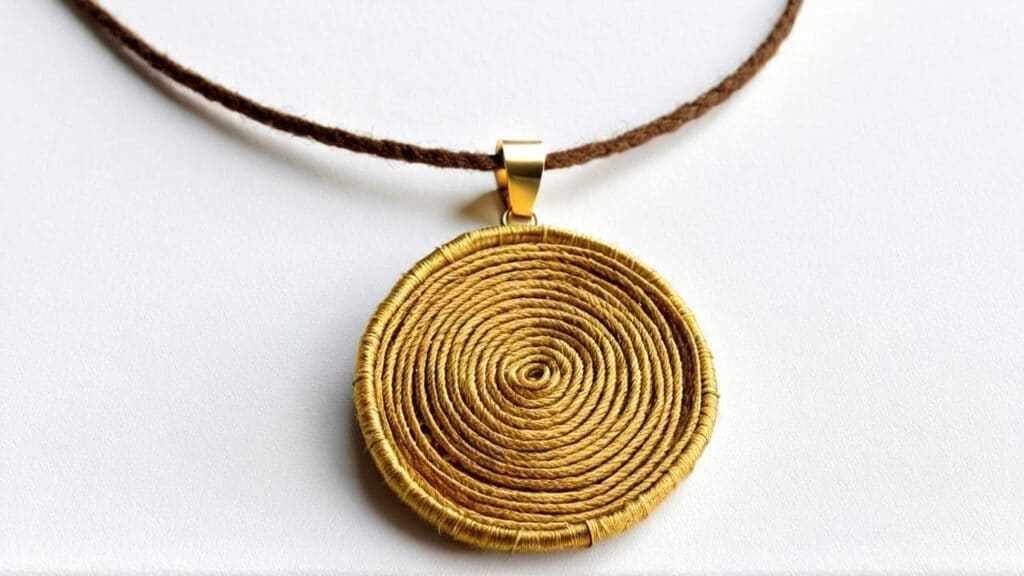
While jute has gained popularity in natural fiber jewelry, it exists alongside several other plant-based materials with their own unique properties. Understanding how jute compares to alternatives like hemp, cotton, sisal, or coir helps consumers make informed choices about which natural fiber best suits their specific needs, preferences, and values.
- Jute offers greater tensile strength than cotton while being more flexible than sisal or coir, creating a balance of durability and workability that makes it especially suitable for structured yet comfortable jewelry designs.
- Hemp jewelry shares many sustainability benefits with jute but typically features a more pronounced texture and higher durability, though it’s often more expensive and less widely available than jute in many regions.
- Cotton cord creates smoother, softer jewelry suitable for direct skin contact but lacks the distinctive natural color variations and textural interest of jute, while requiring significantly more water to produce.
- Sisal and abaca fibers offer excellent durability but tend to be coarser than jute, making them better suited for statement pieces rather than everyday jewelry worn against the skin.
- Jute naturally absorbs dye more readily than many other plant fibers, allowing for vibrant color applications while requiring fewer chemical mordants or fixatives in the coloring process.
- Coir (coconut fiber) shares jute’s biodegradability but has a significantly coarser texture and darker color, limiting its jewelry applications primarily to chunkier, more rustic designs rather than versatile everyday pieces.
- From a sustainability perspective, jute typically has a lower environmental impact than cotton (requiring less water and fewer pesticides) but may involve more processing than locally harvested materials in some regions.
- The price point of jute typically falls in the middle range of natural fiber options—more expensive than cotton cord but generally more affordable than fine hemp or rare natural fibers like ramie or lotus fiber.
Each natural fiber brings distinct characteristics to jewelry making, with jute offering a particularly versatile middle ground in terms of texture, workability, appearance, and environmental impact. For consumers seeking sustainable accessories with distinctive natural character, jute provides an accessible option that balances practical considerations with aesthetic appeal and ecological benefits, though other fibers may better serve specific needs or design preferences in certain contexts.
How to Buy Quality Jute Jewelry
Navigating the market for jute jewelry requires understanding what constitutes quality construction, fair pricing, and authentic craftsmanship. Whether shopping online, at artisan markets, or in retail stores, informed consumers can make choices that ensure satisfaction with their purchases while supporting ethical production practices and genuine artisanship.
- Quality jute jewelry features tight, consistent knot work or weaving without fraying edges, secure connections between components, and appropriate finishing techniques that prevent unraveling over time.
- Price ranges for jute jewelry vary widely based on complexity, size, incorporation of other materials, and maker reputation; simple bracelets might start around $10-15, while elaborate necklaces or sets from established designers could range from $50-200+.
- Authentic handcrafted jute pieces typically show slight variations even within the same design, while mass-produced items often display machine-like consistency; these natural variations are a hallmark of genuine artisanal work rather than a defect.
- When evaluating durability, examine how components are attached—look for secure knots, proper crimping of metal elements, reinforced stress points, and non-toxic glue applications where necessary for structural integrity.
- Ethical considerations include fair compensation for artisans (fair trade certification is a positive indicator), sustainable harvesting practices for the jute itself, and transparent information about production methods and materials.
- For jewelry combining jute with other elements, verify that add-ons like beads, stones, or metal components are securely attached and proportionally appropriate to the jute foundation in terms of weight and size.
- Online purchases require careful attention to size specifications, material descriptions, and return policies, as natural fiber jewelry may vary more in appearance than mass-produced accessories.
- Supporting small-scale jute jewelry artisans directly—through their websites, Etsy shops, or local markets—often provides better value, more unique designs, and greater opportunity for customization than purchasing through large retailers.
When adding jute jewelry to your collection, balancing aesthetic preferences with quality construction ensures you’ll acquire pieces that provide lasting enjoyment while reflecting your values regarding sustainability and craftsmanship. Taking time to research makers, understand materials, and carefully examine construction pays dividends in finding jute jewelry that remains beautiful and wearable for years to come.
Conclusion
Jute jewelry represents a compelling intersection of traditional craftsmanship, sustainable materials, and contemporary fashion sensibilities. As consumers increasingly seek accessories that align with environmental values without sacrificing style, jute offers a versatile, accessible option with rich cultural connections and practical benefits. From its minimal environmental footprint to its distinctive natural aesthetic, jute jewelry provides an alternative to conventional accessories that connects wearers to traditional craft practices while looking toward a more sustainable future.
The unique properties of jute—its strength, flexibility, and natural beauty—have enabled artisans worldwide to create diverse jewelry styles ranging from simple everyday pieces to elaborate artistic expressions. Whether you’re drawn to jute jewelry for its eco-friendly characteristics, its hypoallergenic qualities, its affordability, or simply its natural charm, these accessories offer a meaningful way to incorporate sustainability into your personal style.
As the fashion industry continues to evolve toward more environmentally conscious practices, jute jewelry stands as a reminder that beautiful adornment need not come at environmental cost. By choosing, caring for, and appreciating jute accessories, consumers participate in a larger movement toward mindful consumption that honors both planetary boundaries and human creativity—wearing not just jewelry, but a commitment to more thoughtful relationships with the objects that adorn our lives.